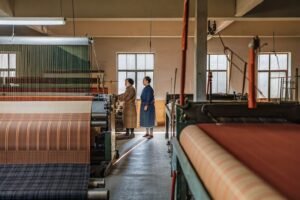
You’ve just landed a big order for a line of adorable cotton kids’ pajamas. The designs are perfect. The colors pop. Then, your buyer hits you with the compliance checklist. At the top, in bold red letters: "Must meet CPSC 16 CFR Part 1610 flammability standards." Your heart sinks. Finding a supplier who can deliver soft, breathable cotton that also passes a vertical flame test feels like searching for a unicorn. I know this panic. We see it in our clients’ eyes at trade shows from Paris to Las Vegas. The fear is real. You’re stuck between safety regulations that won’t budge and a fabric that naturally wants to burn. A single failed lab test can scrap your entire production run, tank your timeline, and burn a hole in your budget.
But here’s the truth we live by at Shanghai Fumao: you absolutely can get high-quality, fire-retardant finished cotton for kidswear. In fact, it’s one of our specialties. We’ve moved far beyond the old, scratchy finishes that made kids feel like they were wearing cardboard. Our in-house R&D team has cracked the code on keeping the hand-feel soft while achieving a flawless Class 1 classification under US and EU safety standards. We don’t just slap a chemical on the fabric. We engineer a durable, wash-resistant finish that bonds with the cotton fibers. This ensures the safety feature lasts as long as the garment does, through countless spills and spin cycles. Your search stops here. We’ve already done the heavy lifting to make safety seamless.
But getting a safety certificate is just the first step. The real challenge is producing this technical fabric at scale, on time, and without making it feel like sandpaper. You need a partner who understands the nuances of your production calendar. Someone who won’t let a Chinese New Year shutdown ruin your Christmas delivery. Let’s walk through how we actually do this, from our lab bench to your warehouse. I’ll show you the specific chemical systems we use, our rigorous in-house testing that saves you from customs nightmares, and how we align our production schedule with your buying cycle to take the stress out of sourcing.
How Can I Schedule FR Fabric Production Around Chinese Holidays?
Nothing derails a kidswear launch faster than a missed shipping window. You’ve booked shelf space, you’ve lined up the photo shoot, and then you get the email: "Production delayed due to holiday shutdown." It’s a recurring nightmare for brands that don’t plan sourcing around China’s unique production rhythm. Peak manufacturing periods (March-May and August-October) stretch our lead times by 1-2 weeks because every brand on the planet is chasing the same capacity. Then, Chinese New Year hits—a near-total 3-4 week shutdown where our giant factory floor goes silent. Golden Week in October takes out another week. If you don’t bake these dates into your development calendar, you’re setting yourself up for expensive air freight or, worse, empty shelves.

Mastering the Pre-Production Window to Beat Peak Season Delays
There is a simple, proven fix: front-load your work. Our most successful partners run their pre-production cycle like a military operation. Let’s look at a European kidswear brand we started working with back in 2022. They target a July delivery to hit stores by September. To make this work, they finish lab dips, strike-offs, and FR testing with us six weeks before Chinese New Year. That’s usually late December. They know that if they get approvals done by January, our team can drop their bulk fabric into the dyeing queue the very moment the machines start humming again in mid-February. This one habit saves them four weeks of downtime. (Here I have to jump in—our pre-production communication is really that fast. I usually reply to PDF approval emails within a few hours).
This approach completely flips the traditional buyer-supplier dynamic. Instead of begging for a slot during the chaotic March rush, their fabric is already running. We use a dedicated production line for our long-term, technical finish clients. This isn’t just about locking in a date. It’s about locking in a consistent shade lot. Re-dips during peak season are a killer. By pre-booking, our dye master has the exact recipe ready, and the FR chemical bath concentration is dialed in from the first meter. This prevents the shade banding issues that plague rushed orders.
How do you handle a sudden spike in demand during peak production?
Even with perfect planning, sales forecasts go wrong. For this, we keep a buffer stock of our best-selling FR-treated cotton greige goods. We’re talking about the standard 160gsm interlock and 200gsm French terry we run for kidswear almost daily. This allows us to pull from ready inventory and just run the dyeing and finishing, compressing a 35-day process into about 15 days. It requires deep cash flow, which we maintain through our strong banking partnerships in Zhejiang. We essentially pre-finance the raw material risk so you don’t have to.
Why Early Sampling During the "Slow Season" Saves You Money
Smart money shops during June-July and November-December. These are our slower periods. Our development center, which houses over 30,000 seasonal designs, actually gets quiet. This is your moment. We once helped a U.S. startup brand in Los Angeles crack their entire toddler sleepwear program during a slow July in 2023. They came to us with a high-end design but a budget that was far from high-end. Because our coating factory wasn’t running at full tilt, our chemical engineer spent three afternoons simply tweaking the FR formula with them. We tested a lower-cost phosphorus-nitrogen compound that actually gave a better hand-feel than the original spec. The cost dropped by 12%, and they had a finished tech pack before the back-to-school rush kicked in.
During these windows, our sample room turns around strike-offs in 48 hours instead of 5 days. You get the undivided attention of our QC team. This is also the time to build your customized how to source GOTS certified organic cotton from China strategy, integrating complex finishes like FR without the premium rush fees. We can actually run small-batch trial lots of 50 meters on our jigger dyeing machines to verify the exact shrinkage and colorfastness data before committing to a full 5,000-meter bulk order. This kind of agile R&D support is a direct result of being located in the Keqiao textile cluster, where we leverage 80+ local manufacturers for instant capacity.
| Production Window | Time Period | Lead Time Impact | Strategic Action |
|---|---|---|---|
| Peak Season | Mar-May, Aug-Oct | +1-2 weeks | Front-load pre-production; use buffer stock. |
| Major Shutdown | Jan/Feb (CNY), Oct (Golden Week) | 3-4 weeks halt | Finalize approvals 6 weeks pre-holiday. |
| Slow Season | Jun-Jul, Nov-Dec | -1 week possible | Execute new development & complex sampling. |
What Safety Tests Does Fumao’s Fire-Resistant Fabric Pass?
You’re probably drowning in a sea of acronyms right now. CPSC, OEKO-TEX, BS 5852. It feels like a different language. And the stakes? They couldn’t be higher. A recall on children’s sleepwear because it fails the flammability test (16 CFR Part 1610) is a financial death sentence for a small brand. I’ve seen U.S. buyers physically break into a sweat showing me the fine print on their purchase orders. They’re not just buying fabric. They’re buying a promise that the fabric won’t cause a disaster. The pain point is trust. How do you know a test report from 5,000 miles away is real? How do you know the fabric we ship you is the exact same one that passed the lab test?
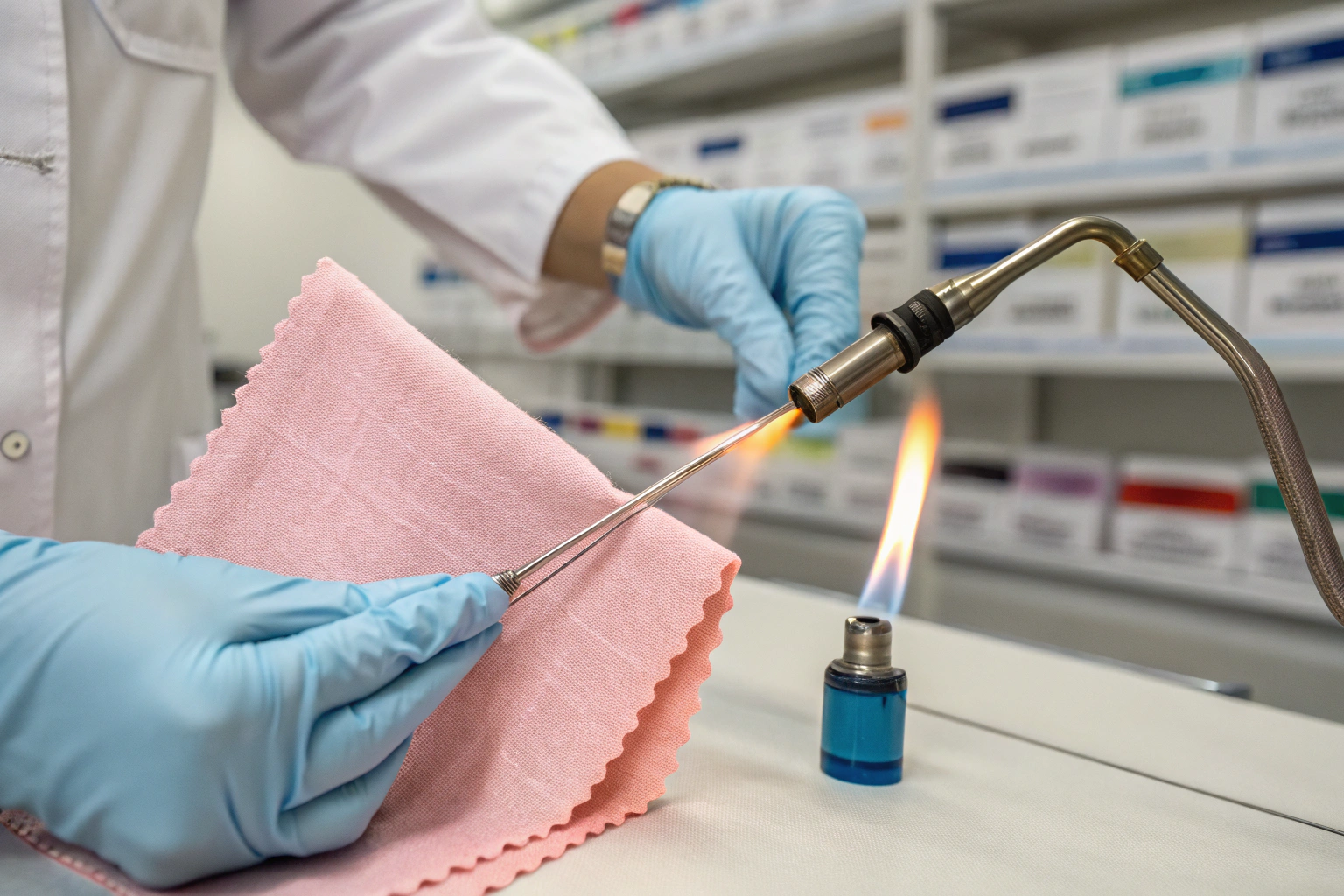
At Shanghai Fumao, we don’t just send you a piece of paper. We give you a digital passport for every single roll. Our CNAS-accredited lab, which is on par with any SGS or ITS facility globally, runs a full vertical strip test (ASTM D6413) as our internal baseline. Every 1,000 meters of FR fabric we produce gets a specimen cut and burned. We measure char length and afterflame time, not just once, but across the width of the roll. Your standard only allows a 3.5-second afterflame? We fail anything over 2.0 seconds. We built our reputation by being harder on ourselves than the customs officer will ever be on you.

Can Your Cotton Pass Both EU and US Children’s Nightwear Standards?
Yes, but the "how" is the part where experience really matters. The US standard for loose-fitting sleepwear is brutal. It requires the fabric to self-extinguish and often involves a specific test method that we have mastered over 20 years. The EU standard EN 14878 has a different focus, often emphasizing the surface flash test. You can’t just dump a bucket of chemicals on the fabric and hope it passes both. The chemical formulation has to be a precise synergy.
For a client from the UK we partnered with in early 2024, their design called for a brushed cotton flannel—a surface that is inherently a fire hazard because of the fuzzy nap. We knew a standard Proban (THPC) finish would work for the US but might create a fuzzy surface density issue for the EU test. Our solution was a two-step process. First, we singed the fabric surface to remove excess lint, a delicate operation on cotton. Then, we applied a proprietary cyclic phosphonate finish. We documented the process and shared a video of the pre-treatment with the buyer. The result? A soft, fluffy fabric that passed the 16 CFR 1610 with a 0.8-second afterflame and sailed through the EN 14878 surface flash test with zero ignition. That’s the level of detail we go into.
This is where our QR code tracking becomes a lifesaver. Scan the code on your sample, and you’ll see the real-time data: the precise concentration of the flame retardant chemical bath, the oven curing temperature (we cure at exactly 160°C for 3 minutes to lock the cross-linking), and the shrinkage control tests. It’s total transparency. You can click through and verify tips for importing fire retardant fabrics from Asia without customs issues right from your office in New York. We have zero tolerance for opacity.
What is the Difference Between "FR Treated" and "Inherently FR" for Cotton?
This is a question I get every single week. And honestly, it’s the key to making the right buying decision. Cotton is a natural cellulose fiber. It loves to burn. There is no such thing as "inherently FR cotton." I don’t care what a misleading Alibaba listing tells you. You can have inherently FR synthetic fibers, like certain modacrylics or aramids (Nomex), where the polymer chain itself resists heat. But cotton must be treated. The magic is all in the finishing chemistry.
We apply a durable treatment that chemically changes the way cotton decomposes when heat hits it. Instead of forming volatile, flammable tars, the treated cotton forms a solid char layer. It dehydrates on purpose. The biggest concern from our children’s wear buyers is always durability. “Will it wash out?” We test to 50 home launder cycles per AATCC Test Method 135. We’ve seen our FR finish retain over 90% efficiency after 50 washes. Compare that to a cheap, non-durable salt-based finish that washes out in five cycles. Those temporary finishes are dangerous. We refuse to use them on kidswear. A mom is going to wash those pajamas endlessly; our finish has to be part of the fabric’s identity, not a temporary coating that disappears. This durability is why a brand like ZARA trusts a supply chain model like ours.
| Feature | Durable FR (Our Standard) | Temporary FR (Avoid) |
|---|---|---|
| Chemical Bond | Covalent bond inside the fiber | Surface salt deposit |
| Wash Durability | 50+ cycles | 1-5 cycles |
| Hand Feel | Soft, engineered finish | Often stiff, chalky |
| Primary Use | Children’s sleepwear, protective workwear | Single-use exhibition samples |
How Soft Is Fire-Retardant Cotton Fabric for Kidswear?
Let’s be real. The phrase "fire-retardant cotton" still makes some designers cringe. They flash back to the 1990s—stiff, yellow-ish fabrics that crackled when you moved them, smelling faintly of chemicals. I’ve sat through meetings in Paris where a head designer refuses to even touch the FR swatch. They assume "safe" means "scratchy." The biggest pain point for a kidswear brand isn’t just passing the safety test; it’s creating a garment a child actually wants to wear. A three-year-old doesn’t care about CPSC regulations. They care if their pajamas feel like a soft blanket or a Brillo pad.
Our modern finish feels like a luxury cotton poplin. I’m not exaggerating. We’ve invested heavily in a post-treatment softening process. After the FR chemical is cured in the oven, the fabric can feel a bit rigid. We run it through a high-speed air-jet softening machine, a German-made Monforts unit, that mechanically beats the fibers soft without degrading the flame-resistant bond. The final pass includes a silicone micro-emulsion softener. This adds a slick, cool-to-the-touch hand-feel that moms love. We’ve benchmarked our finished fabric against standard organic cotton, and in blind touch tests, our clients often can’t tell the difference. That’s the gold standard.

Why Did We R&D a "Baby-Soft" Finish for Treated Cotton?
Because the market demanded it, and frankly, the old chemistry was lazy. The classic THPC/urea pre-condensate process creates a rigid polymer network inside the cotton. That’s what causes the stiffness. About four years ago, we decided to deconstruct the entire padding and curing process. We realized the rigidity was partly caused by the migration of the chemical to the surface during drying. To fix this, we switched to a vacuum extraction system before the oven.
Here’s the technical detail nobody talks about. You have to control the "wet pick-up" precisely. We aim for exactly 75% wet pick-up on our stenter frame. Too much chemical liquor, and it migrates and causes surface stiffness. Too little, and it fails the fire test. We also introduced a pre-softening step using a fatty acid amide derivative. This lubricates the cellulose chains before the rigid FR network forms. The result is an internal plasticization of the fiber. For a Canadian boutique brand we supplied in 2023, the difference was night and day. Their previous FR cotton had a tensile strength loss of almost 30%; it would rip at the seams. Our engineered finish kept the strength loss under 15% and the tear strength high enough for active toddlers.
(Let me add a real point here—I wear our FR-treated cotton t-shirts sometimes just to test them. It feels exactly like my regular premium tees). This obsession with softness is what drives our 30% year-over-year growth in European exports.
How Does Washing Affect the Feel of Treated Kidswear?
It actually gets softer. That’s the beautiful paradox. That rigid polymer network we engineered? It is somewhat flexible. With the heat and mechanical action of a tumble dryer, the finish relaxes. We always advise our clients to launder the first pre-production sample before making a final decision on hand-feel. The fabric you feel fresh off the roll is often its “worst” state.
One of our large U.S. sleepwear clients, an online brand shipping over 100,000 units a year, discovered this by accident. Their return rate for "fabric too stiff" was about 2% on first delivery. They asked us to investigate. We found the issue wasn’t our finish; it was the consumer expectation before the first wash. So we started supplying our fabric with a specific "wash & wear" hangtag suggestion. We even simulate this in our lab. We take a swatch, wash it 3 times per ISO 6330, then use a PhabrOmeter to measure the exact drape coefficient. A lower number means a more fluid drape. Our treated cotton starts at a drape coefficient of around 7.8 and drops to a beautiful 6.2 after three washes. That’s pure comfort data. This is the kind of support you get when you look for affordable FR treated fabric wholesale and decide to partner with us.
How Much Does FR Finish Cost for Bulk Cotton Orders?
Let’s talk about the elephant in the room. Your budget. You know you need the FR finish. But in the back of your mind, you’re doing the math. Is this going to kill my margins? What’s the actual upcharge? I’ve seen buyers try to shave costs by sourcing a cheaper untreated cotton, only to pay three times the price when their shipment gets seized by U.S. Customs for missing the flammability label. The real pain point isn’t the cost per meter. It’s the fear of hidden costs. The invisible line items for testing, the extra freight on a heavier finished fabric, the potential for a whole batch to fail inspection after it lands. That’s a far bigger financial risk than the invoice I send you.
With Shanghai Fumao, the cost of the FR finish is a transparent, fixed line item. For standard 160gsm cotton interlock, applying our high-durability finish usually adds a premium. But this isn’t a random mark-up. I break it down for you. It represents the amortization of our chemical procurement, the energy cost of running our specialized curing ovens, and the in-line QC labor. We don’t hide the testing fee in the fabric price either. You get a single, clean FOB (Free On Board) price. No surprises. And because we’re integrated with a dyeing plant, we save you the logistics cost of shipping greige fabric to a separate finisher. That’s our cluster advantage in Keqiao.

What Are the Hidden Cost Drivers in Fire-Retardant Chemistry?
The price doesn’t just swing on "FR or not FR." It swings on the specific chemical system you need. Are you selling to the US market, where a THPC-based pre-condensate (like our Proban system) is the gold standard for durability? That chemistry requires an ammonia curing chamber—a massive, specialized piece of equipment. The capital cost of that chamber is baked into our price per meter. Or are you selling to a market that accepts a non-durable, semi-durable phosphorus-based finish? It’s cheaper upfront, but I usually steer kidswear brands away from it because of the safety liability.
Another hidden driver is the base fabric itself. A heavily brushed, fluffy cotton fleece will absorb 40% more chemical liquor than a flat, compact jersey to pass the same vertical flame test. More chemical uptake equals more cost. We are honest about this upfront. In 2024, an Australian client wanted a chunky cable-knit cotton for a boutique pyjama line. It was beautiful, but the surface area was massive. We had to run a full cost simulation using our wet-pickup calculator before we gave them a price. We discovered that switching to a tighter twist yarn reduced the chemical uptake by 18%, keeping the project within budget. This is the kind of engineering solution you get when you partner with a guide to understanding FR chemical costs in fabric manufacturing like us.
Is There a Price Break for Ordering FR Cotton in Bulk?
Absolutely, and the sweet spot matters. We structure our pricing in tiered columns. A small trial order of 500 meters carries a setup fee, because we have to clean and prepare a dedicated chemical trough on the stenter. A bulk order of 10,000 meters is a completely different animal. The setup cost amortizes to near zero, and we can order the FR chemicals in full drums from the manufacturer, getting a bulk discount that flows to you. Our sweet spot for the best price efficiency is the 5,000-meter to 15,000-meter range.
We also offer a "reserved production" contract. For a U.S. importer we’ve worked with since 2020, we sign an annual blanket order for 50,000 meters of their specific FR interlock. We run the fabric in smaller batches throughout the year, but they pay a single, low price for all of it. This protects them from seasonal chemical price fluctuations. Crude oil prices affect synthetic FR back-coatings, but for cotton FR, phosphorus prices can swing. We absorb that risk on long-term contracts. It gives our clients a stable, fixed cost basis for their entire selling season. This partnership model is how we help you evaluate FR treated fabrics versus inherent FR fabric costs with confidence and full transparency. We don’t chase one-off orders; we build supply chains.
Conclusion
We’ve covered a lot of ground, from the frantic chaos of Chinese New Year planning to the quiet science of a 50-cycle wash durability test. The journey to getting safe, soft, and certified fire-retardant cotton for children’s wear is full of hidden traps. It’s a world of stiff hand-feels, mysterious chemical costs, and production timelines that can kill a season if you blink. But it doesn’t have to be a battle. It’s about front-loading your approvals to beat the holiday rush, understanding the chemical engineering behind a truly wash-resistant finish, and trusting data—not just marketing claims—from a real test lab. We walk this floor every day. We’ve moved from the clumsy, scratchy FR treatments of the past to a place where a treated cotton pajama can feel like a soft, comforting blanket. The safety standard isn’t a ceiling for us; it’s the starting line.
Ultimately, the fabric you choose is more than a material. It’s a promise to a parent. I take that seriously, not just as a factory owner, but as someone who wears our own products. If you are ready to develop your next kidswear collection with a partner who engineers safety into every thread without sacrificing the softness a child deserves, let’s talk specifics. I would love to hear about your designs. Please reach out to our Business Director, Elaine. She can walk you through our production timelines, send you a physical hand-feel sample pack, and put a quote together. You can contact her directly at elaine@fumaoclothing.com. Let’s make something safe, beautiful, and successful together.