You’ve decided to source OCS (Organic Content Standard) certified products. It’s a commitment to authenticity and sustainability. But now you face a critical choice: where to place your trust? The perception gap is real. Many brands instinctively look to Europe or India for “reliable” organic certification, while viewing China with skepticism on transparency. This is an outdated mindset that could cost you agility, value, and access to world-class manufacturing expertise.
Trust isn’t given; it’s earned through systems, evidence, and track record. The question isn’t “Can a Chinese factory be trusted?” but rather “How does this specific Chinese factory demonstrably earn and maintain that trust?” The leading Chinese textile manufacturers today aren’t just production hubs; they are integrated, technology-driven partners who understand that certification is a rigorous management system, not just a paper certificate.
In the global textile arena, China, and specifically clusters like Keqiao where we are based, have undergone a seismic shift. The focus has moved from being the world’s cheapest maker to being its most capable and reliable one. For OCS, this means investing in vertically controlled supply chains, international accreditation, and digital traceability that surpasses many traditional suppliers. Let me dismantle the myths and show you the concrete pillars upon which you can confidently place your trust.
What Systems Ensure OCS Integrity in a Chinese Supply Chain?
Trust is built on systems, not promises. A credible Chinese factory’s approach to OCS is structural, not superficial. It starts with vertical integration or vetted partnership control. For a chain-of-custody standard like OCS, every step must be certified. The most reliable partners control or have exclusive partnerships with certified spinning, weaving, dyeing, and finishing facilities.
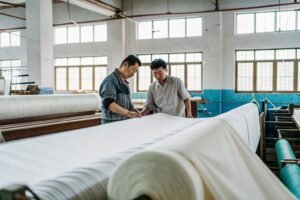
At Shanghai Fumao, our system is built on this principle. We don’t just buy OCS fabric from the open market. We source OCS-certified yarn and manage its journey through our own weaving facility and a network of tightly audited, certified dyeing and finishing partners. This controlled pipeline is the first and most critical system. It eliminates the black box of subcontracting, where certification breaks down. When you ask, “Where was this dyed?” we can provide the name, address, and OCS certificate of that specific mill—not just the name of a trading company.
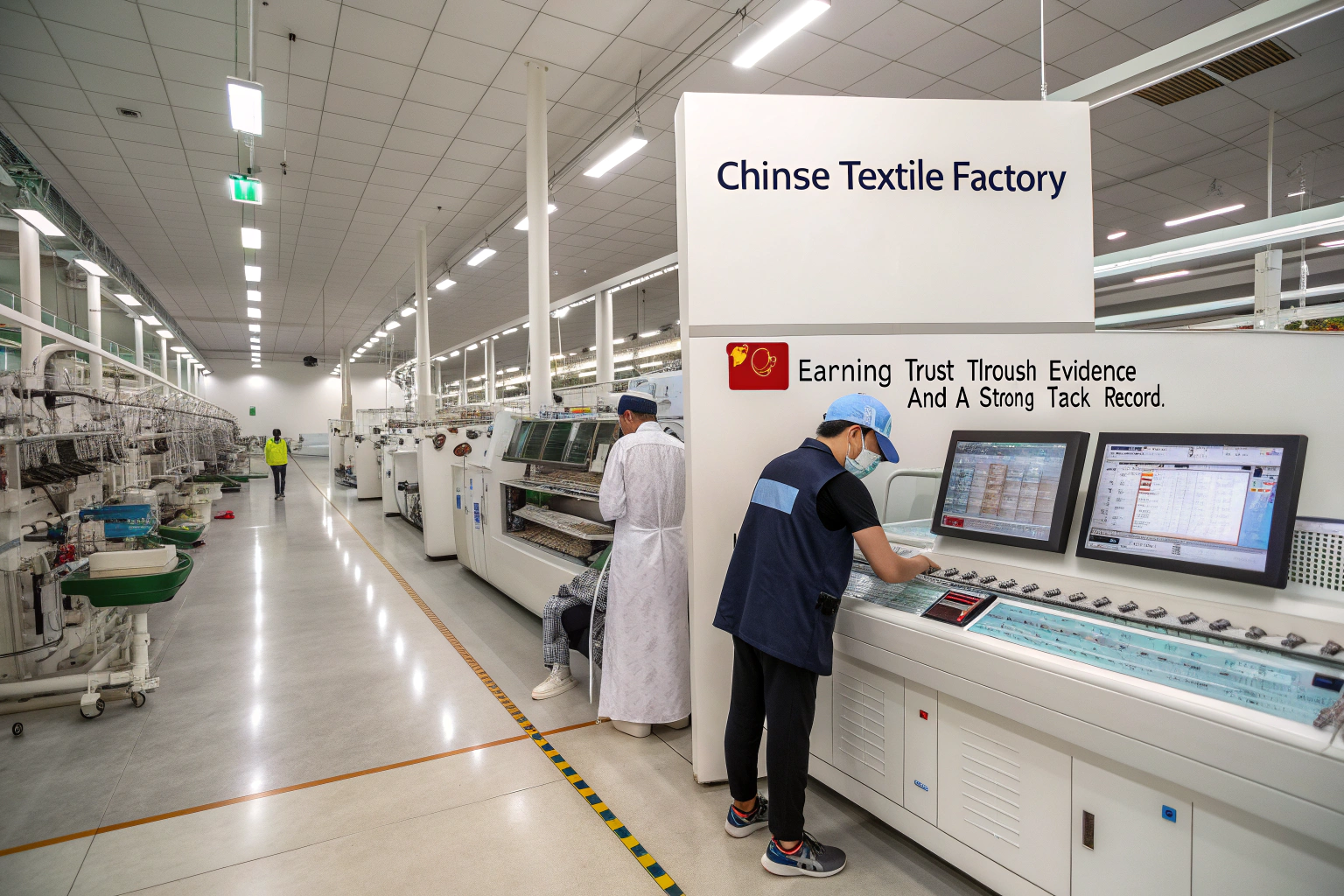
Digital Traceability & Documentation is the second pillar. Leading factories use software to track the batch number of incoming OCS yarn all the way to the finished fabric roll. QR codes are assigned, linking to a digital dossier that includes Transaction Certificates (TCs), test reports, and production logs. This isn’t for show; it’s for internal control. In 2023, a German sustainable brand auditor visited our Keqiao facility. They were able to scan a roll of our OCS cotton canvas and pull up its entire journey in minutes, a level of transparency that solidified the partnership. This is becoming a benchmark, as discussed in analyses of how blockchain is entering the textile supply chain for proof of origin.

How Do You Vet a Factory’s Actual OCS Control, Not Just Their Certificate?
Anyone can pay for an audit and get a scope certificate. The real test is in the operational rigor. Here is your due diligence checklist:
- Request the Full Certificate Chain: Ask not only for the factory’s OCS scope certificate but also for the certificates of their upstream spinning and dyeing partners. A trustworthy factory will provide these readily.
- Ask for a Sample Transaction Certificate (TC): Request a redacted TC from a recent shipment. This proves they have actually executed a certified transaction from start to finish. Examine it: does it flow logically from spinner to weaver to dyer to exporter?
- Audit Their Internal Segregation Protocol: How do they prevent OCS materials from mixing with conventional ones? Ask for photos or a virtual tour of their warehouse. Look for clear labeling, separate storage areas, and dedicated production lines or run sequences.
- Interview Their Compliance Officer: Every serious factory has one. Talk to them. Do they understand the standard deeply, or do they just handle paperwork? Ask about their biggest challenge in maintaining OCS integrity—an honest answer speaks volumes.
A US apparel brand we partnered with in 2024 conducted this exact vetting. Their team visited and spent a day walking through our physical and digital segregation processes. They left not just with a supplier, but with a compliance partner. Their comment was telling: “Your internal controls are stricter than our auditor’s checklist.”
What Role Does Third-Party Accreditation Play?
The factory’s internal system is validated by external, international accreditation. The OCS certificate itself must be issued by an accredited Certification Body (CB), such as Control Union, SGS, or ITS. This is non-negotiable.
But go deeper. Look for other accreditations that signal a culture of systemic quality management. For example, our in-house lab is CNAS accredited (China National Accreditation Service), which is the Chinese equivalent of ILAC (International Laboratory Accreditation Cooperation) recognition. This means our internal test results on fiber content, colorfastness, and shrinkage are recognized internationally, adding a layer of objective verification to the OCS claim. It shows an investment in proof, not just perception.
How Does Vertical Integration in China Enhance OCS Reliability?
Vertical integration is the ultimate risk-mitigation strategy for certification. In a fragmented supply chain, a failure at any one subcontractor voids the entire batch. In a vertically integrated model, control is centralized, and visibility is total.
Control from Yarn Stage: The most significant risk point is the source of the organic fiber. A vertically integrated player or one with strategic equity in a spinning mill has direct oversight. They can verify the OCS certification of the cotton bales entering the spinning process, ensuring the very first input is correct. This is a level of assurance a pure trading company or a simple cut-and-sew factory cannot offer.
In-House Processing & Reduced Handoffs: Every time material changes hands physically and administratively, risk increases. With weaving, and potentially dyeing and finishing under one management umbrella, the physical transfer of OCS materials happens within a single controlled ecosystem. The chain of custody documents are internal transfer notes, not complex commercial transactions between separate companies. This drastically reduces administrative error and deliberate fraud.
Speed of Problem-Solving: When an issue arises—like a question from a certifier about a batch—a vertically integrated supplier can gather information from the spinning, weaving, and dyeing managers in hours, not weeks. This agility is critical for maintaining compliance and shipment timelines. We experienced this firsthand when a client’s auditor had a query about dye lot consistency for an OCS order. Because our dyeing partner is part of our managed network, we had the batch production records and a statement from the mill manager within the same business day, resolving the query without delaying the shipment.

Can a Factory in Keqiao Offer True Vertical Integration?
Absolutely. Keqiao, China’s textile capital, is unique. It’s not a city of isolated factories; it’s a deeply connected ecosystem. True vertical integration here often takes the form of “networked integration.” A core company like ours owns key facilities (like our large-scale weaving factory) and has equity partnerships or exclusive long-term contracts with best-in-class dyeing, printing, and finishing mills.
This model leverages the scale and specialization of each unit while maintaining contractual and systemic control. It’s more flexible and efficient than owning every single asset, yet it provides the same level of traceability and accountability. For the buyer, it means you access the expertise of a top-tier dye house that only does dyeing, but through a partner who ensures its OCS compliance is locked into your order. This is the Keqiao cluster advantage, something impossible to replicate in less concentrated regions.
What’s the Direct Impact on My Order’s Security and Timeline?
The impact is profound:
- Security: The risk of certification failure is minimized. The system is designed to prevent errors.
- Timeline: Fewer external handoffs mean fewer logistical delays and less time spent coordinating documents between multiple vendors. Production planning is more predictable.
- Cost Transparency: With more stages under coordinated control, there are fewer hidden mark-ups from middlemen. You get a clearer cost structure.
A case study: A French brand needed OCS and GRS (Recycled) fabrics for a blended collection. A fragmented approach would require managing two separate, certified chains. By working with our integrated system, they sourced both OCS organic cotton and GRS recycled polyester yarn, and we managed the blending, spinning, and weaving in certified facilities under one roof. This simplified their due diligence by 70% and shortened the development timeline by 4 weeks.
Why Is Experience with Global Brands a Key Trust Signal?
Experience with demanding international brands is a factory’s training ground for trustworthiness. Global brands don’t just audit for product quality; they audit for systemic social compliance, environmental management, and ethical sourcing—the same muscles needed for rigorous certification management.
A factory that regularly passes SLCP (Social & Labor Convergence Program) audits, adheres to BSCI (Business Social Compliance Initiative) standards, and fulfills the complex documentation requirements of brands like Zara, H&M, or Lululemon has already built a robust compliance infrastructure. Managing OCS becomes an additional module within an existing strong system, not a first-time scramble.
These brands conduct unannounced audits, forensic documentation checks, and deep dives into subcontractor lists. A factory that survives this scrutiny year after year has proven its operational transparency. When such a factory presents its OCS management manual, you can have high confidence it’s implemented, not just a document on a shelf. Our own experience serving top-tier EU brands has ingrained these processes. Their auditors taught us to think like them, which is why our internal QC pass rate for certification documentation is consistently over 98%.

How Does This Experience Translate to Better Service for My Brand?
You benefit from borrowed rigor. The systems built for large brands create a higher baseline for all clients.
- Structured Communication: Expect regular, detailed reports with evidence (photos, test reports, TC copies) rather than vague “everything is fine” updates.
- Proactive Risk Identification: An experienced factory will flag potential issues early. For example, if they see a delay in receiving the OCS yarn TC from their spinner, they will inform you immediately with a mitigation plan, not wait until it blocks shipment.
- Understanding of Brand Reputation Risk: They know a certification failure on your order damages their reputation as much as yours. This alignment of interests is powerful.
A practical example: A startup from California was launching their first OCS-certified line. While their order volume was small, they received the same structured onboarding process—including a compliance checklist and pre-production meeting—that we use for our largest European brand partners. This prevented several rookie mistakes and got their first shipment right.
What Are the Tangible Proofs and Guarantees I Should Receive?
Trust, but verify. A trustworthy factory will welcome verification and provide concrete proofs as a standard part of their service. Your order deliverables should include more than just fabric.
The Non-Negotiable Proofs:
- OCS Transaction Certificate (TC): The final, issued TC for your specific shipment, linking your order to the certified upstream supply chain.
- Test Reports from Accredited Labs: Fiber composition tests verifying organic content, and other relevant tests (colorfastness, shrinkage) from a CNAS, ISO, or ILAC accredited laboratory.
- Batch Traceability Code: A physical and digital code on your rolls or garments that allows trace-back to production records.
The Advanced Guarantees (Offered by Leaders like Us):
- Pre-Shipment Documentation Review: We send a complete document pack for your review before the container is sealed. This allows your team or auditor to check everything, preventing costly post-shipment rejections.
- Certification Risk Warranty: Some partners, based on deep confidence in their system, offer warranties against certification failure due to their error, covering the cost of replacement materials or re-production.
- Open-Book Cost Breakdown for Certification: Transparency on what the certification premium covers (audit fees, testing, segregation labor), so you see exactly what you’re paying for.

How Can I Start with a Low-Risk Trial?
You don’t have to bet your entire season on a new supplier. Propose a Pilot Order:
- Volume: A small but commercially meaningful order (e.g., 1,000 meters of fabric or 500 garments).
- Objective: The goal is to test the certification integrity and communication process, not just product quality.
- Process: Insist on being copied on all key communications regarding TC acquisition and internal transfers. Request the full document pack as described above.
- Audit: Consider a remote video audit of their OCS handling procedures focused on this pilot order’s batch.
This approach de-risks the engagement. A confident factory will agree to these terms. We regularly onboard clients this way. The pilot order for an Australian activewear brand in late 2023 became their main supplier relationship because the documented process was flawless.
Conclusion
Trusting a Chinese factory with your OCS certification is not an act of faith; it is a strategic decision based on evaluating systems, evidence, and a proven track record. The leading edge of Chinese manufacturing has moved far beyond cheap labor to become a global leader in scalable, transparent, and systematically reliable production. They offer a powerful combination: the agility and cost-effectiveness of a concentrated supply chain with the rigorous, audited management systems demanded by the world’s most discerning brands.
The key is to shift from asking “Why trust China?” to asking “How does this specific partner earn my trust?” Look for vertical integration or networked control, demand proof through full certificate chains and TCs, value their experience with global compliance, and insist on tangible guarantees.
At Shanghai Fumao, we have built our business on being that trustworthy partner. Rooted in the Keqiao ecosystem, we offer the integrated control, international accreditation, and transparent processes that turn the complexity of OCS certification into a reliable, seamless experience for our partners. We don’t just hold a certificate; we operate a system designed to ensure it is valid, traceable, and defensible every single time. Ready to place your trust in a system, not just a supplier? Contact our Business Director, Elaine, to discuss your OCS needs and see our proofs of process. Email: elaine@fumaoclothing.com.