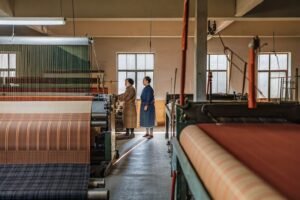
You launched your brand on a promise of sustainability. Your website talks about ethical sourcing and low-impact materials. Your customer reads those words and trusts you. Then a blogger posts a deep dive into the linen supply chain and reveals that some "eco-friendly" flax is grown with heavy pesticide use, processed in water-wasting retting pits, and shipped through opaque middlemen who cannot trace the fiber back to a specific field. Your customer starts asking questions you cannot answer. That panic you feel is the fear of greenwashing exposure. It is a real risk because the textile industry is full of vague eco-claims that crumble under scrutiny.
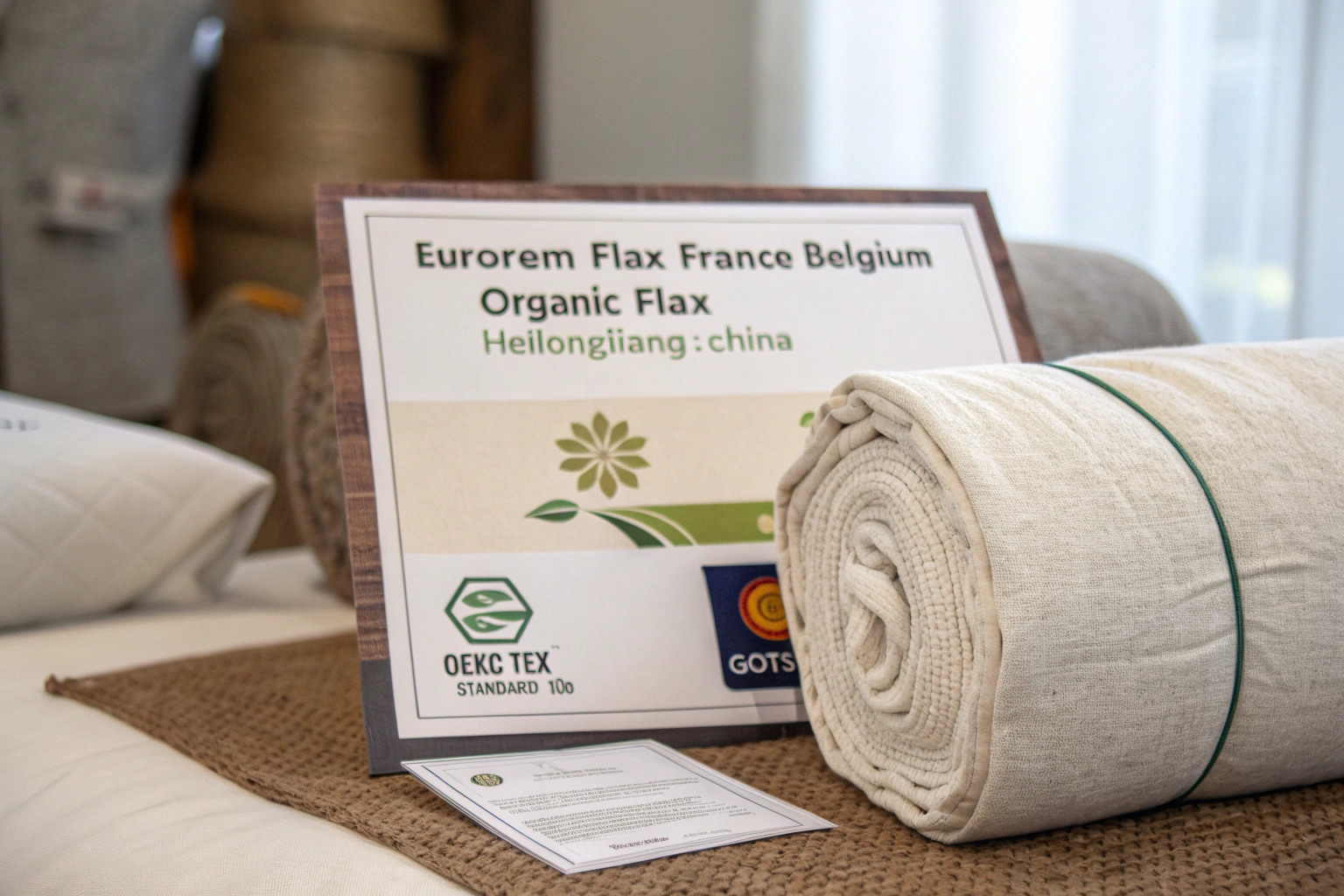
Yes, our linen is genuinely sustainably grown and fully traceable. We source our flax from two certified origins: European Flax certified by the Alliance for European Flax-Linen & Hemp, grown in France and Belgium without irrigation and with minimal fertilizer input, and organically farmed flax from Heilongjiang province in China. We can trace every lot of linen yarn back to the specific growing region, the harvest year, and the retting method. Our supply chain is audited against OEKO-TEX Standard 100, GOTS, and European Flax certification standards. We publish our certifications. We do not just say "green." We prove it.
Sustainability is not a label. It is a chain of custody. Let me walk you through how flax is actually grown, how we process it, and how you can verify every claim I just made with public documents.
How Is Flax Cultivated Without Irrigation Compared To Cotton
The most powerful environmental fact about linen is that flax is a rain-fed crop. It does not need irrigation. This is not a marketing claim that can be twisted. It is an agricultural reality rooted in the plant’s biology and the geography of where it grows. Flax thrives in the temperate maritime climates of Northern France, Belgium, and the Heilongjiang province of China. In these regions, annual rainfall averages 600 to 800 millimeters, which is sufficient for the full growth cycle of the flax plant. Unlike cotton, which requires about 10,000 liters of water per kilogram of fiber in irrigated systems, flax relies almost entirely on what falls from the sky.

What Is The Water Footprint Of Flax Versus Conventional Cotton?
The numbers are dramatic and well-documented. A kilogram of conventional cotton fiber has a total water footprint of roughly 10,000 to 20,000 liters, depending on the region and irrigation method. A significant portion of this water is drawn from rivers and aquifers, contributing to water stress in cotton-growing regions like Xinjiang, Uzbekistan, and parts of India.
A kilogram of flax fiber has a water footprint closer to 2,500 to 3,500 liters. The vast majority of this water is green water, meaning rainwater that falls on the field and is used directly by the plant. Blue water withdrawal from rivers and aquifers is minimal because irrigation is rare in flax cultivation. This means flax does not compete with local communities for drinking water and does not deplete groundwater reserves. This is not a marginal difference. A garment made from European flax uses roughly one-fifth to one-eighth the total water of an equivalent garment made from irrigated cotton. That is a number you can put on a hangtag. It holds up to scrutiny because it is derived from peer-reviewed life cycle assessment data. For the detailed methodology behind these figures, you can read about the comparative water footprint of rain-fed flax cultivation versus irrigated cotton fiber production. The science is solid and widely accepted.
Does Flax Cultivation Require Heavy Pesticide Use?
Flax is naturally resistant to many pests and diseases, which reduces the need for pesticide application compared to more vulnerable crops like cotton. Cotton occupies about 2.5% of the world’s arable land but accounts for an estimated 10% to 16% of global pesticide use. Flax, by contrast, requires relatively little chemical intervention.
The flax plant grows quickly. Its life cycle from seed to harvest is roughly 100 days. During this short window, the plant canopy closes rapidly, suppressing weed growth and reducing the need for herbicides. Common flax pests like the flax flea beetle are managed through crop rotation rather than repeated insecticide spraying. Flax is typically grown in a six to seven-year rotation cycle, meaning the same field will not see flax again for several years. This rotation breaks the pest and disease cycle naturally. The European Flax certification, which governs the fiber we source from France and Belgium, requires that farmers follow integrated pest management protocols and prohibits the use of genetically modified seed. The result is a fiber crop that enters the textile supply chain with a significantly lower chemical load than conventional cotton. To understand the agricultural practice in detail, you can explore how crop rotation and integrated pest management minimize chemical inputs in certified European flax cultivation. It is a system that works with nature rather than against it.
What Certifications Prove Linen Is Sustainably Grown
A claim of sustainability without third-party certification is just a story. I can tell you our flax is grown without irrigation and without pesticides, but why should you believe me? Because independent organizations have audited our supply chain and issued certificates that you can verify online. Certifications are the bridge between a supplier’s promise and a buyer’s trust. We carry three primary certifications that cover different aspects of the sustainability and safety of our linen.

What Does European Flax Certification Guarantee?
The European Flax certification, managed by the Alliance for European Flax-Linen & Hemp, is a premium origin standard. It guarantees that the flax fiber was grown in Western Europe, specifically the coastal belt stretching from Normandy through Belgium and the Netherlands. The certification requires that the flax is grown without artificial irrigation, relying entirely on natural rainfall. It mandates that the fiber is extracted through field retting, a natural process where dew and soil microbes break down the pectin that binds the flax fibers to the woody stalk. No chemical retting agents are permitted.
The certification also requires that every step of the process, from the farmer to the scutching mill to the spinning mill, is audited and traceable. Each certified lot of fiber carries a unique identification number that tracks it through the supply chain. When we sell fabric made from European Flax certified fiber, we can provide the certification number that links your fabric back to the harvest year and the growing region. This is not a generic sustainability claim. It is a geographic and agronomic guarantee enforced by an independent certification body. Brands that market to European consumers often use the European Flax label as a premium differentiation. It tells a story of heritage, terroir, and low-impact agriculture. For the complete standard requirements, you can review the full European Flax certification criteria for sustainable flax fiber cultivation and processing. The public audit reports make the standard transparent.
How Does GOTS Apply To Linen Production?
The Global Organic Textile Standard is the most rigorous certification in the textile industry. It covers the entire production chain, from the field to the finished fabric. For linen, GOTS certification means that the flax was grown on land that has been free from prohibited pesticides and synthetic fertilizers for at least three years. The seeds must be non-GMO. The farming practices must maintain or improve soil organic matter.
GOTS then follows the fiber through every processing stage. Our spinning mill, weaving facility, and dyeing house that handle GOTS-certified linen are audited annually. The auditors check that only approved low-impact dyes and auxiliaries are used. They verify that wastewater is treated properly. They inspect working conditions, including health and safety, fair wages, and freedom of association. GOTS is not just an environmental standard; it is a social standard as well. A GOTS transaction certificate accompanies every shipment of GOTS-certified fabric. This document traces the product from the certified fiber lot through each processing step, creating an unbroken chain of custody. When you buy GOTS-certified linen from us, you receive this transaction certificate. You can use it to substantiate your own GOTS label on your finished garments. For the detailed scope and criteria, you can explore how GOTS certification applies to the organic flax linen supply chain from field to finished fabric. It is the gold standard for organic textile integrity.
How Do You Trace Linen From Field To Finished Fabric
Traceability is the hard part of sustainability. It is easy to buy a certificate once. It is difficult to maintain a system that tracks physical fiber from a specific field to a specific roll of fabric, through multiple processing stages, across different factories, and over several months. We built a digital traceability system for our linen supply chain because we knew that the brands we serve would eventually demand it. The era of generic sustainability claims is ending. The era of digital product passports is beginning.

Can You Trace A Specific Roll Of Fabric Back To The Farm?
Yes, within the scope of the fiber lot. A single roll of linen fabric cannot be traced to a single specific field of a single farmer because flax fibers are blended at the scutching and hackling stages to create a consistent yarn quality. This is true of the entire global linen industry. Traceability operates at the fiber lot level, not the individual stalk level.
A fiber lot represents flax harvested in a specific region during a specific season and processed through a specific scutching mill. Our digital system links the fiber lot identification number to every subsequent processing batch. When the fiber lot is spun into yarn, the yarn batch is assigned a code that references the fiber lot. When the yarn is woven into greige fabric, the weaving batch references the yarn batch. When the greige fabric is finished, the finishing batch references the weaving batch. The QR code on the finished roll brings up this entire chain of custody in a single view. You can see the fiber origin, the harvest season, the spinning date, the weaving date, and the finishing date. For European Flax certified fiber, the unique certification number on our certificate can be cross-referenced with the Alliance’s database. For our Chinese organic flax, we provide GPS coordinates of the growing cooperative and the organic certification number issued by the China Organic Food Certification Center. This is the level of granularity that premium brands require. For a technical explanation of how this works, you can read about digital traceability systems for flax linen supply chains using QR code technology and batch-level lot tracking. The technology exists and we use it daily.
What Is Dew Retting And Why Is It More Sustainable?
Retting is the process that separates the valuable flax fibers from the woody core of the stalk. It is the most critical step in determining the environmental impact of linen production. There are two main methods: dew retting and water retting. Dew retting, also called field retting, is the traditional method used in Western Europe and for our organic Chinese flax. After the flax is pulled from the ground, the stalks are spread in thin layers across the field and left exposed to the weather. Dew, rain, and naturally occurring soil fungi break down the pectin that glues the fiber bundles to the woody shive. The process takes two to six weeks, depending on the weather. No water is consumed. No chemicals are added. The retting is done by nature.
Water retting submerges the flax stalks in tanks of water, often heated to accelerate the process. This consumes water and creates an effluent that is high in organic matter and requires treatment before discharge. Dew retting is slower and more dependent on weather conditions, but its environmental footprint is dramatically lower. The fiber from dew-retted flax often has a slightly more natural, variegated color, which we value for its aesthetic character. All of our European Flax certified fiber is dew-retted by definition, as this is a requirement of the certification. Our Chinese organic flax is also dew-retted in the fields of Heilongjiang during the dry autumn season. For a thorough comparison of these methods, you can explore the sustainability comparison between dew retting and water retting methods for flax fiber processing. The method of retting is one of the most important sustainability indicators in the entire linen supply chain.
How Do We Avoid Greenwashing In Our Linen Marketing
Greenwashing happens when the marketing language is more ambitious than the operational reality. It is easy to write "sustainable," "eco-friendly," and "green" on a website. It is harder to back those words with audited data. I believe the most sustainable marketing is specific, verifiable, and slightly boring. We do not make grand, sweeping claims about saving the planet. We make specific claims about water consumption, chemical inputs, and fiber origin, and we back each claim with a specific document, test report, or certification number.

What Specific Environmental Claims Can You Actually Make?
We make three specific, evidence-backed claims about our linen. First, our flax is rain-fed and requires no artificial irrigation. The evidence is the European Flax certification standard, which mandates this, and the geographic reality that our flax grows in regions where natural rainfall exceeds crop water requirements. Second, our flax is dew-retted without chemical inputs. The evidence is the field audit reports from our farmer cooperatives and the physical observation that our flax fiber has the natural grey and blonde color variegation characteristic of dew-retted fiber. Third, our processing complies with OEKO-TEX Standard 100 and GOTS chemical restrictions, meaning no harmful residues remain on the finished fabric. The evidence is the test reports and transaction certificates we provide with every shipment.
Notice what we do not claim. We do not claim our linen is "carbon neutral" because we have not completed a full scope 3 carbon accounting exercise. We do not claim our linen "saves the planet" because that is marketing fluff, not a measurable claim. We do not claim our linen is "chemical-free" because water and cellulose are chemicals. Specificity is the antidote to greenwashing. When a brand asks me for marketing copy about our linen, I give them the specific claim and the specific evidence. They can publish it with confidence because they know an auditor can verify it. For a guide on how to do this honestly, you can read about how to make specific, verifiable sustainability claims about linen fabric without falling into greenwashing traps. It is a discipline that protects your brand reputation.
How Can A Buyer Independently Verify Our Sustainability Claims?
You do not need to take my word for anything I have written here. You can verify our certifications independently using the certificate numbers on our documents. Take the European Flax certificate number, go to the Alliance for European Flax-Linen & Hemp website, and enter the number in their public verification portal. It will confirm the validity of the certificate and the scope of the fiber. Take our OEKO-TEX Standard 100 certificate number and enter it on the OEKO-TEX website. It will confirm that our fabric is certified for the product class claimed. Take our GOTS scope certificate number and check it on the GOTS public database. It will confirm that our facility is currently certified for the specific processing stages.
If you want to go further, hire a third-party audit firm like SGS or Bureau Veritas to conduct an unannounced inspection of our facility. We have passed these audits for multiple clients. An auditor will review our purchase records, our inventory logs, our production batch records, and our certification documents. They will trace a specific roll of certified fabric from our finished goods warehouse back through our production records to the incoming certified fiber lot. If our traceability system has a gap, the auditor will find it. We welcome this scrutiny because our system is real. A supplier who refuses a third-party traceability audit is hiding a gap between their marketing and their operations. For a practical guide, you can learn how to independently audit a textile supplier’s sustainability claims using certification verification portals and third-party inspections. Trust, but verify.
Conclusion
Sustainable linen is not a marketing story. It is a chain of custody from a rain-fed field to a certified finished fabric. Our flax grows without irrigation in France, Belgium, and Heilongjiang. It is dew-retted by natural processes, not chemical baths. It is spun, woven, and finished in facilities audited to GOTS and OEKO-TEX standards. Every lot is traceable through a digital system that links the finished roll to the fiber origin. We publish our certification numbers. We welcome third-party audits. We do not use vague eco-language that cannot be verified. If you want to build a brand on genuine sustainability and need linen that can withstand the scrutiny of a blogger, a journalist, or a conscious consumer, we can provide the fiber and the paper trail.
Ask Elaine to send you our sustainability documentation package. It includes our current European Flax certificate, our GOTS scope certificate, our OEKO-TEX Standard 100 certificate, and a sample traceability report for a recent production batch. You can verify every document independently before you place an order. Email elaine@fumaoclothing.com with the subject line "Linen Sustainability Documentation." Let us prove that our linen is genuinely grown, not just marketed as green.