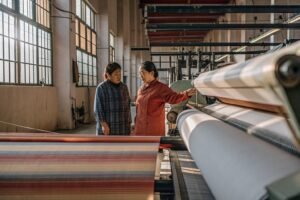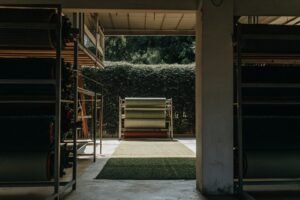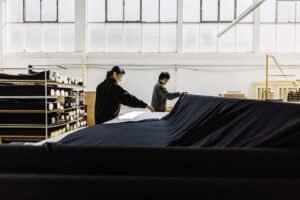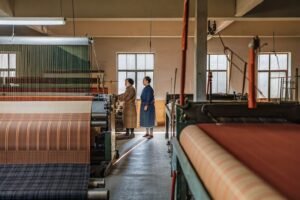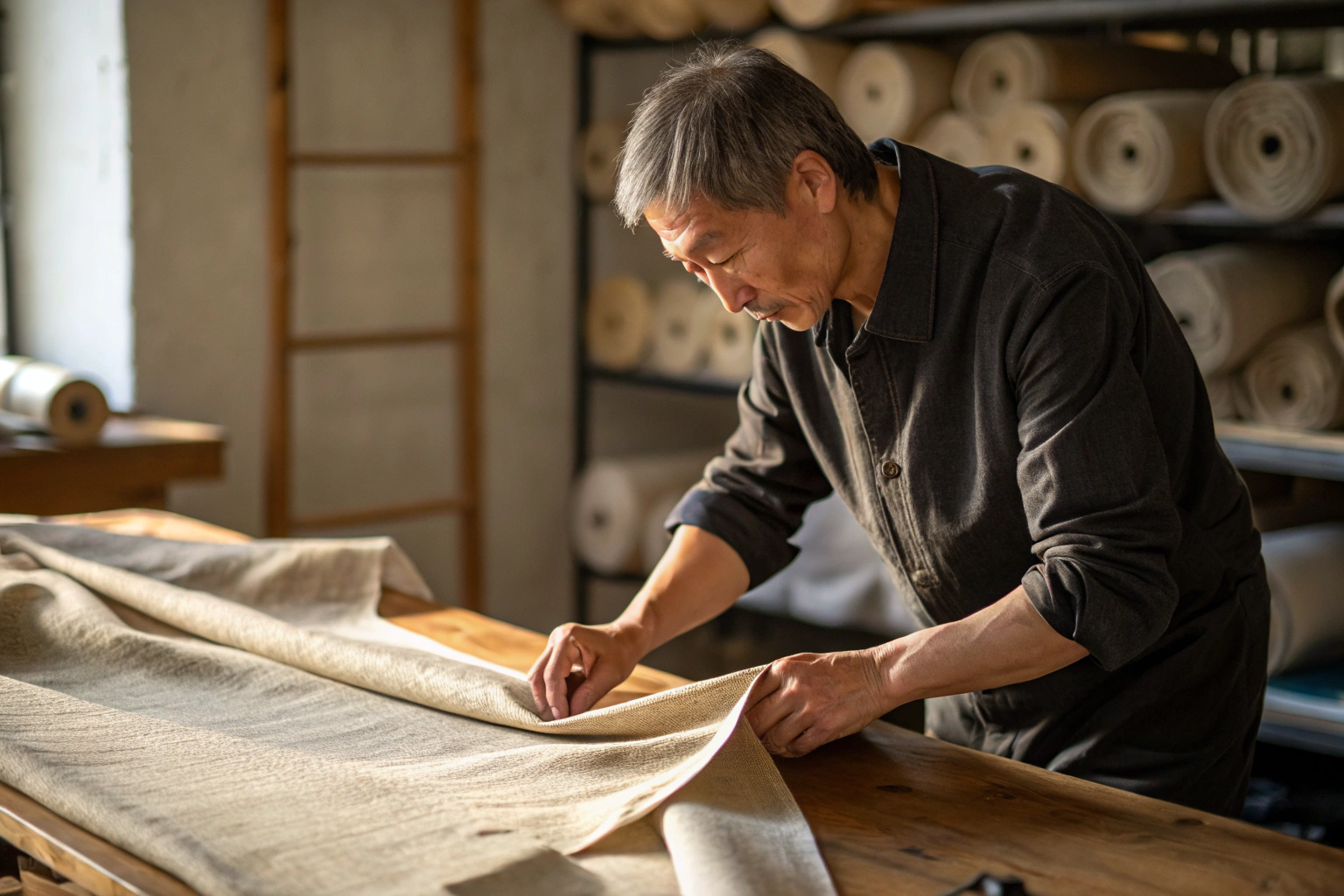
Look, I’ve been shipping fabric out of Keqiao for over twenty years, and I’ve seen trends come and go, but the panic in a designer’s eyes when their linen shipment shows up too late for Fashion Week? That never gets easier to watch. You’ve sourced the perfect European flax vision, but the fabric arrives stiff, the color is off, and the drape looks like a burlap sack. The margin for error shrinks to zero, and the fancy sketch in your portfolio doesn’t translate into a garment that a buyer actually wants to touch.
You don’t need just a mill; you need a partner who treats raw linen like the living, breathing organism it is. Through our vertical setup at Shanghai Fumao, we engineer the softness right from the weaving stage, eliminating the harsh, chemical-heavy breakdowns you usually need to make linen wearable. We control the wash-downs, the sanforizing, and the finishing so your unstructured blazer feels like a second skin on day one, not day 100.
But skipping the pre-production engineering of raw linen is a gamble that costs you more than money—it costs your reputation. This isn’t just about buying a cut-length of fabric. It’s about understanding how raw linen evolves from a stiff agricultural product into a fluid expression of masculine elegance. Let me walk you through the gritty, technical process of how we do it right.
How to Source Premium Raw Linen Fabric Without Shrinkage Issues?
Designing a luxury shirt only to have the seams pucker after the first dry clean is a gut punch. I remember a client from Italy back in 2019 who almost scrapped an entire 5,000-piece resort collection because the off-the-shelf linen they bought had a residual shrinkage of nearly 8%. You lose the tailored fit, and the garment looks cheap instantly.
At Shanghai Fumao, we kill the shrinkage problem before the yarn even hits the loom. We utilize mechanical sanforization and a proprietary relaxation drying process that pre-shrinks the fibers without crushing the natural texture. We guarantee a residual shrinkage rate of under 1.5%, which is industrial gold for pure linen.
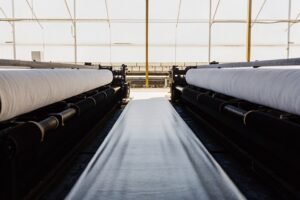
Think of raw linen like a coiled spring. When it touches water, it wants to contract violently. Most mills just sell you the fabric and wish you luck. We don’t. We stretch and compress the fabric using a rubber blanket sanforizing unit under precise steam pressure. It forces the fibers to lock into a relaxed state. That’s the secret. It’s not a chemical fix; it’s pure physics. You get the crisp look of linen without the laundry anxiety.

How does mechanical pre-shrinking preserve linen’s texture better than chemicals?
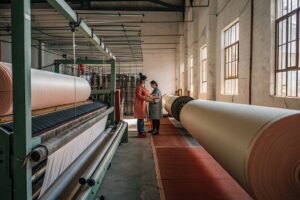
Chemicals coat the fiber. Mechanical force rearranges it. When you use ammonia or heavy softeners to stop shrinkage, you essentially dissolve the lignin that gives linen its signature snap. You get a limp, lifeless rag. I’m not a fan. We use a controlled overfeed mechanism on our stenter frames. We push the fabric forward faster than the chains can stretch it, forcing the warp and weft threads to buckle and relax. It bites into the fabric physically, locking the yarns in place without killing the crisp hand feel. (Here’s a pro tip: if you’re asking a supplier about their sanforization, ask for the "residual shrinkage test results," not just a "pre-shrunk" label).
What are the key tests for durable linen that survives frequent laundering?
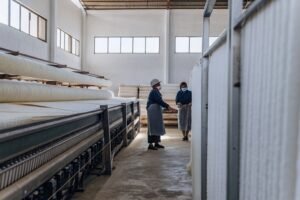
You can’t just believe the lab report someone hands you at a trade show. You need to mimic real-life abuse. In our CNAS-accredited lab, we don’t just do the standard AATCC 135 one-time wash. We run a cycle test of 5 consecutive aggressive washes at 60°C. We measure seam slippage, dimensional stability, and tensile strength after each cycle. You can see the actual standards we adhere to by learning how to accurately predict woven fabric shrinkage for garment manufacturing. It’s a resource I often share with our startup clients. We also insist on a Martindale abrasion test, rubbing the fabric 15,000 times to ensure those elbows and cuffs don’t wear through in a season. You need to look for a supplier who offers a detailed spec sheet, much like the guidelines you’d find if you check ways to understand AATCC textile testing methods for international trade. Don’t settle for a vague "washable" promise.
Why Does Raw Linen Drape Matter for Unstructured Men’s Blazers?
Stiff linen fights the body. Soft linen moves with it. Back in March 2023, an Australian designer sent me a panic email. He had made a beautiful, deconstructed blazer, but the fabric was so boardy it stood up on its own like a tent. He wanted a "relaxed Italian shoulder," but he got a cardboard box. That’s a drape failure.
Drape isn’t about making linen weak; it’s about managing weight and shear rigidity. We use low-twist wet-spun yarns that have a hairy, almost suede-like surface. This creates a natural coefficient of friction that holds a sculptural shape but flows when you move. The secret is in the air-texturizing process we do post-weaving.
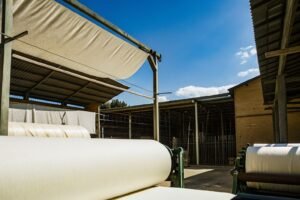
Linen is naturally heavy because the cellulose molecules are densely packed. To make it drape without using polyester (which defeats the purpose of a natural luxury garment), we literally "beat up" the fabric. We pass the greige linen through high-speed AIRO machines. These machines repeatedly throw the fabric against a grid, softening the internal fiber bonds with pure air and mechanical force. The result is a fabric that has memory—it holds a rolled lapel but floats over the chest. It’s the difference between wearing a fabric and fighting it.

How do yarn counts and weaves affect the fluidity of pure linen?
This is a numbers game. If you use a thick 10s Ne (Nm 17) yarn, you’re making a heavy bag. It will never drape, regardless of how much softener you pour on it. For blazers, we strictly recommend 24s Ne to 36s Ne (Nm 40 to Nm 60) yarns. The weave pattern is the unsung hero here. A plain weave has the most interlacing points; it’s crisp but rigid. For drape, we love a 2/2 twill or even a honeycomb weave. The longer floats of the yarn allow the fabric to shear. Visualize a chain-link fence versus a mesh net. The chain link is stiff, the mesh collapses elegantly. That’s the float length difference. You must look at the back of the fabric—if it looks flat and dense, it won’t move well.
What mechanical finishing techniques can transform stiff linen into soft luxury?
Let’s get granular. I have three tools in the shed that work miracles:
| Finishing Machine | Function | Result on Linen |
|---|---|---|
| AIRO® Softener | Continuous rope form beating against grid | 3D crinkle effect, high softness, zero chemical |
| Sueding Machine | Abrasive rollers brush surface nap | Peach-skin touch, reduces the cool, dry hand |
| Compacting Machine | Controlled overfeed via steam | Shrinkage control and bulkiness without pressure |
I don’t rely on silicone oil softeners if I can help it. Silicone feels amazing off the roll, but it washes out and leaves your customer disappointed three months later. Mechanical finishing is permanent. You crush the stiffness out of the plant cells physically.
How to Achieve Rich, Imperfect Colors in Men’s Linen Collections?
A flat, solid Pantone match on linen looks like a cheap plastic tablecloth. I learned this the hard way in 2018 with a New York menswear brand. We nailed the solid navy dye on their first order, but it looked "dead"—no soul, no depth. Linen’s magic lies in its irregular dye uptake.
Linen has a crystalline core and an amorphous surface. Dye penetrates unevenly, creating a natural melange or "strie" effect that polyester can only dream of. We leverage the low dye affinity of linen to our advantage. We don’t fight the inconsistency; we celebrate it through controlled pigment washing and garment dye techniques. At Shanghai Fumao, we call it "engineered imperfection."
You can’t treat linen like cotton. Cotton is a sponge; linen is a straw. We often use a dual-dyeing process. We take a slightly uneven base dye and then over-dye it with a reactive pigment wash. When we then process the fabric through an enzyme wash, the surface color fades slightly, revealing the lighter cellulose core. This creates a micro-shadow effect. It literally mimics the patina of a vintage military jacket, but it’s brand new. That’s the "lived-in" luxury you’re trying to sell at a premium price point.

What is garment dyeing and why does it prevent a cheap, flat finish?
Most mills do piece dyeing—dyeing the flat fabric roll. That’s safe, but boring. For premium menswear, you must consider garment dyeing. You sew the jacket or shirt together in a raw state, then throw the finished garment into the dye bath. The threads around the seams shrink slightly tighter, creating a puckered effect. The dye collects in the folds and stitching holes, creating a darker halo. It gives the garment an instant heirloom feel. It’s risky; you can ruin a whole batch if the temperature isn’t exact. But the visual payoff is massive. You transform a commodity into a curated piece of art.
How do bio-enzyme washes enhance texture for a "worn-in" aesthetic?
Think of bio-enzymes as Pac-Man. They are proteins that eat the tiny fuzz pills (micro-fibrils) sticking out of the linen yarn. In a standard wash, friction rips these pills off unevenly. Enzymes dissolve them selectively. The result is a clean, smooth surface that doesn’t pill, but with a softened edge. We use a neutral cellulase enzyme at 55°C for about 30 minutes in our industrial rotary washers. It removes the "newness" without destroying the fabric strength. It’s a bio-polishing process that gives you that soft, worn-in feel without needing a dozen industrial laundry cycles. It’s like buying a pre-played guitar that sounds instantly better.
When Do You Order Raw Linen Fabric to Hit the Spring/Summer Delivery Window?
Timing kills more fashion brands than bad design. I’m serious. In January 2023, a London startup missed their entire launch window because they didn’t account for the curing time on their coated linen. They assumed fabric ships like Amazon Prime. It doesn’t.
You must calculate backwards from your "in-store" or "online drop" date. A premium linen jacket requires a minimum of 14 weeks just for the fabric if you’re ordering custom greige goods. If you’re buying stock fabric from us, you need to plan for the finishing, testing, and logistics. I always tell my clients: Chinese New Year is not a surprise; it’s a calendar event. If you wake up on January 15th and try to place an order, your fabric won’t leave the port until March. Game over.
You can beat the clock by synchronizing your design calendar with the agricultural cycle of flax. Flax is harvested in July. The best retted fiber hits the spinning mills in September. The freshest, strongest yarn is spun during the autumn months. If you want peak quality, you align your bulk orders with the post-harvest spinning window. I don’t hoard old stock. I time my massive greige production runs to coincide with when the raw material is at its best.

Why is lead time the hidden factor in luxury raw linen sourcing?
Luxury isn’t fast. Raw linen requires "resting." After you weave it, the fabric is full of tension. It needs to sit in the greige warehouse for at least 7 to 10 days to naturally relax. If you skip this, your shrinkage ratio will spike unpredictably down the line. Then you have the finishing—scouring, bleaching, dyeing, sanforizing, calendaring. Each step requires a cooling-down period. Rushing it leads to crease marks that become permanent. I run a strict "no-rush" policy on natural fibers. We’d rather tell you the real lead time than lose your business because the fabric smells like burnt machine oil or looks like a wrinkled mess.
How do Chinese manufacturing peaks and holidays affect your order schedule?
This is non-negotiable for menswear brands. Your Q4 orders (Aug-Oct) compete with winter coat bulk production. Your Q1 orders (Mar-May) compete with summer restocks.
| Season | Factory Load | Advice |
|---|---|---|
| Aug-Oct | Peak season. Dyeing vats are choked. | Place orders 2 weeks early. |
| Nov-Dec | Slower months. | Possible negotiation on minimums. |
| Jan-Feb | Chinese New Year. Ghost town. | Complete all pre-production 6 weeks prior. |
| Mar-May | Secondary peak. High demand. | Lock in fabric greige reservations early. |
The golden rule? Do your lab dips and strike-offs during the holidays. We can often run small sample lots even when the bulk lines are shut down. That way, when the factories roar back to life, your order is ready to cut to the front of the line immediately. It’s about smart product development, not just sourcing.
Conclusion
Raw linen is an honest fabric. It doesn’t hide mistakes. It magnifies them. But when you handle it right—managing the shrinkage mechanics, controlling the drape through brutal physical force, celebrating the imperfect color absorption, and respecting the slow, natural rhythms of textile manufacturing—it becomes the most luxurious armor a man can wear. You aren’t just buying a textile from me; you’re buying the twenty years of headaches I’ve already solved on the factory floor so you don’t have to.
Let’s make something that lasts. If you’re sketching a collection that demands the character only pure European flax can provide, don’t gamble on a faceless warehouse. I’m here to walk you through the weave options and wash-downs personally.
To get an immediate quote on greige or finished linen, or to request our latest lab dip strike-offs for your Spring/Summer mood board, just send the specs directly to our Business Director Elaine. She handles all our key account development and will usually get back to you with a breakdown of costs within a few hours. Reach out to her now at elaine@fumaoclothing.com. Stop designing blind; let’s weave this thing right.