
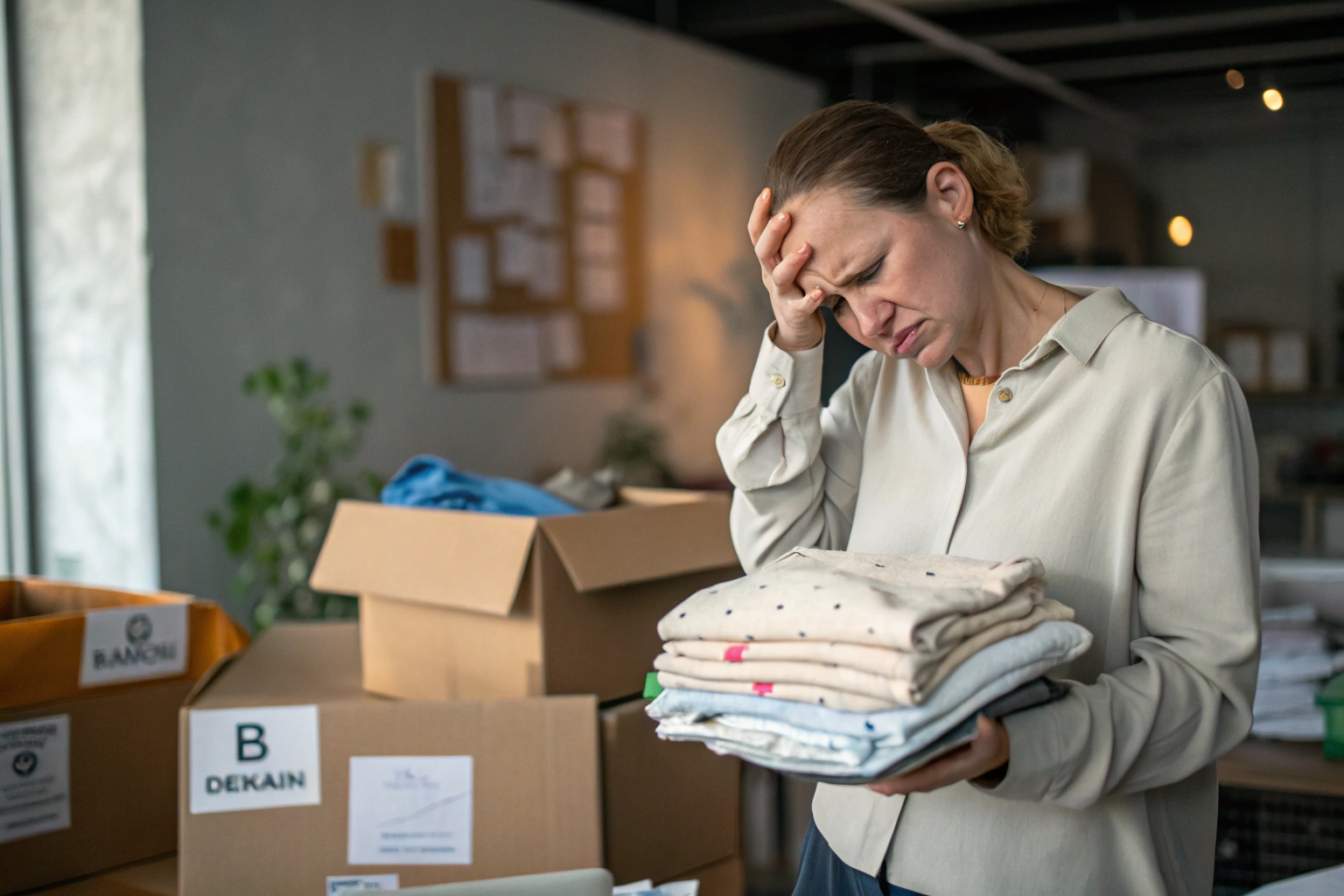
You launched a baby apparel brand with a simple promise: clothes so soft they won’t irritate a newborn’s skin. You sourced organic cotton from a supplier who claimed their fabric was "baby-safe." Three months after launch, the complaints start. A mother in Portland emails you photos of a rash on her infant’s cheek where the collar rubbed. A review on your website says the fabric felt "scratchy after one wash." Your return rate spikes. You pull the collection. You lost $30,000 on fabric you cannot use and a brand reputation you spent a year building. I heard a version of this story from a childrenswear startup in Vancouver in 2023. They switched to our fabric the following season and have been with us ever since.
Shanghai Fumao’s cotton fabrics are engineered to be soft enough for sensitive skin baby apparel. We achieve this through three specific controls: we use long-staple cotton fibers that are naturally smoother and less prone to pilling, we apply a controlled enzyme bio-polishing treatment that removes surface fuzz without chemical irritants, and we certify the finished fabric to OEKO-TEX Standard 100 Class I, which is the strictest certification level reserved for products worn by infants under 36 months. The fabric is tested for over 100 harmful substances, and every batch must pass before it ships.
Softness for baby apparel is not a marketing adjective. It is a measurable physical property with implications for skin health, safety compliance, and brand liability. Let me show you exactly how we engineer softness, how we test it, and how you can verify it before you cut a single onesie.
What Makes Cotton Fabric Soft Enough For Infant Skin
Infant skin is physiologically different from adult skin. It is thinner, more permeable, and more susceptible to mechanical irritation from friction. A fabric that feels acceptably soft to an adult hand can be abrasive against a newborn’s cheek or the inside of a wrist. The softness of a cotton fabric is not a single property but a combination of fiber quality, yarn construction, and surface finish. Understanding these three variables helps you specify fabric that will not irritate a baby’s skin.

How Does Staple Length Affect Fabric Softness?
Cotton fibers, called staples, vary in length. Short-staple cotton, typically under 1.1 inches, produces yarn with many protruding fiber ends. These ends stick out from the yarn surface and create a rough, fuzzy texture that can feel abrasive against sensitive skin. Short-staple cotton also pills more readily because the short fibers are not well-anchored in the yarn and work their way to the surface during washing and wearing, forming small tangled balls of fiber that increase friction.
Long-staple cotton, typically 1.25 inches and above, produces yarn with fewer fiber ends per inch. The longer fibers can be spun with a higher twist that tucks the ends into the yarn body, creating a smoother surface. We use long-staple cotton for our baby apparel fabrics, sourced from Xinjiang and from GOTS-certified organic suppliers. The difference is tactile. Run your hand over a short-staple cotton T-shirt and you feel a slight grit. Run your hand over a long-staple cotton onesie and you feel a smooth, almost slippery surface. This is the starting point for baby-safe softness. For a detailed comparison of fiber properties, you can read about how cotton staple length affects fabric smoothness and pilling resistance in sensitive skin applications. The fiber is the foundation.
What Is Enzyme Bio-Polishing And How Does It Remove Scratchiness?
Even long-staple cotton has some surface fuzz. The mechanical action of spinning, weaving, and knitting raises tiny fiber ends that create a slightly rough hand feel. Enzyme bio-polishing is a finishing process that removes this surface fuzz using a biological catalyst rather than a harsh chemical.
We use a cellulase enzyme, which is a protein that specifically breaks down cellulose, the material that cotton fibers are made of. The enzyme is applied to the fabric in a warm water bath. It attacks the small, protruding fiber ends that are only weakly attached to the yarn surface. It does not attack the main yarn body because the enzyme molecules are too large to penetrate the tightly twisted yarn structure. The result is a fabric surface that is physically smoother. The fiber ends are dissolved away. The fabric feels cooler and silkier against the skin. This process uses no chlorine bleach, no caustic soda, and no synthetic softeners that could leave a chemical residue. The enzyme itself is washed out completely during the rinse cycle. The softness is achieved by removing material, not by coating the fabric with something that could wash off or cause an allergic reaction. For a technical overview of this process, you can explore how cellulase enzyme bio-polishing improves cotton fabric surface smoothness for baby garments without chemical softeners. It is a clean technology.
What Certifications Prove A Fabric Is Baby-Safe
A supplier can tell you their fabric is baby-safe. A certification proves it. For baby apparel, the most recognized and rigorous standard is OEKO-TEX Standard 100 Class I. This is not a generic certification. It is a specific product class designed for items worn by infants up to 36 months. The testing requirements are stricter than Class II, which covers adult apparel, and far stricter than Class IV, which covers home textiles. You should understand the difference because a Class II certification does not make a fabric baby-safe.

What Is OEKO-TEX Standard 100 Class I Certification?
OEKO-TEX Standard 100 is a global testing and certification system for textile products at all processing stages. A fabric bearing the OEKO-TEX label has been tested by an independent institute for harmful substances. Class I is the most stringent category. It covers products for babies and toddlers up to 36 months. The testing requirements are based on the physiological reality that infants put fabric in their mouths, their skin is more permeable, and their body weight is lower relative to their fabric exposure.
A Class I certified fabric is tested for a long list of substances including formaldehyde, heavy metals, pesticides, chlorinated phenols, phthalates, and azo dyes that can release carcinogenic aromatic amines. The test limits for Class I are significantly lower than for adult apparel. For example, the formaldehyde limit for Class I is "not detectable," meaning below 16 parts per million, while Class II allows up to 75 ppm. A fabric that passes Class II might still contain a formaldehyde level that irritates infant skin. We test every baby fabric batch to the Class I standard through our CNAS-accredited laboratory and through independent OEKO-TEX partner institutes. For the complete list of tested substances and limits, you can read about the specific OEKO-TEX Standard 100 Class I testing criteria for infant textile products. The standard is publicly documented.
Is GOTS Organic Cotton Automatically Safe For Babies?
GOTS, the Global Organic Textile Standard, certifies that the cotton was organically farmed and that the processing met strict environmental and social criteria. It also includes chemical residue limits. However, GOTS certification does not automatically guarantee that the fabric is soft or comfortable for infant skin. GOTS is primarily an organic agriculture and processing standard, not a comfort standard.
A GOTS-certified cotton fabric can still be made from short-staple organic cotton that feels rough. It can still be woven in a dense construction that lacks drape. It can still skip the enzyme bio-polishing step because GOTS does not mandate a specific hand feel. The organic certification ensures the fabric is free from harmful pesticide residues and restricted processing chemicals. It does not ensure the fabric will not mechanically irritate a baby’s skin. The ideal baby fabric combines GOTS organic certification for chemical purity with long-staple fiber and enzyme bio-polishing for mechanical softness. These three attributes address different aspects of baby safety: chemical safety, friction safety, and comfort. For a clear explanation of the difference, you can explore the distinction between GOTS organic certification and mechanical softness requirements for infant apparel safety. Both matter, and they matter for different reasons.
How Do You Test Cotton Softness Objectively
"Soft" is a subjective word. What feels soft to me may feel slightly rough to you, and what feels soft to an adult hand may still be too abrasive for an infant’s cheek. To build a reliable specification for baby fabric, you need objective measurements that correlate with the subjective experience of softness. We use two primary objective tests: bending length and surface friction coefficient.

What Is A Bending Length Test And What Number Indicates Softness?
The bending length test, standardized as ASTM D1388, measures the stiffness of a fabric by extending a strip of fabric horizontally over the edge of a platform until the strip bends under its own weight and touches a angled plane below. The length of fabric that overhangs the edge at the point of contact is the bending length. A shorter bending length means a more flexible, drapable, and subjectively softer fabric. A longer bending length means a stiffer, less flexible fabric.
For baby apparel, we target a bending length of 2.0 to 2.5 centimeters in the warp direction for lightweight woven cotton fabrics. Below 2.0 cm, the fabric may feel flimsy and lose its shape. Above 2.5 cm, the fabric begins to feel stiff and papery against the skin. This range provides enough body for a garment to hold its shape while remaining pliable enough to move with the baby’s body and not create pressure points. We measure bending length on every development sample and every bulk batch. If a batch falls outside the target range, it is re-finished or rejected. For the full test method, you can read about the ASTM D1388 bending length test procedure and the typical stiffness values for soft cotton baby apparel fabrics. The number replaces the adjective.
How Do You Measure Surface Friction Against Infant Skin?
Surface friction is measured with a Kawabata Evaluation System surface tester, or a simpler instrument called a sled friction tester. The principle is the same. A small metal sled covered with a standardized silicone skin simulant is dragged across the fabric surface at a controlled speed and pressure. A force sensor measures the resistance to sliding. The result is a coefficient of friction, abbreviated as MIU.
A lower MIU value means a smoother, slipperier surface that produces less friction against the skin. For baby apparel, we target an MIU between 0.15 and 0.25. Below 0.15, the fabric may feel oily or artificial. Above 0.25, the fabric begins to feel rough and drag against the skin, which can contribute to friction rashes in areas like the inner elbow and the neck. This test is particularly important for fabrics that will be used in close-fitting garments like onesies and sleep sacks, where the fabric is in constant contact with the skin. We include the MIU value on our technical data sheet for baby apparel fabrics so you can compare our fabric to other suppliers’ fabrics on an objective basis. For a deeper understanding of the measurement, you can explore how the Kawabata surface friction test quantifies fabric smoothness for sensitive skin textile applications. The friction number is a powerful specification tool.
What Design Considerations Matter For Baby-Safe Fabric
Soft fabric is the starting point. How you design the garment around that fabric determines whether the final product is truly baby-safe. The best fabric in the world can still cause irritation if the seam construction is wrong, the label is placed poorly, or the fabric choice is inappropriate for the climate. I work with baby apparel brands to optimize not just the fabric specification but the design integration between the fabric and the garment.

Should I Use Seamless Or Flat-Seam Construction With Soft Cotton?
Flat-seam construction is the standard for baby apparel because it minimizes bulk and protrusion against the skin. A traditional overlock seam creates a raised ridge of fabric and thread on the inside of the garment. When a baby lies on that seam, the ridge presses into the skin and can cause irritation, particularly in the side seam and shoulder seam areas where body weight is concentrated.
Flatlock stitching, also called flat seams, creates a seam where the fabric edges butt together and the stitching lies flat on both the inside and the outside of the garment. There is no ridge. The seam feels smooth to the touch from either side. We recommend flatlock construction for all baby garments made with our soft cotton fabrics, particularly for onesies and sleepwear. The fabric softness and the seam construction work together. A soft fabric with a bulky seam still irritates. A flat seam with a rough fabric still irritates. Both must be right. For more on this topic, you can read about seam construction best practices for infant apparel and how flatlock stitching reduces skin irritation compared to overlock seams. The seam is as important as the fabric.
How Does Fabric Weight Affect Baby Garment Safety?
Fabric weight matters for baby safety in two ways: thermal comfort and entanglement risk. A fabric that is too heavy can cause overheating, which is a risk factor for Sudden Infant Death Syndrome in sleepwear. A fabric that is too light and loosely woven can create loose threads that wrap around tiny fingers or toes.
For baby apparel, we recommend a fabric weight between 120 and 180 GSM for woven fabrics, and between 150 and 200 GSM for knit fabrics. This weight range is light enough to be breathable and prevent overheating, but substantial enough to maintain structural integrity and resist tearing. For sleep sacks and swaddles, we recommend the lower end of this range, around 120 to 150 GSM, to minimize the risk of overheating. For outerwear like baby jackets and pants, we recommend the upper end, around 180 to 200 GSM, for durability. We also recommend avoiding loose weaves like gauze or mock-leno for baby garments because the open structure can catch small fingers. A plain weave or a fine twill at the recommended weight provides the right balance of breathability and safety. For guidelines on this topic, you can explore the recommended fabric weight and weave structure considerations for safe infant sleepwear and apparel. The weight specification is a safety parameter.
Conclusion
Soft cotton for sensitive skin baby apparel is a specification, not a slogan. It starts with long-staple cotton fibers that produce a naturally smoother yarn surface with fewer protruding fiber ends to irritate the skin. It continues with enzyme bio-polishing that removes residual surface fuzz using a clean biological process that leaves no chemical residue. It is verified by OEKO-TEX Standard 100 Class I certification, the strictest chemical safety standard for infant products, and by objective physical measurements of bending length and surface friction. And it is integrated into garment designs that use flatlock seams and appropriate fabric weights to eliminate mechanical irritation points. The result is a fabric that is measurably soft, chemically safe, and mechanically gentle against the thinnest, most sensitive skin on earth.
If you are developing a baby apparel line, ask Elaine to send you our Infant Apparel Fabric Kit. It includes swatches of our soft cotton fabrics in the recommended weight range, our OEKO-TEX Class I certificate, and a technical data sheet with bending length and surface friction measurements for each fabric. You can touch the fabric, review the certifications, and compare the objective softness data to your current supplier. Email elaine@fumaoclothing.com with the subject line "Baby Apparel Fabric Kit." Let us make sure your next collection is soft enough for the skin that matters most.








