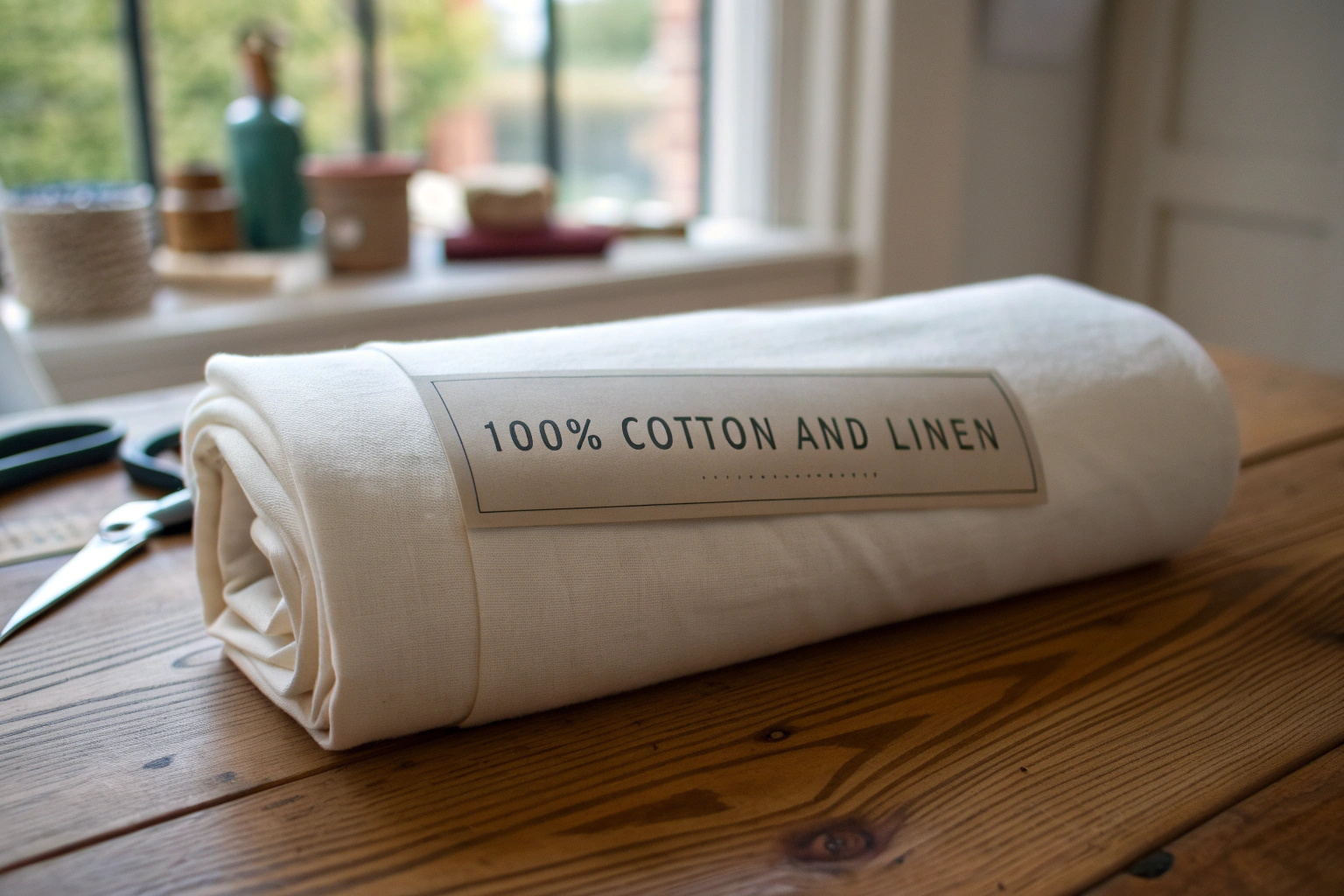
You found the perfect cotton-linen fabric from our mill. The quality is beautiful. The price works for your margin. You have a vision for a brand story around this fabric—maybe a name like "Coastal Weave" or "Heritage Flax." You want to put your own label on it and sell it as your exclusive textile. But then a quiet voice asks: is that legal? Will I get sued? Will customs seize my shipment for mislabeling? I have talked to designers who were terrified to rebrand fabric because they heard horror stories about FTC fines and competitor lawsuits.
Yes, you can legally rebrand Shanghai Fumao’s cotton linen fabric under your own brand name in the United States, as long as you comply with the Federal Trade Commission Textile Rules for fiber content disclosure and country of origin marking. You do not need our permission to put your brand name on our fabric. The fabric is a component material, not a finished consumer product with a trademarked brand identity. You are legally acting as a private labeler when you repackage or relabel the fabric under your own brand. But you must still disclose that the fabric is made of cotton and linen, and you must state the correct country of origin.
Rebranding is a legal process, not a creative one. The law cares about transparency to the consumer, not about who designed the fabric. Let me walk you through exactly what the FTC requires, how to handle country of origin marking, and how to build a brand story around our fabric without crossing any legal lines.
What Are The FTC Textile Labeling Rules For Rebranded Fabric
The Federal Trade Commission enforces the Textile Fiber Products Identification Act, which is codified in 16 CFR Part 303. This law requires that every textile product sold in the United States carries a label stating the fiber content by percentage, in descending order of predominance, using the generic fiber names recognized by the FTC. This label must be attached to the product at the point of sale. The law applies whether you manufactured the fabric yourself or bought it from a mill and rebranded it.

Do I Need To Disclose The Original Manufacturer On My Label?
No. The FTC Textile Rules require you to disclose the fiber content and the country of origin, but they do not require you to disclose the name of the mill that wove the fabric. You are permitted to put your own brand name on the label as the responsible party. The legal term for this is "private labeling." You, the company introducing the fabric into the U.S. market, are considered the manufacturer or marketer under the FTC rules, even though you did not physically weave the fabric. Your brand name appears on the label as the company that is making the fiber content and origin claims.
However, this does not mean you can claim you manufactured the fabric in the USA. The country of origin must be the country where the fabric was woven, which in our case is China. You can say "Imported by Coastal Weave" or "Manufactured in China for Coastal Weave" or simply "Made in China" alongside your brand label. You cannot say "Made in USA" or "Handcrafted in California" if the fabric itself was woven in China. The FTC actively enforces false origin claims, and the penalties are significant. For the complete regulatory text, you can read a summary of the FTC Textile Fiber Products Identification Act requirements for private labeling and rebranding imported fabric. The rules are clear and publicly available.
What Fiber Names Must I Use On A Cotton-Linen Label?
The FTC maintains a list of approved generic fiber names. You must use "Cotton" for cotton. You must use "Linen" or "Flax" for linen. You cannot invent a proprietary fiber name like "AquaLinen" or "EcoFlax" and use it as the sole fiber identification. You can use a trademarked brand name for the fabric as a whole, but the fiber content disclosure must still use the approved generic names.
For example, a compliant label could read: "Coastal Weave Fabric – 55% Linen, 45% Cotton – Made in China." The brand name "Coastal Weave" is your trademark. The fiber names "Linen" and "Cotton" are the FTC generic names. Both are present, and both are accurate. The percentages must total 100%, and they must be listed in order of predominance by weight. If the fabric has any functional finishes that are present at 5% or more by weight, such as a heavy resin coating, those must also be disclosed. Our standard cotton-linen fabrics do not contain any added finishes that trigger this requirement, but if you apply your own finishing treatments after purchase, you must account for those on your label. For a complete guide to the naming conventions, you can explore the FTC list of approved generic fiber names and labeling requirements for natural fiber blend textile products. The vocabulary is legally defined.
How Do I Handle Country Of Origin Marking For Customs
Country of origin marking is a separate legal requirement from fiber content labeling, and it is enforced by US Customs and Border Protection, not the FTC. Every imported product must be marked with its country of origin in a conspicuous, legible, and permanent manner. For fabric, this typically means a label sewn into the selvedge or a sticker on the roll, but the requirement extends through the supply chain. If you rebrand our fabric and sell it as cut yardage to home sewers, the yardage itself must be marked. If you manufacture it into finished garments, the garment label must carry the origin.

Can I Say "Designed In USA" If The Fabric Is Chinese?
This is a gray area that requires careful handling. You can say "Designed in USA" on your label or marketing materials if the design work—the selection of the fabric, the creation of the pattern, the branding—was genuinely done in the United States. However, this phrase must not imply that the fabric itself was made in the USA. The country of origin marking "Made in China" must still be present, and it must be at least as prominent as the "Designed in USA" claim.
The FTC and CBP are both sensitive to "Designed in USA" claims that function as disguised origin claims. If you put "Designed in Portland" in large gold foil on the front of a hangtag and "Made in China" in 6-point type on the back, a regulator may view this as a deceptive practice. The safest approach is to keep the "Made in China" marking on the same tag, in close proximity to any design claim, and in a comparable font size. For example, "Designed in Portland, OR – Made in China" on a single line in the same typeface is clear and likely compliant. For the detailed enforcement guidance, you can read about US Customs and Border Protection country of origin marking requirements for imported textiles and the rules for qualified origin claims. This is an area where a consultation with a customs attorney is worth the fee.
Does The Country Of Origin Change If I Dye Or Print The Fabric In The USA?
Yes, potentially. The country of origin for textile products is determined by the place where the fabric is substantially transformed. If you buy our greige fabric and you dye it, print it, and finish it in a US facility, you may have transformed the fabric sufficiently to change the country of origin from China to the United States. The legal test is whether the processing in the USA creates a new and different article of commerce with a new name, character, or use.
This is a complex legal determination that depends on the specific facts of the processing operation. Simple repackaging or relabeling does not change the origin. Cutting and sewing greige fabric into pillowcases probably changes the origin. Dyeing and finishing bulk greige yardage sits in a middle ground that has been the subject of CBP rulings. If you plan to do significant processing of our fabric in the USA and you want to label the finished product as Made in USA, you need a binding ruling from CBP specific to your operation. I am not an attorney, and this is not legal advice. But I want you to know the possibility exists. For an exploration of the legal concept, you can explore how substantial transformation applies to textile processing for country of origin determination under US customs law. The right legal counsel can guide you through a ruling request.
Can I Trademark My Own Fabric Collection Name
Building a brand around our fabric is smart business. A proprietary collection name like "The Nomad Series" or "Pacific Linen Blend" creates a point of differentiation that commodity fabric cannot offer. You can trademark these names to protect your investment in the brand story and prevent competitors from using the same or similar names. Trademark law is separate from FTC labeling law, and navigating both correctly gives you a legally defensible brand position.

Can I Trademark A Fabric Blend Name Like "LinoCotton"?
You cannot trademark a descriptive or generic term. "LinoCotton" is a combination of two generic fiber names. It directly describes the fiber content of the product. Trademark law prohibits the registration of marks that are merely descriptive of the goods. You cannot claim exclusive rights to a name that all of your competitors need to use to describe their equivalent products.
However, you can trademark a suggestive or arbitrary name that does not directly describe the fabric. "Heritage Flax" is likely protectable because "Heritage" suggests quality or tradition without directly describing the fiber content. "The Nomad Series" is protectable because it is arbitrary; it has no inherent connection to linen or cotton fabric. The stronger the brand name, the further it moves away from descriptive terms. The best fabric collection names evoke a feeling or a story rather than a specification. If you want to build a legally protected brand, invest in a distinctive, non-descriptive name and use it consistently on your labels, your website, and your marketing materials. For guidance on building this strategy, you can read about trademark protection strategies for private label textile collections and fabric brand names in the US market. A trademark attorney can conduct a clearance search and file your application.
Do I Need A License Agreement With The Mill To Rebrand?
No, you do not need a license agreement from Shanghai Fumao to rebrand our fabric. The fabric is a physical good that you purchased. Once you own it, you can resell it under your own brand name, subject to the FTC labeling rules discussed earlier. We do not impose any contractual restrictions on the branding or rebranding of our fabrics. Our role ends at the sale of the fabric. Your role as the brand builder begins.
There is one exception to this general rule. If we develop a custom fabric for you—a specific weave, a specific color, a specific finish that we created at your request and for your exclusive use—you may want a written agreement that confirms your exclusive rights to that development. This is not a legal requirement for rebranding, but it is a business protection that prevents us from selling your custom development to your competitors. We are happy to sign a mutual exclusivity agreement for custom developments. For standard stock fabrics, no agreement is needed. You buy it, you brand it, you own it. For more on the business arrangement, you can explore the typical relationship between textile mills and private label fabric brands regarding ownership, exclusivity, and rebranding rights. Clarity upfront prevents misunderstandings later.
How Do I Build A Brand Story Around Fumao Fabric Ethically
Brand building is storytelling. Your customer buys the fabric, but they fall in love with the story. The story can include the origin of the fiber, the craftsmanship of the weaving, and your design vision. The ethical line is that the story must be true. You cannot invent a false provenance. You cannot claim the fabric was handwoven on antique looms if it was produced on modern air-jet machines. Authenticity sells, and inauthenticity eventually gets exposed.

Can I Say The Fabric Is "Woven In A Small Family Mill"?
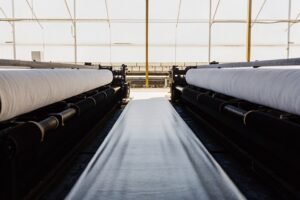
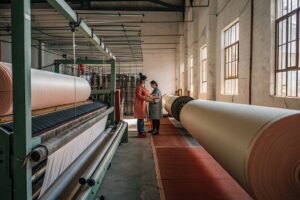
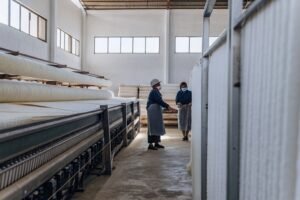
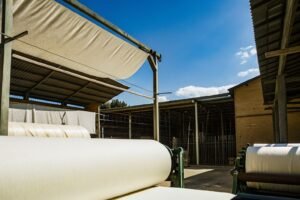
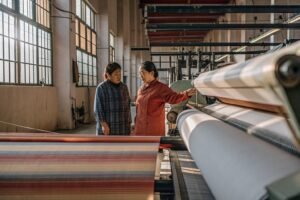
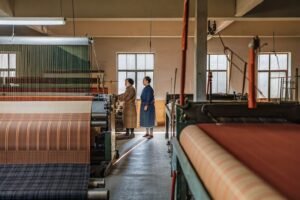
If you are buying from Shanghai Fumao, no. We are a substantial industrial operation with a large-scale weaving factory, multiple production lines, and a professional workforce. We are not a small family mill, and describing us as such would be false. However, there are true stories you can tell. You can say the fabric is "woven in the Keqiao textile district, the heart of China’s textile industry." You can say it is "produced in a mill with over 20 years of expertise." You can say it is "dyed with OEKO-TEX certified dyes" or "finished with an enzyme wash for a soft hand feel." These are factual statements that can be verified.
The consumer does not need to know every operational detail, but the story you choose to tell must be factually supported. I am happy to provide you with accurate information about our mill, our processes, and our certifications to fuel your brand narrative. Use that information. Do not make up a romantic fiction that falls apart when a journalist sends an email asking for verification. The truth is usually interesting enough. A 20-year-old mill in the world’s largest textile cluster, weaving on high-speed air-jet looms with GOTS-certified organic linen, is a good story. It does not need to be a small family mill to be compelling. For guidance on this, you can read about how to ethically market the origin and production story of your textile supply chain without fabricating provenance. Authentic stories build lasting brands.
How Do I Credit The Mill Without Losing My Brand Identity?
You can credit the mill in a way that strengthens your brand rather than dilutes it. The transparency trend in fashion is growing. Consumers want to know where their clothes come from. A brand that says "Fabric sourced from Shanghai Fumao, Keqiao, China" on its website is positioning itself as transparent, ethical, and confident. It is not diminishing the brand. It is adding a layer of trust.
You do not need to put the mill’s name on the garment label. The label is for the FTC-required fiber content and origin. The mill credit goes in the brand storytelling space: the website, the social media, the hangtag copy, the lookbook. You can say "We partner with Shanghai Fumao, a textile manufacturer in China’s Keqiao district" and then pivot immediately to your design vision: "We select their finest linen-cotton blends and transform them into garments that feel like heirlooms." The mill is the supporting actor, not the lead. Your brand is the star. This balanced approach satisfies the demand for transparency without turning your brand into a reseller of someone else’s product. For a practical guide, you can explore strategies for crediting your textile supply chain partners in brand storytelling to build consumer trust without diluting brand equity. The most admired brands are open about their supply chain.
Conclusion
Rebranding Shanghai Fumao’s cotton linen fabric is completely legal in the USA, and it is a proven path to building a distinctive apparel or home textile brand. You must comply with the FTC Textile Rules by labeling the fiber content with approved generic names in descending order of predominance. You must comply with CBP country of origin marking requirements by stating "Made in China" clearly and conspicuously. You do not need to disclose our company name on your label, and you do not need a license agreement to rebrand our standard stock fabric. You can trademark a distinctive, non-descriptive collection name. You can build a compelling, truthful brand story around the fabric using the factual information we provide about our mill and our processes. The law is not a barrier. It is a framework that protects both you and your customer.
If you are ready to develop a private label fabric program, contact Elaine. Tell her your brand vision, your target customer, and the type of cotton-linen fabric you are looking for. She can provide you with our standard stock options, or we can develop a custom fabric exclusive to your brand with a written exclusivity agreement. We can also provide the technical documentation you need for FTC and CBP compliance, including fiber content test reports and country of origin certificates. Email elaine@fumaoclothing.com with the subject line "Private Label Rebranding Inquiry." Let us provide the fabric. You build the brand.