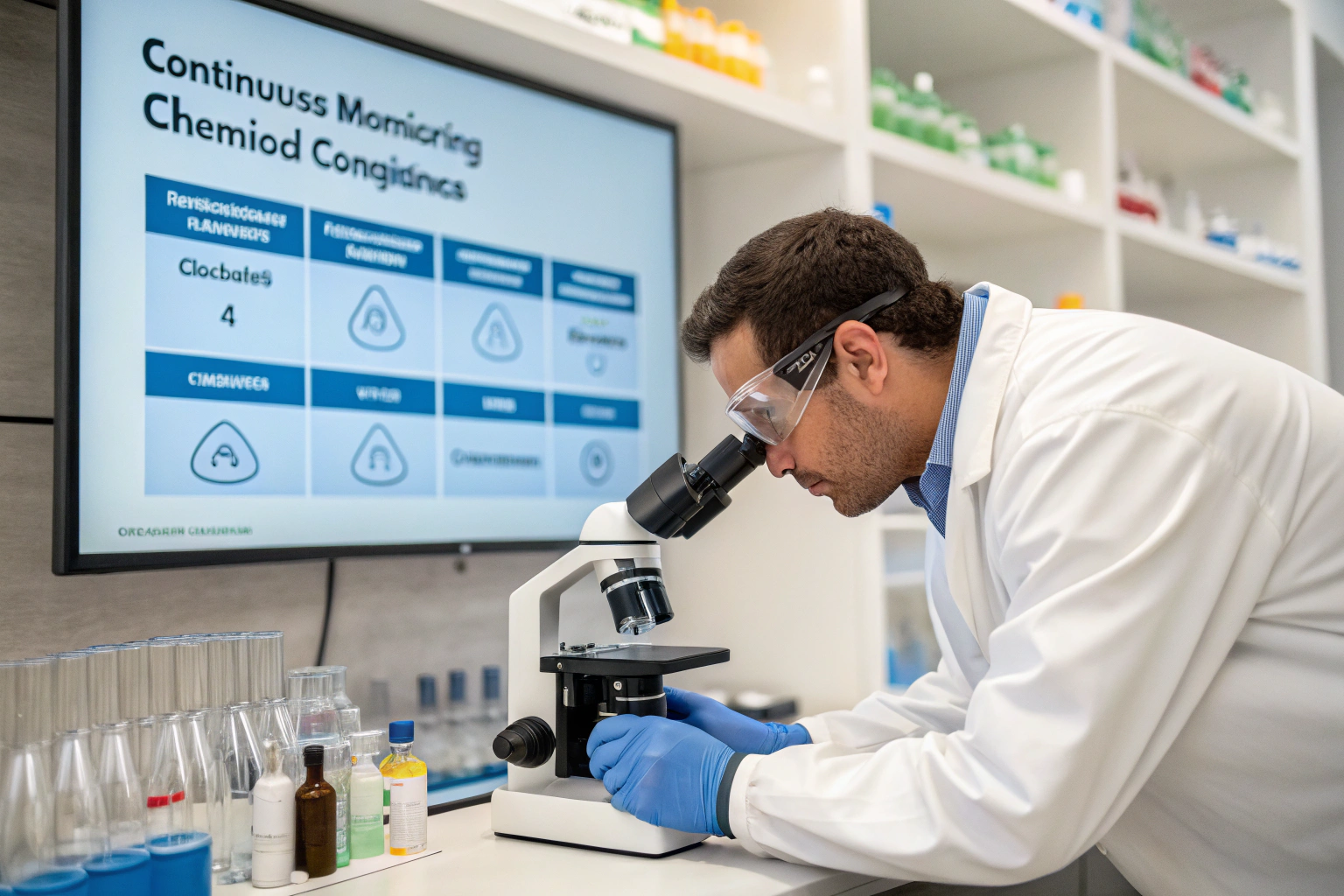
You ship a beautiful collection of baby rompers to a boutique in Berlin. The fabric is soft, the prints are adorable, the stitching is flawless. But German customs pulls the shipment for a random chemical test. A week later, you get the news: the fabric contains traces of nonylphenol ethoxylates (NPEs) at 120 parts per million—above the EU’s 100 ppm limit. Your entire shipment is rejected at the border. You can’t sell it. You can’t even donate it without a hazardous waste classification. Your €15,000 order is now a liability, and your brand’s name is flagged in the EU’s RAPEX rapid alert system for dangerous products. This nightmare happens to brands that don’t understand that "soft" and "safe" are two completely different standards in the European market.
At Shanghai Fumao, our fabrics are engineered from the fiber stage to pass the European Union’s most stringent chemical regulations. We don’t just "meet" the minimum legal threshold. We design our dye recipes, our finishing auxiliaries, and our printing pigments to comply with REACH Annex XVII, the OEKO-TEX Standard 100 Class I (the strictest, for baby products), and the ZDHC Manufacturing Restricted Substances List (MRSL) Level 3. This means our fabrics are tested for over 350 harmful substances—from carcinogenic azo dyes that release restricted amines, to heavy metals like lead and cadmium, to endocrine-disrupting phthalates and chlorinated phenols. We don’t guess at compliance. We test every dyelot in our CNAS-accredited lab and verify the results with annual third-party certifications from SGS and Bureau Veritas.
But chemical compliance isn’t a static checklist. The regulations evolve. A substance that was legal last year gets restricted this year. A limit value drops from 100 ppm to 50 ppm. If your supplier isn’t actively tracking these changes—and we track them obsessively—your next shipment could be the one that gets flagged. I’m going to break down exactly which standards we pass, what each standard covers, how we test for compliance, and why choosing a supplier who owns the chemistry (instead of outsourcing it to a third-party dyeing house with unknown chemical inputs) is the only way to sleep soundly at night when your goods are on a container ship headed for Rotterdam.
What Is the REACH Regulation and How Does It Apply to Imported Textiles?
REACH stands for Registration, Evaluation, Authorisation, and Restriction of Chemicals. It’s the European Union’s flagship chemical safety regulation, enacted in 2007, and it applies to every textile product sold in the EU, regardless of where it was manufactured. If you import fabric from China and sell it in France, REACH applies to you. The regulation is massive—over 800 pages—but for textile importers, the most critical section is Annex XVII, which lists specific restricted substances and their maximum allowable concentrations in consumer products.
Annex XVII is a living document. As of 2025, it restricts over 70 substance categories in textiles. The heavy hitters for our industry include: azo dyes that can release any of 24 carcinogenic aromatic amines (limit: 30 mg/kg), pentachlorophenol (PCP) and tetrachlorophenol (TeCP) used as anti-mold agents (limit: 0.5 mg/kg each), organotin compounds like TBT and DBT used as biocides (limit: 1 mg/kg as tin), nonylphenol ethoxylates used as detergents (limit: 100 mg/kg), and formaldehyde used in anti-wrinkle finishing (limit: 75 mg/kg for direct skin contact, 30 mg/kg for baby wear). There’s also the recent addition from 2020 restricting 33 CMR substances—chemicals classified as Carcinogenic, Mutagenic, or toxic to Reproduction—in clothing and textiles. If your fabric has been treated with a formaldehyde-based easy-care resin and the residual formaldehyde is above 75 ppm, you’re in violation. Period.

How Do We Ensure Our Dyes and Auxiliaries Comply With the REACH Restricted Substance List?
The dye supply chain is where most REACH violations originate. A cheap disperse dye from an uncertified chemical supplier might contain restricted amines as manufacturing impurities, even if the dye itself isn’t one of the banned azo types. The factory using that dye might not even know the impurity is there until a test result comes back positive. We’ve eliminated this risk by vertically controlling our dye sourcing. Our cooperative dyeing facility only purchases dyes and auxiliaries from a pre-approved vendor list of five global chemical companies—including Huntsman, Archroma, and Dystar—all of whom provide full REACH compliance declarations and Safety Data Sheets (SDS) for every batch.
When a new dye lot arrives at our facility, our in-house lab doesn’t just trust the supplier’s certificate. We run a random sample through a gas chromatography-mass spectrometry (GC-MS) machine to screen for the 24 restricted amines. This is a £60,000 piece of equipment that most fabric trading companies don’t own—they rely on external testing once a year, which is useless for catching batch-to-batch contamination. We test every lot of black, navy, red, and brown dyes specifically, because these dark and intense shades are most likely to use azo chemistry that could degrade into restricted amines. If a dye lot shows even a trace of a restricted amine above 5 mg/kg—well below the legal 30 mg/kg limit—we reject the lot and send it back to the supplier. We don’t take chances with chemistry. The how to verify REACH Annex XVII compliance for azo dyes in imported Chinese textiles protocol we follow internally is more conservative than the law requires, because a recall costs 50 times more than a rejected dye lot.
Why Is the SVHC Candidate List Critical for Your Fabric’s EU Market Access?
SVHC stands for Substances of Very High Concern. The European Chemicals Agency (ECHA) maintains a "Candidate List" of SVHCs that are being considered for eventual inclusion in the Authorisation List (Annex XIV) of REACH. Once a substance is on the Candidate List, importers have immediate legal obligations. You must provide information to consumers within 45 days upon request about whether your product contains an SVHC above 0.1% weight by weight. If your fabric contains an SVHC at that concentration and you don’t have a system to know it, you’re legally exposed.
The Candidate List currently contains over 240 substances, and ECHA adds new ones twice a year. Recent additions relevant to textiles include certain phthalates used as plasticizers in prints and coatings, specific boron compounds used as flame retardants, and cobalt salts used in some blue dyes. Our compliance team monitors the ECHA website for Candidate List updates and cross-references every new addition against our chemical inventory within 48 hours of the announcement. If a chemical we use gets listed, we have a phase-out plan ready before it impacts any client’s shipment. The how to monitor the ECHA SVHC Candidate List for textile supply chain compliance is a continuous process, not an annual review. Brands that get caught by an SVHC disclosure failure usually didn’t know the list had been updated. We don’t let that happen.
How Does OEKO-TEX Standard 100 Class I Certification Protect Your Brand?
OEKO-TEX Standard 100 is a voluntary, independent certification that’s become the de facto global benchmark for textile chemical safety. It tests for over 350 harmful substances—significantly more than the legal minimums in most countries—and it updates its limits annually based on the latest toxicological research. The certification has four product classes based on the intensity of skin contact. Class I is for baby products and requires the strictest limits. Class II is for products with direct skin contact. Class III is for products with no or minor skin contact. Class IV is for furnishing materials.
At Shanghai Fumao, we hold OEKO-TEX Standard 100 Class I certification for our entire range of baby and children’s wear fabrics, and Class II certification for our adult apparel bases. The Class I limits are punishingly low. Formaldehyde must be below 16 mg/kg—not detected at all, essentially. Heavy metals like lead must be below 0.5 mg/kg for the extractable portion. Antimony, a common catalyst residue in polyester production, must be below 30 mg/kg. Pesticide residues, including glyphosate, must total less than 0.5 mg/kg. These limits are far stricter than REACH’s legal minimums. Passing Class I means your fabric can be used for a newborn’s onesie with complete confidence. We re-certify annually with a full audit by an OEKO-TEX accredited institute—currently TESTEX in Switzerland—and we maintain a valid certificate number that you can verify on the OEKO-TEX online database.

What Specific Substances Does OEKO-TEX Screen That REACH May Overlook?
OEKO-TEX goes beyond legal compliance into the realm of "precautionary toxicology." It screens for many substances that are not yet regulated by REACH but are suspected of being harmful based on emerging science. The list includes alkylphenol ethoxylates (APEOs), which are surfactants used in detergents and wetting agents. APEOs degrade into alkylphenols, which are endocrine disruptors that mimic estrogen and wreak havoc on aquatic ecosystems. OEKO-TEX limits APEOs to 100 mg/kg total, while REACH only restricts the nonylphenol variant specifically.
OEKO-TEX also tests for chlorinated paraffins—short-chain (SCCPs) and medium-chain (MCCPs)—which are used as flame retardants and plasticizers. SCCPs are restricted under the EU’s POPs (Persistent Organic Pollutants) Regulation, but MCCPs are not yet regulated. OEKO-TEX limits both. It also tests for quinoline, a chemical used in some yellow dyes that has shown carcinogenic potential in animal studies, and for bisphenol A (BPA), which is used in some synthetic fiber production and is a known endocrine disruptor. Neither quinoline nor BPA is specifically restricted by REACH in textiles, but OEKO-TEX screens for them. For a brand marketing "clean" or "non-toxic" fabrics, these additional screens are the difference between a marketing claim you can defend and one that could be shredded by a consumer watchdog investigation. The how OEKO-TEX Standard 100 Class I testing exceeds EU REACH chemical restrictions for textile safety certification is our baseline, not our ceiling.
How Often Do We Renew Our OEKO-TEX Certification and What Does the Audit Involve?
OEKO-TEX certification is valid for 12 months and must be renewed annually. The renewal process is not a rubber stamp. The certifying institute—TESTEX in our case—sends an auditor to our facility in Keqiao for an on-site inspection. The auditor reviews our chemical inventory, checks the SDS for every dye and auxiliary we use, and samples finished fabrics from our production line for laboratory testing. They also audit our quality management system to verify that we have procedures in place to maintain consistent chemical compliance across all production batches, not just the ones submitted for testing.
The laboratory testing portion is comprehensive. The auditor selects samples from our current production—usually a mix of cotton, polyester, viscose, and blended fabrics in various colors—and sends them to the TESTEX laboratory in Switzerland. The lab runs the full OEKO-TEX substance screen, which takes about two to three weeks. We receive a detailed test report showing the detected levels (if any) of every substance on the list. If any sample fails, we lose the certification for that product category until we implement corrective actions and pass a re-test. In the ten years we’ve held OEKO-TEX certification, we’ve never had a failure, because we run our own internal OEKO-TEX screening on every dyelot before the fabric leaves our QC department. The external audit confirms what we already know. The how annual OEKO-TEX Standard 100 certification audits ensure consistent textile chemical safety process is rigorous, expensive, and absolutely worth it.
What Is the ZDHC MRSL and How Does Our Dyeing Cooperative Comply?
ZDHC stands for Zero Discharge of Hazardous Chemicals, a multi-stakeholder initiative founded by major brands including Adidas, Nike, H&M, and Levi’s. Its goal is to eliminate hazardous chemicals from the textile, apparel, and footwear supply chain. The ZDHC Manufacturing Restricted Substances List (MRSL) is the initiative’s core tool. Unlike REACH or OEKO-TEX, which focus on substances in the finished product, the ZDHC MRSL focuses on substances used in the manufacturing process. It restricts chemicals that may not remain in the finished fabric but are discharged into wastewater or expose workers during production.
The ZDHC MRSL has three compliance levels. Level 1 is a document review: the chemical supplier provides a product declaration and SDS showing the formulation meets ZDHC limits. Level 2 involves chemical analysis: a ZDHC-accredited laboratory tests the chemical formulation for the restricted substances. Level 3, the highest, involves a factory visit where the ZDHC-approved certification body verifies that the chemical management system is implemented on the ground. Our cooperative dyeing facility operates at ZDHC Level 3. Every chemical we use in wet processing—dyes, auxiliaries, detergents, leveling agents, fixing agents—must meet ZDHC MRSL Level 3 requirements. We don’t buy a single barrel of acetic acid without a ZDHC Conformance Certificate from the supplier.

How Does Our Wastewater Testing Align With the ZDHC Wastewater Guidelines?
The ZDHC Wastewater Guidelines set discharge limits for conventional parameters (like pH, temperature, COD, BOD) and for hazardous chemicals (like heavy metals and APEOs) in the effluent leaving a textile mill. The guidelines require testing twice a year at a minimum, with all results uploaded to the ZDHC Gateway—a public database accessible to brands and auditors. We test our wastewater quarterly, exceeding the minimum frequency, and we upload every result, pass or fail. Transparency is the point of the Gateway; hiding a bad result is worse for your ZDHC standing than disclosing it and showing corrective action.
Our most recent wastewater report (Q1 2025, available on the Gateway) showed zero detections for the 11 priority heavy metals (antimony, arsenic, cadmium, chromium VI, cobalt, copper, lead, mercury, nickel, silver, tin). Our Chemical Oxygen Demand (COD) was 82 mg/L, well below the ZDHC limit of 160 mg/L for direct discharge. We achieve this through our on-site wastewater treatment plant, which uses a combination of coagulation, flocculation, biological treatment with activated sludge, and a final membrane filtration stage. The treated water is clear enough that we recycle 40% of it back into our dyeing process. The rest is discharged into the municipal system at a quality that exceeds the local Keqiao Environmental Protection Bureau standards. The how ZDHC wastewater guidelines testing verifies chemical management in textile dyeing facilities system is the most transparent accountability mechanism in our industry, and we participate fully.
What Does ZDHC Level 3 Certification Mean for Brands Committed to Zero Discharge Goals?
ZDHC Level 3 is the highest tier of chemical management maturity recognized by the ZDHC program. It means that an independent, ZDHC-approved third-party certification body—in our case, SGS—has physically visited our facility and verified that our chemical management system is not just documented but operational. The auditor checked that our chemical inventory database matches what’s actually on our shelves, that our SDS binders are up to date, that our workers handling chemicals are trained and wearing appropriate PPE, and that our wastewater treatment system is functioning as designed.
For a brand with a public commitment to ZDHC—and most major European and US fashion brands have signed on to the ZDHC Roadmap to Zero—sourcing from a Level 3-certified facility is a compliance shortcut. It satisfies the chemical management portion of the brand’s own supply chain audit requirements without the brand needing to send its own auditor. Many brands now require Level 3 as a condition of doing business. By maintaining ZDHC Level 3 at our dyeing cooperative, we’ve already passed the bar that brands like Zara, H&M, and Nike set for their tier-one wet processing suppliers. The how ZDHC MRSL Level 3 certification simplifies supply chain compliance for fashion brands sourcing from China credential is a powerful signal that a factory has moved beyond "testing the product" to "managing the process."
How Does Our CNAS-Accredited Lab Verify Compliance Before Every Shipment?
Third-party certifications are the foundation, but the ongoing, batch-level testing in our own lab is what catches problems before they ship. Our laboratory in Keqiao is accredited by CNAS (China National Accreditation Service for Conformity Assessment), which means it operates under the international standard ISO/IEC 17025. This is the same standard that SGS and Intertek labs operate under. Our test results are valid and recognized internationally because our equipment calibration, our test methods, and our staff competence have been independently verified by CNAS assessors.
Before any shipment leaves our factory, our lab runs a "pre-shipment chemical screen" on a random sample from the batch. The screen includes: azo dye amine release (GC-MS), formaldehyde content (UV-Vis spectrophotometry using the acetylacetone method per ISO 14184-1), heavy metal extractables (ICP-OES for lead, cadmium, mercury, chromium VI), APEO content (LC-MS/MS), and pH value (aqueous extraction per ISO 3071). The results are recorded in a digital certificate that we attach to the shipment documentation. If any parameter is even close to the limit—say, formaldehyde at 60 mg/kg against a 75 mg/kg limit—we flag the batch, investigate the finishing process that caused the elevated reading, and re-wash the fabric before re-testing. We don’t ship marginal results.

What Specific Test Methods Do We Use for EU Regulated Substances?
Test method selection is critical because different methods have different detection limits and different scopes. You can’t just tell a lab "test for azo dyes" and expect a legally defensible result. You need to specify the exact method. For azo dye screening, we use EN 14362-1:2012 for natural fibers and EN 14362-3:2012 for synthetic fibers. These methods involve extracting the dye from the fabric, chemically reducing it to break any azo bonds, and analyzing the resulting amine mixture via GC-MS or HPLC-DAD. The detection limit for each of the 24 restricted amines is 5 mg/kg.
For formaldehyde, we use two complementary methods: ISO 14184-1 (water extraction, which measures "free" formaldehyde) and a modified version with heated extraction that captures "releasable" formaldehyde from resin-finished fabrics. The heated method is more conservative because it simulates what happens when a consumer wears the garment against warm skin. For heavy metals, we use ICP-OES (Inductively Coupled Plasma Optical Emission Spectrometry) following EN 16711-1:2015, which involves extracting the metals from the fabric using an acidic sweat simulant. This mimics what leaches out when a garment gets sweaty. For phthalates, we use GC-MS following CPSC-CH-C1001-09.4, with a detection limit of 50 mg/kg for each of the seven regulated phthalates. The how to specify correct textile chemical test methods for EU REACH and OEKO-TEX compliance verification documentation we maintain for our lab is a 60-page standard operating procedure manual that any client can request.
Can Clients Request Additional Targeted Testing Before Shipment?
Yes, and many do. If you’re a brand with a specific restricted substance list (RSL) that goes beyond REACH and OEKO-TEX—for example, a corporate RSL that includes additional substances like bisphenol A (BPA), perfluorinated compounds (PFCs), or specific flame retardants—we can run targeted tests on your order. We’ll incorporate your RSL into our pre-shipment screening protocol for your account. This is a standard service for our branded clients, and we don’t charge extra for routine add-on tests if they’re within our lab’s existing capabilities.
If your RSL requires a test method we don’t run in-house, we’ll arrange it through SGS or Intertek at cost. For example, a Scandinavian children’s wear brand recently asked us to test for perfluorooctanoic acid (PFOA) and perfluorooctane sulfonate (PFOS) on a water-repellent polyurethane-coated fabric they were ordering for rain jackets. These "forever chemicals" are regulated under the EU POPs Regulation and are not part of the standard OEKO-TEX screen. We sent a sample to SGS Shanghai, they ran the LC-MS/MS analysis, and we had the pass certificate within five working days. The test cost about $300, and the client paid it directly to the lab. The fabric shipped with full documentation, and it cleared German customs without a hitch. The how to request additional targeted chemical testing for specific substances on fabric orders from China is a conversation we encourage every client to have with us before their first production run.
Conclusion
European chemical compliance is not a marketing checkbox. It’s a legally enforced barrier to market entry, and it’s getting stricter every year. REACH Annex XVII sets the legal floor. OEKO-TEX Standard 100 Class I raises the ceiling. ZDHC MRSL Level 3 proves that the manufacturing process is clean from input to discharge. At Shanghai Fumao, we don’t just meet one of these standards. We integrate all three into our daily operations, from the moment we select a dye supplier to the moment we sign the pre-shipment test certificate. Our CNAS-accredited lab runs the chemistry; our third-party certifications verify it; and our documented procedures ensure that every meter of fabric we ship to Europe is safe, legal, and audit-ready.
For a brand, this means you can stop worrying about the RAPEX alert that kills a season. You can stop losing sleep over the €15,000 shipment that’s been sitting in Hamburg customs for a week. When your fabric comes from a supplier who owns the chemistry, your compliance risk drops to near zero. You focus on design, sales, and growth. We focus on keeping the formaldehyde below 16 ppm and the azo amines undetectable. That’s the division of labor that builds a brand that lasts.
If you’re shipping to the EU and you need a fabric partner who can document every chemical from the dyestuff batch number to the wastewater discharge report, contact our Business Director Elaine. She’ll send you our latest OEKO-TEX certificate, our ZDHC Gateway profile link, and a sample of our pre-shipment chemical test report so you can see exactly what documentation accompanies your order. Email her at elaine@fumaoclothing.com. Let’s make your next shipment to Europe the least stressful one you’ve ever sent.