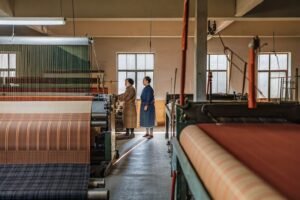
You know that sinking feeling when you unroll a batch of fabric and the color is just… off. It doesn’t match the lab dip. The shade is blotchy. You call your supplier, and they blame the dyeing house. The dyeing house blames the water pressure that day. And you? You’re stuck with 5,000 yards of unusable fabric and a shipping deadline that’s about to combust. This is what happens when a fabric supplier outsources your dyeing to a nameless third party. The chain of command breaks. The responsibility evaporates. I’ve been in this industry for over 20 years, and I’ve seen this nightmare destroy small brands more times than I can count.
The simple answer is that we don’t outsource because color consistency isn’t just a quality metric—it’s a promise. At Shanghai Fumao, we utilize our exclusive cooperative dyeing facilities, which operate under a synchronized production agreement rather than a transactional outsourcing model. This means our QC team controls the recipes, the water quality, and the finishing chemistry directly, ensuring that your batch #3 looks exactly like your batch #300. In an industry where many trading companies simply pass your order to the lowest-bidding dyeing mill and pray, we keep the responsibility—and the control—firmly under our own roof.
But keeping dyeing in-house is about more than just avoiding finger-pointing. It’s about speed, sustainability, and survival in a market where tariffs and timelines are tightening. If you want to understand how to protect your brand from color inconsistency, you need to look deeper into how the dyeing machinery works, how we manage the chemistry, and how our setup shields you from the markup that usually comes with a third-party dyeing fee. I’m going to walk you through the mechanical reality of our dyeing floor and why our vertical setup in Keqiao is the competitive moat your brand needs right now.
What Happens to Fabric Quality When Dyeing Is Outsourced to a Third-Party Mill?
When you outsource dyeing to a third-party mill, the first thing that dies is accountability. If you buy fabric from a generic supplier, that supplier becomes a middleman. If the color bleeds, they can’t fix it. If the shade is lighter than the standard, they can’t adjust the recipe on the spot. They just send an email and wait. Meanwhile, your production line is stalled. I lost a European client early in my career because a third-party dyeing house used hard water with high calcium content, which caused uneven dye uptake on a Modal jersey. The fabric looked like it had a disease. That was the day I decided we would never rely on a 100% external dyeing house again.
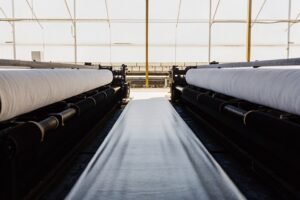
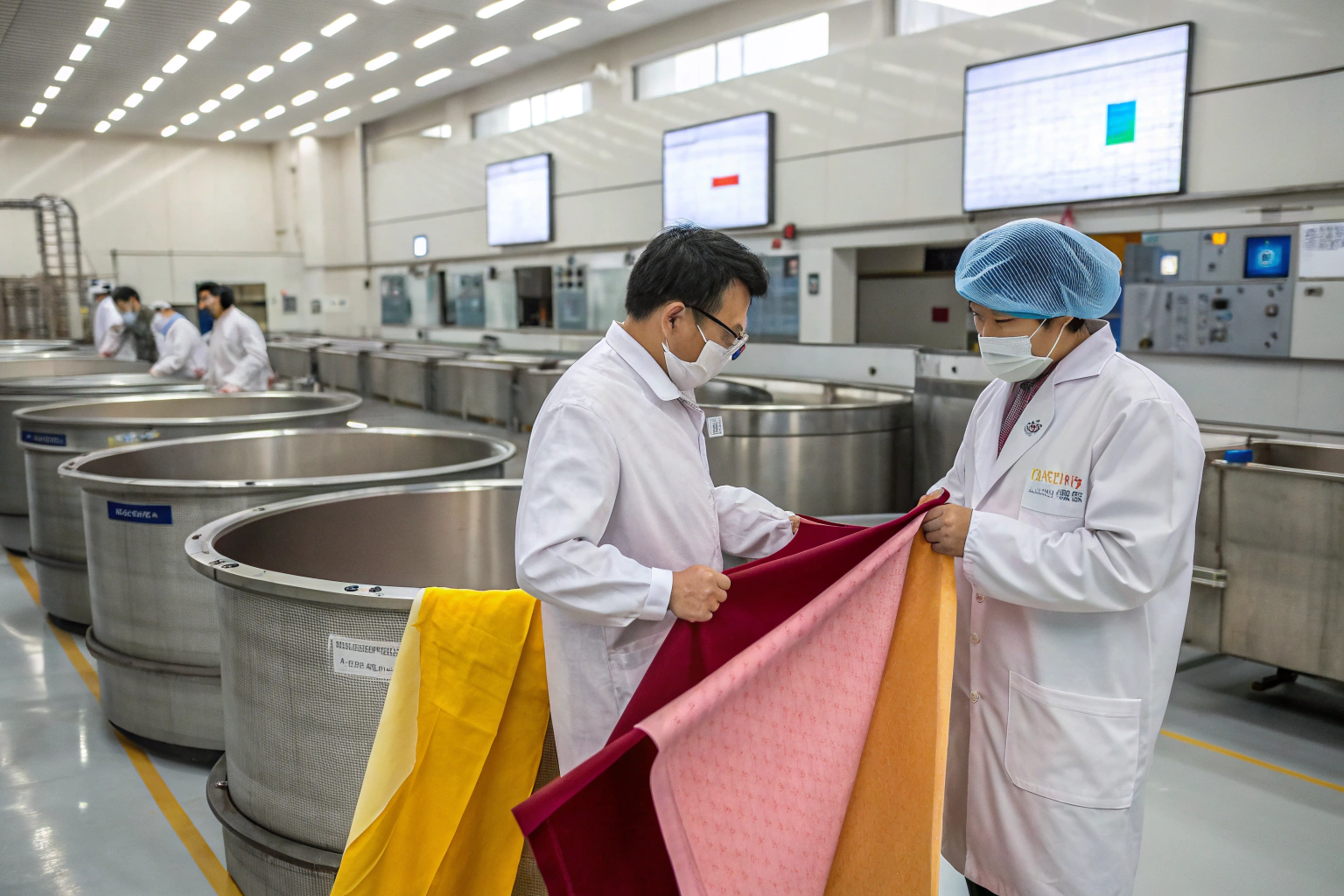
The real secret to controlling quality lies in the physical mechanics of a dyeing machine. At our cooperative dyeing plant in Keqiao, we run high-temperature, high-pressure (HTHP) overflow dyeing machines. These aren’t magic; they’re steel vessels that circulate fabric rope at speeds of up to 300 meters per minute through a pressurized dye bath at 130°C. If the circulation speed drops because of a cheap pump or the nozzle pressure is off, the fabric plies can stick together, creating crease marks that are permanent. Our operators constantly monitor the differential pressure between the fabric and the liquor flow. It’s a hands-on skill, not something you can micromanage through a WeChat message to a third-party subcontractor who doesn’t care about your client’s anxiety.
How Do Third-Party Dyeing Delays Disrupt Your Bulk Production Schedule?
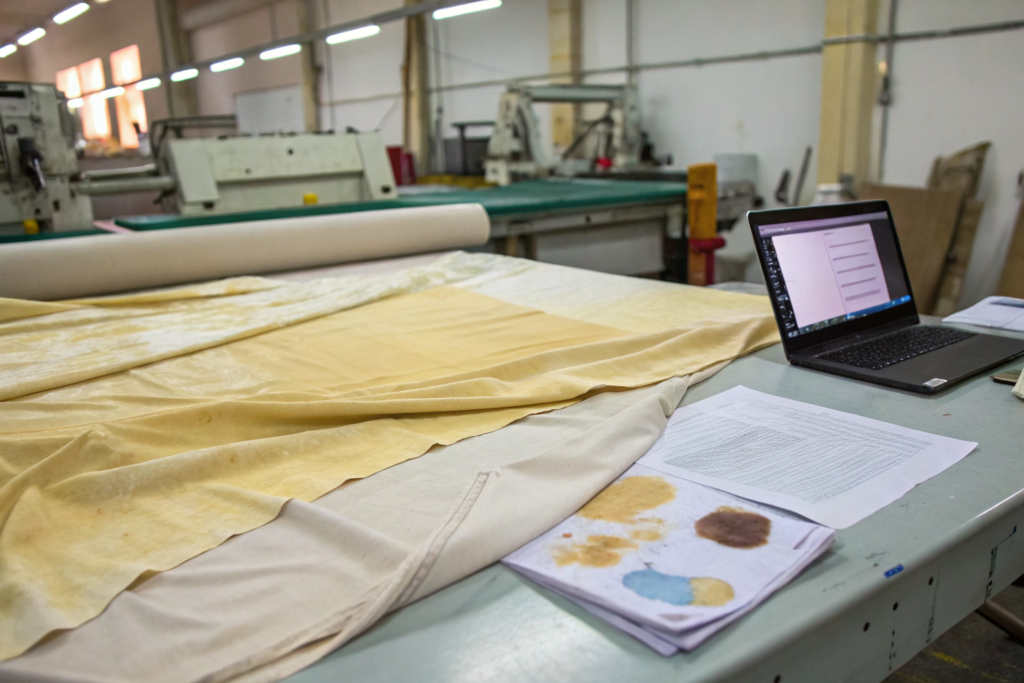
There is a critical path in fabric production, and dyeing sits right in the middle of it. If you miss the dyeing window, you miss the shipment. Most third-party dyeing houses operate with a "public bath" mentality; they wait until they have a full kettle of 800kg to 1,200kg before they run the cycle, regardless of your urgency. They do this to save energy costs, even if it adds one to two weeks to your lead time. In our synchronized cooperative model, we optimize our loading. We can run a half-kettle lot for our priority partners without waiting for a full load because we’ve already planned the steam consumption with the factory master at 5:00 AM.
Shipping timelines aren’t just impacted by machine availability. They’re impacted by re-dyeing. If an outsourced mill fails the shade match—let’s say the Delta E (dE) value, which measures mathematical color difference—is above 1.0 on a critical navy blue, you have to strip the color using reduction clearing agents and dye it again. This doesn’t just double the dye cost; it degrades the fabric strength by up to 15% as the high-alkalinity cleaning attacks the fiber’s molecular chain. We track dE values using a Datacolor spectrophotometer, ensuring the dE is below 0.8 before the fabric leaves the machine. When you work with Shanghai Fumao, you aren’t just buying greige goods; you’re buying the guarantee that we catch the shade rejection before it becomes a shipping delay.
Can You Really Trust an Outsourced Mill’s Eco-Certifications and Chemical Compliance?
If you are shipping to the EU or the US, you can’t afford to ignore the ZDHC (Zero Discharge of Hazardous Chemicals) Manufacturing Restricted Substances List (MRSL). When a third-party mill claims they are ‘clean,’ you are hoping they aren’t using cheap detergents containing nonylphenol ethoxylates (NPEs), which are toxic to aquatic life and banned in Europe. We don’t hope; we test. Our cooperative dyeing facility runs a closed-loop sampling system on the discharge water, checking the Chemical Oxygen Demand (COD) and pH levels every four hours, not just once a month.
The problem with outsourced sustainability is the invisible substitute. A mill might use certified dyes for one audit, then switch to uncertified disperse dyes the next week to save $0.15 per yard. We prevent this because our CNAS-accredited lab retains a fingerprint of every dye lot. We can trace a specific red shade back to the exact dye manufacturer in a chemical factory in Zhejiang. For our organic cotton and Tencel blends, we stick to the how to source GOTS certified organic cotton from China protocol strictly, using only OEKO-TEX PASS-certified chemicals to keep the MRSL clear. This discipline is what allows our clients to pass the random testing from brands like ZARA or Lululemon without sleepless nights.
How Does Fumao’s Cooperative Dyeing Management Model Eliminate Color Inconsistency?
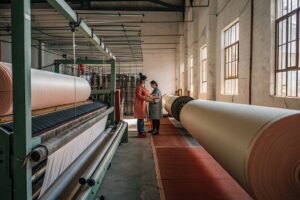
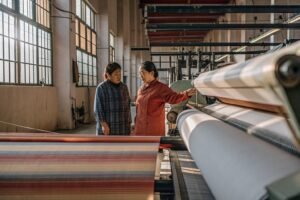
The word "cooperative" in our model doesn’t mean we just shake hands with a dyeing boss. It means we integrate our proprietary standard operating procedures into their hardware. In a typical transactional outsourcing relationship, the fabric supplier sends a P.O. and a lab dip, then crosses their fingers. In our model, we have a resident QC team embedded in the dyeing plant. They don’t report to the dyeing factory’s manager; they report to me. This is the only way to truly master how to eliminate batch-to-batch shade variation in textile production. When a machine operator sees our QC standing there with a color reading gun during the first rinse, they know they can’t rush the fixation time just because they want to finish their shift early. That’s real power.
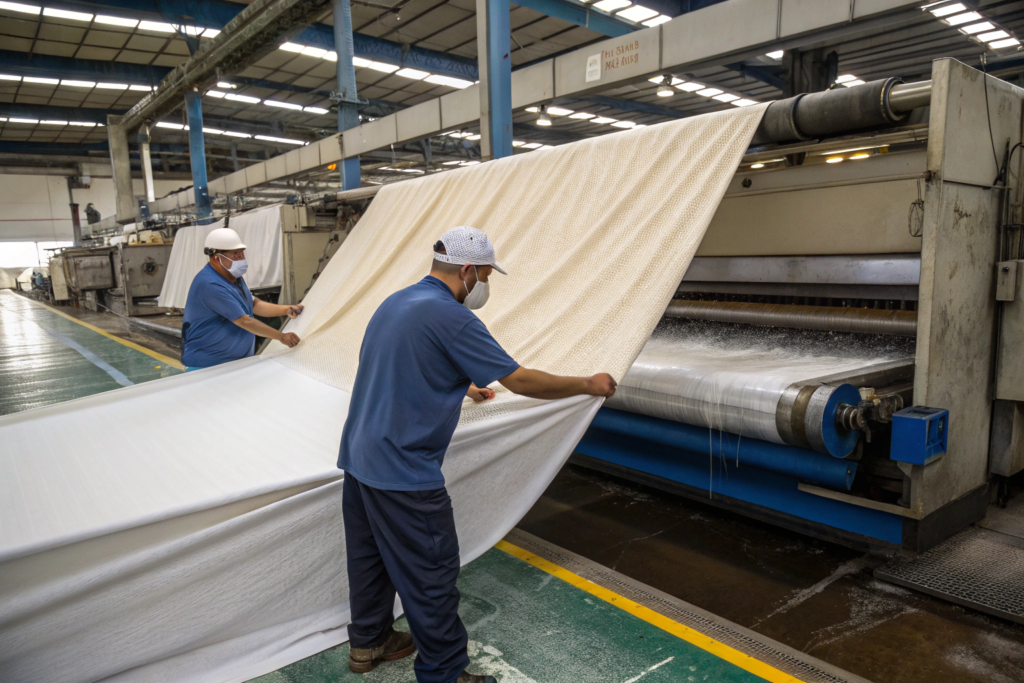
When you dive deeper into the chemistry, you realize that consistency isn’t just about matching a recipe. It’s about managing the substrate. Cotton grown in Xinjiang absorbs dye differently than cotton grown in India, even if the yarn count is identical. We manage this by standardizing the pre-treatment. Our cooperative lines use a continuous bio-polishing and scouring bleaching range before the fabric ever touches the reactive dyes. This ensures the absorbency—measured by a water drop disappearing in under 3 seconds—is uniform across the entire lot. This is what sets a factory apart from a middleman. I want to show you exactly how we break down the dyeing phase so you can see where the risks lie and how we kill them.
How Do We Standardize the Lab Dip and Bulk Matching Process?
There is a black hole in this industry called "the lighting trick." A mill will match a lab dip under a D65 light box, which mimics daylight, but the bulk fabric will look completely different under the TL84 fluorescent lights of a retail store. That’s metamerism, and it causes chargebacks. To kill metamerism, we process dye recipes through a software algorithm that predicts reflectance curves. We don’t approve a lab dip until the spectral data matches the target standard under three different light sources simultaneously.
Once the lab dip is approved, the transition to the bulk recipe is where most horizontal stripes appear. A lab machine dyes a 10-gram swatch, but a production kettle dyes 800 kilograms. The liquor ratio—the ratio of dye bath water to fabric weight—changes dramatically. Our technical team applies a logarithmic correction factor based on the substantivity of the dye. For turquoise reactive dyes, which have notoriously poor migration properties and tend to appear uneven, we inject the alkali fixing agent not in a single dump, but in a linear dosing curve over 45 minutes. This prevents the "shock fixation" that causes the dye molecules to rush to the fiber surface and create that terrible frosty look. Controlling this process means we eliminate the gamble you take when ordering the best custom dyed organic cotton for luxury apparel brands.
How Does Your Water Treatment Facility Affect Deep and Dark Shades?
You can’t dye a deep, rich black without soft water. It’s a physical law. If the water has high iron ions, the black turns brownish. If there is calcium carbonate, it precipitates on the fabric surface during scouring, making the hand feel rough and dusty. Our cooperative facility runs a reverse osmosis (RO) feed system that strips the water of hardness below 5 ppm. (Here I have to interject—our water softness is honestly better than some bottled drinking water I’ve tried in other countries.)
For deep shades like jet black on polyester-spandex activewear, water quality dictates the wash fastness. After dyeing, the unfixed surface dyes must be removed through reduction clearing (RC). If you use hard water in the RC bath, the detergent complexes with the mineral deposits instead of the dye molecules, leaving a loose color on the surface. This color will bleed onto a white sports bra trim in the first wash. We run an acidic neutralization step right after RC to bring the fabric pH to a skin-safe 5.5 to 6.5. This combination of soft water chemistry and precise pH control allows us to hit that deep "wet look" on modal blends without sacrificing rub fastness, a standard we’ve seen many factories fail during the critical wet-and-dry crocking tests.
What Are the Hidden Costs of Outsourcing Fabric Dyeing for Small and Medium Brands?
Most brands look at the dyeing cost per meter and stop right there. They see a quote for $0.50 and think it’s cheaper than our $0.70. But the hidden costs of outsourcing will eat your margin alive. The biggest monster is the "minimum quantity penalty." A third-party mill typically demands a minimum batch size of 1,000 meters. If you only need 300 meters of a seasonal highlight color, you pay for 1,000. Or, they skip the sample dyeing bath entirely and just dump your 300 meters into a recipe they made for another brand. That’s how you get ‘close enough’ colors that aren’t even close. We don’t buy into that; our agility allows us to manage the economics of small-batch dyeing without killing our clients’ cash flow.
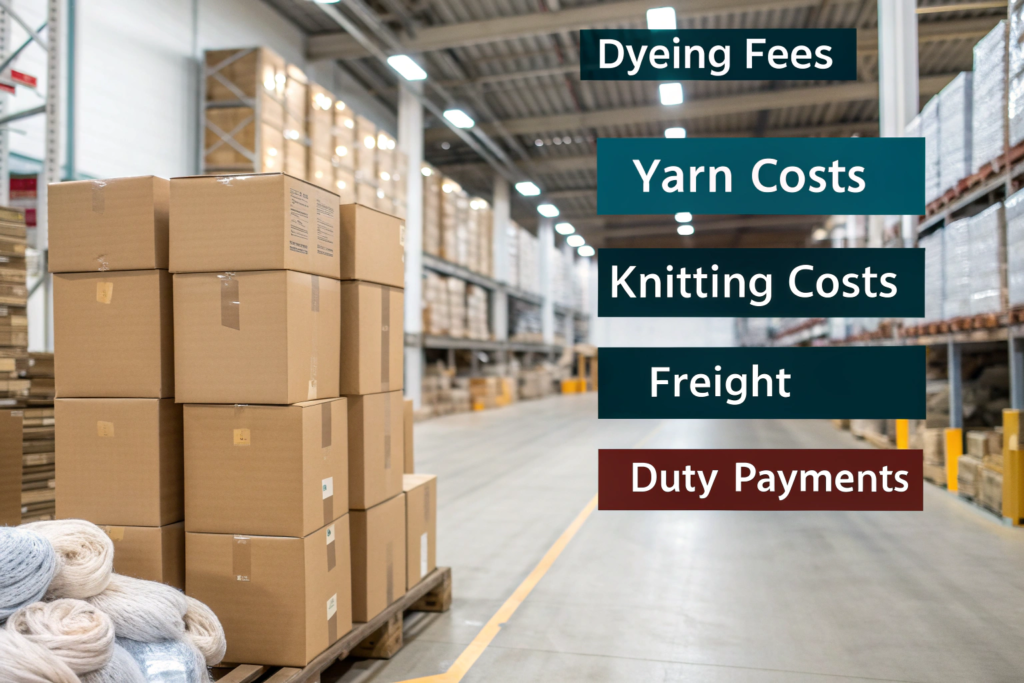
But there’s a more painful cost: the cost of dead inventory. If the third-party dyeing job results in a 10% color reject rate, you don’t just lose the dyeing fee. You lose the yarn cost, the knitting cost, the freight, and the duty paid on the trashed fabric. The true cost of a failed dyelot is often 5 to 7 times the visible dyeing charge. I’ve structured our cooperative model specifically to absorb the technical risk so that small-to-medium brands don’t have to manage the complex China fabric dyeing mill supply chain for fashion startups. Let’s peel back the layers on how we make the economics work in your favor.
How Do Small-Batch Dyeing Capabilities Reduce Your Inventory Risk?
The market is demanding faster fashion with less waste. You can’t buy 50,000 meters of neon green on a hunch. You need to test the market with 500 meters first. Standard third-party dyeing plants hate 500 meters because the cleaning cycle between a dark batch and a light batch takes hours. We invested in flexible auxiliary kettles with a capacity of 50kg to 200kg specifically for this. These are perfect for sampling or a limited-edition drop. We use an automated dosing system that can weigh powder dyes with a precision of 0.01 grams, which is critical when you are scaling a lab recipe down to a pilot run without losing shade depth.
This ability fundamentally changes your cash conversion cycle. Imagine you are planning a collection around a new ‘burgundy crushed velvet.’ Instead of taking the risk of ordering bulk directly and hoping the market buys it—which ties up capital for 60 days—you can place a rapid replenishment order. We dye the first 500 meters, you sell it online, and if the sell-through rate is high, we spin up another 1,000 meters in 5 days. This is how to manage fabric inventory risk with small batch dyeing services in Asia. It shifts the supply chain from a ‘push’ gamble to a ‘pull’ reality, keeping your storage costs low and your cash flow breathing. That’s the difference between a rigid vendor and a growth partner.
Does Outsourced Dyeing Inflate Your US Tariff and Logistics Burden?
Since I’m shipping to the US constantly, I see the tariff structure play out in real-time. If you outsource dyeing to a separate entity, the logistics path lengthens. The greige fabric moves from a knitting mill to a remote dyeing house, often crossing provincial lines. This adds not just trucking cost, but time. More importantly, when you buy from a fragmented chain, the export documentation becomes a mess. For a US Customs entry, the declared value of the fabric must match the manufacturing chain. If the dyeing house is a different legal entity with a chaotic invoicing system, you risk misdeclaring the value, which can trigger a 30% penalty from Customs and Border Protection.
We circumvent this by issuing a single, unified commercial invoice from Shanghai Fumao. Because we control the entire process—from weaving in our large-scale facility to dyeing in our cooperative lines—the production cost is consolidated. We don’t need to inflate the FOB value to pay a middleman. This is critical under the current U.S. Section 301 tariff exclusions. The duty is calculated on the net cost, not on a padded chain of markups. When you work with us, you’re not just avoiding the waste of transshipment; you’re establishing a clean, auditable trail that a U.S. customs broker can clear in a single day, saving you demurrage fees at the port of Long Beach.
How Does Our Vertical Dyeing Integration Accelerate Speed to Market for US Buyers?
Speed in textiles isn’t just about running a machine faster. It’s about eliminating the white space between processes. If dyeing is outsourced, the fabric sits in a plastic bag on a truck for 2 days. It sits in a receiving queue for another day. It waits for the lab dip approval for 3 days because the communication has to go through a trader who doesn’t know the chemical limitations. That’s a week of zero production. By having our QC team physically inside the dyeing plant, we execute a hot transfer. The wet fabric can be transferred directly to the drying and finishing stenter frame without waiting, because the quality check is instantaneous rather than scheduled.
This seamless flow allows us to hit a 5-day dyed fabric turnaround in peak season, which is virtually impossible for a third-party fragmented supply chain to achieve. We call it ‘heat-to-seal’ velocity, where the heat from the drying cylinder hasn’t even cooled before the inspection report is uploaded to your customer portal. I want to show you how we handle the chaos of peak season and the technical data sharing that makes this raw speed actually usable for a brand trying to beat a trend curve to market. (I have to be honest here—we really, really hate waiting. And we know you hate it more.)
How Do We Handle Peak Season Rush Orders While Keeping Quality High?
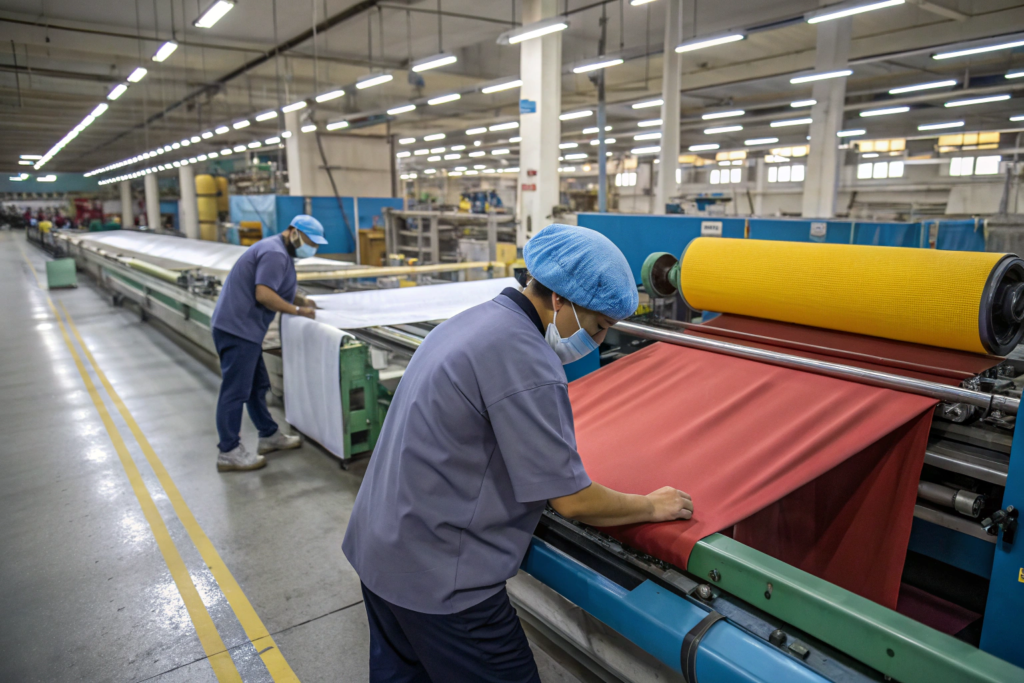
Peak season in China—around March to May and August to October—can add 1 to 2 weeks to normal timelines. Many third-party mills lock their machines with massive 50,000-meter running orders for big domestic brands and kick the smaller export orders to the curb. We don’t do that. We hold back 20% of our cooperative machine capacity specifically for "rush injection" orders. This is reserved capacity, not idle capacity; we use it for prototype development daily, but when a US client needs a quick restock of a best-selling linen blend, we flush the development batch and load the commercial batch within 6 hours.
The trick to maintaining quality during a rush is not cutting the chemical times. You can’t rush the 45 minutes it takes for a reactive dye to fix to cellulose. But you can rush the physics. By using pre-heated soft water tanks and injecting steam directly into the mixing tank, we bring the bath temperature from room temperature to 60°C in a fraction of the time a cold start requires. The operators are trained on a "pit stop" model; every movement is standardized to reduce machine downtime between unloading and loading to under 15 minutes. This orchestrated intensity allows us to execute the global guide to Asian textile factory peak season production scheduling without scorching the fabric or burning out the team.
Can You Access Your Dyeing QC Data Before the Shipment Leaves Our Dock?
In the old model, you get the inspection report when the fabric hits your warehouse. If there’s a problem, it’s already too late; the container has crossed the ocean. We flipped this script completely. Every batch dyed in our cooperative facility gets a QR code sticker. When you log into our client portal, you can scan that code and see the real-time QC data: the final dE reading, the washing fastness grade (rated 1-5), the bursting strength in kPa, and even the pH of the finished fabric. We publish this before the fabric goes to the cutting table.
This transparency is what builds trust. For a recent collaboration with a US luxury streetwear brand, they needed to verify that the reactive dye used on their black Pima cotton was free from banned amines, which are strictly regulated under REACH. During the production run, our lab pulled a sample from the dye bath, ran a High-Performance Liquid Chromatography (HPLC) test, and uploaded the chromatogram showing zero azo breakdown products. The client’s compliance officer in New York could see the data while the fabric was still being stentered in our facility in Keqiao. This is the practical application of how to implement blockchain traceability for fabric dyeing quality control. We provide proof, not promises.
Conclusion
This whole game comes down to one question: can you sleep at night while your fabric is in the dyeing machine? If you are outsourcing to a low-cost third party, the answer is probably no. You’re risking color inconsistency, hidden chemical violations that can stop your goods at the U.S. border, and the "slow bleed" of hidden surcharges that ruin your margin. By choosing Shanghai Fumao, you’re choosing a synchronized model. You’re getting a cooperative dyeing setup where the QC team works for you, the water is reverse-osmosis pure, and the chemicals are tracked down to the parts per million. You’re not just buying fabric; you’re buying a guarantee of shade continuity from batch to batch.
I believe that in this tariff-heavy, inventory-sensitive market, brands need speed and safety, not just a cheap meter price. We’ve designed our vertical integration—from our large-scale weaving factory to our cooperative dyeing, printing, embroidery, and coating lines—to absorb the technical complexity so you can focus on design and marketing. If you want to take control of your quality and stop losing sleep over your supply chain, I invite you to partner with us.
Don’t let a disconnected dyeing house ruin your next collection. Reach out directly to our Business Director Elaine. She has been instrumental in onboarding our American partners and can walk you through a specific timeline and recipe audit for your next project. Send her your tech packs and your quality expectations, and we’ll show you the Fumao difference. You can email her at elaine@fumaoclothing.com. Let’s build a supply chain that looks as good as your designs.