
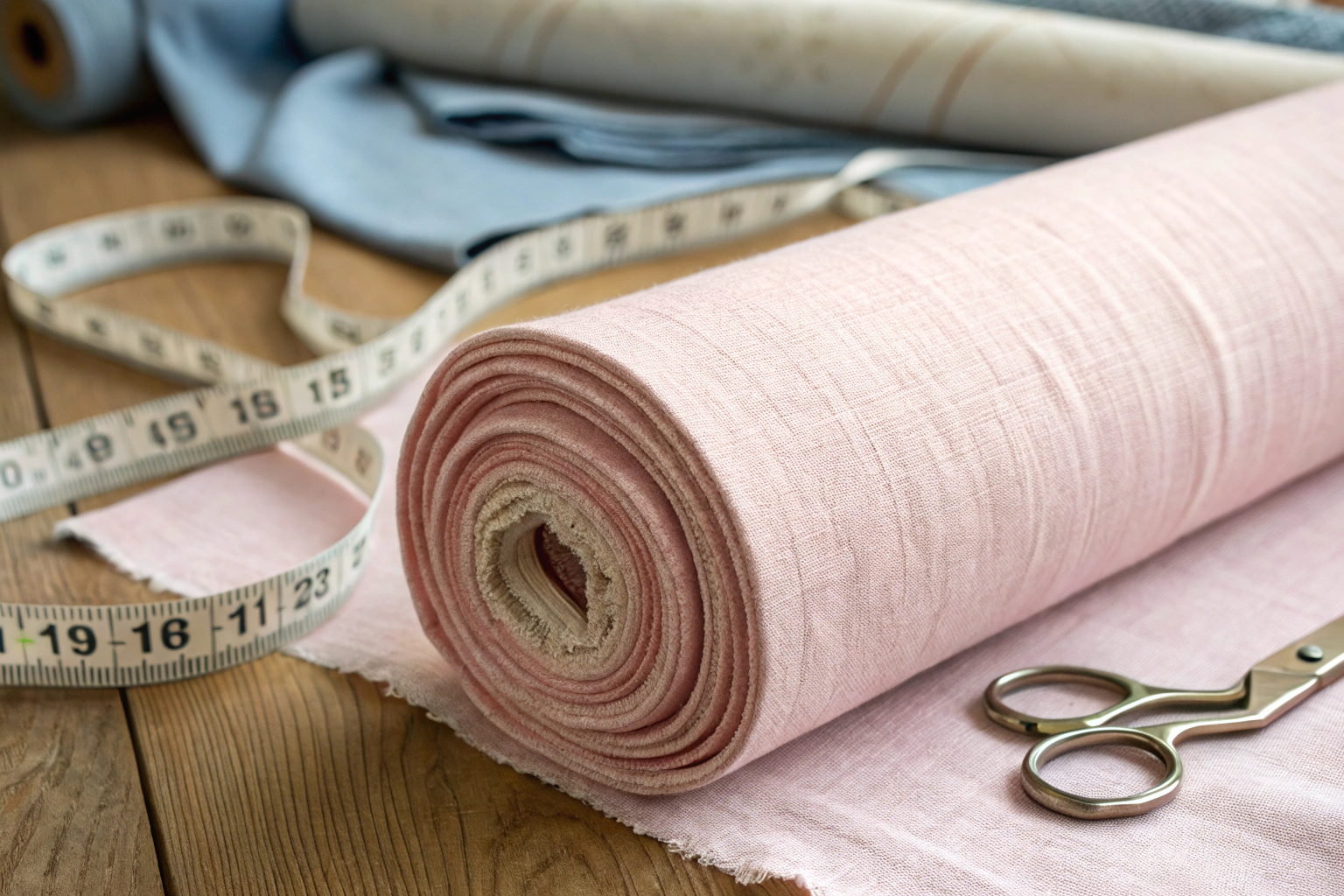
You need 200 yards of a beautiful cotton-linen blend for a limited drop of summer blazers. You do not want to pay for custom development. You do not want to hit a 1,000-yard minimum. You just want something interesting, immediately available, at a price that leaves room for your margin. Then you hear about deadstock fabric—the overrun, cancelled-order, and end-of-roll inventory that mills sell at a discount. It sounds perfect. But the fear creeps in. Is deadstock just a polite word for defective garbage? Will the quality be inconsistent? Will you even be able to reorder if the blazers sell out? I hear these questions from small brands every week.
Yes, Shanghai Fumao sells deadstock cotton linen fabrics at discounted prices, typically 25% to 50% below our standard bulk rates. This inventory comes from three main sources: production overruns where we wove extra yardage to cover quality trimming, cancelled export orders where a brand over-ordered and released the fabric, and end-of-season stock rolls from our development archive. The fabric is first-quality and fully tested in our CNAS lab. It is not defective. It is not irregular. It is simply surplus that we want to move out of our warehouse to make room for new seasonal collections.
Deadstock is not a clearance rack of bad decisions. It is a strategic sourcing tool for small and emerging brands. Let me show you where our deadstock comes from, how we price it, and how you can access it before the best rolls get snapped up.
Where Does Deadstock Cotton Linen Fabric Actually Come From
Deadstock fabric is not a mysterious category. It is inventory that a mill intentionally produced but can no longer sell through its normal channels. Understanding the source of the deadstock tells you a lot about its quality. Our deadstock shelves are full of fabric that was made for a specific client, produced to export specifications, and then left behind when the business reality of fashion intervened.

What Is Production Overrun And Why Does It Happen?
Production overrun is the most common source of our deadstock. When a brand orders 10,000 yards of a custom fabric, we do not set up the loom to produce exactly 10,000 yards and then stop. Fabric production has a natural yield loss. The beginning and end of each warp beam have tension irregularities. The dyeing process can produce slight shade drift at the start and end of a batch. Quality inspection trims away these imperfect sections. We typically weave 5% to 10% extra fabric to ensure that after trimming, we can still ship the full 10,000 yards of first-quality goods.
Sometimes the yield loss is lower than expected. The dyeing runs perfectly. The weaving has minimal stops. We end up with 500 extra yards that are identical in quality to the shipped order but surplus to the contract. The client does not want to pay for overage beyond their order. The fabric is too good to shred for recycling. It goes onto our deadstock shelf. This overrun fabric is often the best deadstock available because it was made for a specific, paying client with tight specifications. It is export-grade fabric that just happened to have a lucky production run. You can learn more about this by reading about how textile production overrun and yield loss create premium deadstock cotton linen fabric inventory in Chinese mills. The operational reality produces beautiful surplus.
Are Cancelled Orders A Reliable Source Of Quality Deadstock?
Yes, and they are sometimes the most interesting fabrics in our archive. A fashion brand places a bulk order for a seasonal color, maybe a specific shade of terracotta or sage green, and then the retail buyer cancels the program. The fabric has already been woven and dyed. It is sitting in our warehouse, fully finished, inspected, and ready to ship. The original client paid a cancellation fee to cover our raw material costs, so the fabric is now our property to sell.
These cancelled-order fabrics are often highly specific. They were developed with a designer’s eye for color and texture. The terracotta was matched to a Pantone chip over three rounds of lab dips. The hand feel was adjusted with a specific enzyme wash. As a deadstock buyer, you get access to a fabric that a professional design team spent weeks developing, at a fraction of the development cost. The catch is that the quantity is limited to what was in the cancelled order, typically 300 to 1,500 yards. If you can design a capsule collection around a specific deadstock find, you can create garments with a level of textile sophistication that would be uneconomical to develop on your own. This is how some of the most interesting independent brands build their collections. They hunt cancelled orders and overruns. For more on this sourcing strategy, you can explore how to source premium deadstock fabric from cancelled fashion brand orders at Chinese mills. It is a legitimate and increasingly popular way to access high-end textiles.
How Do You Inspect And Grade Deadstock Before Sale
The word "deadstock" can trigger a fear that the fabric is second-quality. I understand that fear. A brand that builds a reputation on quality cannot afford to cut a garment from fabric with hidden defects. That is why every roll of deadstock we sell goes through the exact same inspection process as our custom bulk orders. The fabric is unrolled, examined under light, graded, and tagged. If it does not meet our export standard, we do not sell it as first-quality deadstock. We sell it to the local market, shred it for recycled fiber, or donate it.

Do Deadstock Rolls Go Through The Same 4-Point Inspection?
Yes. We use the same 4-point system that we use for our highest-tier export clients. The inspector unrolls the fabric over a tilted, backlit inspection table. The light shines through the fabric, revealing any thin spots, holes, or weaving defects. The inspector marks defects with a chalk or a sticker and assigns penalty points based on the defect size. A defect under 3 inches gets 1 point, 3 to 6 inches gets 2 points, 6 to 9 inches gets 3 points, and over 9 inches gets 4 points.
A roll passes inspection if the total penalty points per 100 square yards remain below 40. This is the international standard for first-quality export fabric. If a roll scores above 40, we do not sell it as deadstock. It goes into a separate category, clearly marked as "second-quality" or "irregular," and sold at a much deeper discount with full disclosure of the defect level. Every deadstock roll we sell online or to our trade clients comes with a digital inspection report accessible through the QR code on the roll tag. You can see exactly what defects were found, if any, and where they are located on the roll. There is no mystery. You know what you are buying. This transparency is how we maintain trust with deadstock buyers who become repeat bulk clients. To understand the grading scale in detail, you can review the 4-point fabric inspection system criteria for grading deadstock and surplus cotton linen fabric. The math is universal and verifiable.
Can I Trust The Fiber Content Label On Deadstock Fabric?
Every deadstock roll in our inventory has been tested for fiber composition. If the roll came from a production overrun for a specific client order, the fiber content is documented from the original production batch testing. We pull the original CNAS lab report from our database and attach it to the deadstock listing. If the roll came from a development archive sample, we test it before listing it for sale.
The testing uses the AATCC 20A chemical dissolution method, the same standard that US Customs uses. The report tells you the exact percentage of linen and cotton, plus any trace of other fibers. You can rely on this number for your garment labels and your FTC compliance. A deadstock listing on our website includes the fiber content, the fabric weight in GSM, the usable width in inches, and the available yardage. You get the same technical data sheet that our bulk clients receive. This is not a mystery grab bag. This is documented, tested, and graded inventory. For peace of mind on your labeling requirements, you can read about FTC fiber content labeling requirements and how to verify deadstock fabric composition for garment production. It covers the legal side of using surplus textiles in your collection.
What Kind Of Discount Can I Expect On Deadstock Cotton Linen
Deadstock pricing is not a fixed formula. It depends on how we acquired the fabric, how much is available, and how long it has been sitting in the warehouse. But as a general rule, deadstock cotton linen sells for 25% to 50% less than the equivalent custom bulk order price. A fabric that would cost you $8.00 per yard to develop and weave at a 1,000-yard minimum might be available as deadstock for $4.50 to $6.00 per yard with no minimum beyond the roll length.

Why Is The Price So Much Lower Than Custom Production?
The price is lower because our costs are already covered. For a production overrun, the original bulk order client paid the full development and production cost for the entire warp run. Our cost basis on the surplus fabric is essentially zero. We have already been paid for the yarn, the weaving, and the finishing. Any revenue from selling the overrun is incremental profit for us, which means we can price it aggressively and still do well.
For cancelled orders, the cancellation fee from the original client covered our raw material and production costs. The fabric on the shelf is a sunk cost. Selling it at any price above zero generates cash that we can reinvest in new inventory. This is different from a discount on a new custom order, where we still need to cover raw materials, labor, and machine time. Deadstock pricing reflects the economics of surplus inventory, not a reduction in quality. It is a genuine bargain created by the inefficiencies and uncertainties of the fashion supply chain. To explore the financial logic in more detail, you can read about the economics of deadstock fabric pricing compared to new custom textile production orders. The price difference makes sense once you understand who already paid the bill.
Do You Offer Further Discounts On Larger Deadstock Purchases?
Yes, within the limits of the available quantity. If you want to buy the entire remaining roll of a deadstock fabric—say 800 yards—I will give you a better per-yard price than if you buy a 100-yard cut. We want to move the entire inventory out. Splitting a deadstock roll into small cuts creates handling inefficiency and leaves us with odds and ends that are harder to sell.
If you are willing to take the full roll, we typically knock an additional 10% to 15% off the listed deadstock price. This rewards buyers who help us clear shelf space. The exception is for very rare, high-demand deadstock. A special jacquard or a unique slub texture that we know will sell quickly is priced firmly. Discounts on deadstock are always a conversation. Tell Elaine what you are looking for and what quantity you can handle, and she will quote you the best price for that specific inventory. The worst thing you can do is assume the listed price is final. Deadstock pricing is negotiable because the inventory is a wasting asset in our warehouse. We are motivated to sell. For guidance on how to approach this negotiation, you can learn about how to negotiate bulk purchase discounts on deadstock fabric inventory from textile mills. A respectful, informed offer usually gets a positive response.
How Do I Access And Reserve Deadstock Before It Sells
The best deadstock does not sit on a public website for months. It moves fast. Our most desirable overruns and cancelled orders are often claimed by our existing clients within a week of being listed. If you are serious about sourcing deadstock cotton linen, you need to know how to get access to the listings before they are picked over. We operate a private notification system that gives our registered buyers a first look at new inventory.

Do You Have A Mailing List For New Deadstock Arrivals?
Yes, and this is the single best way to secure premium deadstock. We send a "Deadstock Drop" email to our subscriber list roughly every two weeks. The email includes high-resolution photos of the fabric draped and flat, the fiber content, the weight, the width, the available yardage, and the deadstock price per yard. Subscribers get 48 hours of priority access before any remaining inventory is released to our general website or to Alibaba.
To get on this list, just email Elaine and ask to be added to the deadstock notification list. Tell her what types of fabric you typically look for—lightweight shirting, midweight suiting, specific color families—so she can tailor the alerts. There is no cost to be on the list and no obligation to buy. But if you want first shot at the best deadstock, you need to be on this list. The fabric that appears in the email is usually gone within a few days. I have seen a beautiful washed black linen overrun sell out completely within six hours of the email blast. Speed matters. If you are even casually interested in deadstock, subscribe now so you are ready when the right fabric appears. For a broader view of how this works, you can explore how to subscribe to mill deadstock fabric inventory alerts for access to limited cotton linen drops. The early buyer gets the best selection.
Can I Reserve A Deadstock Roll While I Make A Decision?
We can hold a deadstock roll for 48 hours with no deposit. This gives you time to check the technical specs against your pattern requirements, calculate your yield, and confirm the fabric works for your collection. If you need more than 48 hours, we require a 30% deposit to extend the hold for up to two weeks. The deposit is fully refundable if you ultimately decide not to purchase, or it can be credited toward your total if you do.
We offer this because we understand that deadstock purchasing is often a faster decision cycle than custom development. You might spot a fabric on Tuesday and need to confirm by Thursday whether it can work for your drop. The 48-hour courtesy hold gives you a no-risk window to do your due diligence. What we cannot do is hold a fabric indefinitely with no commitment. Deadstock inventory is first-come, first-served, and when a roll is gone, it is gone forever. There is no reorder. That is the nature of deadstock. The scarcity is real, and it is what makes the fabric special. If you see something you love, act on it. I have had too many designers call me back two weeks later asking about a fabric that sold on day three. To learn a practical approach to the process, you can read about how to quickly evaluate and reserve deadstock fabric inventory for a capsule collection. It helps you make confident, fast decisions.
Conclusion
Deadstock cotton linen is not a clearance rack of failures. It is a curated inventory of surplus from successful production runs, cancelled orders from sophisticated brands, and archive samples of discontinued developments. Every roll has been inspected to the 4-point system and tested for fiber content to AATCC standards. The pricing is 25% to 50% below custom bulk rates because the original production costs were already covered, not because the quality is compromised. For a small brand, a startup label, or an established designer looking for a unique limited-edition fabric, deadstock is one of the smartest sourcing strategies available. You get high-end textile quality at a fraction of the development cost, with low minimums and immediate availability.
If you want to see what is on our deadstock shelf right now, email Elaine and ask for the current deadstock list. Tell her your target weight range, your preferred color palette, and the yardage you need. She will send you a personalized selection of available rolls with photos, specs, and pricing. And ask to be added to the deadstock notification list so you see new drops before they sell out. Email elaine@fumaoclothing.com with the subject line "Deadstock List Request." Let us find you a fabric that makes your next collection look expensive without being expensive.








