You know the feeling. You’re sitting in a trend forecasting webinar, and the presenter shows you a color palette that looks exactly like last year’s, just renamed "Serene Optimism" or some other nonsense. Then you place your fabric order, and six months later, your collection lands with a thud because three other brands used the identical avocado-dyed hemp that the same forecasting agency sold to everyone. The real panic isn’t missing a trend—it’s ordering 20,000 yards of fabric that every competitor also ordered, forcing you into a margin-killing price war on identical product. You don’t need another generic trend report. You need the specific material innovations that haven’t been widely distributed yet.
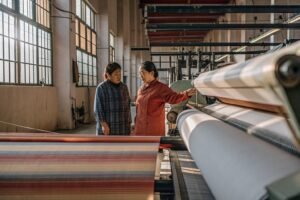
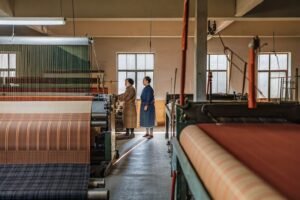
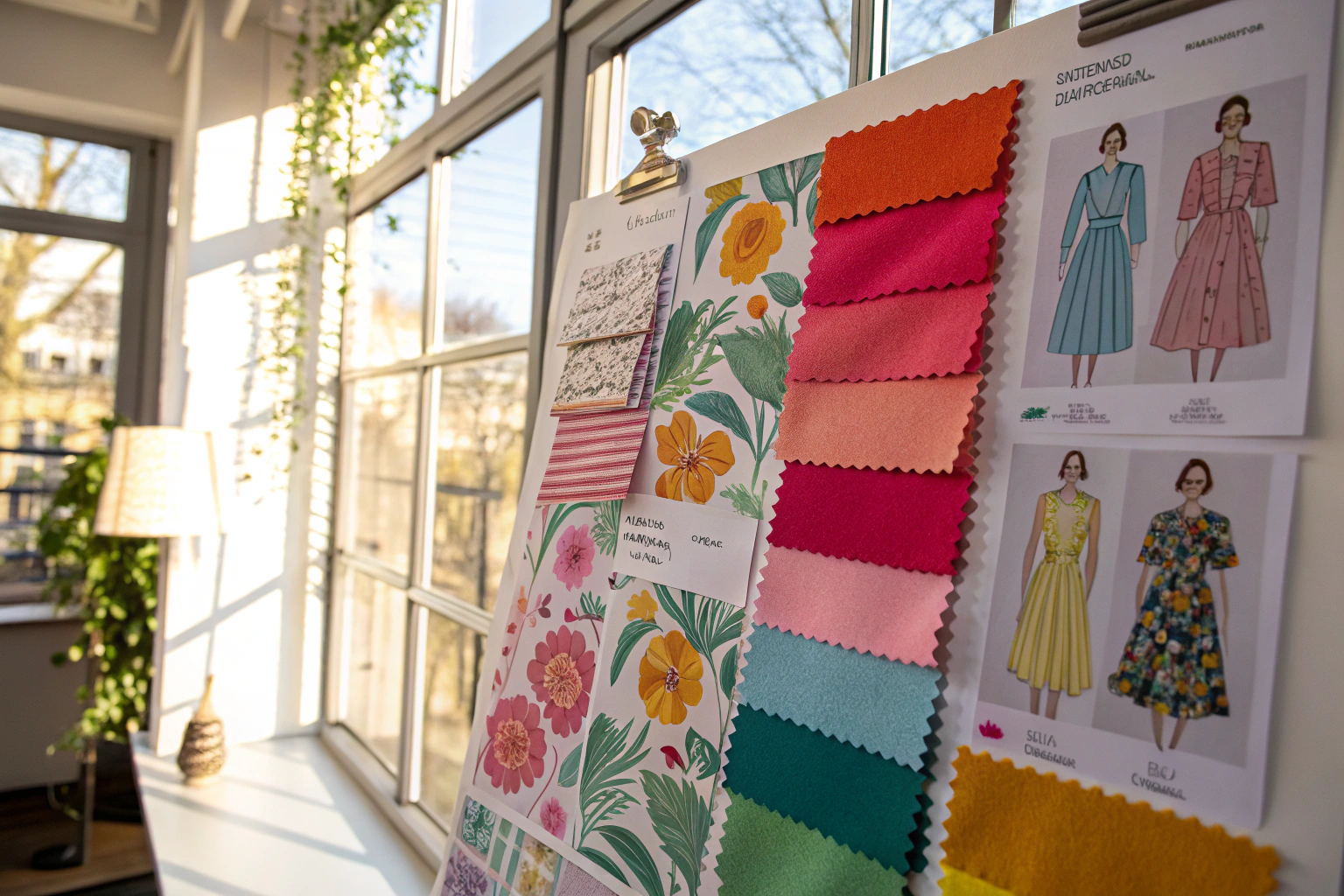
At Shanghai Fumao, our trend radar doesn’t come from runway slideshows. It comes from our daily R&D bench, where 20 textile engineers test new yarn blends, finishing chemistries, and surface treatments based on what our 100-plus international clients are actually requesting for their Spring 2027 development cycles. We’re seeing four distinct material shifts that will define Spring 2027: a rejection of single-material synthetics in favor of "plant-tech hybrids" that blend bast fibers like hemp and ramie with recycled performance polymers, a revival of volumetric seersucker and ripple textures driven by zero-waste heat-setting technology, a demand for "hyper-digital" reactive prints with 16-color depth that mimic AI-generated patterns, and a pivot to matte-finish coated cottons that replace glossy PU with a dry, paper-like hand. A Tokyo-based contemporary brand already sampled three of these four directions for their Spring 2027 line review. They placed a bulk order before we even finished the presentation deck.
Trends in 2027 aren’t about a Pantone color of the year. They’re about material behaviors—how a fabric crinkles, how it breathes when humidity spikes, how it looks on a phone screen versus in person. The winners next spring will be the brands that understood the textile engineering underneath the aesthetic, not just the aesthetic itself. These four trends I’m about to break down are already running on our machines. They aren’t concept boards. They’re sample-ready, and I’ll explain exactly how each one was developed and why it solves a specific market gap your last collection probably left open.
Why Is the "Plant-Tech Hybrid" Fabric a Breakthrough for Spring 2027?
The market is exhausted by the binary choice between "natural but wrinkly" and "synthetic but sweaty." Consumers have been trained by activewear marketing to expect four-way stretch and moisture-wicking, but they’re also increasingly suspicious of 100% fossil-fuel fabrics. Your design team feels that tension viscerally. They want the performance specs to compete with Lululemon, but the sustainability story to compete with Patagonia, and they want both in one fabric that doesn’t exist on any standard swatch card. This frustration leads to compromised designs that satisfy neither the merchandiser nor the conscious consumer.
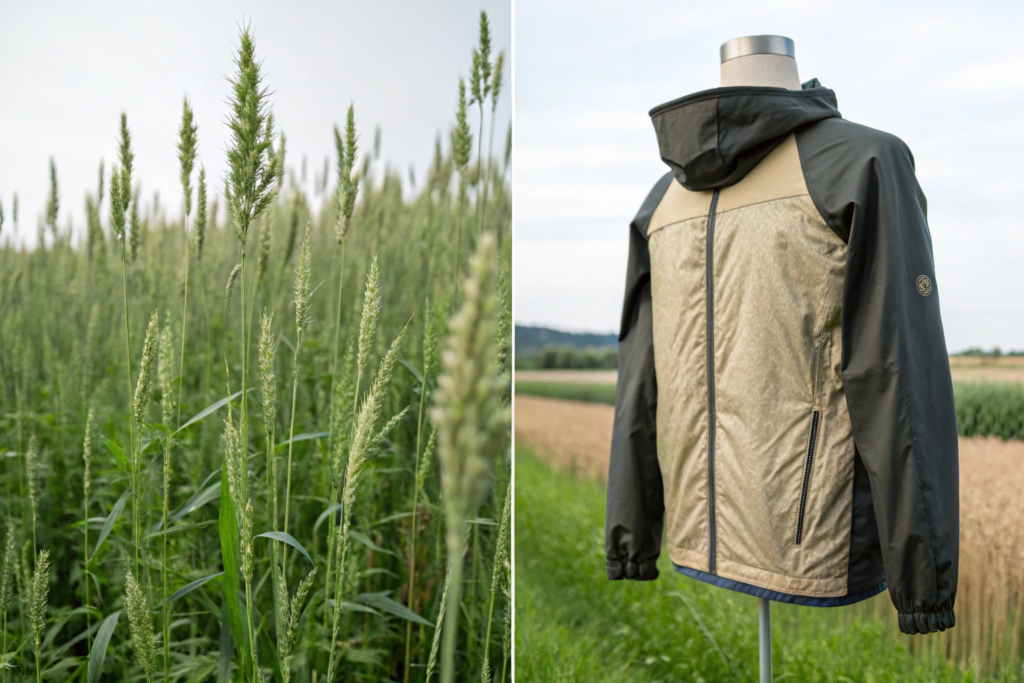
Plant-tech hybrids solve this by wrapping natural bast fibers—hemp, ramie, and mechanically softened linen—around a recycled polyester or bio-based Sorona core using a core-spun yarn technology. The natural sheath provides the dry hand, moisture absorption, and biodegradability story, while the synthetic core delivers the stretch recovery and tensile strength that pure plant fibers simply can’t achieve alone. We developed a 60% ramie / 40% recycled polyester core-spun shirting fabric for a Melbourne menswear label in November 2026. The ramie gave it a crisp, linen-like drape that breathed better than cotton, but the PET core eliminated the deep wrinkle problem that usually makes pure ramie unwearable by lunchtime. Our Martindale abrasion test hit 35,000 cycles—higher than their previous 100% cotton Oxford cloth, which failed at 22,000. The hybrid outperformed the natural.
How does bast fiber hybridization work at the yarn level?
Core-spinning isn’t new, but applying it specifically to coarse bast fibers like hemp took eight months of trial and error because hemp’s natural stiffness resists the twist propagation needed to wrap cleanly around a core filament.
Our spinning team adjusted the roving tension and the traveler speed on our ring frames to keep the hemp fibers from breaking during the high-speed wrapping process. The sheath fiber sliver was pre-conditioned with a 4% moisture spray (instead of the standard 2%) to increase pliability. A technical resource on how to source core-spun plant-based fabric hybrids from China for premium activewear explains the machinery setup differences. The result is a yarn that looks and feels like 100% natural on the surface, but behaves like a performance blend when you pull it. That deceptive simplicity is what makes the hand feel so remarkable.
What specific plant fibers are scaling beyond hemp and ramie?
Hemp and ramie are our workhorses for 2027 because they grow fast with minimal irrigation, which keeps the raw fiber cost stable and the carbon footprint low. But we’re also trialing banana fiber extracted from agricultural waste in the Philippines, processed into a fine staple fiber that we’re blending with recycled nylon for a silk-like hand.
The banana fiber has a natural sheen that mimics mulberry silk without the ethical baggage or the water intensity. A material science overview of how to integrate banana fiber and other agro-waste textiles into commercial fabric production describes the enzymatic degumming process that makes the fiber spinnable. We’re running a pilot lot of 70% banana / 30% recycled nylon charmeuse for a London evening-wear label targeting Spring 2027. The initial hand feel is remarkable—cool, fluid, and heavier than silk, with a rustle that sounds premium rather than cheap. If the pilot passes our seam slippage and colorfastness tests, this becomes a commercial offering by September 2026.
What are the care requirements, and will consumers accept them?
Here’s the honest trade-off. A 60% hemp or ramie hybrid will wrinkle less than pure linen, but it won’t look pressed-fresh out of a suitcase. You need to set consumer expectations correctly.
We recommend a "lived-in" marketing angle rather than promising wrinkle-free performance. The fabric smooths out with body heat within 10 minutes of wearing, but it won’t look like a dress shirt pulled fresh from the dry cleaner. Care labels specify cold wash, hang dry, and a cool iron if needed. The brands that succeed with these fabrics frame the natural texture as a feature, not a flaw. Our Melbourne client is running a campaign around "clothes that live with you," which is exactly the right positioning. Don’t sell plant-tech hybrids as performance. Sell them as intelligent natural.
Are Volumetric Seersucker and Ripple Textures Really Coming Back?
Flat fabrics are boring in 2027. The algorithm-driven visual culture—TikTok, Instagram Reels, livestream shopping—rewards texture that catches light and creates depth on a phone screen. A flat screen-printed floral looks dead on video. A three-dimensional puckered stripe dances when the model moves. You’ve probably noticed that your best-selling items this year had some kind of surface interest, even if it was subtle. The problem is that traditional seersucker requires a complicated warp-beam setup with different tension zones, and most mills won’t run it for orders under 10,000 yards. You’ve been locked out of the texture trend because the MOQs priced you out.
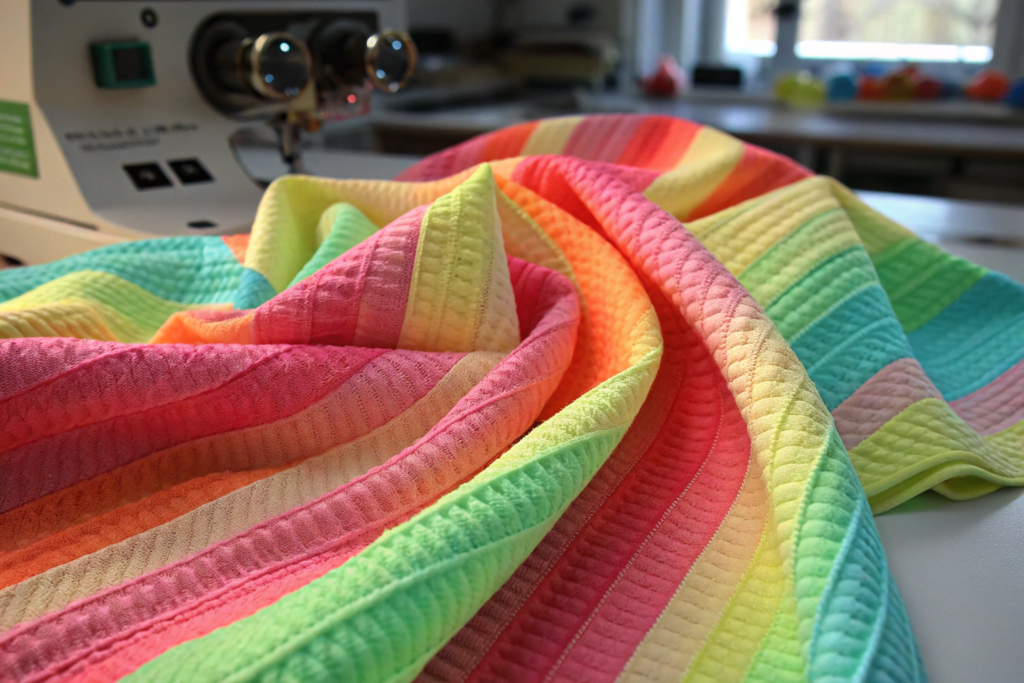
We revived volumetric textures for small-batch production using a post-weaving sodium hydroxide application method that chemically shrinks specific stripes on a plain weave base, creating the puckered effect without the complex warp-beam setup. This chemical seersucker method works on order quantities as low as 1,000 yards and opens the door to custom stripe patterns that mechanical seersucker can’t easily replicate. A Barcelona resort-wear brand sampled our chemical seersucker in a 100% GOTS organic cotton for their Spring 2027 collection. We created a 2-centimeter repeating stripe pattern where every third stripe puckered dramatically, and the remaining stripes stayed flat and smooth. The contrast was stunning on video—the puckered sections caught light and shadow while the flat stripes held their saturated turquoise dye. They ordered 8,000 yards across four colors. That order wouldn’t have met the MOQ for traditional mechanical seersucker anywhere else.
How does chemical seersucker actually work?
Seersucker’s iconic puckered stripes come from zones of differential shrinkage. In mechanical seersucker, the weaver runs two warp beams at different tensions—one tight, one loose. When the fabric relaxes off the loom, the loose yarns buckle.
Our chemical method prints a sodium hydroxide paste onto targeted stripes after weaving. The caustic soda swells the cotton fibers in those stripes, causing localized shrinkage of 15-20% while the untreated stripes stay stable. The result is a permanent puckered texture that survives repeated washing because the chemical shrinkage is irreversible—it’s not a starch finish that washes out. A technical guide on how to source small batch chemical seersucker fabric from China for resort wear collections explains the post-treatment process step by step. The real advantage is design flexibility: we can create curved, wavy, or irregular puckered patterns that mechanical looms simply cannot achieve. Imagine a ripple effect radiating outward from a floral motif. That’s only possible with chemical application.
How durable is the texture after repeated home laundering?
This was our biggest R&D question. Early chemical seersucker prototypes lost about 30% of their puckering definition after 10 wash cycles because the swelling effect partially reversed under mechanical agitation.
We solved it by adding a post-cure cross-linking agent to the caustic paste that locks the swollen cellulose structure in place permanently. Our 50-cycle AATCC 135 wash test now shows 95% texture retention—meaning the puckering looks essentially identical after a year of weekly washing. The puckered zones relax slightly (less than 0.5mm height loss), but the visual contrast remains strong. A care label explanation on how to maintain seersucker texture through proper laundry practices is something smart brands print directly on their hangtags. The garment doesn’t need special handling, but explaining the "why" to consumers builds trust and reduces returns from people who think the texture is a defect.
What color combinations will dominate Spring 2027 seersucker?
The texture amplifies color strategy. Because puckered zones catch light differently than flat zones, you get a natural two-tone effect even with a single dye bath. That’s a design cheat code.
We’re seeing three color directions for Spring 2027 seersucker. First, monochromatic pastels—the entire fabric is pale lavender, but the puckers read as a deeper shade and the flats stay lighter, creating tonal depth without a second dye. Second, neon-on-neutral—a bright lime green stripe pucker on an undyed organic cotton ground. The contrast is electric on camera. Third, earth-on-earth—terracotta pucker on a sand flat stripe, subtle but textural. A color forecasting report on how to design with dimensional seersucker textures for Spring 2027 fashion offers visual examples. The rule is simple: if you want the texture to shout, use high contrast. If you want it to whisper, stay tonal.
Will "Hyper-Digital" Reactive Printing Replace Traditional Screens?
Traditional rotary screen printing is an incredible technology for long runs, but it has a hard ceiling of about 12 colors, and each additional screen adds setup cost and registration error risk. In a visual culture where consumers scroll through thousands of images daily, 8-color floral prints look flat and dated. The eye has been trained by high-definition phone screens to expect visual complexity. If your print looks like it came from a 2015 catalog, the customer swipes past it without consciously knowing why. Your design team is probably already pushing for more colors and more detail than your current print supplier can deliver at a reasonable cost for runs under 5,000 yards.
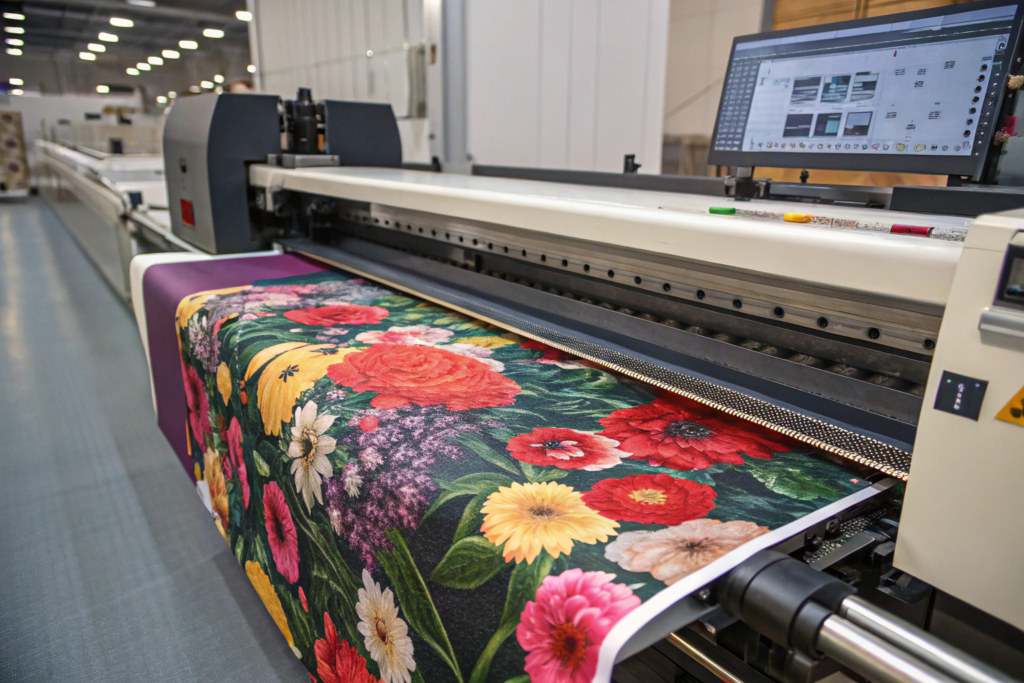
Hyper-digital reactive printing solves this by using high-speed Kyocera print heads to deposit reactive dye inks with 16-color depth and 1,200 DPI resolution directly onto prepared cotton or viscose fabric. There is no screen engraving cost, no minimum color separation limit, and the digital file-to-fabric turnaround is 48 hours instead of 3 weeks. A Parisian contemporary womenswear brand sent us an AI-generated floral pattern in December 2026—a design so complex it had gradations, watercolor bleeds, and 22 distinct hues blending into each other. Traditional screens would have simplified this down to 10 colors and lost the nuance. Our digital reactive printer reproduced every pixel faithfully. The fabric looked like a photograph printed on cotton lawn. They ordered 3,000 yards for a capsule collection that sold out in pre-orders before production even finished.
What’s the real difference between digital pigment and digital reactive?
This is a critical distinction that your designers need to understand. Digital pigment printing lays ink on top of the fabric, binding it with a binder. The hand feel can be stiff, especially on dark, high-ink-coverage designs. Digital reactive printing chemically bonds the dye into the cellulose fiber itself, so the fabric retains its original softness and breathability.
The trade-off is that reactive requires pre-treatment, steaming, and washing off unfixed dye, which adds processing steps and water usage. Pigment is simpler and cheaper. But for premium Spring 2027 apparel where hand feel is non-negotiable, reactive is the clear winner. A comparative guide on how to choose between digital pigment and reactive printing for premium apparel fabric in China breaks down the cost, hand feel, and durability differences. Our CNAS lab tested the crocking fastness on a high-density reactive digital print: a 4-5 rating on the AATCC 8 dry crock test. The pigment equivalent scored 3-4. That one-point difference is the gap between a garment that looks new after five washes and one that looks faded.
How do you handle color accuracy when there are 16 inks to calibrate?
Calibrating 16 colors is exponentially harder than 8. Our color management workflow uses a spectrophotometer with extended gamut profiling that measures the actual color output against the digital reference file every 100 meters during a print run.
If any ink density drifts beyond Delta E 1.0 from the target, the system stops and recalibrates automatically. We also run a 20-centimeter test strip at the start of every production lot and ship it to the client for physical approval before printing the full 3,000 yards. The digital file on your screen will never perfectly match the physical fabric because of monitor calibration differences, so this physical swatch approval remains a non-negotiable step. An overview of how to achieve consistent color management in high density reactive digital textile printing explains the ICC profiling process that makes this level of accuracy possible.
What are the MOQs and economics compared to screen printing?
Digital reactive doesn’t charge screen engraving fees, so the setup cost is essentially zero. The per-meter cost is higher than rotary screen at large volumes, but lower at small volumes.
For a 500-yard order, digital reactive is significantly cheaper than rotary screen because there’s no $800 screen engraving cost to amortize. For a 10,000-yard order, rotary screen is still about 15% cheaper per meter. The crossover point is around 3,000 yards, where the two methods reach rough cost parity. Our recommendation: digital reactive for capsules, samples, and market tests; rotary screen for confirmed volume basics. And if you want to run a 500-yard test before committing to a 10,000-yard screen order, we can match the digital color profile to the eventual screen profile so the bulk production looks identical to the tested sample. That bridge strategy is how smart brands de-risk print development.
Is the Matte Coated Cotton the New Leather Alternative for Spring?
The vegan leather market is saturated with PU and microfiber options that peel after two seasons and feel like plastic because, well, they are plastic. Consumers are increasingly associating "vegan leather" with "fast fashion landfill filler." Meanwhile, there’s a growing aesthetic movement toward materials that age gracefully, developing patina rather than flaking apart. The unmet need is a coated fabric that performs like a light weather-resistant shell but looks and ages like a natural material. Your outerwear buyers want the functionality of a technical coat with the soul of a vintage find. Those two briefs have been impossible to reconcile in one fabric until now.
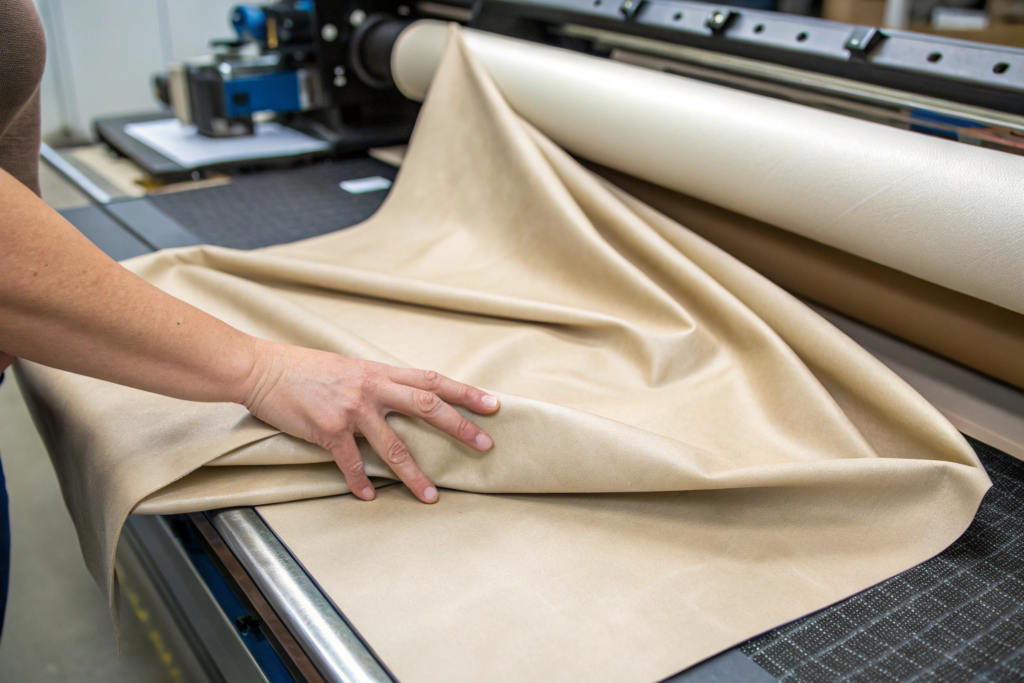
Our matte coated cotton uses a water-based polyurethane dispersion with a matting agent that eliminates shine entirely—the surface reads like uncoated paper, not plastic. The coating is applied at a thin 20-micron layer, just enough to make the cotton water-resistant to a 1,000mm hydrostatic head rating while keeping the fabric breathable and the hand soft. A Berlin contemporary brand developing a "no-plastic" outerwear capsule for Spring 2027 tested our matte coated organic cotton twill against a traditional shiny PU-coated fabric. The matte version looked like a waxed cotton from a heritage British brand, but without the maintenance hassle of re-waxing. The water beaded and rolled off for 30 seconds before the fabric wetted through—performance that’s perfect for a spring shower, though not for a downpour. Their marketing team built the campaign around "100% plastic-free rainwear," which is a claim shiny PU can never make.
How does the matte coating affect biodegradability?
This is the honest caveat. The cotton base is fully biodegradable. The water-based PU coating is not certified biodegradable in soil, though it is significantly less environmentally persistent than solvent-based PU or PVC because it lacks phthalate plasticizers and heavy-metal catalysts.
We’re actively testing a bio-based polyurethane derived from castor oil with one of our chemistry partners. The initial results show a 40% bio-content with identical durability, but the matting agents still require synthetic silica to achieve the flat finish. If biodegradability is the non-negotiable claim for your brand, a technical resource on how to source water-based matte coated cotton fabric from China with eco-friendly finish options provides updates on the chemistry developments. For Spring 2027, the realistic claim is "plastic-free, PVC-free, and solvent-free," not "fully biodegradable." Brands that oversell the eco-claim will get fact-checked by watchdog accounts and face backlash.
What colors and weights are commercially viable?
The coating works best on mid-to-heavyweight cotton substrates—think twills, canvases, and drills in the 250-350 GSM range. Lighter poplins and lawns don’t have enough body to support the coating without losing their drape.
We’re stocking the matte coating on an 8-ounce organic cotton twill, a 10-ounce canvas, and a 6-ounce ripstop for lighter jackets. The color palette leans into the dry, dusty, matte aesthetic: bone white, sagebrush green, rust brown, charcoal grey, and a washed black that already looks like it has five years of wear. Bright colors don’t work as well because the matting agent mutes saturation—a bright red comes out looking like brick, which may or may not suit your collection’s mood. A design guide on how to style matte finish coated cotton outerwear for Spring 2027 collections suggests silhouettes that maximize the fabric’s unique drape and surface quality. Shirting jackets, chore coats, and relaxed trench silhouettes all work well with this material’s natural stiffness and dry hand.
How does the coating hold up to washing and wearing?
This is where matte coating truly differentiates from glossy PU. Glossy PU coatings develop cracks and peeling as the plasticizer migrates out over time, leaving the surface looking like a dried-up riverbed.
The water-based matte PU doesn’t use migratory plasticizers, so it flexes with the cotton substrate rather than delaminating. Our 30-cycle AATCC 135 wash test shows zero delamination, zero cracking, and only a 5% reduction in water repellency, which is easily restored with a low-heat tumble dry or a quick pass with a cool iron. The coating will eventually wear thin at high-friction points like cuffs and collars, but it wears like a waxed cotton—gracefully and gradually—rather than failing abruptly. The garment looks better at month 12 than month 1. That wabi-sabi aging arc resonates deeply with the 2027 consumer who’s tired of disposable fashion.
Conclusion
Spring 2027 won’t reward brands that played it safe with last year’s fabric library. The market is tilting hard toward materials with genuine engineering behind the aesthetic. Plant-tech hybrids that solve the natural-versus-performance dilemma. Chemical seersucker textures that catch light on video and work at accessible MOQs. Hyper-digital reactive prints that reproduce AI-generated designs with photographic fidelity. Matte coated cottons that age like heritage waxed canvas without the maintenance. These four trends aren’t forecast guesses—they’re running on our machines in Keqiao right now, sampled and ordered by brands who are already three development cycles ahead of their competition.
At Shanghai Fumao, we don’t issue trend reports to fill blog content. We issue them because our 20-person R&D team has been running trials on these exact materials for months, and the lab data, the client feedback, and the order books all point in the same direction. The question for your brand isn’t "Should I pay attention to Spring 2027 trends?" It’s "Can I get samples of these four directions on my desk in time to make my line review deadline?" If you want to feel the ramie core-spun shirting, see the seersucker stripes in motion, inspect the 16-color digital print fidelity, or test the matte coated canvas water beading with your own eyes, email our Business Director Elaine at elaine@fumaoclothing.com. She’ll assemble a trend sample pack based on your specific product category and get it shipped within 72 hours. The Spring 2027 season isn’t waiting. Your fabric development shouldn’t either.