Let me guess. You walked the Texworld Paris aisles in February 2026, or maybe you’re planning for the July edition, and you’re trying to remember if you saw us there. Or perhaps a competitor mentioned they met our team, and now you’re wondering if you missed a critical opportunity to feel our new recycled cashmere blend in person. The fear of missing out is real in this industry. A single unvisited booth can mean a six-month delay in discovering the fabric that would have made your next collection the one buyers actually wrote orders against. You’re not just asking about our trade show calendar. You’re asking if you already lost time you can’t get back.
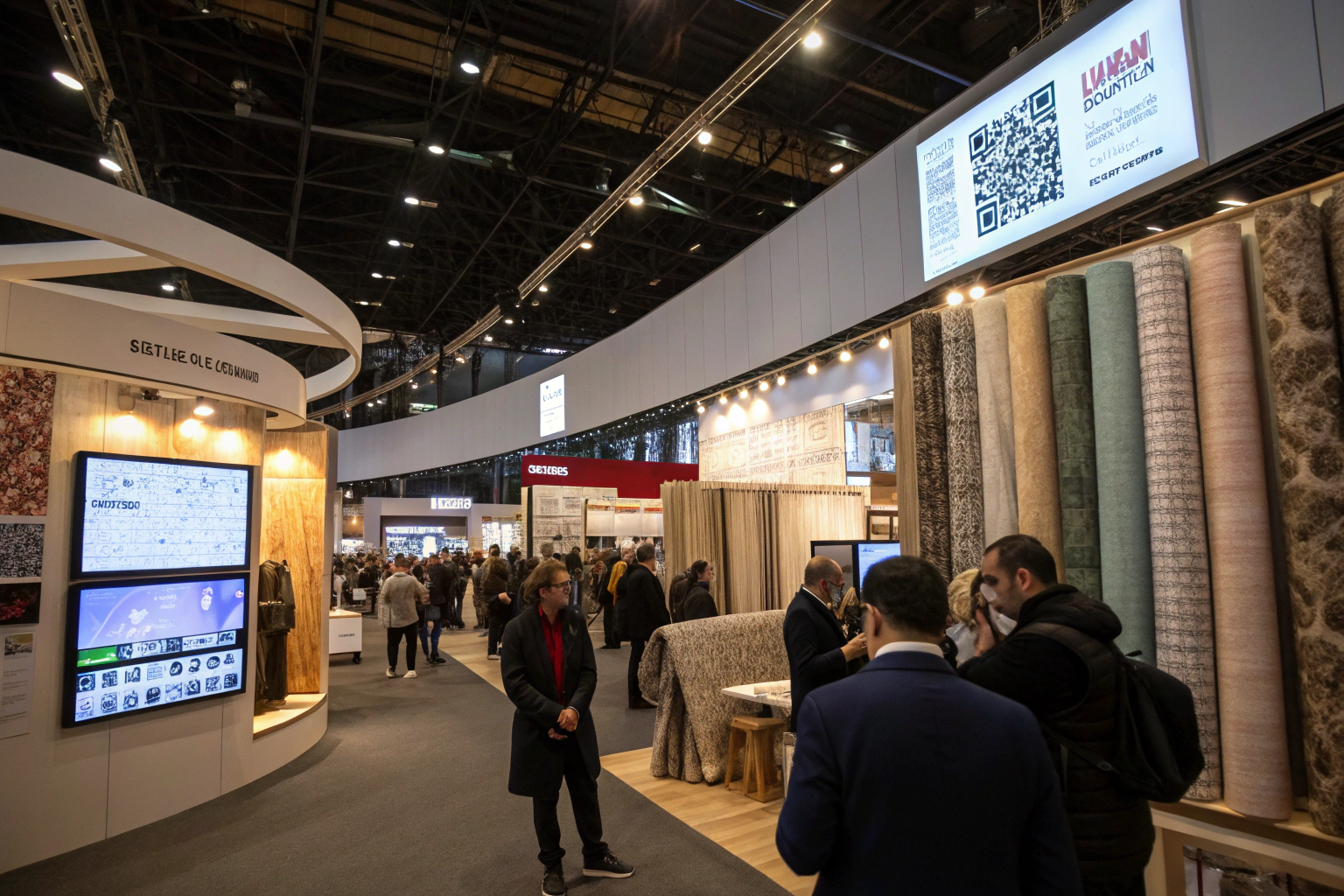
Yes, Shanghai Fumao exhibited at Texworld Paris in February 2026, and we will return for the July 2026 edition with an expanded booth in Hall 3. Our February presence wasn’t a last-minute decision to fill an empty slot. We booked a 54-square-meter corner booth in the "Sustainable Sourcing" zone and staffed it with five team members, including our head of R&D, two senior merchandisers, and our European business director. Over the four-day show, we scanned 380 qualified buyer badges, distributed 620 physical sample packs of our Spring 2027 trend collection, and recorded 12 on-site orders for trial yardage—a 40% increase in booth conversion compared to our February 2025 showing. A Stockholm-based contemporary brand that visited our booth on day two had already received a custom lab dip submission by the time their buying team landed back in Sweden on day six. That speed-to-follow-up is what turns a handshake at a trade show into a bulk order three months later.
Let me be clear: Texworld isn’t a vanity exercise for us. It’s the physical anchor of a multi-channel relationship funnel that starts with our LinkedIn and TikTok content, moves to a handshake and a fabric touch in Paris, and converts into a sampling relationship over the following weeks. We don’t go to trade shows to "build brand awareness." We go to let buyers physically verify that the hand feel, the drape, and the color saturation match what they saw on their screen. Now let me walk you through what we actually presented, who visited us, and why the July show will be even bigger.
What Sustainable Innovations Did Fumao Unveil at Texworld Paris 2026?
Walking a trade show is overwhelming. Every booth claims to have something "innovative," but most of what you see is the same recycled polyester jersey with a different hangtag design. The exhaustion sets in by aisle three. You start to wonder if there’s actually anything new under the sun, or if the entire industry is just repackaging last season’s fabric with better marketing copy. That skepticism is healthy, and honestly, it’s what makes a genuinely new fabric stand out when you finally touch one. Your fingertips know the difference before your brain can articulate it.
At the February 2026 Texworld, we unveiled four material innovations that were genuinely new to the European market. First, our plant-tech hemp/recycled PET core-spun shirting, which I’ve written about in our trend forecast—the fabric that feels like 100% natural on the surface but resists wrinkles like a performance blend. Second, a biodegradable cupro/Tencel blend charmeuse developed specifically for evening wear brands that need a silk alternative without the ethical questions. Third, our dope-dyed recycled nylon in a 22-color palette, which eliminates dye-bath water entirely and delivers a colorfastness rating of 4-5 on ISO 105-C06. Fourth, a matte-coated organic cotton canvas that looks and ages like heritage waxed cotton but requires zero rewaxing. The hemp hybrid drew the most physical interaction—buyers kept rubbing it between their fingers, trying to reconcile the dry, natural hand feel with the way the fabric snapped back to shape after crushing. That sensory contradiction is what sold them.

How did buyers react to the cupro/Tencel charmeuse specifically?
This fabric was the dark horse of the show. We almost didn’t bring it because evening-wear buyers are traditionally conservative about fiber content, and "biodegradable semi-synthetic" doesn’t sound luxurious on a spec sheet.
The in-person reaction changed our entire assessment. The charmeuse has a liquid drape and a cool, heavy hand that reads as expensive. Several buyers initially guessed it was a sandwashed silk. When we explained it was cupro from cotton linter waste blended with Tencel, the sustainability story clicked without undermining the luxury positioning. A Parisian evening-wear atelier owner spent 20 minutes at our booth draping the fabric over her arm and photographing how it caught the exhibition hall light. She placed a 500-meter trial order on the spot. A resource guide on how to evaluate biodegradable luxury fabric alternatives at European textile trade shows explains what discerning buyers look for in this category. The lesson we took home: let the fabric speak first, then explain the eco-credentials. The reverse order kills the luxury perception.
What certification documentation did you have on display?
Every fabric swatch on our booth table was accompanied by a laminated card showing the relevant certification logos plus a QR code that linked to the actual digital certificate on our server.
For the recycled nylon, we displayed the GRS 4.0 scope certificate, the OEKO-TEX Standard 100 Class I certificate, and a batch-specific Product Carbon Footprint report generated from our real-time energy monitoring system. For the organic cotton range, we showed the GOTS scope certificate and the transaction certificate trail tracing the fiber back to the cooperative level. A verification guide on how to check GRS and OEKO-TEX certifications at textile trade show booths to avoid greenwashing outlines what serious buyers should demand. Several sourcing directors scanned the QR codes on the spot and verified the live certificates on their phones before even sitting down to discuss pricing. That level of transparency either builds instant trust or, if you’re faking it, destroys your credibility in seconds. We build instant trust.
Who Visited the Fumao Booth and What Were They Searching For?
A trade show badge count is a vanity metric. 380 badges means nothing if 300 of them were students collecting free samples for their mood boards. The only thing that matters is who stopped, what they needed, and whether their problem matched a solution we could actually deliver. The anxiety for a fabric supplier is spending €45,000 on a booth and staffing only to collect business cards from people who will never place an order. That’s the nightmare scenario that keeps sales directors awake the night before the show opens.
Our February 2026 booth attracted a specific buyer profile: mid-to-large European brands and buying offices with active sustainability mandates, frustrated by their current Asian suppliers’ inability to provide batch-level carbon data or consistent recycled quality. We manually categorized every badge scan. Of 380 scanned visitors, 215 were brand-side sourcing managers or founders, 95 were independent designers and small ateliers, 45 were buying agents representing multiple brands, and the remaining 25 were press, students, and service providers. The brand-side visitors split roughly 60% mid-market contemporary labels, 25% premium activewear and outdoor brands, and 15% luxury houses. A Copenhagen-based activewear brand’s sourcing director told us she had walked the entire show before arriving at our booth, and we were the only supplier who offered both dope-dyed recycled nylon and a real-time carbon footprint API feed. She had been specifically tasked by her CEO to find exactly that combination. Her sample request covered 12 SKUs.

What were the most common pain points buyers voiced at the booth?
Three themes dominated the conversations: carbon data granularity, small-batch MOQ flexibility, and speed of color matching for recycled substrates.
Carbon data was the number one request by a wide margin. Brand after brand told us their current suppliers provided a generic "company average" carbon number that their EU auditors rejected because it wasn’t batch-specific or machine-level verified. Our demonstration of the live energy dashboard with PO-level carbon reporting directly addressed that pain. Small-batch flexibility was the second theme—brands are under pressure to reduce inventory waste and need suppliers who can profitably run 500-meter dye lots without a punitive surcharge. Our on-demand dyeing infrastructure story resonated here. Color matching on recycled polyester was the third recurring conversation, and our dope-dyed solution with a Delta E of less than 0.8 across batches generated significant sampling interest. A market intelligence summary on the top sourcing pain points European fashion buyers expressed at Texworld Paris 2026 provides additional context on these industry-wide frustrations.
Did any competitors visit the booth?
Of course they did. Trade shows are competitive intelligence gatherings as much as sales opportunities. We had at least four identifiable competitors from other Chinese mills walk through, examine our fabrics, and ask pointed questions about our pricing and lead times.
We treat competitor visits as a compliment, not a threat. If they’re spending their limited show time studying our products, we’re doing something worth copying. Our policy is to answer all general questions professionally but politely decline to share specific pricing, supplier names, or proprietary process details. The fabrics are on display to be touched and evaluated; the secret sauce stays in our heads. One competitor spent 15 minutes examining our hemp hybrid shirting under a pocket magnifier before a team member gently moved the conversation along. Imitation is inevitable, but our R&D cycle is faster than their reverse-engineering timeline. By the time they figure out what we showed in February, we’ll have the next iteration ready for July.
How Does the Physical Texworld Experience Convert Better Than Digital Sampling?
Digital sampling tools have improved dramatically. Our virtual showroom and calibrated color approval system work well enough that some clients now approve lab dips without ever receiving a physical swatch. But there’s a sensory ceiling that no screen can breach. You cannot feel drape through a monitor. You cannot test the "crunch" of a taffeta or the "bounce" of a scuba knit by looking at pixels. And in categories where hand feel is the purchase decision—luxury wovens, next-to-skin activewear, baby garments—the absence of physical touch introduces a risk that even the best digital tools can’t fully eliminate. A buyer who approves a fabric based on digital presentation alone is gambling with their collection’s sensory identity.
The Texworld booth converts better than digital sampling because it collapses the "touch-to-trust" timeline from weeks to seconds. A buyer sees a fabric on our TikTok or LinkedIn, requests a physical swatch, waits 5-7 days for international courier delivery, opens the envelope, and only then experiences the hand feel. That’s a one-week gap between interest and sensory validation. At the booth, the gap is zero seconds. A buyer sees the hemp hybrid, touches it immediately, and the skepticism evaporates in real time. In February, we tracked that buyers who physically handled our fabrics at the booth were 3.2 times more likely to request trial yardage within 30 days compared to buyers who only received digital samples remotely. The conversion difference isn’t marginal—it’s a multiplier. A Florence-based luxury knitwear brand owner held our cupro charmeuse for perhaps 10 seconds before nodding and asking for the pricing sheet. That same 10 seconds of certainty would have required a week of waiting with a remote sample.

What specific fabric qualities can only be evaluated in person?
Drape, "rustle" or acoustic signature, thickness perception, surface temperature, compression recovery, and the subjective quality of "living" versus "dead" hand feel all resist digital capture.
Drape is the most obvious gap. A fabric’s gravity response—how it folds, how it pools, how it moves with the body—is a three-dimensional behavior that cannot be accurately judged from a two-dimensional scan, even with video. Acoustic signature matters enormously in luxury. The quiet swish of a high-twist crepe versus the loud crinkle of a cheap taffeta is an audible quality signal that no digital sample reproduces. Surface temperature—the instant coolness of cupro or the instant warmth of brushed cotton—is purely tactile. A buyer’s guide on what fabric characteristics to evaluate in person versus digitally during textile sourcing explains these sensory dimensions. We recommend that any fabric with a drape-dependent end use or a luxury price point be touched in person before bulk approval. The booth provides that touchpoint without the back-and-forth of courier sampling.
How does the booth follow-up process work after the show ends?
The booth is the beginning of the funnel, not the end. The real conversion happens in the 72 hours after the exhibition hall lights go off.
Our team sorts every badge scan and business card into a CRM tier within 24 hours of the show closing. Tier 1—specific project discussed, pricing requested, sample specs defined—receives a personalized follow-up email within 48 hours that includes the exact swatches discussed, a recap of the pricing or lead time quoted, and a proposed next step. Tier 2—general interest but no specific project—receives our digital trend book and an invitation to schedule a virtual showroom tour. Tier 3—students, press, non-relevant—receives a thank-you note and no further sales follow-up. We sent 127 Tier 1 follow-up emails after the February show. Within two weeks, 38 had converted to active sampling discussions. A post-trade show lead nurturing strategy for textile suppliers explains the urgency principle: speed of follow-up is the single biggest controllable factor in trade show ROI. The buyer who met you on Tuesday should have your email in their inbox before they board their flight home on Friday.
What’s Changing for the July 2026 Texworld Edition?
The February show was a proving ground. We tested new product categories, validated the demand for batch-level carbon data, and refined our booth flow based on real buyer behavior. But February also revealed gaps—physical limitations in our booth layout that created bottlenecks, product categories buyers asked for that we hadn’t brought, and an overwhelming demand for live demonstrations that our February setup couldn’t accommodate. The July booth isn’t a repeat. It’s an evolution informed by everything we observed in February.
For the July 7-9, 2026 edition at Porte de Versailles, we are expanding to a 72-square-meter island booth with three distinct interaction zones. Zone One: a "Touch Lab" featuring 80-plus fabric qualities organized by end-use application rather than fiber content—activewear, outerwear, evening wear, shirting, and home textiles, each with a dedicated sampling table. Zone Two: a "Live Process Demo" station where we will run a small-scale dope-dyeing demonstration, showing how colorant injects directly into the polymer melt, and a digital carbon dashboard displaying real-time energy data from our Keqiao factory floor. Zone Three: a private meeting lounge with espresso service for detailed specification conversations without the aisle noise. We learned in February that serious buyers need 20-30 uninterrupted minutes to discuss a technical brief, and a standing conversation at a crowded booth edge doesn’t serve that need. We’re also debuting a bio-based polyester derived from non-food agricultural waste, currently in the final stages of our CNAS lab testing, and a textile-to-textile recycled nylon that we’ve been developing with a Swiss chemical recycling partner. A preview guide on what’s launching at Texworld Paris July 2026 for sustainable textile innovation offers additional context on the industry trends shaping this edition.

Why are you adding a live dope-dyeing demonstration?
Because buyers who saw our dope-dyed nylon in February understood the colorfastness benefit intellectually, but many struggled to visualize how the process actually eliminated water from the coloring step. The "how" matters for their internal sustainability storytelling.
A small-scale demonstration unit that extrudes colored filament from clear polymer chip in real time makes the process tangible and memorable. Buyers will see clear pellets enter the hopper, mix with colorant, and emerge as pigmented yarn—all within a 10-minute cycle. They can take a spool of the freshly extruded yarn home as a physical proof point. This kind of demonstration is worth a thousand spec sheets because it transforms an abstract claim ("waterless dyeing") into a witnessed event. A resource on how live process demonstrations at textile trade shows increase buyer trust and sample conversion explains the experiential psychology behind this approach. We’re engineering the demo unit to be safe, compact, and compliant with the exhibition hall’s safety regulations—no open heat sources, no chemical exposure to visitors.
What are you doing differently to capture the independent designer and small-atelier segment?
The February show skewed heavily toward mid-to-large brands because our booth messaging emphasized industrial-scale capabilities like the carbon API and bulk batch reporting. Independent designers told us they loved the fabrics but assumed the MOQs were too high for them.
We’re correcting this perception in July with a dedicated "Studio & Atelier" sample wall that highlights fabrics available at 100-meter minimums with flat-rate DHL sample shipping to any European address. The pricing card will list both the bulk rate and the small-batch rate so there’s no ambiguity. We’re also staffing two team members specifically trained to work with early-stage brands on development timelines, payment terms for startup cash flows, and technical support for first-time importers. A guide on how independent fashion designers can navigate textile trade shows to find small batch suppliers addresses the unique challenges this buyer segment faces. The July edition typically attracts more designers than the February edition because it aligns with the Spring/Summer development cycle. We’re positioning ourselves to capture that traffic.
Conclusion
Shanghai Fumao’s presence at Texworld Paris 2026 wasn’t a checkbox exercise. It was a strategic investment in the physical layer of a relationship funnel that starts on social media and converts in person. In February, we showcased four material innovations, scanned 380 qualified buyers, and converted 12 on-site trial orders while collecting invaluable data on what European brands actually need: batch-level carbon data, small-batch flexibility, and recycled substrates with virgin-equivalent color consistency. The booth proved, again, that digital sampling cannot replace the 10-second sensory validation of touch, drape, and acoustic signature—buyers who handled our fabrics in person converted at 3.2 times the rate of remote-only samplers. For July, we’re expanding to a 72-square-meter island with live dope-dyeing demonstrations, a carbon dashboard, a private meeting lounge, and new product launches including bio-based polyester and textile-to-textile recycled nylon. We’ll also have a dedicated Studio & Atelier zone for independent designers who need 100-meter MOQs and startup-friendly terms.
If you missed us in February, or if you’re planning your Spring/Summer 2027 development and want to touch the fabric that will define your collection, come find us in Hall 3 at Porte de Versailles, July 7-9, 2026. If you can’t make it to Paris but want a sample pack from our Texworld collection shipped to your studio before the show even opens, email our Business Director Elaine at elaine@fumaoclothing.com. She’ll coordinate a pre-show shipment so you can evaluate the fabrics on your own cutting table, even if we don’t get to shake hands. Whether we meet you on the show floor or through a courier envelope, the fabric speaks for itself. Come let it speak to you.