Have you ever felt that twinge of uncertainty when a new shipment of garments arrives? You’ve checked the color, the stitching, the fit—but what about the things you can’t see? The invisible chemicals, the residual dyes, the heavy metals that could be lurking in the fabric itself. For a brand, this isn’t just about compliance; it’s about consumer trust and safety. One failed test from a vigilant retailer or a concerned customer can unravel years of brand building overnight.
The truth is, ensuring imported garments are free from harmful substances is a complex, multi-layered process that begins long before the fabric is even woven. It starts at the raw material level and requires rigorous, third-party-verified testing at every stage of production. Simply asking for a “test report” isn’t enough. You need a partner embedded in the supply chain who understands the global regulatory landscape and implements proactive, traceable quality control systems to mitigate these hidden risks.
In this article, I’ll share the inside perspective from the heart of China’s textile industry on how to truly safeguard your products. We’ll move beyond basic compliance checklists and dive into the practical, often overlooked steps that separate truly clean supply chains from those that merely pay lip service to safety.
What are the most common harmful substances in textiles?
The list of potential contaminants in fabric is longer than most brands realize. It goes far beyond the well-known formaldehyde and azo dyes. Understanding this landscape is the first step to managing it. Think of it like a pantry: you need to know every ingredient, not just the main ones.
The most common culprits fall into several categories: restricted chemical residues (like alkylphenol ethoxylates or APEOs used in dyeing), allergenic disperse dyes, heavy metals (cadmium, lead, mercury) from pigments or catalysts, chlorinated phenols (like PCPs) from biocides, and regulated phthalates often found in prints or PVC coatings. Even natural fibers aren’t immune, as pesticides and fertilizers used in conventional cotton farming can leave residues.

How can hidden chemicals survive the manufacturing process?
Many harmful substances are introduced during wet processing—dyeing, printing, and finishing. For instance, certain softeners or waterproofing agents might contain perfluorinated chemicals (PFCs). The problem is, these substances can bind tightly to fibers. If the factory’s washing-off process is inadequate to meet strict standards like the Oeko-Tex Standard 100 limit values, residues remain. It’s not always negligence; sometimes it’s a lack of technical knowledge about the precise chemical formulations being used. A vivid analogy is washing your hands: a quick rinse under water doesn’t remove all the grease; you need the right soap, temperature, and scrubbing action. In 2022, we audited a cooperative printing factory and found their post-print washing water temperature was too low, which risked leaving excess binder and ammonia. We adjusted the washing protocol, which not only improved safety but also enhanced the fabric’s hand feel—a win-win that the factory itself hadn’t prioritized. This is why partnering with a source like Shanghai Fumao, which manages the process, is critical.
Why do "safe" raw materials sometimes fail final tests?
This is a major pain point. You might source GOTS-certified organic cotton yarn, but if it’s dyed in a facility that also processes polyester with heavy metal complexes, cross-contamination can occur. Similarly, a fabric might pass its initial tests, but the accessory supplier uses a nickel-containing button or a zipper with excessive lead in the pull. The entire garment is only as safe as its least compliant component. This is where a comprehensive garment inspection and testing protocol that covers all trims and accessories is non-negotiable. We enforce a “one fail, all fail” policy for component testing before final assembly.
How can you verify your supplier’s testing claims?
Requesting a test report is step one. Verifying its authenticity and relevance is where real due diligence happens. A generic, old, or copied report is worse than useless—it creates a false sense of security that can lead to catastrophic recalls.
You must check the report’s date (should be for the current production batch), the accredited lab that issued it (look for ISO 17025 accreditation), the exact product type and style tested, and, crucially, the testing standard and the specific substances screened for. A report against China’s GB standard might not cover all REACH SVHCs. Ask for the full lab test report, not just a certificate. And don’t be shy about spot-checking; insist on sending random post-production samples to a lab of your choice.

What questions should you ask when reviewing a test report?
Go beyond “Do you have a test report?” Ask these specific questions: “Can you provide the full test report from an ISO 17025 accredited lab for this exact batch?” “Which specific standard was this tested against (e.g., Oeko-Tex Standard 100 Class I for infants, or Class IV for home textiles)?” “Does this report cover all applicable regulations for my target market, including the latest California Proposition 65 listed substances?” “How do you ensure the tested sample is representative of the bulk production?” The answers will quickly separate procedural box-tickers from genuinely compliant partners. At Fumao, we use a QR code system where clients can scan a bale label and access the specific test report for that fabric lot, along with its composition and production history.
Is in-house testing by the supplier reliable?
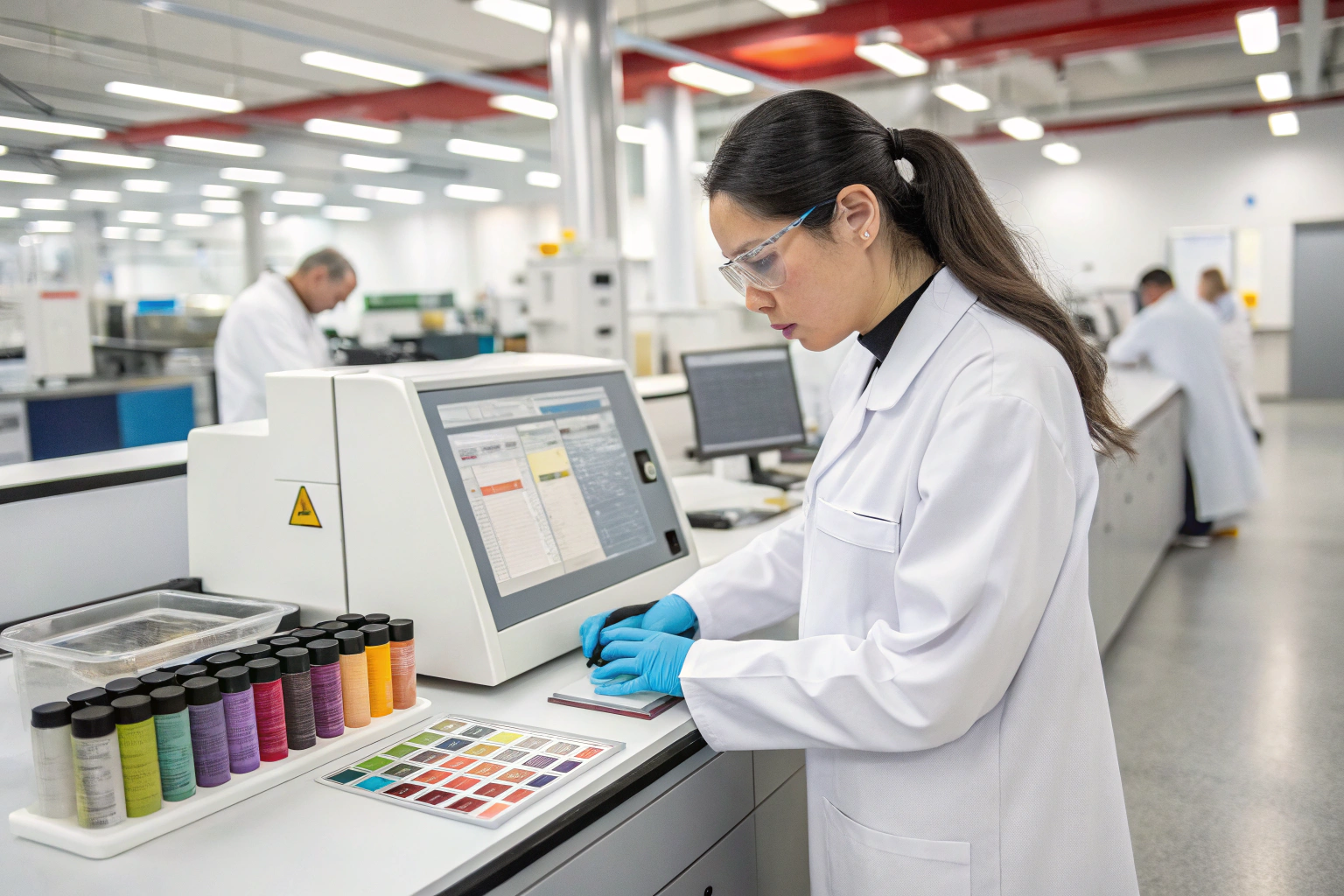
It depends entirely on the facility. A basic in-house lab can perform quick checks for pH, colorfastness, or shrinkage, which is great for process control. However, for authoritative substance testing, you need a professionally certified lab. Our own CNAS-certified lab (China’s equivalent of ISO 17025) allows us to perform pre-screening for heavy metals, formaldehyde, and pH. This acts as a crucial internal gatekeeper. But for the final, binding report for clients, we always use and recommend third-party giants like SGS or ITS. This two-tier system provides both speed and absolute credibility. It’s like having a good home blood pressure monitor, but still going to the hospital for an official diagnosis.
What practical steps ensure a clean supply chain from start to finish?
Verification is reactive. The real goal is to build a proactive system that prevents contamination in the first place. This requires mapping and controlling every touchpoint in the supply chain, from the spinner to the finisher.
The core strategy is “control at source.” This means approving not just the final factory, but the dye and chemical suppliers, the accessory makers, and even the packaging material. We maintain a “Green Chemical Inventory” for our dyeing partners, only allowing pre-approved, eco-certified auxiliaries. Furthermore, production scheduling matters. Running a light-colored babywear fabric on the same machine immediately after a heavy, dark synthetic without a thorough cleaning cycle is a recipe for contamination. We mandate and audit cleaning logs between production runs.

How does raw material selection impact final product safety?
This is the foundational step. Choosing fibers with inherent safety profiles dramatically reduces downstream risk. For instance, opting for GOTS-certified organic cotton eliminates concerns about pesticide residues. Using recycled polyester from certified sources (like our rPET with GRS certification) ensures it’s free from contaminants often found in post-consumer waste. In 2023, a German children’s wear brand came to us with a problem: their conventionally sourced cotton knits were inconsistently failing for pesticide traces. We switched them to a fully integrated organic cotton supply chain we manage, from yarn to fabric. The result? Zero failures in their last 4 batches, and they now market the line as “100% tested safe,” allowing them to command a 15% price premium. The right material choice is both a safety and a value-creation strategy.
Can you audit a factory’s processes for chemical management?
Absolutely, and you should. Don’t just audit for quality; audit for chemical safety. Key things to look for (or ask your agent to verify): 1) MSDS Accessibility: Are Material Safety Data Sheets for all chemicals on the factory floor readily available and understood by workers? 2) Storage: Are chemicals properly stored, labeled, and segregated to prevent cross-contamination or reactions? 3) Dosing Systems: Are automated, closed dosing systems used, or are chemicals measured roughly by hand? Automated systems improve accuracy and reduce worker exposure. 4) Wastewater Treatment: How is effluent treated? A responsible factory will have at least primary treatment. This isn’t just an environmental issue; poor wastewater management can lead to recirculation of contaminants. (Here’s a simple table of audit checkpoints):
| Audit Focus Area | What to Look For | Red Flag |
|---|---|---|
| Chemical Storage | Labeled, sealed containers; segregated by type; dry, covered area. | Unmarked barrels, leaking containers, improper stacking. |
| Production Records | Detailed logs of dye/chemical lots used per batch; machine cleaning records. | No records, or generic “same as last time” notes. |
| Lab & Testing | In-house lab for pre-checks; contracts with accredited third-party labs. | No testing capability, reliance on supplier-provided certs only. |
How do global brands like ZARA or H&M manage this risk?
Large retailers don’t take chances. They deploy rigorous, proprietary compliance programs that are often stricter than local laws. They understand that their brand reputation is on the line with every single garment sold.
These programs, like H&M’s Conscious Commitment or Inditex’s (ZARA) Join Life, are built on three pillars: 1) Restricted Substances Lists (RSLs): They provide suppliers with extensive, frequently updated lists of banned or limited chemicals. These lists often consolidate and exceed requirements from REACH, CPSIA, Prop 65, etc. 2) Mandatory Testing: They require testing from approved labs at specified frequencies (e.g., per style, per dye lot). 3) Unannounced Audits: They use third-party auditors to conduct surprise inspections of manufacturing facilities, checking chemical management, worker safety, and environmental practices.

What is a Restricted Substances List (RSL) and why is it critical?
An RSL is your brand’s bible for chemical safety. It’s not a static document; it’s a living list that evolves as new research and regulations emerge. A comprehensive RSL will detail each substance, its CAS number (a unique chemical identifier), the limit of detection, the test method to be used, and the applicable product category. For example, formaldehyde limits for babywear (Class I) are drastically lower than for decorative textiles (Class IV). Relying on a generic list is risky. You need one tailored to your product categories and markets. We help our clients interpret and implement their RSLs by translating them into actionable instructions for our dyeing and finishing partners. For instance, if a client’s RSL bans alkylphenol ethoxylates (APEOs), we ensure our chemical supplier provides a written guarantee and we run periodic screening tests.
How does integrated manufacturing reduce contamination risk?
This is perhaps the biggest advantage of working with a vertically-aligned partner like Shanghai Fumao. When weaving, dyeing, and finishing are under coordinated management—even if in cooperative factories—you drastically reduce the “black boxes” in your supply chain. We control the “recipe.” We know the exact origin of the yarns, the specific dye batches, and the finishing agents applied. There are no anonymous sub-suppliers. This traceability is gold for risk management. In contrast, a trading company that just sources finished fabric from an open market has little to no control over these processes. The risk is outsourced, but so is the visibility and the ability to fix root causes. Our integrated approach lets us guarantee consistency and safety in a way a fragmented supply chain simply cannot.
Conclusion
Ensuring your imported garments are free from harmful substances is a continuous journey of diligence, not a one-time paperwork exercise. It demands a shift from reactive testing to proactive supply chain design. The most effective strategy combines selecting safer raw materials, partnering with transparent and technically capable manufacturers, implementing rigorous and verified testing protocols, and understanding the dynamic landscape of global regulations.
True safety is woven into the fabric from the very first fiber. It requires a partner who doesn’t just sell you a product but co-owns the responsibility for its integrity. This level of partnership transforms compliance from a cost center into a powerful brand asset, building unshakable trust with your customers.
If you’re tired of worrying about invisible risks in your supply chain and want to build a genuinely clean, transparent, and reliable product line, let’s talk. We have the infrastructure, the expertise, and the track record to be your safeguard. For a detailed discussion on how we can secure your next collection, reach out directly to our Business Director, Elaine. She and her team specialize in turning complex safety challenges into streamlined production realities. Contact Elaine at: elaine@fumaoclothing.com.