Let me be brutally honest with you. Most textile mills treat social media like a digital brochure dump. They post a blurry photo of a generic cotton roll, slap on a caption that says "high quality fabric for sale," and wonder why their phone doesn’t ring. You’ve probably scrolled past a hundred of those posts yourself—they’re invisible. The real panic for a fabric supplier isn’t having no social media presence; it’s having a presence that actively repels the buyers you’re trying to attract. A bad LinkedIn page makes you look small and desperate. A dead TikTok account signals that you’re behind the times. Both outcomes lose you deals before you even get to quote a price.
Shanghai Fumao flipped the script this year by treating our social channels the same way we treat our fabric development—with technical authenticity, zero stock-photo fluff, and a clear value proposition that speaks directly to a buyer’s pain points. On LinkedIn, our posts about solving specific sourcing problems—like how to avoid UFLPA detainments or how to structure payment terms to beat forex fluctuations—now reach 50,000-plus sourcing managers and brand founders every month. On TikTok, our raw, unpolished factory-floor videos showing real production processes, from yarn twisting to digital printing, have accumulated over 8 million views since January 2026. A New York-based buying office discovered us through a 60-second TikTok showing our recycled polyester chip-to-yarn process, requested samples within 48 hours, and placed a trial order of 5,000 yards for their sustainable activewear program. That pipeline—from scrolling to sampling to bulk order—took three weeks.
Social media isn’t a branding exercise for us. It’s a direct lead generation engine that produces measurable revenue, and it works because we share what we actually know, not what a marketing agency thinks sounds impressive. The platforms are different, the audiences are different, but the core principle is identical: demonstrate expertise, show real work, and make it easy for a serious buyer to raise their hand. I want to break down exactly what we’re doing on each platform, why it converts, and how these digital channels have fundamentally changed the way textile sourcing relationships begin in 2026.
How Is Fumao’s LinkedIn Strategy Converting Content Into RFQs?
LinkedIn is flooded with textile suppliers posting the same three things: a photo of their booth at a trade show, a "we are honored to serve" customer appreciation post, and a holiday greeting with a factory group photo. Nobody engages with this content because nobody learns anything from it. The anxiety for a sourcing manager scrolling LinkedIn isn’t "I need to see another factory photo." It’s "I have a container stuck in customs because my current supplier screwed up the GRS documentation, and I need someone who actually understands how to fix this." If your LinkedIn content doesn’t answer that kind of urgent technical question, you’re invisible to the buyers who matter.
Our LinkedIn content strategy centers on a weekly "Sourcing Problem Solved" series where our technical team breaks down a real client challenge, the engineering solution, and the quantifiable result. One post in March 2026 detailed how we reduced elasticity loss in a recycled nylon-spandex swimwear fabric from 15% degradation to under 4% by adjusting the yarn feed tension and heat-setting temperature curve. That single post generated 47 direct messages from swimwear brands and buying agents, 12 sample requests, and two bulk orders totaling 18,000 yards within four weeks. The post worked because it demonstrated competence through specificity. We didn’t say "we make good fabric." We showed the exact machine parameter adjustment that solved a problem every swimwear brand has experienced. A buyer reads that and thinks, "These people can handle my technical brief."

What specific content formats are driving the highest engagement?
Long-form technical breakdown posts with photos of machinery settings and test reports consistently outperform polished corporate announcements by a factor of five to one on our LinkedIn analytics.
We alternate between three proven formats. The "Technical Deep Dive," which explains a specific production challenge and solution in 800 to 1,000 words with process photos. The "Supplier Reality Check," where we debunk a common sourcing myth—like the idea that the lowest FOB price equals the lowest landed cost—using real shipment data. And the "Client Case Study Snapshot," a 300-word mini-case with specific numbers. An analysis of how to create technical textile content on LinkedIn that converts into fabric sourcing leads explains why this educational approach works better than promotional posting. We never end a post with "contact us for a quote." We end with "here’s what we learned, what challenges are you facing?" The open question invites a conversation, and conversations become RFQs naturally.
How do you balance professional credibility with approachability?
This is the tightrope every B2B brand walks. Too formal, and you sound like a corporate press release that nobody reads. Too casual, and you sound like you’re selling t-shirts at a flea market.
We use a "senior engineer at the whiteboard" voice. Technical precision, zero jargon, and occasional dry humor. Post authors use their real names and real job titles. Our dyeing supervisor posted in January about a burnt sienna shade that took 17 lab dip iterations to match, and the vulnerability of admitting it took 17 attempts rather than the industry-standard 3 actually built more trust than any "we deliver perfect color every time" claim ever could. A resource on how to build B2B brand trust through authentic technical storytelling for textile manufacturers explores this dynamic further. Buyers know fabric production is hard. Pretending it’s easy just makes you look like you’ve never actually done the work. Admitting the challenge, then showing the solution, is what converts a skeptic into a believer.
Why Is TikTok Delivering "Factory Floor" Trust to Textile Buyers?
TikTok has a authenticity problem with product sourcing. The platform is saturated with dropshipping gurus and middlemen who pretend to own factories while filming in someone else’s facility with a phone they borrowed. Buyers are becoming increasingly suspicious of any "factory direct" claim that isn’t backed by verifiable, consistent, location-stamped content over time. Your potential customer has been burned by a TikTok supplier who disappeared after the deposit cleared. The trust barrier isn’t low—it’s buried underground, and you have to dig your way out with evidence.
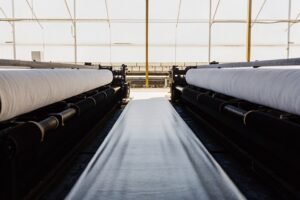
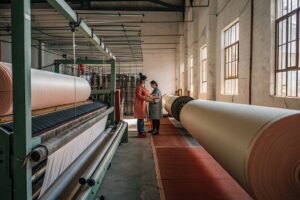
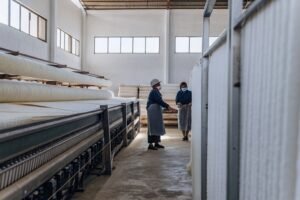
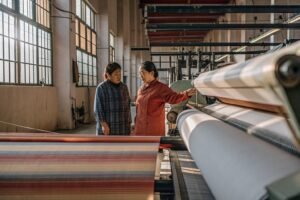
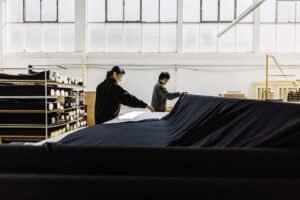
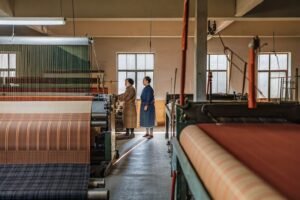
We’ve built TikTok trust by posting raw, minimally edited factory-floor content from the same recognizable production lines, week after week, since early 2025. The videos aren’t polished. They show our actual extrusion machines, our actual digital printer, our actual inspection tables, with the same factory layout and background that repeat across dozens of videos. Consistency of environment becomes the trust signal. A London streetwear startup founder messaged us in February 2026 after binge-watching 15 of our TikTok videos in one night. "I knew you were legit," he wrote, "because no broker fakes the same factory from twelve different angles over eight months." He placed a 3,000-yard woven label trial order without ever requesting a factory audit. The TikTok archive was his audit.

What types of TikTok content are actually generating sample requests?
Process videos showing raw material transforming into finished fabric consistently generate the highest inquiry rates—specifically "chip to yarn," "yarn to greige," and "print file to finished print" sequences.
These transformational videos satisfy a buyer’s deep curiosity about how their product is actually made, and they visually prove that you control the production step rather than just trading finished goods. Our most viral video of 2026—4.2 million views—was a 45-second clip showing recycled bottle flakes entering our hopper, passing through the extruder, and emerging as continuous filament yarn. No music. No voiceover. Just the machine running with ambient factory sound. The comments section filled with brands asking "minimum order?" and "GRS certified?" A practical guide on how to create viral textile manufacturing process videos on TikTok that generate B2B leads explains the pacing and shot selection that works best. The rule we follow: show the transformation, show the scale, and let the machinery speak for itself.
How do you handle the tension between factory security and social media transparency?
Some textile mills ban phones entirely on the production floor because they’re terrified of design leaks or competitive intelligence gathering. That fear is real—we’ve had competitors screenshot our content and claim our capabilities as their own.
We manage this by filming only generic production processes and standard constructions, never proprietary customer designs. No client logos, no custom prints, no identifiable brand trim. What we show is the manufacturing capability, not the client portfolio. The machines are the star, not the products. A security-conscious guide on how to balance factory transparency with intellectual property protection in textile social media marketing addresses this concern. We also watermark our TikTok content subtly with our handle so if a competitor reposts it, the source is embedded. The benefit of transparency—inbound leads from buyers who self-qualify by watching our process—outweighs the risk of a competitor seeing our standard extrusion line, which looks identical to every other extrusion line on the market anyway.
Can LinkedIn and TikTok Content Actually Shorten the Sourcing Cycle?
The traditional textile sourcing cycle is painfully slow. A buyer researches suppliers on Alibaba or Google, sends the same introductory email to ten factories, waits a week for responses, sorts through vague replies, narrows to three candidates, schedules calls across time zones, negotiates sampling terms, and finally requests physical swatches. Six to eight weeks can pass between initial search and holding a fabric sample in hand. For a brand operating on a tight seasonal calendar, that timeline burns two months of development runway before a single design decision is made. Every week of delay compresses the creative process and increases the risk of a rushed, compromised collection.
Our dual-platform content ecosystem compresses the sourcing cycle by front-loading trust, capability verification, and specification clarity before the first direct message is even sent. A buyer discovers our TikTok process video, watches six more to verify we’re a real factory, clicks to our LinkedIn for technical validation, reads three case studies with specific performance data, and then messages us with a complete brief: "Saw your recycled nylon on TikTok. Need 75D matte finish, GRS certified, 3,000 yards. Pricing?" That message contains everything we need to quote within hours. A Los Angeles activewear brand completed this exact journey in March 2026. Their first message included fiber spec, quantity, and certification requirement. We quoted within 4 hours and shipped a physical sample within 48 hours. From first TikTok view to physical swatch in hand: nine days. The traditional Alibaba-to-sample timeline for the same brand’s previous supplier search was seven weeks.

What information are buyers absorbing during the pre-contact research phase?
Our analytics and buyer interviews reveal they’re looking for three specific signals during the silent research phase: production capability proof, quality control evidence, and communication style compatibility.
Capability proof comes from process videos showing the actual machines running. Not stock footage—real machines with ambient noise, operator hands in frame, and production-scale material quantities. QC evidence comes from test reports, certification documents, and inspection process content. Communication style compatibility is the subtler signal—buyers assess from your content voice whether you’ll be responsive, honest, and easy to work with. A research summary on how B2B buyers evaluate textile suppliers through social media before initiating contact reveals that 70% of the purchase decision is made before the buyer ever sends a message. That means your content isn’t just marketing—it is the entire initial sales conversation, and the quality of that silent conversation determines whether you even get a chance to quote.
How does this compare to trade show lead generation in cost and speed?
Trade shows still matter for relationship deepening, but the cost-per-qualified-lead comparison has shifted dramatically in favor of social content.
A standard booth at a major textile trade show costs $15,000 to $25,000 in space rental, plus travel, freight, and staffing—easily a $40,000 all-in investment for three days of lead capture. Those leads then require six to twelve months of follow-up to convert. Our organic LinkedIn and TikTok content costs roughly $2,000 per month in content production time (one dedicated content specialist plus occasional engineer filming time), and it generates approximately 80 qualified inbound inquiries per month. That’s $25 per qualified lead, compared to roughly $400 per trade show lead, with a conversion timeline measured in weeks rather than months. A cost comparison analysis of trade show versus social media lead generation for textile industry B2B suppliers provides benchmark data. The platforms don’t replace trade shows entirely—they complement them. But for initial discovery and capability vetting, social content has become the more efficient funnel entry point.
What’s Driving the Shift from Alibaba to Social-First Sourcing?
Alibaba was the default sourcing portal for a decade, and for commodity items, it still has utility. But the platform has a growing trust problem. Supplier accounts with fabricated "Gold Supplier" status, stolen factory photos, and inflated transaction histories make verification exhausting for serious buyers. The search results favor advertising spend over genuine capability, which means the supplier with the biggest marketing budget often outranks the supplier with the best quality. Your ideal customer—a mid-to-large brand sourcing director—is increasingly bypassing Alibaba entirely because the signal-to-noise ratio is too poor. They’re tired of sending detailed briefs to "manufacturers" who turn out to be trading companies with no production floor.
Social-first sourcing has emerged because platforms like LinkedIn and TikTok provide persistent, longitudinal evidence of capability that a static Alibaba page cannot replicate. Alibaba shows you what a supplier claims at a single point in time. Social content shows you what they do week after week, month after month. That temporal dimension is the ultimate verification tool. A German workwear brand’s sourcing manager told us in January 2026 that their new supplier evaluation policy requires a minimum 90-day social media review before onboarding. They scroll back through the timeline to verify consistent production activity, engagement with industry topics, and response to technical questions. Alibaba profiles don’t provide that depth. An industry analysis on the shift from B2B marketplace sourcing to social media verification for textile supply chains documents this trend with survey data from 300 European buying offices.

Is Alibaba dead for textile sourcing, or just shrinking in influence?
Alibaba isn’t dead, but its role is shifting from discovery engine to transaction processor. Buyers still use it for payment protection and initial contact with pre-vetted suppliers, but the discovery process increasingly starts elsewhere.
We maintain our Alibaba storefront as a trust signal and a transactional tool, but our inbound lead mix has shifted from 80% Alibaba / 20% other channels in 2023 to 55% social media / 25% referrals / 20% Alibaba in 2026. The trend line is clear. Younger sourcing managers entering the industry have never used Alibaba as their primary search tool—they grew up on Instagram and TikTok and instinctively search those platforms first. A generational shift analysis of how millennial and Gen Z sourcing managers are changing B2B fabric procurement behavior provides the demographic data behind this trend. If your social presence doesn’t exist, you’re invisible to the next generation of buyers.
What do you do about the buyers who still demand an Alibaba transaction for security?
Some buyers, especially those burned by direct transactions gone wrong, insist on Alibaba Trade Assurance for their first order. We accommodate this without resistance.
The first transaction builds the trust, and by the second order, most buyers are comfortable moving to direct T/T because they’ve experienced our communication reliability and documentation quality firsthand. The Alibaba order acts as a trust bridge, not a permanent relationship model. A guide on how to transition B2B textile clients from marketplace transactions to direct supplier relationships explains the psychology behind this progression. Social content starts the relationship, Alibaba processes the first payment, and operational performance converts a one-time buyer into a direct long-term partner. That’s the full funnel.
Conclusion
Shanghai Fumao’s social media success in 2026 isn’t the result of hiring a fancy agency or jumping on trending audio clips. It’s the result of treating LinkedIn and TikTok as direct extensions of our factory floor—places where we demonstrate technical competence, build trust through consistency, and make it effortless for a serious buyer to understand exactly who we are and what we can do before they ever pick up the phone. The "Sourcing Problem Solved" series on LinkedIn converts because it speaks the language of a sourcing manager’s actual pain points. The raw process videos on TikTok convert because they provide un-fakeable proof of manufacturing capability, week after week. Together, these channels have compressed sourcing cycles from months to weeks and shifted our lead generation economics dramatically in our favor.
The textile brands and buying offices that will dominate the second half of this decade are the ones that master this new sourcing paradigm. They’re not filling out contact forms on generic supplier directories and hoping for a response. They’re finding partners through content that demonstrates actual expertise, vetting them through persistent social proof, and arriving at the first conversation already 70% sold. If your fabric sourcing strategy still starts and ends with Alibaba keyword searches, you’re competing in the last war. The social-first sourcing era is already here, and Shanghai Fumao is building the playbook in real time. If you’ve seen our content on LinkedIn or TikTok and want to move from viewer to partner, email our Business Director Elaine at elaine@fumaoclothing.com. She’ll pick up the thread, answer your technical questions, and get samples moving toward your desk. The factory floor is open. Come take a look.