You want to do the right thing. You’ve seen the data on fashion waste. You’ve heard your customers asking, "Is this eco-friendly?" You want to launch a sustainable collection or transition your core line to better materials. So you start sourcing. You find a beautiful organic cotton twill. The price is 40% higher than the conventional cotton you usually buy. Then you find a recycled polyester with the right hand feel. It’s double the price. Your heart sinks. You do the math on your margin, and it just doesn’t work. You’re faced with a brutal choice: Abandon your sustainability goals or destroy your profitability.
This is the "Green Premium" trap. It’s the belief that sustainable fabric is always and inherently a luxury item that only premium brands with high markups can afford. But that’s a false narrative. The reality is that the Total Cost of Ownership for sustainable fabric can be lower than conventional fabric if you know how to source it correctly. You just have to change the way you think about "cost."
I’m Jack, and I’ve been navigating the shift to sustainable textiles at Shanghai Fumao for over a decade. We’ve invested over ¥550M in green production lines. We’ve seen the price of recycled polyester fluctuate wildly and the premium for organic cotton shrink as demand has grown. I’m going to show you the specific strategies—from fiber selection to order timing—that allow smart brands to go green without going into the red. This isn’t about greenwashing. It’s about smart, profitable, responsible sourcing.
What Are the Most Cost-Effective Sustainable Fabric Options?
Not all sustainable fibers are created equal in the eyes of your accountant. Some carry a massive premium due to complex certification and limited supply. Others are actually Price Competitive with their conventional counterparts, or even cheaper when you factor in long-term performance and marketability.
The key is to understand the Cost Drivers of each fiber. For some fibers, the cost is in the Raw Material (Organic Cotton seed is more expensive). For others, the cost is in the Processing (Tencel requires a closed-loop solvent system). And for some, like Recycled Polyester, the cost is tied to the Price of Oil. When virgin polyester (made from petroleum) is cheap, recycled polyester struggles to compete. When oil prices spike, recycled poly suddenly looks like a bargain.
At Shanghai Fumao, we help clients build a Blended Portfolio. You don’t have to make your entire line from $15/yard peace silk. You can mix high-cost, high-impact hero pieces with more affordable, high-volume sustainable staples. This is how you hit both your sustainability targets and your margin targets.

Is Recycled Polyester Cheaper Than Virgin Polyester Right Now?
The answer is: It depends on the month. This is the most volatile category in sustainable textiles. Recycled Polyester (rPET) is made from melted-down plastic bottles. The cost of collecting, cleaning, and processing those bottles is relatively fixed. Virgin polyester is made from crude oil. When the price of oil crashes, virgin poly becomes dirt cheap, and rPET looks "expensive." When oil prices surge, rPET can actually be Cost Neutral or Cheaper.
As of early 2026, the premium for rPET over virgin poly is hovering around 10-15%. That’s a significant improvement from the 40% premium we saw three years ago. Why? Because Scale. H&M, Adidas, and IKEA have committed to massive volumes of rPET. The recycling infrastructure has expanded. The more bottles we recycle, the cheaper the chip becomes.
Here is a strategic tip: Use rPET for your Base Layers and Linings. These are high-volume, low-visibility areas where the cost difference has the least impact on the garment’s retail price. A jacket lining in rPET might cost $0.50 more per garment. That’s negligible. But it allows you to put "Made with Recycled Materials" on your hangtag.
At Shanghai Fumao, we produce a 75D rPET Microfiber that is within 5% of the cost of virgin poly. It’s our best-selling sustainable fabric for a reason. It’s a no-brainer. You can track the current market dynamics by reading the price trends and market outlook for recycled polyester vs virgin polyester and how economies of scale are reducing the cost of sustainable textile fibers.
Why Is Hemp Sometimes More Affordable Than Organic Cotton?
This surprises a lot of designers. They think "Hemp = Hippie = Expensive Niche." But from a pure textile economics standpoint, Hemp is one of the most cost-effective sustainable fibers on the planet.
Why?
- Agricultural Yield: Hemp produces 200-300% more fiber per acre than cotton. You get more fabric from less land.
- Water Usage: Hemp requires 50% less water than cotton, and significantly less than the thirsty organic cotton varieties. Less water means lower irrigation costs for the farmer.
- Pesticides: Hemp is naturally resistant to pests. It requires Zero Pesticides or Herbicides. Organic cotton still requires some organic-approved pest management, which costs labor.
The only reason hemp used to be expensive was the Processing Bottleneck. Decorticating hemp (separating the fiber from the woody core) was a slow, labor-intensive process. Modern enzymatic and mechanical processing has changed that.
At Shanghai Fumao, we have developed a Hemp/Cotton Blend (55/45) that is price-competitive with mid-tier conventional cotton. It has a beautiful, slubby texture and gets softer with every wash. It’s a secret weapon for brands wanting a natural, sustainable story without the organic cotton price tag. You can dive into the agronomics by reading a comparative life cycle assessment of hemp vs cotton fiber production and the economic viability of industrial hemp for textile applications.
How to Avoid the "Greenwashing" Premium on Fabric?
The biggest waste of money in sustainable sourcing is paying a premium for Stories, not Substance. The market is flooded with fabrics labeled "Eco," "Green," or "Natural" that have no third-party verification. You pay an extra $1.00 a yard for a nice feeling and a green hangtag, but you get no actual environmental benefit and no legal protection for your marketing claims.
This is Greenwashing. And it’s not just unethical. It’s a financial risk. If you claim a fabric is "organic" and a consumer watchdog group tests it and finds pesticide residue, your brand is liable for false advertising. The fine is bigger than the fabric cost.
The only defense against the Greenwashing Premium is Certification. You need to see the Transaction Certificate (TC) . Not a PDF of a generic certificate. A specific TC with your company’s name on it, tracing the fiber from the farm to the finished roll.
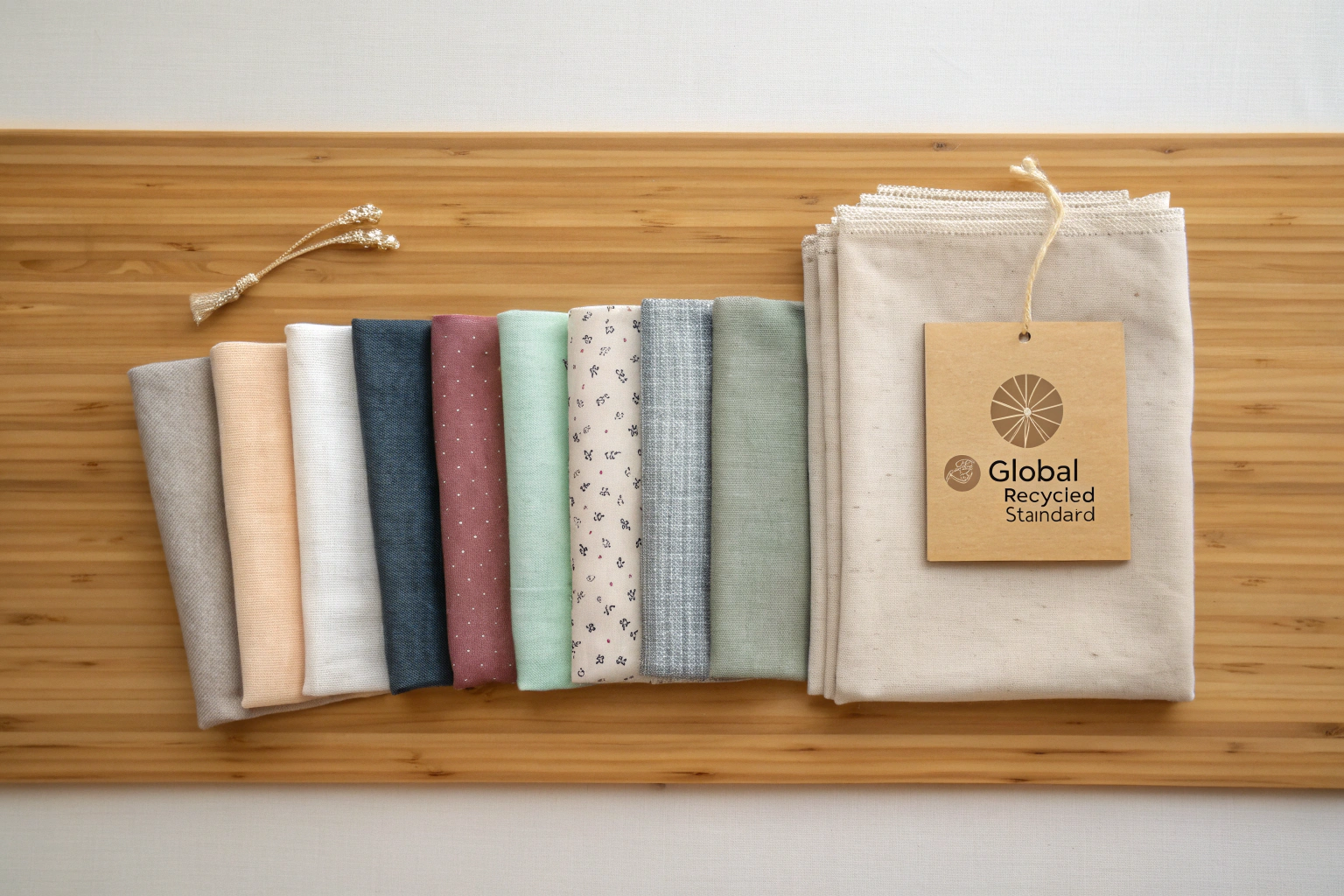
At Shanghai Fumao, we are certified to GRS (Global Recycled Standard) and GOTS (Global Organic Textile Standard) . We provide TCs with every sustainable order. Yes, the certification process costs us money annually (audits, inspections). But it also allows us to sell the fabric at a Justified Premium. You are paying for Verification, not just a vibe.

What Is the Difference Between GOTS "Organic" and "Made with Organic"?
This is the most common pricing trap in organic cotton. You get a quote for "Organic Cotton Jersey." It’s only 20% more than conventional. You think, "Great! I can afford this!" You’re likely being quoted "Made with Organic Cotton" (which requires only 70% organic fibers), not "GOTS Certified Organic" (which requires 95-100% organic fibers and strict environmental/social criteria for processing).
Here is the breakdown of the cost difference:
| Certification Level | Organic Content Requirement | Processing Standards | Price Premium (vs Conventional) |
|---|---|---|---|
| GOTS "Organic" | >95% Organic Fiber | Strict (Water treatment, labor rights, banned inputs) | +40-60% |
| GOTS "Made with Organic" | >70% Organic Fiber | Strict (Same processing rules as above) | +20-30% |
| OEKO-TEX "Organic" | Variable | Focus on chemical safety, less on social/environmental | +15-25% |
| Uncertified "Organic" | Unknown (Trust the Seller) | Unknown | +10-15% (The Greenwash Premium) |
The "Made with Organic" label is a legitimate, lower-cost entry point for brands. It allows you to use conventional cotton for strength or cost in the blend, while still supporting organic farming. But you must know which one you are buying. If a supplier says "Trust me, it’s organic," and the price is too good to be true, you are paying the Greenwashing Premium. You can read the official standards to protect yourself by downloading the GOTS standard for organic textile processing and labeling requirements and understanding the OEKO-TEX Made in Green certification and product traceability.
Can You Trust "Eco-Viscose" Without Certification?
Viscose is a tricky fiber. It’s made from trees (renewable), but conventional viscose production uses toxic chemicals (carbon disulfide) and often sources wood from endangered rainforests. So you see "Eco-Viscose" or "EcoVero" on the market. It’s a premium price.
The only viscose you can trust to be truly sustainable is Lenzing™ Ecovero™ or Birla Excel™. These are branded fibers with a Closed-Loop Production system that recaptures 99% of the chemicals and uses certified sustainable wood sources.
A generic "Eco-Viscose" with no brand name attached is just conventional viscose with a marketing spin. You are paying a premium for nothing. At Shanghai Fumao, when a client wants sustainable viscose, we source the actual Lenzing Ecovero branded fiber and provide the hangtag license. It costs more, but the Brand Equity of the Lenzing name adds value to the garment that justifies the cost. You can verify this by reading the sustainability credentials and closed-loop process of Lenzing Ecovero viscose and the environmental impact of conventional vs sustainable viscose production.
How Does Order Timing Affect the Price of Sustainable Fabric?
This is the insider knowledge that separates the profitable sustainable brands from the struggling ones. The price of sustainable fabric is Seasonal. It follows the agricultural cycle for natural fibers and the manufacturing cycle for recycled fibers.
Most buyers think about timing in terms of "When do I need the fabric in my warehouse?" Smart buyers think about timing in terms of "When is the raw material cheapest and when are the factories hungry for orders?" If you can align your purchase order with these windows, you can shave 5-15% off the cost of sustainable fabric without changing the spec at all.
At Shanghai Fumao, we work with clients to Forward Book their sustainable orders. This means placing the order and committing to the volume 3-4 months before you need the fabric. In exchange for that commitment (which helps us plan our raw material purchasing), we lock in a lower price. It’s a win-win.

When Is the Best Time to Buy Organic Cotton Fabric?
Organic cotton is an agricultural commodity. The price is set at harvest time (October-November in the Northern Hemisphere). After harvest, the price is relatively stable for a few months. Then, as the year goes on, if demand has been high, stocks dwindle and the price Spikes in the summer (June-August) before the new crop arrives.
Therefore, the Sweet Spot for Ordering Organic Cotton is November through February. The new crop is in. The gins are running. The yarn spinners have inventory. Prices are at their most competitive.
I had a client in 2025 who always placed their organic cotton orders in July for a September delivery. They were consistently paying a 15-20% premium over the winter price. We showed them the data. They shifted their development calendar so they were ready to place the bulk order in January. They saved over $8,000 on a single container. That’s pure profit.
Additionally, ordering in the winter means you miss the Peak Production Periods (March-May) when factories are slammed and less likely to negotiate. You get better pricing and better service. You can track these cycles by following the USDA cotton market reports and price forecasts for organic and conventional cotton and understanding the seasonal patterns of textile manufacturing and pricing in China.
Does Factory Capacity Affect the Price of Recycled Polyester?
Absolutely. Recycled polyester is an industrial product. The chips are made continuously, but the Weaving and Dyeing capacity is finite. During the slow periods—June-July and November-December—the factories in Keqiao have lower utilization rates. They are more willing to accept smaller margins to keep the machines running and the workers employed.
If you can place your recycled poly orders during these Shoulder Seasons, you have significantly more negotiating power. You can ask for a 5% discount or free freight, and you’ll often get it. During the peak March-May rush? The factory is running at 95% capacity. They don’t need your order. They will charge full price.
At Shanghai Fumao, we are transparent with our partners about our Capacity Planning. We tell them, "If you can take delivery in late June instead of late May, we can improve the price by X%." This kind of collaborative planning is only possible with a long-term relationship. It’s one of the hidden benefits of working with a single, integrated supplier.
How to Use Blends to Reduce Cost While Maintaining Sustainability?
This is the secret weapon of the sustainable sourcing professional. The Blend. A 100% sustainable fiber fabric is the gold standard. It’s also the most expensive. A 50% sustainable / 50% conventional blend can deliver 80% of the sustainability story at 60% of the cost.
Why? Because you are using the sustainable fiber where the consumer feels it (hand feel, comfort) and using the conventional fiber where it provides structure (strength, wrinkle resistance). You’re not just cutting costs. You’re often making a Better Fabric.
Take Tencel Lyocell. It’s incredibly soft and drapes beautifully. But 100% Tencel can be limp and wrinkle-prone. A 70% Tencel / 30% Linen blend is a masterpiece. The Linen gives the fabric Skeleton and Texture. The Tencel gives it Softness and Fluidity. The blend is better than either fiber alone. And because Linen is relatively affordable, the blend is cheaper than 100% Tencel.
At Shanghai Fumao, our R&D team is constantly developing these Synergistic Blends. We test the ratios for the optimal balance of performance, hand feel, and cost. We present these options to clients as a Value Engineering exercise. "Here is the 100% Organic Cotton at $6.50/yd. Here is the 60/40 Organic Cotton/Recycled Poly blend at $4.80/yd. It has better wrinkle recovery and is 25% cheaper." Most clients take the blend. It’s just smart business.

What Are the Best "Bridge" Fibers to Blend with Organic Cotton?
If you want the softness of organic cotton but need to hit a lower price point, you need a Bridge Fiber. These are fibers that are more sustainable than conventional cotton/poly but cheaper than GOTS organic.
Top 3 Bridge Fibers for Blending:
- BCI Cotton (Better Cotton Initiative): This is not organic, but it’s grown with significantly less water and pesticides than conventional. Blending 50% Organic / 50% BCI gives you a strong sustainability narrative at a mid-tier price. It’s a stepping stone to full organic.
- Recycled Polyester (rPET): The 60/40 Cotton/rPET blend is a workhorse. The rPET adds strength and reduces the overall cost (since rPET is often cheaper than organic cotton). It also reduces the water footprint of the garment dramatically.
- Lyocell (Tencel): As mentioned, Tencel elevates the hand feel of cotton. A 70% Cotton / 30% Tencel blend feels like a $12 fabric but costs like a $7 fabric.
At Shanghai Fumao, we have a library of Pre-Engineered Blends that are ready to go. This saves the client months of development time. They can feel the fabric, see the cost, and make a decision in a day. This is how you move fast in sustainable fashion without blowing the budget. You can explore this strategy further by reading a guide to blending fibers for sustainable and cost-effective textile development and the performance characteristics of cotton blended with recycled polyester and lyocell.
Can a Small Percentage of Spandex Ruin the Sustainability Story?
This is a common fear. "If I add 3% Spandex for comfort stretch, is the garment no longer ‘sustainable’?" Not necessarily. The Intent and the Volume matter.
Adding a small amount of conventional spandex (3-5%) to an otherwise 95% GOTS organic cotton fabric is Industry Standard Practice. It’s exempted under GOTS labeling rules (the "Accessories" or "Sewing Thread" exemption, though strictly speaking it’s in the fabric). Why? Because a Durable Garment is a Sustainable Garment. If the jeans have no stretch, they might be uncomfortable, worn less, and discarded sooner. If they have 3% spandex, they fit better, last longer, and stay in the wardrobe.
The alternative is Roica™ V550 or Creora® eco-soft, which are Degradable or Recycled Spandex alternatives. They are available, but they carry a significant premium and can be difficult to source in small quantities.
At Shanghai Fumao, our advice is: Start with the 95/5 blend using conventional spandex. Get the product to market with a solid, certifiable organic shell. As your volume grows and the technology matures, you can transition to the fully sustainable elastane. Don’t let the perfect be the enemy of the good. A 95% sustainable garment on the market is better than a 100% sustainable garment stuck in development limbo because it’s too expensive.
Conclusion
Sourcing sustainable fabric on a budget is not about finding a magic, cheap, eco-friendly unicorn. It’s about Strategic Substitution and Timing. It’s about knowing that hemp is cheaper than organic cotton, that a Tencel blend is better than 100% Tencel, and that ordering in November is smarter than ordering in July.
The brands that win in this space are the ones who treat sustainability as an Engineering Challenge, not just a Marketing Slogan. They understand the cost drivers of the fibers, the importance of legitimate certification, and the power of a well-designed blend. They don’t just pay the Green Premium. They Outsmart it.
At Shanghai Fumao, we are committed to making sustainable textiles accessible. We’ve invested in the certifications, the green chemistry, and the R&D precisely so our clients can access these materials without needing a Fortune 500 budget. We want to help you build a better product and a better planet, one yard at a time.
If you are ready to explore how sustainable fibers can fit into your current cost structure, let’s have a conversation. Our Business Director, Elaine, can walk you through our sustainable portfolio, share current market pricing, and help you identify the smartest blends for your specific application. Reach out to her at elaine@fumaoclothing.com. Let’s make sustainability your competitive advantage, not your cost disadvantage.