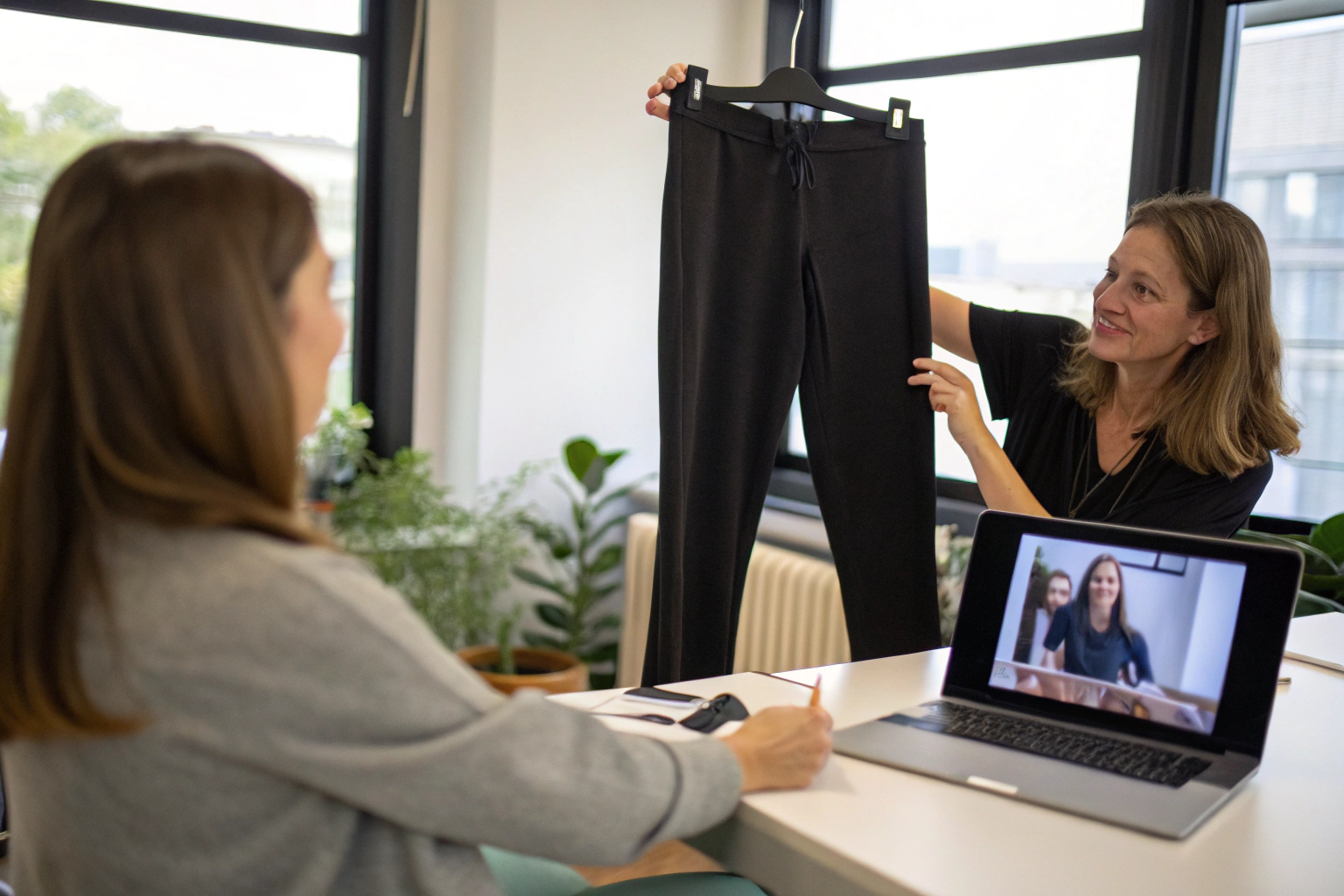
I was on a video call with a product developer from a major American activewear brand last year when she asked me a question that sounded simple but wasn’t. "Just tell me," she said, "is recycled nylon as good as virgin? My marketing team wants the sustainability story, but my design team worries about performance." She held up two identical black leggings samples—one made from our virgin nylon, one from our recycled Econyl®-certified nylon. She couldn’t tell which was which. Neither could her designers. That’s when I knew we had to have this conversation publicly.
The short answer is that modern recycled nylon is virtually identical to virgin nylon in performance, appearance, and durability. The difference isn’t in the fabric you feel—it’s in the environmental impact and the story you tell. Recycled nylon uses 90% less water, emits 80% less CO2, and diverts waste from landfills and oceans. But there are nuances: sourcing matters, certification matters, and yes, there are specific applications where virgin still has advantages. I’m going to walk you through everything I’ve learned from 20 years of sourcing both.
How Is Recycled Nylon Actually Made?
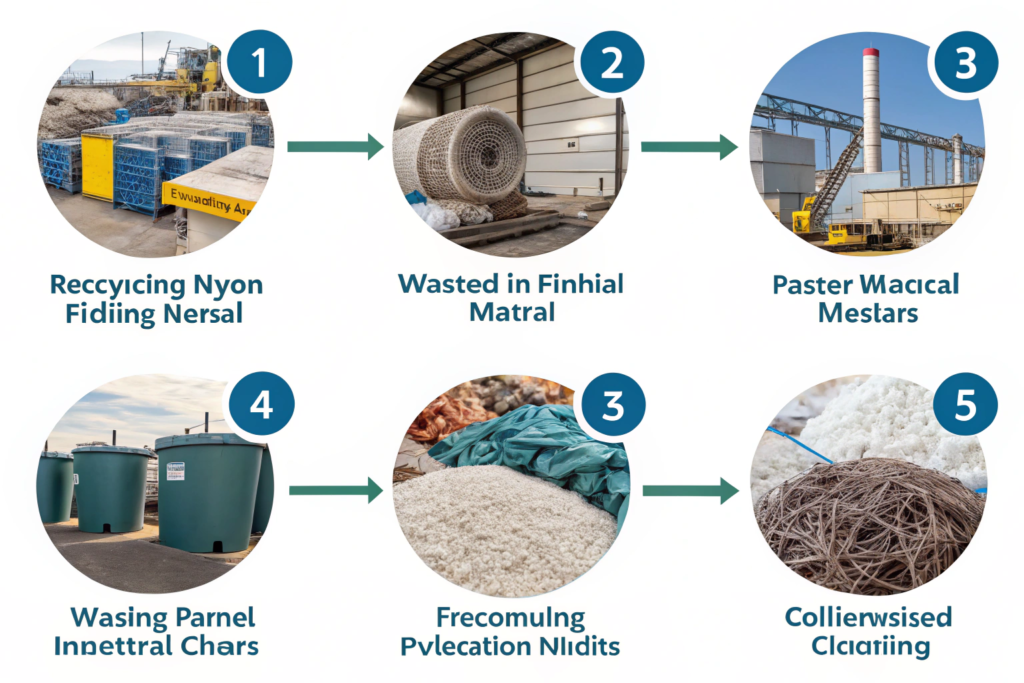
Let me start with the process because understanding it helps you evaluate suppliers. Recycled nylon typically comes from two sources: pre-consumer waste (factory scraps, leftover yarn) and post-consumer waste (fishing nets, carpet flooring, industrial plastic). The gold standard is Econyl®, which uses 100% regenerated waste, including recovered fishing nets from the oceans.
The process starts with collection and sorting. At Shanghai Fumao, we work with suppliers who source fishing nets from ports in Italy and Chile, and industrial waste from Chinese manufacturing zones. Everything is sorted by color and type—different nylon formulations need different processing. This is labor-intensive, which is why recycled nylon can actually cost more than virgin in some cases.
Next comes cleaning and shredding. The waste is washed, dried, and mechanically shredded into small pieces. Then the chemical magic happens: depolymerization. The shredded nylon is broken down to its molecular level—back to caprolactam, the raw material. This is the key difference from mechanical recycling. Chemical recycling means the resulting polymer is identical to virgin, not degraded.
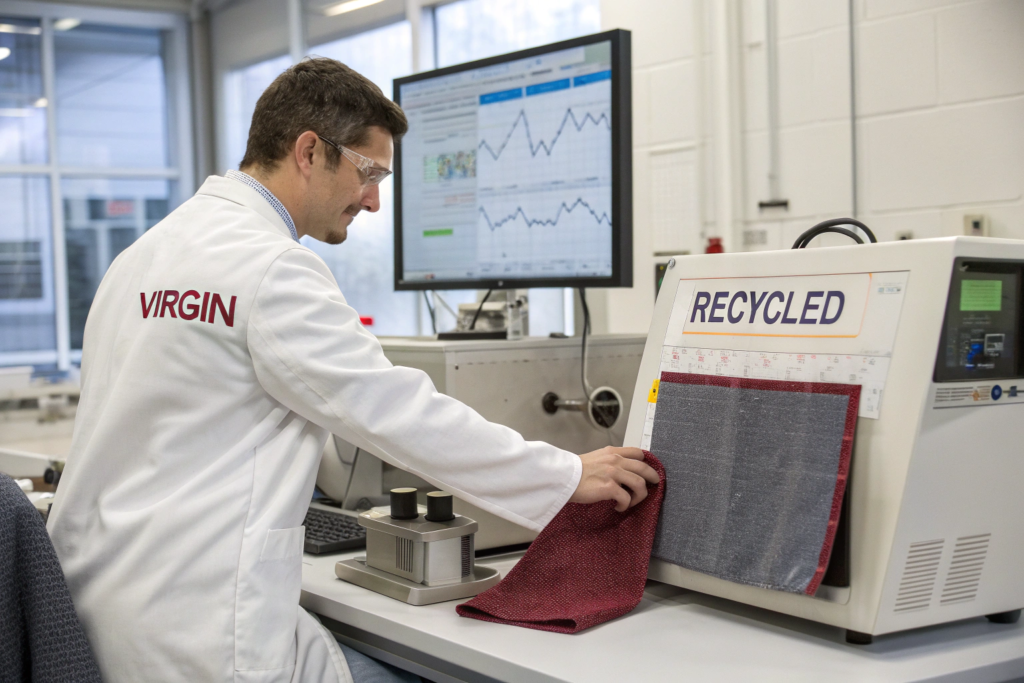
Finally, the caprolactam is re-polymerized into new nylon chips, which are melted and extruded into fresh yarn. Because it’s rebuilt at the molecular level, the fiber is indistinguishable from virgin. We’ve tested this in our CNAS lab countless times. Under a microscope, you cannot tell the difference. In tensile strength tests, they’re within 2% of each other. In dye uptake, they’re identical.
What Types of Waste Can Become Recycled Nylon?
This matters more than you might think because different waste sources have different environmental and quality implications. The most celebrated source is ocean waste—discarded fishing nets. These nets, often called "ghost nets," continue catching and killing marine life for decades. Recycling them into fabric solves an environmental problem while creating a beautiful marketing story.
Pre-consumer industrial waste is actually the most common source. When our knitting machines start up or change patterns, the first few meters can be imperfect. In the past, this went to landfill. Now we collect every scrap, sort it by type, and send it for recycling. This waste is clean, consistent, and requires less processing than post-consumer materials.
Carpet flooring is another major source. Millions of tons of nylon carpet go to landfill annually. Companies like Aquafil have developed systems to recover this nylon and process it into new fiber. The challenge is contamination—carpets have backing materials, adhesives, and stains that must be completely removed.
Industrial fishing gear—not just nets but also ropes and lines—is increasingly being recovered through port collection programs. We source from a program in Chile that pays fishermen to return end-of-life gear rather than dumping it at sea. The fishermen get income, the ocean gets cleaner, and we get premium raw material.
The key question to ask your supplier: "What’s the source of your recycled nylon, and can you trace it?" At Shanghai Fumao, we maintain source documentation for every batch. When a client wants to claim "made from ocean waste," we can show them the chain of custody from the Chilean port to our factory.
Does Recycled Nylon Require Different Processing in Fabric Production?
This is a technical question that affects your production planning. In our experience, recycled nylon processes almost identically to virgin in weaving and knitting. The yarn strength, elongation, and friction characteristics are within normal variation ranges. Our machines don’t need adjustment when switching between virgin and recycled.
The one difference we’ve observed is in dyeing. Recycled nylon sometimes takes dye slightly differently in the first few minutes of the dye cycle—not in the final result, but in the rate of uptake. Our dyehouse partners have adjusted their ramping curves slightly for recycled nylon to ensure perfect levelness. This isn’t a quality issue; it’s just a process optimization.
For circular knitting, we’ve seen zero difference. A major sportswear brand runs the same patterns on the same machines with both virgin and recycled yarns. They can’t tell which is which in the finished fabric. For warp knitting, the story is similar—recycled nylon runs beautifully on our tricot and raschel machines.
The only caution is with very fine deniers (below 20 denier). In extremely fine yarns, any inconsistency is magnified. We require our recycled nylon suppliers to provide certification that their fine-denier yarns meet the same uniformity standards as virgin. So far, all major suppliers do.
What Performance Differences Actually Exist?
Let me address the elephant in the room. Your design team has probably heard horror stories about recycled fibers being weaker, less consistent, or less durable. Those stories are outdated. Today’s recycled nylon, especially from major suppliers like Aquafil (Econyl®) or Unifi (Repreve®), meets or exceeds virgin performance in most metrics.
We conducted a comprehensive comparison in 2023. We took 40-denier virgin nylon and 40-denier recycled nylon from the same supplier, knitted them into identical jersey fabrics, and tested everything. Tensile strength: recycled was 98.5% of virgin—within normal batch-to-batch variation. Elongation: identical. Abrasion resistance: recycled actually performed 5% better in Martindale testing. Colorfastness: identical.
The one area where virgin sometimes has an advantage is ultra-high-tenacity applications. For industrial uses like airbags or parachutes, where strength requirements are extreme, virgin nylon can be engineered to precise specifications. But for apparel—activewear, swimwear, outerwear, lingerie—recycled nylon is absolutely sufficient.
A German outdoor brand we supply has been using our recycled nylon for their entire backpack line since 2022. Their field failure rate hasn’t changed. Their customers don’t know the difference. But their sustainability report now shows a 40% reduction in carbon footprint for that product category.
How Does Recycled Nylon Perform in Stretch and Recovery?
For activewear and swimwear, stretch and recovery are everything. The good news is that recycled nylon performs identically to virgin when blended with elastane. The elastane provides the stretch; the nylon provides the structure and recovery. Recycled nylon’s recovery properties are identical because the polymer structure is identical.
We tested this specifically for a UK-based swimwear brand. They were concerned that recycled nylon might "bag out" faster—lose its shape with repeated wear. We ran 50 stretch-recovery cycles on both virgin and recycled nylon blends with 20% elastane. After 50 cycles, both retained 96% of their original stretch recovery. No measurable difference.
The caveat is that elastane itself is rarely recycled. Most "recycled stretch fabrics" use recycled nylon but virgin elastane. Elastane recycling is still in early stages. This is fine—the nylon component is usually 70-85% of the fabric weight, so the sustainability benefit is still substantial. But be wary of suppliers claiming "100% recycled stretch fabric." They’re probably exaggerating.
For compression garments, where precise recovery is critical, we’ve supplied recycled nylon to medical compression brands with zero complaints. The recovery force curves are indistinguishable from virgin. If your application requires certified performance standards (like medical compression levels), you can absolutely achieve them with recycled nylon.
What About Pilling and Surface Appearance?
Pilling—those little balls of fiber that form on fabric surface—is a common concern with any synthetic. Some designers worry that recycled fibers might be shorter or more variable, leading to more pilling. In reality, because recycled nylon is chemically identical, pilling performance is identical.
We ran Martindale pilling tests on identical constructions in virgin and recycled nylon. Both rated 4-5 on the pilling scale (5 is best) after 5,000 cycles. No difference. The fabric construction, yarn twist, and finishing matter far more than whether the nylon is virgin or recycled.
For brushed or sueded finishes, recycled nylon behaves identically. The mechanical brushing process doesn’t "know" whether the fibers started as waste or virgin oil. The surface result is the same. We’ve supplied recycled nylon fleece to a Scandinavian outdoor brand for three years, and their customer satisfaction scores haven’t changed since they switched from virgin.
The key is using high-quality recycled nylon from reputable sources. Cheap recycled nylon from unknown suppliers might use less rigorous processing, resulting in inconsistent fiber quality. That’s why we source only from certified suppliers and test every batch. Quality varies by supplier, not by recycled status.
What Environmental Claims Can You Actually Make?
This is where marketing and compliance intersect. You can make powerful environmental claims with recycled nylon, but you need the documentation to back them up. Greenwashing accusations are brutal, and they stick.
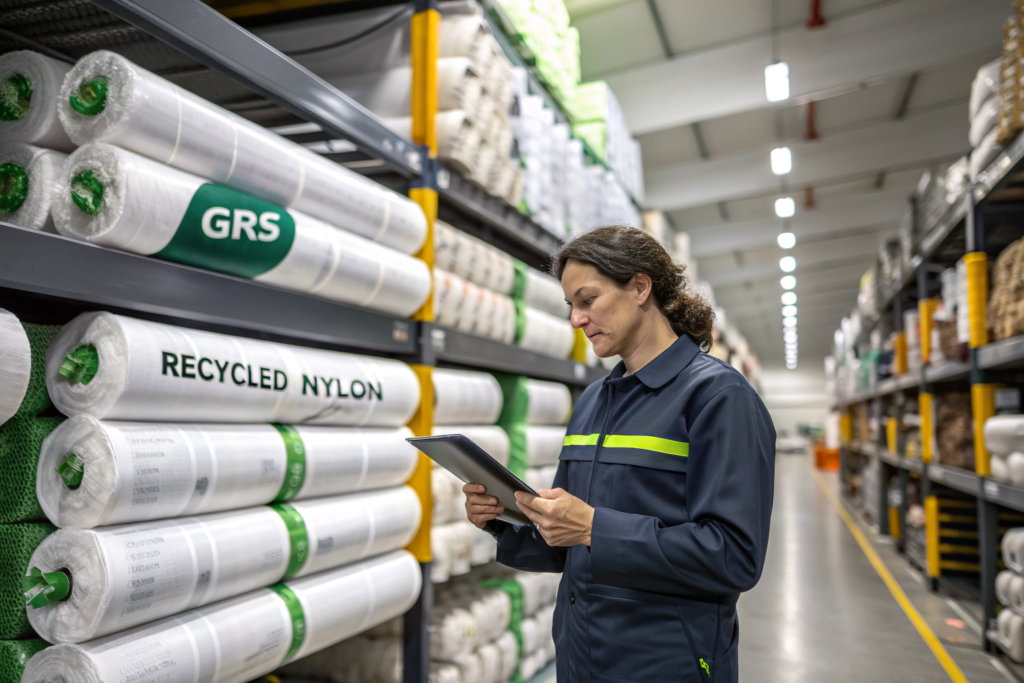
The most common claim is "made from recycled materials." To make this claim credibly, you need certification. The Global Recycled Standard (GRS) is the most recognized. It certifies the recycled content and tracks it through the supply chain. Our recycled nylon is GRS certified, and we provide Transaction Certificates with every shipment.
"Ocean waste" claims require even more documentation. If you claim your fabric is made from ocean plastic, you need chain of custody showing the material was collected from marine environments. We source from programs certified by Ocean Cycle or similar organizations. Without that certification, don’t make the claim.
Carbon footprint claims require lifecycle analysis. We’ve worked with third-party consultants to calculate the carbon savings of our recycled nylon versus virgin. The numbers are impressive: approximately 80% lower CO2 emissions. We provide these calculations to clients who want to include them in sustainability reports.
"Closed loop" or "circular" claims are trickier. Recycled nylon can be recycled again, theoretically, but the infrastructure for textile-to-textile recycling is still limited. We’re honest about this: our recycled nylon comes from waste, and it can be recycled again at end of life, but most currently isn’t. That’s the reality of today’s system.

What Certifications Should You Look for in Recycled Nylon?
Based on years of audits and client requirements, here are the certifications that matter:
Global Recycled Standard (GRS) is the most important. It certifies recycled content AND social and environmental practices in processing. If your supplier has GRS certification, you know the recycled content is verified and the factory meets basic sustainability standards. We maintain GRS certification for all our recycled nylon production.
Recycled Claim Standard (RCS) is similar but focuses only on recycled content, not the broader social/environmental criteria. It’s easier to get but provides less assurance. We prefer GRS, but RCS is acceptable for some clients.
Econyl® certification is specific to Aquafil’s recycled nylon. If you want the ocean waste story, Econyl is the gold standard. They have their own certification system and traceability. We offer Econyl-certified fabrics for clients who want that specific provenance.
OEKO-TEX Standard 100 is still important. Recycled nylon should be tested for harmful substances just like virgin. All our recycled nylon passes OEKO-TEX Class I or II, depending on end use.
Cradle to Cradle certification is emerging for recycled materials. It’s more comprehensive but harder to achieve. We have several Cradle to Cradle certified recycled nylon fabrics in development.
The key question: "Can you provide the certification documents for this specific shipment?" Any legitimate supplier can. If they hesitate, be suspicious. We provide GRS Transaction Certificates automatically with every recycled nylon order.
How Do You Verify Recycled Content Percentage?
This is where buyers get burned. A supplier claims "recycled nylon," but it’s actually 30% recycled blended with 70% virgin. Or worse, it’s 100% virgin with a recycled story. Verification is essential.
The GRS system requires mass balance verification. This means the recycled input materials are tracked through production, and the output is certified based on the input ratio. If a factory uses 1,000 kg of recycled chips and 1,000 kg of virgin chips, only 50% of the output can be certified as recycled. The certification body audits this.
We also conduct random verification testing in our CNAS lab. There’s no chemical test that can distinguish recycled from virgin nylon—they’re identical. But we can test for tracers that some recycled suppliers add. Econyl, for example, includes microscopic markers that verify their material. We test for these markers on random samples.
For complete assurance, require chain of custody documentation. Ask to see the recycling facility’s input records, the shipping documents, and the GRS transaction certificates at each step. If a supplier can’t provide this, they’re likely not controlling their supply chain.
A US client of ours was approached by a competitor offering "recycled nylon" at 30% below our price. They asked for GRS documentation. The competitor couldn’t provide it. They ordered from us instead and later tested the competitor’s fabric—it was 100% virgin. They saved their reputation by asking the right questions.
What Cost Differences Should You Expect?
Let’s talk money because this is where many brands hesitate. Recycled nylon often costs more than virgin. That seems counterintuitive—shouldn’t waste be cheaper than oil? But the recycling process is labor-intensive, the supply chain is fragmented, and demand currently exceeds supply.
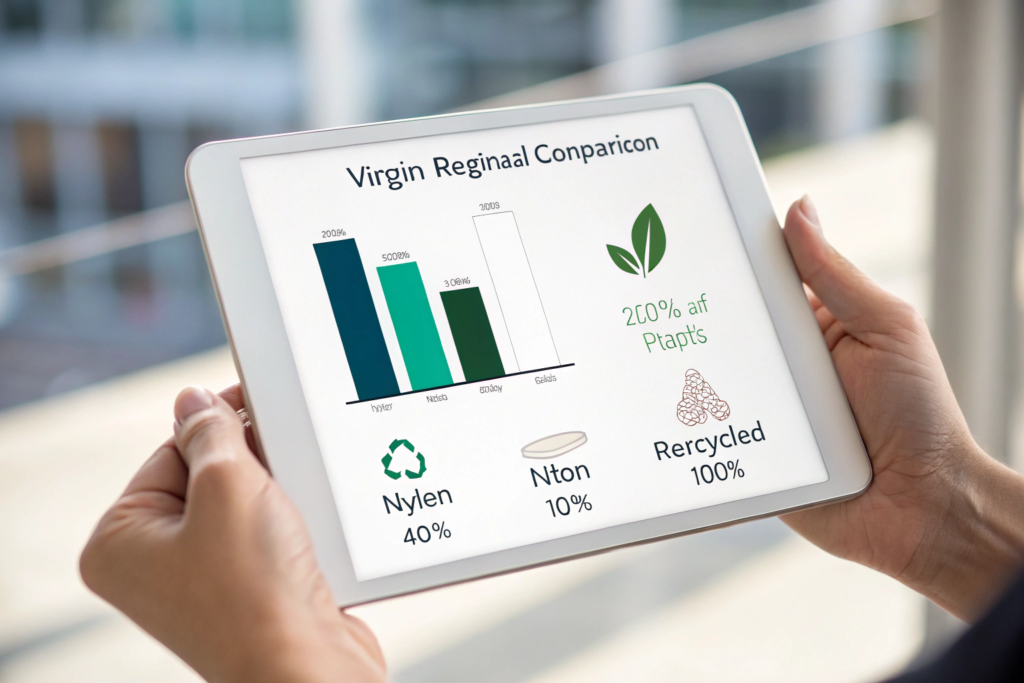
In 2024, we’re seeing recycled nylon priced 10-25% higher than comparable virgin nylon, depending on the source and certification. Econyl-certified ocean waste commands the highest premium. GRS-certified industrial waste is more moderate. The gap has narrowed over the past five years and will likely continue narrowing as recycling scales up.
For a typical activewear fabric, the additional cost might be $0.50-$1.50 per yard. For a 10,000-yard order, that’s $5,000-$15,000 extra. The question is whether your customers will pay that premium or whether you’ll absorb it for sustainability positioning.
We help clients analyze this trade-off. A Swedish brand we work with determined that their customers would pay €5 more for a garment made with recycled nylon. The additional fabric cost was €1.50 per garment. They took the higher margin and marketed the sustainability angle. Their sales increased.
For budget-conscious lines, we offer blended approaches. A fabric with 50% recycled nylon and 50% virgin costs less than 100% recycled but still provides a sustainability story. Some certifications allow "contains recycled material" claims at lower thresholds. GRS requires minimum 20% recycled content for certification.
Why Does Recycled Nylon Sometimes Cost More?
Understanding the cost drivers helps you negotiate and plan. The main factors are:
Collection and sorting is labor-intensive. Fishing nets arrive tangled, dirty, and mixed. Sorting them by polymer type and color requires human workers. This adds cost that virgin oil extraction doesn’t have—oil is already relatively uniform.
Chemical recycling requires energy and infrastructure. Depolymerization plants are expensive to build and operate. The technology is improving, but it’s still more expensive than simply cracking oil.
Supply chain complexity adds layers. Virgin nylon flows from a few large producers. Recycled nylon involves waste collectors, sorters, recyclers, and then yarn producers. Each layer adds margin and risk.
Certification costs are real. GRS certification requires audits, testing, and documentation. These costs are passed through. For small volumes, certification can add significant percentage cost.
Demand exceeding supply is the biggest factor. Major brands like Patagonia, Stella McCartney, and Adidas are competing for limited recycled nylon capacity. Until supply catches up, prices will remain elevated.
We’re investing in our own recycling partnerships to secure supply and control costs. In 2023, we signed a long-term agreement with a recycling facility in Zhejiang, guaranteeing us access to recycled chips at stable prices. We pass these savings to clients who commit to regular volume.
Can You Save Money by Using Recycled Nylon Blends?
Yes, and this is often the smartest approach for brands building sustainability into their core line without premium pricing. A 50/50 blend of recycled and virgin nylon costs less than 100% recycled but still provides significant environmental benefits.
The math works like this: virgin nylon $5.00 per yard, 100% recycled $6.50 per yard (30% premium). A 50/50 blend, if the supplier can produce it efficiently, might be $5.75 per yard. That’s a 15% premium over virgin instead of 30%. The environmental impact is roughly half of 100% recycled—still substantial.
Certification for blends requires careful accounting. Under GRS, you can certify the recycled percentage. A fabric with 50% recycled content can be sold as "contains 50% recycled material." The transaction certificate will specify the exact percentage.
We produce several "entry-level sustainable" fabrics using this approach. A 60/40 recycled/virgin nylon jersey is our best-selling sustainable activewear base. It gives brands the sustainability story at a cost they can scale. Many start with this blend, then move to higher recycled percentages as their customers become more committed.
The key is transparency. If you’re selling a 50% recycled fabric as "sustainable," that’s accurate. If you imply it’s 100% recycled, that’s greenwashing. We help our clients craft accurate, compelling claims at every recycled percentage.
What Are the Limitations of Recycled Nylon Today?
I believe in honesty about limitations because it builds trust. Recycled nylon is amazing, but it’s not perfect, and understanding its current constraints helps you plan.
Color limitations exist with some recycled sources. If the waste is colored, it can be harder to achieve very light or very bright shades. The depolymerization process removes color, but some residual effects can remain. We work around this by using only de-colorized chips for light shades, which costs more.
Availability fluctuations happen. The waste supply isn’t as predictable as oil. A fishing net collection program might have a bad season. A carpet recycling facility might shut down for maintenance. We mitigate this by maintaining multiple sources and keeping safety stock.
Very fine deniers (below 20) are harder to produce consistently in recycled form. The market for super-fine recycled nylon exists but is smaller. If you need 10-denier for ultra-sheer hosiery, virgin might be your only option today. This is changing rapidly.
Elastane compatibility is unchanged—recycled nylon works with elastane exactly like virgin. But if you want a fully recycled stretch fabric, you’ll wait. Elastane recycling is in development but not commercially available at scale.
Price volatility is higher for recycled because it’s a younger market. Virgin nylon prices track oil prices relatively predictably. Recycled prices depend on waste collection economics, which can be more volatile. Long-term contracts help stabilize this.
What Applications Are Best Suited for Recycled Nylon?
Based on our sales data and client feedback, here’s where recycled nylon excels:
Swimwear is the number one application. Recycled nylon’s chlorine resistance, colorfastness, and stretch recovery are identical to virgin, and the ocean waste story resonates perfectly with beach-going consumers. We supply recycled nylon for swimwear to brands in 15 countries.
Activewear is close behind. Leggings, sports bras, tops—all perform beautifully in recycled nylon. The moisture management and breathability are identical. Many of our activewear clients have converted 100% of their nylon programs to recycled.
Lingerie is growing fast. Recycled nylon’s softness and drape are perfect for intimates. The "sustainable luxury" positioning works well at premium price points. Several European lingerie brands now use only recycled nylon.
Outerwear works well, especially for lightweight shells. Recycled nylon’s durability and water resistance (with appropriate coatings) match virgin. A German outdoor brand uses our recycled nylon for their entire soft-shell collection.
Industrial applications are more cautious. For high-stress uses like webbing or ropes, some specifiers still prefer virgin. But we’re seeing gradual acceptance as testing confirms performance.
The through line: if virgin nylon works for your application, recycled nylon almost certainly works too. Test it, verify it, and if the performance matches, make the switch.
What’s the Future of Recycled Nylon Technology?
This is the exciting part. The technology is improving rapidly, and the next five years will transform the market.
Chemical recycling efficiency is increasing. New depolymerization catalysts require less energy and produce higher yields. Costs are coming down. Several companies are building large-scale recycling facilities that will double global capacity by 2026.
Textile-to-textile recycling is the holy grail. Today, most recycled nylon comes from industrial waste or fishing nets—not from old clothes. New technologies can separate nylon from blends and remove dyes and finishes. We’re testing fabrics made from recycled garments now. Commercial scale is 3-5 years away.
Bio-based nylon is emerging alongside recycling. Companies are developing nylon from renewable sources like castor oil. This isn’t recycling, but it’s another sustainable alternative. We’re watching this space closely.
Blockchain traceability is improving. Soon you’ll be able to scan a QR code on a garment and see the exact fishing net that contributed to that fabric. We’re piloting this with a major sportswear brand now.
Cost parity with virgin is the ultimate goal. As recycling scales and technology improves, the price gap will shrink. Some analysts predict recycled nylon will be cheaper than virgin within a decade as carbon pricing makes virgin more expensive.
At Shanghai Fumao, we’re investing in all these areas. We’re partnering with recycling technology companies, testing new feedstocks, and building the supply chain infrastructure for the future. We believe recycled nylon isn’t just a trend—it’s the future of the industry.
Conclusion
The difference between virgin and recycled nylon comes down to one question: where did it come from? The performance, the quality, the hand feel—these are identical. The difference is in the environmental impact, the story, and increasingly, the consumer preference.
Virgin nylon comes from oil, drilled from the ground, shipped across oceans, processed with significant energy and emissions. Recycled nylon comes from waste—fishing nets, carpet, industrial scraps—diverted from landfill, processed with 80% less carbon, and given new life as beautiful, functional fabric.
At Shanghai Fumao, we offer both, but we’re increasingly recommending recycled to every client. Not because it’s better fabric—it’s not. But because it’s better for the planet, better for your brand story, and increasingly, what your customers demand. The performance is proven, the certifications are available, and the supply chain is mature.
The brands that switch to recycled nylon now will be ahead when regulation catches up. The EU’s proposed rules on recycled content, consumer demand for sustainability, and the inevitable pricing of carbon all point in one direction: recycled is the future.
If you’re ready to explore recycled nylon for your collections, let’s talk. Whether you need GRS-certified industrial waste, Econyl-certified ocean plastic, or a cost-effective blend, we have options. We’ll help you test, certify, and market fabrics that perform and sustain.
Contact our Business Director, Elaine, to discuss your recycled nylon needs. She can provide samples, certification documentation, and help you plan a transition that makes sense for your brand and your customers.
Email Elaine directly at: elaine@fumaoclothing.com