
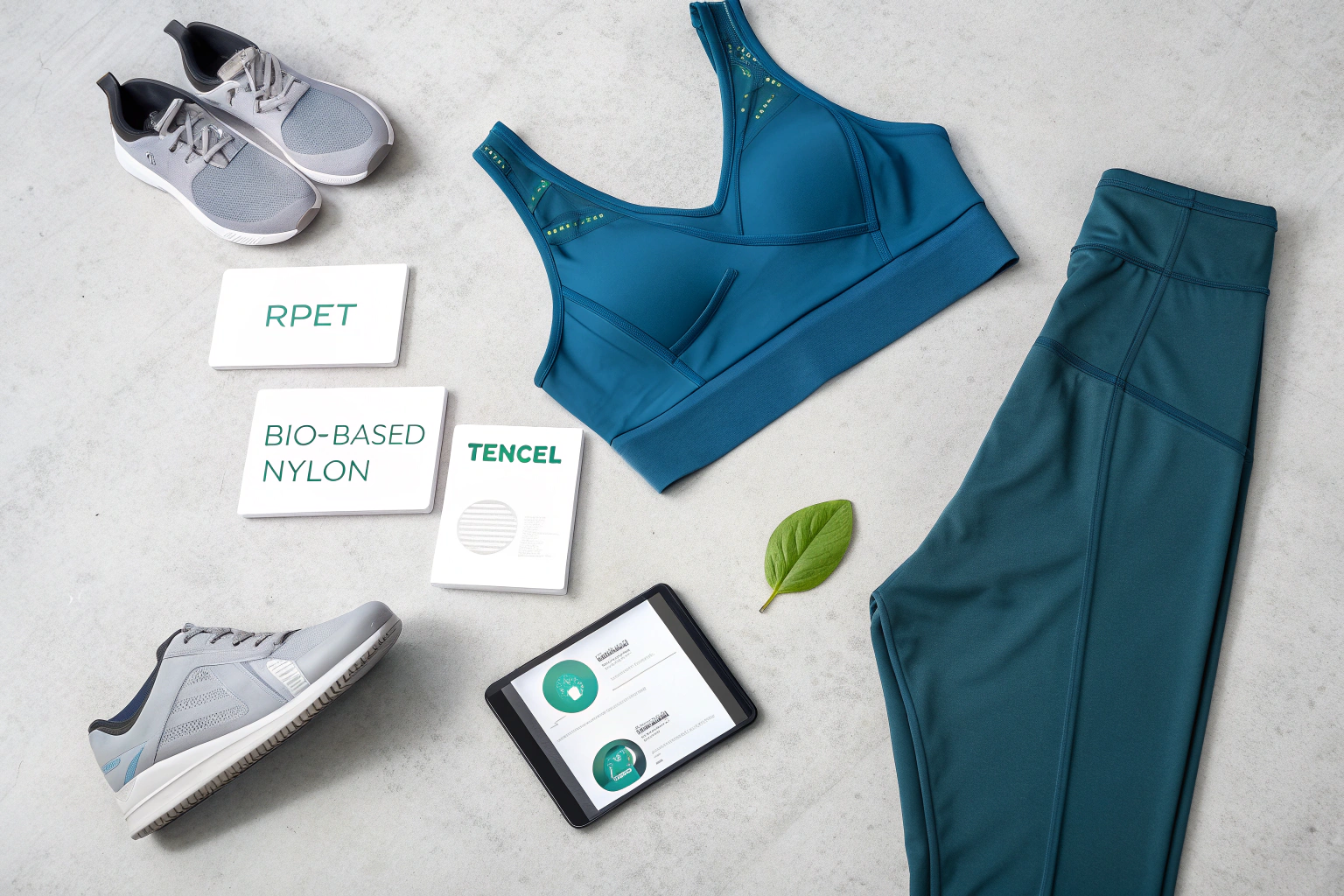
A senior product developer from a major German sportswear brand called me late last year, sounding genuinely frustrated. She told me her entire team was locked in a debate. The marketing department insisted everything must be "100% recycled polyester" by 2026. The design team hated the handfeel of some rPET fabrics they’d tested. The sustainability officer was asking about bio-based alternatives. She asked me, as a supplier who works with all these materials, "Are we putting all our eggs in one basket? Is recycled polyester really the only game in town for eco-activewear moving forward?"
The short answer is absolutely not. Recycled polyester (rPET) is a fantastic and important option—it diverts plastic bottles from landfills and uses less energy to produce than virgin polyester. But by 2026, the activewear landscape will be far more diverse. You’ll have bio-based nylons made from castor oil, next-generation TENCEL™ Lyocell blends that manage moisture better than ever, and even innovative materials like renewable spandex alternatives. The real "eco choice" for your 2026 activewear line won’t be a single fiber; it will be the intelligent combination of these materials to meet specific performance needs while minimizing environmental impact.
But here’s the thing I tell every brand that calls me with this question: navigating this new landscape is getting more complex, not less. The marketing hype around "recycled" is loud, but the science around "bio-based" and "regenerative" is evolving fast. I’ve been in the textile industry in Keqiao for over 20 years, and I’ve watched every "miracle fiber" trend come and go. The winners in 2026 will be the brands who understand the real-world trade-offs—durability, cost, supply chain stability—and who partner with suppliers who can offer honest, data-driven advice, not just whatever fiber is cheapest this season. Let me break down the real options you’ll have in 2026.
What Exactly Is Recycled Polyester and What Are Its Real Limits?
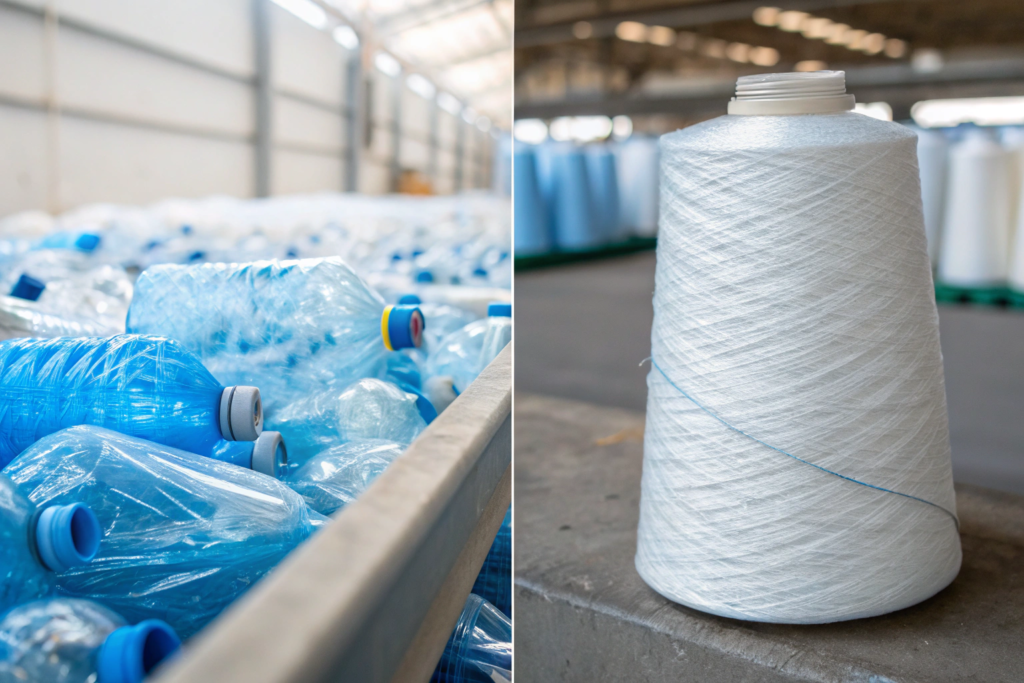
Let’s start with the incumbent. Recycled polyester, often called rPET, is made by melting down existing plastic—usually post-consumer PET bottles—and extruding it into new polyester fiber. It’s been the hero of sustainable activewear for the last decade, and for good reason. It keeps plastic out of the ocean and typically has a carbon footprint about 30% to 50% lower than virgin polyester.
I’ve personally overseen millions of yards of rPET production for clients ranging from US yoga brands to European soccer clubs. It’s a mature, reliable technology. But I also see brands treating it as a magic wand, and that’s where the problems start. A buyer from a large American activewear chain came to us in 2023 with a huge rPET order. They’d specified a very light, silky finish for their running singlets. We produced the samples, and they loved the handfeel. But when the bulk order arrived, they complained it didn’t "breathe" as well as their previous virgin polyester line. They hadn’t accounted for the fact that rPET can sometimes be processed slightly differently, affecting moisture management. We fixed it by adjusting the knit structure, but it was a lesson: rPET is great, but it’s not identical to virgin in every way.
Does recycled polyester still shed microplastics when I wash it?
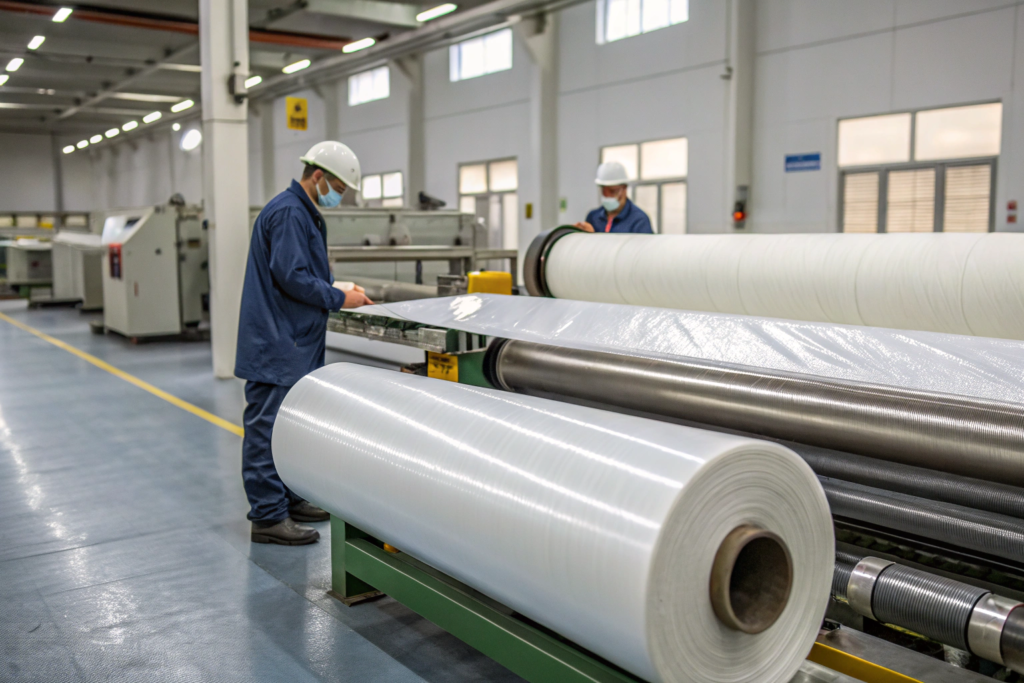
Yes, it does. And this is the elephant in the room that many brands are still ignoring. Recycled polyester is still polyester. It’s still a plastic fiber. Every time your customer washes that beautiful, eco-friendly rPET legging, it sheds thousands of microscopic plastic fibers that go down the drain, through water treatment plants (which aren’t designed to catch them all), and eventually into our oceans.
I had a sobering conversation with a sustainability consultant from Scandinavia in 2022. She was helping a major activewear brand map their true environmental impact. They were proud of their switch to 100% rPET. But her lifecycle analysis showed that microplastic shedding during the consumer use phase was actually becoming their biggest unaddressed problem. We started working with them on fabric constructions that shed less—tighter knits, different yarn structures—but the fundamental issue remains. If you shed plastic, you shed plastic. (This study from the University of Plymouth is one of the most cited on microplastic shedding from polyester textiles.) For 2026, brands that ignore this risk being called out for "greenwashing."
Can rPET match the performance of virgin polyester for serious athletes?
Usually, yes, but there are nuances. For 90% of activewear applications—yoga, gym workouts, casual running—rPET performs identically to virgin polyester. It wicks moisture, it dries fast, it holds color well. Our CNAS-accredited lab tests rPET against virgin controls constantly, and the physical properties are nearly indistinguishable.
However, there are edge cases. For extreme high-abrasion uses, like professional team sports with constant sliding on artificial turf, some of our clients have reported that rPET can pill or wear slightly faster than the best virgin high-tenacity polyester. We saw this in 2021 with a client supplying jerseys to a semi-professional football league in the UK. The rPET jerseys were fine for a season, but the virgin polyester ones lasted two seasons. We solved it by blending the rPET with a small percentage of a bio-based nylon in the high-wear areas. So, for most users, rPET is perfect. For the elite athlete pushing gear to the absolute limit, you might need a hybrid solution. (Here’s a detailed technical paper comparing abrasion resistance of rPET vs. virgin PET.)
What Are the Best Bio-Based Alternatives to Polyester Coming in 2026?
This is where it gets exciting. The next generation of activewear fabrics isn’t coming from oil wells or plastic bottles; it’s coming from plants and renewable resources. Bio-based synthetics are designed to offer the performance of nylon or polyester, but with a fraction of the carbon footprint, and sometimes—this is the game-changer—they can be biodegradable at the end of their life.
I visited a fiber innovation expo in Shanghai in late 2023, and I felt like a kid in a candy store. I saw nylon 56 made from corn and sugarcane. I saw spandex alternatives made from castor oil. I saw polyester precursors made from waste biomass. These aren’t lab curiosities anymore; they are scaling up. A client from a French luxury activewear brand asked me to source a bio-based nylon for their 2025 ski collection. We found a supplier, tested the fabric, and the results were stunning. The handfeel was silkier than standard nylon, the color depth was incredible, and the carbon footprint data was 40% lower. The only catch? The price was higher. But for their premium line, it was a perfect fit.
How does castor oil nylon (PA 610/1010) compare to recycled polyester?
It’s a different beast entirely. Castor oil nylon, often referred to as PA 610 or PA 1010, is a polyamide (nylon) made from castor beans. It’s not a polyester. The key advantage is that castor beans are a non-food crop that can grow on marginal land with very little water. The resulting fiber has the inherent advantages of nylon: it’s incredibly strong, abrasion-resistant, and has a naturally soft, "dry" handfeel that many people prefer to polyester.
We worked with a high-end Italian sportswear brand in 2023 to develop a running tight using a blend of castor-oil nylon and rPET. The brief was "luxury performance." The castor oil component gave the tight a beautiful, almost cashmere-like softness against the skin, while the rPET provided the structure and moisture management. The brand marketed it as "plant-powered performance," and the first run sold out in weeks. The downside? The supply chain for castor oil nylon is not as massive as rPET, so lead times can be longer, and the cost is significantly higher—think 20-30% premium. But for brands targeting the premium end of the market, it’s a compelling differentiator. (You can read more about the science of bio-based polyamides on this materials database.)
Can TENCEL™ truly compete with synthetics for high-sweat activities?
Five years ago, I would have said "no." Cellulosic fibers like TENCEL™ Lyocell are amazing for comfort, but they absorb water (they are hydrophilic), while synthetics repel water (hydrophobic). For serious sweating, you wanted synthetic. But the technology has evolved.
Lenzing, the maker of TENCEL™, has developed specialized fiber variants with modified cross-sections that dramatically improve moisture management. We’ve been testing their "TENCEL™ Active" fibers for two years now. In our lab tests, these new variants actually transport moisture away from the skin faster than some polyesters, while maintaining the incredible softness and breathability of cellulosics. We produced a sample run of t-shirts for a German outdoor brand in 2024, using a 50/50 blend of TENCEL™ Active and rPET. The feedback from their wear-testers was unanimous: it felt cooler and less clammy than their standard 100% polyester running tee. (Lenzing’s own site has detailed information on TENCEL™ Active moisture management technology.) For 2026, I expect to see a lot more activewear moving to these intelligent cellulosic-synthetic blends, offering the best of both worlds.
What About Spandex? Isn’t That the Dirty Secret in "Eco" Activewear?
You’ve hit on the absolute weakest link in sustainable activewear. You can have the most eco-friendly shell fabric in the world—100% organic cotton, recycled wool, bio-based nylon—but if you need 5% to 15% spandex to give it stretch, you’ve just introduced a permanent plastic problem. Conventional spandex (elastane) is a petroleum-based polymer that is notoriously difficult to recycle and breaks down poorly at end-of-life.
I remember a meeting with a very earnest buyer from a US-based sustainable swimwear brand in 2022. She showed me their beautiful new collection made from 100% recycled nylon. I asked her, "What about the spandex?" She admitted it was conventional. When I explained that the spandex essentially contaminates the nylon for future recycling, she looked crushed. She hadn’t known. This is the kind of hidden complexity that keeps sourcing managers up at night. The good news is that 2026 will finally offer real solutions.
Is there such a thing as recyclable or bio-based spandex yet?
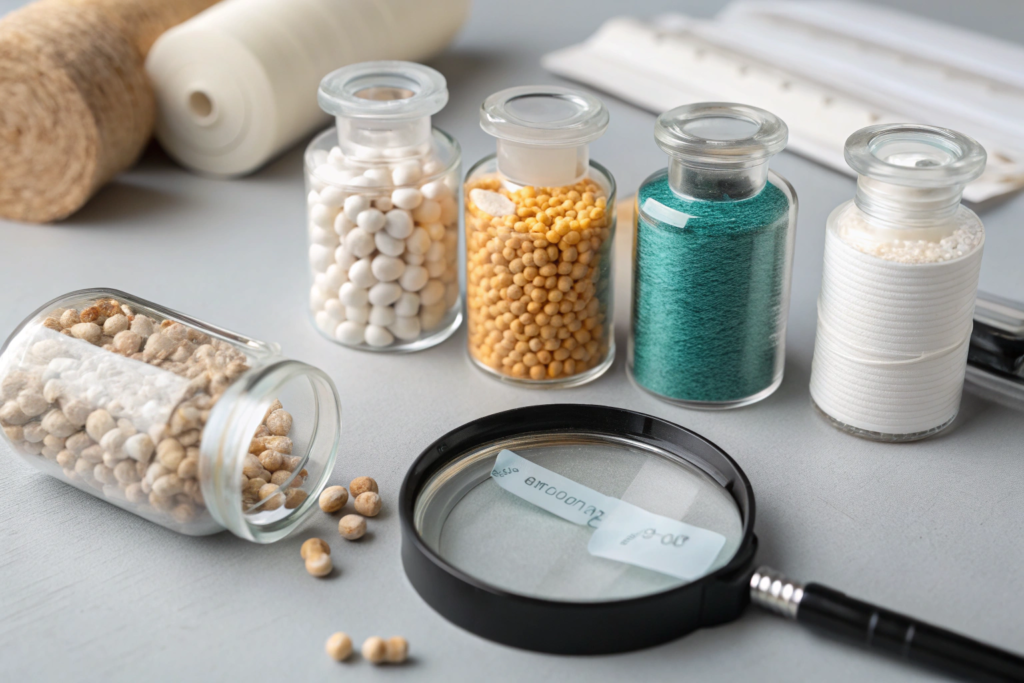
Yes, and it’s finally becoming commercially viable. For years, the industry has talked about "spandex alternatives" with little to show for it. But that’s changing fast. There are now several options emerging. One is renewable spandex made from castor oil, which performs identically to petroleum-based spandex but has a lower carbon footprint. More importantly, there are new "elastane-multiblock" polymers designed to be chemically recycled back into new fiber.
We started running trials with a renewable spandex from a major European supplier in late 2023 for a Canadian activewear client. The initial samples were promising—the stretch and recovery matched their conventional spandex exactly. We ran a full production batch of 5,000 yards of a nylon-spandex jersey in early 2024. The fabric performed flawlessly in the client’s garment manufacturing. They are now planning to convert their entire line to this renewable spandex by 2025. The cost is still about 10% higher, but they believe their customers will pay for the integrity of a truly "plant-based" stretch garment. (Here’s an article from a textile innovation platform on the latest developments in bio-based elastane.)
How do I design for recyclability if I need stretch?
You have to think about mono-material design. The recycling problem with spandex is that it’s a different polymer mixed into your main fabric. To recycle that garment efficiently, you currently have to separate those polymers, which is difficult and expensive. The solution for 2026 and beyond is to use "mechanical stretch" created by the fabric construction itself, or to use a stretch fiber that is chemically identical to the main fiber.
For example, there are now PTT (polytrimethylene terephthalate) polymers, like DuPont’s Sorona, which are partly bio-based and offer good stretch and recovery. PTT is a polyester. So if you build a garment using a main fiber of rPET and a stretch fiber of Sorona (which is also a polyester), you have created a mono-polyester garment. This is infinitely easier to recycle than a polyester-spandex mix. We did exactly this for a Japanese sportswear brand in 2023, developing a "fully recyclable" running tight. It wasn’t cheap, and the stretch wasn’t quite as aggressive as high-performance spandex, but for their "circular economy" capsule, it was perfect. (The Textile Exchange guide to designing for recyclability is essential reading on this topic.)
How Can a Smart Blend Strategy Future-Proof My 2026 Collection?
This is the most practical advice I can give any brand. Don’t fall in love with a single fiber. Fall in love with a performance outcome and a sustainability goal, and then use the smartest blend of available fibers to get there. The era of the 100% single-fiber garment for activewear is ending, except for specific circular-economy projects. The future is intelligent blending.
I learned this from a client in Australia, a mid-sized activewear brand that has been a partner for over a decade. They never jump on trends. They test everything. In 2021, they came to us with a brief: "We want a fabric for our core legging that is 50% lower carbon than our current one, but it must feel better and last just as long." We couldn’t do that with a single fiber. We ended up developing a tri-blend: 60% rPET for durability and structure, 30% TENCEL™ Lyocell for softness and breathability, and 10% renewable spandex for stretch. It hit every target. That legging is still their bestseller today. They didn’t care about the "purity" of the fiber; they cared about the result.
What is the ideal blend for durability, softness, and low impact?
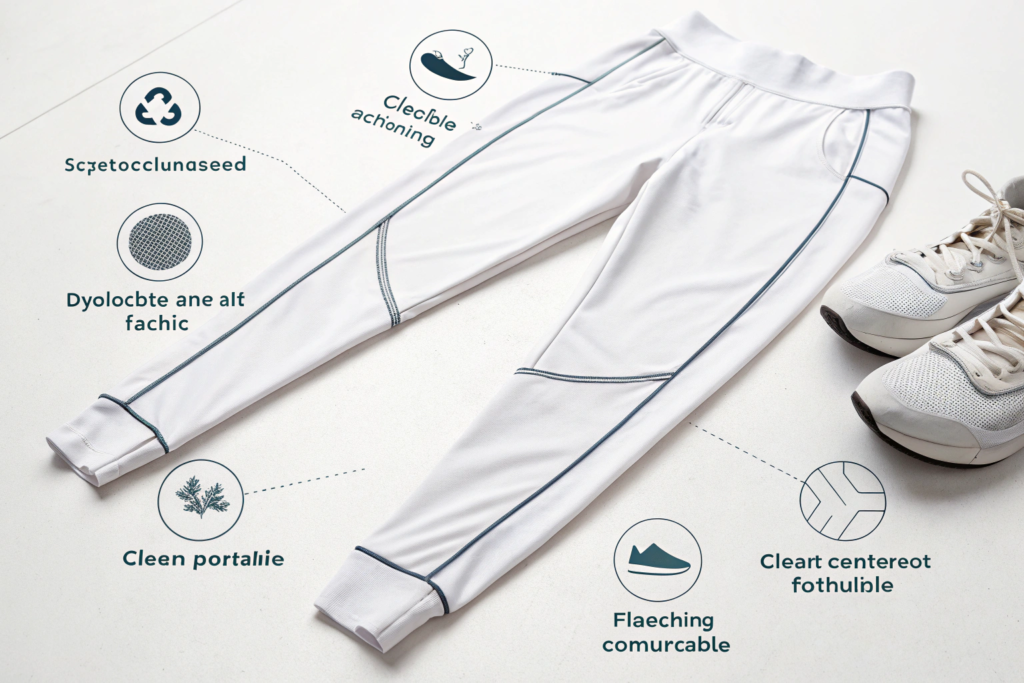
Based on our testing and client feedback over the last three years, I’m seeing a sweet spot emerge for high-performance, high-comfort, low-impact activewear. It’s a ternary blend: 50-60% recycled polyester (for structure, moisture wicking, and durability), 20-30% TENCEL™ Lyocell or Modal (for incredible softness, breathability, and a lower carbon boost), and 5-15% renewable or recyclable elastane (for stretch).
We refined this formula with a Dutch yoga wear brand in 2023. They wanted a "second skin" feel for their new line, but with enough structure for more dynamic poses. We ran 15 different blend variations through our lab. We tested for pilling, stretch recovery, moisture management, and handfeel. The winning blend was 55% rPET, 30% TENCEL™, and 15% renewable spandex. The fabric had a beautiful, soft, matte appearance, it moved perfectly with the body, and our LCA data showed a 40% lower carbon footprint than a standard 87% nylon / 13% spandex fabric. (Common Objective’s fabric guide for activewear provides an excellent overview of blend options.)
How do I balance cost and eco-claims when blending multiple fibers?
This is the million-dollar question. The honest answer is that multi-blends are often more expensive than single-fiber fabrics. You’re managing more supply chains, more testing, and more complexity. But you can offset this by being strategic. You don’t have to put your most expensive, cutting-edge fiber everywhere.
For example, if you’re using a premium bio-based nylon, you might use it in the panels of a garment that touch the skin directly—like the inner lining of a sports bra—and use a high-quality rPET for the outer shell. You get the marketing story of the bio-based fiber where it matters most, without the cost premium across the entire garment. We did this for a Swiss cycling brand in 2022. Their bib shorts had a seat panel made from a super-durable bio-nylon blend, and the rest of the short was a high-performance rPET. It was cost-effective, and the performance was better than using a single fiber for everything. (This article on cost engineering for sustainable fashion offers some great strategies.)
Conclusion
So, is recycled polyester the only eco choice for activewear in 2026? Absolutely not. It will remain a crucial, workhorse fiber—a reliable and scalable solution for reducing plastic waste and lowering carbon emissions. But the future belongs to a more nuanced, intelligent approach. You’ll have bio-based nylons offering premium softness and performance from renewable resources. You’ll have advanced cellulosics like TENCEL™ Active that can finally compete with synthetics on moisture management. And most critically, you’ll have new solutions for the "spandex problem," from renewable elastomers to mono-material design strategies. The winning strategy for 2026 isn’t betting on one fiber; it’s mastering the art of the smart blend, combining the best attributes of multiple materials to hit your specific performance, sustainability, and cost targets.
This is exactly the kind of complex, collaborative work we thrive on at Shanghai Fumao. We don’t have a single "house fiber" to push. We work with them all—from basic rPET to cutting-edge bio-nylons and TENCEL™ blends. With over 20 years of experience in Keqiao, China’s textile heart, and our own CNAS-accredited lab for rigorous testing, we can help you navigate this complex landscape. We can run the trials, analyze the data, and help you develop a custom blend that tells your unique sustainability story without compromising on performance or breaking your budget. If you’re ready to build an activewear collection for 2026 that’s genuinely future-proof, please reach out to our Business Director, Elaine. She can walk you through the latest material innovations, our testing capabilities, and how we can bring your vision to life. Email her directly at elaine@fumaoclothing.com. Let’s create the future of activewear, together.








