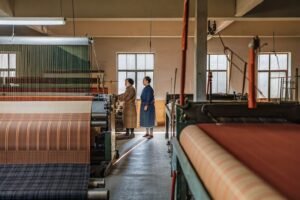
You found the perfect linen-cotton blend for your summer collection. The swatch is beautiful. The price works. You place the order, the fabric ships, and three weeks later, the vessel docks in Los Angeles. That is when the real terror begins. U.S. Customs and Border Protection flags your container for a textile examination. They pull a sample, test the fiber content, and if the lab report does not match your commercial invoice—even by a few percentage points—your entire shipment gets seized. You pay storage fees, you pay lab fees, and your production timeline evaporates. I received a panicked call from a menswear brand in Chicago last year exactly because this happened with a Vietnamese supplier. The fabric was labeled 55% linen, 45% cotton. Customs tested it and found 60% cotton, 40% linen. The container was held for six weeks. They missed their spring delivery window entirely.
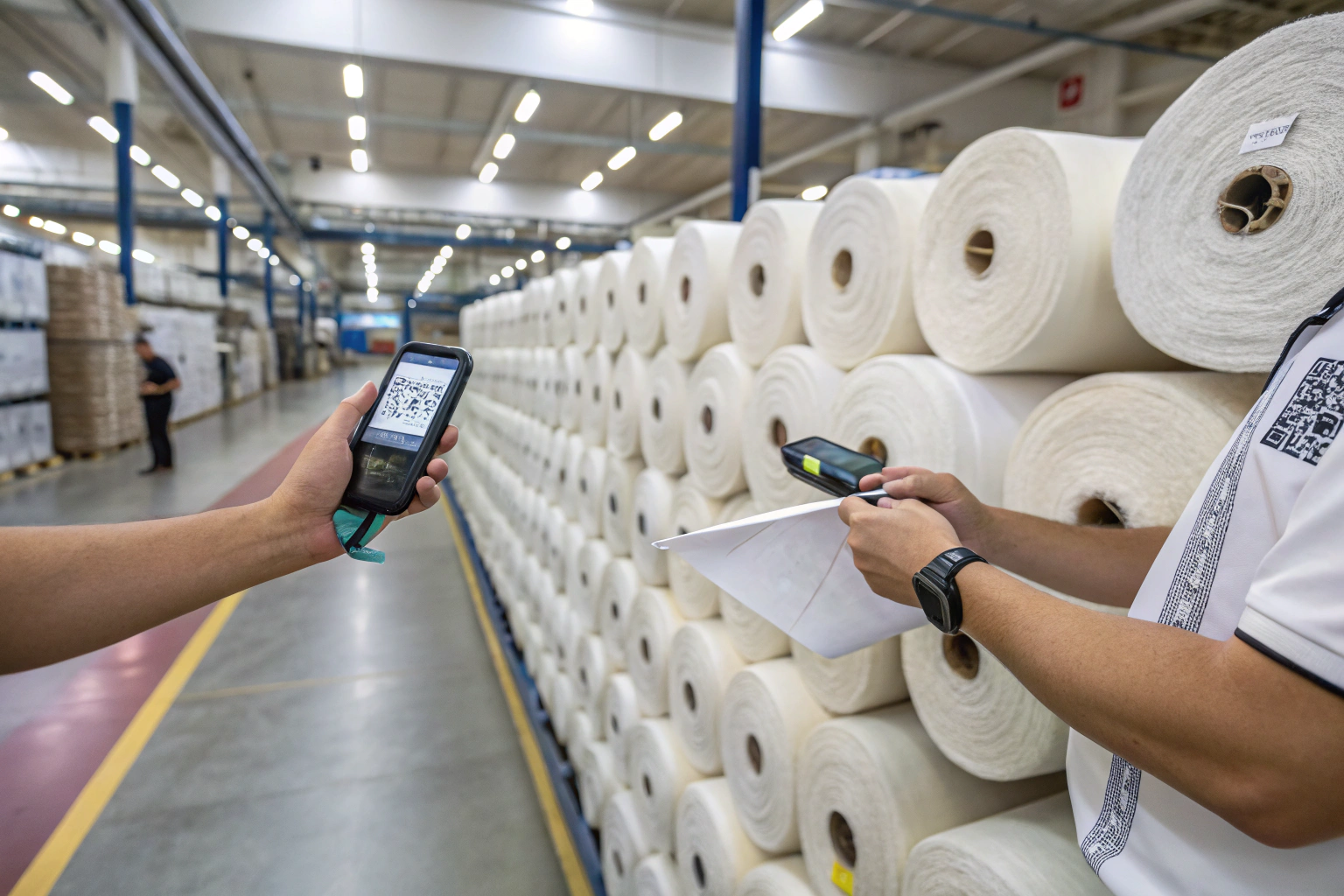
Yes, every linen fabric shipment from Shanghai Fumao passes U.S. Customs fiber content inspection. We guarantee it. Our CNAS-accredited internal laboratory tests every single production batch for exact fiber composition before export, using the same AATCC 20A chemical dissolution method that U.S. Customs labs use. We attach a digital QR code to every roll that links directly to the fiber analysis report, so when a Customs officer scans it, they see the molecular breakdown of your fabric instantly. Our documentation matches our physical product with zero tolerance for deviation.
But passing Customs is not just about having the right fiber percentage. It is about understanding how they test, what red flags trigger an inspection in the first place, and how your documentation can either accelerate clearance or guarantee a hold. I want to take you inside the inspection room mentally so you know exactly what happens and why our fabric walks through without a second glance.
How Does US Customs Test Linen Fiber Content
When CBP selects your container for a textile exam, the fabric goes to a laboratory. It is not a visual guess. An officer does not just rub the cloth between their fingers and decide it feels like linen. They dissolve it. They burn it. They put it under a microscope. The testing follows a strict protocol defined by AATCC 20A, which is the standard for fiber analysis using chemical and microscopic methods. You need to know how this test works because if your supplier does not run the identical test before shipping, they are gambling with your container.

What Is The AATCC 20A Chemical Dissolution Method?
This test separates fibers by killing one of them. Linen and cotton are both cellulose. They look similar under a basic microscope. To tell them apart, the lab uses a solvent, typically 70% sulfuric acid, at a controlled temperature. The acid dissolves the cotton fibers but leaves the linen fibers relatively intact, because linen has a higher degree of polymerization and a denser crystalline structure. The lab technician weighs the sample before the acid bath. They dissolve the cotton component. They wash, dry, and weigh the remaining linen residue. The percentage is calculated from the weight difference.
The margin of error on this test is tiny. If your commercial invoice declares 55% linen, 45% cotton, and the lab finds 53% linen, 47% cotton, the result is still within the acceptable tolerance, usually plus or minus 3%. But if the lab finds 45% linen and 55% cotton, you have a problem. That is a misclassification. CBP considers this a fraudulent declaration, even if it was an honest mistake by the mill. We avoid this risk by running the exact same AATCC 20A protocol on a sample from your production batch before the fabric even enters our finishing department. If the blend ratio is off by more than 1.5%, we re-work the batch or re-label it honestly. To understand the test fully, you should review how the AATCC 20A quantitative fiber analysis chemical dissolution test determines linen cotton blend ratios. It is the same science Customs uses, and your supplier should own the equipment to do it.
Why Does Microscopic Analysis Sometimes Override The Chemical Test?
Sometimes the chemical test gives a blurry answer, especially with heavily finished fabrics. A starch coating or a silicone softener can interfere with the dissolution rate. In these cases, the Customs lab switches to a microscopic longitudinal view. They take individual yarn fibers, mount them on a slide, and look for the characteristic "nodes" of flax. Flax fibers look like bamboo stalks under a microscope, with cross-hatch markings at regular intervals. Cotton fibers look like twisted ribbons with no nodes.
A trained analyst counts the fibers in a randomized grid and identifies each one visually. This is a slow, expensive test, but it is definitive. CBP uses it when a blend contains more than two fiber types, or when the chemical test result is disputed. If your fabric contains linen, cotton, and a small amount of recycled polyester, microscopic analysis becomes the referee. Our internal lab maintains a fiber reference library—a slide bank of every fiber we use—so we can cross-reference our yarns against known standards before shipping. This is how we catch a rogue batch of ramie that a yarn supplier might accidentally mix into a linen delivery. Ramie nodes look different. We spot it. Customs would spot it too. If you are curious about the visual method, reading about microscopic identification of flax versus ramie fibers in textile forensic analysis gives you a window into what the analyst sees through the lens.
What Documentation Prevents A Customs Fabric Hold
Customs does not test every container. They select shipments based on a risk algorithm that looks for red flags. Your documentation is the first and most powerful defense against being selected in the first place. A messy, inconsistent set of papers screams "inspect me." A perfectly aligned set of documents with verifiable third-party certifications often sails through without a physical exam. I treat export documentation like a legal brief.

Does A CNAS Lab Report Satisfy US Customs Officers?
Yes, and in many cases, it stops the inspection before it starts. CNAS, the China National Accreditation Service for Conformity Assessment, is a signatory to the International Laboratory Accreditation Cooperation (ILAC) Mutual Recognition Arrangement. This means a test report issued by our CNAS-accredited laboratory is technically equivalent to one issued by an A2LA-accredited lab in the United States, provided the test standard is mutually recognized.
When my freight forwarder files the Importer Security Filing (ISF 10+2) with CBP, we attach a digital copy of our internal fiber analysis report and our CNAS accreditation certificate. The Customs entry specialist reviewing the electronic filing sees a certified document that states the exact fiber composition, tested to AATCC standards. This pre-answers the question CBP usually asks. It reduces the "unknown risk" score in their algorithm. A shipment with a clean, accredited lab report attached has a significantly lower probability of being flagged for a random textile examination compared to a shipment from an unknown mill with no supporting data. This is not a guarantee against inspection—CBP can still pull any container—but it stacks the odds in your favor. For more on this, you should investigate how CNAS accredited textile lab reports are recognized under ILAC mutual recognition for US customs clearance. It provides the legal framework for why our internal tests carry weight at the border.
What Information Must Appear On A Commercial Invoice For Linen?
A commercial invoice for U.S. Customs is not just a bill. It is a sworn statement. For textile products specifically, CBP requires the fiber content by percentage, listed in descending order of predominance. It must use the generic fiber names recognized by the FTC Textile Rules. You cannot write "natural fibers" or "European linen." You must write "55% Flax (Linen), 45% Cotton."
The invoice must also state the country of origin, the manufacturer’s name and address, and the harmonized tariff schedule code. If your fabric is a blend, the HS code must match the blend classification. A common trap is using the HS code for 100% linen on a 55/45 linen-cotton blend because it has a lower duty rate. CBP’s system cross-references the HS code with the fiber declaration. If they mismatch, the entry gets flagged for a documentation review, which delays clearance and costs storage fees. I also include the fabric construction method—woven versus knit—because this affects the quota and visa requirements under any potential trade remedies. Our commercial invoices are deliberately over-detailed. We list the roll numbers, the net weight per roll, and the specific testing standard applied. Customs likes detail. Detail signals transparency. Transparency signals a low-risk shipment. I encourage buyers to review the specific US customs import requirements for fiber content labeling on woven linen cotton blend textiles to ensure their invoice aligns exactly with CBP expectations.
Why Do Some Linen Shipments Get Flagged For Inspection
CBP does not wake up thinking about textile fiber content. They think about national security, narcotics, and intellectual property theft. But textile shipments get caught in the net for very specific, avoidable reasons. The most common trigger is a mismatch between the declared value and the weight, or a country of origin that doesn’t match the shipping route. A fabric shipment from China that transshipped through Vietnam, for example, will almost certainly get flagged for a forced labor and origin verification review right now.

Does Undervaluing Fabric Trigger A Customs Audit?
Yes, and it is the number one unforced error I see small brands make. You ask me to lower the commercial invoice value so you pay less import duty. I refuse. Every single time. CBP’s database has a massive reference table of global textile prices per kilogram by country of origin. If you declare a linen-cotton woven fabric at $1.50 per kilogram when the known average for Chinese linen is $8 to $12 per kilogram, the automated targeting system flags the entry instantly.
The consequence is not just paying the correct duty. It is a full audit. CBP seizes the shipment, reviews every line item, and issues a penalty. The penalty can be a multiple of the underpaid duty. Your brand gets added to a high-risk database, meaning every future shipment from any country gets scrutinized. This is a business-ending event for a small brand. I protect my buyers from this by providing a fair market value invoice that accurately reflects the production cost plus a reasonable margin. If you want to save on duty, we change the product design or the fiber composition legally; we do not change the number on the invoice. You can read more about how CBP’s automated targeting system detects undervalued textile import entries to understand why this shortcut is a trap. The system is smarter than you think.
How Does The Lacey Act Affect My Linen Shipment?
The Lacey Act is not just about wood. It was amended to cover plant products, and linen comes from the flax plant. CBP has the authority to seize any plant-based textile product if the importer cannot demonstrate that the raw fiber was legally harvested and exported under the source country’s own laws. This is a relatively new enforcement frontier for textiles, but we are seeing more inquiries.
For Chinese linen, the key is demonstrating that the flax was cultivated and harvested in accordance with Chinese agricultural law. Our raw flax comes from documented farms in Heilongjiang province. We maintain a chain-of-custody record from the retting facility to the spinning mill. If CBP asks for a Lacey Act declaration, we provide the GPS coordinates of the growing region, the harvest date, and the license number of the retting cooperative. This level of upstream traceability is rare in the commodity linen trade, where fiber often gets blended in open markets. We built this documentation system specifically because we knew enforcement was coming. A generic linen supplier without this paperwork cannot help you if CBP decides to test the Lacey Act on a linen shipment. The declaration requires you to state the scientific name (Linum usitatissimum) and the harvest country. If your supplier cannot tell you the province where the flax was grown, you are exposed. Understanding how Lacey Act plant product declarations apply to imported flax linen textiles from China is essential for protecting your supply chain from a seizure you never saw coming.
Can Fabric Treatment Chemicals Cause Customs Rejection
Even if the fiber content is perfect and the invoice is accurate, your fabric can still fail Customs because of what is on the fabric, not what is in it. U.S. Consumer Product Safety Commission (CPSC) works closely with CBP to enforce limits on hazardous substances in textiles. If your linen has a heavy formaldehyde-based anti-wrinkle finish that exceeds the CPSC limit, the fabric is not just rejected; it is destroyed. You cannot re-export it. You lose the goods entirely.

What Is The Formaldehyde Limit For Imported Linen Garments?
The CPSC, under the Consumer Product Safety Improvement Act (CPSIA), does not set a single universal number for all textiles, but it enforces the industry standard which is generally 75 parts per million (ppm) for fabrics that directly contact skin and 300 ppm for outerwear. If your linen-cotton shirting tests at 150 ppm, Customs can detain it as a hazardous substance.
We achieve crease resistance on our linen without heavy formaldehyde. We use a polycarboxylic acid cross-linking agent, specifically butane tetracarboxylic acid (BTCA), with a sodium hypophosphite catalyst. This chemistry creates the hydrogen bonds that stop wrinkles without the formaldehyde release. It is more expensive than the traditional dimethylol dihydroxyethyleneurea (DMDHEU) resin used by cheap finishing plants, but it keeps the free formaldehyde level on our fabric below 20 ppm, well under the detectable threshold that worries CBP. This chemistry choice is invisible to the consumer, but it is the difference between a container clearing Customs in a day and a container being impounded for hazardous material testing. When you ask a supplier how they achieve wrinkle resistance, listen for the word "formaldehyde-free." If they cannot answer the chemistry question, you are taking a risk. A deeper look at CPSIA formaldehyde limits for imported resin finished cotton and linen apparel fabrics explains the exact thresholds and the testing methods used at the border.
Do Flame Retardant Coatings Require Special Import Documentation?
Yes, and this catches hospitality and contract furniture buyers off guard. If your linen fabric has a flame retardant (FR) back-coating for use in hotel drapes or restaurant banquettes, the specific FR chemical must be registered. Some brominated and chlorinated flame retardants are banned or restricted under state-level laws like California’s Proposition 65 and Washington State’s Children’s Safe Products Act.
Even if the federal CPSC allows a certain FR chemical, California requires a warning label if the fabric contains a listed carcinogen. CBP enforces these state-level requirements at the port because the product is entering the California market stream. We use only phosphorus-based, non-halogenated FR systems that do not require a Prop 65 warning. We provide a certificate of compliance that lists the exact chemical name and CAS number of the FR agent used. This document is filed with the customs entry. Without it, a fire-rated fabric can be held until you prove it does not contain a restricted substance. The testing alone can take weeks. I urge any buyer sourcing coated linen for contract use to check the regulatory landscape of flame retardant chemical compliance for imported contract textiles under California Proposition 65. The chemistry matters as much as the weave.
Conclusion
Passing U.S. Customs with a linen fabric shipment is a science, not a prayer. It requires that your fiber blend matches your invoice down to a single percentage point, proven by an AATCC 20A chemical dissolution test. It requires a CNAS-accredited lab report that a Customs officer can trust under ILAC mutual recognition. It requires a formaldehyde-free finishing chemistry that keeps your product below 20 ppm and a flame retardant system that does not trigger a Prop 65 hold. And it requires a supplier who refuses to undervalue your commercial invoice or lie about the country of origin on a Lacey Act declaration. At Shanghai Fumao, I built our entire quality and documentation system backwards from the U.S. border. We test what Customs tests. We document what Customs demands. We do this because I know your container sitting in a customs warehouse for six weeks costs you more than the fabric itself.
Do not wait until your shipment is seized to find out if your supplier understands U.S. textile import regulations. Before you place your next order, ask Elaine to send you a sample of our export documentation package for a recent U.S.-bound linen shipment. You will see the fiber analysis report, the formaldehyde test certificate, and the Lacey Act declaration form. Bring them to your customs broker and ask them to review the packet. That is how you verify that your supply chain is legally secure. Email elaine@fumaoclothing.com with the subject line "Customs Doc Sample" and she will send you the redacted paperwork from our last Long Beach clearance. Let’s make your fabric entry boring and routine, not a crisis.