
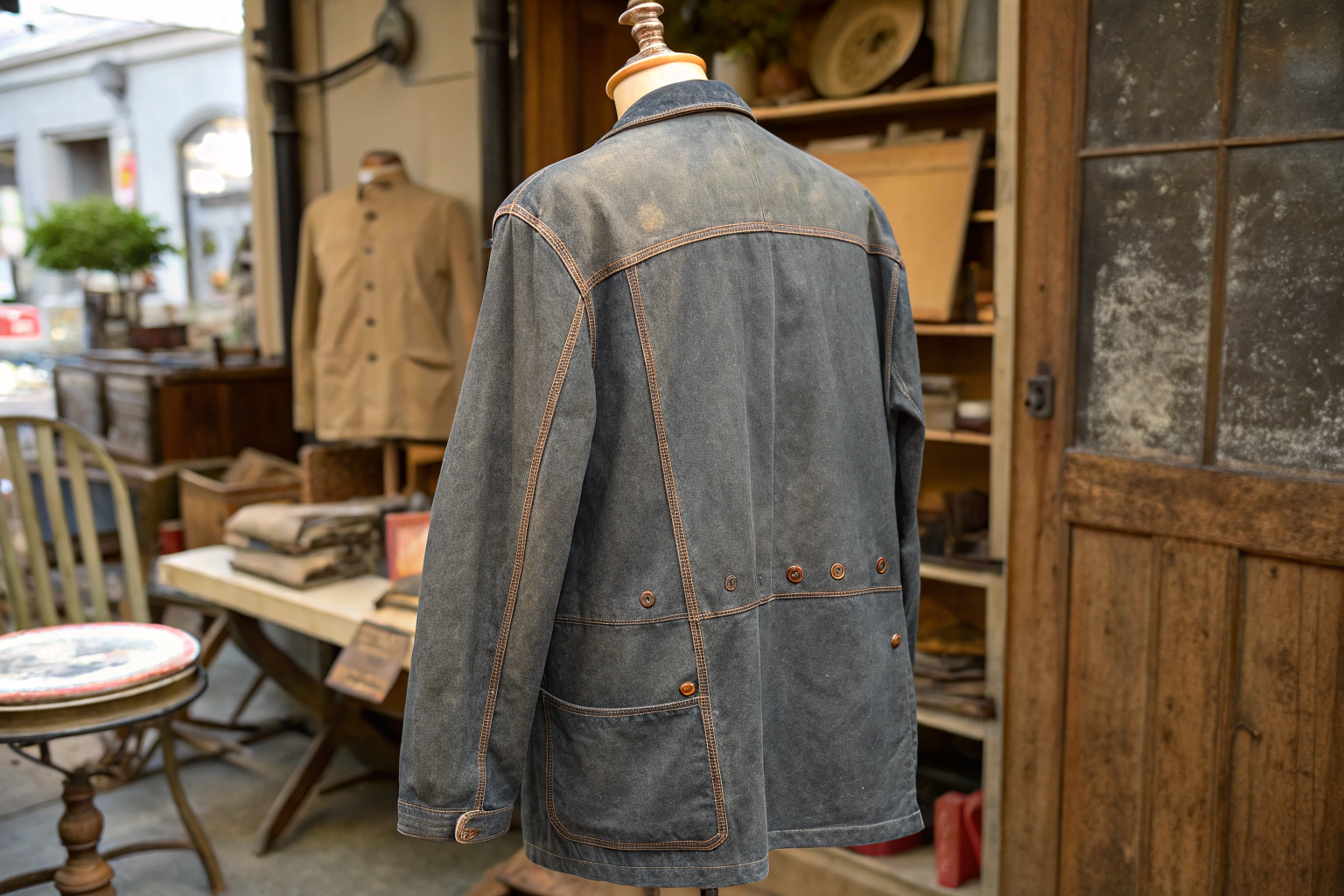
You found a 1950s French workwear jacket in a flea market in Provence. The fabric is incredible. It has a dry, grainy hand feel, a faded charcoal color with warm brown undertones where the sun hit the shoulders, and irregular slubs that catch the light like little rivers of texture. You want to build your entire brand around this feeling. You email ten mills. Nine of them send back generic swatches that look like cheap hotel bedsheets. One mill tries to sell you a printed fake texture on polyester. You start to think maybe that vintage magic is just deadstock and old machines, and no one can actually recreate it. I have had this exact conversation with a menswear designer from New York in 2022 who was ready to give up on his brand launch until he walked into our showroom.
Yes, Shanghai Fumao can replicate and even customize vintage cotton linen textures for your brand. We use a combination of specialized slub yarn spinning, low-tension weaving on rapier looms, and controlled overdyeing and wash-down finishing techniques to recreate the tactile irregularity and visual depth of authentic mid-century workwear, military surplus, and heritage home textiles. We do not print fake textures onto flat fabric. We engineer the irregularity into the yarn itself and then age the fabric through mechanical and enzymatic processes that mimic decades of wear in a matter of hours.
Replicating a vintage texture is a reverse-engineering challenge. It requires breaking down the original fabric into its component variables—yarn character, weave tension, dye chemistry, and finishing aggression—and then reassembling those variables in a modern production environment. Let me walk you through how we do it, from the spinning frame to the wash house.
How Do You Reverse-Engineer A Vintage Fabric Texture
Reverse-engineering is detective work. You cannot just look at a vintage fabric and say, "It feels old, make me that." You have to measure it. We start with a forensic analysis of your reference sample. The fabric goes into our CNAS lab, but instead of testing for shrinkage or colorfastness, we are measuring weave density, yarn twist direction, slub frequency, fiber degradation patterns, and dye penetration depth. Every physical attribute gets a number.

What Do You Look For Under The Microscope On A Vintage Swatch?
We mount a small cut of the reference fabric on a slide and examine it under a digital microscope at 200x magnification. The first thing we check is the fiber composition and condition. Is it 100% linen, or a cotton-linen blend? Has the cotton component degraded more than the linen, creating a subtle, uneven surface pilling? We also look at the yarn structure. Vintage workwear often used single-ply, low-twist yarns that were slightly irregular in diameter because the spinning technology of the mid-century was less precise than modern ring spinning. That irregularity is part of the charm.
We also measure the weave density with a pick glass. How many warp ends per inch? How many weft picks? A loose, low-density weave combined with thick, irregular yarns creates a distinct texture that modern high-speed looms struggle to replicate unless you deliberately dial back the tension. We document the slub spacing. Are the slubs—those thicker lumps in the yarn—randomly distributed, or is there a repeating pattern? A truly vintage look requires random spacing, which means we need to program the spinning frame to generate controlled chaos, not a predictable machine rhythm. We also analyze the color layer by layer. The surface might be faded to a light blue, but the core of the yarn in the seam allowance might still show a deep indigo. That tells us the fabric was rope-dyed and then heavily washed, not piece-dyed after weaving. All of these clues feed into the replication recipe. For a deeper dive, you can read about methods for forensic textile analysis of vintage woven fabrics to reverse engineer yarn structure and finishing. It is a field that combines history, chemistry, and engineering.
How Do You Source Or Spin A Custom Slub Yarn For A Vintage Look?
Once we have the measurements from the reference, we go to the spinning frame. You cannot get a genuine vintage texture from a perfectly uniform, high-strength modern yarn. You need a yarn with character. We call this a "fancy yarn" or a "slub yarn." We spin it by deliberately varying the feed speed of the roving into the drafting zone of the ring spinning frame. A small servo motor, controlled by a programmable logic controller, accelerates and decelerates the feed rollers in a randomized sequence. Where the feed is faster, the yarn gets thicker. That is a slub.
The key is making the slubs random, not rhythmic. The human eye is very good at detecting patterns. If the slubs repeat every 15 centimeters, the fabric looks machine-made and cheap. We program the spinner with a "random seed" algorithm that varies the slub length, thickness, and spacing within defined parameters. For a 1950s French workwear look, we might specify slubs of 8mm to 25mm in length, spaced irregularly with an average of 12mm between slubs, and a thickness increase of 150% to 200% over the base yarn diameter. This level of control allows us to match the exact irregularity signature of your reference fabric. We can spin the slub yarn in pure linen, pure cotton, or a blend at the intimate fiber level. This custom spinning service is a significant advantage for brands that want a truly exclusive fabric. You are not buying a commodity. You are co-developing a yarn that only exists for your brand. To understand the technology behind this, you can explore how programmable fancy slub yarn spinning creates authentic irregular textures for vintage reproduction fabrics. It is the marriage of old-world aesthetics and modern digital control.
What Dyeing And Washing Techniques Age Fabric Quickly
Dyeing and washing are the time machine. You can weave a perfect reproduction fabric, but if the color is a flat, uniform solid, it will look brand new. Vintage textiles have a color story. The surface is faded, the high points are lighter, the seams and edges are darker where dye collected, and the undertone is often a warm, yellowish brown from years of oxidation and sunlight. We recreate this layered, lived-in color using a sequence of cross-dyeing, overdyeing, enzyme washing, and pigment spraying.

How Does Garment Overdyeing Create A Layered Color Effect?
Garment overdyeing is the opposite of the standard textile dyeing process. Normally, we dye the fabric first and then cut and sew the garment. With overdyeing, we sew the garment in its raw, greige state and then submerge the entire finished jacket or shirt in a dye bath. This produces a completely different color effect. The stitching thread, which is usually polyester, does not take the dye and remains its original white or natural color, creating contrast. The seams and thicker areas absorb more dye and become slightly darker. The surface of the fabric gets a rich, deep color, while the inner folds and hidden areas remain lighter.
To achieve a vintage look, we often use a two-step overdye. First, we dye the garment in a warm, earthy base color like a mustard yellow or a terracotta brown. Then we overdye it a second time with a darker, cooler shade like a charcoal or indigo. The second dye bath only partially penetrates; the surface goes dark, but the undertone remains warm. When we then enzyme-wash the garment, the surface dye fades away in high-wear areas like the elbows and collar, revealing the warm base color underneath. This mimics the effect of decades of wear and sun fading. A flat, piece-dyed fabric cannot replicate this depth. You get one color. Garment overdyeing gives you a color story. It is a more expensive and time-consuming process, but the visual result is unmistakably vintage. For a detailed look at this technique, you can read about the process of garment overdyeing with reactive dyes to achieve a worn, dimensional color on linen cotton workwear. It is a craft skill as much as a science.
What Does Enzyme Washing Do To Recreate A Worn-In Surface?
Enzyme washing is a mechanical and biological process that eats away a tiny amount of the fiber surface to simulate years of abrasion. We use cellulase enzymes, which are proteins that specifically break down cellulose. The enzymes are added to a large industrial washing machine along with the garments. As the drum rotates, the fabric tumbles against itself. The enzymes attack the loose, protruding fibers on the surface, effectively "shaving" the fabric.
The result is a softer hand feel and a slight loss of surface color, particularly at the edges and seams. The fabric looks and feels broken-in, not stiff and new. We can control the degree of aging by adjusting the enzyme concentration, the water temperature, and the cycle time. A light enzyme wash of 15 minutes gives a subtle, one-year-old patina. A heavy enzyme wash of 45 minutes, combined with pumice stones for mechanical abrasion, can replicate a decades-old, heavily worn surface. The key is stopping the enzyme reaction at the right moment by raising the water temperature to deactivate the enzyme, then rinsing thoroughly. If the enzyme is not properly killed, it continues to eat the fabric slowly over time, and the garment falls apart after a few washes. We have mastered this kill step. Our aged fabrics are stable; the aging process is complete when we ship, not still in progress. For the science behind this, you can explore how cellulase enzyme washing techniques create controlled surface abrasion and softness on woven linen for vintage denim effects. It is a biological tool that we wield with precision.
Can You Match A Specific Historical Reference Swatch
Matching a historical reference is the ultimate test of our development capability. You bring us a scrap of fabric from a 1940s military fatigue jacket or a 1960s Italian linen tablecloth. You say, "Make me this." We do not promise an exact copy because age is a physical process that cannot be perfectly duplicated. Cellulose degrades, lignin yellows, and UV radiation breaks chemical bonds over 60 years. But we can get remarkably close. Close enough that your customer cannot tell the difference.

What Is The Development Timeline For A Custom Vintage Reproduction?
The timeline depends on the complexity of the reference, but a typical custom vintage reproduction project takes 6 to 8 weeks from reference swatch receipt to approved bulk sample. Here is the breakdown. Week one: we receive your reference swatch and perform the forensic analysis, measuring fiber content, yarn structure, weave density, and color data. Week two: we source or custom-spin the yarn to match the irregularity profile of your reference. Week three: we weave a sample greige fabric on a rapier loom at low tension. Week four: we run the greige fabric through the dyeing and finishing sequence that matches the color layering we observed in the reference. Week five: we send you a lab dip and a hand-feel swatch for your approval. You provide feedback. Week six: we adjust the formula and send a second round of samples. Weeks seven and eight: you approve the final sample, and we begin bulk production.
This is a collaborative process. The more specific your feedback, the faster we converge on the target. Some projects hit the mark on the first round. Others take three or four rounds of adjustment to dial in the exact shade of faded olive or the precise softness of the enzyme wash. We are patient. We want you to be thrilled with the result. The development cost for a custom vintage reproduction includes a one-time sampling fee that is credited back to you when you place the bulk order. This ensures that both sides are committed to the project. For a full walkthrough of this process, you can read about a step by step timeline for developing custom vintage reproduction cotton linen fabrics with Chinese textile mills. It sets realistic expectations for the journey from reference to production.
How Close Can You Get To An Original Without The Natural Aging?
We can get to a 95% visual and tactile match. The remaining 5% is the authentic patina of time that only 60 years of sunlight, oxygen, and human wear can create. No machine can perfectly replicate the random micro-fading caused by a worker’s wallet worn in a back pocket for a decade, or the slight yellowing from tobacco smoke in a French cafe. Those are unique artifacts of a specific life.
But what we can do is create a fabric that feels, drapes, and looks aged enough that even a knowledgeable vintage dealer would pause before declaring it a reproduction. The slub character, the dry hand, the color depth, and the wear pattern at the seams are all there. And unlike a genuine vintage fabric, our reproduction is strong. It has full tensile strength, no dry rot, no hidden tears waiting to rip, and consistent color across the entire production run. A genuine vintage find might yield enough fabric for five jackets. Our reproduction yields enough fabric for a full seasonal collection, with consistent quality from the first meter to the last. This is the advantage of modern engineering applied to old-world aesthetics. You get the romance without the fragility. For insights into the specific finishing challenges, you can explore how to simulate natural UV fading and oxidation on modern linen cotton blends for vintage reproduction projects. It is a technical deep dive into the chemistry of accelerated aging.
How Do You Scale A Vintage Texture For Full Production
Developing a beautiful vintage texture in a sample size is one challenge. Producing 5,000 yards of that same texture with perfect consistency is another challenge entirely. The risk is that the bulk production loses the irregularity because the machines are too precise. We solve this by locking in the "irregularity recipe" during the sampling phase and then replicating those exact machine settings across parallel production lines.

How Do You Keep The Irregularity Consistent Across Bulk Yardage?
This sounds like a contradiction: consistent irregularity. But it is achievable through strict parameter control. During the sample development, we define a set of machine parameters that produce the desired texture. These include the spinner’s slub algorithm program number, the rapier loom’s weft insertion speed and warp tension setting, the enzyme concentration and cycle time in the wash house, and the overdyeing bath formula. Every parameter is recorded in a digital production recipe.
When we scale to bulk, we do not ask the operators to "make it look vintage." We load the exact same program into the spinning frame, the exact same loom settings, and the exact same dyeing recipe. The machines are the artists. They replicate the input parameters, and the output texture is statistically identical to the approved sample. We also run a continuous quality control check during bulk production. Every 500 yards, we pull a sample and compare it to the approved reference under a light box. We measure the slub frequency, the color Delta E, and the hand feel. If any parameter drifts, we pause production and recalibrate. This is not a romantic process, but it is the only way to deliver 5,000 yards of fabric that all look like they came from the same vintage roll. The artistry is in the recipe development. The discipline is in the bulk execution. For more on the operational side, you can read about maintaining texture consistency in scaled production of slub yarn vintage reproduction woven fabrics. It explains the quality control loops that keep bulk production faithful to the sample.
What Is The Minimum Order Quantity For A Custom Vintage Texture?
For a fully custom vintage texture with a custom-spun slub yarn, the minimum order quantity is 500 meters per colorway. This MOQ covers the yarn spinning setup, the warp beam preparation, and the dyeing minimums. For brands that need smaller quantities, we offer a "stock vintage" program. We have a library of pre-developed vintage textures—slub linens, cross-dyed canvases, washed twills—that are available from 100 meters per colorway. You can choose from textures we have already perfected.
The custom development route gives you exclusivity. No other brand has your fabric. The stock vintage route gives you lower minimums and faster lead times, about 2 to 3 weeks instead of 6 to 8. Both paths lead to a beautiful, textured fabric. The choice depends on whether your brand story requires a proprietary fabric or whether one of our existing vintage developments fits your aesthetic. Many brands start with a stock vintage fabric for their first collection, then invest in a custom development for their second season once they have sales data and customer feedback. It is a pragmatic path that minimizes risk. I am happy to guide you through both options. Understanding the difference between fully custom textile development and adapted stock vintage fabric programs gives you a framework for making the right investment for your brand’s stage of growth.
Conclusion
Replicating a vintage cotton linen texture is a technical art. It starts with forensic analysis under a microscope, measuring slub spacing and dye penetration depth. It moves to a programmable spinning frame that generates controlled chaos in the yarn. It passes through low-tension rapier looms that weave the irregular yarn into a fabric with authentic character. It then enters a sequence of garment overdyeing and enzyme washing that layers color and eats away the surface until the fabric looks and feels like it has lived a full life. And finally, it scales to bulk production through strict parameter control that locks the irregularity recipe into the machines. At Shanghai Fumao, we have spent years building this capability because we know that the brands that win are the ones with fabrics that tell a story. A vintage texture is a story of work, time, and character. It cannot be faked with a print. It must be engineered.
If you have a vintage reference swatch that you have been carrying around in your pocket, send it to us. Elaine will log it into our development lab and send you a forensic analysis report within ten days, breaking down the fiber content, yarn structure, and color layering. From there, we will propose a development plan with a timeline and a sampling fee that credits back against your bulk order. Even if you are just exploring the idea and do not have a physical swatch, describe the texture you are chasing, and we will send you our closest stock vintage swatches for your review. Email elaine@fumaoclothing.com with the subject line "Vintage Texture Development." Let us turn your flea market find into a full collection.








