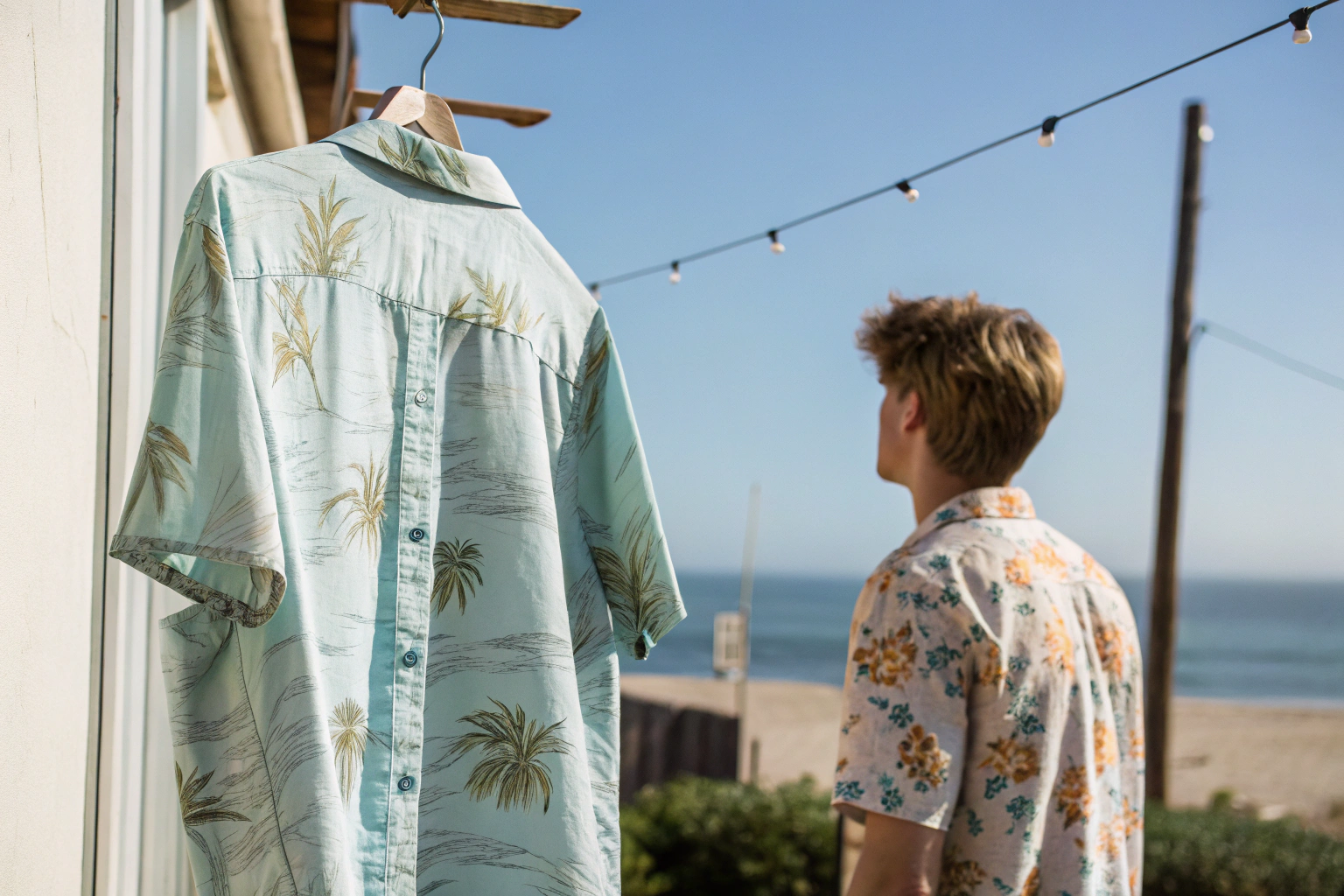
You design a summer shirt. The sample looks perfect on the hanger. You wear it outside on an 85-degree day. Ten minutes later, your back is wet, the fabric is clinging to your skin, and you feel like you are wearing a plastic bag. The shirt failed. It does not matter how beautiful the print was. Breathability is the invisible quality that determines whether a summer garment gets worn every week or buried in the back of the closet. I have seen designers fall in love with a fabric’s look and completely forget to ask about its air permeability. Then they wonder why their customers are sweating.
Yes, Shanghai Fumao’s cotton linen fabrics are engineered specifically for maximum breathability in hot-weather apparel. A standard 55% linen, 45% cotton blend from our production line achieves an air permeability rating between 400 and 600 liters per square meter per second (L/m²/s) when tested to the ASTM D737 standard. This is roughly four to six times more breathable than a standard denim and significantly airier than 100% cotton poplin. The secret lies in the hollow, tubular structure of the flax fiber itself, combined with open weave constructions that we optimize for airflow rather than just appearance.
But breathability is not just a fiber story. It is a physics story about how air moves through a textile structure. Let me show you exactly how we measure it, why our blend ratios work the way they do, and how you can compare fabrics with real data instead of marketing fluff.
What Makes A Fabric Breathable For Hot Weather
Breathability is the rate at which air flows through a fabric. It is measured by clamping a piece of fabric over a circular opening, pulling a vacuum on one side, and measuring how much air passes through per unit of time. The result is expressed in liters per square meter per second. A higher number means more air movement, which means more evaporative cooling on your skin. It is a simple physical measurement, not a subjective opinion about how "cool" a fabric feels.

How Is Air Permeability Actually Measured In A Lab?
We use the ASTM D737 test method on a machine called a Frazier Air Permeability Tester. The technician cuts a sample of fabric, clamps it flat over a circular test area of 38 square centimeters, and activates a vacuum pump. The machine draws air through the fabric at a controlled pressure differential of 125 Pascals, which is roughly equivalent to a gentle breeze. The machine then measures the volumetric flow rate of air passing through the fabric and calculates the air permeability value.
We test every new fabric construction three times and average the results. For a summer shirting weight of approximately 150 grams per square meter (GSM) in our 55/45 linen-cotton blend, we consistently see results between 450 and 550 L/m²/s. What does that number mean in the real world? A standard 100% cotton T-shirt jersey typically measures around 300 to 400. A heavy denim might measure below 100. A lightweight linen shirting from our range can hit 600. Every step up of 100 points is a noticeable improvement in how cool the garment feels on a hot day. When a designer asks me, "Is this fabric breathable?" I do not answer with words. I send them the ASTM D737 test report for that specific batch. The number speaks for itself. For more context on what these values mean in practice, you can read about interpreting ASTM D737 air permeability test results for lightweight woven summer apparel fabrics. It translates laboratory data into real-world comfort.
Does A Higher Linen Percentage Always Mean More Breathability?
Not exactly, and this is a common misconception. Linen fibers are inherently more breathable than cotton fibers because flax has a hollow, tubular structure that acts like a tiny straw, channeling air and moisture away from the body. Cotton fibers are flat and ribbon-like, with a collapsed, twisted structure that does not channel air as efficiently. So yes, all else being equal, increasing the linen percentage increases breathability.
But "all else being equal" is the catch. A 100% linen fabric woven in a dense, tight plain weave with thick yarns can be less breathable than a 55/45 linen-cotton blend woven in a loose, open plain weave with fine yarns. The weave structure matters as much as the fiber content. A tightly beaten linen canvas for a blazer might have an air permeability of only 150, while a loosely woven linen-cotton shirting at the same weight could hit 500. The thickness of the yarn, known as the yarn count, also plays a role. Finer yarns create smaller pores, which can reduce airflow, but they also allow a tighter weave to remain somewhat breathable. A heavier, coarser yarn might leave larger gaps between warp and weft, even in a relatively dense construction. The interplay of fiber, yarn count, and weave density is complex. We optimize all three for summer comfort. We typically recommend a blend with 45% to 55% linen for apparel that needs a balance of breathability, drape, and wrinkle resistance. To understand this interaction more deeply, you should explore how the weave structure and yarn count of linen cotton blends affect overall fabric air permeability. It explains why two fabrics with the same fiber content can feel completely different on a hot day.
Which Cotton Linen Weave Is Coolest For Summer Shirts
The weave of a fabric is the architecture of the cloth. It determines the size and shape of the spaces between the yarns through which air can pass. For summer shirts, the weave choice is often more important than the fiber blend. We produce cotton linen in several weave structures, and each one breathes differently. The designer who understands this distinction can spec the right fabric for a steamy August wedding suit versus an air-conditioned office shirt.

Why Does A Plain Open Weave Outperform A Twill For Airflow?
A plain weave is the simplest structure: one warp thread over, one weft thread under, repeated. It creates the maximum number of intersections per square inch. This might sound like it would block airflow, but a plain weave also has the smallest thread float, meaning the yarns do not cover large areas without an intersection. When woven loosely, with a low thread count, a plain weave produces a grid of tiny, evenly distributed pores. Air flows straight through.
A twill weave, recognizable by its diagonal pattern, has longer thread floats. The weft yarn skips over two or three warp yarns before tucking under. This creates a tighter packing of yarns with fewer direct vertical pores. Air must navigate a more tortuous path through the fabric. Twill is stronger and has a beautiful drape, which is why we use it for trousers and blazers. But for a shirt worn directly against the skin in high humidity, an open plain weave is the cooler choice. We measure this difference in the lab. A 150 GSM plain weave linen-cotton blend might hit 500 L/m²/s, while a twill of the exact same fiber and weight might only reach 350. The structure itself accounts for the difference. This is the kind of specification data a designer needs when choosing between a "classic shirt" and a "resort shirt" fabric. For a more detailed comparison, look at the airflow differences between plain weave and twill weave linen cotton structures for summer menswear shirting. The data tells a clear story.
Is A Gauze Or Mock-Leno Weave Too Sheer For Apparel?
We sometimes push breathability to the extreme with a mock-leno or gauze weave. In this structure, the warp and weft yarns are spaced deliberately far apart and interlaced in a way that creates stable, visible holes in the fabric. Air permeability on a mock-leno linen-cotton can exceed 800 L/m²/s. It is like wearing a gentle, structured net. The cooling effect is dramatic.
But yes, sheerness is the trade-off. A mock-leno weave is transparent. You cannot wear it as a standalone shirt without a camisole or a lining, unless your brand aesthetic is deliberately avant-garde. Most of our summer apparel clients use mock-leno as an overlay fabric for a sheer-sleeved blouse, a beach cover-up, or a double-layer detail on a dress. It is also fantastic as a lining fabric for a tailored linen jacket because it adds zero warmth while providing a slip layer that helps the jacket slide over a shirt. If you want the maximum possible airflow and you are willing to design around the transparency, mock-leno is the coolest fabric we make. If you need solid coverage with high breathability, an open plain weave is the sweet spot. The performance-to-coverage ratio is what designers must balance. Learning how to select the appropriate weave structure for optimal ventilation in cotton linen summer apparel fabrics is a skill that separates good collections from great ones.
How Does Moisture Wicking Work In Linen Blends
Breathability lets the breeze in. Moisture wicking pulls the sweat out. These two properties work together to create a feeling of cool dryness. A fabric can be breathable but still feel clammy if it holds liquid sweat against your skin. Cotton is absorbent but it holds moisture. Linen is absorbent but it releases moisture rapidly. A well-engineered blend combines the best of both.

How Fast Does Linen Release Moisture Compared To Cotton?
Linen wicks and dries faster than cotton. This is measurable. In a standard vertical wicking test, where a strip of fabric is suspended with one end in a water reservoir, linen will transport water up the strip roughly 20% to 30% faster than an equivalent-weight cotton fabric. In a drying test, where a saturated swatch is hung in a controlled environment, linen will reach bone-dry status in roughly half the time of cotton.
The physical reason is the structure of the flax fiber. Flax has a high degree of crystallinity, meaning the cellulose molecules are tightly packed in an ordered arrangement. Water cannot easily penetrate the crystalline regions; it moves rapidly along the surface and through the capillary channels of the hollow fiber core. Cotton has a lower crystallinity with more amorphous regions that absorb water and hold it inside the fiber structure. This is why a cotton towel is great for drying your body—it absorbs and holds water. Linen is great for clothing on a sweaty day—it absorbs the sweat, wicks it to the fabric surface, and releases it into the air. You stay dry. A 55/45 linen-cotton blend leans into the wicking and drying speed of linen while the cotton content adds softness and reduces the initial cool shock of 100% linen against warm skin. This balance is what makes the blend so popular for summer shirting. For the hard data behind this, you can read about comparative moisture regain and drying rates of flax linen versus cotton for active summer apparel fabrics. The numbers make the case better than any marketing copy.
What Is The "Clammy" Feeling And How Do You Prevent It?
Clamminess happens when a fabric absorbs sweat but does not release it. The moisture sits on your skin, trapped in a humid micro-layer. The fabric becomes heavy, sticks to your body, and blocks any cooling breeze from reaching your skin. It is the opposite of comfort.
We prevent clamminess by controlling the fabric’s "moisture regain" and "surface contact area." Moisture regain is the amount of water a fiber absorbs from the air at a given humidity. Linen has a moisture regain of about 12%, cotton about 8.5%, and polyester less than 1%. A fabric with higher moisture regain actively pulls moisture vapor off your skin before it condenses into liquid sweat. It acts as a buffer. Then the wicking mechanism moves the liquid sweat to the surface for evaporation. The second factor, surface contact area, is controlled by the weave and finish. A smooth, tightly woven fabric sits flat against the skin, maximizing the contact area and the feeling of stickiness. A fabric with a slight texture, a crepe, a slub, or a peached finish, sits on the skin like a series of tiny points. Less contact area means less cling. Our enzyme-washed linen has a slightly roughened, textural surface that enhances this "stand-off" effect. The fabric floats over the skin rather than plastering itself to it. This is the secret to that cool, dry feeling. For a deeper understanding of this phenomenon, explore how fabric surface texture and fiber moisture regain interact to prevent the clammy skin feel in hot weather clothing. It is a critical lesson in comfort science.
Can You Test Breathability Before Buying Bulk Fabric
You do not need a $10,000 lab machine to get a useful, practical read on whether a fabric will breathe. A designer with a swatch in hand can perform several simple tests that correlate reasonably well with laboratory data. I encourage every client to test swatches at their own desk before signing a bulk order. A fabric that passes the "hand test" and the "mouth test" will almost certainly perform well in a garment.

How Do You Do A Breath Test On A Swatch At Home?
The simplest test is the mouth breath test. Hold a single layer of the fabric swatch tightly against your mouth. Exhale forcefully. Pay attention to the resistance you feel. If your breath passes through the fabric easily, with almost no back pressure, the fabric is highly breathable, likely above 400 L/m²/s. If you feel noticeable resistance and your breath deflects sideways, the fabric is moderately breathable, in the 150 to 300 range. If you feel like you are blowing into a sealed plastic bag, the fabric has very low air permeability, below 100.
You can refine this with a fan test. Hold the fabric swatch in front of a small desk fan at a fixed distance of about six inches. Place your other hand behind the fabric. Feel for the airflow passing through. Now swap the swatch for a known reference fabric, like a basic cotton T-shirt material, and compare the sensation. This is a relative measurement, not a scientific number, but your hand is surprisingly sensitive to airflow differences. A design team that does this test on every swatch will quickly develop an intuitive understanding of breathability. For a more structured approach, you can learn a simple protocol for performing a breathability comparison test on apparel fabric swatches using only a desk fan. It is a practical skill that costs nothing and saves you from ordering a container of sweltering shirts.
What Breathability Specification Should I Ask For In A Tech Pack?
If you are writing a technical specification for a summer garment, do not just write "breathable fabric." That word means nothing without a number and a test method. Write "Air permeability: minimum 400 L/m²/s, tested to ASTM D737 at 125 Pa pressure differential." This is a clear, measurable, enforceable specification.
A commercial testing lab anywhere in the world can run ASTM D737 on a sample and tell you within 24 hours whether the fabric meets your spec. When you send this specification to a supplier, you are not asking their opinion. You are stating a requirement. The supplier who can provide a lab report showing a passing value gets the order. The supplier who writes back, "Our fabric is very breathable, trust me," does not. This is how you build a quality-driven supply chain. I welcome these specs. I will send you our ASTM D737 report for your approved lab dip before we run the bulk. If the number does not hit your minimum, we will adjust the weave or the finishing until it does. That is how a technical partnership works. For more on how to write these specs properly, look into how to specify minimum air permeability requirements in a woven summer apparel fabric technical specification sheet. It gives your design team a template for demanding accountability from every mill they work with.
Conclusion
Breathability is not a subjective feeling. It is a measurable physical property defined by air permeability, moisture wicking speed, and drying rate. A 55% linen, 45% cotton blend from Shanghai Fumao in an open plain weave construction will deliver an ASTM D737 air permeability above 400 L/m²/s, wick moisture faster than 100% cotton, and dry in roughly half the time. The result is a summer shirt that floats over the skin, releases sweat into the breeze, and feels cool even when the temperature climbs past 90 degrees. The combination of the hollow flax fiber, the engineered weave structure, and the enzyme-washed surface texture creates a fabric that breathes, wicks, and refuses to cling. That is the physics of summer comfort.
Before you commit to your next summer collection, test our fabric yourself. Ask Elaine to send you a set of our cotton-linen swatches in different weave structures. You will receive a plain weave, a twill, and a mock-leno in the same beige colorway so you can isolate the effect of weave on breathability. Put them through the mouth test. Put them in front of a fan. Feel the difference. Email elaine@fumaoclothing.com with the subject line "Summer Breathability Swatch Pack." She will include a copy of our latest ASTM D737 lab reports for each swatch. Let the numbers and your own breath decide.