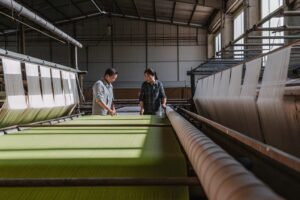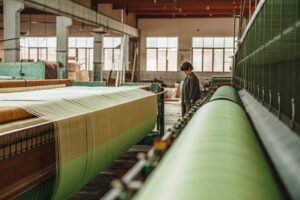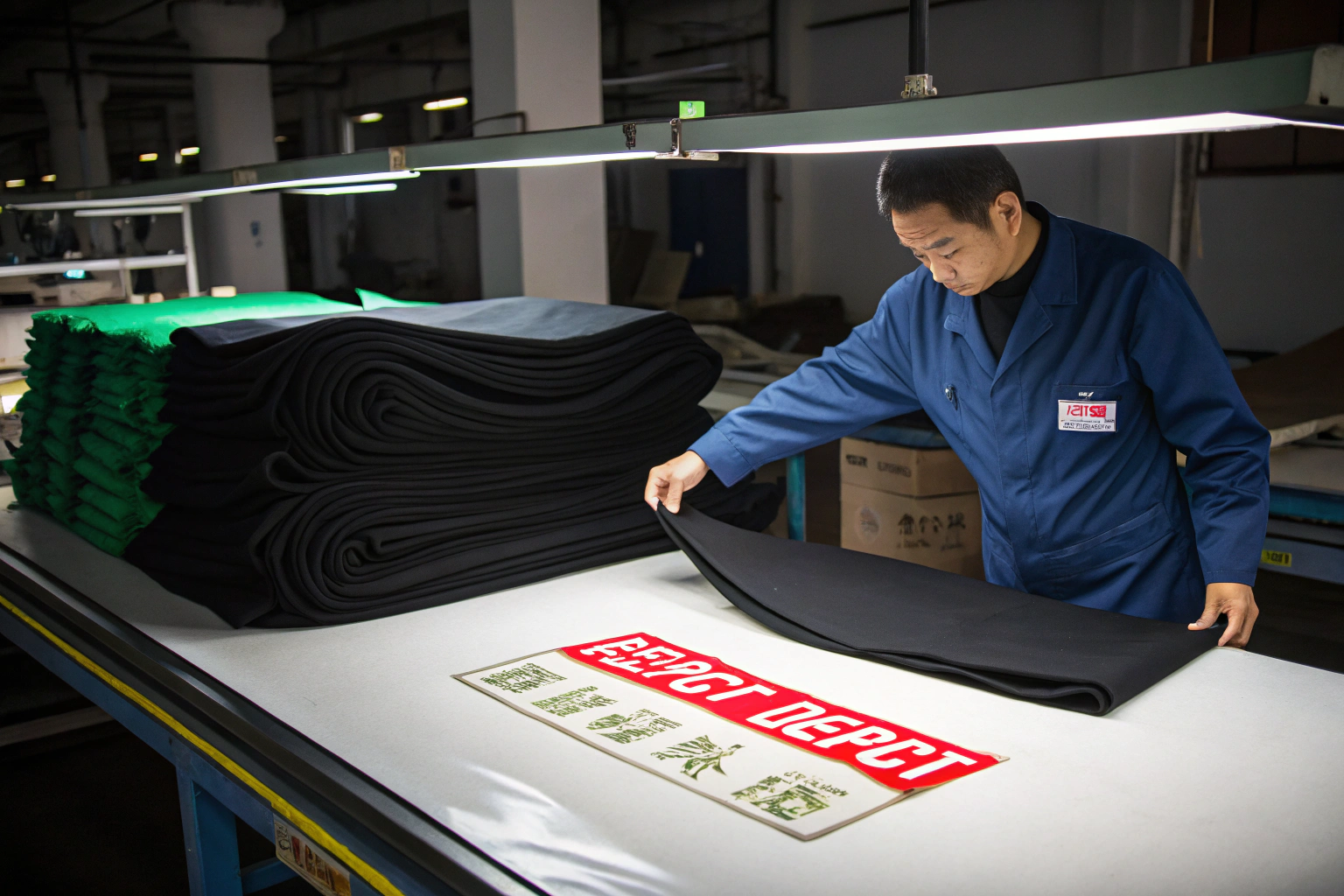
Open your inbox right now. You probably have three emails from fabric suppliers you’ve never heard of. "Dear Sir, We are professional fabric mill. Best price 100% Cotton Twill $2.50/yd." Delete. Next one. "Hello Boss, We have cheap linen look polyester $1.80/yd." Delete. Next one. "Premium Quality Fabric. Price Good." You get a dozen of these a week. The world is drowning in cheap fabric. There is a glut of low-price capacity in the textile industry. Anyone with a few looms and a connection to a yarn market can make something cheap.
But you’re not looking for cheap. Not really. You’re looking for fabric that arrives on time, matches the approved sample, and doesn’t fall apart when your customer washes it. You’re looking for Consistency. And consistency is the rarest commodity in the global textile trade. It’s harder to find than a needle in a haystack because consistency isn’t a thing you can see in a swatch. It’s a Culture. It’s a System. It’s a Discipline that must be applied to every single meter of fabric, every single day, by every single worker.
I’m Jack, and I’ve spent twenty years at Shanghai Fumao trying to solve this exact problem. I’ve seen mills that can make a world-class sample but can’t replicate it in bulk. I’ve seen factories with shiny new machines and zero process control. I’ve learned that the gap between "Sample Quality" and "Bulk Consistency" is the gap between a transaction and a partnership. I’m going to explain why consistency is so elusive, and what it takes to build a supply chain that delivers the same great fabric on the tenth order as it did on the first.
Why Do Fabric Samples Look Perfect But Bulk Orders Disappoint?
This is the oldest heartbreak in the apparel business. You receive a lab dip or a handloom sample. It’s beautiful. The color is rich. The hand feel is exactly what you wanted. You approve it. You wire the deposit. You wait six weeks. The container arrives. You cut open the first roll and… it’s just different. The color is a shade off. The hand feel is stiffer. The drape isn’t the same. You’ve been Sampled and Swapped.
This happens because making One Perfect Meter is a completely different process than making Five Thousand Perfect Meters. A sample is made in a laboratory setting by a senior technician. They use the best yarn from the front of the batch. They run the dye machine with fresh water and exactly the right chemicals. They take their time. They care.
Bulk production is made on the factory floor by operators under pressure to hit output targets. They use the yarn that arrived on the truck. They reuse the dye water from the last batch. They run the stenter frame at maximum speed to save energy. The conditions that created the perfect sample no longer exist.
At Shanghai Fumao, we bridge this gap with a process called Production Validation. Before we cut a 5,000-yard bulk order, we run a 50-Yard Pilot Run on the actual production machine. We don’t just show you a lab sample. We show you fabric made under Real-World Production Conditions. This pilot run reveals the "scale-up" problems before we commit the whole order. It costs us time and material, but it prevents the "Bulk Disappointment" call.
What Is the "First Meter vs. Last Meter" Problem?
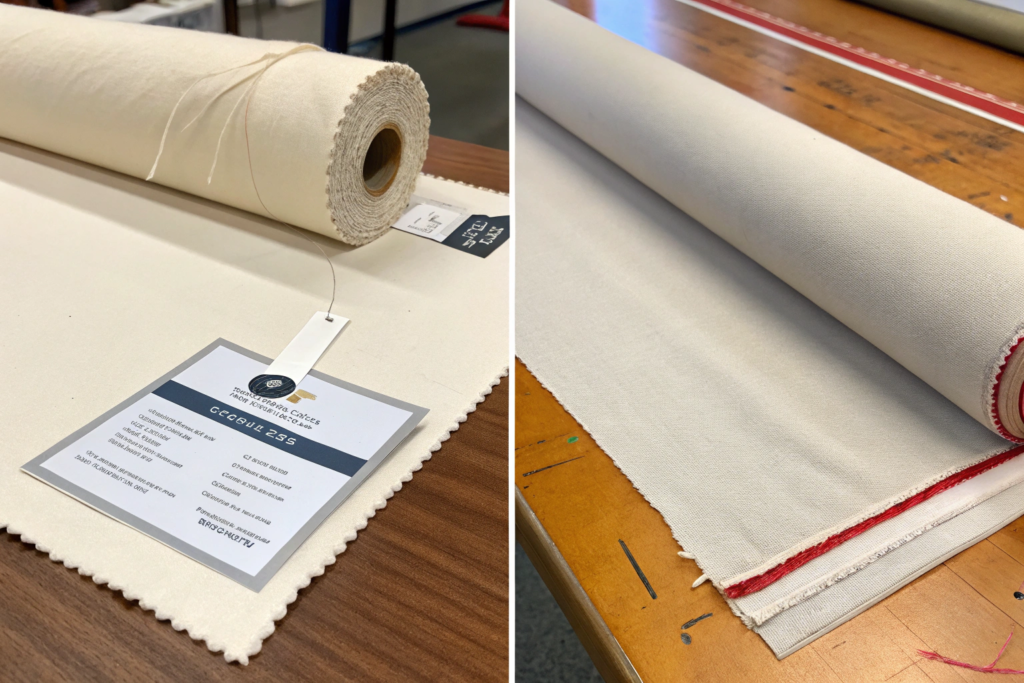
Even within a single bulk run, quality can drift. The First Meter of fabric off the loom or out of the dye machine might be perfect. But by the time you get to the Last Meter—three days and 5,000 yards later—the quality may have silently degraded.
In weaving: The tension on the warp beam changes as the beam gets smaller. The first 1,000 yards have high tension (tighter weave). The last 1,000 yards have lower tension (looser weave). If the weaver doesn’t compensate, the fabric changes character from start to finish.
In dyeing: The concentration of dye in the bath Exhausts over time. The first 1,000 yards absorb more dye. The last 1,000 yards absorb less dye. If the dyer doesn’t "feed" more dye into the bath during the run, the color will Shade Off from dark to light.
A consistent factory manages this Process Drift. They measure tension constantly. They use Automated Dye Feed Systems that add chemicals continuously based on real-time spectrophotometer readings.
At Shanghai Fumao, we test fabric from the Beginning, Middle, and End (BME) of every production lot. We compare the three swatches side-by-side in a lightbox. If they don’t match, we don’t ship the lot as a single batch. We either re-process the off-shade portion or we shade-group it. This is the cost of consistency. You can read more about this by exploring the causes of shade variation in continuous textile dyeing and how to control it and how warp tension affects fabric properties in weaving.
How Do You Verify That the Bulk Yarn Matches the Sample Yarn?
This is the root cause of many "mysterious" quality failures. The supplier made the sample with Premium Combed Ring-Spun Yarn. It was smooth, strong, and had a beautiful luster. For the bulk order, to save $0.20 a yard, they used Carded Open-End Yarn. It’s rougher, weaker, and duller. You can’t easily tell the difference in a greige fabric, but after dyeing and finishing, the bulk fabric feels "dead" and pills quickly.
You need to ask the supplier: "Can you provide the yarn lot traceability and spinning mill certificate for the bulk order?"
At Shanghai Fumao, we maintain a Yarn Inventory Management System. Every cone of yarn that enters our warehouse is assigned a batch code and tested for Count Variation (CV%) and Strength. When we produce a bulk order, we record exactly which yarn batch was used. If there is ever a quality issue, we can trace it back to the specific spinning mill and even the specific day it was spun. This is not just record-keeping. It’s Forensic Quality Assurance. A supplier who can’t provide yarn traceability is likely substituting cheaper inputs. You can verify yarn specifications by learning about the differences between carded, combed, ring-spun, and open-end cotton yarns.
How Do You Audit a Factory’s Internal Quality Management System?
You can’t inspect quality into a product. You can only build it in. Relying on a final inspection to catch defects is like trying to fix a leaky pipe by mopping the floor. You have to fix the pipe. The pipe is the Quality Management System (QMS) .
A factory with a robust QMS doesn’t just check fabric at the end. They check the Inputs (yarn, dyes), the Process Parameters (temperature, tension), and the In-Process Work (greige, dyed fabric before finishing). They have Standard Operating Procedures (SOPs) for everything, from cleaning a dye kettle to changing a needle on a knitting machine.
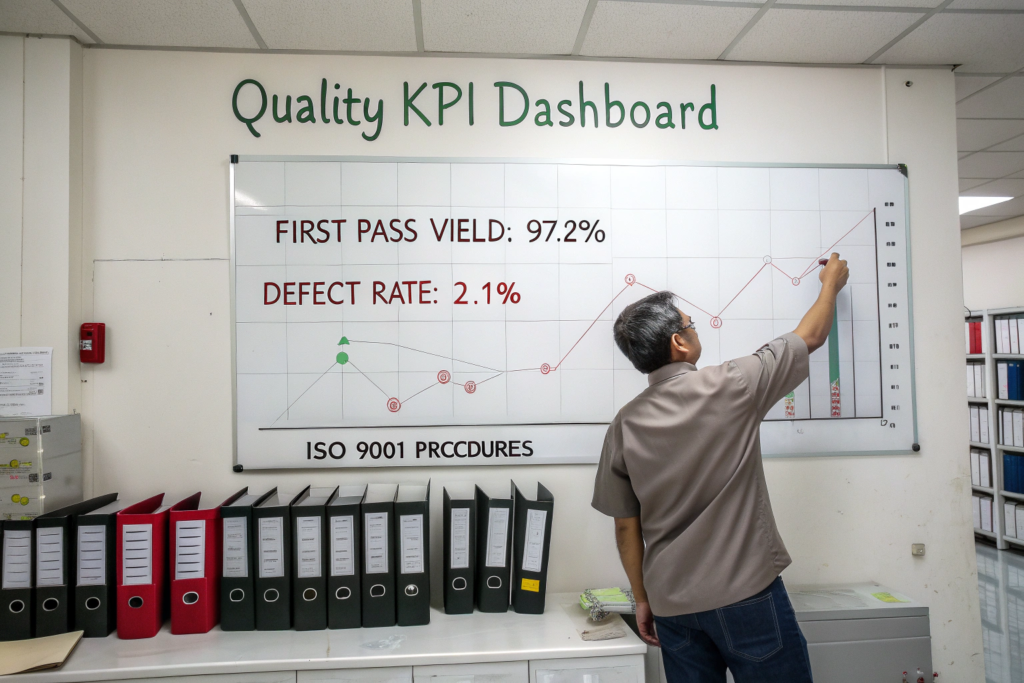
When you audit a factory, you shouldn’t just look at the finished rolls. You should look at the Records. A factory that is proud of its QMS will have a War Room—a room with charts and graphs tracking quality metrics in real-time.
At Shanghai Fumao, our CNAS lab is the hub of our QMS. But the real work happens on the floor. We use Statistical Process Control (SPC) to monitor key variables. If the stenter temperature starts to drift outside the control limits, the operator gets an alert before it affects the fabric. This is proactive quality management.
What Is a "Corrective Action Report" and Why Should You Ask to See One?
This is the single most revealing document in any factory. A Corrective Action Report (CAR) is written when something goes wrong. It documents the problem, the Root Cause Analysis, and the Corrective Action taken to prevent it from happening again.
A factory that hides its mistakes is a dangerous factory. A factory that learns from its mistakes is a reliable factory.
Ask the supplier: "Can you show me a CAR from the last 3 months related to a fabric defect?"
At Shanghai Fumao, we have a living database of CARs. Here is a sanitized example: "Problem: Streaky dye lines in viscose jersey Lot #456. Root Cause: Water hardness spiked after municipal supply maintenance. Hardness not checked before dye run. Corrective Action: Mandatory water hardness check before every viscose dye lot. Hardness log implemented."
A supplier who can show you a CAR like this is a supplier who has a functioning Continuous Improvement culture. A supplier who says, "We never have problems," is either lying or not paying attention. You can’t improve what you don’t measure. You can learn more about this by reading how to implement a corrective action and preventive action system in manufacturing and the role of root cause analysis in textile quality improvement.
How Often Are Inspection Machines Calibrated Against a Master Standard?
This is the "stump the chump" question for QC. You see a fabric inspection machine. The fabric rolls over a lighted panel. An inspector marks defects. But how do you know the Lighting is correct? How do you know the Yardage Counter is accurate?
If the lightbox bulbs are old and yellowed, the inspector won’t see subtle shade variations. If the yardage counter wheel is worn or mis-calibrated, your "60-yard" roll might actually be 58 yards. You’re paying for fabric you’re not receiving.
The right question is: "What is the calibration frequency for your inspection table light sources and yardage counters, and can I see the log?"
At Shanghai Fumao, we use D65 Standard Illuminant tubes that are replaced on a strict Hours of Use schedule, not just when they burn out. The yardage counters are calibrated weekly with a Known Length Standard. This is tedious, unglamorous work. But it’s the foundation of trust. You can read more about the standards by looking at ASTM D1729 standard for visual evaluation of color differences and how to calibrate fabric inspection and measuring equipment.
What Role Does Workforce Stability Play in Consistent Production?
Machines don’t make fabric. People make fabric. The machines just do what the people tell them to do. This is the Human Element of consistency, and it’s the hardest thing to copy or scale. You can buy the same looms as the best mill in Italy. But if you don’t have the Tacit Knowledge in the hands of your operators, you will never make the same fabric.
A worker who has been running the same type of dye machine for 15 years doesn’t just follow the recipe. They Feel the process. They hear a slight change in the pump sound and know to check the filter. They see the way the foam looks on the bath and know to add a drop of defoamer. This knowledge is not in any manual. It’s in the Muscle Memory of a stable, experienced workforce.
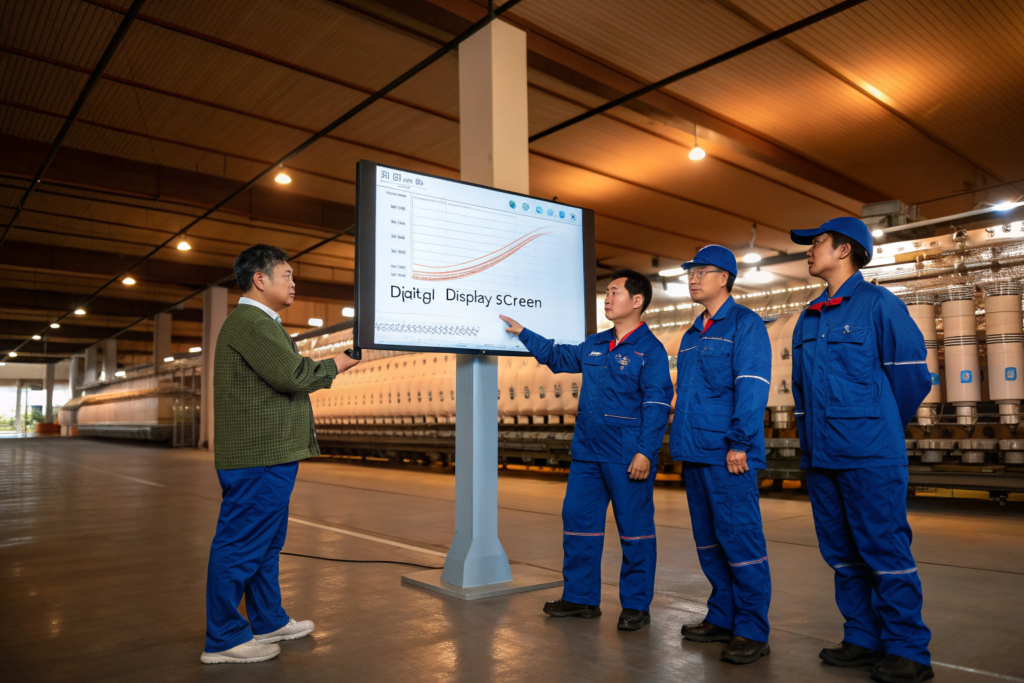
At Shanghai Fumao, our core technical team has an average tenure of over 8 years. This is rare in China’s high-turnover manufacturing environment. We invest in Competitive Wages, On-Site Housing, and Skills Training. Why? Because a worker who is worried about their next job or their child’s school fees is a distracted worker. A distracted worker makes mistakes. A stable, secure worker takes pride in their work.
How Does High Employee Turnover Lead to Fabric Defects?
Textile manufacturing is not an unskilled job. Tying in a new warp beam on a loom requires 1,000 Precise Actions in a specific sequence. A novice worker takes 4 hours and makes 5 mistakes (broken ends, crossed threads). An experienced worker takes 90 minutes and makes zero mistakes.
If a factory has a revolving door of workers—common in low-cost, low-margin mills—they are constantly in Training Mode. Your fabric is being made by someone who is learning on the job. The defect rate spikes. The consistency plummets.
When you visit a factory, ask the floor manager: "What is the average tenure of the weavers (or dyers) on this specific line?" If they don’t know, or if the number is less than 2 years, be cautious. That factory is likely a Training Ground, not a Production Center.
At Shanghai Fumao, we have Master Technicians who have been with us since the early 2000s. They train the apprentices. They set the standard. They are the living embodiment of our quality culture. This stability is a cost—we pay above-market wages. But it’s an investment that pays off in Zero-Defect Production. You can read more about this by exploring the impact of employee turnover on manufacturing quality and productivity and strategies for workforce retention in China’s manufacturing sector.
What Happens to Quality During Shift Changes?
The Shift Change is the most dangerous hour in a textile mill. The first shift is tired and ready to go home. The second shift is just waking up and getting their coffee. Information gets lost in the handover. A machine that was "acting up a little" doesn’t get mentioned. The new operator finds out the hard way when the fabric breaks.
A factory with a disciplined QMS has a Structured Shift Handover Protocol. It’s not just a wave goodbye. It’s a 15-Minute Overlap where the outgoing operator walks the incoming operator around the machine. They point out the specific tension settings. They show the last inspection report.
Ask the supplier: "Can I observe a shift change on the production line?"
If they say yes, watch. Does the incoming operator check the quality of the last meter produced by the previous shift? Do they initial a logbook? Or do they just put on their headphones and ignore the machine?
At Shanghai Fumao, our Shift Logbook is a legal document. It records every stoppage, every adjustment, and every quality check for the previous 12 hours. The incoming supervisor must review and sign the log before assuming control. This simple administrative discipline prevents the "It Was Like That When I Got Here" syndrome that plagues inconsistent factories.
How to Test for Long-Term Durability and Colorfastness?
Consistency isn’t just about how the fabric looks when it arrives. It’s about how it performs Six Months Later, after your customer has worn and washed it a dozen times. A fabric that fades after three washes or pills after two wears creates a Silent Return Rate. The customer doesn’t complain. They just never buy from your brand again.
Testing for Durability is the final frontier of quality assurance. It requires specialized equipment and a willingness to Accelerate Aging. You have to simulate years of wear and washing in a matter of hours.
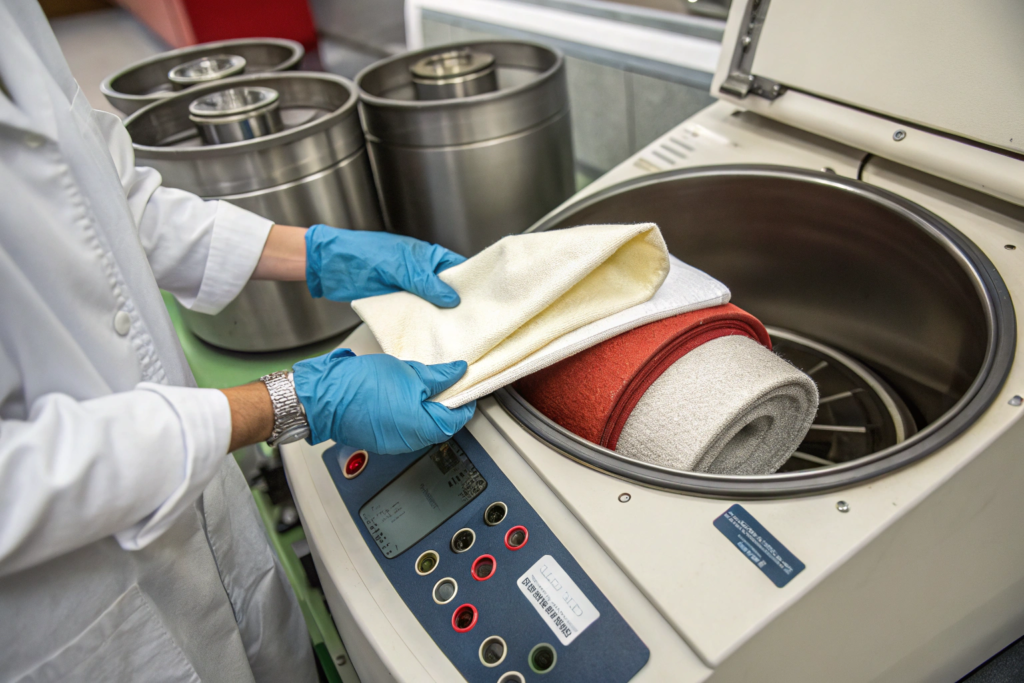
At Shanghai Fumao, our CNAS lab is equipped for this. We don’t just test for Shrinkage and Colorfastness to Light. We test for Pilling Resistance (using a Martindale machine that rubs the fabric against itself 2,000 times), Seam Slippage (pulling a seam apart to see if the yarns slide open), and Tensile Strength (pulling the fabric until it rips).
What Is the Difference Between Wash Fastness and Crocking Fastness?
These are the two most common consumer-facing failures.
- Wash Fastness: Does the color bleed or fade in the laundry? Tested in a Launderometer. We wash the fabric at 40°C or 60°C with standard detergent and a Multifiber Adjacent Fabric (a strip of white cloth with different fiber types). If the white strip picks up color, the fabric has poor wash fastness. That red dress will turn your customer’s white underwear pink.
- Crocking Fastness: Does the color rub off on a dry or wet surface? Tested with a Crockmeter. This is the "Blue Jean Problem"—indigo rubbing off on a white sofa. We rub a dry white cloth and a wet white cloth against the fabric under controlled pressure. We measure how much color transfers.
A supplier might provide a test report showing "Grade 4" for Wash Fastness. That’s passing. But you need to know: Was that test done on the Sample or the Bulk?
At Shanghai Fumao, we pull Random Bulk Samples for these tests. We don’t just test the perfect lab sample. We test the fabric that actually went into the container. This is the only way to guarantee that the performance you approved is the performance your customer receives. You can learn the specifics by reading the AATCC Test Method 61 for colorfastness to laundering and the AATCC Test Method 8 for colorfastness to crocking.
How Do You Test for Pilling on Sweater Knits and Fleece?
Pilling is the formation of those ugly little fuzz balls on the surface of the fabric. It’s caused by abrasion during wear and washing. Short, weak fibers work their way to the surface and tangle together. Once a garment pills, it looks old and cheap, even if it’s brand new.
The standard test is the Martindale Abrasion Test. We mount the fabric on a machine that rubs it against a standard abrasive surface in a Lissajous figure (a complex circular pattern). After 2,000 rubs, we take the fabric out and compare it to a Visual Rating Standard (1 = severe pilling, 5 = no pilling).
For a premium sweater knit, you want a rating of 4 or higher.
At Shanghai Fumao, we use this test during development. If a new yarn blend is pilling at a 3, we don’t release it for production. We go back to the spinner and ask for a tighter twist or a longer staple fiber. This is how we ensure that our fabrics look good not just on day one, but on day one hundred. You can read more about this by exploring how to test and improve the pilling resistance of knitted fabrics and the Martindale abrasion and pilling test method.
Conclusion
Consistent quality is not a product. It is the Shadow of a Well-Managed Organization. It is the visible result of invisible systems: the yarn traceability, the shift handover log, the calibrated lightbox, the retained technician, and the corrective action report. You cannot buy consistency by negotiating a lower price. In fact, relentlessly driving down price usually destroys consistency, because it forces the factory to cut the very corners that create it.
The search for consistency is really a search for Trust. You are looking for a partner who has the discipline to do the right thing when no one is watching. A partner who treats your tenth order with the same care as your first. This kind of partner is rare, but they exist. They are the ones who welcome your questions about their CARs, their calibration logs, and their workforce tenure.
At Shanghai Fumao, we don’t claim to be perfect. We claim to be Systematic. We have built the infrastructure, the processes, and the culture to deliver consistent results. We know that our long-term success depends entirely on your brand’s long-term success. And that only happens if the fabric is right, every single time.
If you are tired of the "Sample Roulette" game and you want to build a supply chain based on predictable, repeatable quality, let’s talk. Our Business Director, Elaine, can walk you through our quality management system in detail and show you how we achieve the consistency that seems so elusive elsewhere. You can reach her at elaine@fumaoclothing.com. Let’s make consistency your competitive advantage.