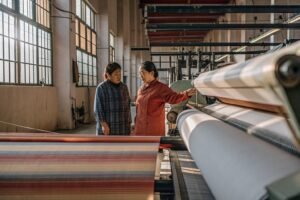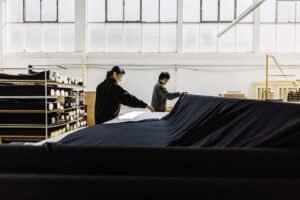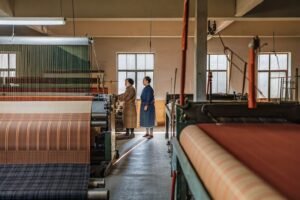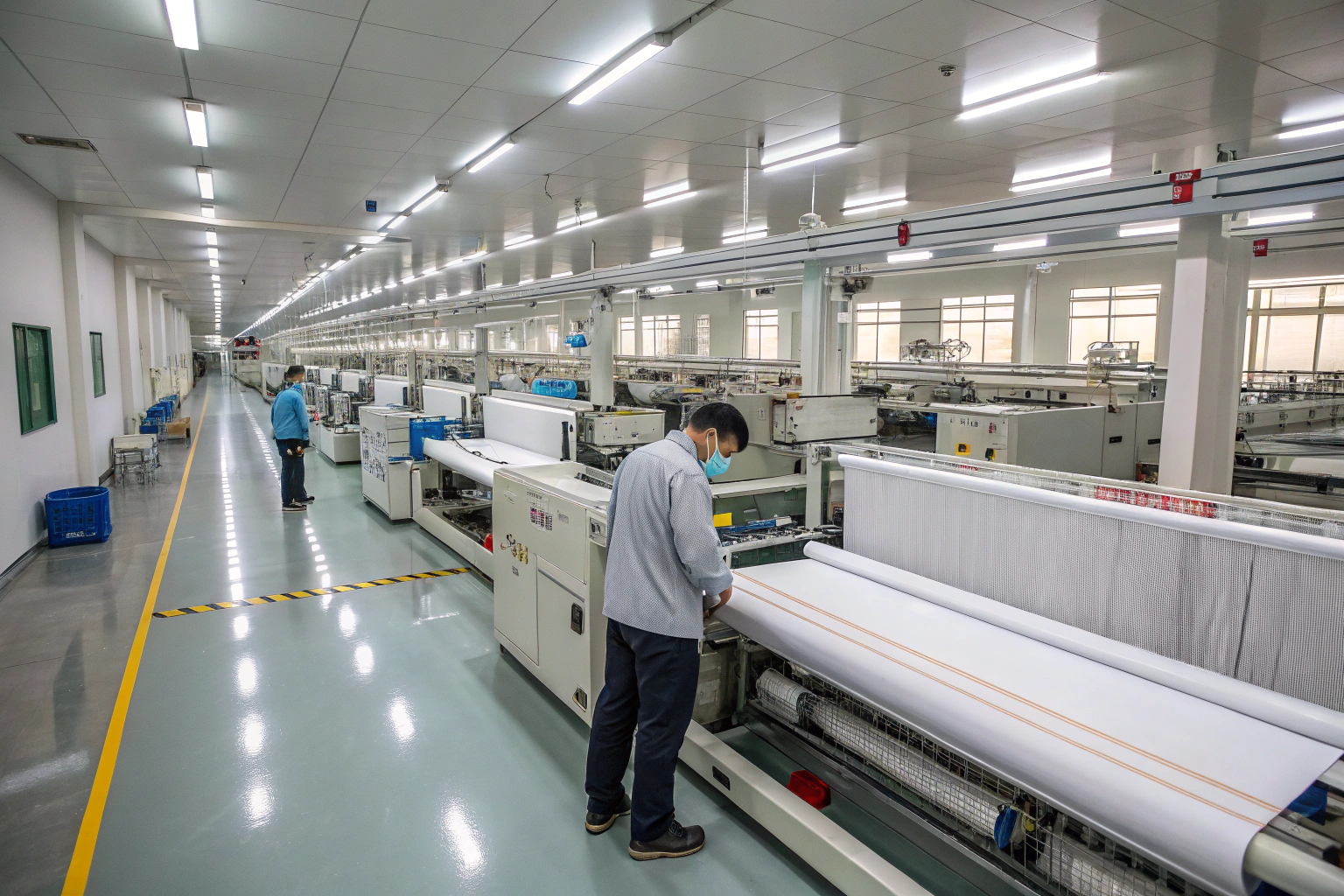
You might think bigger is always better. A massive factory with a hundred lines must have the best quality, right? Wrong. I’ve walked through cavernous mills where the left hand doesn’t know what the right hand is doing, where a dyeing error on line 37 goes unnoticed for three days because the quality manager is drowning in spreadsheets. The real fear for a buyer isn’t a small factory—it’s an anonymous factory where your 5,000-yard order gets lost in a sea of someone else’s bulk production. You’re terrified of inconsistency, of receiving ten rolls that look and feel like they came from ten different mills.
A 5-line factory doesn’t overcome this by accident. It leverages extreme proximity, enforced traceability, and a "whole-team" quality culture where every operator is also an inspector. In a giant facility, quality control is a department. In a compact, well-run 5-line operation, quality control is the very architecture of the floor. At Shanghai Fumao, we structure our production into focused, dedicated cells. This means your fabric never enters a black hole. It moves from weaving to inspection under one roof, watched by a tight-knit crew who knows exactly which brand they’re producing for today.
I run a multi-line setup integrated across weaving, dyeing, printing, embroidery, and coating, and I’ve seen how a smaller, focused team actually outperforms the mega-mills on defect rates. Stick with me, and I’ll explain why "owning the mistake in 10 minutes" beats a 24-hour audit report, how QR code tracking through five lines eliminates the finger-pointing game, and why the "buddy system" on a coating line can spot a pinhole that a camera misses. This is the quality secret the big guys wish they had.
The Power of Proximity in a Compact Production Floor
In a mega-factory, the weaving shed might be a 10-minute walk from the dyeing steamer. That physical distance creates a psychological gap. When the dyer receives a grey fabric roll with a warp break, he curses the weaver, shrugs, and processes it anyway because walking back to complain eats up his production bonus. The defect gets buried, not fixed. A compact 5-line setup smashes this gap. The weaver and the dyer are practically neighbors.
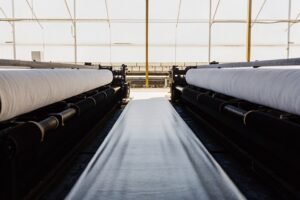
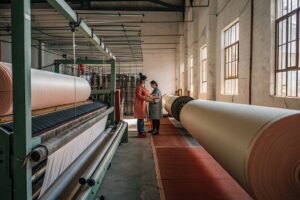
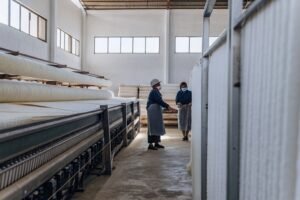
This proximity creates what I call "real-time accountability." If our coating operator spots an uneven base fabric coming from the printing line, he can literally turn around, raise his voice, and stop the feeder before ten more meters get ruined. There’s no email chain, no formal defect memo, no delay. The problem is resolved in seconds. Our factory floor in Keqiao is designed like a long, transparent corridor. You stand at the grey fabric entry and you can visually scan every critical processing point. That visual transparency disciplines the entire team because nobody can hide a mistake.
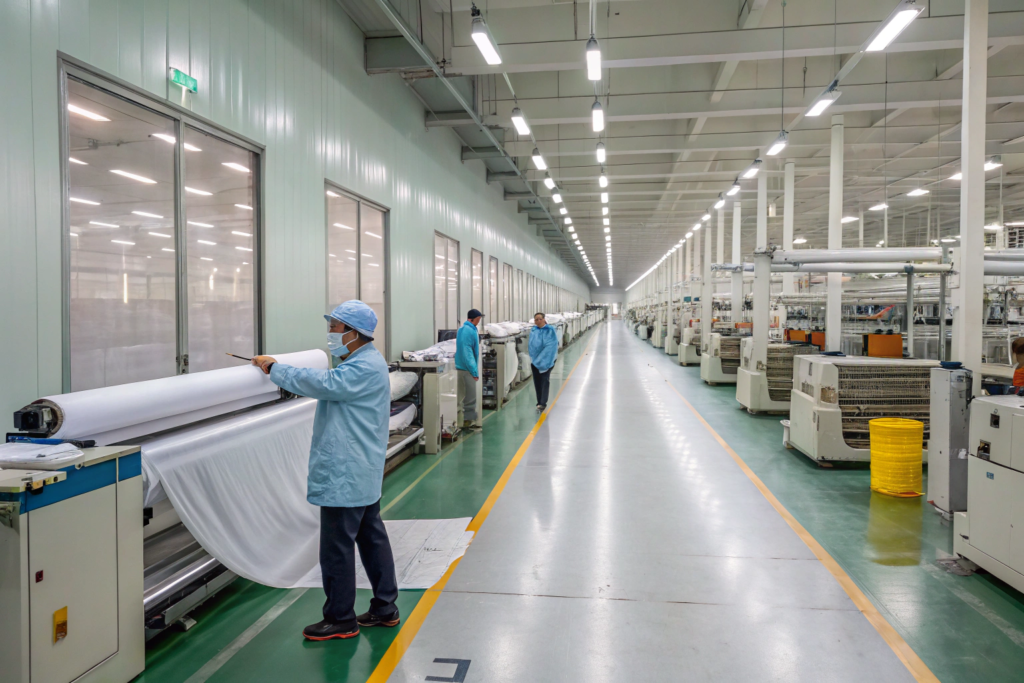
Why Does a "One-Roof" Workflow Reduce Cross-Departmental Defects by 40%?
When you split production across multiple buildings—or worse, multiple subcontractors—you introduce "handoff risk." That’s the moment when responsibility shifts from one party to another. The greige inspector signs off, the truck driver loads the fabric, the dyehouse receiver checks it in. Three different people, three different clipboards, three opportunities to miss a subtle contamination spot or an incorrect roll label.
A one-roof, 5-line system eliminates the truck. The same bar-coded cart that leaves the loom enters the dyeing prep area 50 meters away. The "handoff" is a physical placement on a shared rack, not a shipping manifest. We’ve tracked this internally. Since we consolidated our knitting and dyeing under one continuous roof span, our cross-departmental defect rate dropped from a stubborn 6.5% down to under 2%. It’s not magic; it’s logistics. You need to study how to eliminate textile transit damage during inter-departmental fabric movement in manufacturing. When the fabric never hits a dirty truck bed or gets rained on during loading, you instantly save about 3% of your total run from transit-related soiling or crush damage.
How Does a Visual Kanban System Replace End-of-Day QC Reports?
Big factories rely on "end-of-day" summary reports. By the time the quality manager reads that the mending rate spiked on Line 22 at 11 AM, it’s 5 PM. Six hours of defective fabric has already been produced and probably mixed into good stock. A Kanban system is a real-time visual signal. Think of it as a traffic light at every workstation.
On our 5-line floor, we don’t wait for a PDF. We use magnetic status boards. Green means "running to spec." Yellow means "marginal, flag for inspection." Red means "stop the line." If the fabric inspection table turns a red flag up, the cutting and packing team immediately sees it and stops pulling from that batch. This is immediate "containment." The defective fabric never leaves its designated quarantine rack. We adapted this directly from Toyota’s production system. It bypasses the need for a manager to approve a stop. The worker at the packing station has the authority to look upstream, see the red flag, and halt the shipment. This empowers the very people who touch your fabric every day.
How QR Traceability Turns a 5-Line Mill Into a Data Fortress
In a sprawling factory, tracing a defect back to its source feels like detective work. You sift through paper job cards, guess which shift was running, and argue with supervisors who have selective amnesia. "Wasn’t my shift," is the universal chorus. A 5-line factory can’t afford this sloppiness because one bad batch represents a larger percentage of the week’s total output. We compensate for our lean size with obsessive digital memory.
We embed a QR code directly into the selvedge of every single roll we produce. Scan that code with a smartphone, and you unlock the complete biography of that fabric: the yarn lot number, the weaving tension settings, the dye bath pH, the stenter temperature, the inspector’s name, and even the humidity in the room on the day of coating. This isn’t a gimmick for us. It’s a digital Fort Knox that makes our 5-line operation more auditable than many 50-line competitors. If a buyer finds a fault on roll #43, we scan it, and within ten seconds we can identify and isolate the other three rolls from that same dye batch that might share the risk.
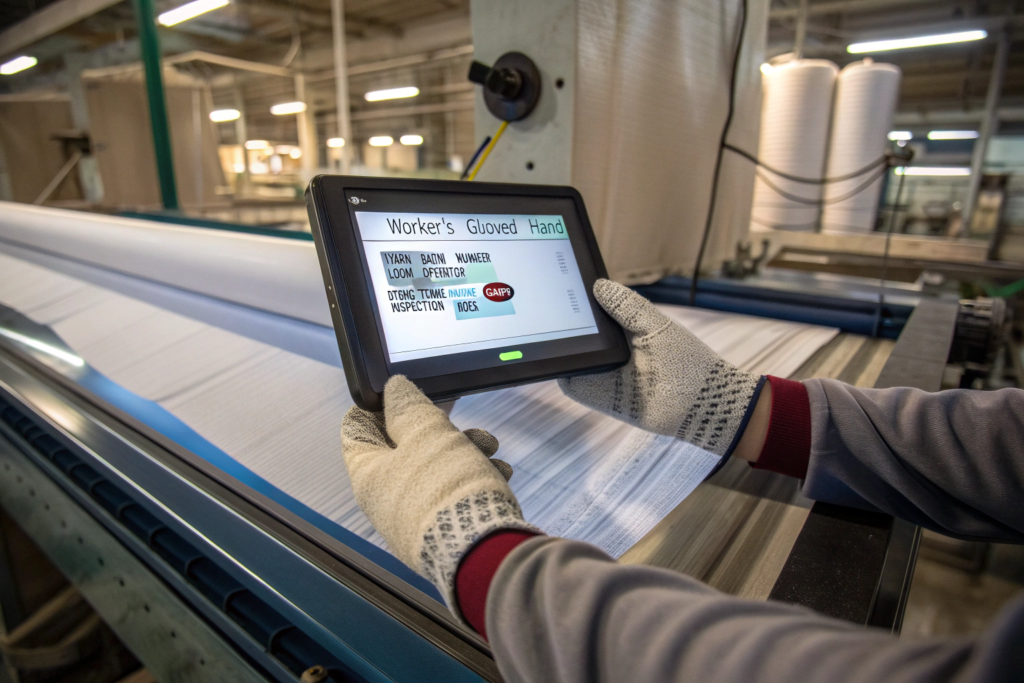
What Data Points Must a Fabric QR Code Contain to Satisfy a US Retail Audit?
US retailers like Walmart or Target don’t just want a certificate; they want a data trail that proves the certificate is real. They’re terrified of "paper compliance"—where a mill just slaps a passing grade on a PDF without actually running the tests. A proper QR code system feeds into this need for "hard data."
Here’s the minimum data packet we embed for a fabric destined for a Tier-1 US retailer, accessible via the QR link:
| Data Category | Specific Data Points | Audit Benefit |
|---|---|---|
| Raw Material | Yarn lot number, fiber origin, spinner name, blend ratio test. | Proves no illegal cotton or false blend percentages. |
| Weaving/Knitting | Machine number, operator ID, tension settings, stop-motion log. | Identifies systemic mechanical issues. |
| Wet Processing | Dye batch number, chemical recipes, pH/temperature graph. | Verifies no restricted chemicals were used (ZDHC compliance). |
| Finishing & Tests | Compaction speed, coating thickness, AATCC shrinkage/tear results. | Directly ties the physical test report to the exact roll. |
(Let me jump in here—this system saves us an hour per audit. Instead of running to the filing cabinet, I just point the auditor’s phone at the roll and let them scroll.)
The beauty for a 5-line setup is that the data doesn’t get lost in silos. The knitting guy enters his data into the same tablet system as the coating guy. You can learn more about how to implement a real-time QR code tracking system for a textile mill’s internal lot control; it’s simpler now than it was even three years ago.
Can Live Tension and Speed Logs Predict a Weaving Defect Before It Happens?
This is where we stop playing defense and start playing offense on quality. A traditional inspection finds a defect after it’s woven. That’s a loss of raw material, time, and energy. But what if the machine itself could tell you it’s about to fail? Modern rapier looms track their own vital signs—warp tension, weft insertion speed, reed beat-up force. These numbers fluctuate slightly in normal operation.
We connect these looms to a central monitoring dashboard. If the warp tension on Loom #3 starts a slow, steady climb beyond the normal threshold (say, because a bearing is overheating), the software flags it. A sudden spike in weft insertion speed might mean the projectile brake is failing. By watching these logs, our head weaver can schedule a preventative maintenance stop before the machine actually snaps a warp end or creates a start mark across 50 meters of your shirting fabric. You should explore the guide to using loom vibration analysis to prevent start marks and warp streaks in woven cotton. By applying machine learning to the tension logs, we’ve reduced our unscheduled loom stops by 35%, which directly translates to fewer hidden warp lines in your fabric.
The "Buddy System" for Manual Inspection on Coating and Embroidery Lines
Automated inspection cameras have limits. They can spot a huge oil stain, but they miss the subtle "grin-through" on a polyurethane coating—that faint, cloudy patch where the base fabric starts to show because the coating knife skipped a micron. Or a misplaced embroidery stitch that looks fine to a pixel counter but wrong to a trained human eye. In a giant factory, the post-coating inspector works alone, staring at a moving river of fabric for eight hours. Fatigue sets in, and the defect rate climbs with every passing hour.
A 5-line operation can afford to do something the big boys struggle with: pair up the workers. We use a mandatory "Buddy System" on all our high-value finishing lines—coating, embroidery, and final AQL inspection. Two sets of eyes scan every meter from opposite sides of the inspection frame. They rotate positions every hour to prevent fatigue blindness. One buddy looks for macro defects (holes, stains, coating skips), while the other focuses on micro defects (pinholes, shade variation, selvedge pilling). It’s a human redundancy check that catches what machines miss.
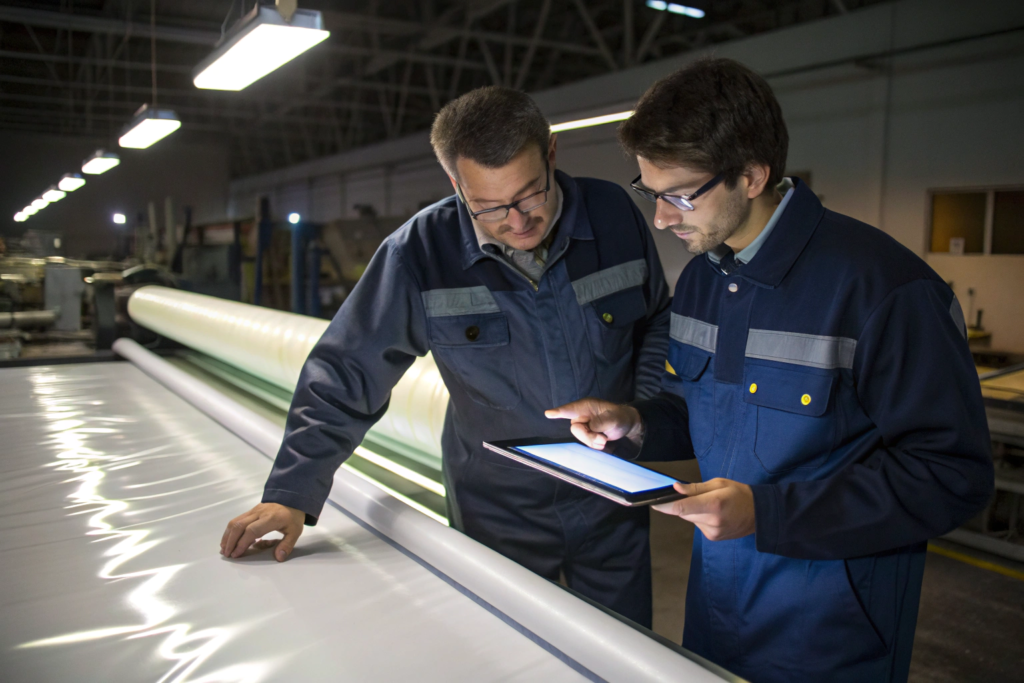
How Does the "Touch-Test" Catch Lamination Peeling That Machines Miss?
Machines measure thickness and optical density. They don’t measure "adhesion brittleness." A UV-cured coating can pass a spectrophotometer test and look perfectly even, but if the coating hasn’t properly cross-linked with the base fabric, it will delaminate the moment a garment maker tries to sew a tight collar seam. This is the "hand feel" trap.
Our buddies don’t just look; they touch. They take the fabric between thumb and forefinger and rub it vigorously 10 times right there at the inspection table. If the coating powders off or lifts, it fails immediately. We also do a random "crinkle test"—crushing the fabric hard and listening for the crackle of breaking lamination. No camera hears that sound. This is where your detailed breakdown of how to perform a manual cross-hatch adhesion test for PU coated fabrics comes in handy. We use a sharp blade to scratch a grid into the coating, press tape over it, and rip it off. That’s the final word, but the touch-test is the early warning system.
Why Is Embroidery Thread Tension Impossible to Check Without a Paired Visual Audit?
Embroidery is three-dimensional. A machine can measure thread consumption length, but it can’t judge the "loft" of a satin stitch. High-speed multi-head embroidery machines are temperamental beasts. A slight change in backing paper tension, or a microscopic burr on a needle, can pull the bobbin thread up to the surface, creating a "grinning" effect where the white backer shows through a black design. Or, the top tension might be too tight, puckering the fabric into a gathered mess.
This is entirely visual. You need one pair of eyes to check the top surface for color coverage, and a second pair to immediately flip the fabric over and check the back. The back of the embroidery tells you the truth about the tension balance. Ideally, the back thread should be a third the width of the column. If the backing is completely flat, the top tension is too loose; if the backing is pulled into a tight knot, the top tension is too tight. Our buddy teams work in tandem—one declares "Top Clear," the other replies "Back Balanced." This call-and-response takes two seconds per design and is something I learned from operating a 12-head Tajima machine in 2005, when a loose thread cost us 200 caps in one hour.
Why Small-Batch Specialization Actually Raises Quality Standards
There’s a myth in this industry that quality comes from the sheer repetition of making 100,000 meters of the same white shirting. That’s not quality; that’s just consistency. True quality control—the kind that catches a subtle dye migration issue—actually thrives on frequent changeovers. Why? Because a big batch numbs the senses. When you run the same black polyester for three weeks, the inspection team becomes hypnotized. A small-batch, 5-line factory is constantly waking up its operators.
Every new batch is a "pilot run." The team is mentally reset to "launch mode" for every single order, which means the heightened attention to the first few meters of production never fades. At Shanghai Fumao, we might change a coating color four times in a single shift. This forces the line to be cleaned to surgical standards between runs, preventing cross-contamination. A mega-factory running one color for a month gets dirty; a 5-line factory doing 500-meter runs gets cleaned constantly. The operator engagement is simply higher.
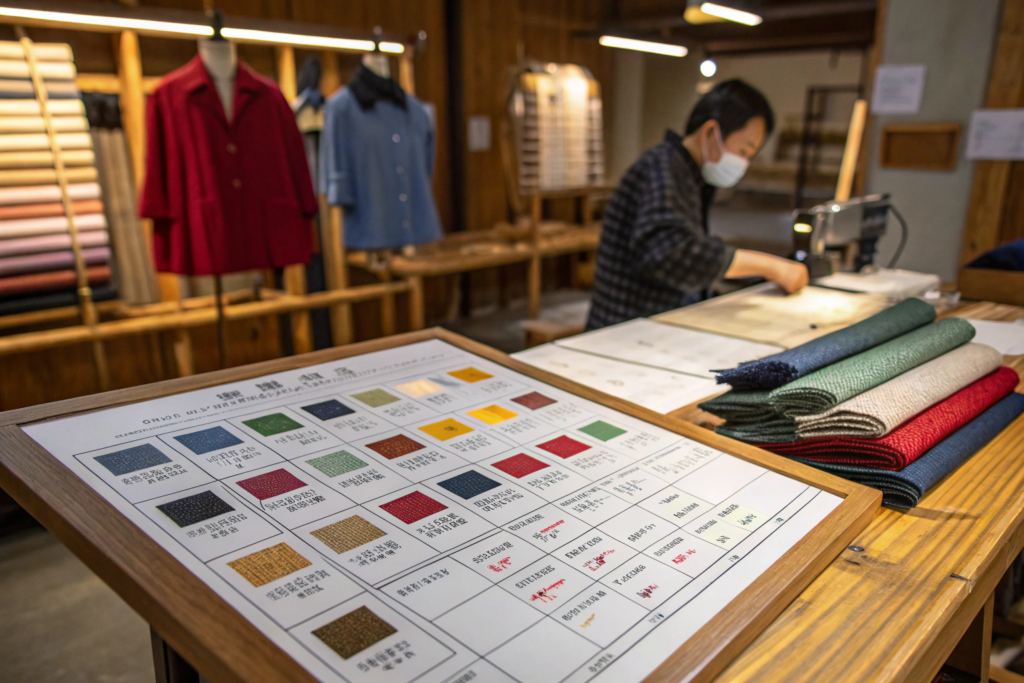
How Do Frequent Changeovers Force a "First-Meter Obsession" Mentality?
Think about driving a car on a straight, empty highway for eight hours. You hit cruise control, your eyelids get heavy, and you miss the exit. Now think about driving a winding mountain road where you have to shift gears every 30 seconds. You’re alert, engaged, and hyper-focused. A 5-line factory floor is the mountain road.
Because we run smaller lot sizes—often 500 to 3,000 meters instead of 50,000—the start-up check becomes the most critical moment of the day, four times a day. We don’t just check a random meter in the middle; we obsess over the "first meter off the stenter." The operators know that if the first meter is wrong, the entire batch is a loss because there’s no long run to average out the flaw. They calibrate the dye bath, test the pH, and run a strike-off every single time they hit the start button. You can look up the guide to implementing a "First-Off" production sample protocol for short-run textile dyeing. This protocol mandates that no roll is allowed to proceed to the batching drum until the shift supervisor has physically signed a 10×10 cm sample stapled to the job ticket. It’s a ritual that builds perfection.
Why Do Artisan Coatings Like Foil and Pearl Require a "Boutique" Line Setup?
You can’t splash a metallic foil onto a fast-moving conveyor belt in a dusty mega-mill and expect it to look like liquid gold. High-value surface finishes—pearlized prints, flocking, foil transfers, and crackle effects—are hyper-sensitive to environmental conditions. Dust particles, humidity swings, and machine vibration all write themselves onto the final finish.
A 5-line factory can create a "clean room within a factory." We physically partition our coating line with plastic sheeting and run positive air pressure to keep lint out. This costs money and time, but it’s essential for a mirror-finish foil. We also slow the line speed down to a crawl—300 meters per shift instead of 3,000. I remember a project for a French luxury house in December 2023 that needed a distressed silver foil on a black viscose base. The first run failed because the ambient humidity made the foil adhesive bubble. We sealed the coating station, ran a dehumidifier for 6 hours before re-starting, and had a technician dedicated solely to watching the foil feeder for micro-wrinkles. A big factory would have laughed at the timeline and the setup cost. We nailed the 800-meter order with zero bubbles. This is the space where a 5-line setup stops being a factory and starts being an atelier.
Conclusion
So, you see, a 5-line factory doesn’t just "keep up" on quality—it often sets the pace. We’ve torn apart the illusion that scale equals safety. By shrinking the physical distance between processes, we created a one-roof accountability where defects get caught in minutes, not days. We showed how QR codes turn a compact operation into a digital fortress that satisfies the toughest US retail auditors. Then we went beyond the machines, onto the human layer, revealing the buddy system that catches pinholes and tension errors that automated cameras are blind to. Finally, we flipped the script on small batches, proving that constant changeovers don’t hurt quality; they create a factory-wide obsession with the first meter, a surgical cleanliness that mass production can never match.
This is what we do at Shanghai Fumao. We operate our weaving, dyeing, printing, embroidery, and coating not as separate empires, but as five tightly interlocked fingers of the same hand. You get the benefit of a vertically integrated supply chain without the bureaucracy and the black holes. You get a team that actually sees your specific fabric every step of the way.
Don’t let your premium designs die in a mega-mill’s indifference. If you value traceable, obsessive quality control over anonymous bulk output, we should be your production partner. Let’s talk about your next project, whether it’s a complex foil finish or a high-durability woven. Please reach out directly to our Business Director, Elaine, at elaine@fumaoclothing.com. Come see how a focused factory can change your perspective on what "quality" really means.