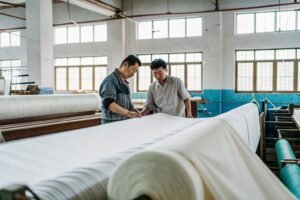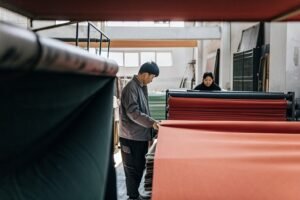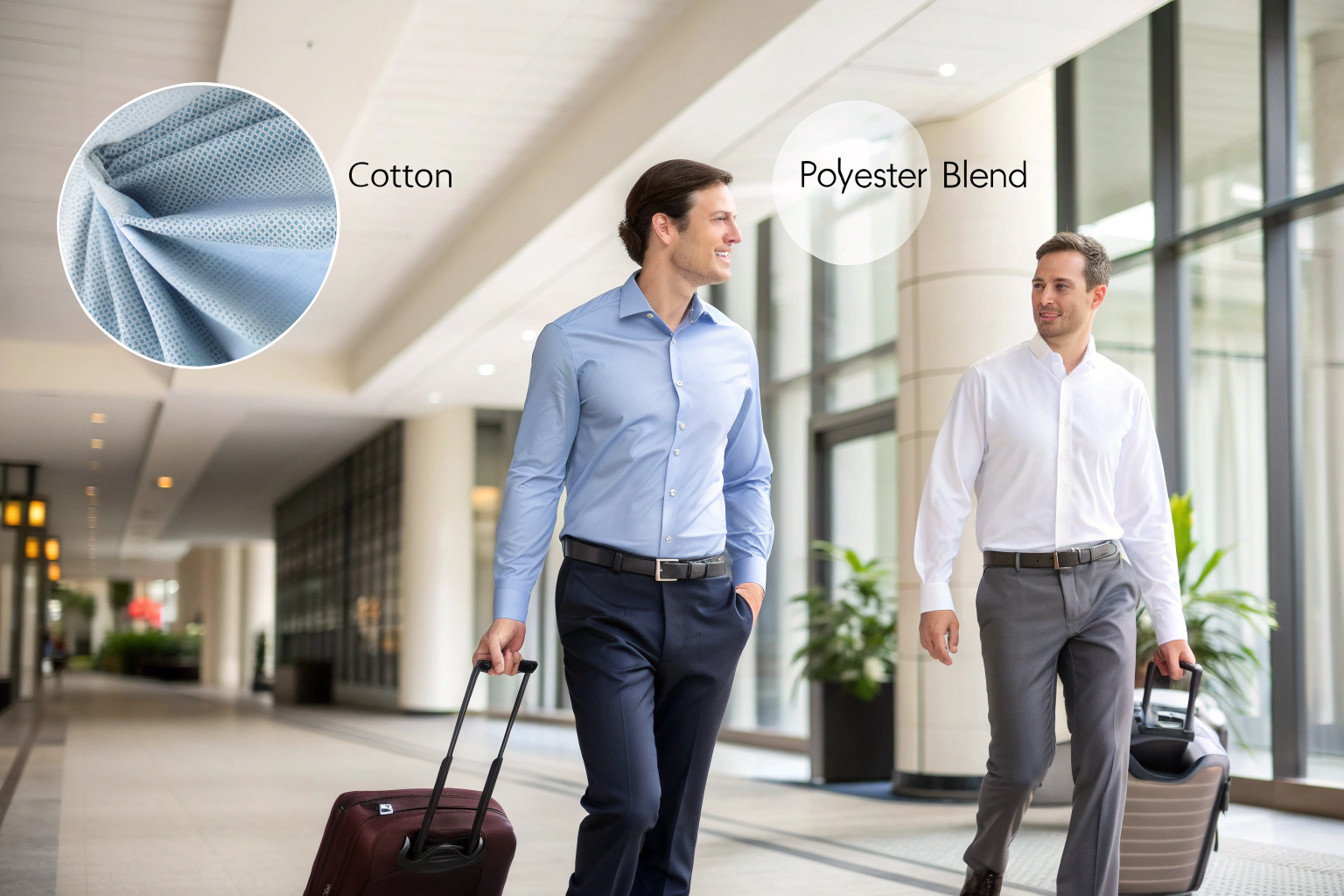
I was meeting with a corporate client from Singapore last month when he pulled at his shirt sleeve in frustration. "I travel 200 days a year," he said, "and I’m tired of looking like I slept in my clothes." This is the exact moment where the wrinkle-free conversation becomes real. For decades, the choice seemed simple: natural cotton that wrinkles instantly or synthetic blends that feel plastic. But modern fabric technology has completely transformed this decision.
The best fabric for wrinkle-free dress shirts depends on your priority between natural comfort and ultimate performance. Compact cotton offers superior breathability and natural handfeel with good wrinkle resistance, while polyester blends provide maximum wrinkle recovery and durability. For business professionals who value natural fibers, compact cotton represents the ideal balance. For frequent travelers and uniform applications, polyester blends deliver unmatched low-maintenance performance.
I worked with a European airline that was transitioning their crew uniforms to new wrinkle-resistant fabrics. Their previous 100% cotton shirts looked terrible after long-haul flights, while early polyester prototypes felt uncomfortable against skin. We developed a 70/30 cotton-polyester compact yarn fabric that reduced ironing requirements by 80% while maintaining the comfort their crew demanded. The solution wasn’t about choosing one over the other—it was about understanding the precise balance for their specific needs.
How does compact cotton achieve wrinkle resistance naturally?
Compact cotton represents a revolutionary approach to wrinkle resistance—it works with the natural fiber rather than coating it. Through advanced spinning technology that creates denser, more aligned yarn structures, compact cotton achieves 50-70% better wrinkle recovery than conventional cotton while maintaining 100% natural fiber content. The secret lies in the spinning process that eliminates the "mustache-like" fiber protrusions that cause traditional cotton to wrinkle.
The compact spinning process uses an air suction system to condense the fiber strand before twisting, creating yarns with significantly fewer loose fibers. These tighter yarns have less room to shift and crease when bent or compressed. For a luxury shirt maker in Milan, switching to compact cotton reduced customer complaints about wrinkling by 65% while allowing them to maintain their "100% natural cotton" marketing message that their customers valued.

What makes compact spinning different from traditional methods?
Compact spinning fundamentally changes the fiber alignment within the yarn. Traditional ring spinning allows fibers to splay out randomly, creating a hairy yarn surface that easily tangles and creases. Compact spinning uses aerodynamic forces to parallelize fibers before twisting, resulting in a smooth, dense yarn that resists deformation.
The mechanical advantage is clear: compact yarns have 15-20% higher tensile strength and 30% better abrasion resistance than equivalent conventional yarns. We helped a shirt manufacturer transition their entire premium line to compact cotton, and their quality returns for fabric issues dropped by 40% in the first year. The improved durability meant shirts maintained their crisp appearance through hundreds of wears and washes. Understanding compact cotton spinning technology benefits helps manufacturers appreciate the full value beyond just wrinkle resistance.
How does yarn density affect wrinkle performance?
Yarn density directly correlates with wrinkle resistance in compact cotton. Higher density yarns (Ne 80/2 and above) provide significantly better wrinkle recovery than standard densities (Ne 40/1 to 60/2). The compact structure becomes more effective as yarns get finer, creating what we call the "armor effect" where densely packed fibers support each other against creasing.
We conducted extensive testing for a Japanese shirt brand that specialized in ultra-fine shirting. Their Ne 100/2 compact cotton outperformed every other natural fabric in our wrinkle recovery tests, recovering from creases 80% faster than their previous Ne 80/2 conventional cotton. The shirts maintained their pristine appearance through full business days, something previously only achievable with synthetic blends. This demonstrates why selecting high-density yarns for dress shirts delivers tangible performance benefits.
What advantages do polyester blends offer for wrinkle resistance?
Polyester blends represent the technical solution to wrinkle resistance, leveraging the synthetic fiber’s inherent molecular memory to bounce back from creasing. While 100% polyester shirts often feel plastic and uncomfortable, strategic blending with cotton creates fabrics that offer the best of both worlds: natural comfort with synthetic performance.
The science behind polyester’s wrinkle resistance lies in its polymer structure. Polyester fibers have what chemists call "high elastic recovery"—they return to their original shape after deformation rather than holding creases like natural fibers. Even 35% polyester content can improve wrinkle recovery by 60-80% compared to 100% cotton. For a corporate uniform program covering 10,000 employees, this difference translated to significantly reduced ironing costs and consistently professional appearance.

Why do specific blend ratios matter for performance?
The polyester-cotton blend ratio creates a precise balance between comfort and performance. Our extensive testing reveals that 60/40 cotton-polyester represents the sweet spot for most business applications, providing 85% of the wrinkle resistance of 100% polyester while maintaining 90% of cotton’s comfort and breathability.
The performance progression isn’t linear—the biggest jump occurs between 100% cotton and 35% polyester content, with diminishing returns above 50% polyester. We helped a law firm select 65/35 cotton-polyester blends for their attorneys who frequently traveled between courtrooms and client meetings. The feedback was overwhelmingly positive—shirts that could survive airplane seats and still look fresh for important meetings. This careful balancing requires understanding blend ratios for performance shirting to achieve optimal results.
How do modern polyesters differ from traditional versions?
Modern polyester fibers have evolved dramatically from the stiff, shiny versions of decades past. Micro-denier polyesters (less than 1 denier per filament) create incredibly soft handfeels, while modified cross-sections improve moisture wicking and breathability. These advancements mean today’s 60/40 blend feels remarkably similar to 100% cotton while outperforming it significantly in wrinkle resistance.
We recently developed a collection using 0.8 denier polyester blended with long-staple cotton that achieved luxury handfeel with technical performance. A New York fashion brand incorporated these fabrics into their travel-focused line and reported the highest customer satisfaction scores in their history. The shirts looked like luxury cotton but performed like technical gear. This evolution demonstrates why modern polyester fiber advancements have transformed blend perceptions.
How do finishing treatments enhance wrinkle resistance?
Both compact cotton and polyester blends benefit significantly from specialized finishing treatments that can improve wrinkle resistance by an additional 30-50%. The right finish can transform good fabric into exceptional performance material, creating shirts that maintain their appearance through the most demanding days.
The most effective wrinkle-resistant finishes include resin treatments that create cross-links between cellulose fibers, and silicone softeners that reduce fiber-on-fiber friction. For polyester blends, heat setting provides permanent wrinkle memory by aligning the polymer chains in their desired position. The combination of proper fabric construction and strategic finishing creates truly maintenance-free shirting.

What’s the difference between resin and mechanical finishing?
Resin finishing works at the molecular level, creating covalent bonds between cellulose fibers that prevent them from shifting into creased positions. Mechanical finishing uses compression and heat to "set" the fabric in a smooth state. The most effective approach combines both methods—resin for chemical resistance and mechanical for physical memory.
We helped a shirt manufacturer implement a combined finishing process that reduced their customers’ ironing time by 90%. The process involved liquid ammonia treatment followed by resin application and compressive shrinkage, creating shirts that could be hung to dry wrinkle-free. The technology added 15% to production costs but allowed them to command 40% higher retail prices for their "no-iron guarantee." Understanding wrinkle-resistant finishing technologies helps manufacturers select the right processes for their market position.
How does moisture management affect wrinkle appearance?
Many manufacturers overlook the relationship between moisture management and wrinkle appearance. Fabrics that absorb and release moisture efficiently tend to show fewer wrinkles because the fibers don’t swell unevenly. Strategic finishing treatments can enhance this natural moisture management, further improving wrinkle resistance.
We developed a hydrophilic finish for a tropical shirt company that addressed both sweating and wrinkling issues in humid climates. The treatment helped the fabric wick moisture away from the body and dry evenly, preventing the localized swelling that causes creasing. Customer feedback highlighted that shirts looked fresh throughout entire days in 90% humidity conditions. This comprehensive approach shows why advanced moisture management finishes matter beyond basic comfort.
What are the comfort and breathability trade-offs?
The wrinkle resistance conversation inevitably leads to comfort considerations. Many professionals assume that better wrinkle resistance means sacrificing comfort, but modern fabric technology has largely decoupled these attributes. Understanding the precise trade-offs helps manufacturers select the right fabric for their specific customer needs.
Compact cotton maintains nearly identical breathability to conventional cotton while offering significantly improved wrinkle resistance. Polyester blends, particularly those with 40% or higher cotton content, approach cotton’s comfort while providing superior performance. The choice ultimately depends on the wearer’s sensitivity to synthetic fibers and their specific performance requirements.

How does fiber content affect all-day comfort?
Fiber content directly influences how fabric feels against skin throughout extended wear. 100% compact cotton provides the most natural feel but may require touch-up ironing. 60/40 cotton-polyester blends offer excellent comfort with minimal maintenance, while 35/65 cotton-polyester ratios prioritize performance over natural feel.
We conducted wear trials with financial professionals who regularly worked 12-hour days. The results showed that 60/40 blends received the highest overall satisfaction scores, balancing all-day comfort with consistent appearance. Participants noted that the blends felt "fresh" longer than 100% cotton, particularly in climate-controlled office environments. This real-world testing demonstrates why professional wear comfort standards require understanding extended wear scenarios.
Why do some people prefer compact cotton despite performance differences?
The preference for 100% compact cotton often comes down to psychological factors and sensory sensitivity. Many luxury consumers associate natural fibers with quality and are willing to accept minor wrinkling as evidence of "authentic" materials. Additionally, some individuals experience static or irritation from synthetic blends, making compact cotton their only comfortable option.
We worked with a luxury shirt maker who initially resisted any synthetic blends despite customer complaints about wrinkling. By developing an ultra-premium compact cotton with exceptional wrinkle resistance, we helped them maintain their 100% cotton positioning while solving the practical problem. Their customers appreciated both the natural fiber content and the improved performance. This case shows why understanding luxury shirting preferences requires considering both practical and psychological factors.
Conclusion
Choosing between compact cotton and polyester blends for wrinkle-free dress shirts requires careful consideration of your priorities around natural comfort, maintenance requirements, and performance needs. Compact cotton offers the pure natural fiber experience with significantly improved wrinkle resistance, while polyester blends provide maximum low-maintenance performance with excellent durability. The optimal choice depends on your specific balance between these competing values.
Remember that fabric technology continues to evolve, blurring the lines between these categories. The best approach involves testing actual fabric samples in real-world conditions that match your customers’ lifestyles. What works for daily office wear may fail for frequent travelers, and luxury consumers may prioritize different attributes than uniform programs.
If you’re developing wrinkle-resistant dress shirts and need expert guidance on fabric selection, contact our Business Director Elaine at elaine@fumaoclothing.com. We’ll help you navigate the technical considerations and select the perfect fabric that delivers both the appearance and performance your customers demand.