
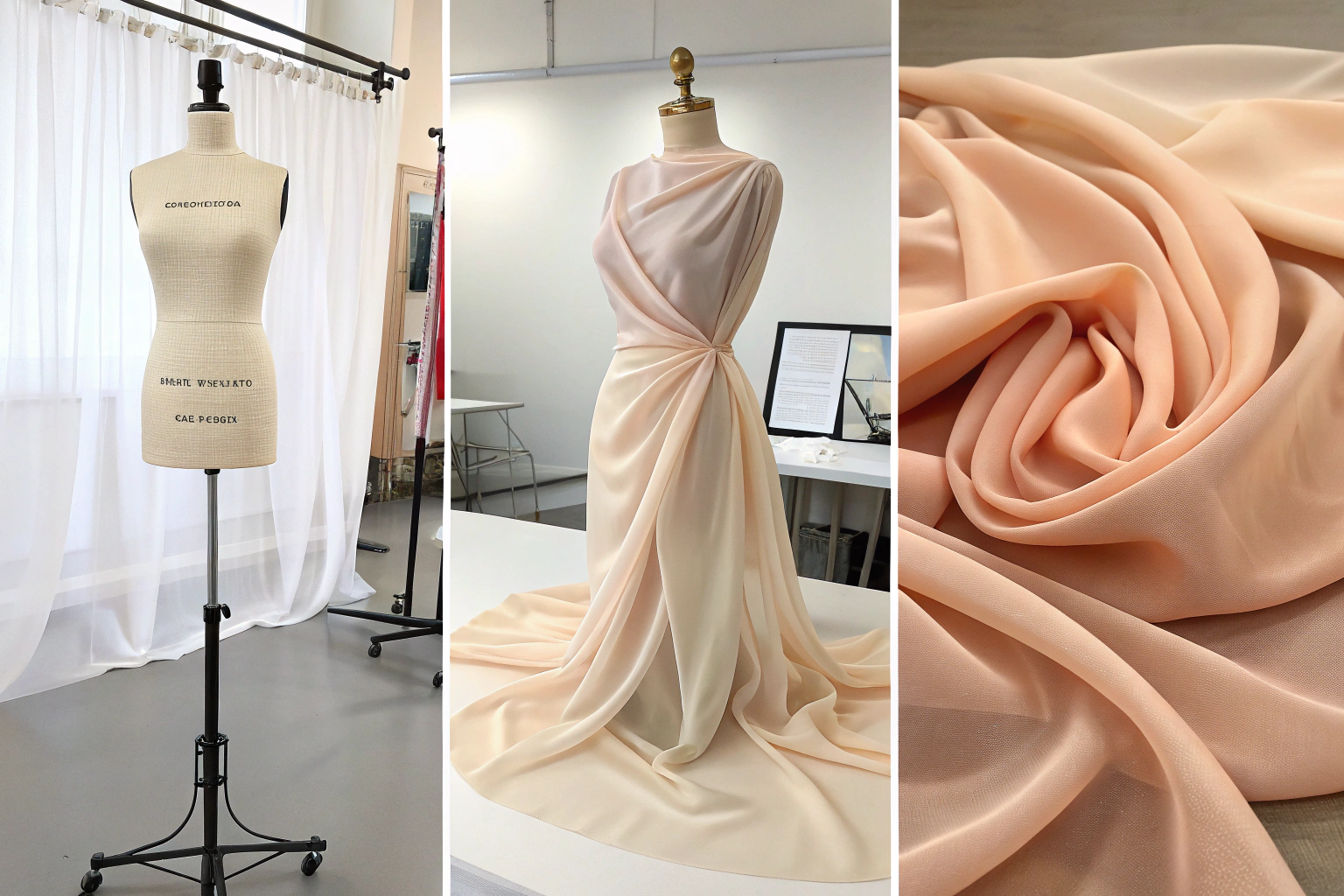
Ever found yourself browsing through fabric swatches, feeling utterly confused by the delicate, sheer materials labeled chiffon, georgette, and organza? You’re not alone. Many designers and brands, especially those sourcing from overseas, struggle to tell these fabrics apart and understand their best uses. Choosing the wrong one can lead to production nightmares, unhappy customers, and lost revenue.
The core difference lies in their weave, weight, texture, and drape, which directly influence the final garment’s look, feel, and functionality. As a fabric expert with over 20 years in China’s textile hub, Keqiao, I’ll demystify these popular materials for you. Understanding these distinctions is crucial for making informed sourcing decisions that align with your design vision and quality expectations.
This guide will break down each fabric’s unique personality, compare them side-by-side, and provide practical tips for sourcing them efficiently from Asia. You’ll learn how to select the perfect fabric for your next collection, avoiding common pitfalls that can derail your production timeline.
What is chiffon fabric and its best uses?
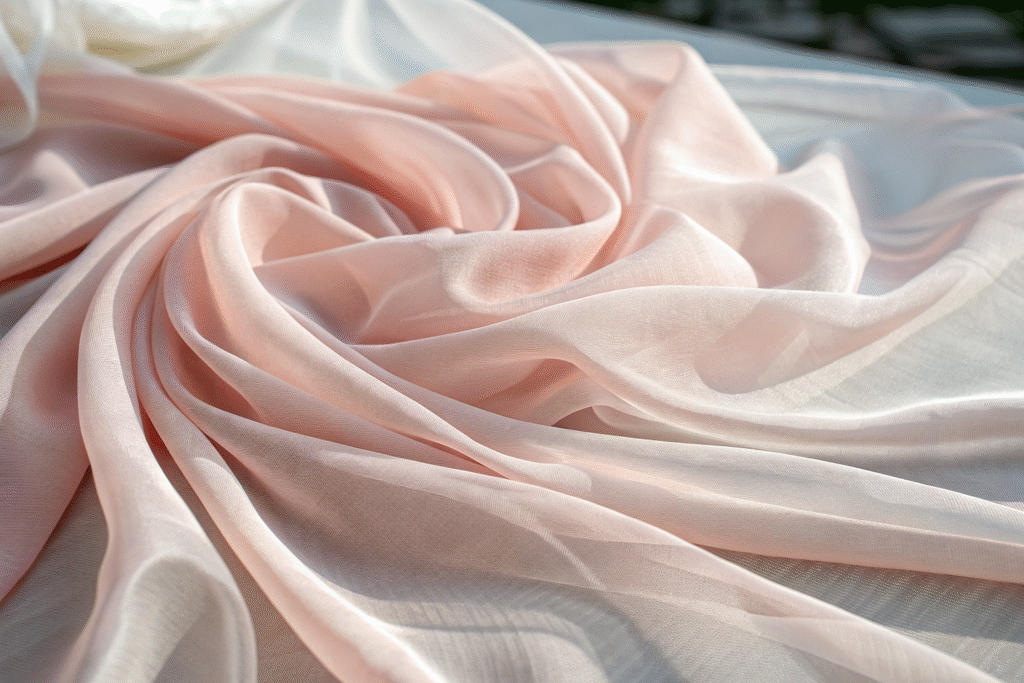
Chiffon is the epitome of elegance and grace in the fabric world. Known for its sheer, lightweight, and slightly rough feel, it creates beautiful, flowing silhouettes. Originally made from silk, most commercial chiffon today is woven from twisted polyester or nylon yarns, making it more durable and affordable while retaining its delicate appearance. Its signature gauzy texture comes from a plain weave and highly twisted yarns, which also give it a slight stretch.
Chiffon is the go-to fabric for creating ethereal, romantic looks. Its excellent drape makes it perfect for flowing garments like evening gowns, scarves, and blouses. Designers often use multiple layers of chiffon to achieve opacity without sacrificing movement. When you need a fabric that moves with the wearer and catches the light beautifully, chiffon is an unparalleled choice. Its airy quality also makes it a favorite for overlays and delicate sleeves in high-fashion and bridal wear.
How is chiffon’s unique texture achieved?
The signature slightly rough yet soft feel of chiffon is a direct result of its construction. It uses a plain weave with highly twisted yarns. These yarns are twisted in alternating "S" and "Z" directions, which creates the fabric’s characteristic slight puckering and crinkled texture. This high twist also gives chiffon a bit of inherent stretch, more so than other woven fabrics. While silk chiffon was the original, most modern chiffon is made from synthetic fibers like polyester. This shift to synthetics makes the fabric more resilient, easier to care for, and significantly more cost-effective for large-scale production, without losing its essential flowing character.
What are the primary applications of chiffon in fashion?
Chiffon’s primary role in fashion is to add volume and movement without weight. It is the star fabric for flowing evening wear, elegant blouses, and delicate scarves. Its sheer nature makes it ideal as an overlay on dresses and skirts, adding a layer of visual interest and modesty. In the realm of accessories, chiffon is famously used for luxurious sari drapes and decorative elements like ribbons. For designers working with our fabric weaving expertise, chiffon offers a versatile base that can also be enhanced with digital printing for intricate patterns that seem to float on the fabric.
What defines georgette fabric’s character?
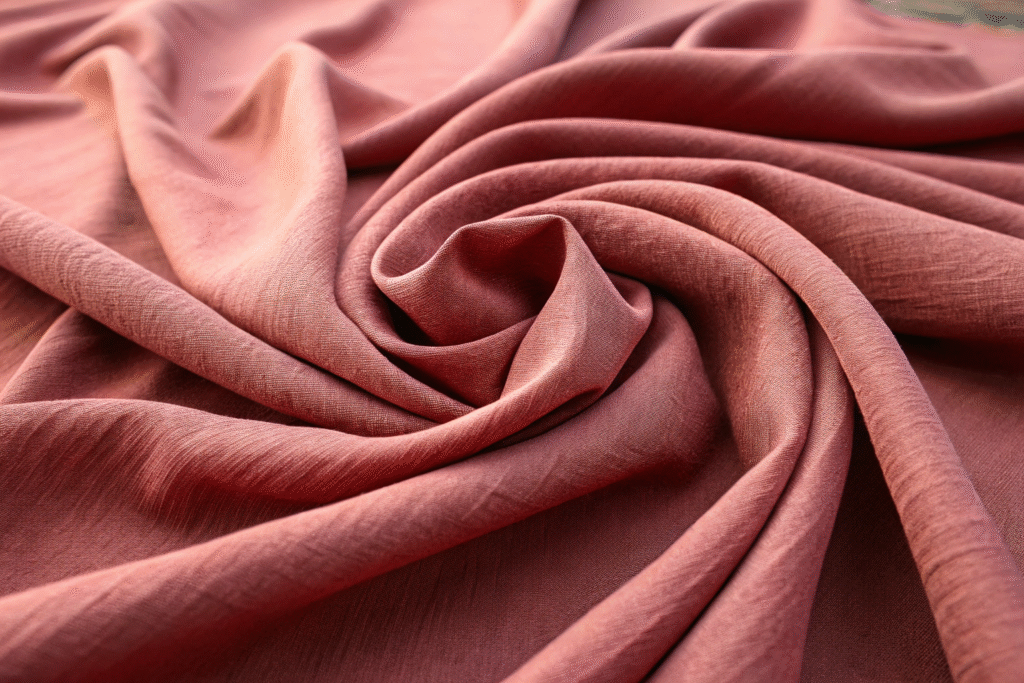
Georgette is often confused with chiffon, but it has a personality all its own. It is a crepe fabric, which means it has a distinctive pebbly, matte texture and a slightly grainy feel. This texture comes from using highly twisted yarns in both the warp and weft directions, woven in a plain weave. The result is a fabric that is more opaque, heavier, and has a superior drape compared to chiffon. While it shares chiffon’s fluidity, georgette falls with more body and structure, making it less clingy and easier to handle during the garment construction process.
This durable and resilient fabric is a workhorse in the world of flowy silhouettes. Its excellent opacity means it often requires fewer layers than chiffon, simplifying design and reducing material costs. Georgette’s dull luster and textured surface give garments a sophisticated, luxurious look without being overly shiny. It is less prone to snagging than chiffon, making it a more practical choice for garments that will see regular wear. Its robustness also makes it an excellent candidate for various dyeing and printing techniques.
Why is georgette considered more durable than chiffon?
Georgette’s superior durability stems from its tighter weave and the use of more densely twisted yarns in both directions of the fabric. This creates a stronger, more cohesive structure that is resistant to pulls and tears. While both fabrics can be made from similar materials like polyester or silk, georgette’s inherent crinkle texture and heavier weight contribute to its ability to withstand the stresses of cutting, sewing, and wearing. For brands concerned with garment longevity, this makes georgette a reliable choice. Sourcing from a supplier with rigorous quality control standards ensures that the georgette’s weave is consistent and secure, preventing issues like yarn slippage.
Which garment styles benefit most from georgette?
Georgette is the ideal fabric for designs that require fluid movement and a structured silhouette. It excels in flared skirts, dresses, blouses, and tunics where a designer wants the fabric to "stand away" from the body slightly before falling into soft folds. Its excellent drape makes it perfect for styles inspired by vintage or bohemian fashion. Because it is less transparent, it is widely used in scarves and wraps. Its texture also holds embellishments well; for instance, our embroidery factories often work with georgette to create detailed, raised patterns that do not distort the fabric’s base structure.
How is organza fabric distinct from the others?
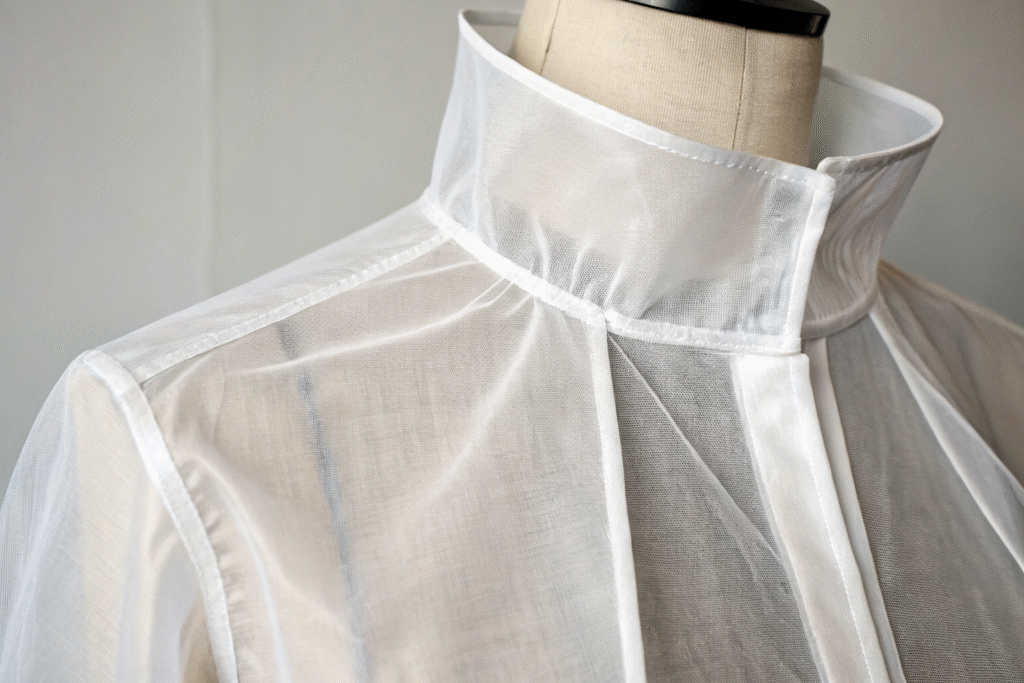
Organza is the structural rebel of the sheer fabric family. While chiffon and georgette are defined by their flow, organza is celebrated for its stiffness and crispness. This unique body comes from a plain weave using filament yarns that are twisted and then treated, resulting in a transparent, lightweight fabric that holds its shape remarkably well. Traditionally made from silk, modern organza is predominantly made from polyester or nylon, which enhances its stiffness and makes it more accessible. The most immediate way to identify organza is by its hand; it feels smooth and firm, and it can almost "stand up" on its own, creating dramatic volume and silhouette.
This structural integrity makes organza incredibly versatile beyond its traditional roles. It is the key fabric for creating volume in ball gowns and wedding dresses, often used in petticoats or layered to support heavier fabrics. Its crispness is ideal for stand-alone collars, structured sleeves, and decorative accents like bows and flowers that need to hold their shape. Organza provides a dramatic, high-fashion effect that neither chiffon nor georgette can replicate, offering designers a tool to play with architecture and form.
What gives organza its signature crispness?
The crisp, stiff hand of organza is a product of both its fiber content and a specific finishing process. The yarns, often silk or polyester, are tightly twisted. After weaving, the fabric undergoes a chemical treatment or "sizing" that adds body and stiffness, allowing it to maintain its shape. This process is what differentiates organza from its softer cousins. For synthetic organzas, the heat-setting properties of polyester are leveraged to permanently lock in this crispness, making it resistant to wilting in humid conditions. Partnering with a specialist fabric finishing factory is crucial to achieving the consistent stiffness and high-quality finish that luxury brands demand.
Where is organza typically used in design?
Organza’s primary use is anywhere a designer needs to add permanent structure and volume without weight. It is indispensable in formal and bridal wear for creating dramatic, voluminous skirts and sleeves. It serves as an excellent interlining or underlining to provide support to other, more delicate fabrics in a garment’s construction. Its transparent quality makes it perfect for overlays on dresses and skirts, adding a layer of texture and depth. Furthermore, its smooth surface is an ideal canvas for intricate embroidery and beading, as the firm base prevents the fabric from puckering under the weight of heavy decorations.
Chiffon vs. Georgette vs. Organza: A quick comparison
To make the best fabric choice, a direct comparison is essential. The table below summarizes the key differences to guide your selection process. This is based on my daily work with designers who need clear, actionable information to make fast decisions.
| Feature | Chiffon | Georgette | Organza |
|---|---|---|---|
| Transparency | Sheer | Semi-Sheer to Opaque | Sheer |
| Texture | Smooth, slight puckering | Gritty, pebbly (crepe) | Smooth, crisp |
| Drape | Fluid, flowing | Fluid with more body | Stiff, structural |
| Weight | Very Lightweight | Lightweight to Medium | Lightweight |
| Best For | Flowing gowns, scarves | Draped blouses, dresses | Structured garments, overlays |
This comparison should serve as a starting point. Remember, the final choice depends on the specific design, desired silhouette, and budget. For instance, a designer creating a romantic, flowing summer dress might lean towards chiffon, while one designing a structured cocktail dress with volume would choose organza. Georgette strikes a perfect balance for everyday luxury that is both beautiful and durable.
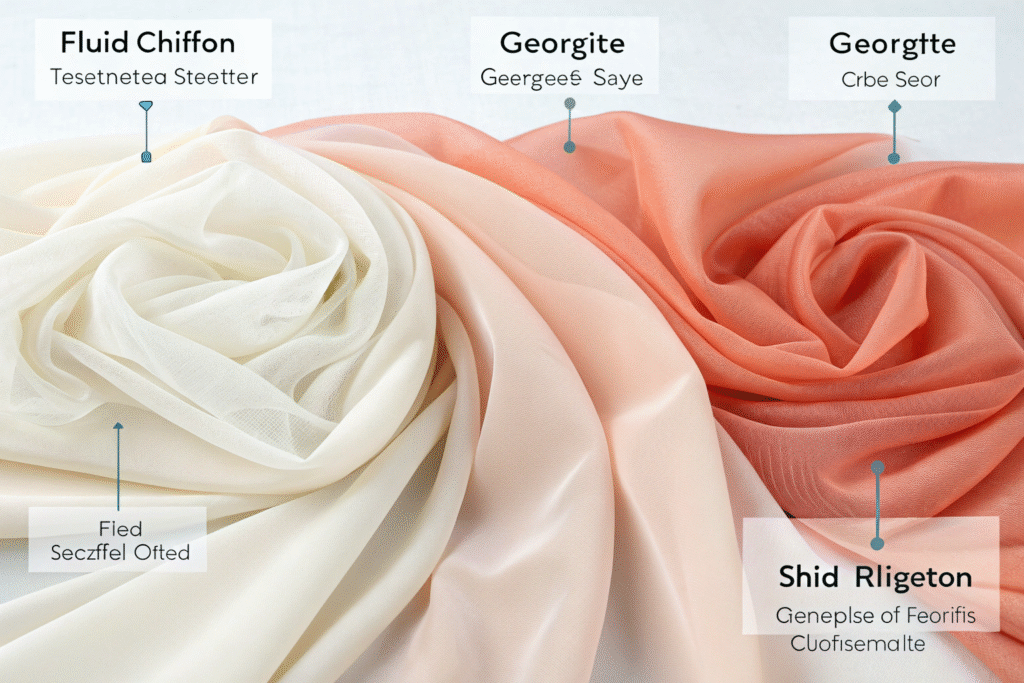
How do their costs and sourcing differ?
The cost and sourcing complexity for these fabrics can vary significantly. Generally, silk versions of any of these three will be the most expensive. Polyester-based fabrics are the most cost-effective and widely available. Chiffon and georgette, being more commonly used, often have larger stock availability and faster production times. Organza, particularly specialty types with specific finishes, might require custom orders. A key advantage of sourcing from a hub like Keqiao is the ability to access a vast inventory of all three types. Our fabric catalog offers numerous options, and our integrated supply chain allows for agile production, whether you need a small batch of silk georgette or a large volume of polyester chiffon.
What are the key care and handling considerations?
Care and handling are critical from production to the end consumer. Chiffon is delicate and can snag easily; it often requires delicate machine washing or hand washing. Georgette is more robust but can lose its texture with harsh abrasion. Organza must be handled with care during sewing to avoid creasing and is typically dry-clean only to maintain its stiffness. For brands, understanding these properties is vital for creating accurate care labels and ensuring customer satisfaction. Our quality inspection process includes checking for common issues like yarn slippage in chiffon or inconsistent stiffness in organza, preventing these problems from reaching your production line.
Conclusion
Choosing between chiffon, georgette, and organza is fundamental to bringing your design vision to life. Chiffon offers ethereal flow, georgette provides textured drape with durability, and organza delivers crisp structure. Understanding their unique properties—weight, texture, transparency, and drape—empowers you to select the perfect material for every garment in your collection. This knowledge not only enhances your designs but also streamlines your sourcing and production process.
Now that you can confidently distinguish these fabrics, the next step is to source them from a partner who guarantees quality and reliability. At Fumao Textiles, rooted in China’s textile capital, Keqiao, we specialize in producing and supplying all three of these fabrics, along with comprehensive finishing services like dyeing, printing, and embroidery. Let us help you translate your vision into a stunning reality with the right materials and expert support. Ready to start your next project? Contact our Business Director, Elaine, today at elaine@fumaoclothing.com to discuss your fabric needs and clothing orders.








