
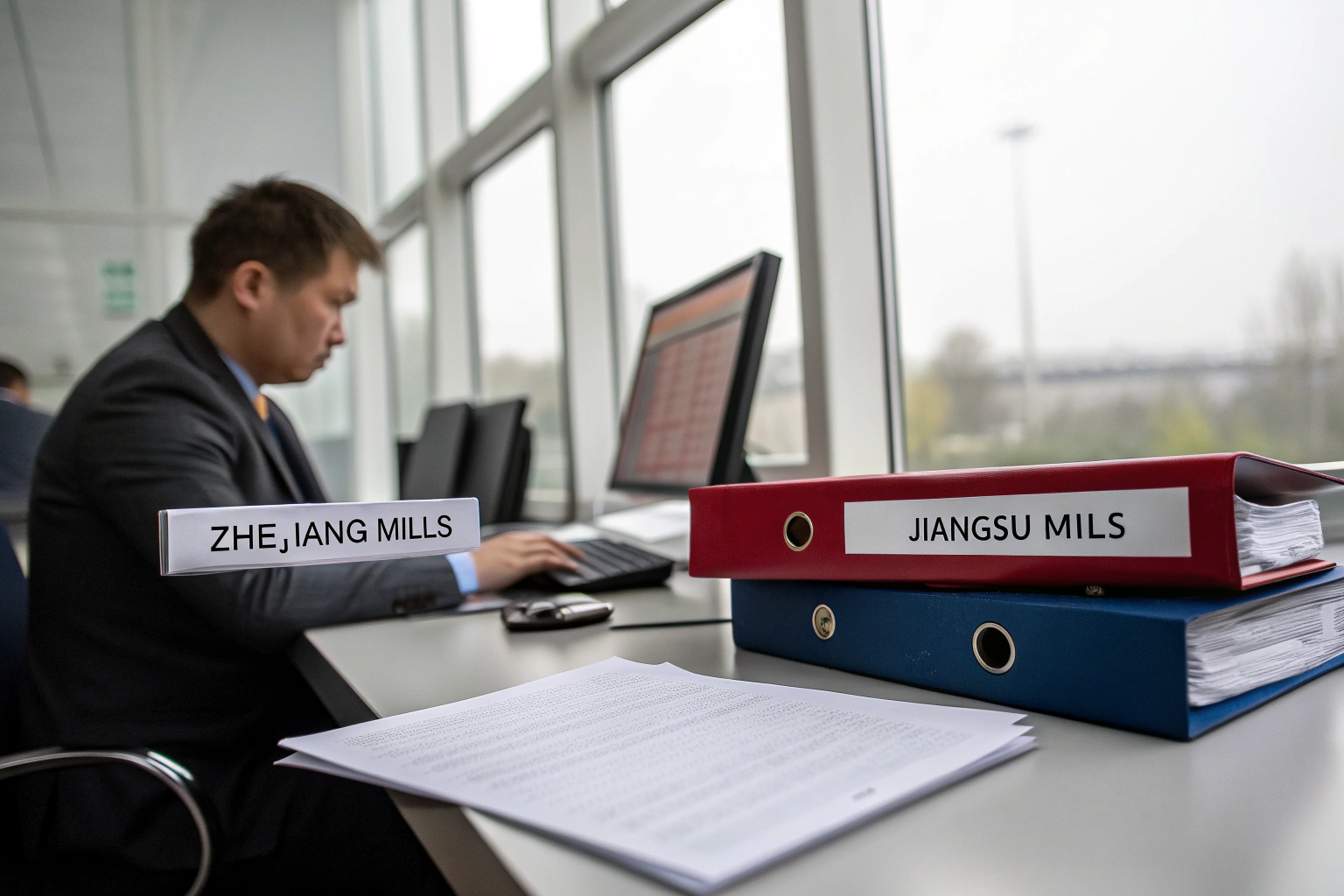
I want to start with a confession. I run a textile mill in Keqiao, China, and I have seen the absolute worst of this industry. I’ve seen buyers fly 6,000 miles to visit a "factory" that turned out to be a rented office with a fake showroom. I’ve seen sample-quality fabrics delivered for approval, and then bulk shipments that look like a completely different product—thinner, rougher, and mysteriously 15% lighter. I’ve seen deposits wired and then the supplier simply vanished after Chinese New Year. The search for a reliable wholesale fabric supplier in China is a minefield, and I’m not going to pretend otherwise just because I happen to be a supplier myself.
But here is what I also know. For every fraudulent middleman, there are a dozen legitimate, hardworking mills in Zhejiang and Jiangsu who desperately want to find long-term, professional buyers. The problem isn’t a lack of good suppliers. The problem is that most buyers don’t know how to verify a supplier before they send money. They rely on a pretty Alibaba storefront or a charming WeChat conversation. That’s not due diligence. That’s gambling. In 2026, with the sophistication of digital verification tools and the maturity of the Chinese textile compliance infrastructure, you can absolutely find a rock-solid partner. You just need a systematic filter. This article is that filter.
I’m going to give you the exact playbook that I would use if I were in your shoes—a US or European brand looking to source fabric from China without getting burned. And I’m going to be brutally honest about the red flags, the verification hacks, and the questions that will make a dodgy supplier squirm.
What Are the Definitive Red Flags When Vetting Chinese Textile Suppliers?
Before I tell you what to look for, let me tell you what to run away from. The Chinese textile export industry is massive—hundreds of thousands of companies are registered in Zhejiang province alone—but only a fraction actually own production assets. The rest are traders, and while some traders are honest and add value, many are simply arbitrage players who will sell you whatever is cheap this week, with zero quality consistency. They are the reason "Made in China" sometimes still carries a stigma.
The red flags I’m about to share come from two decades of watching buyers make the same mistakes. Some of these flags are obvious, but the dangerous ones are subtle. A supplier who communicates perfectly in English, always answers immediately, and promises you the world at half the market price is often far more dangerous than a gruff, slow-responding factory manager who tells you bluntly that your target price is unrealistic. The honest ones have boundaries. The scammers have no limits.
| Red Flag Behavior | What It Looks Like in Practice | What It Actually Means | Your Immediate Action |
|---|---|---|---|
| The "Any Fabric" Promise | Supplier claims to produce cotton, silk, polyester, lace, denim, and neoprene with equal expertise | No factory does everything. This is a trader sourcing from multiple unknown mills | Demand a video call showing the specific loom type for your fabric running live |
| Price Quoted 30%+ Below Market | You’ve quoted with 5 suppliers, and one is dramatically cheaper | Either bait-and-switch on quality, or using substandard yarns that will fail testing | Request a physical A4 sample with selvedge before any deposit; measure weight and yarn count yourself |
| Reluctance to Show Live Factory Floor | "My factory is under renovation" or "our video equipment is broken" | The factory either doesn’t exist or is a subcontracted facility they have no control over | Insist on a live WeChat video call with specific instructions (e.g., "show me the dyeing vats and the outside street view") |
| Company Registration Less Than 2 Years Old | Beautiful website, but the business license shows a 2024 registration date | Inexperienced operators, or a phoenix company risen from the ashes of a previous failed entity | Check the how to verify Chinese company registration date and legal representative on official government portal for the unified social credit code |

Why Is the "Any Fabric, Any Quantity" Promise a Dangerous Trap?
Here’s a story from March 2025 that still makes me angry. A Canadian startup founder contacted me after losing $8,000. He had found a supplier on a B2B platform who claimed they could do "everything." Organic cotton jersey? Yes. Recycled polyester fleece? Yes. Silk charmeuse? Absolutely. The supplier sent beautiful samples—samples they had clearly bought from a high-end sample house in Guangzhou. The buyer placed a bulk order for three completely different fabric types. What arrived was a disaster. The jersey was a stiff, low-grade open-end yarn that pilled after two washes. The fleece shed microfibers everywhere. The silk was actually a cheap polyester satin.
No real factory produces everything. I don’t care what their website says. A knitting mill has circular knitting machines. It doesn’t have rapier looms for woven satin. A jacquard weaving mill doesn’t have a continuous dyeing range for lightweight nylon. These are completely different capital equipment investments, often in different industrial parks or even different cities. At Shanghai Fumao, we specialize in wovens and knits for fashion, sportswear, and home textiles. We have our own weaving factory, a cooperative dyeing plant, and printing and embroidery facilities. And even with all that, we will tell you honestly if a specific construction is better sourced from a specialist. A supplier who never says "no" is a supplier who doesn’t actually own the machines. They are just placing your order with whoever picks up the phone. If you want to test a supplier’s honesty, ask them how to identify a genuine Chinese textile mill versus a trading company by asking about loom types and gauges. A real mill owner can tell you the exact machine brand, gauge, and diameter of the knitting cylinder they run your fabric on. A trader will give you a vague answer.
How Can a "Cheap" Sample Cost You Thousands in Bulk?
This is the classic bait-and-switch, and it’s so common that I warn every new client about it before we even discuss pricing. The scam works like this: the supplier sources a premium sample from a specialist sample-development house. These houses produce short runs of beautiful fabric specifically to win orders. The sample you receive is gorgeous—perfect weight, deep color, soft hand feel. You approve it. You wire a deposit. Then the bulk production arrives, and it’s a shadow of the sample. Lighter weight. Rougher hand feel. Off-shade color.
Why does this happen? Because the bulk production was done in a different, cheaper factory, using a coarser yarn count and a faster, lower-quality dyeing cycle. A sample that cost the supplier $20 to produce was used to win a $50,000 order. I saw this happen to a US uniform brand in 2024. The sample was a dense, durable twill. The bulk fabric was so loosely woven you could see light through it. The brand rejected the entire container, but the supplier kept the 30% deposit and disappeared. The only defense against this is to demand a "counter-sample" from bulk production before the full lot ships, and to have it independently tested. At Shanghai Fumao, we keep a file of every sample we send, with a unique QR code that links to the exact yarn batch and machine parameters used. When we go to bulk, we match those parameters. You can literally scan the bulk fabric and see that it came from the same knitting machine as the approved sample. Ask any potential supplier: "Can you guarantee the bulk will match the sample, and will you accept a third-party SGS inspection at your expense if it doesn’t?" The way they answer that question tells you everything.
How to Digitally Verify a Chinese Fabric Supplier Before You Visit?
You don’t need to fly to China to eliminate 90% of the bad suppliers. You can do it from your desk, before you spend a dollar on a sample or a plane ticket. The digital verification tools available in 2026 are powerful and, in many cases, free. The Chinese government has made company registration data publicly searchable, and the good suppliers will proactively share their credentials. The bad ones will make excuses.
I recommend a three-layer digital audit before you even request a swatch. First, verify the legal entity. Second, verify the production capability through a live video walkthrough. Third, verify the compliance certifications through third-party databases. If a supplier passes all three layers, they are worth your time and your sample budget. If they stumble on even one, walk away. The market is too big to gamble on uncertainty. At Shanghai Fumao, we actually prefer buyers who do this level of homework, because it means they’re serious and professional. We’ll happily share our business license, our CNAS certificate number, and give you a live tour of our weaving shed on WeChat. We have nothing to hide, and the suppliers you want to partner with won’t either.

How Do I Use a Company’s Business License to Spot a Fake Factory?
Every legally registered company in China has a Unified Social Credit Code—an 18-digit identifier that is publicly searchable on the National Enterprise Credit Information Publicity System. This is not a secret database. It’s a government-run website where you can look up any company’s registration details, including its legal representative, registered capital, business scope, and—critically—its operating status and any administrative penalties.
Here is the practical hack: compare the "business scope" on the license with what the supplier claims to do. If the business scope says "consulting services" and they claim to own a dyeing factory, that’s a massive red flag. Also, check the registered capital. A company claiming to run a weaving mill with a registered capital of $15,000 is not credible—a single modern rapier loom costs more than that. Look for penalties or "abnormal operation" listings. Our company, Shanghai Fumao, has a clean record stretching back to our founding, and you can verify that yourself on the how to check a Chinese textile supplier’s legal business license and export record online. I tell every prospective client: please look us up. Seriously. The fact that we invite you to do so is itself a trust signal. A supplier who gets defensive or tells you the database is "outdated" or "inconvenient" is hiding something. The database works perfectly well for verifying the basics, and any legitimate exporter knows their code by heart.
Can a Live WeChat Video Call Replace an In-Person Factory Audit?
Not completely, but it gets you 80% of the way there for a fraction of the cost. I’ve done dozens of these calls for clients who couldn’t travel, and I’ve learned what serious buyers should ask to see. A genuine factory video tour should be unscripted, slightly messy, and should show details that can’t be faked. Don’t accept a pre-recorded video. Demand a live call and give specific, unpredictable instructions: "Show me the control panel of the stenter frame" or "Walk over to the dye kitchen and show me the weighing scales" or "Point the camera at the ceiling—I want to see if the overhead lights are on and the machines are running."
On a live call, you should hear the noise of machinery. You should see workers moving. You should see inventory that makes sense for the fabric types the supplier claims to produce. I did a call with a US client in January 2026. He asked me to show him our rapier looms running the jacquard we had quoted. I walked onto the production floor, showed him the loom number matching the production card, and let him watch the fabric being woven in real time. He also asked to see the yarn storage area to verify we had the raw material stock for his order. We showed him the pallets with the supplier labels. That call took 15 minutes and it sealed a $45,000 deal. If a supplier can’t do a live how to conduct a live remote factory video audit with a Chinese textile supplier via WeChat, they are either hiding something or they don’t actually have a factory. Either way, you should move on.
What Factory Certifications Actually Matter for US and EU Fabric Buyers?
Certifications in the textile industry are like a second language. If you don’t speak it, you can be easily fooled by meaningless pieces of paper. I’ve seen suppliers display "ISO 9001" like it’s a badge of manufacturing excellence, when in reality, ISO 9001 is a generic quality management standard that a consulting firm can get for a restaurant or a call center. It says nothing about whether your fabric will bleed color or fall apart. You need to know which certifications actually verify product quality and environmental compliance, and you need to know how to check if a certificate is still valid.
For US and EU buyers, the certification landscape breaks down into three categories: product safety, environmental/sustainability, and laboratory competence. Product safety certs like OEKO-TEX Standard 100 ensure the fabric won’t give your customer a rash. Sustainability certs like GOTS or GRS validate the organic or recycled content story you’re putting on your hang tag. And laboratory competence certs like CNAS accreditation prove that the testing reports the factory gives you are scientifically valid and CBP-recognized. At Shanghai Fumao, we maintain all three categories, and we update them annually. If a supplier’s certificate expired last year and they’re still showing it on their website, what else are they being dishonest about?

Is OEKO-TEX Standard 100 Enough, or Do I Need GOTS Certification?
This depends entirely on your product and your marketing claims. OEKO-TEX Standard 100 is a product safety certification. It tests for harmful substances—azo dyes, formaldehyde, heavy metals, phthalates—and certifies that the finished fabric is skin-safe. It does not care how the cotton was grown or whether the factory workers were treated fairly. It’s a chemical safety test, and for many brands making no eco-claims, it’s sufficient and often mandatory for EU REACH compliance.
GOTS is a completely different beast. It certifies the entire supply chain, from the organic cotton farm to the finished garment, covering both ecological criteria (no GMO seeds, no toxic pesticides) and social criteria (no forced labor, safe working conditions). If you want to label your product "organic," you need GOTS. If you just want to assure your customers the fabric won’t cause skin irritation, OEKO-TEX is your baseline. I had a US baby clothing brand tell me they just wanted OEKO-TEX because "organic" wasn’t part of their brand story. Fair enough. We shipped them OEKO-TEX certified bamboo rayon that passed Class I (the most stringent, for infants). But a German organic lifestyle brand we work with requires the full GOTS certificate for every lot, which we provide through our certified supply chain. You need to decide your claim first, then how to verify GOTS certification validity and scope for a Chinese textile supplier online. Don’t pay the premium for GOTS fabric if you’re not marketing it as organic, but don’t skip OEKO-TEX if you’re selling in the EU, because REACH enforcement is getting much stricter.
Why Does a CNAS-Accredited Lab Matter More Than a Generic "Factory Lab"?
Here is a hard truth: most factory labs in China are not calibrated, not audited, and not reliable. They exist to give the sales team a report to show buyers, but the data might be fabricated, or the equipment might be so poorly maintained that the results are meaningless. A CNAS-accredited lab, by contrast, operates under the ILAC mutual recognition framework. This means our spectrophotometer is calibrated against a traceable standard, our technicians are proficiency-tested, and our test methods follow strict ISO or AATCC protocols. And because CNAS is an ILAC signatory, a test report from our lab is legally equivalent to a report from a US or EU accredited lab.
This has direct, tangible value for your customs clearance. When CBP or EU customs flags a shipment for fiber content verification, a CNAS test report carries authoritative weight. It can be the difference between a 3-hour release and a 3-week detention. We invested over ¥3.5 million in our CNAS lab because we were tired of relying on external third-party labs that added days to our development cycle. Now, we run colorfastness, shrinkage, tensile strength, and composition analysis in-house, with full global recognition. Ask any supplier: "Is your lab CNAS accredited, and can you provide the accreditation number so I can how to verify a Chinese textile lab CNAS accreditation status and scope on ILAC database?" If they look confused or change the subject, their lab reports are just nicely formatted guesses. That’s a risk you can’t afford to take on a bulk container.
How to Negotiate Terms That Protect Your Order From Start to Finish?
Negotiating with a Chinese textile supplier isn’t about squeezing the last five cents out of a yard price. In fact, the buyer who obsesses only over price is the easiest target for quality shortcuts. Smart negotiation is about structuring the transaction so that the supplier’s incentive to deliver quality is stronger than their temptation to cut corners. This means payment terms, inspection clauses, and shipping responsibilities are more important than the unit price itself. A fair price with ironclad protection is infinitely better than a rock-bottom price with no recourse.
In 2026, the power dynamic has shifted. Reliable suppliers with in-house labs and DDP logistics capability have more leverage because they offer a complete, risk-free package. We don’t need to chase bottom-feeder prices because our value proposition is eliminating your risk, not just selling you fabric. When you negotiate with a supplier like Shanghai Fumao, you’re not haggling over pennies; you’re agreeing on a partnership structure that guarantees your goods arrive on spec and on time. Here is how to structure those terms.

What Payment Method Protects Me If the Fabric Quality Fails Inspection?
Never, ever pay 100% upfront. I say that as a supplier who would benefit from it. The standard protective structure is 30% deposit to initiate production, and 70% balance against a copy of shipping documents—but with a critical addition: the balance is only payable after a third-party inspection report confirms the quality matches the approved sample. This gives you leverage. If the inspection fails, you don’t pay the balance until the issues are rectified.
At Shanghai Fumao, we actively encourage third-party inspections from SGS, ITS, or Bureau Veritas. We will coordinate the date, provide the inspector access to our factory floor, and pull the random samples according to AQL 2.5 standards. We want that inspection to happen, because it protects us too—it eliminates any later dispute about what was shipped. I had a client in late 2025 who was nervous about his first bulk order with us. I told him, "Send SGS. I’ll pay for the inspection if they find a major defect. If they don’t, you pay for it." The inspection came back with zero major defects and two minor color shading points that were within tolerance. The client paid the balance the same day. That’s how a mature partnership works. If a supplier resists a how to negotiate a 30-70 payment term with third party SGS inspection clause for textile imports from China, they are planning to ship you something they don’t want inspected. Walk away.
Why Should I Push for DDP Terms Instead of FOB for My First Order?
FOB is a false economy for first-time buyers. You might save a few cents per yard on the fabric price, but you inherit a logistical nightmare you’re not equipped to handle—booking a freight forwarder, navigating customs brokerage, and dealing with port demurrage if your paperwork isn’t perfect. For a first order, the goal is not to optimize logistics cost; the goal is to get the goods into your warehouse without any surprises. DDP achieves that.
When we ship DDP, the price I quote you includes the fabric, the ocean freight, the US duty, the customs clearance, and the truck to your door. It’s one all-in price. If CBP decides to examine the container for three days and the terminal charges storage fees, I pay that, not you. If the duty rate I calculated is wrong, I eat the difference. That risk transfer is valuable, especially when you’re still building trust with a supplier. We did a first DDP order for a Texas-based western wear brand in January 2026. They had previously done FOB with a different supplier and ended up paying $2,400 in unexpected fees. Our DDP price was transparent, landed exactly on budget, and arrived 3 days early. They’ve never gone back to FOB. Ask any new supplier: "Can you quote me how to negotiate door to door DDP shipping terms with a Chinese wholesale fabric supplier for first time buyers?" If they can’t—if they only offer FOB or CIF—it means they don’t have the logistics infrastructure or the confidence in their own customs classification ability to take on that risk. That’s a yellow flag.
Conclusion
Finding a reliable wholesale fabric supplier in China in 2026 is not about luck. It’s about applying a rigorous, repeatable filter. You need to recognize the red flags before they cost you money—the supplier who claims to do everything, the price that’s too good to be true, the reluctance to show a live factory floor. You need to use digital verification tools like the Chinese business license database and live WeChat video audits to eliminate the fakes from your shortlist before you invest in samples. You need to understand which certifications actually protect your brand—CNAS for lab credibility, OEKO-TEX for safety, GOTS for organic integrity—and how to check their validity. And you need to negotiate terms that protect your money, your quality, and your delivery timeline, from 30/70 payment with inspection clauses to DDP shipping that transfers risk to the supplier who can actually manage it.
The suppliers worth finding are the ones who will help you with all of this. We don’t hide from your audits; we schedule them. We don’t resist your inspections; we welcome them. We don’t quote FOB and wish you luck; we quote DDP and take full responsibility until the fabric is in your cutting room. This is what twenty years of reputation in the Keqiao textile cluster looks like. It’s not the cheapest offer you’ll get. But it’s the one that won’t keep you awake at night.
If you’re tired of sifting through Alibaba listings and WeChat sales pitches that feel just slightly off, let’s have a real conversation. Our Business Director, Elaine, can schedule a live video tour of our weaving floor, share our CNAS accreditation documents, and prepare a DDP quote for your specific fabric requirements. You can verify everything I’ve said in this article before you spend a single dollar. That’s how confident we are in our operation.
Reach out to Elaine at elaine@fumaoclothing.com and ask for a Supplier Verification Pack. Let’s start with transparency and build a partnership from there. Your collection deserves a fabric partner, not a gamble.








