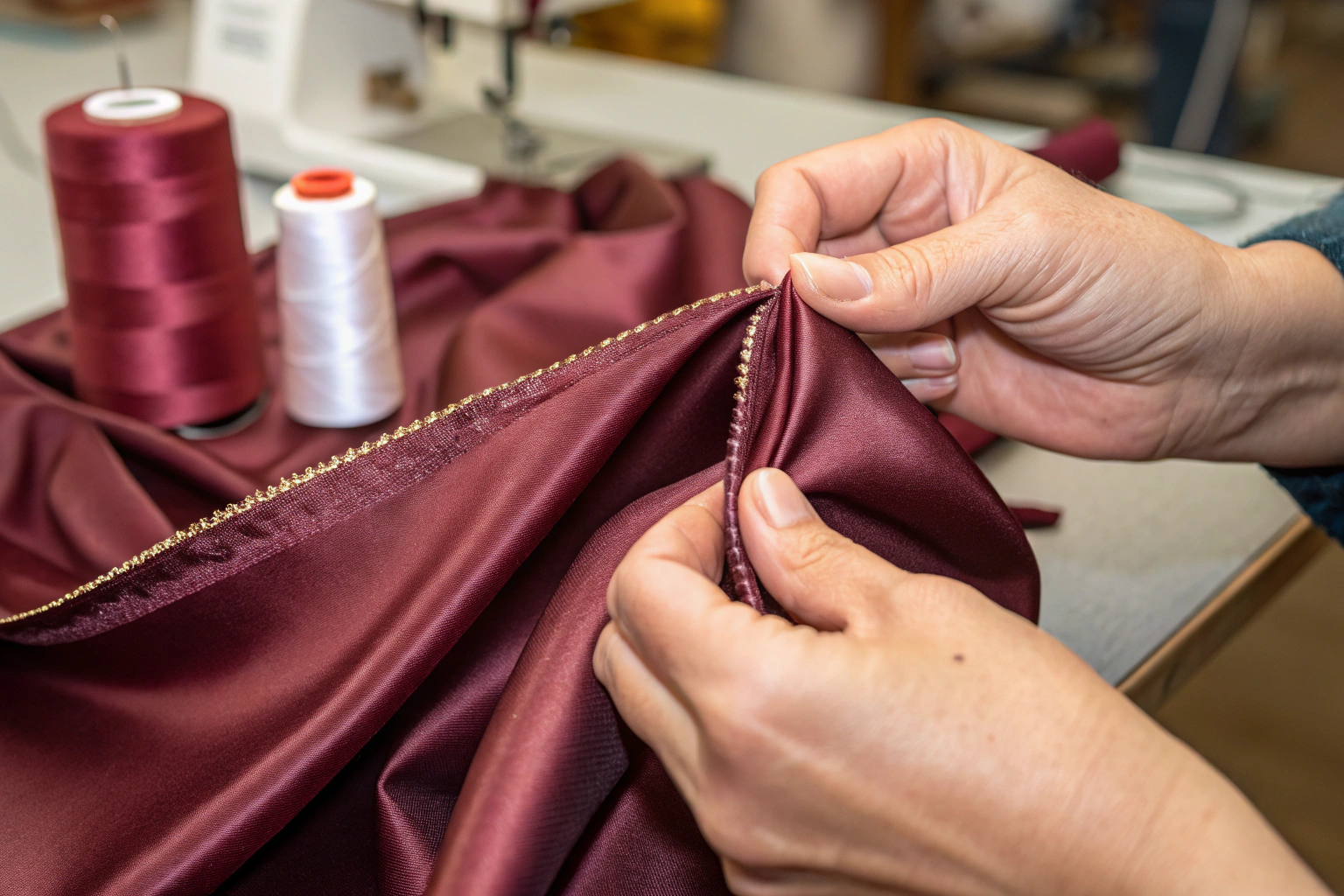
Let me paint you a picture that I’ve seen destroy the reputation of a good clothing brand in seconds. A customer buys a $300 blazer. They love the cut, they love the outer wool fabric. Three months later, they bring it back to the store with a look of disgust. Why? Because the sleeve lining has a six-inch rip from just their watch catching it. Or worse, the back lining split right down the center seam when they reached for something in the back seat of their car. That one moment of structural failure negates all the money you spent on premium shell fabric, marketing, and design. It makes the whole garment feel cheap.
At Shanghai Fumao, we call lining fabric the "skeleton’s clothing." Nobody sees it, but if it breaks, the body collapses. The best quality lining that won’t tear isn’t just about picking "polyester" or "viscose" off a spec sheet. It’s about selecting a fabric with the right combination of seam slippage resistance, tensile strength, and a weave structure tight enough to keep your stitches from pulling through. After twenty years of supplying linings to brands that can’t afford returns, I can tell you this: a torn lining is almost never the customer’s fault. It’s an engineering failure in the fabric selection phase.
Now, you might be thinking, "Okay, so I just need to buy the thickest lining possible, right?" Wrong. If you put a thick, stiff lining inside a fine suiting wool, you ruin the drape of the garment. The jacket feels like cardboard. That’s why this is a technical question, not a simple one. We need to find the fabric that is strong and supple. Let’s walk through exactly what makes a lining tear-proof and how we test for it right here in our CNAS lab in Keqiao.
Why Does Polyester Lining Rip So Easily Sometimes
You’ve felt it before. That super cheap, shiny lining that sounds like a static electricity generator every time you move. That’s the stuff that rips if you look at it wrong. But here’s the thing: polyester should be strong. In its raw filament form, polyester has incredibly high tenacity. So why does the lining version fail so spectacularly?
The problem is usually the weave construction and the yarn denier, not the polymer itself. To hit a super low price point—say, under $0.50 per yard—mills will use what we call "air-textured" yarns with a very low twist and weave them in a loose plain weave. This creates a fabric that feels soft initially but has massive gaps between the warp and weft yarns. When you sew a seam under tension (like across the back shoulders of a jacket), the yarns don’t break. Instead, they just slide apart. This is called seam slippage. It looks like a tear along the stitch line, but technically the thread didn’t snap; the fabric just opened up like a cheap zipper.
At Shanghai Fumao, we see this all the time with samples clients send us from other vendors. We test them, and the seam slippage is less than 5kg of resistance. That’s terrible. We require a minimum of 8kg for jacket linings, usually higher.

Is Seam Slippage the Real Reason My Lining Failed
Yes. Nine times out of ten, when a client says "my lining tore," they are actually describing seam slippage. True tensile tear—where the fabric itself rips across the middle of a panel—is rare unless the wearer catches the fabric on a sharp nail or zipper. The daily wear-and-tear failures happen at the armhole seam or the center back seam.
Let me give you a technical explanation without the boring lab manual speak. Imagine a woven fabric is like a wicker basket. If the reeds are packed tight and you weave them over/under many times, it’s hard to push a pencil through the side. But if the reeds are spaced wide apart and just cross each other loosely, you can push the pencil right through without breaking a single reed. That’s seam slippage. The sewing needle punctures the basket, and the tension of wearing the garment just widens that hole until it’s a long rip.
We combat this at Fumao by using higher picks per inch (PPI) in our lining constructions. A standard cheap lining might be 80 PPI. Our premium Bemberg-style cupro lining is 110 PPI. That extra density locks the yarns in place. For a deep dive into this specific failure mode, check out this detailed explanation of seam slippage testing and why it differs from tensile strength. It’s the most overlooked spec on a tech pack.
What Denier Yarn Is Strong Enough for a Jacket Lining
Denier is the weight of the yarn. Higher denier means thicker, stronger yarn. But like I said before, you can’t just use rope. The art of a good lining is balancing denier with drape.
Here’s a quick reference table from our development room showing how denier impacts performance in a standard polyester taffeta lining:
| Yarn Denier (Warp x Weft) | Hand Feel | Seam Strength | Best Use Case |
|---|---|---|---|
| 50D x 50D | Very Soft / Flimsy | Low (Avoid) | Disposable fashion, very lightweight dresses. |
| 68D x 68D | Crisp / Standard | Medium | Our minimum spec. Good for blouses, skirts. |
| 75D x 75D | Substantial / Smooth | High | The Sweet Spot. Ideal for suit jackets, coats. |
| 100D x 100D | Heavy / Stiff | Very High | Heavy outerwear, bag linings, not for drapey garments. |
(Here I need to interject—a 75D yarn in a twilled lining will feel softer than a 75D yarn in a plain weave taffeta. The weave structure matters just as much as the yarn size.) We’ve found that for most of our European clients making mid-to-high-end blazers, the 75D twill is the gold standard. It resists the elbow rub and shoulder stretch without making the jacket feel armored.
For more on how yarn size translates to real-world performance, I recommend reading this guide to selecting the correct polyester yarn denier for different textile applications.
Is Bemberg Cupro Stronger Than Viscose Lining
This is the million-dollar question for anyone stepping up from fast fashion to premium ready-to-wear. Viscose (Rayon) has that beautiful, silky hand and breathes like a dream. It’s the gold standard for comfort. But wet strength? Forget about it. Viscose loses up to 50% of its strength when it gets wet. That’s why you see those "Dry Clean Only" labels. If you sweat through a viscose lining, or if your customer hand washes it despite the label, that lining turns to wet tissue paper.
Enter Bemberg Cupro. This is a regenerated cellulose fiber, just like viscose, but made from cotton linter (the fuzz around the cotton seed). The manufacturing process is different—it uses a cuprammonium solution. The result is a fiber that is perfectly round and incredibly smooth. But here’s the kicker for our topic today: Bemberg’s wet strength is significantly higher than standard viscose. It doesn’t disintegrate in the presence of moisture or perspiration. For a high-end garment that someone might actually wear to a summer wedding and sweat in, Bemberg is the only natural-feel lining that won’t embarrass you.
At Shanghai Fumao, we stock both standard Viscose and premium Bemberg Cupro. For our clients targeting the Zara price point, viscose is fine. For those competing with Lululemon or Theory, I push them toward Bemberg every single time. The cost per meter is higher, but the cost of returns is zero.

Why Does Viscose Lining Tear When Wet or Sweaty
Let’s get microscopic for a second. Viscose fiber has an amorphous structure—think of it like a dry sponge. When you add water, that sponge swells up. The polymer chains inside the fiber push apart, and the hydrogen bonds that give it strength in the dry state break down. If you put that weakened fiber under tension (like stretching your arm forward in a jacket), it snaps.
I had a client from Florida last June (and if you know Florida, you know humidity). He was buying suits with a beautiful 100% viscose twill lining from another supplier. The return rate due to torn armhole linings was 7%. Seven percent! That’s a disaster. We switched him to a Fumao Bemberg Cupro. The return rate dropped to under 1% within two seasons. The fabric felt identical—actually, Bemberg is even silkier—but the molecular structure didn’t collapse in the Tampa heat.
This is why we always ask our clients: "Where is this garment going to be worn?" If it’s for a winter coat in Norway, viscose is fine. If it’s for a blazer in Singapore, you need cupro or a high-end polyester. For a more scientific breakdown, check out this resource on the physical and chemical properties of cupro fiber compared to viscose rayon.
Can You Tell the Difference Between Cupro and Silk by Feel
This is a party trick I like to play with new designers visiting our showroom. I hand them two black swatches—one is our Fumao 22 Momme Silk Charmeuse, the other is our Bemberg Cupro Twill. Eyes closed. Most people can’t tell which is which based on touch alone. Bemberg is that good.
It has a natural anti-static property (no clinging to your tights) and it breathes. But unlike silk, it doesn’t yellow over time, and it’s machine washable in cold water (though we still recommend dry clean for tailored jackets to preserve the shoulder pads). The strength-to-weight ratio is phenomenal. You get the luxury of silk with the durability of a synthetic.
(Here’s a little insider tip: Some mills will try to sell you "Bemberg type" fabric. That’s just modal or lyocell with a different marketing name. Real Bemberg is a trademarked brand from Asahi Kasei in Japan. We source our yarn directly from them. If the price seems too good to be true, it’s not real Bemberg.)
For a deeper comparison of the two, this article comparing Bemberg cupro versus silk for garment lining applications does a great job of breaking down the care and durability differences.
What Is the Tear Strength of Acetate vs Polyester Lining
Acetate is a weird beast. It was the darling of the mid-century lining world because it has a beautiful, rich luster and resists mildew. It feels expensive. But if you’ve ever handled a vintage 1960s jacket and the lining is in shreds, that’s acetate. It has a fatal flaw: fibrillation.
Over time, and with exposure to body oils and dry cleaning chemicals, acetate fibers literally split into tiny fibrils. The fabric weakens progressively. It doesn’t just rip one day; it disintegrates over a few years. Polyester, on the other hand, is chemically inert. It will be around for the next 500 years whether you want it to be or not.
So, which is better for tear strength today? Polyester wins, hands down. A standard 75D polyester taffeta has a tear strength (Elmendorf test) that is about 2-3 times higher than a similar weight acetate satin. However, acetate has a softer, quieter hand. It doesn’t "rustle" like polyester can. That’s why you still see acetate blended with viscose in high-end women’s wear—the drape is worth the trade-off in absolute strength.
At Shanghai Fumao, we tend to steer menswear toward Bemberg or Polyester for durability, and womenswear toward acetate/viscose blends for that specific "slinky" drape they want in a dress lining.

Does Dry Cleaning Destroy Acetate Lining Over Time
It’s not the solvent itself (usually perchloroethylene or hydrocarbon) that kills the acetate. It’s the heat and the mechanical action of the dry clean cycle, combined with the removal of natural oils. Acetate becomes brittle when it’s stripped of moisture and then tumbled in a hot machine.
We did a wash test in our lab last year comparing a Fumao Acetate Satin to a Fumao Polyester Satin. After 10 simulated dry clean cycles:
- Polyester: No change in tear strength. Zero.
- Acetate: Tear strength decreased by 22% . The fabric began to show surface cracking under magnification.
This doesn’t mean acetate is bad. It means you need to know its limits. It’s perfect for a special occasion dress lining that might be worn three times a year and dry cleaned gently. It’s terrible for a daily work blazer.
For those interested in the chemistry of fabric degradation, this is a fascinating read on how different dry cleaning solvents affect the tensile properties of acetate and rayon fibers. (Yes, even dry cleaner forums have good info).
What Is the Ideal Weave for a Tear-Resistant Lining
If you want a lining that fights back against tears, you want a Twill Weave. You know that diagonal pattern you see on jeans? That’s twill. In a lining, a twill weave (specifically a 2×1 or 2×2 twill) allows the yarns to "float" over each other. This means the fabric has more give.
When stress is applied to a plain weave (taffeta), the yarns are locked in a tight over-under grid. They have no room to move, so they snap. A twill weave acts like a shock absorber. The diagonal structure shifts slightly to distribute the force of your elbow pushing against the sleeve. That’s why a 75D polyester twill lining will almost always outperform a 75D polyester taffeta lining in a real-world jacket, even if the lab tensile test numbers look similar on paper.
Here’s a simple comparison of our two most popular lining weaves:
| Weave Type | Surface Feel | Drape Quality | Seam Slippage Resistance |
|---|---|---|---|
| Plain Weave (Taffeta) | Crisp, Slight Rustle | Stiffer | Good (Yarns locked tight) |
| Twill Weave (Serge) | Soft, Smooth, Quiet | Excellent Fluidity | Excellent (Diagonal shift absorbs stress) |
For a visual learner, this detailed guide to different fabric weaves and their properties explains why denim is so tough and why that same principle applies to making a lining last longer.
How to Choose Lining Fabric for High-Stress Seams
Not all parts of a garment are created equal. The back panel of a dress lining just hangs there. It doesn’t need to be bulletproof. But the armhole (armscye) and the center back pleat? Those areas are war zones. They endure constant pulling, stretching, and friction.
Choosing the right lining for these areas is about more than just the base fabric. It’s about the construction details we can add at the mill level. For our customers who produce tailored jackets, we offer specific finishing treatments on the lining to beef up those high-stress zones without affecting the drape of the rest of the piece.
One trick we use is a reinforced selvedge. On the edge of the lining roll, we can weave a slightly denser strip or use a stronger yarn. When the cutter lays out the pattern, they position the armhole seam along this reinforced edge. It’s invisible in the finished garment but adds about 30% more seam strength right where you need it. These are the kinds of details that separate a $100 jacket from a $500 jacket.

Should I Use a Different Lining for Sleeves vs Body
Yes. This is a pro-level move. The body lining can be that beautiful, drapey viscose or cupro because it doesn’t move much relative to the shell. But sleeves? They take a beating. Every time you put the jacket on, you’re forcing your arm through a tube that’s resisting you.
A lot of high-end suit makers in Europe (our clients in Italy and the UK) use Viscose for the body and Polyester for the sleeves. Why? Because polyester is slippery. It reduces the friction when you put the jacket on. Less friction = less stress on the seams = less tearing. Plus, polyester doesn’t absorb sweat and deodorant stains as much as viscose, so the underarm area stays cleaner longer.
We call this a "split lining package" and we offer it as a cut-and-sew kit option. It adds a little complexity to the cutting room, but the durability payoff is massive. For more on this tailoring technique, check out this discussion on the benefits of using contrasting lining materials for suit sleeves versus body.
What Finishing Treatments Increase Lining Tear Strength
Sometimes the fabric needs a little chemical help to perform its best. We have a coating factory on site, and we apply two main treatments to lining fabrics for durability:
- Anti-Slip Finish: This is a light resin application that roughens the surface of the yarns microscopically. It increases the coefficient of friction so the warp and weft yarns grip each other tighter. It directly combats seam slippage.
- Softener with Cross-Linking Agent: This sounds like an oxymoron. We want it soft, but strong. A silicone softener with a cross-linking polymer coats the individual fibers. It lubricates them so they slide past each other (soft hand), but the cross-links add a tiny bit of "glue" that holds the fiber bundle together under tension.
I had a client last March who was making dance costumes. Talk about high stress! Those garments get pulled in every direction imaginable. We took our standard 68D polyester lining and ran it through our finishing stenter with a double-pass of anti-slip resin. The fabric weight increased by only 3 grams, but the seam slippage resistance went from 6.5kg to 11.2kg. That’s a game-changer for active wear.
This process is very technical. You can read more about the chemistry behind it in this overview of textile finishing agents for improving the mechanical properties of synthetic fabrics.
Conclusion
The best quality lining fabric that won’t tear is rarely the cheapest option on the swatch card. It’s the fabric that matches the end-use of the garment. If you’re making a heavy wool coat that will be worn daily in a cold climate, you need the brute strength of a 75D polyester twill or the wet-strength reliability of Bemberg Cupro. If you’re making a delicate silk dress for a special occasion, a high-grade viscose or acetate satin will provide the luxury hand feel you need, as long as you accept the care limitations.
The real secret, though, is in the details: the PPI of the weave, the reinforcement of the selvedge, and the chemical finishing applied at the mill. These are the factors that prevent the dreaded seam slippage that most people mistake for a "tear." At Shanghai Fumao, we don’t just sell you a roll of fabric and wave goodbye. We help you engineer the interior of your garment so that it performs as beautifully as it looks. A lining should be invisible to the wearer. If they notice it, it’s usually because it failed. Our goal is to make sure they never, ever think about the lining again.
Don’t let a torn lining ruin the reputation of your next collection. We have the inventory, the CNAS lab testing equipment, and the 20 years of know-how to guide you to the right choice.
If you’re ready to upgrade the bones of your garments, reach out to our Business Director, Elaine. She can send you a lining sample pack tailored to your specific end-use—whether that’s suiting, activewear, or couture. Her email is: elaine@fumaoclothing.com. Let’s make sure your linings are as strong as your brand promise.