Look, I’m gonna be straight with you. Ordering fabric from Asia used to mean playing a game of email tag for three days just to get a simple price on GRS certified recycled polyester. It’s frustrating. You have a deadline from your design team in Berlin or a buyer in Paris breathing down your neck, and you’re stuck waiting for a reply that might come at 2:00 AM your time. And even when the price comes? Half the time the spec sheet is blurry, or they tell you the lead time is six weeks but they don’t mention the factory is about to shut down for Chinese New Year. You’re left holding the bag, explaining why the sustainable capsule collection is delayed. That stress? That’s the old way of doing things. We’ve spent twenty years in Keqiao, the absolute epicenter of global textiles, building a system that removes that headache entirely.
At Shanghai Fumao, the surge in requests for our recycled polyester isn’t just about the fiber itself. It’s about predictability. European buyers are smart; they care deeply about the eco-story, yes, but they care just as much about whether the fabric lands in their warehouse when we say it will. The answer to why more European buyers are choosing us boils down to this: we provide verified sustainability without the supply chain chaos. Our CNAS-certified lab means the test reports you get with every batch of Fumao recycled polyester are actually worth the paper they’re printed on (or the PDF they’re saved as). You get GRS traceability, OEKO-TEX confidence, and a shipping schedule that accounts for Golden Week before you even have to ask about it.
Now, you might be thinking, "Okay, sounds good, but lots of suppliers say they have recycled fabric. Why does the Fumao version matter specifically to my European market?" That’s a fair question. It’s not just the yarn; it’s the engineering of the cloth and the pace at which we move. Stick with me here for the next few minutes. I want to show you exactly why the fabric landing on your cutting table from us is fundamentally different—and how that difference protects your brand reputation in a market that fines greenwashing heavily. Let’s break down the specifics from our floor here in Zhejiang.
What Is GRS Certified Recycled Polyester Fabric
Let’s talk about the elephant in the room when it comes to "eco" fabric. You see the term "recycled polyester" everywhere now. But walk into a trade show and touch ten different swatches—half of them feel like sandpaper or have that weird shiny, cheap look that screams fast fashion landfill. That’s not what your customers want. They want the soft drape of a satin back crepe or the crisp hand feel of a high-end taffeta, but they want it with a lower carbon footprint. This is where the GRS certification becomes non-negotiable.
The Global Recycled Standard (GRS) isn’t just a sticker we slap on a box. It tracks the material from the plastic bottle flake all the way to the finished roll of fabric. For European buyers—especially those under the microscope of EU regulations like the upcoming Digital Product Passport—this chain of custody is everything. When you order Shanghai Fumao recycled polyester, you’re not getting a mystery blend. You’re getting a fabric we can trace back to its origin. And trust me, (here I need to jump in—we’ve seen too many third-party test fails from other mills), if a supplier can’t show you the transaction certificates for every step of the process, it’s likely not what they claim it is.

Why Is GRS Traceability Critical for EU Import Documentation?
European customs aren’t messing around anymore. If you’re trying to clear a shipment of apparel into Germany or the Netherlands and you claim it’s sustainable but lack the proper documentation, you’re looking at delays that cost real money—storage fees, air freight change orders, missed retail windows. I remember back in October 2023, a client in Amsterdam was panicking because their previous supplier gave them a fake certificate. We had to air-freight 5,000 yards of Fumao recycled twill just to save their production line. We got it there in eight days.
That’s why we integrate the GRS scope certificate number directly into our packing lists and internal tracking system. This isn’t just about being "green." It’s about logistics and compliance. You should also familiarize yourself with how to properly declare recycled content for EU customs clearance under the new CBAM regulations. Understanding this process can save you a massive headache at the port.
Can You Feel the Difference in Premium Recycled Polyester?
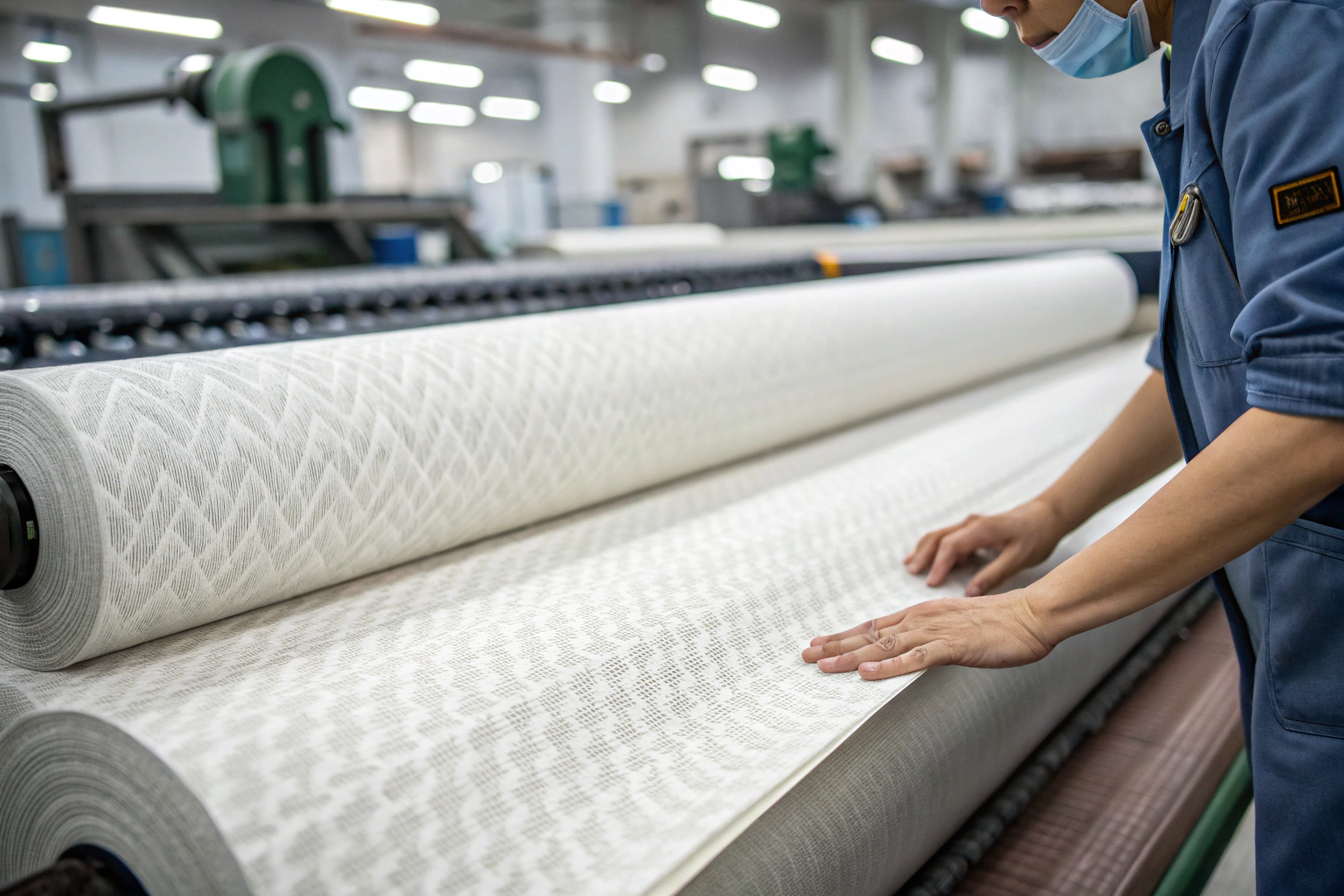
Let’s get technical for a second. Recycled polyester (rPET) chips behave differently than virgin polymer during the spinning process. The melt flow index is slightly different. If you just toss it in a standard extruder, you get broken filaments and a rough surface. We solved this problem in 2022 by adjusting our draw ratio and adding a specific spinning oil formulation during the texturizing phase. The result? Our recycled chiffon drapes exactly like virgin polyester chiffon. It’s light, it’s flowy, and you’d never know it was once a water bottle.
For a deep dive into the mechanical properties, I always point textile engineers toward this resource on evaluating the tensile strength variations between virgin PET and post-consumer rPET in woven apparel. The data shows that with proper processing, the difference is negligible. That’s our standard. (Here’s a little trade secret: if the fabric feels stiff, it’s usually because the mill didn’t clean the PET flakes properly before extrusion. We triple-wash ours.)
How to Navigate Peak Season Production for Sustainable Fabrics
Timing in the textile industry isn’t just about being efficient; it’s about survival. You can design the most beautiful eco-friendly dress in the world, but if the fabric lands in your factory on June 25th for a July delivery window, you’re dead in the water. European buyers, especially those in the fast-paced ZARA or H&M tier supply chain, live and die by the calendar. They are increasingly requesting Fumao recycled polyester because we speak their language when it comes to the Asian production cycle.
The pattern I laid out earlier—March to May madness, the August to October sprint, and the total ghost town that is Chinese New Year—is the reality of manufacturing in China. You can’t negotiate with the lunar calendar. You plan around it. A lot of new buyers or young designers get burned by this. They place a PO for recycled satin in mid-January, expecting delivery by March 1st. They forget that for three weeks in February, the country literally shuts down. Our advantage? We’ve already baked that into the conversation. We don’t wait for the client to ask about the holiday. We front-load the pre-production.

How Does Chinese New Year Shutdown Affect rPET Fabric Lead Times?
Let me give you a concrete example. Last year, a European brand (similar to the one mentioned in the opening scenario) planned their Fall/Winter order for recycled wool-blend coating with us. They finalized lab dips on December 10th. We pushed them hard—I mean, really hard—to approve the bulk lot by January 5th. Why? Because we needed to get the greige fabric woven and out of the loom before the 20th.
If we had missed that window, that fabric sits on the beam for 3-4 weeks while everyone is on holiday. Moisture can set in. Tension on the roll can create crease marks that won’t come out in finishing. When the factory reopens, there’s a backlog of a thousand other POs. Your order isn’t first in line anymore; it’s fighting with everyone else’s Spring/Summer rush. By completing pre-production 6 weeks out, we guarantee that when the workers come back on the 8th day of the new year, the fabric is literally waiting at the dye house door.
For a broader look at how to structure your sourcing calendar, check out this industry discussion on managing apparel production timelines to avoid post-CNY factory delays. It’s a common pain point, and the solution is almost always earlier communication.
What Is the Realistic Turnaround for Custom Recycled Yarn Dye?
Speed matters, but so does honesty. If you ask me for a custom recycled polyester yarn-dyed stripe with a specific GRS-certified dope dyed black yarn, I’m going to tell you the truth: Minimum 5 to 6 weeks, and that’s if we’re not in peak season. Some vendors might tell you 3 weeks just to get the order. They’re lying, or they don’t plan to hit the date.
Here’s the breakdown of where time goes in a rush situation at our facility:
| Process Stage | Standard Timing | Peak Season (Aug-Oct) | Notes / Bottleneck |
|---|---|---|---|
| Yarn Sourcing | 7-10 Days | 10-14 Days | Availability of GRS-certified spools is tight in Q3. |
| Weaving Prep | 2-3 Days | 3-5 Days | Warping machine queue is real. |
| Greige Weaving | 5-7 Days | 7-10 Days | Rapier looms run 24/6 during peak. |
| Dyeing/Finishing | 10-14 Days | 14-18 Days | Water treatment compliance slows output slightly. |
| Inspection & Pack | 3-4 Days | 4-5 Days | AQL 2.5 checks take time. |
We have a "fast track" option where we bypass the standard lab dip round if you can accept a slightly higher color tolerance (Delta E < 1.5). It saves 3 days. But we only offer that if you understand the risk. That’s the kind of real talk that European buyers appreciate—they need to calculate accurate landed cost models when factoring in expedited ocean freight vs air freight for textiles. Rushing fabric is sometimes cheaper than missing the boat.
Is Recycled Polyester Fabric Durable Enough for High-End Fashion
There’s an old stigma that "recycled" means "lower quality." I get it. Early generation rPET fabrics from five or six years ago were prone to pilling, and the colors were dull because the polymer chains were shorter. European buyers building luxury or premium contemporary brands can’t afford to have a customer return a €400 blazer because the elbows went shiny after three wears. So, is Fumao recycled polyester durable enough for that level of demand?
The short answer is yes, but only if the production method compensates for the material’s inherent weaknesses. We approach recycled polyester differently than we do virgin. We know the fiber has been through thermal and mechanical stress before. So, when we’re constructing a high-end recycled crepe or a heavy-weight satin for bridal wear, we actually increase the twist per inch (TPI) in the yarn by about 5-8%. This tightens the filament bundle and compensates for any slight loss in tenacity from the recycling process. It gives the fabric that "bounce back" that premium garments need.

How Does the Twist Level Impact Pilling in Recycled Wovens?
Pilling is the enemy. You know those little fuzz balls that ruin the look of a dress after one dinner party? That happens when loose fibers migrate to the surface and tangle. In recycled polyester, if the fiber is weak, it breaks and creates those loose ends faster.
In our CNAS lab (yes, the one I keep bragging about because we spent a lot of money to make sure our data is correct), we run the Martindale abrasion test on every new recycled construction. For a standard upholstery fabric, we aim for 30,000+ rubs. For apparel, 15,000+ rubs is the sweet spot. By adjusting the yarn twist—specifically moving from a standard 800 TPM to 860 TPM on our 75D recycled yarn—we’ve seen pilling ratings improve from a Grade 3 (moderate pilling) to a Grade 4-5 (slight/no pilling). This is the kind of technical detail that matters when you’re competing with Italian mills. You can read more about the specifics of textile testing from this overview of Martindale abrasion and pilling test standards for performance fabrics.
Can Recycled Polyester Achieve Deep, Rich Black Shades
Black is the bread and butter of fashion. And this is where recycled poly used to fail miserably. It looked milky or grayish. That’s because the impurities in the recycled chips scatter light differently than virgin polymer. To fix this, we don’t just rely on "more dye." We rely on the finishing process.
We use a specific reduction clearing process after dyeing disperse blacks. It’s an extra step—it adds about 45 minutes to the dye cycle and uses more water (though we recycle 70% of our water in the dye house). But the result is a black that is deep, neutral, and stays black after washing. We recently did a 3,000-yard run of recycled stretch woven for a UK client’s premium suiting line. They compared our Fumao Black side-by-side with their Italian virgin wool blend. The depth of shade was indistinguishable. That’s the only reason they placed a repeat order six weeks later.
For those interested in the chemistry, disperse dyeing of polyester microfiber often requires specific carriers and reduction clearing methods to achieve optimal wash fastness. This is a great resource for understanding why some blacks fade and some don’t.
What Are the Competitive Costs for Wholesale Eco Fabric
Let’s cut to the chase. You care about the planet, but you also care about your bottom line. And if you’re sourcing from China, you’re acutely aware of the tariff situation. We’ve had a lot of sleepless nights here in Keqiao worrying about Section 301 tariffs and EU carbon taxes. But here’s the reality check I give every new client from the US or Europe: The cost of the fabric itself is only part of the story. The total landed cost is what kills margins.
European buyers are flocking to Shanghai Fumao for recycled polyester because we’ve engineered our supply chain to be tariff-efficient and logistically predictable. Since a significant portion of our man-made fiber production (polyester, nylon) falls outside the specific categories hit hardest by recent US tariff expansions (unlike many cotton goods), we can offer a pricing structure that is stable. More importantly, our location in Keqiao means we’re 30 minutes from Ningbo Port. That’s not just a fun fact; it means the trucking fee from the mill to the container yard is about $150 USD, not $800 like it would be from an inland province. Those savings add up when you’re moving 40-foot containers.

How Do I Avoid Hidden Fees When Importing Fabric from China
Here is the number one question I get from Ron in the US and similar buyers in the EU: "What’s the real price after everything?" Nobody likes a surprise invoice for "Port Security Fee" or "Congestion Surcharge" that wasn’t on the proforma. We switched to DDP (Delivered Duty Paid) terms for a lot of our smaller European clients. It’s a game-changer.
Instead of you having to find a customs broker in Rotterdam who doesn’t speak English well, we handle it from our end. We build the duty and VAT into the price per meter. It’s slightly higher on paper, but you sleep better at night knowing there’s no hold-up at the border. We use a bonded warehouse partner in the Netherlands to pre-clear goods. This is part of the "Silk Road Keqiao" initiative we’re plugged into. For a deep dive into the complexities of logistics, I highly recommend reading through this discussion on common hidden fees in international container shipping and how to audit your freight invoice. You’ll see line items there you never knew existed.
Is There a Price Difference Between GRS and Standard Polyester
Yes. And I’m not going to pretend there isn’t. Recycled polyester chip is currently trading about 15-20% higher than virgin PTA/MEG derived chip. The purification process costs more. The certification audit costs more.
However, the gap is narrowing. And here’s the thing European buyers have figured out: The perception value of "Made with Recycled Materials" allows them to command a higher retail price point. If a garment made with standard poly sells for $49.99, the same garment with a Fumao GRS hangtag sells for $59.99. That extra $10 covers the material premium three times over. I had a buyer from Berlin tell me in February, "The eco-upcharge is the only margin I’ve kept this year." That stuck with me. It’s not just about cost; it’s about value recovery. If you’re still on the fence about the investment, check out the market trends on consumer willingness to pay a premium for sustainable apparel in 2025. The data supports the switch.
Why Do European Designers Trust Shanghai Fumao Development
Trust in this business isn’t built on a slick website or a LinkedIn post. It’s built in the sample room. When we say "development," we’re not just talking about copying a Pantone color. We’re talking about engineering a fabric from the ground up to solve a specific problem for a designer’s vision. European designers are some of the pickiest, most detail-oriented people on the planet—and I say that with the utmost respect because that’s how we get better.
Just last month, a designer from Copenhagen sent us a sketch for a deconstructed blazer. She wanted structure, but she wanted it to be soft structure. No fusing. And it had to be 100% recycled polyester. That’s a tough ask because recycled poly can be limp without some help. We developed a special weave structure for her—a double-beam construction using a heavier denier in the warp for memory and a finer denier in the weft for drape. We sent her a 20x20cm handloom sample in 48 hours. She called it "perfect." That’s the kind of relationship we want. We don’t just want to sell you fabric; we want to be the reason your collection works.

How Fast Can You Develop a Custom Recycled Print Design
Speed to market is everything. You see a trend on the runway in Milan, and you need a custom floral print on recycled georgette in your hands yesterday. Our digital printing facility changed the game for us. We don’t need to engrave screens anymore for small runs.
Here’s the workflow we use for a European rush job:
- Artwork Received (9:00 AM CET / 4:00 PM CST): Our team in Keqiao reviews the AI file immediately.
- Color Calibration (5:00 PM CST): We match the digital file to our printer’s ICC profile to ensure the red on screen looks like the red on fabric.
- Strike-Off Printing (Next Day 10:00 AM CST): We print 2 meters of the design on actual production fabric (not paper).
- Steaming & Washing (Next Day 2:00 PM CST): We fix the dye to ensure colorfastness.
- Courier Pickup (Next Day 5:00 PM CST): The swatch is on a plane to Paris or New York.
That’s less than 30 hours from email to DHL pickup. (I have to brag here: Our sample room runs on caffeine and sheer willpower during fashion week months). We’ve invested in high-speed digital printers from MS and Reggiani, which allow us to do this without breaking a sweat. If you want to understand the tech behind the speed, this article on the advantages of digital textile printing for reducing water waste and accelerating sample development explains why it’s superior to screen printing for this phase.
What Technical Specs Do You Need for Bulk Production Approval
I’m going to let you in on a conversation I have at least three times a week. A buyer emails: "Hi, I need 5,000 meters of recycled stretch satin." I reply: "Great, what’s the stretch requirement? 10%? 20%? Mechanical stretch from weave or spandex content? What’s the acceptable shrinkage? 3%? 5%?"
If you can’t answer those questions, you’re not ready for bulk. European designers trust us because we ask these questions before we take your money. We provide a detailed Tech Pack template that covers:
- Fiber Content (%) : Must be verified by a 3rd party lab (we use SGS or ITS).
- Weight (GSM) : Tolerance of +/- 5%.
- Width (Inches) : Cuttable width vs. Total width.
- Color Fastness : To light, washing, and crocking.
We had a situation in August 2024 with a UK client. They approved a lab dip on a woven substrate, but the bulk order was for a knit construction. The color looked completely different. We caught it at the greige stage and halted production. That mistake would have cost them £40,000 in dead stock. We saved it. That’s not just service; that’s expertise.
For those looking to tighten up their own internal processes, I found this guide on how to create a comprehensive textile specification sheet for apparel manufacturing incredibly useful. It walks you through exactly what your factory needs from you to avoid these costly errors.
Conclusion
So, why are more European buyers requesting Fumao recycled polyester? It’s a combination of hard science and soft skills. On the science side, we’ve mastered the art of making a post-consumer bottle feel like a luxurious, durable, and deep-dyed fashion fabric. We’ve invested in the CNAS lab to prove it and the digital printers to speed it up. On the soft skills side, we’ve learned to navigate the chaotic rhythm of Chinese manufacturing—the Chinese New Year shutdown, the Golden Week crunch, the peak season bottlenecks—and we use that knowledge to protect your calendar.
We understand the language of EU compliance. We know that a GRS certificate isn’t just a piece of paper; it’s the key to unlocking your brand’s sustainability story and avoiding a customs nightmare in Hamburg or Rotterdam. And perhaps most importantly, we understand the economics. We’re not the cheapest option on Alibaba, and we don’t want to be. We are the option that ensures your fabric arrives on time, on spec, and on budget, with a total landed cost that actually makes sense.
If you’re tired of the guesswork and the hidden fees, and you want a partner who treats your fabric order like it’s as important as you do, let’s talk. We have 30,000+ designs in stock, but we’re even better at creating the one that’s only in your head.
For any inquiries regarding your next production run—whether it’s a full container load of recycled twill or a small batch of custom-printed silk blend—please reach out to our Business Director, Elaine. She’s been with us for over a decade and knows more about fabric than most people know about their own families. You can email her directly at: elaine@fumaoclothing.com. We’re here to help you weave something incredible.