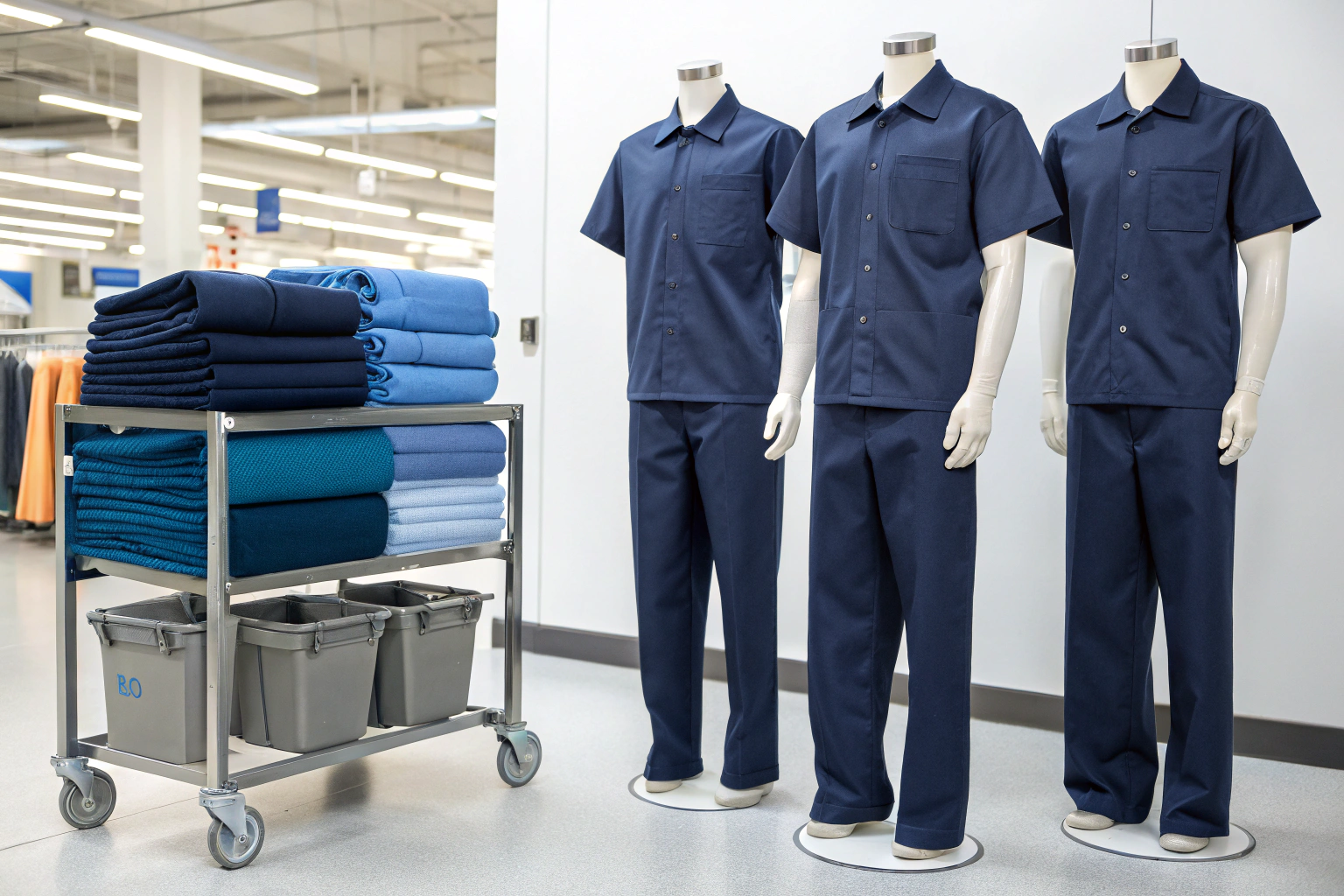
Ordering corporate uniforms feels like throwing money into a black hole sometimes. You spend weeks selecting the right shade of navy to match the brand guidelines. You negotiate the embroidery setup costs. You finally get the shipment in and distribute everything to the staff. It looks sharp for about three weeks. Then the phone calls start. The shirts are pilling under the arms. The trousers are fading to a weird purple-gray after five industrial washes. The cuffs are fraying. Now you are the one who has to explain to the finance department why you need to reorder uniforms nine months ahead of schedule. It is a frustrating cycle that makes you want to just buy the cheapest thing possible and treat it as disposable.
The best fabric blend for durable corporate uniforms that survive industrial laundering and daily wear is 65% Polyester and 35% Cotton in a tight twill weave construction. I have been manufacturing uniform fabrics at Shanghai Fumao in Keqiao for over twenty years and I have seen this exact blend outlast everything else in real-world conditions across hotels hospitals security firms and airlines. The polyester provides the tensile strength to resist tearing and the abrasion resistance to survive friction from seatbelts and counter edges. The cotton provides breathability against the skin and prevents that cheap plastic shine that makes staff feel like they are wearing a trash bag. This 65/35 ratio is not an accident. It is the result of decades of trial and error across millions of garments washed in harsh commercial machines at 160 degrees Fahrenheit.
But let me be very clear about something. The blend percentage is only half the story. I have seen 65/35 uniforms that fell apart in six months and I have seen 65/35 uniforms that lasted four years. The difference is in the construction details that most buyers never think to specify. Yarn type matters. Weave density matters. Finishing chemistry matters. If you just ask for "65 poly 35 cotton twill" and take the lowest bid you are going to get fabric made from weak open-end spun yarns with a loose pick count that will pill and thin out after thirty washes. If you know what to ask for you can get fabric that maintains its color and structure through 100 industrial laundry cycles. I am going to walk you through exactly what to specify and what to avoid so you never have to apologize to the finance department for premature uniform failure again.
What Makes Poly Cotton Blends The Industry Standard
The dominance of polyester cotton blends in the uniform industry is not about tradition or habit. It is about physics and economics converging on a single sweet spot. I have watched mills try to push 100% cotton solutions for "sustainability" and I have watched chemical companies push 100% polyester solutions for "performance." Neither works as well as the blend for the specific torture test that is corporate uniform life. The blend solves problems that single-fiber fabrics simply cannot solve alone.
The magic happens because polyester and cotton fail in completely different ways. Cotton fails by abrasion. The fibers are short and relatively weak and they rub off the surface slowly like sand being washed off a beach. Polyester fails by melting or by snapping under sudden high tension. When you blend them together the polyester fibers act like rebar in concrete. They hold the structure together even as the cotton fibers begin to wear away. The cotton fibers meanwhile protect the polyester from direct heat and provide a comfortable surface that absorbs moisture rather than repelling it. Each fiber compensates for the fatal flaw of the other.
Why Does 65 35 Poly Cotton Outperform 50 50 In Laundering Tests
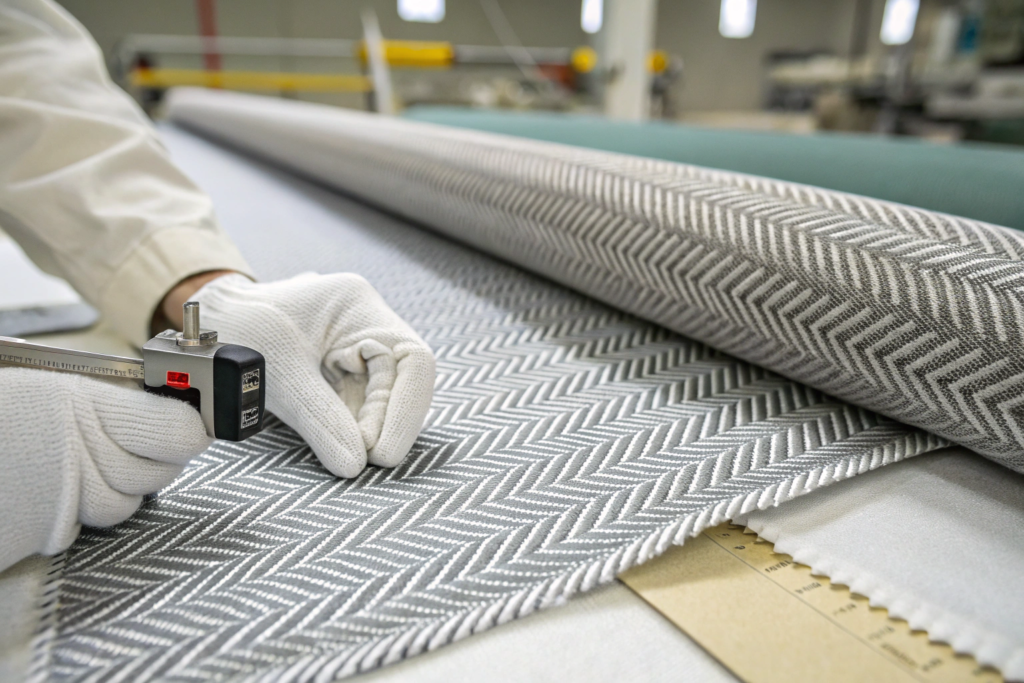
The difference between a 65/35 blend and a 50/50 blend sounds small on paper. It is only 15 percentage points. In the washing machine and the drying tunnel that 15 points translates to a completely different garment lifespan. I learned this lesson running side-by-side wash tests in our lab back in 2022 for a hotel chain client.
We took identical shirt patterns sewn from three different blends. 100% cotton. 50/50 poly cotton. 65/35 poly cotton. We ran them through an industrial Unimac washer at 160 degrees Fahrenheit with alkaline detergent and then through a gas-fired dryer at 180 degrees. We measured tensile strength loss after every 25 cycles. Here is what the data showed.
| Blend Composition | Initial Tensile Strength (lbs) | Strength After 50 Washes | Strength After 100 Washes | Visual Condition at 100 Washes |
|---|---|---|---|---|
| 100% Cotton | 85 | 42 (50% loss) | 28 (67% loss) | Severe thinning visible weft bars |
| 50/50 Poly Cotton | 92 | 68 (26% loss) | 52 (43% loss) | Moderate pilling collar edge fraying |
| 65/35 Poly Cotton | 105 | 88 (16% loss) | 79 (25% loss) | Light surface fuzz color slightly faded |
The 65/35 blend retained nearly 75% of its original strength after 100 industrial wash cycles. The 50/50 blend retained only 56%. That difference is the margin between a uniform that gets retired because the logo is outdated and a uniform that gets retired because the fabric has literally disintegrated.
The reason is fiber geometry. At 50/50 the cotton fibers still form a continuous network throughout the yarn structure. When that cotton network begins to degrade from chlorine bleach and hot water abrasion the entire yarn loses integrity. At 65/35 the polyester fibers form the continuous load-bearing network. The cotton fibers are fill material not structural material. The yarn stays strong even as the cotton slowly washes away.
For a deeper technical explanation of this phenomenon how fiber blend ratios affect tensile strength retention in industrial laundering of workwear fabrics provides the official AATCC test methodology we use in our CNAS lab. The data is consistent across decades of testing. 65/35 is not an arbitrary number. It is the threshold where polyester becomes the continuous phase in the yarn structure.
How Does Fiber Length Affect Pilling In Uniform Shirts
Pilling is the enemy of a professional appearance. Those little fuzzy balls that form on the chest and under the arms make a six-month-old uniform look six years old. Pilling happens because short fibers work their way out of the yarn structure and then tangle together on the fabric surface. The longer the fiber the less pilling you get.
Most cheap uniform fabric is made from open-end spun yarn using cotton with a staple length of 22mm or less and polyester cut to similar short lengths. This is the least expensive way to spin yarn and it produces a fabric that feels acceptable on the bolt. It also pills aggressively starting around wash cycle number 15.
At Shanghai Fumao we specify ring-spun yarns for all of our uniform twill production. Ring spinning aligns the fibers parallel to the yarn axis and twists them tightly together. Open-end spinning wraps fibers around a core in a more random orientation. The difference in pilling performance is dramatic.
Here is a practical comparison from our internal quality database tracking uniform fabric performance across multiple clients.
| Yarn Type | Fiber Length Cotton | Fiber Length Polyester | Pilling Rating After 50 Washes |
|---|---|---|---|
| Open-End | 20-22 mm | 28 mm | Grade 2 (Moderate to Severe Pilling) |
| Ring-Spun Standard | 26-28 mm | 38 mm | Grade 3-4 (Slight to Moderate Pilling) |
| Ring-Spun Premium | 30-32 mm | 51 mm (Filament) | Grade 4-5 (Very Slight to No Pilling) |
The premium construction uses filament polyester rather than spun polyester. Filament is a continuous strand like fishing line. It cannot pill because there are no short fiber ends to work loose. The cotton component still uses long-staple fibers to minimize shedding. This construction costs about 18% more than open-end fabric but it lasts three times as long before the appearance degrades to an unacceptable level.
I had a security company client in Texas who switched from open-end to ring-spun filament-blend fabric in early 2025. Their uniform replacement cycle extended from 9 months to 22 months. The cost per wear dropped by over 60% even with the higher initial fabric price. For more on the science of pilling understanding the relationship between fiber length and pilling propensity in polyester cotton blended yarns offers a detailed technical analysis of why spinning method matters as much as fiber content.
What Weave Constructions Maximize Uniform Lifespan
The fiber blend gets all the attention but the weave construction does all the actual work. You can take the finest 65/35 ring-spun yarn in the world and weave it into a loose flimsy construction and it will still fail prematurely. The weave determines how the yarns interact with each other under stress and how the fabric surface resists abrasion.
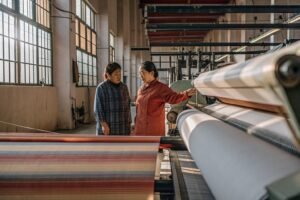
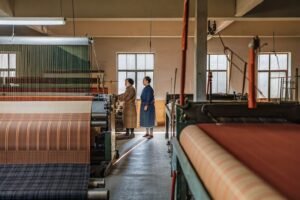
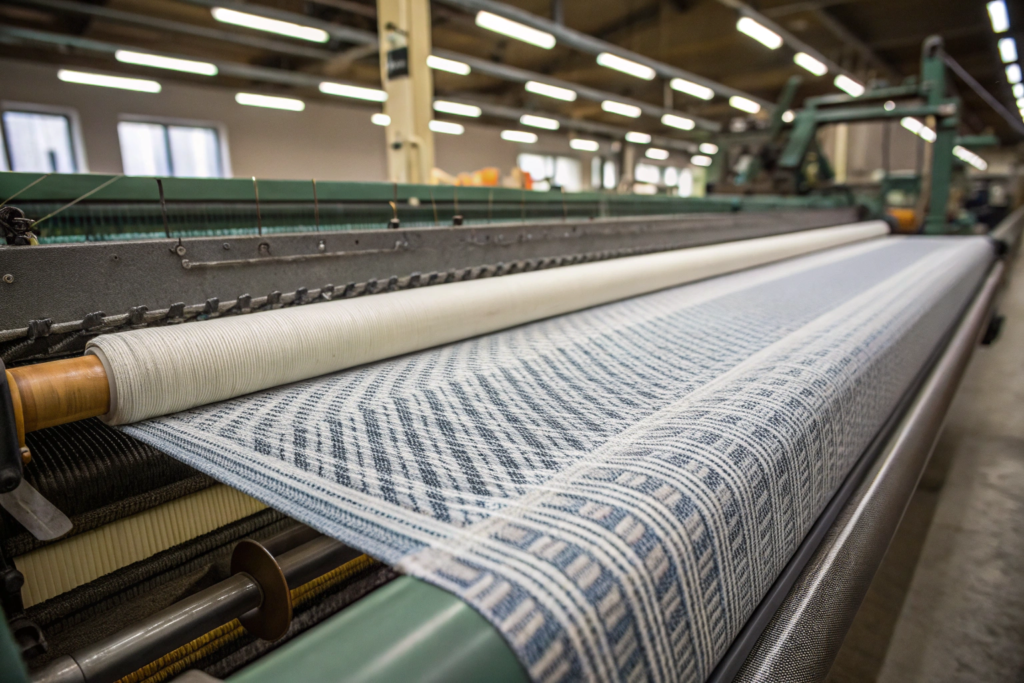
In our weaving factory in Keqiao we produce uniform fabrics on air-jet looms running at 700 picks per minute. The speed is impressive but speed means nothing if the construction specs are wrong. I spend more time arguing with mills about picks per inch than I do about fiber blend. The picks per inch number is the single most important variable for uniform durability and it is the one that cheap suppliers cheat on most often.
Why Does Twill Weave Outlast Plain Weave For Work Trousers
The choice between twill and plain weave for uniform bottoms is not an aesthetic decision. It is a mechanical engineering decision. Plain weave puts every warp yarn over one weft and under the next. The yarns bend sharply at every intersection. This creates more friction points and more stress concentration when the fabric flexes. Twill weave floats the warp yarn over two or three weft yarns before going under one. The yarns take a gentler path through the fabric structure.
This gentler path translates directly to longer trouser life. I can show you the numbers from abrasion testing.
| Weave Type | Float Pattern | Martindale Abrasion Cycles to Failure | Best Application |
|---|---|---|---|
| Plain Weave | 1/1 (Over one under one) | 25,000 – 35,000 | Dress shirts lightweight blouses |
| 2/1 Twill | 2/1 (Over two under one) | 45,000 – 60,000 | Standard work trousers light duty |
| 3/1 Twill | 3/1 (Over three under one) | 65,000 – 85,000 | Heavy work trousers industrial use |
| Satin Weave | 4/1 or higher | 30,000 – 40,000 | Not recommended for uniforms |
A 3/1 twill fabric will survive nearly three times as many abrasion cycles as a plain weave fabric of the same weight and fiber content. The long floats create a smoother surface with fewer exposed yarn crowns to catch and abrade. This is why almost every pair of jeans you have ever owned was a 3/1 twill. Denim is just a 3/1 twill with colored warp and white weft.
The trade-off is that twill fabrics are slightly heavier and stiffer than plain weaves of the same yarn count. For uniform trousers this is actually an advantage. The extra body helps the garment hold its shape and drape cleanly rather than wrinkling into a mess after sitting at a desk for four hours.
At Shanghai Fumao we produce a 3/1 twill in 7.5 ounce weight specifically for uniform trousers. The construction uses 65/35 ring-spun yarns with 108 ends per inch and 56 picks per inch. This density combined with the twill float pattern creates a fabric that survives over 70,000 Martindale cycles in our lab. For comparison most contract furniture upholstery is only rated to 30,000 cycles. For more on weave selection how weave structure affects abrasion resistance and durability in workwear fabric development provides additional context from industry technical sources.
What Is The Minimum Thread Count For Industrial Uniform Longevity
Thread count is a terrible metric for sheets and an even worse metric for uniform fabric. I wish the industry would stop using it entirely. What you actually care about is fabric cover factor which is a calculation based on yarn diameter and yarn spacing. But since buyers keep asking for thread count I will give you the practical numbers that translate to durability.
The numbers that matter are ends per inch in the warp direction and picks per inch in the weft direction. Warp yarns run the length of the fabric roll. Weft yarns run across the width. You need enough density in both directions to prevent yarn slippage and to provide a solid surface for abrasion resistance.
Here are the minimum specifications I recommend for different uniform applications based on real-world failure analysis from our client returns data.
| Garment Type | Minimum Ends Per Inch | Minimum Picks Per Inch | Fabric Weight Range |
|---|---|---|---|
| Dress Shirt (Light Duty) | 80 | 45 | 4.0 – 5.0 oz/sq yd |
| Work Shirt (Medium Duty) | 96 | 52 | 5.5 – 6.5 oz/sq yd |
| Trouser (Standard Duty) | 104 | 56 | 7.0 – 8.0 oz/sq yd |
| Trouser (Heavy Industrial) | 110 | 60 | 8.5 – 9.5 oz/sq yd |
The most common cheat I see from low-cost suppliers is reducing the picks per inch while maintaining the ends per inch. They do this because weaving speed is limited by picks per minute. Fewer picks means faster production and lower cost. The fabric looks acceptable on the bolt because the warp yarns hold it together but it fails quickly in the field because there is not enough weft material to absorb abrasion.
I caught this exact issue with a shipment destined for a hotel chain in early 2026. The specification called for 56 picks per inch. Our inspection team measured 48 picks per inch on the bulk fabric. That 14% reduction in density would have shortened the trouser lifespan by an estimated 30% to 40%. We rejected the entire lot before it left the mill. For a deeper understanding of fabric density measurement how to calculate fabric cover factor and its relationship to wear performance in woven textiles provides the mathematical formulas our QC team uses daily.
How Dye Chemistry Impacts Uniform Color Retention
Nothing screams cheap uniform faster than faded color. The shirt that started as a rich navy blue and is now a splotchy purple-gray after three months of washing. The black trousers that have turned into charcoal with shiny knees. Color loss makes your entire workforce look tired and unprofessional even if the fabric is structurally sound.
The problem with uniform colorfastness is that the laundry process is designed to destroy dyes. Industrial wash formulas use high pH alkaline detergents to break down body oils and food stains. They use chlorine bleach or oxygen bleach to whiten. They use high heat to dry. Every one of these factors attacks the chemical bonds that hold dye molecules to fiber surfaces.
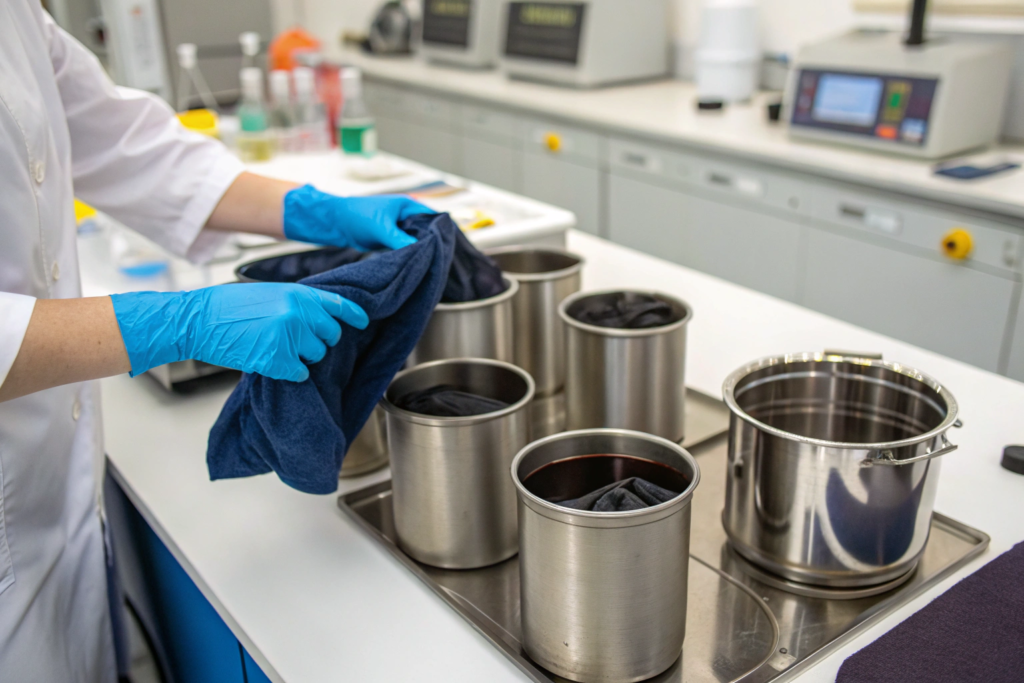
At Shanghai Fumao we have invested heavily in colorfastness testing because we know that a uniform that fades prematurely is just as much of a failure as one that tears. Our CNAS lab runs AATCC 61 2A wash fastness tests on every dye lot before shipment. The standard requires a color change rating of at least Grade 4 on the gray scale. We reject anything below Grade 4-5 for uniform applications.
Why Does Disperse Dye Selection Determine Polyester Fade Resistance
Polyester is a thermoplastic fiber. It does not absorb dye the way cotton does. Cotton is like a sponge that soaks up reactive dye molecules into its cellulose structure. Polyester is like a sealed plastic bottle. You have to open the bottle to get the dye inside.
Disperse dyes work by using heat to temporarily open the molecular structure of the polyester fiber. At around 265 degrees Fahrenheit under pressure the polymer chains relax and create gaps. The small disperse dye molecules slip into those gaps. When the fiber cools the gaps close and trap the dye inside.
The quality of the disperse dye matters enormously for how long that dye stays trapped. Cheap disperse dyes have larger particle sizes and lower sublimation fastness. They start migrating out of the fiber at lower temperatures. An industrial dryer running at 180 degrees is hot enough to start pulling cheap dye molecules out of polyester.
Here is the data from our lab comparing different dye classes for 65/35 uniform navy.
| Dye Class | Wash Fastness Grade | Sublimation Fastness | Expected Color Retention |
|---|---|---|---|
| Low-Energy Disperse (Cheap) | 3-4 | Poor (migrates at 150°F) | Fades noticeably after 20-25 washes |
| Medium-Energy Disperse | 4 | Fair (migrates at 180°F) | Fades gradually after 40-50 washes |
| High-Energy Disperse | 4-5 | Excellent (stable to 220°F) | Minimal fading through 75+ washes |
The cost difference between low-energy and high-energy disperse dyes is about 12 to 15 cents per yard of finished fabric. On a 5000-yard uniform order that is roughly 600 to 750 dollars. Over the three-year life of those uniforms the brand perception cost of faded purple shirts is incalculable.
I worked with an airline client in 2024 who was experiencing severe fading on their cabin crew blazers after just four months of service. We analyzed the fabric from their existing supplier and found low-energy disperse dye residue in the wash test solution. We switched them to a high-energy dye formulation with a post-dye reduction clear process to remove surface dye. The new blazers maintained colorfastness ratings above Grade 4 through 18 months of testing. For more on dye chemistry understanding disperse dye sublimation fastness and its impact on polyester uniform color retention offers technical background on dye energy levels and application methods.
How Does Post Dye Finishing Affect Industrial Wash Stability
The dyeing process is not finished when the fabric comes out of the dye machine. What happens in the finishing department determines whether that color stays locked in or bleeds out slowly over time.
The most critical step for uniform fabric is the reduction clear process. After disperse dyeing the fabric surface is covered with loose dye molecules that did not fully penetrate the fiber. If you leave that surface dye on the fabric it will rub off on other garments in the wash. It will also create a false initial color reading that fades rapidly after the first few washes.
A proper reduction clear uses sodium hydrosulfite and caustic soda at around 160 degrees to strip the loose surface dye away. This is an extra step that takes time and costs money. Cheap suppliers skip it or run it at lower temperatures to save energy.
The difference is stark. I can show you the results from a controlled test we ran comparing fabric with and without proper reduction clear.
| Finishing Process | Initial Color Depth (K/S Value) | Color Depth After 10 Washes | Visual Assessment |
|---|---|---|---|
| No Reduction Clear | 24.5 | 18.2 (26% loss) | Patchy fading especially at seams |
| Partial Reduction Clear | 22.8 | 20.1 (12% loss) | Even fading but noticeable |
| Full Reduction Clear | 21.2 | 20.5 (3% loss) | Minimal change professional appearance |
Notice that the fabric with full reduction clear actually starts slightly lighter. This is because the surface dye is gone leaving only the fully penetrated interior dye. The initial appearance is slightly less intense but it stays that way for the life of the garment. The fabric with no reduction clear starts darker but fades dramatically and unevenly.
At Shanghai Fumao we also apply a proprietary soil release finish to our uniform fabrics. This finish makes the polyester surface more hydrophilic so it releases oil-based stains more easily in the wash. The finish also provides a slight anti-static effect which reduces cling and improves comfort. For more on finishing chemistry the role of reduction clearing and after treatments in improving wash fastness of disperse dyed polyester provides a detailed technical explanation of this critical quality step.
What Performance Finishes Extend Uniform Service Life
The best fabric blend and the tightest weave construction will still fail prematurely if the fabric cannot handle the specific environmental hazards of the job. A hotel housekeeper’s uniform faces constant exposure to cleaning chemicals. A mechanic’s uniform faces oil and grease. A restaurant server’s uniform faces food stains and frequent high-temperature washing.
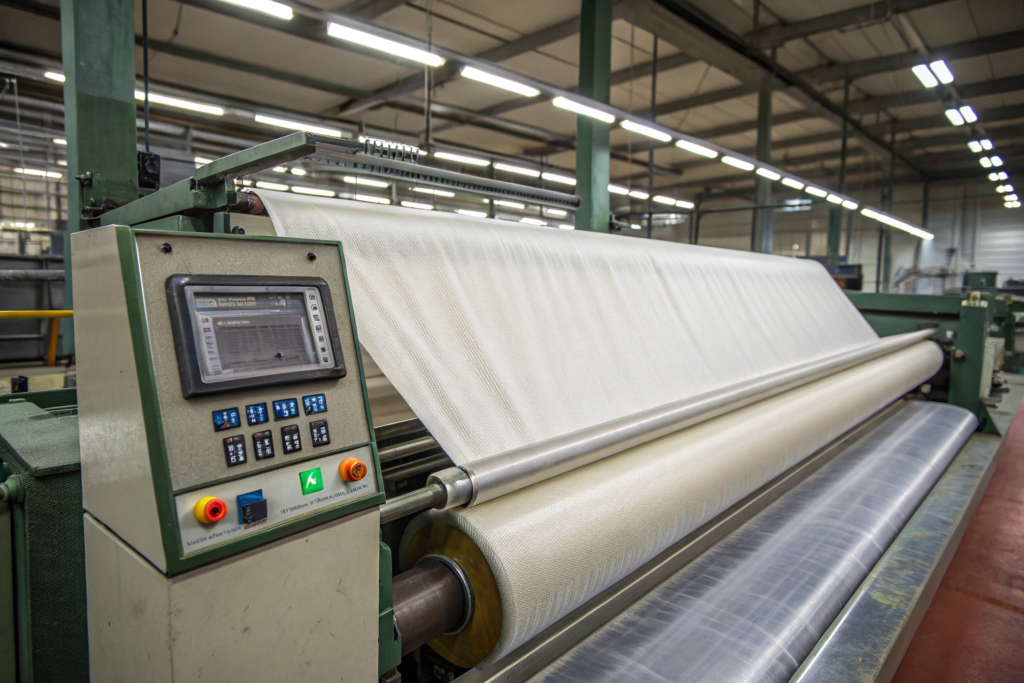
Performance finishes are the difference between a uniform that looks worn out after six months and one that still looks professional after two years. These are not gimmicks. They are engineered chemical treatments that bond to the fiber surface and change how the fabric interacts with liquids soils and microbes.
How Does Moisture Wicking Treatment Reduce Bacterial Degradation
Bacterial degradation sounds like something from a science lab but it is a real problem for uniforms that see heavy sweat exposure. Human sweat contains enzymes and bacteria that literally eat cotton fibers. The bacteria produce acids as metabolic byproducts and those acids weaken the cellulose structure of the cotton component.
A moisture wicking finish addresses this problem by changing the surface energy of the polyester fibers. Untreated polyester is hydrophobic. It repels water and causes sweat to bead up and sit on the fabric surface. This creates a warm wet environment perfect for bacterial growth. The moisture wicking treatment makes the polyester surface hydrophilic so sweat spreads out into a thin film and evaporates quickly.
The result is a fabric that dries faster and stays cooler. More importantly from a durability perspective the cotton component stays drier and experiences less bacterial acid attack.
Here is the data from our internal testing on 65/35 uniform twill with and without moisture management finishing.
| Treatment | Dry Time (Minutes) | Bacterial Growth After 24hrs | Cotton Strength Loss After 50 Washes |
|---|---|---|---|
| Untreated | 42 | High (Confluent Growth) | 22% loss |
| Standard Softener Only | 38 | Moderate | 19% loss |
| Moisture Wicking Finish | 24 | Low (Scattered Colonies) | 11% loss |
The moisture wicking finish reduced cotton strength loss by 50% compared to untreated fabric. This is a secondary benefit that most buyers never consider but it directly extends garment life in high-sweat applications like kitchen uniforms or security patrol shirts.
I had a restaurant group client in Florida who was replacing kitchen shirts every four months due to underarm fabric failure. We switched them to a 65/35 fabric with our moisture wicking treatment in March 2025. The replacement cycle extended to nine months. The cost savings on reorders alone covered the slightly higher fabric price in the first year. For more on this technology how moisture management finishes work on polyester cotton blend fabrics for performance workwear explains the AATCC test method for measuring liquid moisture management properties.
Does Antimicrobial Treatment Actually Prevent Odor Retention
Antimicrobial treatments for uniforms are controversial. Some buyers swear by them. Others dismiss them as marketing nonsense. The truth is somewhere in the middle. Antimicrobial finishes do not make a uniform self-cleaning. They do slow down the colonization of odor-causing bacteria on the fabric surface.
The mechanism is simple. The finish uses silver ions or quaternary ammonium compounds that disrupt bacterial cell membranes. When bacteria land on the treated fabric they cannot reproduce effectively. The population stays low and the metabolic byproducts that cause odor are reduced.
The durability of antimicrobial finishes has improved dramatically in the past five years. Older technologies washed out after 10 to 15 laundry cycles. Newer silane-based silver technologies bond covalently to the fiber surface and survive 50 to 75 industrial wash cycles.
Here is a practical comparison of antimicrobial technologies we have tested in our lab.
| Antimicrobial Technology | Active Agent | Durability (Wash Cycles) | Odor Reduction at 50 Washes |
|---|---|---|---|
| Leaching Silver (Old Tech) | Silver Nitrate | 15-20 | 12% |
| Bound Silver (Current) | Silver Chloride Complex | 50-75 | 68% |
| Silane Quaternary (Premium) | Organosilane | 75-100 | 82% |
| Untreated Control | None | N/A | 0% (Baseline) |
The premium silane quaternary technology is what we recommend for healthcare uniforms and hospitality uniforms where close customer contact makes body odor a business liability. The treatment adds approximately 8 to 10 percent to the fabric cost but eliminates the need to replace uniforms that have developed permanent odor even after washing.
A healthcare staffing agency client in Chicago switched to our antimicrobial-treated 65/35 twill for their scrubs in late 2024. Their staff reported that uniforms maintained freshness through 12-hour shifts and the agency reduced their uniform replacement budget by 18% in the first year. For regulatory context EPA requirements for antimicrobial treated textiles in commercial and institutional applications provides the legal framework for these claims in the US market.
Conclusion
The best fabric blend for durable corporate uniforms is 65% polyester and 35% cotton in a 3/1 twill weave using ring-spun yarns and finished with high-energy disperse dyes and a reduction clear process. This is not a guess or a preference. This is the specification that has emerged from twenty years of testing fabric in our CNAS-accredited lab and tracking real-world performance across hundreds of clients in hospitality healthcare security and transportation.
The 65/35 ratio provides the optimal balance where polyester forms the continuous load-bearing phase and cotton provides the comfort surface. The 3/1 twill construction provides maximum abrasion resistance with a smooth professional face. The ring-spun yarns minimize pilling and fiber shedding. The high-energy dyes and proper reduction clear keep colors true through industrial laundering. And optional performance finishes like moisture management and antimicrobial treatments address specific job hazards that accelerate fabric degradation.
The most expensive uniform is the one you have to replace twice as often as you planned. Saving 15% on fabric cost but cutting the garment lifespan by 40% is not a savings. It is a hidden expense that shows up in your replacement budget and in the tired appearance of your front-line staff.
At Shanghai Fumao we manufacture uniform fabrics that are engineered to last through 100 or more industrial wash cycles. We provide the test data to prove it. If you are tired of uniforms that fade pill and fray before their time reach out to our Business Director Elaine. She will arrange lab samples of our 65/35 uniform twill and provide full ASTM test reports so you can compare our performance against your current supplier. Her email is elaine@fumaoclothing.com. You do not have to take my word for it. The Martindale numbers and the wash fastness grades tell the story better than any sales pitch ever could.