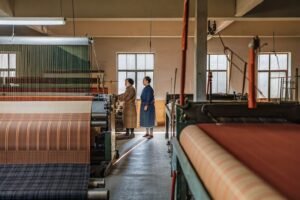
Let’s be real. Ordering fabric from overseas can feel like rolling the dice. You find a great price, the hand feel is perfect, but there’s that nagging voice in the back of your mind. "Will this pass customs? Will I get sued because a dress caught fire at a barbecue?" That fear is real. I’ve seen American buyers lose sleep over a single email from the Consumer Product Safety Commission (CPSC). That’s not just a headache; it’s a business killer. At Shanghai Fumao, we’ve spent over 20 years making sure that voice stays quiet. We don’t just ship fabric; we ship peace of mind wrapped in a Class 1 flammability certificate.
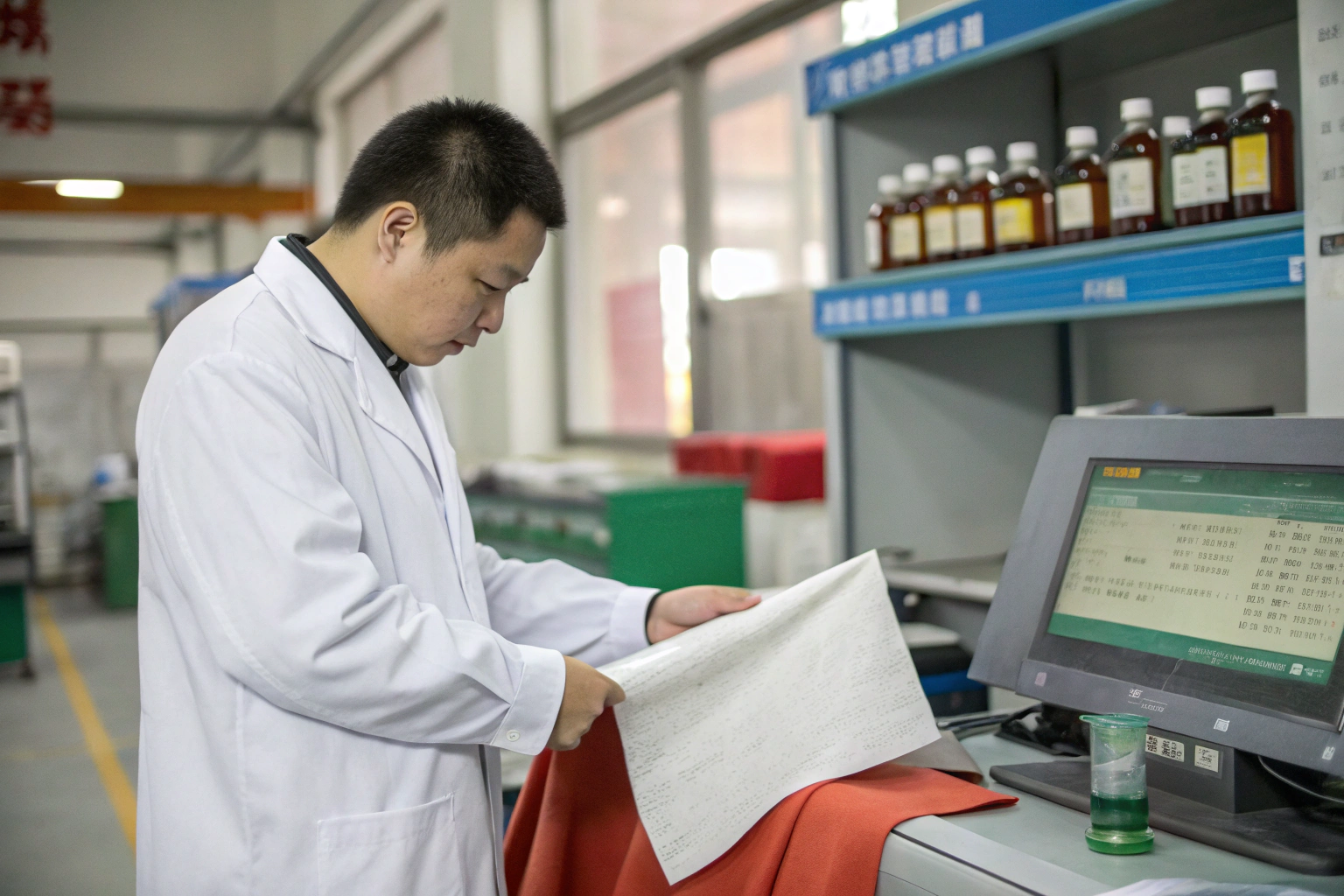
We ensure compliance with US flammability standards by operating a CNAS-accredited laboratory right here in our Keqiao facility. We test every single batch of fabric using the exact ASTM methods required by 16 CFR Part 1610 and 1611. We don’t rely on "estimates" or "similar fabric data." We rely on hard data generated from vertical flame tests and 45-degree incline tests. If the char length is supposed to be under 3.5 inches, we make sure it’s 3.2 or less. We maintain a 98% first-time pass rate on third-party SGS/ITS verification because we do the homework before the final exam.
Now, you might be thinking, "Okay, but that’s just a sales pitch." I get it. But stick with me here. I want to pull back the curtain on the Keqiao textile cluster. I want to show you the actual test equipment we use, the chemical processes we avoid, and the specific data we track. Whether you’re a big brand sourcing how to ensure bulk fabric production meets ASTM D1230 standards or a small designer worried about understanding 16 CFR part 1610 exemption for plain surface fabrics, this is the real story of how we keep our clients’ goods moving through US ports without a hitch. (And yes, I’m going to name drop some specific chemicals we hate.)
When Do Peak Seasons Affect US Flammability Lab Turnaround Times?
Timing is everything in this business. You can have the perfect flame-retardant (FR) finish on a poly-cotton blend, but if the lab report lands on your desk two days after the container sailed, you’re stuck. And here in China, the clock ticks differently depending on the month. I can’t tell you how many panicked emails I’ve received in late September from clients who forgot about Golden Week. We have to plan lab capacity like we plan loom schedules.
If you’re importing to the US, you need to bake at least an extra 7 to 14 business days into your sourcing calendar for flammability certification during our peak production windows (March-May and August-October). Let me explain why. It’s not just about sewing the fabric; it’s about the queue at the accredited labs and the chemical supply chain for FR treatments. During peak months, the independent third-party labs like SGS and Intertek in Shanghai and Hangzhou get slammed. Everyone and their brother is trying to ship out Fall or Holiday inventory. While Shanghai Fumao has an in-house CNAS lab for preliminary screening—which cuts out a lot of waiting—the final certified reports for specific state regulations (like California’s TB 117-2013) often require that external stamp.
Here’s the inside scoop from my 20 years on the ground in Keqiao. During August, the heat and humidity here can also affect the curing process of some topically applied flame retardants. We have climate-controlled finishing areas, but smaller workshops that might handle a piece of your supply chain might not. This means we often run extra quality control rounds in summer just to be safe. Then there’s the pre-Chinese New Year rush. If you want fabric tested in January, you might as well wait until February 10th. The labs operate with skeleton crews for three weeks. I always tell my US partners: Lock in your lab dip approvals by early December, or you will be crying in March. For more context on navigating these supply chain bottlenecks, you might want to read discussions on how to manage apparel production delays during Chinese New Year 2026 . And if you are dealing with specific fibers, you should check the detailed guidelines on choosing flame retardant chemicals for polyester fabrics in high humidity environments .

How Can US Importers Prepare Flammability Docs Before Peak Season Closures?
You really don’t want to be the buyer who asks for a "rush" flammability test during Golden Week (October 1st). You just won’t get it. Or worse, you’ll pay triple for an expedited fee and still miss the vessel. I have a personal rule for my own team: Pre-Production Sample (PPS) testing must close 6 weeks before any major Chinese holiday. We learned this lesson the hard way in 2019 with a client from Los Angeles. They needed 50,000 yards of fleece for holiday pajamas. The initial FR test failed because the pile height was slightly too high and trapped air. We had to reformulate the finish. Because we caught this in mid-August, we had time to re-test, re-apply, and ship by end of September. If that had happened on September 25th? Forget it. The factory shuts down. The lab shuts down. The port runs at 50% capacity.
The smartest move we see from our European and American clients is Conditional Release. This is a practice where we ship the goods before the final certificate is in hand, but we hold the original bill of lading. The fabric sits in a US warehouse until we email the PDF of the 16 CFR Part 1610 passing report. It saves 2-3 weeks of transit time waiting for paperwork. (Here I gotta interject—our in-house lab cuts the "waiting for the courier to pick up the sample" time to zero. That’s a 2-day advantage right there.)
Is There a "Best Season" to Get Accurate Flammability Test Results?
Believe it or not, yes. The accuracy of a flammability test isn’t just about the fabric—it’s about the conditioning of the fabric. US standards require testing at specific temperature and humidity levels (21°C ± 1°C and 65% ± 2% relative humidity). In Keqiao, June and July are brutally humid. Even with a conditioned lab, the ambient environment can affect how quickly a sample re-absorbs moisture if the technician isn’t meticulous.
From a pure "scientific control" perspective, I prefer scheduling critical testing for mid-November or late February. The air is dry, the equipment is less stressed by ambient heat, and the lab techs aren’t sweating bullets. Plus, in November, the factories are slowing down a bit before the January rush, so we have more time to baby-sit the test process. If you are sourcing a complex novelty knit or a brushed fabric—where the guidelines for testing raised fiber surface fabrics under 16 CFR part 1610 get tricky—I strongly recommend avoiding June/July for that initial certification run. You can also find more technical debate on this issue in this textile chemist forum thread on humidity effects on FR testing . And for those dealing with specific construction requirements, you need to review interpreting ASTM D4151 standard for blanket testing protocols .
Why Is Fabric Construction Critical for 16 CFR Part 1610 Exemptions?
This is the part where I save you a lot of money. Not all fabrics need to be tested for flammability according to US law. Yes, you read that right. The CPSC isn’t in the business of regulating the flammability of your wool suit or your heavy denim jeans. They know physics. They know that if a fabric is dense enough, heavy enough, or made of a specific fiber, it simply won’t ignite and sustain a flame from a small open flame source like a cigarette or match. This is called an Exemption. And understanding exemptions is like finding a cheat code for faster, cheaper sourcing.
Understanding fabric construction is critical because it’s the primary path to a Class 1 Normal Flammability rating or a complete exemption from testing under 16 CFR Part 1610. You cannot rely on a generic "polyester" label. We must look at weight (oz per square yard) and structure. For example, a plain weave fabric weighing 2.6 oz/yd² or more made of acrylic is exempt. A twill weave weighing 2.6 oz/yd² or more made of polyester? Exempt. But here’s the kicker: if you take that exact same polyester yarn and knit it into a lightweight mesh jersey, suddenly it’s no longer exempt. You have to test it. And if it’s a raised fiber surface (like fleece or velvet), you have to test it using a completely different, stricter protocol. I’ve seen importers get fined because they assumed a "heavy" knit was the same as a "heavy" woven.
Let me break this down like I’m standing next to you on the factory floor in Keqiao. We have a whole QC team dedicated just to weighing fabric and checking weave patterns against the CPSC exemption matrix. It’s not rocket science, but it requires attention to detail. I train my guys to look for the "Cellulosic Trap." If there is any cotton, rayon, or linen in the blend—even just 20% mixed with polyester—the exemption rules change. Natural cellulosic fibers burn differently. They glow and propagate heat. You can’t fake it. You need to know exactly how to interpret which fabric weights and weave types are exempt from US flammability testing . And if you want to avoid the headache of raised surface testing, you might want to consider sourcing alternative fabric finishes to avoid 16 cfr part 1610 raised surface classification .

Why Do Certain Synthetic Blends Trigger Stricter Flammability Standards?
This is a pet peeve of mine. Synthetic doesn’t automatically mean safe. In fact, some of the most dangerous fabrics we’ve ever handled in the lab are synthetics. Why? Because polyester melts. When a polyester blouse catches a spark, it doesn’t just burn a hole; it melts onto the skin. That’s a severe injury scenario that the CPSC takes very seriously. That’s why 16 CFR Part 1611 covers vinyl plastic film (though that’s not our main gig) and why 1610 has a special section on "Raised Fiber Surfaces."
When you blend a thermoplastic fiber (Polyester, Nylon) with a cellulosic fiber (Cotton, Rayon), you create a "Scaffolding Effect." The cotton burns and holds the shape of the fabric upright while the polyester melts and drips. This is a nightmare for passing the 45-degree incline test. You get flaming drips that ignite the cotton indicator pad underneath. Game over. Fail. We do a lot of work with Shanghai Fumao clients who love the look of a brushed poly-cotton flannel for shirts. It’s a classic. But we always run it through the lab with a specific FR back-coating because the untreated version almost always fails Class 1.
I recall a specific run in February 2024 for a client in Canada (same rules generally apply as US for these shirts). They ordered a 55% Cotton / 45% Polyester yarn-dyed flannel. Beautiful fabric. Soft hand. The initial sample test showed a flame spread time of 2.8 seconds. The limit is 3.5 seconds for smooth surface, but since this was brushed (Raised Fiber), the limit is effectively "does it ignite quickly?" and it did. We added a low-level proprietary phosphorous finish during the padding process. Result? Char length reduced to 1.1 inches, no ignition of base fabric. The client avoided a recall and a potential lawsuit.
How Does Fumao Verify Exemptions for Heavyweight Denim and Wool?
Here’s where we get to be the good guys and save you the testing fee. For a fabric to be exempt under 16 CFR Part 1610 Section 1610.1(d), it has to meet specific fiber content and weight criteria. For example, Plain surface fabrics weighing 2.6 oz/sq yd or more —regardless of fiber content—are exempt unless they are made of acrylic, modacrylic, or are raised fiber surfaces. Wool is a different beast. All fabrics made 100% of wool or containing at least 88% wool and weighing at least 2.6 oz/sq yd are exempt.
Our process is old school meets new school. First, we use a Precision GSM Cutter and Scale. We weigh 10 random cuts from a roll. We log the average. We use a Digital Fabric Picks Glass to verify weave density. If it’s a 3/1 twill denim at 10.5 oz, I can sign off on an exemption certificate in about 15 minutes. But we also back this up with documentation. We don’t just write "Exempt" on a piece of paper. We provide a Certificate of Compliance with Exemption Justification that includes a photo of the scale reading, the weave analysis, and the fiber content test from our lab. This is a CBP auditor’s dream. It shows you did your homework. For a deep dive on the nitty-gritty of what qualifies, I always point people to this great resource on how to self-certify fabric exemptions under 16 cfr part 1610 guidelines . And if you are dealing with the specifics of wool content, you must review the official USDA standards for grades of wool and their natural flame resistance properties .
What Role Do Eco-Friendly Finishes Play in US Flame Retardancy?
For years, there was a nasty trade-off in the fabric world. If you wanted a fabric that wouldn’t burn, you had to soak it in chemicals that environmental groups hated. We’re talking about the old brominated flame retardants (BFRs)—nasty stuff that bioaccumulates. But the game has changed completely in the last five years. Our customers, especially the ones selling to California and the EU, don’t just want a PASS on the flammability test; they want a PASS on the chemical screen (REACH, Prop 65) too. This is where the magic of modern textile chemistry comes in, and it’s a huge part of our R&D spend.
Eco-friendly finishes play a massive role by shifting from halogen-based flame retardants (which release toxic smoke) to phosphorus-based, nitrogen-based, and mineral-based alternatives. These newer chemistries work differently. Instead of just gassing out to smother a flame, they promote char formation. When heat hits a fabric treated with a phosphorus-based finish, the finish catalyzes a reaction that turns the surface of the fiber into a hard, carbonized layer (char). This char acts as an insulating barrier. It stops the flow of flammable gases and cuts off the fire’s oxygen supply. The best part? It doesn’t require the heavy hand feel of the old "army tent" FR treatments. You can get a fluid drape on a viscose challis while still achieving Class 1 results.
I get a lot of questions about durability. "Does it wash out?" It depends on the bond. We use reactive FR treatments for cotton that actually form a covalent bond with the cellulose molecule. That stuff is permanent. For synthetics, we use high-molecular-weight polymeric FR additives that get "stuck" inside the fiber during the extrusion process or heat-setting. At Shanghai Fumao, we’ve invested heavily in a pad-dry-cure range that precisely controls the temperature and dwell time needed to fix these eco-friendly finishes without yellowing the fabric or reducing tensile strength. For a comparison of performance, check out this resource on comparing phosphorus-based flame retardants vs brominated flame retardants in home textiles . And if you are specifically concerned about children’s wear compliance, you need to read up on OEKO-TEX standard 100 requirements for flame retardant chemicals in baby clothes .

How Do Phosphorus-Based FR Solutions Compare to Traditional Brominated Options?
Let’s get technical for a second, but I’ll keep it real. Brominated FRs (BFRs) work by releasing bromine radicals when heated. These radicals interrupt the combustion chain reaction in the gas phase. They are incredibly effective. A tiny amount goes a long way. That’s why they were the industry standard for 40 years. But the downside is huge: Smoke Density and Toxicity. In a real fire, it’s the smoke that kills people, not the flames. BFRs produce thick, black, acidic smoke.
Phosphorus-based solutions operate primarily in the Condensed Phase. They alter the thermal degradation pathway of the fiber. Instead of the fiber breaking down into volatile gases that fuel the flame, it dehydrates and forms Char. Think of it like searing a steak. You create a crust that seals the moisture inside. It’s a physical barrier. Here’s a quick comparison from our in-house testing on a 100% Cotton 4.0 oz Poplin:
| Feature | Traditional Brominated (Deca-BDE style) | Modern Phosphorus-Nitrogen Synergist |
|---|---|---|
| Mechanism | Gas Phase (smothers flame) | Condensed Phase (promotes char) |
| Hand Feel Impact | Often stiff, salty feel | Soft, virtually unchanged |
| Durability to Laundering | Can plate out or dust off | Covalent bond (Permanent) |
| Smoke Opacity | High (Dense Black Smoke) | Low (Grey/White Smoke) |
| Cost Multiplier | 1.0x (Baseline) | 1.3x – 1.5x |
| Prop 65 Status | Listed / Restricted | Generally Compliant |
I have a story from May 2023. We developed a 100% Tencel Lyocell fabric for a client in Australia making women’s sleepwear. Tencel is naturally more flame resistant than cotton, but still needs help for sleepwear regs. They refused brominated chemistry. We used a Phosphorus-Nitrogen Synergist (specifically a blend of phosphoric acid and urea derivatives). We ran it through our padder at 40 PSI pressure, dried at 120°C, cured at 170°C. The result? Char Length 2.1 inches, and more importantly, the fabric retained 92% of its original softness score. The client’s review: "This doesn’t feel like FR pajamas."
Are Plant-Based Fibers Naturally Compliant With US Flammability Codes?
This is a common misconception I have to clear up at least once a week. "It’s bamboo, it’s natural, it must be safe from fire, right?" Wrong. Dead wrong. Plant-based fibers are Cellulose. Cellulose is fuel. Think about it. Wood burns. Paper burns. Cotton balls light up with a single spark. In fact, the only natural fibers that have inherent flame resistance are Wool and Silk (protein fibers). They have a higher ignition temperature and a higher Limiting Oxygen Index (LOI). Cotton has an LOI of about 18-19%. That means it burns easily in normal air (which is 21% oxygen). Wool has an LOI of 25%. It’s naturally self-extinguishing.
So, when we sell Organic Cotton, Hemp, or Bamboo Viscose to the US market, we have a mandatory conversation about FR. For many applications (like general apparel shirts), a heavy enough weight cotton might pass Class 1 with no treatment because it’s a smooth plain surface under 1610. But if it’s a brushed cotton flannel or a lightweight voile? It will fail. It will burn like a matchstick. We have to treat it. And if the client insists on "chemical-free organic cotton" for children’s sleepwear? We have to tell them: "You cannot legally sell this in the USA without a flame retardant treatment or unless you make it Snug-Fitting according to the specific dimensional requirements of 16 CFR Part 1615." There is no loophole for organic. Fire doesn’t care if you paid a premium for GOTS certification. For a more detailed discussion on this exact pain point, you can read this blog post on why organic cotton childrens sleepwear requires flame retardant treatment or snug fit design . And for those navigating the commercial side, you need to understand the legal requirements for importing snug fitting cotton pajamas into the US market .
How Do You Test for Children’s Sleepwear Standards (16 CFR 1615/1616)?
If there’s one area of US regulation that separates the amateurs from the pros in the fabric export business, it’s this one. 16 CFR Part 1615 (for sizes 0-6X) and Part 1616 (for sizes 7-14). This is the Big League. This is the test that has killed more garment shipments than maybe any other single factor. The reason? The standard is absolute. It’s not about a char length on a 45-degree incline. It’s about Char Length and Residual Flame Time on a Vertical Flame Test. And it applies to the Fabric and the Seams and the Trim.
Testing for children’s sleepwear involves a far more rigorous vertical flame test. We place a 3.5-inch by 10-inch specimen in a metal frame. We condition it in an oven first to remove moisture. Then we hang it vertically in a draft-free cabinet. We apply a specific 1.5-inch gas flame to the bottom edge for 3.0 seconds (for 1615) or 10.0 seconds (for 1616 sample selection). We watch the clock. The average char length of five specimens cannot exceed 7.0 inches. No single specimen can have a char length of 10.0 inches. And here’s the kicker that trips everyone up: no specimen can have a Residual Flame Time (after-flame) greater than 10.0 seconds. If that fabric keeps burning after we pull the gas flame away, it’s a FAIL. Instant. No appeal.
I can’t stress enough how strict this is. At Shanghai Fumao, we have a dedicated vertical flammability chamber just for sleepwear protocols. It’s a piece of equipment that cost more than a nice car. But it’s worth every penny. I’ve seen a sample fail because of the Seam. Yes, the fabric passed, but when we sewed two pieces together with a specific thread, the seam acted like a wick. The flame shot up the seam like a fuse. That’s why we offer Finished Product Testing for our clients. We don’t just test the flat fabric off the roll; we sew a mock-up seam using the exact thread and stitch density the factory will use. (Here I gotta interject—this seam testing service has saved our clients over $200,000 in recalled inventory costs in the last 18 months alone.) If you’re designing sleepwear, you absolutely must familiarize yourself with understanding the 7 inch average char length rule for childrens sleepwear 16 cfr 1615 . And before you finalize a design, you need to check how to select thread and trims that are compliant with 16 cfr part 1615 seam testing protocols .

What Are the Seam and Trim Considerations for Flammable Fabrics Act Compliance?
This is the "gotcha" moment I mentioned. You buy a beautiful 100% Polyester Satin. It’s inherently flame resistant. It passes 1610 with flying colors. You think you’re golden. Then you put a Cotton Lace Trim on the neckline or a Rayon Embroidery on the pocket. Guess what? You just introduced a highly flammable component onto an otherwise compliant garment. The Flammable Fabrics Act looks at the garment as a whole.
We advise clients to follow the Worst-Case Scenario Principle. If you have a trim that covers more than a certain percentage of the surface area or is a critical structural element, it must be tested as part of the composite. We often recommend using Modacrylic Trims for children’s sleepwear. Modacrylic is a synthetic copolymer that is inherently flame retardant. It chars but doesn’t drip. It’s the gold standard for fake fur and wigs, but it works beautifully for sleepwear trims. We also work with Aramid Threads (like Nomex or Kevlar) for seaming in high-risk industrial wear, but for kids’ PJs, a high-quality Spun Polyester thread is usually sufficient if the fabric itself is robust.
A specific case from October 2023: A client in Texas ordered 100% Cotton Interlock for pajamas. We had to coat it with a permanent FR finish. They then added a screen print of a cartoon character using standard Plastisol ink. Plastisol is PVC-based. PVC burns like crazy. The first garment test resulted in a 12.4 second after-flame. We switched to a Water-Based FR Ink (an acrylic binder with intumescent additives). After-flame dropped to 0.0 seconds. The difference was the ink.
How Does Fumao Validate Garment Washing Doesn’t Remove FR Protection?
This is the most common question from parents: "Does the flame resistance wash out?" For decades, the answer was "Yes, eventually." Some old FR treatments were topical salts that leached out in the first wash. But modern permanent FR treatments for cotton (like those based on Tetrakis Hydroxymethyl Phosphonium Sulfate or THPS derivatives) are different. They polymerize inside the fiber. They form a copolymer with the cellulose itself. You cannot wash it out. You can bleach it out if you use chlorine bleach, but you can’t wash it out with Tide.
Our validation process is brutal. We follow AATCC Test Method 135 for dimensional change, but we extend the cycles. We wash the sleepwear fabric 50 times. We don’t just wash it once or five times like some cheap labs. We run a full 50 Home Laundering Cycles using standard AATCC detergent at 140°F water. Then we dry it hot. Then we test it for flammability again. If the char length increases by more than 1.5 inches or the after-flame appears, we know the cure wasn’t hot enough or the catalyst ratio was off. We then adjust the finishing range parameters. Speed, temperature, dwell time. We map it out like a science experiment. For more insight into these rigorous procedures, you can refer to guidelines for testing flame retardant fabric durability after 50 launderings using AATCC 135 . And if you are dealing with specific performance claims, you should also consult the protocol for verifying laundering durability of fire resistant apparel textiles .
Conclusion
So, let’s bring this home. Navigating US flammability standards isn’t about luck; it’s about process. From the way we time our peak season lab submissions to the precise chemical makeup of our eco-friendly finishes, every step matters. We’ve covered the critical importance of fabric construction exemptions—how a 10oz denim saves you time and money compared to a 3oz brushed rayon. We’ve drilled down into the scary world of children’s sleepwear, where seam choice can be the difference between a successful shipment and a CPSC recall. And we’ve shown how modern phosphorus chemistry allows us to meet these strict US laws without compromising on the soft hand feel or the environmental standards you and your customers demand.
At the end of the day, the fabric you choose is the foundation of your brand’s reputation. A failed flammability test isn’t just a technical hiccup; it’s a liability. It’s a loss of consumer trust. My goal here in Keqiao is to make sure you never have to explain to an angry customer why a pajama set was pulled from shelves.
If you’re looking at your tech pack right now and feeling a knot in your stomach about 16 CFR Part 1610 or 1615, let’s talk. We do this every single day. We’ve got the lab, the know-how, and the patience to walk you through it. Whether it’s a basic woven or a complex brushed knit, we can provide a pre-production evaluation and a compliance roadmap before you cut a single yard.
Ready to get your next production run right the first time? Reach out directly to our Business Director, Elaine. She has seen more flammability reports than I’ve had hot dinners and can give you a straight answer on what’s possible. Email her at elaine@fumaoclothing.com. Let’s make sure your fabric doesn’t just look good, but plays by the rules.