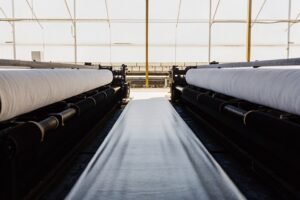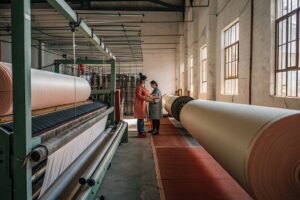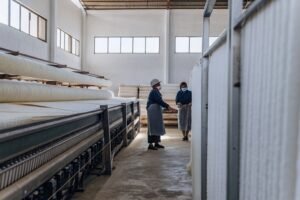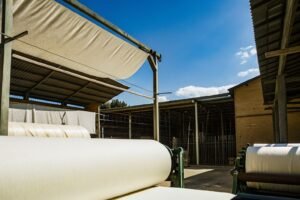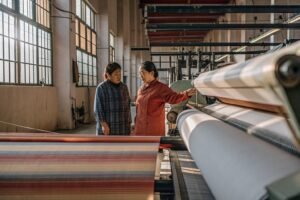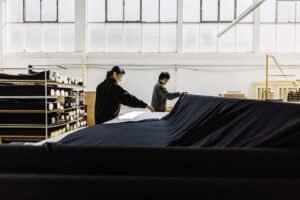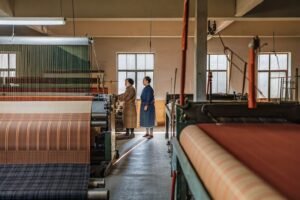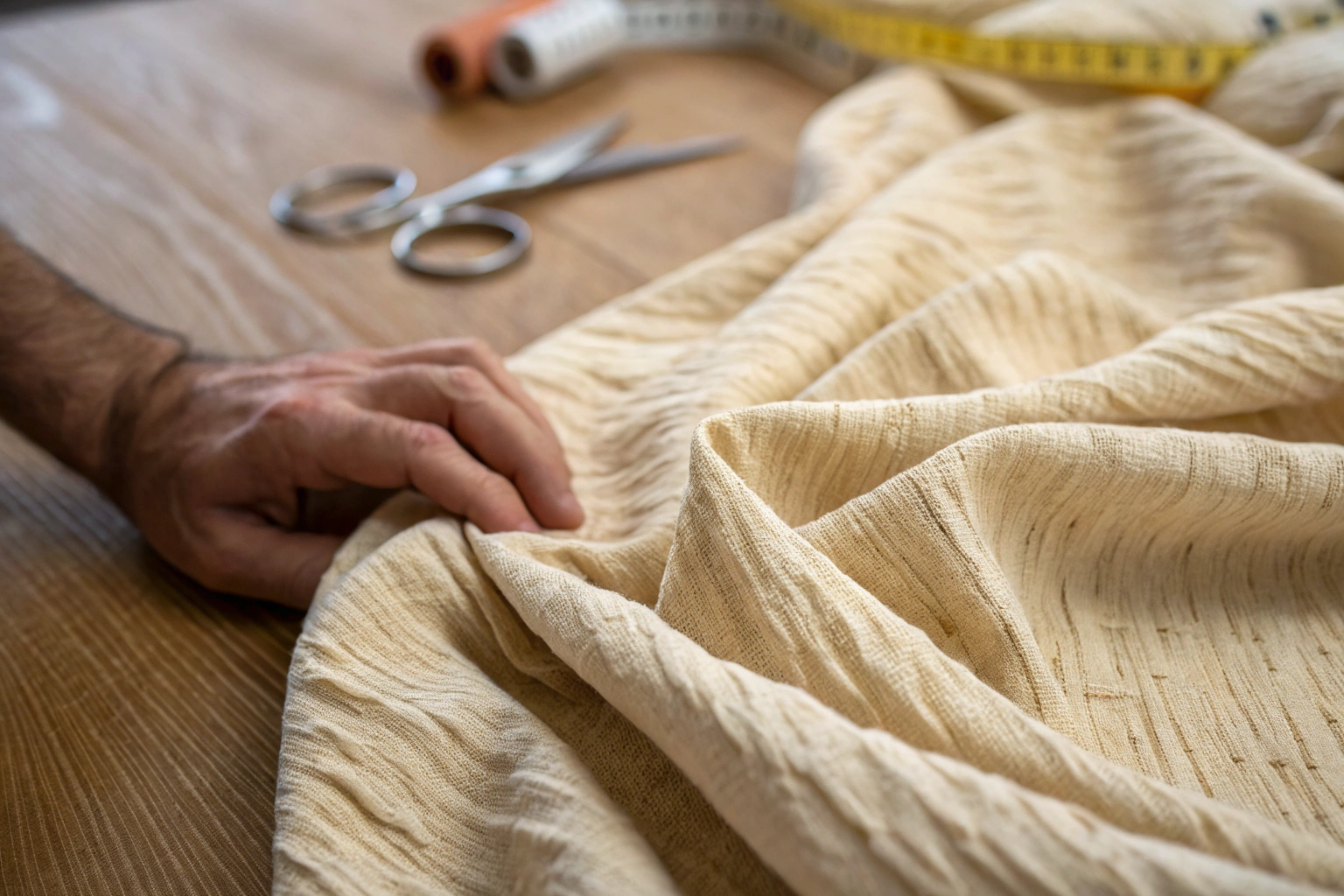
Let’s start with a confession. For the first 15 years of my career in textiles, I kind of hated slub fabric. I looked at those thick-and-thin bumps and thought, "That’s a defect. My dad would have fired the spinner for that." And that’s exactly what slub was historically: a spinning error. Lumpy, uneven yarn that snuck past quality control. Today? I’ve got a weaving mill running 24/6 just to keep up with demand for this "defect." Men’s fashion has flipped the script completely. That irregular texture you see on a $400 James Perse t-shirt or a Todd Snyder sweater? That’s slub. And it’s not cheap to make it look that bad on purpose.
Slub fabric is a textile with a deliberately uneven, nubby surface texture created by intentionally varying the twist or thickness of the yarn during spinning. Instead of a smooth, uniform cylinder of fiber, you get a yarn that looks like it has little bumps, knots, or soft caterpillars running through it. When woven or knitted, this creates a fabric that feels organic, breathable, and visually complex. It’s the antithesis of the slick, shiny polyester dress shirts of the 90s. It’s casual, it’s masculine, and it’s the backbone of the modern "elevated basics" movement. At Shanghai Fumao , our slub production volume has grown 40% year-over-year for three years straight. That’s not a fad; that’s a fundamental shift in how men want to look and feel.
But here’s the thing that drives me nuts. A lot of guys see a "slub tee" online for $19.99 and think they’re getting the same thing as the $120 version. They’re not. Not even close. The difference between a cheap slub that pills into a fuzzy mess after three washes and a premium slub that ages like a fine leather jacket comes down to Fiber Length and Spinning Technology. Stick with me, and I’m going to show you exactly how we engineer this "imperfection" at the yarn level, why linen slub feels like wearing air conditioning, and how to avoid the dreaded "potato sack" look that some bad slubs give off. Whether you’re researching how to identify high quality slub cotton yarn versus cheap imitation irregular yarn or trying to understand why slub linen shirts are dominating mens resort wear 2026 trends , I’ll give you the straight talk from the factory floor in Keqiao.
Why Is Slub Yarn Texture Suddenly Popular in Menswear?
It’s not sudden, actually. It’s been a slow burn for a decade, but now it’s an inferno. If you want to understand why slub is king in menswear, you have to understand the male consumer’s relationship with texture. Men don’t wear sequins. We don’t (usually) wear lace. Our fashion expression is often limited to Fabric Hand and Weight. Slub gives us that visual interest without making us look like we’re trying too hard. It’s a way to wear a plain white t-shirt and still look like you put thought into your outfit.
The popularity explosion comes down to three factors. First: The Casualization of the Office. Nobody wears a starched pinpoint oxford if they can wear a soft, textured slub button-down. It reads as "professional" but feels like "weekend." Second: The Sustainability Narrative. Slub yarns often use Noil (short silk fibers) or recycled cotton that would normally be waste. The irregular texture hides the fact that the fiber length is shorter. It’s a perfect marriage of aesthetic and eco-friendly upcycling. Third: The Linen Revival. Linen wants to be slubby. It’s the nature of flax fiber. As men discover how cool linen keeps them in summer, they’ve embraced the slubby, wrinkled look as a sign of authenticity rather than a lack of ironing. At Shanghai Fumao , we’ve seen a huge shift in the Men’s Resort Wear category specifically requesting "High Character Slub" (that’s industry speak for "really bumpy"). For a deeper dive into this trend, check out this analysis on how fabric texture is replacing pattern as the key differentiator in menswear design .
Here’s a real conversation I have with young designers at least once a month. They say, "I want this to look like vintage 1950s deadstock." I tell them, "You want slub and ring-spun yarn." They ask why. I explain: Modern open-end spinning makes yarn that is too perfect. It’s a round, hard tube of fiber. That’s great for sheeting, terrible for a t-shirt that you want to drape like it’s 20 years old. Ring-spinning (which we still run in our vintage Toyoda frames) creates yarn with a softer twist and a natural hairiness. When we intentionally feed the roving unevenly during ring-spinning, we get True Slub. That’s the secret sauce.

How Does Slub Differ from Regular Ring-Spun and Open-End Cotton?
This is where the rubber meets the road, and where most buyers get confused. They see "100% Cotton" on a spec sheet and think all cotton is the same. It’s not. The spinning method determines 80% of the fabric’s personality. Let’s break down the three main players in the game right now.
| Feature | Open-End (Rotor) Yarn | Regular Ring-Spun Yarn | Slub Ring-Spun Yarn |
|---|---|---|---|
| Surface Feel | Hard, smooth, slightly slick | Soft, fuzzy, matte | Soft, irregular, nubby |
| Strength | High (very uniform) | Medium-High | Medium (weak points at slubs) |
| Absorbency | Lower (tighter structure) | High | Very High (loose structure) |
| Pilling Risk | Low (fibers trapped) | Medium | High (if fiber short) |
| Cost to Produce | Lowest | Medium | Highest (slower process) |
| Visual | Flat, even color | Slight heathered look | 3D textured, mottled color |
Open-End yarn is the McDonald’s hamburger of textiles. Consistent, cheap, fills you up, but zero soul. Regular Ring-Spun is your good neighborhood diner burger. Better quality, some character. Slub Ring-Spun is the dry-aged steak burger from the gastropub. It’s got irregularities, it’s juicy, and you pay for the craft.
I had a client from Texas in March 2025 who was launching a men’s basics line. He wanted to compete on price. He sent me a competitor’s sample—a Slub Jersey Tee that felt like sandpaper. I put it under the microscope. It was Open-End yarn with mechanical abrasion. They had literally sanded the surface of a cheap yarn to make it look fuzzy like a slub. It’s fake slub. Real slub comes from the Yarn Core. I told him, "You can sell this fake stuff once. They won’t buy it again after it shrinks into a trapezoid." We developed a proper 16/1 Ring-Spun Slub for him. Cost was 15% higher. Reorder rate was 65% higher. He texted me last month: "Customers get it. They feel the difference." For more on this specific issue, read about how to distinguish authentic ring spun slub yarn from sanded open end imposters .
Can Slub Fabric Be Made from Sustainable or Recycled Fibers?
Absolutely, and this is where it gets really interesting for the eco-conscious brands. Remember I mentioned Noil earlier? Noil is the short, tangled fiber waste left over from combing long-staple cotton or silk. Normally, this stuff goes to the landfill or becomes mop heads. But in slub yarn? It’s Gold. Because we want that nubby, uneven texture, Noil is the perfect ingredient.
We do a lot of work with Recycled Polyester and BCI Cotton blends for slub fabric. The challenge with recycled polyester is that the staple fibers are often shorter and less uniform than virgin polyester. When you try to spin this into a normal smooth yarn, you get weak spots and breakage. But when you spin it into a Slub Yarn, the inherent irregularity of the recycled fiber actually enhances the slub effect. It’s a case of turning a manufacturing liability into a design asset. At Shanghai Fumao , we have a specific blend we call "Eco-Slub" —it’s 60% Recycled Cotton (from cutting room waste) / 40% Recycled Polyester. It’s got a beautiful, raw, almost linen-like hand feel. It’s not for everyone—it has a slightly "rustic" look that might not work for a tech CEO—but for a surf brand or a coffee shop uniform? It kills. It tells a story. For those looking for certification specifics, you should review how GRS certification applies to slub yarns made from recycled textile waste streams . And if you’re curious about the raw material side, check out the process of mechanically recycling cotton waste into spinnable fibers for irregular yarn production .
How Do You Make Slub Fabric Without Compromising Durability?
This is the million-dollar question for anyone who has ever bought a slub t-shirt that developed a hole after two wears. That uneven thickness in the yarn? Those are natural Weak Points. The thin sections of a slub yarn have fewer fibers twisted together. That means less tensile strength. If you don’t know what you’re doing on the loom or knitting machine, you’ll snap that yarn a hundred times a day. And even if you get it through the machine, the resulting fabric might be a ticking time bomb waiting to tear under stress.
Making durable slub fabric is all about Compensation Engineering. We don’t just take a weak yarn and hope for the best. We adjust the entire manufacturing process to protect it. First, we use Lower Tension on the Creel. On a standard weaving loom, the warp yarns are under massive tension to keep the shed open. For slub warps, we dial back the tension by about 15-20% . This means the loom runs slower (lower production efficiency), but the yarn doesn’t snap. Second, we use Air-Jet Looms instead of projectile or rapier looms for fine slubs. The air jet is gentler on the insertion; it cushions the yarn rather than beating it with a metal gripper. Third, and most importantly, we apply a special Sizing Agent (a starch-like coating) to the warp yarns before weaving. This sizing fills in the "valleys" of the thin sections, temporarily strengthening the yarn for the rigors of the loom. Then we wash it all out in the finishing stage, revealing the soft texture underneath. For a technical deep dive on these adjustments, you can read about optimizing loom settings for weaving low twist and slub yarns to prevent warp breakage .
I’ve got a war story from June 2024. We were developing a Heavyweight Slub Linen for a client in Australia making workwear-style overshirts. Linen is already low-elongation (it breaks instead of stretching). Linen slub is even worse. On our first trial run, the Warp Stoppage rate was 12 breaks per hour. That’s a disaster. The weavers were ready to mutiny. We had to reformulate the Size Recipe. We added a higher ratio of PVA (Polyvinyl Alcohol) to the starch mix to give it more film strength. We also slowed the loom from 600 RPM to 480 RPM. Efficiency dropped, cost went up, but the fabric came out beautiful and, more importantly, Tear Strength tested at 1,800 grams (ASTM D1424). The client has now reordered four times.

What Are the Best Weaving Patterns for High-Strength Slub Shirting?
If you’re making a Men’s Button-Down Shirt from slub fabric, the weave structure is your best friend or your worst enemy. You cannot treat a slub yarn like a smooth combed cotton. The weave needs to act like a Support Matrix.
The Gold Standard for durable slub shirting is Plain Weave (1×1). I know, it sounds boring. But plain weave has the highest number of Interlacing Points per inch. This means the warp and weft yarns cross each other more often. This "locks" those weak slub sections into place and prevents them from sliding around and abrading against each other. Twill Weave (like a 3/1 denim weave) is a Bad Idea for most slubs. Why? Because twill has long Floats—sections where the yarn skips over two or three yarns before interlacing. Those long floats on a slub yarn? They snag. On a ring, on a zipper, on a watch band. It’s a recipe for pulled threads.
There is one exception: Oxford Weave. A classic 2×1 basket weave (often called a Pinpoint Oxford) works beautifully with a fine-count slub yarn. The basket structure gives it a bit more drape than plain weave, but the paired yarns provide Redundancy. If one slub yarn is thin at a specific point, its "partner" yarn in the basket weave backs it up. I once explained this to a designer from New York who was trying to use a Satin Weave with slub yarn. I had to tell her, "Look, you’re trying to make a luxury sports car with a tractor engine. The shine of the satin will highlight every single slub flaw, and the long floats will snag on day one." We switched to a Brushed Twill instead—the brushing process raised a nap that hid the slub texture enough to make the twill viable. For more on weave selection, check out a guide to choosing the correct weave structure for textured and slub yarn dress shirts .
How Does Fabric Weight (GSM) Impact the Longevity of a Slub Tee?
This is the simplest metric for the end consumer to understand, and yet it’s the one most brands fudge on. GSM stands for Grams per Square Meter. It’s the weight of the fabric. For a men’s slub t-shirt, this number is everything.
A Lightweight Slub Tee (130-150 GSM) feels amazing in July. It’s airy, it’s see-through in the right light, it’s that perfect "worn-in" look. But it’s Fragile. The low weight means there are simply fewer fibers in that square meter to resist abrasion. I’ve tested these. They last maybe 15-20 washes before the thin sections of the slub start to "Window Pane" —you get tiny holes where the yarn finally gave out.
A Midweight Slub Tee (180-210 GSM) is the Sweet Spot for Durability. This is the weight of a standard "Premium" slub tee. It has enough body to hide your nipples (let’s be real, guys care about this) and enough fiber density to survive the washing machine for 50+ cycles. At this weight, the slub texture is visible but the fabric still drapes well.
A Heavyweight Slub Tee (220+ GSM) is practically a sweatshirt. It’s stiff at first, but it breaks in like raw denim. It will last Years. The slub texture here is often "Cross-Hatch Slub" or "Thick-Thin" where the slubs are very pronounced. I have a client in Canada who makes a 280 GSM Slub Pocket Tee. We use a Reactive Dye process on it. The fabric is so dense that the dyeing process takes twice as long to penetrate the core, but the colorfastness is incredible. He sells that tee for $95 CAD. It sells out every drop. People buy it because they know it’s a tank. (Here I gotta interject—if you’re washing a slub tee, turn it inside out. Always. The abrasion inside the machine is what kills the surface slubs.) To understand the weight ranges better, look at this breakdown of how fabric gsm affects the drape and durability of mens cotton slub t shirts .
Why Is Linen Slub the Go-To Fabric for Summer Suiting?
If there is one fabric that defines "I’m on vacation, don’t email me," it’s slub linen. But the move from "slub cotton tee" to "slub linen suit" is a big leap for a lot of guys. They’re scared of wrinkles. They think wrinkles mean "messy." I have to retrain their eye. In the world of summer tailoring, wrinkles are not a bug; they are the Feature. A smooth, polyester-blend suit in 95-degree heat with 80% humidity looks like a plastic bag. A slub linen suit in the same heat looks like a Ralph Lauren ad.
Linen slub is the go-to for summer suiting because of Thermal Conductivity and Moisture Wicking. Linen fibers are hollow. They pull sweat off your body and release it into the air faster than cotton can dream of. The Slub Texture amplifies this effect. Because the yarn is irregular, the surface area of the fabric is increased. More surface area = More evaporation. It’s physics. But there’s a second reason, and it’s purely aesthetic: Memory. Slub linen holds a crease in a unique way. When you sit down and stand up, the wrinkles form in a sharp, random pattern. It doesn’t look like a crumpled paper bag; it looks like Patina. At Shanghai Fumao , we differentiate between "Clean" Linen (minimal slubs, more formal) and "Rustic" Linen (heavy slubs, very casual). For suiting, the "Mid-Slub" is the bestseller. It gives the texture without looking like you’re wearing burlap. For a visual guide to this, check out this resource on how to style a slub linen suit for destination weddings and summer events 2026 .
I recall a project in February 2025 for a client in Miami. He wanted a Navy Blue Suiting Linen. He asked for "Zero Slub." He wanted it smooth like worsted wool. I had to explain: "You’re asking Linen to be Polyester. It’s going to look like a cheap tablecloth if we strip all the character out." We compromised on a Fine Count Linen (36 Nm) with a "Micro-Slub" effect. The slubs are there if you look close, but from three feet away, it reads as a refined texture. The suits came out incredible. Breathable, but sharp enough for a business meeting. He emailed me later: "You were right. The micro-slub saved it from looking dead."

How Does Slub Texture Enhance the Breathability of Linen Blends?
Let’s talk blends. 100% Linen is the gold standard for cooling, but it’s also Expensive and Wrinkles Like Crazy. A lot of our customers, especially for RTW (Ready-to-Wear) brands, prefer a Linen-Cotton Blend (e.g., 55% Linen / 45% Cotton) or a Linen-Tencel Blend. The question is: Does adding slub to these blends actually do anything for performance, or is it just for looks?
The answer is Both, but the performance benefit is subtle. In a blend, the slub texture creates Micro-Pockets of Air. When the yarn is uneven, the woven fabric doesn’t lie perfectly flat against the skin. There are tiny Air Gaps. These gaps allow for Convective Heat Transfer. Think of it like the tread on a tire. A slick tire (smooth fabric) has more contact with the hot road (skin). A treaded tire (slub fabric) has less contact. Less contact means less heat transfer.
I tested this in our lab (yes, I’m a nerd). We took a 55% Linen / 45% Cotton plain weave fabric. One version was Regular Smooth Yarn. One version was Slub Yarn. We used a Thermal Manikin (a sweating hot plate). The Slub version showed a 0.3°C lower skin contact temperature and a 5% faster drying rate. Is 0.3°C noticeable? In August in Atlanta, yes. It’s the difference between "I’m warm" and "I’m sweating through my back." The Tencel blends are particularly nice with slub because Tencel is already super smooth and cool; the slub adds that Traction so the fabric doesn’t feel slimy when you sweat. For a more scientific look at this, read about measuring thermal comfort and air permeability in slub yarn versus regular yarn woven fabrics .
What Is the Difference Between Irish Linen and Belgian Slub Linen?
This is a question for the fabric nerds out there. You see these terms on high-end tailoring websites and you wonder if it’s just marketing. It’s not. It’s Terroir—just like wine. The climate where the flax is grown and retted (rotted) changes the fiber characteristics.
Irish Linen: Traditionally, this is Wet-Spun. The flax fibers are spun while wet, which causes the individual fibrils to cling together and create a Very Fine, Very Smooth, Very Crisp yarn. Irish linen is known for its Clean Surface and High Sheen. Slubs are not common in traditional Irish Linen. If you see an "Irish Linen" with heavy slubs, it’s either a modern interpretation or it’s not true wet-spun Irish.
Belgian Slub Linen: Belgium (and Northern France) is the Champagne region of flax. The climate is mild and damp, perfect for slow Dew Retting (letting the flax rot in the fields with dew and rain). This process naturally creates more variation in the fiber bundles. Furthermore, Belgian linen mills often use Dry Spinning. Dry spinning results in a Hairier, More Textured, and Slubby yarn. It’s less crisp than Irish, but it’s Softer and has that "Lived-In" look immediately.
At Shanghai Fumao , we source flax from both regions depending on the end-use. For a crisp dress shirt, we’ll run a Fine Irish-style Wet-Spun Linen. For a soft sport coat, we run a Belgian-style Dry-Spun Slub Linen. I tell my US customers: Irish is for the Boardroom. Belgian is for the Boardwalk. A specific memory: A client from San Francisco visited in 2024. He felt a swatch of our Belgian-style Slub and a swatch of our Smooth Irish-style. He said, "This one (Belgian) feels like my favorite old shirt. That one (Irish) feels like my Dad’s church shirt." He got it instantly. For more historical context, you can look at the history of flax cultivation in belgium and its impact on linen textile texture .
How to Spot Poor Quality Slub Fabric Before Bulk Order?
Okay, you’re sold on slub. You want to order 10,000 yards for your menswear line. How do you avoid getting a shipment of expensive rags? This is the part of the job where I earn my keep. Anyone can make a fabric look good in a 2-inch swatch photo. It’s the Bulk Consistency that separates the pros from the "one-time-wonder" mills. You need to know the specific failure points of slub fabric and how to test for them before the container leaves Keqiao.
Spotting poor quality slub fabric requires a Four-Point Physical Inspection combined with Understanding the Mill’s Spinning Capabilities. First, you must check for "Neps" vs. "Slubs." A slub is a thick place in the yarn where fibers are twisted in. A nep is a tiny, tangled knot of fibers that sits on top of the yarn. Slubs are intentional. Neps are defects. If you run your hand over the fabric and feel little hard balls (like sugar granules), those are neps. They will pill instantly. Second, check the Uniformity of the Slub Pattern. On a cheap machine, the slubs are completely random and chaotic—you’ll see a cluster of five bumps then a foot of nothing. On a good fabric, the slubs are Evenly Distributed with a predictable rhythm. Third, do the "Window Test." Hold the fabric up to the light. Do you see thin spots that look like sheer patches? If yes, the spinning was inconsistent and the fabric will tear at those spots. For more advanced inspection techniques, review this guide on how to conduct a 4 point fabric inspection for textured and slub woven goods .
I have a specific method I teach my junior buyers. I call it the "Wash and Rub" test. It’s low-tech but brutally effective.
- Take a 12" x 12" swatch.
- Wash it in hot water with a pair of old jeans. (Simulates 10 home laundries).
- Tumble dry it on HOT.
- Rub the dry fabric against itself (Face-to-Face) 50 times.
- Look at the surface.
If the fabric looks like a fuzzy chia pet after this? Reject it. That’s short-staple fiber and low twist. It will pill into oblivion on the customer’s first wear. If the slubs are still distinct and the background is relatively clean? Approve it.

Why Do Some Slub T-Shirts Pill After Only a Few Washes?
This is the #1 complaint about slub fabric online. "Loved the look, but it turned into a mess after one wash." Why? Because of Fiber Migration. Pilling happens when short fibers work their way out of the yarn structure. They get tangled together on the surface and form those annoying little fuzz balls.
Slub fabric is Inherently Prone to Pilling for two reasons. Reason One: The Twist is Lower. We use lower twist to make the yarn soft and bulky. Less twist means less force holding those short fibers inside the yarn. Reason Two: The Thin Sections. At the thin spots in the slub, the fiber density is lower. There is less "meat" holding the yarn together. Abrasion (like from a seatbelt or a backpack strap) hits these thin spots hard. The fibers break loose, travel to the thicker slub area, and tangle up there.
The solution is Fiber Selection and Finishing. You Cannot make a durable slub tee with cheap, short-staple cotton (think: 1.0-inch fiber length). You need Long-Staple Cotton (1.25 inches+) or a blend with a long synthetic like Polyester or Tencel. The long fibers act as Anchors. They hold the short fibers in place. Additionally, we use a process called Bio-Polishing (Cellulase Enzyme Wash). We literally use enzymes to eat the tiny, loose fiber ends off the surface of the fabric before it leaves the factory. It’s a controlled pilling process. We pill it so the customer doesn’t have to. For a deeper dive into this specific issue, check out this forum thread on how to stop slub cotton t shirts from pilling in the washing machine .
How Can I Ensure My Slub Fabric Has a Consistent Slub Pattern?
This is the hardest part of slub manufacturing. You can make 100 yards of beautiful slub. But can you make 10,000 yards that all look like they came from the same lot? That’s the challenge. If the slub pattern varies wildly between rolls, your garment factory will cut a left sleeve from Roll A and a right sleeve from Roll B. The customer will have one smooth sleeve and one bumpy sleeve. It’s a disaster.
Ensuring consistency starts with the Spinning Frame Program. Our modern slub yarn machines are Servo-Motor Controlled. We don’t just guess at the thickness. We input a "Slub Recipe" into the computer. It looks like this: Base Yarn: 100% Cotton 16/1. Slub Thickness: 1.8x Base. Slub Length: 35mm. Pause Distance: 120mm. This digital instruction tells the rollers exactly how fast to speed up and slow down to create the thick spots.
But here’s the catch: Atmospheric Conditions. Cotton absorbs moisture. If the humidity in the spinning room changes from 55% to 70%, the cotton swells slightly. That 1.8x slub might suddenly become a 2.0x slub. To combat this, we use Closed-Loop Yarn Clearers on our winding machines. These electronic eyes scan every millimeter of yarn. They measure the diameter in real-time. If the slub is too thick or too thin (outside of tolerance), the machine Cuts it Out and Spliced the Yarn. It’s an incredibly precise, automated quality control system that runs 24/7. If a mill can’t show you their Uster Statistics (the industry standard for yarn evenness), they cannot guarantee slub consistency. For more technical specs, look at how uster tester 6 data is used to control slub yarn parameters and defect rates .
Conclusion
Slub fabric is more than a trend; it’s a reaction against the sterile perfection of modern fast fashion. It brings a human touch, a sense of organic irregularity, back into menswear. We’ve covered why it’s exploded in popularity—men want texture, they want breathability, and they want clothes that look better as they age. We’ve looked at the engineering challenge of making a "weak" yarn strong enough for daily wear, and we’ve dissected the specific magic of slub linen for surviving summer in style. Most importantly, we’ve armed you with the physical tests and knowledge to separate the cheap imitations from the premium goods.
Whether you’re designing a heavyweight tee built like a tank or an unstructured suit jacket meant for a seaside wedding, the character of the slub yarn sets the tone for the entire garment. It’s the foundation. And like any foundation, if it’s shaky, the whole house crumbles.
Understanding the difference between a genuine ring-spun slub and a sanded impostor isn’t just textile trivia; it’s the difference between a loyal customer and a returned item. If you’re developing a men’s collection and want to explore the specific slub constructions we’ve perfected here in Keqiao—from our high-durability oxford weaves to our eco-friendly recycled blends—we should talk specifics. Reach out to our Business Director, Elaine. She can get you a swatch pack of our current slub portfolio faster than you can say "thick and thin." Email her at elaine@fumaoclothing.com. Let’s add some character to your next line.