You spent weeks designing the perfect print. The colors are electric. The details are crisp. You upload the file to your print-on-demand partner or send it to your cut-and-sew factory. You wait for the sample. It arrives. And your heart sinks. The vibrant magenta you designed looks like a dusty rose. The sharp black lines are blurry and faded at the edges. The fabric feels stiff and plasticky. You just wasted $300 on a sample that looks like it came from a cheap carnival booth.
This is the Sublimation Heartbreak. It happens every single day. And 90% of the time, it is not the printer’s fault. It is not the ink’s fault. It is the Fabric’s Fault.
Sublimation printing is a chemical reaction. It is not like painting on top of the cloth. It is Infusing gas into the fiber’s DNA. If you pick the wrong fiber, the gas just bounces off. The color sits on the surface, ready to wash out or fade in the sun. You are left with a garment that looks old before it is even worn.
At Shanghai Fumao, we have been deep in the sublimation game for over a decade. We supply base fabrics to some of the biggest print-on-demand fulfillment centers and custom sportswear brands in the world. And we have seen the technology shift dramatically for 2026. The "best" fabric is no longer just "100% Polyester." That is the starting line. The finish line is about Print Clarity, Handfeel, and Sustainability.
Let me walk you through exactly what you need to be printing on right now to make your designs pop and keep your customers coming back.
(And a quick warning: If someone tries to sell you "Sublimation Cotton," run. It is a scam involving a spray coating that washes off in three cycles. Stick with me here.)
What Is the Difference Between Sublimation and Heat Transfer Printing
Before we talk about the best fabric, we have to clear up the terminology. Because a lot of "Sublimation" offered on cheap POD sites is actually Heat Transfer Vinyl (HTV) or Screen Printed Transfer. And those are completely different beasts.
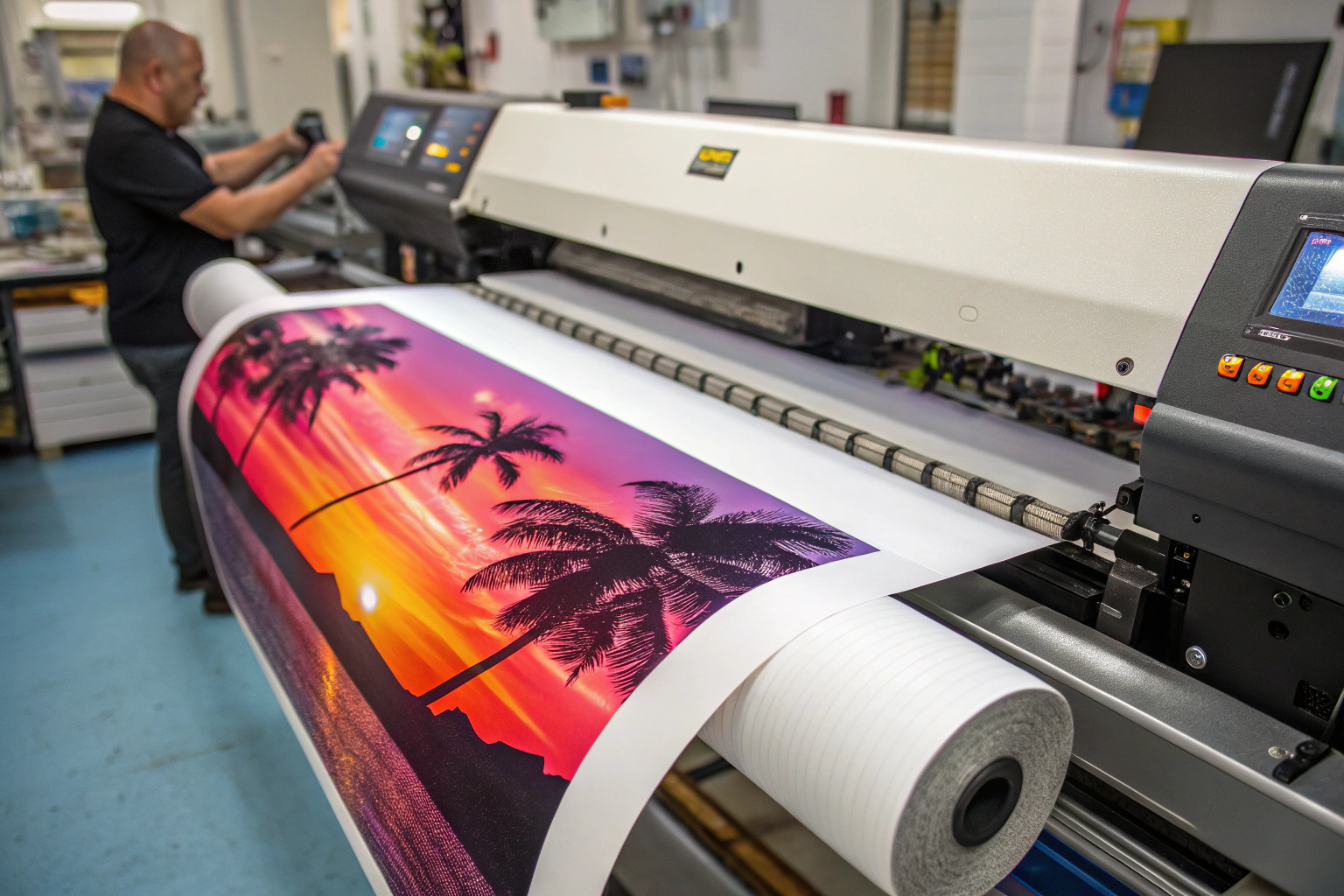
Sublimation (Dye-Sublimation):
- The Science: Solid dye particles are heated until they turn into a Gas (they sublime). This gas penetrates the Open Polymer Chains of the polyester fiber. When the fabric cools, the gas turns back into a solid Trapped Inside the Fiber.
- The Result: The print is Part of the Fabric. You cannot feel it. It does not crack. It does not peel. It does not fade easily because the color is locked at a molecular level.
Heat Transfer (or Digital Transfer):
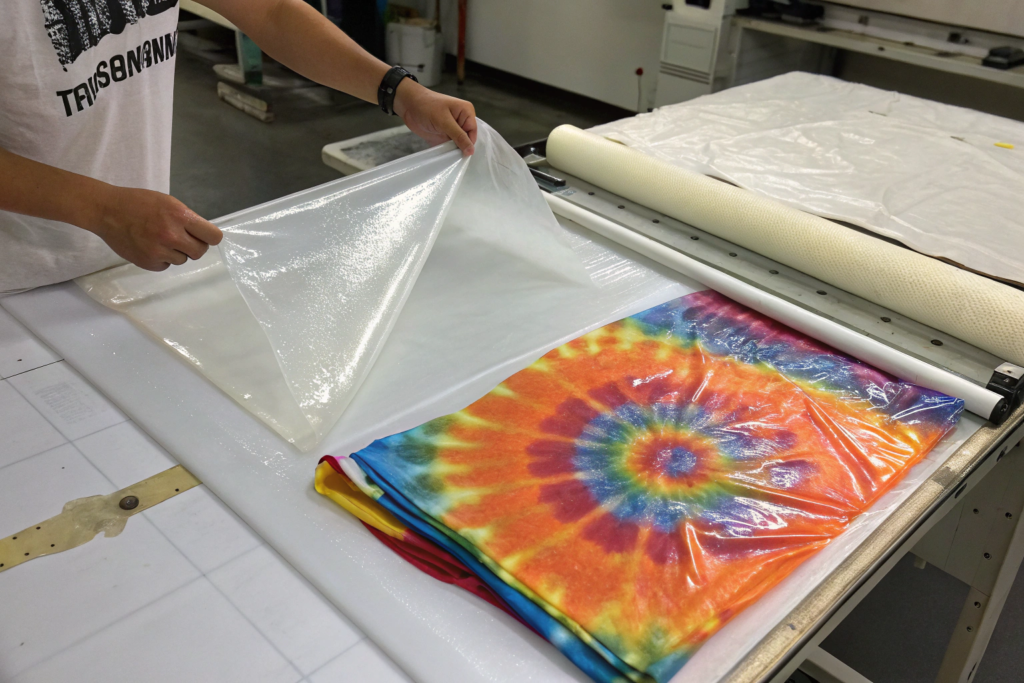
- The Science: Ink is printed onto a Carrier Paper or Film. This film is placed on top of the fabric. A heat press melts a Glue Layer on the film, sticking the image to the surface of the textile.
- The Result: You can Feel the Print. It has a rubbery or plasticky texture. It sits On Top of the fibers. It will eventually Crack, Peel, or Fade as the glue breaks down.
When you want that "No-Handfeel" performance finish—the kind used for high-end cycling jerseys, volleyball uniforms, or gallery-wrapped canvas art—you must use True Dye-Sublimation. And that requires the right fabric.
Why Does 100% Polyester Yield the Sharpest Sublimation Results
This is the chemistry rule. Sublimation dye only bonds permanently to Polyester.
It has a Weak Attraction to Nylon (it fades after 10 washes).
It has Zero Attraction to Cotton, Rayon, Linen, or Silk. On natural fibers, the dye gas just Bounces Off.
Why Polyester?
Polyester is a Thermoplastic. When you heat it to 180°C – 210°C (the sublimation sweet spot), the polymer chains in the amorphous region of the fiber Relax and Open Up. The dye gas molecules (which are very small) rush into these open spaces. When the fabric cools, the polymer chains close and Trap the dye molecules inside.
Cotton is Cellulose. It does not have these "open and close" polymer gates at these temperatures. The dye gas has nowhere to go. It just condenses on the surface and wipes off.
This is why 100% Polyester is the King of Clarity. The higher the polyester content, the more Dye Receptors there are. A 95/5 Poly/Spandex blend will sublimate beautifully. An 80/20 Poly/Cotton blend will look Vintage/Faded. Some people like that retro look. But if you want Sharp, Pantone-Accurate Color, you need pure poly. There is a great deep dive on this chemistry in this article on the molecular mechanism of disperse dye sublimation into polyethylene terephthalate fibers.
Can Nylon Fabrics Be Used for Dye Sublimation With Acceptable Fastness
This is the most common question I get from swimwear brands. "I want the softness and chlorine resistance of Nylon, but I want the crazy prints of Sublimation."
The short answer is: Yes, but with a huge asterisk.
Nylon 6 and Nylon 6.6 can be sublimated. The dye gas will penetrate the fiber. The colors will look Bright and Rich immediately after pressing.
The Problem: Wash Fastness and Light Fastness.
Nylon has a different chemical structure. The Amide Groups in Nylon attract water molecules (Nylon is Hydrophilic). When you wash the garment, water gets into the fiber and Extracts the loose dye molecules. The print Fades noticeably after just 5-10 home launderings. It also Yellows in the sun faster than printed polyester.
The 2026 Solution: Modified Nylon with Sublimation Fixatives.
At Shanghai Fumao, we have developed a specific Sublimation-Optimized Nylon Spandex (SKU: FUM-SUB-NYL) . We pre-treat the greige fabric with a Cationic Fixative in the finishing plant. This acts like a Primer. It gives the sublimation dye something extra to grab onto.
The Fumao Test Result:
- Standard Nylon Print: Fades 30% after 10 washes (AATCC 61 2A). Crocking: Grade 3.
- Fumao Pre-Treated Nylon Print: Fades 10% after 10 washes. Crocking: Grade 4.
Is it as permanent as Polyester? No. Will it last a season of vacation wear? Yes. It is a trade-off between Handfeel (Nylon is softer) and Longevity (Poly lasts forever). For a luxury swim line that expects the customer to buy new suits each season, it is acceptable. For a work uniform that needs to be washed 100 times, stick with Polyester.
Which Polyester Weave Shows Off High Definition Sublimation Best
So you know you need Polyester. Great. But walk into any fabric store (or scroll any wholesale website) and you will find 50 different kinds of Polyester. Chiffon. Satin. Jersey. Crepe. Pongee. Taffeta. They are all 100% Polyester. Will they all print the same?
Absolutely not. The Weave Structure and Surface Texture have a massive impact on Print Definition.
Think of the fabric surface like a TV Screen.
- Satin Weave: This is like a Glossy 4K Monitor with Glare. The long "floats" of yarn create a smooth, shiny surface. It reflects light. This Reflectance washes out the black levels of your print. The colors look bright, but the Contrast is Low. Dark areas look greyish. It is hard to see fine details.
- Textured Crepe: This is like projecting an image onto a Stucco Wall. The surface is bumpy and grainy. The print will look Broken and Mottled because the dye gas cannot reach the "valleys" of the texture as easily as the "peaks."
- Tight Jersey or Pongee: This is like a Matte Professional Monitor. The surface is flat, uniform, and has Low Luster. It absorbs light rather than reflecting it. This allows for Deep Blacks and Crisp Edges. Every pixel of your design translates to the thread.
Why Does Brushed Polyester Reduce Image Sharpness in Large Format Prints
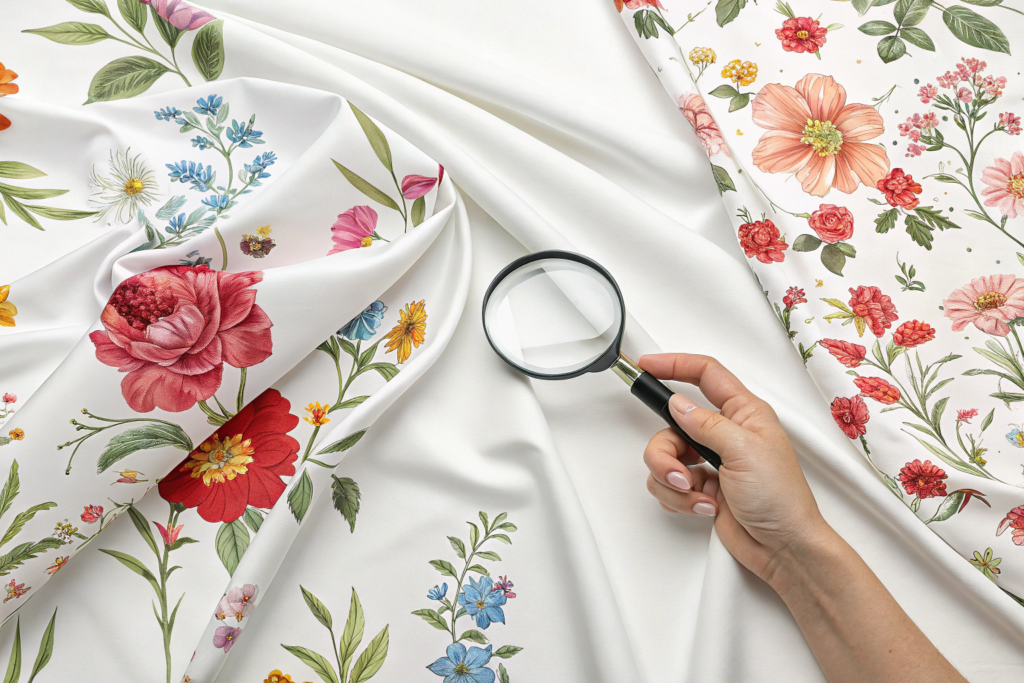
This is the #1 mistake I see new Custom Blanket and Plushie brands make. They want a Super Soft product. They order Brushed Polyester Fleece or Minky Fabric. They print a highly detailed, photorealistic image of their dog on it. And they get back a Blurry Mess.
The Physics of Brushing:
Brushed fabric is created by running a standard knit under Rotating Wire Brushes. These brushes Tear Up the surface yarns. They create a Nap—a forest of tiny, fuzzy fiber ends standing up vertically.
This Nap is Soft. But it is also Optically Diffuse. When the sublimation gas hits the fabric, it colors the Base Fabric AND the Fuzzy Nap. But the Nap fibers are pointing in random directions. They scatter light. They blur the boundary between a black line and a white background.
The Result: Your sharp 12pt font becomes Fuzzy and Unreadable. The crisp edge of a logo looks like it was drawn with a Spray Paint Can.
The Fumao Recommendation for Soft + Sharp:
We direct customers to Peached Polyester. This is a fabric that is Sanded lightly (creating a micro-nap) but Sheared to a uniform height. It is soft, but the nap is so short and dense that it doesn’t disrupt the inkjet dot pattern. It is the sweet spot for Soft Blankets with Photo Quality Prints.
How Does Calendered Polyester Improve Ink Saturation and Bleed Control
This is the Secret Sauce for the Best sublimation fabric in 2026. It is a finishing process called Calendering.
A standard polyester woven fabric (like a basic flag fabric) has tiny Micro-Gaps between the warp and weft yarns. When the sublimation paper is pressed against it, the dye gas can Migrate Sideways (this is called Dot Gain or Bleeding). It is like writing with a Sharpie on a paper towel—the ink spreads out.
Calendering is a process where the fabric is passed between two massive, heated Steel Rollers under Extreme Pressure (up to 100 tons). This does two things:
- Flattens the Yarn: It makes the yarn cross-section oval instead of round. This Closes the Gaps in the weave. The fabric becomes Tighter.
- Polishes the Surface: It creates a Smooth, Glassy Surface.
The Result for Sublimation:
- Higher Dye Yield: The smooth surface reflects less light during printing, allowing more dye gas to transfer efficiently. Colors are 10-15% more Saturated.
- Sharper Lines: The closed gaps prevent sideways gas migration. Lines are Crisp.
- Faster Transfer Times: The flat surface allows for better contact with the transfer paper.
At Shanghai Fumao, our best-selling FUM-SUB-202 (for flag and banner distributors) is a Calendered 100% Polyester Pongee. It is the industry standard for a reason. It prints like glass. If you are printing Trade Show Graphics, Flags, or High-End Sportswear Panels, you need calendered fabric. There is a technical note on this process in this article about the impact of calendering and heat setting on the print definition and color yield of dye-sublimation polyester textiles.
How Does Recycled Polyester Perform for Eco Sublimation in 2026
The question is no longer "Can we sublimate on recycled polyester?" The question in 2026 is "Is there any reason NOT to?"
Five years ago, Recycled Polyester (rPET) had a bad reputation for sublimation. It was made from a mix of Post-Consumer Bottles and Industrial Waste. The polymer quality was inconsistent. You would get White Specks (un-melted bottle flakes) in the fabric. The Whiteness of the base fabric was poor (it had a grey/yellow cast). This made the printed colors look Muddy.
In 2026, that problem is Solved. The recycling technology, especially here in Keqiao, has advanced by leaps and bounds.
The 2026 rPET Advantage:
- Better Sorting: Optical sorters separate clear bottles from colored bottles with 99.9% accuracy.
- Advanced Filtration: During the extrusion of the rPET chip, we use 20-Micron Fine Filters. This catches any specks or gels. The filament yarn is as clean as virgin polyester.
- Optical Brighteners: We can add OBAs (Optical Brightening Agents) during spinning to make the rPET fabric Brilliant White.
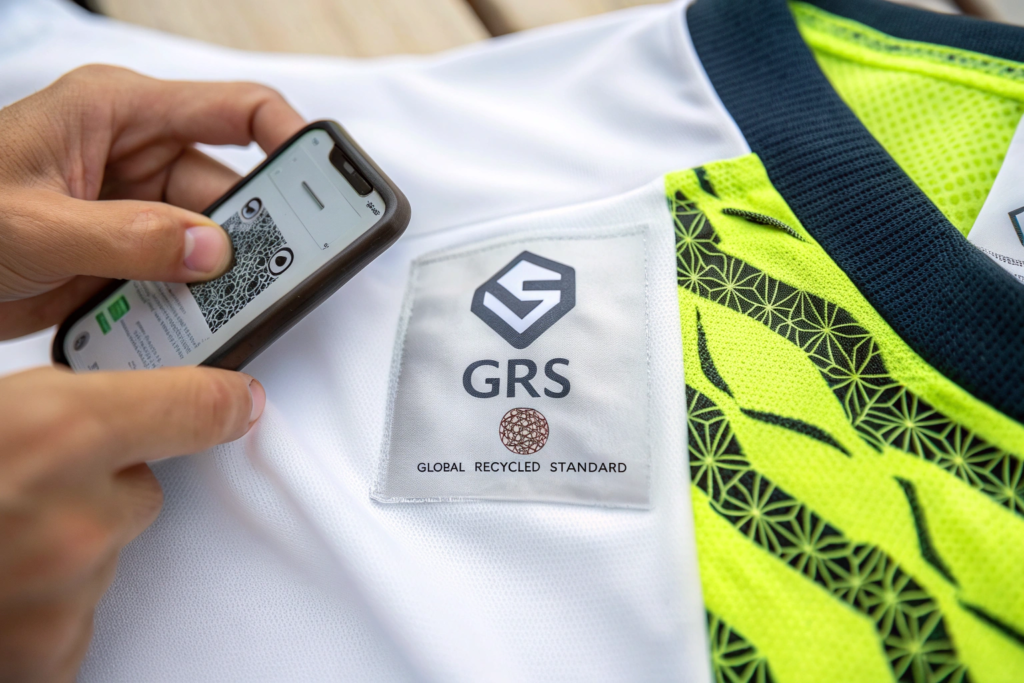
At Shanghai Fumao, our FUM-ECO-SUB line is GRS Certified Recycled Polyester. The print performance is Indistinguishable from Virgin Polyester. The white point is excellent. The dye uptake is identical. And the story for the brand is 100x better.
Does Virgin Polyester Still Hold a Color Gamut Advantage Over rPET
This is the technical question for the Perfectionists. If you are a fine art printer reproducing a museum photograph on fabric, you care about Gamut Volume—the total range of colors the fabric can reproduce.
The Honest Answer: Virgin Polyester has a microscopic edge.
Because virgin polymer chains are perfectly uniform, they have a slightly more uniform Dye Receptor Distribution. This can result in a 0.5% to 1.5% wider color gamut in the extreme saturated blues and cyans.
The Practical Answer: No one can see the difference.
A recent blind test we conducted with a sportswear brand’s design team showed that 4 out of 5 designers preferred the rPET print because the "handfeel was softer" (rPET yarn is often slightly finer denier). The 5th designer couldn’t tell the difference.
Unless you are using a Spectrophotometer to measure the exact LAB values of a specific Pantone shade, you will not notice the gamut difference. And the Marketing Value of "Made from Recycled Bottles" for a Millennial/Gen Z customer is worth far more than that 1% of cyan saturation. This resource on the comparative analysis of color gamut and print uniformity between virgin PET and mechanically recycled rPET fabrics for dye sublimation provides the lab data if you want the deep dive.
What Role Does GRS Certification Play in Sublimated Athletic Wear Marketing
This is the Trust Seal of 2026. You can put "Eco-Friendly" on your hangtag. Anyone can. But the Global Recycled Standard (GRS) is a Chain of Custody certification. It is audited by a third party (like SGS or Control Union).
For a sublimated athletic wear brand, GRS Certification does three things:
- Prevents Greenwashing Accusations: You have a Transaction Certificate (TC) to prove the bottle-to-fabric journey. This protects you from social media backlash.
- Allows "Made with Recycled Content" Labeling: This is a legal claim. You cannot make it without GRS (or similar RCS).
- Unlocks Retail Partnerships: Big box stores like Target, REI, and Decathlon require GRS certification for any product claiming to be sustainable.
At Shanghai Fumao, we provide the GRS Scope Certificate and the TC with every shipment of FUM-ECO-SUB. We make it easy for your brand to tell the story. You can scan the QR code on our fabric roll and see the certification. This is Marketing Gold for a DTC athletic brand. It justifies the $68 price tag on those leggings. The consumer feels good about the purchase, and the brand is protected from liability.
When Should You Choose Poly Coated Paper Over Tacky Sublimation Paper
Okay, this is a bit of a bonus round. It is not about the fabric, but it is about the Transfer Medium that touches the fabric. And in 2026, the choice of paper has a massive impact on the final fabric quality.
There are two main camps of sublimation paper:
- Tacky Paper (High-Tack): This paper has a slightly sticky coating. When it heats up, it Glues Itself to the fabric. This prevents the paper from shifting during the press cycle. It is great for Hard Substrates (mugs, phone cases).
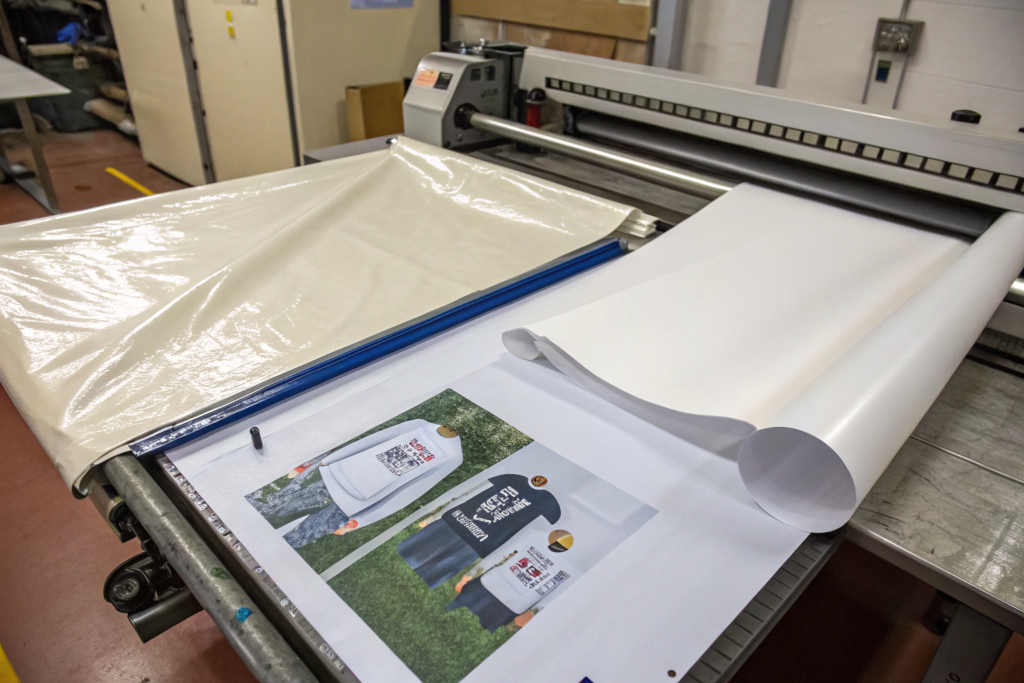
- Poly-Coated Paper (Low-Tack): This paper has a thin Polymer Film layer. It is Not Sticky. It relies on the vacuum of the calendar press to hold it in place.
For Fabric, especially Lightweight Polyesters and Knits, we strongly recommend Poly-Coated Paper.
Why Does Tacky Paper Cause Ghosting on Lightweight Polyester Fabrics
Ghosting is the faint, shadowy double-image you see on the fabric. It happens when the sublimation paper moves Even a Millimeter while the press is opening or while the gas is transferring.
The Mechanism of Ghosting with Tacky Paper on Fabric:
- You open the heat press. The hot platen rises.
- The Tacky Paper is Glued to the Fabric.
- The lightweight fabric Lifts Up with the platen because it is stuck to the paper.
- The fabric Falls Back Down onto the lower platen a split second later.
- During that micro-second of movement, the dye gas is still transferring. The image Shifts.
Poly-Coated Paper prevents this because it Releases Cleanly. When the press opens, the paper stays on the platen (or is easily removed), and the fabric stays flat on the pad. Zero Movement = Zero Ghosting.
We had a large-format flag printer switch to our FUM-SUB-202 Calendered Polyester last year. They were getting 30% rejection rate due to ghosting on the edges. We looked at their setup. They were using Tacky Paper meant for mugs. We sent them a pallet of Poly-Coated Paper. The rejection rate dropped to Under 2%. It was a $0.01 difference in paper cost. It saved them $50,000 a year in wasted fabric.
How Does Humidity Affect Sublimation Paper Performance on Keqiao Fabrics
This is the Silent Killer of print quality in the summer. Sublimation paper is Hygroscopic. It absorbs moisture from the air.
When you put Damp Paper into a 200°C Heat Press, three bad things happen:
- Steam Explosions: The moisture turns to steam instantly. It creates Micro-Bubbles between the paper and the fabric. These bubbles cause Color Voids (white spots).
- Dye Migration: The steam carries the dye gas Sideways. You get Fuzzy Lines.
- Paper Curling: Damp paper curls up like a potato chip. It is impossible to align on the fabric.
At Shanghai Fumao, our fabric is dry. But we cannot control the humidity in your print shop in Florida or Singapore. We advise all our sublimation customers to:
- Store Paper in Airtight Bags.
- Use a Dehumidifier in the Print Room.
- Pre-Press the Fabric for 5 Seconds before applying the paper. This drives off any residual surface moisture on the fabric itself.
This is one of those "invisible" process details that separates the professional print shops from the hobbyists. The fabric can be perfect, the ink can be perfect, but if the paper is damp, the print will be garbage. There is a good troubleshooting guide on this topic in this article about managing humidity and static electricity in dye-sublimation transfer printing environments.
Conclusion
The best fabric for sublimation in 2026 is no longer a simple, one-word answer. It is a System. It is the intersection of Fiber Science, Surface Engineering, and Environmental Responsibility.
We have seen that the foundation must be 100% Polyester to achieve that permanent, molecular bond. But the foundation is just the start. The Weave and Finish dictate the Sharpness—with Calendered Pongee and Tight Jersey delivering that high-definition, matte look that modern brands crave. And the Raw Material has evolved, with GRS Certified Recycled Polyester now performing at a level that makes virgin polyester a hard sell for any brand that values a sustainability narrative.
At Shanghai Fumao, we are not just a mill. We are a Technical Partner for the sublimation industry. We engineer our FUM-SUB and FUM-ECO-SUB lines specifically to maximize Color Gamut, minimize Ghosting, and provide the Certification Paper Trail that protects your brand. We understand that the fabric is the canvas, and a bad canvas ruins a masterpiece.
Whether you are printing a 50-foot tradeshow banner, a custom cycling jersey, or a photorealistic blanket, the fabric choice determines the final result. Don’t let a cheap, un-calendered, low-white-point fabric destroy the design you spent weeks perfecting.
If you are looking for the specific base fabric that matches your printer, your ink, and your end-use, let’s talk. Our Business Director, Elaine, can send you our Sublimation Swatch Kit complete with print test samples on all our different weaves and finishes. Reach out to her at elaine@fumaoclothing.com. Let’s make your prints pop.