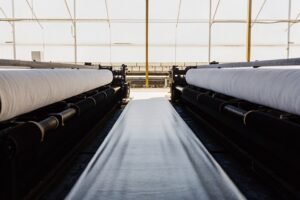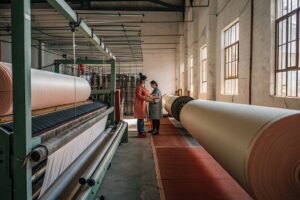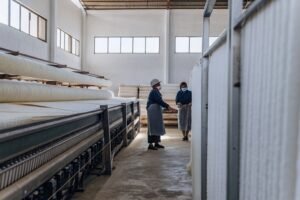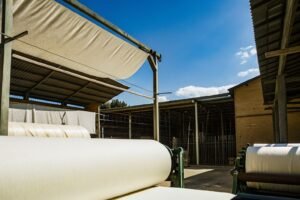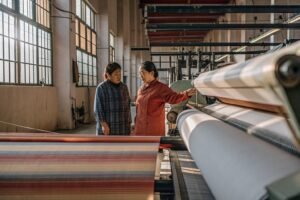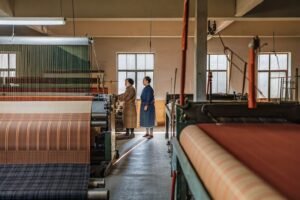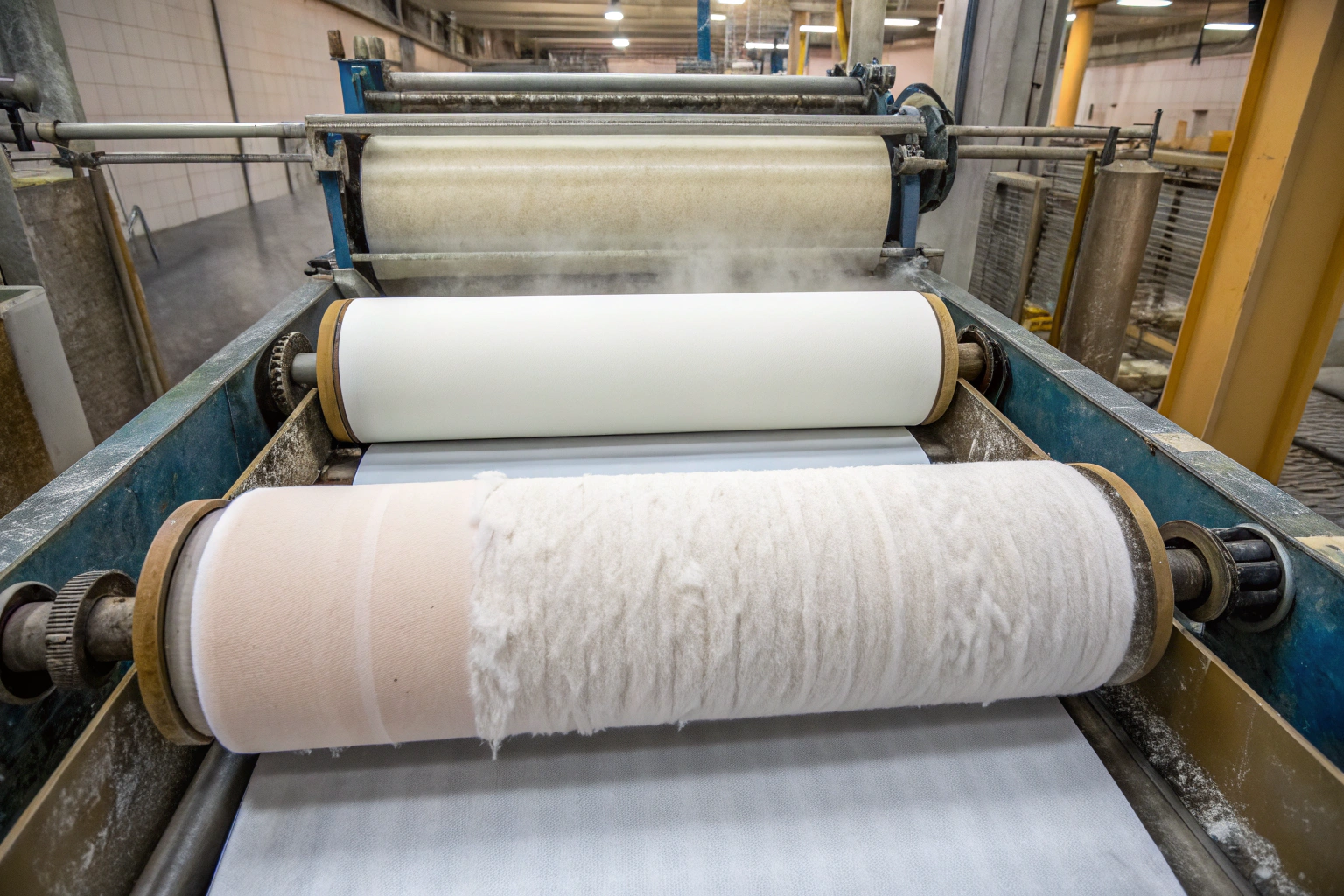
I stood in a finishing plant in 2018, watching two identical rolls of cotton poplin emerge from two different washing processes. Roll A came out of an enzyme bath, and the fabric looked… wrong. It was soft, yes, but the surface had a subtle, dusty haze, and the color looked like it had been aged ten years overnight. Roll B came out of a silicone wash, and it was so slippery and glossy that it felt synthetic, like a cheap tablecloth. Both rolls were technically "finished to soft hand feel" per the spec sheet. Both were total failures for their intended end-use. That day solidified a lesson I have never forgotten: a wash is not just a wash. An enzyme wash is a biological etching process that permanently alters the fiber surface at a microscopic level. A silicone wash is a surface coating that temporarily lubricates the fabric with a synthetic polymer film. They achieve softness through completely different physical and chemical mechanisms, and confusing the two is one of the most common and costly mistakes I see buyers make when specifying fabric finishes.
The practical difference for you, the fabric buyer, is that an enzyme wash reduces pilling, gives a natural, peachy, worn-in hand feel, and permanently degrades surface fuzz at the cost of some fiber strength and color brightness. A silicone wash gives an instant, dramatic, slippery softness that makes fabric feel luxurious on a retail hanger, but it can wash out after a few laundry cycles, interfere with subsequent printing or coating adhesion, and create a screaming nightmare for a sewing room because the fabric slides around like a wet fish under the needle. Choosing the enzyme route when you actually needed the silicone route—or vice versa—can ruin a garment’s performance, and I have seen brands discover this only when the customer returns pile up.
At Shanghai Fumao, we run both enzyme and silicone finishing lines within our Keqiao operations, and we also offer hybrid processes that combine enzyme pre-treatment with a micro-silicone topcoat for the best of both worlds. I want to demystify these two finishing technologies for you today. I will explain exactly what is happening chemically inside the fabric during each process, how each process changes the hand feel, surface appearance, and durability, and under what circumstances you should choose one over the other—or choose a carefully engineered combination.
What Is an Enzyme Wash and How Does It Chemically Alter Fabric?
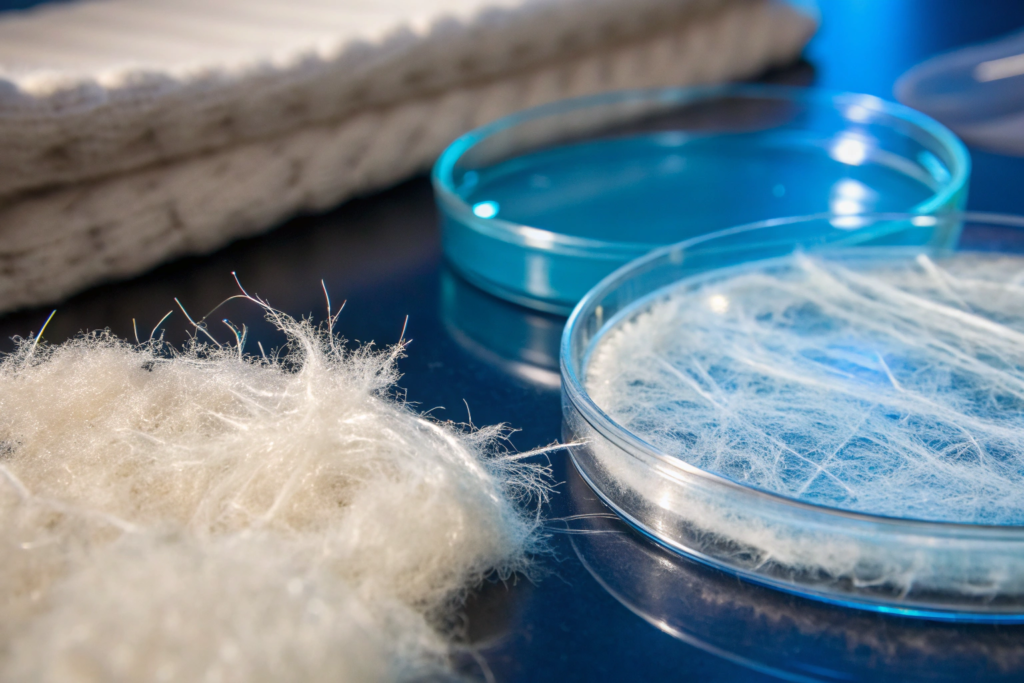
An enzyme wash, sometimes called a bio-polish or bio-wash in the industry, is a wet finishing process that uses cellulase enzymes—naturally occurring proteins that act as biological catalysts—to eat away the microscopic fuzz and protruding fiber ends on the surface of cellulosic fabrics like cotton, Tencel, linen, and viscose. Cellulase enzymes are specific: they only hydrolyze cellulose, the main structural polymer of plant fibers. They do not attack polyester, nylon, or elastane. When you throw a cotton jersey into an enzyme bath under controlled temperature and pH, the enzyme molecules seek out the tiny, damaged fibrils sticking up from the yarn surface—these are the weakest, most accessible cellulose chains—and they cleave them from the fiber body. The result is a cleaner, smoother fiber surface with dramatically less surface hairiness. The fabric feels softer not because something was added, but because something sharp and rough was removed. The process is permanent and irreversible.
The critical processing parameters for an enzyme wash are temperature, pH, enzyme concentration, and dwell time. Cellulase enzymes work optimally at a temperature range of 50°C to 60°C and a pH of 4.5 to 5.5 for acid cellulases, or pH 6.0 to 7.0 for neutral cellulases. The bath time typically runs between 30 and 60 minutes. These parameters are not set-and-forget; they must be tightly controlled because the enzyme does not know when to stop eating. If you leave the fabric in the bath too long, or if the temperature spikes, or if the pH drifts too low, the enzyme will start degrading the structural cellulose in the yarn core, not just the surface fuzz. This over-processing causes severe strength loss, and the fabric can develop holes or tear like wet paper. Stopping the enzyme reaction requires raising the bath temperature above 80°C, which denatures the enzyme protein and kills its catalytic activity, or drastically raising the pH to inactivate it. I have a strict protocol in our wet processing department: the enzyme bath is monitored every five minutes with a temperature probe and a pH strip, and the kill cycle is triggered at exactly the programmed time by an automated steam injection. No manual override. No "just five more minutes to get it softer."
Why Does Enzyme Washing Permanently Reduce Pilling on Cotton and Tencel Fabrics?
Pilling is the formation of small, tangled balls of fiber on the fabric surface. It happens when the short, loose fiber ends on the yarn surface work their way out during wear and abrasion, entangle with each other, and form pills that anchor themselves to the fabric by a few unbroken fibers. Enzyme washing solves pilling at the root cause by removing the loose fiber ends before the garment ever reaches the customer. The enzyme does not just cut the pills off the surface; it completely digests the weak, protruding fibrils that would have become pills in the future. This is a fundamental difference from mechanical surface treatments like singeing or biopolishing with pumice stones, which only cut or burn off the visible pills but leave the weakened fibrils still attached at the base. Enzyme treatment goes deeper—it removes the weakened cellulose at the molecular level.
The pilling resistance is permanent because the fibers that were going to cause pilling are simply gone. They do not grow back. A properly enzyme-washed cotton or Tencel garment will show a pilling grade of 4 to 5 on the ASTM D4970 Martindale pilling test even after multiple wash cycles, compared to a grade of 2 to 3 for the same fabric without enzyme finishing. I test this regularly in our CNAS lab. I have a retained sample archive of a Tencel-modal blend bedsheet fabric we developed in 2020. The initial untreated fabric pilled to a grade 2 after 500 Martindale cycles. After our standard enzyme bio-polish, the same fabric pilled to grade 4.5 after 2,000 cycles. I still have the pilled original and the smooth enzyme-treated sample side by side in a display frame in my office. It is one of the most convincing before-and-after demos I can show a skeptical client. The catch is that the enzyme must be matched to the specific cellulosic fiber. Tencel responds beautifully to enzyme treatment because its fiber structure is highly crystalline and uniform, so the enzyme attacks only the surface without penetrating the core. Viscose is trickier because its lower crystallinity makes it more susceptible to core degradation; the enzyme concentration must be reduced by about 20% relative to a cotton treatment to avoid strength loss.
How Does Over-Processing During Enzyme Washing Cause Fabric Strength Loss?
Over-processing is the silent killer in enzyme finishing, and it happens faster than most people realize. The cellulase enzyme does not have an off switch built into its chemistry. It hydrolyzes every cellulose molecule it contacts, without discrimination. The surface fuzz is the first to go because those fibrils have a high surface-area-to-volume ratio and are physically protruding out of the yarn structure, making them the most accessible. Once those are digested, the enzyme molecules start attacking the cellulose on the yarn surface itself. The yarn begins to thin out. The individual fibers within the yarn lose their outer layers, and the yarn’s tensile strength drops. In the early stages of over-processing, this is invisible to the naked eye—the fabric looks beautifully clean and smooth. But a tensile test reveals a 15% to 20% loss in breaking strength. In extreme over-processing, the fabric develops a "tender" hand feel, and you can actually push your finger through it with moderate pressure.
I learned the brutal economics of enzyme over-processing in 2019 with a batch of 100% linen for a European home textile brand. Linen is already a brittle, low-elongation fiber. We ran a bio-polish to improve the softness for a high-end bedding line. The lab trial was perfect. But the bulk finishing operator extended the dwell time by eight minutes to "make it extra soft," and the pH drifted down to 4.2 because the buffering agent depleted. The resulting fabric lost 35% of its tensile strength. It was completely unusable for bedding, which requires seam integrity under body weight and washing machine stress. We had to write off the entire batch. I personally re-wrote the enzyme finishing SOP after that day, adding a mandatory tensile strength test on a sample swatch pulled from the bath at the halfway point of the dwell time. If the strength drops more than 10% from the greige baseline, the cycle is terminated immediately, even if the surface is not yet perfectly clean. A slightly hairy fabric can still be sold. A fabric that tears during sewing is garbage.
What Is a Silicone Wash and How Does It Coat the Fabric Surface?
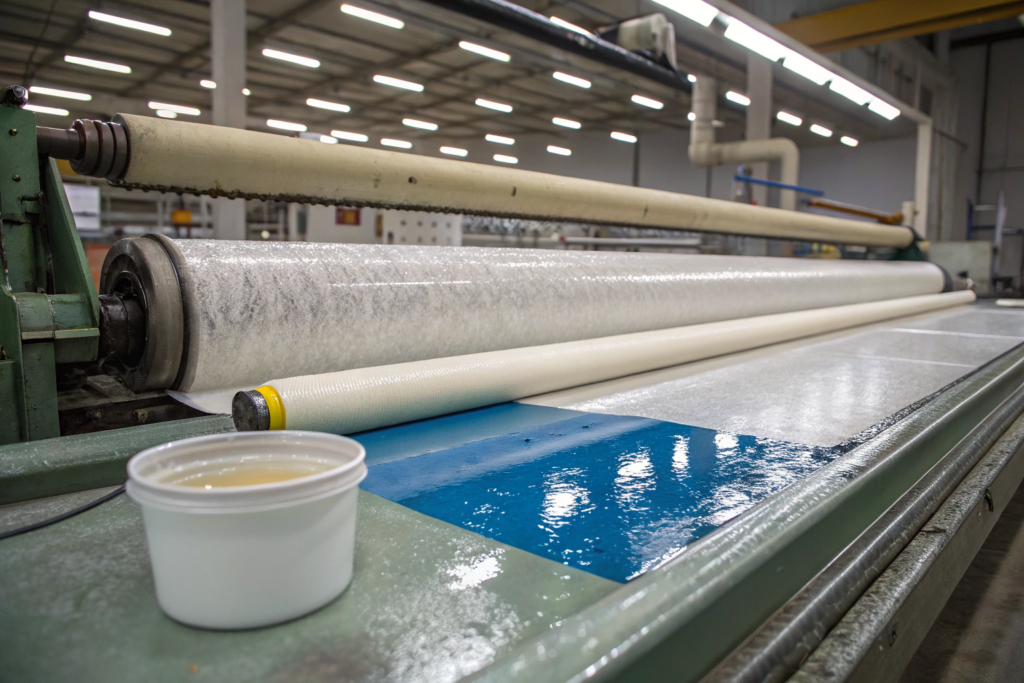
A silicone wash, also called a silicone finish or silicone softener treatment, is a surface coating process that deposits a thin film of polydimethylsiloxane (PDMS) polymer onto the individual fibers of the fabric. Unlike enzyme washing, which removes material, silicone washing adds material. The silicone molecules are typically delivered as a water-based emulsion—tiny droplets of silicone oil suspended in water using emulsifying agents. The fabric is passed through a bath containing this emulsion, squeezed between rollers to remove excess liquid, and then dried and cured at elevated temperatures, typically 150°C to 170°C. During curing, the water evaporates, and the silicone droplets coalesce into a continuous, flexible film that wraps around each fiber. This film has an extremely low coefficient of friction, which is the fundamental reason silicone-treated fabric feels so slippery and smooth. The silicone molecules also have a flexible polymer backbone that acts like a microscopic shock absorber, contributing an additional sensation of suppleness.
The performance of a silicone wash depends on three main factors: the type of silicone chemistry used, the amount of silicone solids deposited on the fabric, and the uniformity of the curing process. There are three main classes of silicone softeners in textile finishing: non-reactive dimethyl silicones, reactive amino-functional silicones, and macro or micro-silicone emulsions. Non-reactive silicones provide the most basic, wash-durable lubrication. Amino-functional silicones chemically bond to the fiber surface through their amine groups, offering better durability through laundering. Micro-silicone emulsions have extremely small particle sizes that penetrate deep into the yarn bundle, coating the internal fibers as well as the surface fibers, creating a more thorough and durable softness. At Shanghai Fumao, I select the silicone chemistry based on the client’s end-use requirements and the required number of home laundry cycles the garment must survive. A fast-fashion blouse might get a standard non-reactive silicone to keep costs down; a premium spa towel gets a macro-amino silicone for maximum durability and plushness.
Does Silicone Wash Softness Wash Out After Repeated Laundering?
Yes, and no. The answer depends entirely on the silicone chemistry chosen and the curing quality achieved in the finishing plant. A basic dimethyl silicone, applied without a cross-linking agent and cured at a marginal temperature, will largely wash out within five to ten home laundry cycles. The softness gradually fades, and the customer notices the garment becoming rougher over time. This is the "fast fashion" finish—it only needs to feel good on the retail rack and for the first few wears. An amino-functional reactive silicone, properly cross-linked and cured, can survive 20 to 50 home laundry cycles with a gradual, linear decline in surface lubricity. The reactive amine groups form covalent bonds with the hydroxyl groups on the cellulose fiber surface, anchoring the silicone molecules in place. The washing machine can dislodge the unbound silicone molecules, but the chemically bonded layer remains.
I ran an internal comparative laundering test in 2023 for a US premium loungewear brand. We prepared three sets of identical cotton-modal jersey fabric with three different silicone systems: a budget non-reactive silicone, a mid-tier reactive amino-silicone, and a premium macro-silicone with a cross-linking catalyst. We washed all three sets through 30 cycles in a commercial front-loader per AATCC Test Method 135, measuring the coefficient of friction after every 5 cycles. The budget silicone lost 60% of its softness benefit by cycle 10. The reactive amino-silicone retained 70% of its benefit at cycle 30. The premium macro-silicone with cross-linker retained 85% of its benefit at cycle 30. I presented this data to the brand owner, and they immediately upgraded their specification to the premium system for their core collection, while keeping the budget system for their seasonal trend pieces. The data made the decision easy. You need to ask your supplier not just "does this have a silicone wash," but "which silicone chemistry, and what is the laundering durability data?"
How Does Silicone Coating Interfere With Post-Treatments Like Printing and Coating?
This is a question that comes up frequently from brands that do value-added processing after fabric delivery. Silicone finishes create a low-surface-energy film on the fibers that actively repels water-based inks, adhesives, and coating polymers. If you try to print on silicone-treated fabric with water-based pigment inks, the ink beads up on the surface instead of penetrating and bonding to the fiber. The print will have poor wash fastness and may crack or peel. If you try to apply a polyurethane (PU) coating to a silicone-treated base fabric, the coating adhesion will be severely compromised because the silicone film acts as a release layer between the fiber and the PU. I have seen this failure mode repeatedly: a brand sources a lovely, soft, silicone-treated nylon from a generic supplier, sends it to a third-party coater for a waterproof PU lamination, and the coating delaminates in the field like peeling a sticker.
The industry term for this is "surface energy incompatibility." Silicone surfaces have a critical surface tension around 24 dynes/cm, while water-based print pastes and most coating systems require a substrate surface tension of at least 38 to 44 dynes/cm to achieve proper wet-out and adhesion. If you are planning to print, coat, bond, or laminate fabric, you must inform the finishing plant upfront so they either skip the silicone softener entirely, or apply a sacrificial, re-wettable silicone that can be washed off before printing, or use a specialty "printable silicone" chemistry that contains hydrophilic co-polymers. At Shanghai Fumao, I have a dedicated finishing route called "pre-print preparation" that uses a cationic fatty-acid softener instead of silicone to provide sewing lubricity without compromising the surface energy for subsequent printing. I always ask the client during the development phase: "Will this fabric be printed, coated, or laminated after delivery?" If the answer is yes, silicone is off the table unless we engineer a specific compatible system.
When Should You Choose Enzyme Wash Over Silicone Wash for Your Fabric?
The decision tree between enzyme wash and silicone wash starts with a single clarifying question: is the primary goal to permanently solve a fiber problem, or to temporarily create a retail hand feel? If your fabric has a pilling problem, a surface hairiness problem, or a "cheap feel" caused by protruding fibrils on cellulosic fibers, enzyme wash is the correct engineering solution. It permanently removes the defect-causing material. If your fabric is structurally sound, already smooth and pill-resistant—like a filament polyester or a tightly woven, non-fuzzy cotton—and you simply need to elevate the tactile luxury for retail appeal, silicone wash is the appropriate cosmetic finish. The second clarifying question is about the supply chain downstream from you. If your customer or your own manufacturing process involves printing, coating, or bonding, avoid silicone unless you have verified compatibility. If the end-user is washing the garment frequently and expects long-term softness, a reactive silicone or an enzyme-plus-silicone hybrid is the durable solution.
Let me give you a real-world comparative scenario from 2024. A UK childrenswear brand came to me with two fabric requirements: a cotton interlock for everyday playwear, and a cotton-silk voile for a special-occasion dress. For the interlock, I recommended an enzyme bio-polish only, no silicone. The enzyme permanently removed the surface fuzz that would pill under the abrasive wear of playground activity and frequent home laundering. The fabric had a clean, natural, peachy hand feel that mothers perceive as "healthy" and "breathable" for children. Silicone would have given a slipperier initial feel, but it would have reduced the fabric’s absorbency, and mothers would have complained about clamminess. For the dress voile, I recommended a light enzyme pre-treatment to clean the surface, followed by a micro-amino-silicone topcoat. The enzyme gave the permanent anti-pilling base, and the silicone provided the instant, luxurious, silky drape that sells a special-occasion dress on a retail hanger. The two fabrics served two different functional and emotional purposes, and the finishing choices reflected that.
Which Fabric Types and Fiber Compositions Benefit Most From Enzyme Bio-Polish?
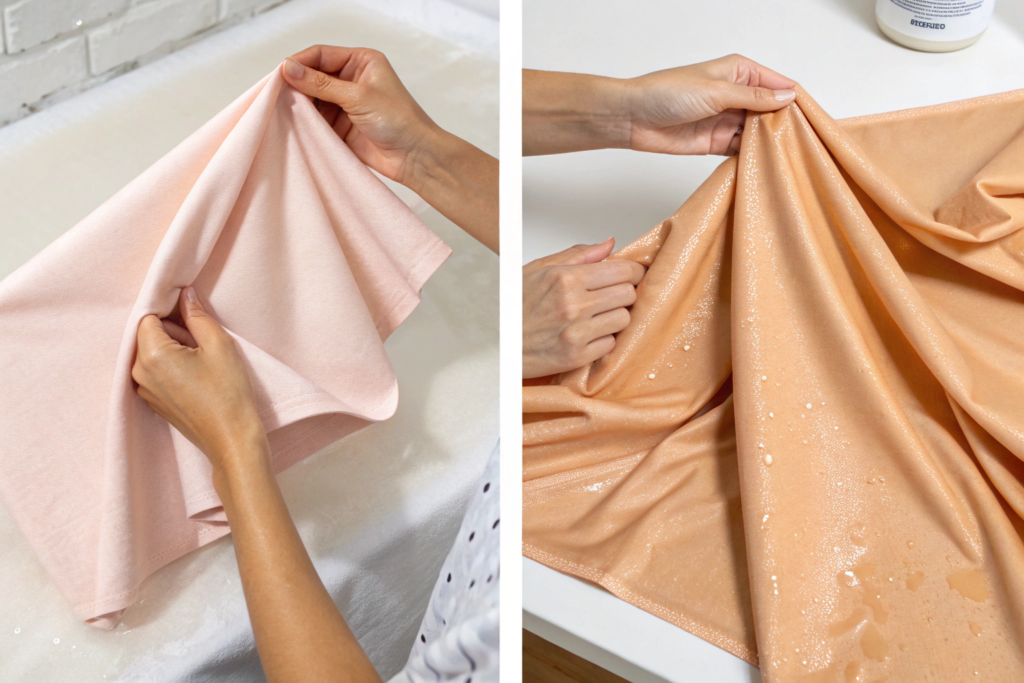
Cellulosic fibers and their blends are the primary candidates for enzyme bio-polish: 100% cotton, cotton-spandex, Tencel, modal, viscose, linen, bamboo viscose, and any blend of these with each other. The enzyme works exclusively on the cellulose component, so in a cotton-polyester blend, only the cotton fibers are polished; the polyester fibers are chemically invisible to the enzyme. This selectivity can create a useful differential effect—the cotton component becomes smooth and soft while the polyester component retains its original surface, providing structural strength. Tencel and modal are perhaps the best-performing fibers under enzyme treatment because their high crystallinity and smooth extrusion profile means they have fewer internal weak points for the enzyme to attack, resulting in excellent surface cleaning with minimal strength loss. Linen responds well but requires careful process control due to its natural brittleness. Viscose is the most risk-prone cellulosic; I always reduce enzyme concentration and dwell time by 20% to 30% relative to a cotton baseline and run a mandatory tensile strength check at the midpoint.
Synthetic fibers—polyester, nylon, acrylic, spandex—gain zero direct benefit from enzyme treatment because cellulase enzymes do not hydrolyze synthetic polymer chains. However, synthetic fibers in a blend can experience indirect benefit: the enzyme removes the short, fuzzy cellulosic fibers that tend to migrate to the surface and cause pilling in blended fabrics. So a 60/40 cotton-polyester fleece that is enzyme bio-polished will pill significantly less than an untreated version, not because the polyester surface changed, but because the loose cotton fibrils that initiated the pill formation have been digested away. This is useful knowledge for activewear and athleisure brands working with cotton-rich blends. A question I hear often is: "Can I enzyme-wash a 100% polyester fabric?" The honest answer is: there is no chemical point, but sometimes I will run a blank enzyme bath—just water and buffer, no enzyme—on polyester to simulate the mechanical agitation of the process and slightly soften the fabric through physical working alone. It is not true enzyme treatment, but it can produce a modest softening effect.
In What Situations Is a Hybrid Enzyme-Plus-Silicone Process the Best Solution?
The hybrid process—sometimes called a "bio-silicone" or "dual finishing" route—combines enzyme bio-polish as the first stage with a controlled silicone topcoat as the second stage, in sequence, in the same wet processing line. This gives you the permanent anti-pilling and surface cleanliness of the enzyme treatment plus the instant retail hand-feel luxury of the silicone, while using less silicone than a standalone silicone wash because the enzyme has already smoothed the surface. A rough, fuzzy surface requires more silicone to feel smooth; a clean, enzyme-polished surface achieves the target softness with a lower silicone add-on, which reduces cost and minimizes the negative side effects of heavy silicone loading, such as reduced absorbency and sewing slipperiness.
The hybrid is ideal for premium casualwear and athleisure that must look and feel expensive on the rack but also survive repeated washing without becoming rough. It is also the standard specification I recommend for Tencel and modal knitwear, which have inherently beautiful drape but are prone to pilling in their untreated state. The enzyme provides the pill defense; the micro-silicone provides the buttery hand that consumers associate with "premium modal." I have a signature hybrid formulation I developed for a US-based sustainable basics brand in 2023. Their core fabric was a 95% Tencel, 5% elastane single jersey. The initial fabric pilled within 5 washes and felt only average in softness until it was washed three times at home to remove the temporary mill starch. We ran our hybrid route: neutral cellulase enzyme at 0.5% concentration for 40 minutes at 55°C, kill cycle, rinse, then a micro-amino-silicone emulsion at 1.0% solids pickup, padded and cured at 160°C. The result was a fabric that tested at a Grade 4.5 pilling resistance after 30 washes, with a coefficient of friction comparable to a standalone silicone wash at three times the silicone loading. The brand owner called the finished fabric "the softest Tencel I have ever touched." That is what a well-engineered hybrid process delivers.
Conclusion
Enzyme wash and silicone wash are not interchangeable vocabulary terms on a fabric spec sheet; they are fundamentally different finishing technologies with distinct mechanisms, durability profiles, and suitability for different end-uses. Enzyme wash is a subtractive, biological process that permanently removes surface fuzz and reduces pilling on cellulosic fibers by hydrolyzing the weak protruding fibrils. It trades a small amount of fiber strength for a permanent improvement in surface cleanliness and a natural, peachy hand feel. Silicone wash is an additive, chemical coating process that deposits a low-friction polymer film on the fiber surface, delivering an instant, dramatic, slippery softness that varies in durability depending on the silicone chemistry chosen and the curing quality. It can interfere with subsequent printing, coating, and bonding operations.
The right choice depends on your fiber composition, your downstream manufacturing processes, and your end-consumer’s expectations for softness durability. For cotton, Tencel, modal, and linen fabrics where pilling is a known risk and a natural hand feel is desirable, enzyme bio-polish is the superior long-term solution. For synthetic fabrics or cellulosic fabrics where retail rack appeal is the top priority and the supply chain does not involve printing or coating, a reactive silicone wash delivers immediate tactile luxury. For premium products where both anti-pilling permanence and luxury softness are required, a hybrid enzyme-plus-silicone process provides the best of both worlds.
At Shanghai Fumao, I run all three routes—enzyme-only, silicone-only, and hybrid—within our Keqiao finishing operations, with full lab testing to validate the results before bulk production. I do not guess at the right finish; I test, measure, and verify. If you are developing a fabric and are unsure which finishing route is appropriate for your specific fiber blend and end-use, I have twenty years of comparative data and physical sample archives to guide the decision. Reach out to our Business Director, Elaine, at elaine@fumaoclothing.com. Tell her your fiber composition, your target hand feel, and any downstream processes like printing or coating you have planned. She will work with our wet processing team to recommend a finishing specification and provide a small finished sample for your own evaluation. Let us dial in the right finish so your fabric performs as good as it looks.