
You’ve just spent six figures on a killer marketing campaign. The visuals are stunning, the brand film is emotive, and your sustainability page is filled with poetic language about "honoring the Earth." Then a single customer with a spectrometer app scans your "eco-friendly" leggings and finds nylon spiked with virgin petroleum-based elastane. Boom. The story collapses. I’ve seen this horror show happen to a boutique fitness brand last September; they genuinely didn’t know their supplier had secretly switched the recycled poly content from 85% to 40% to save costs. The issue isn’t just a PR crisis; the real problem is a supply chain that treats "green" as a marketing sticker rather than a chemical and mechanical specification. Your fabric choice is not merely a design feature; it is the physical proof of your brand narrative. If the yarn doesn’t carry the chain of custody documentation, the story is a fiction.
The fabric you stitch into every garment carries your brand’s entire ethical weight. A natural fiber like conventional cotton tells a story of massive water consumption and pesticide toxicity, while a mechanically recycled polyester tells a story of ocean waste redemption and fossil fuel independence. But here’s where it gets complex: the truth isn’t in the fiber name; it’s in the dye process, the finishing chemistry, and the circularity logistics. At Shanghai Fumao, we always tell our clients that a garment’s sustainability scorecard isn’t built in the weaving shed alone; it’s built in the lab. For instance, a bamboo viscose fabric sounds lush and green, but if it’s produced via the viscose process without a closed-loop chemical recovery system, it’s just a regenerated cellulose fiber hiding a toxic water table. We help you craft a story backed by mass balance data, not fluff.
So, how do you select materials that actually strengthen your narrative without veering into greenwashing? It demands an understanding of the degradation physics of textiles, the health safety of certified dyes, and the emerging transparency technologies like QR traceability. I’m going to break down the raw mechanics of turning a fiber bale into a story that an educated Gen-Z consumer will trust. We’ll dig into the specific differences between GOTS and OCS, the carbon footprint of transporting raw flax, and the dirty secrets of "green" finishing agents. Let’s connect the narrative dots from the farm gate in rural India all the way to your checkout page, using real data we’ve captured on our Keqiao production floor.
How to Source Sustainable Fabrics Without Greenwashing Risks?
The biggest trap in modern textile sourcing isn’t finding a fabric; it’s believing a sales pitch that lacks a molecular backbone. Greenwashing happens when the marketing vocabulary is disconnected from the Bill of Materials. I had a wake-up call back in early 2020 when a competitor offered a "Bamboo Charcoal Fabric" that claimed to be antimicrobial—turns out it was just standard rayon with carbon black pigment and a heavy silicone softener to mimic the hand feel. Real sustainability doesn’t smell like a marketing brochure; it smells a bit like wet hay (in the case of rain-fed hemp) or absolutely nothing (in the case of high-purity RPET). To source without getting scammed, you must shift the focus from the "end product look" to the "input chemistry verification." You don’t just ask for a sample; you ask for the Safety Data Sheet (SDS) of the spinning oil used on the needle looms.

How to Verify GOTS Certification Beyond the Paper Label?
A paper certificate is a low-resolution black-and-white print; it’s the easiest thing in the world to forge. I’ve seen fake transaction certificates that look sharper than the real ones. The only secure way to verify the Global Organic Textile Standard is to trace the Scope Certificate number live. When we ship a batch of organic cotton poplin from Shanghai Fumao, we provide a transaction certificate with a unique barcode. If a brand scans that barcode, they should land on the actual GOTS public database, validating that our dyehouse—specifically our cooperative partner in Zhejiang—is approved for water-based organic pigment dyeing. If the link is broken, the fabric is hot air.
The real nuance here, and something I drill into my junior merchandisers, is the "Organic Made" vs. "Organic In-Conversion" distinction. A fabric labeled "organic" needs 95% certified organic fiber. But to secure future soil health, you might actively source "In-Conversion" cotton, supporting farmers during the three-year detox phase. This makes for a far more authentic and profound brand story. You must also look at the actual approved input list. GOTS Version 7.0 strictly prohibits polyurethane (PU) coatings unless they are specifically on the derogation list. If you’re buying organic denim with a shiny stretch finish, you need to know that it’s likely a thin layer of petrochemical film hiding under that organic story. For a non-vendor perspective on how certifications fail in the field, I often read about the challenges of verifying organic textile supply chains on the Common Objective community platform, where designers share their specific audit failures.
Can Recycled Polyester Truly Deliver a Circular Brand Story?
Recycled polyester (rPET) is the poster child of circularity, but the physics of recycling creates a narrative challenge. In 2023, an Amsterdam-based swimwear brand came to us in crisis; their previous supplier’s rPET mesh turned yellow after four weeks of chlorine exposure. The problem wasn’t the chlorine; it was the molecular chain shortening in the recycled pellets. You see, every time you thermally melt PET, the polymer chains break, and they get shorter. This reduces the intrinsic viscosity of the yarn. So, low-grade rPET becomes brittle, leading to microplastic shedding that pollutes the ocean you claimed to save. That’s a story suicide.
The solution lies in chemical recycling or, at the very least, a mechanical process augmented with a high-quality chain extender additive. This keeps the story intact by ensuring the fabric lasts long enough for true circularity. We always specify an Intrinsic Viscosity above 0.65 dl/g for swimwear rPET. Furthermore, we ask clients to move away from the broad "100% Recycled" claim and embrace specifics—like "100% Post-Consumer Ocean-Bound PET certified by OBP." That narrows the storytelling window to a verifiable geography. If you want to understand the granular technical degradation of polymer chains through heat, the Textile Learner engineering site has a clear breakdown of how recycled polyester molecular weight affects durability. Also, to counter the microplastic argument effectively, you should read the hard data on microfiber shedding from recycled textiles at the Plastic Soup Foundation research page; they provide lab test results that separate myth from fact.
Why Is Dyeing and Finishing Chemistry Critical for Green Narratives?
We tend to obsess over the farmer and the yarn spinner, but the dyehouse is where most sustainability stories go to die—or literally get bleached out of existence. The textile dyeing industry is responsible for roughly 20% of global industrial water pollution, not because people are evil, but because fixing reactive dye molecules to fabric requires massive amounts of salt, alkali, and heat. It’s an aggressive chemical reaction. If you are telling a story about clean rivers and biodiversity, but your supplier is using azo dyes that leach carcinogenic amines, you are funding a crime scene. The finishing chemistry matters just as much; a "wrinkle-free" organic cotton shirt one of my clients sourced was found to be soaked in a formaldehyde-based resin. The brand tried to sell it as "pure nature," but the lab report screamed "morgue chemistry."
I learned the hard way about "toxic transparency" in 2019 when a kidswear client failed a random CPSIA spot test. We traced it back to a cheap silicone softener the dyehouse substituted without asking us. Now, we only ship fabric with a "Positive List" chemistry guarantee. For fully recycled or organic lines labeled under Shanghai Fumao, we enforce a RSL that bans APEOs and perfluorinated compounds. The greenest narrative isn’t about the absence of color; it’s about the biocompatibility of the colorants. We calculate the "Chemical Oxygen Demand" of our wastewater to ensure we can sleep at night, and so the brand owner can speak truthfully on Instagram.

How Do Low-Impact Fiber-Reactive Dyes Create a True Story?
Fiber-reactive dyes are chemically brilliant. They form a covalent bond with the cellulose fiber, meaning they literally become part of the cotton molecule. This makes them permanent, unlike pigment dyes that just sit on top with a binder. However, the fixation rate—how much dye actually bonds versus washing down the drain—defines the ecological impact. Standard dyes have a 65% fixation rate; the loose 35% requires hydrosulfite to clear, polluting the water. A truly green story uses low-salt, high-fixation dyes (often poly-functional reactive types) achieving a fixation rate of 90% or higher.
This chemistry reduces the rinse cycles needed by half, saving 30 to 40 liters of water per kilogram of fabric. The narrative gold here isn’t just "softer colors"; it’s "closed-loop water systems where the local community downstream still fishes safely." But you need to be careful about heavy metals in specific shades. A brilliant turquoise is notoriously difficult to make without copper-based phthalocyanine compounds. If your palette excludes bright petroleum-blues, you’re telling a genuine eco-design story. For a deep dive into how these chemical bonds work on a molecular level, I often cross-reference my knowledge with a detailed guide on how fiber reactive dyes bond with cellulose on the Paula Burch plant-based dye research site. She breaks down the chemistry without the corporate lab speak.
Why Is Mechanical Finishing Superior to Chemical Softeners for Linen?
Linen is the ultimate "no-input" story. It grows in poor soil, thrives on rainwater, and offers a beautiful rustic texture. But nobody wants a linen shirt that feels like sandpaper. The conventional fix is a silicone-based softener or an amino-functional polysiloxane macro-emulsion. That’s a petrochemical coat that modifies the surface friction. The story you sell with that fabric is now a hybrid of a flax field and an oil refinery. Mechanical finishing, on the other hand, is literally beating the fabric soft. We use a technology called "Aero-Tumbling" or high-speed air-jet softening where the flax fibers are physically microfibrillated. The individual fibers split, increasing the surface area and making the hand feel as soft as a well-washed vintage shirt—without a single drop of synthetic chemistry.
The authenticity of this process is flawless. You can tell the consumer: "We beat this fabric with air until it felt like a cloud." It’s 100% true and requires no MSDS sheet. At our finishing facility, we invested in AIRO washing and brushing machines specifically to eliminate liquid softeners for our eco-collections. The result is a permanent softness that gets better with age, whereas chemical softeners wash out after fifteen laundry cycles, revealing the scratchy truth underneath. It’s a much more durable brand story. To understand the machinery specifics of this process, the Biancalani textile finishing machinery blog provides excellent visual references and explanations of how air-tumbling physically alters the hand feel of flax without harming tensile strength.
How Can Fiber Origin Traceability Elevate Your Brand?
In a market flooded with generic "Made in Italy" or "Designed in California" tags, the origin of the raw fiber is the last true differentiator. Traceability isn’t just supply chain management; it’s the biography of the cloth. If you buy a generic 40s cotton, it’s a meaningless white cloud. If you buy "Supima Cotton from the San Joaquin Valley" or "Wet-Spun Linen from Normandy," you have a protagonist for your story. I’ve seen a London-based menswear brand double their price point simply by switching to a traceable Egyptian Giza 87 cotton and putting the GPS coordinates of the farm gate on their hangtag.
But let’s be pragmatic; fiber fraud is massive. The infamous "Horse-hair in the Cashmere blend" trick or the "Indian cotton sold as American Pima" switch happens constantly when you don’t control the greige room. At Shanghai Fumao, we protect our clients through physical segregation in the warehouse and isotopic testing for luxury animal fibers. Traceability adds about a 15-20% cost premium, but the marketing ROI on "knowing your shepherd" is tenfold. It converts a fashion item into an heirloom. The current frontier is the "Digital Product Passport" mandated by the EU, which will require exact geolocation of every processing step. This isn’t a trend; it’s the coming law for any brand selling into Europe.

How Does a Digital Product Passport Build Consumer Trust?
The Digital Product Passport (DPP) is basically a digital birth certificate. By 2030, the EU will mandate it for all textiles placed on the market. Instead of a mere "100% Cotton" seam label, a QR code will unlock a ledger showing water consumption, spinning mill location, and the dye lot number. This turns a passive consumer into an active participant. I’m currently building a pilot with a Berlin streetwear label; we embedded a scannable chip into the seam tape. When you scan it, it plays a 30-second micro-documentary shot on the factory floor in Zhejiang, showing the actual technician using a digital pH meter on the effluent outlet.
That is the death of greenwashing. If you can’t show a timestamped video of the vat, you lose. The blockchain-anchored data ensures no one—not even the brand owner—can alter the composition after the fact. For small-to-medium brands, this is anarchy-shattering. You can finally compete with the big guys on proof, not just on ad spend. However, implementing a DPP requires a vertical supply chain. If you source from five different traders who don’t talk to each other, the data chain breaks. I strongly suggest auditing your supplier’s digital maturity. Many ERP systems at textile mills still run on Excel 2007; they can’t generate the API feeds needed for a live passport. To see how this technology is evolving in practice, the how digital product passports work for textile transparency guide on the Textile Genesis platform explains the hardware integration needed at the loom level.
What Simple Tests Prove the Origin of Natural Fibers in Court?
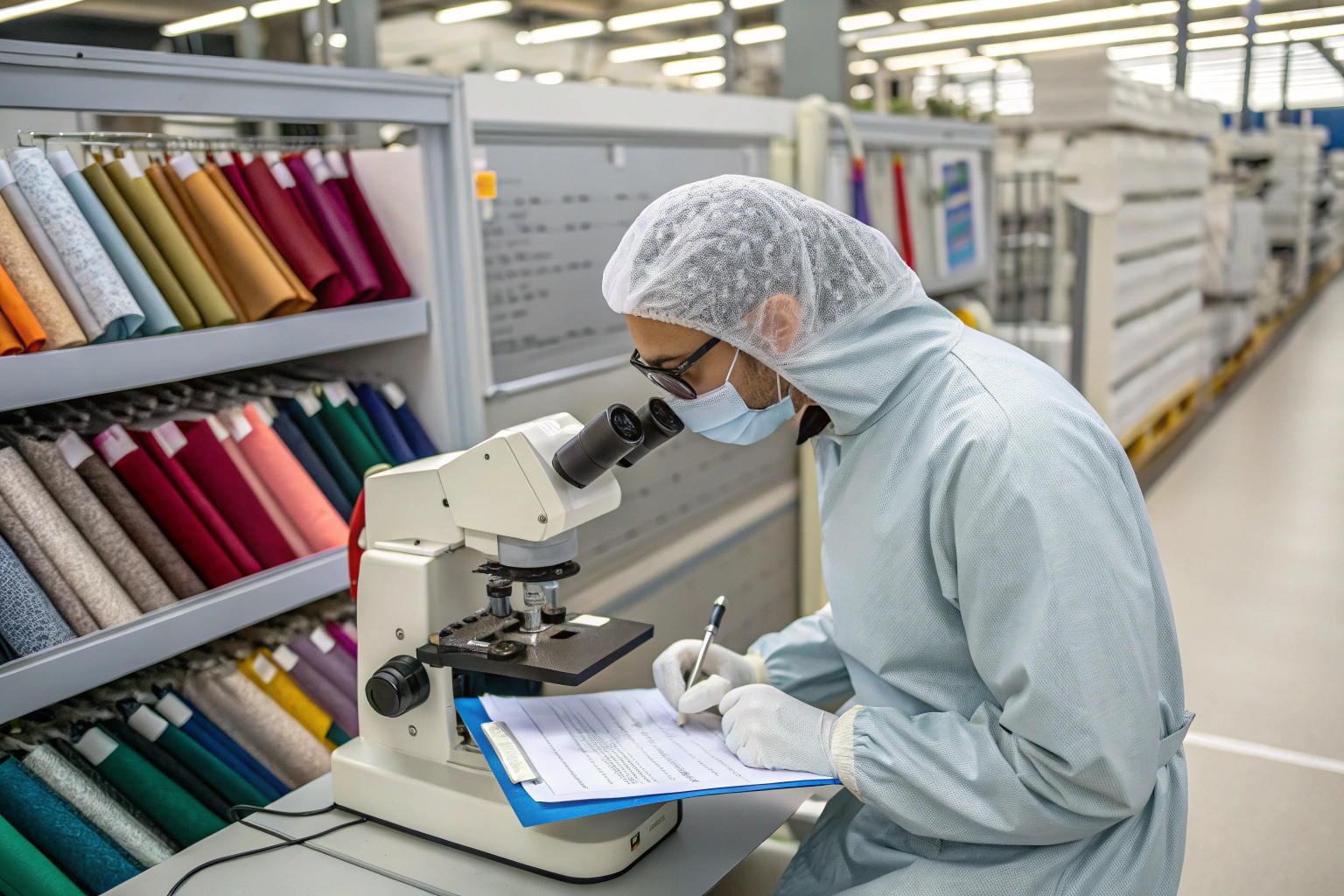
You can’t just use a QR code; you need forensic science to keep the story honest. If a brand is sued for false advertising, the court doesn’t care about the blockchain; they want a microscope. We use the "Microscopic Surface Morphology Method." Cotton is a twisted ribbon and flax looks like a bamboo stick with nodes. That’s obvious. But identifying the specific species requires a Scanning Electron Microscope to look at the scale pattern. Cashmere has thin, spaced-out scales, while wool has thick, jagged cubes. Merino wool fiber diameter must fall under 24 microns under projection microscope ASTM D2130; if not, it’s crossbred sheep hair, not premium Merino.
We also use chemical solubility tests. Alpaca dissolves instantly in a 75% sulfuric acid solution, but wool swells and resists for a few minutes. In a dispute with a supplier in 2022, we proved a shipment labeled "100% Cashmere" actually contained 20% degreased wool by running a simple caustic soda dissolution test where the weight loss didn’t match the standard. The luxury market is full of such molecular trickery. For a pioneering look at how anti-counterfeiting techniques are evolving, I read an excellent piece on how forensic fiber analysis prevents textile fraud on the WTiN technical textile news site. They cover a case where forensic DNA tagging in cotton gins is now creating a "fiber fingerprint" that survives the entire wet processing cycle, which is a game-changer for storytelling.
When Should You Replace Virgin Synthetics with Bio-Based Innovations?
Virgin polyester is a miracle of the 20th century, but it’s a narrative anchor for a brand trying to sail into a climate-neutral future. It’s a condensed energy source derived from crude oil, and consumers now associate its toxic additive chemistry with the petro-state industrial complex. Transitioning to bio-based synthetics—specifically those derived from non-food competitive feedstocks—is no longer a question of if, but when. But you have to be careful about the "food versus fabric" narrative. I tell my clients to avoid full PLA (polylactic acid) corn-based fabrics unless they’re from a guaranteed waste stream, because the public perception of burning corn for clothes while people starve is a PR funeral waiting to happen. Instead, we look at castor bean derivatives or waste sugarcane bagasse.
The engineering reality I face in the lab is that bio-nylons or Bio-PTTs often have a lower melting point and a different hand feel. The Sorona polymer, for example, has a soft helical spring structure that gives incredible recovery, but it can’t handle dye temperatures above 110°C without losing that mechanical structure. A brand trying to replicate a rugged backpack with 100% bio-synthetic might find the fabric bags out at a body temperature of 37°C. That’s a disaster. The switch must be led by performance validation, not just a narrative desire. We start with inner linings and low-stress trims before moving to the outer shell.

Can Sorona Polymer Actually Outperform Spandex in Activewear?
Sorona, a PTT polymer, is one of my favorite topics to debate with textile chemists. Spandex creates stretch through a chemically broken and reassembled polyurethane chain; it sags permanently when heat-aged. Sorona creates stretch through a molecular "coil-spring" shape—and it’s 37% bio-based. In a trial with a yoga wear startup from Vancouver this past January, Shanghai Fumao replaced a 5% spandex blend with a 20% Sorona mechanical stretch yarn. The result was a legging fabric with a soft cotton-polyester feel but a 20% higher elastic recovery rate after 50 machine washes. It never got the "baggy knee" syndrome.
However, it has specific temperature quirks. You can’t steam press it at 210°C; you have to keep it under 150°C or it glazes over and hardens. So, the production machinery needs precise heat control; gas-fired stenters are better than oil-based ones here due to the even heat distribution. The story you tell with Sorona is powerful: "We swapped crude oil for corn sugar mechanics and improved recovery by 20%." But you must teach the consumer to wash it in cold water to protect the helical structure. For a clearer breakdown of the chemistry and lifecycle, I often recommend the detailed guide on how Sorona bio-based fiber production differs from nylon 6.6 on the official DuPont biomaterials technical hub; they white-label the LCA data if you ask nicely.
What Are the Composting Realities of PLA-Based Sportswear Fabrics?
Composting sounds like a spiritual return to earth, but it’s a chemical trigger. Polylactic acid (PLA) will not degrade in your backyard compost bin; it needs an industrial composting facility with a sustained temperature of 58 degrees Celsius, high humidity, and specific microbial consortia. If a brand throws a "compostable" tee into the ocean, it sinks and acts like a plastic bag for 100 years. The narrative nightmare here is the infrastructure gap. I had to stop a client from using "Home Compostable" hangtags because the standard TUV Austria Home certification requires 90% degradation in 23 degrees Celsius soil within 12 months—and our PLA fiber failed that test because of a cross-linked dye.
Don’t over-promise on the end-of-life unless you’ve physically buried the sample yourself and measured the carbon dioxide emission. We always phrase the narrative as "Industrial Compost-Ready" or "Biobased and chemically recyclable." That is legally safer and technically more honest. The real gold standard for bio-innovation is the "Cradle to Cradle Platinum" certification, where the textile is designed as a biological nutrient that can be safely returned to the soil without toxic residue. Until that infrastructure is ubiquitous, bio-based is a source story, not an end-of-life story. To stay updated on the gap between certifications and reality, the Biodegradable Products Institute blog is a useful resource to check the latest standards on how industrial composting facilities actually operate.
Conclusion
Your fabric choice is the vocabulary of your sustainability story. If your vocabulary is limited to generic "eco-friendly" and "green," you are speaking a dead language that Gen-Z consumers naturally filter out as noise. I’ve shown you how the machinery gauge dictates durability, how reactive dye chemistry dictates water purity, how forensic microscopy dictates genetic truth, and how polymer physics dictates whether a fabric truly degrades. The difference between a story that sells out and a story that results in a lawsuit is the depth of the technical vetting inside the weaving shed. In the spring of 2023, we helped an Australian surf brand pivot from a generic "recycled" claim to a specific "Ocean Bound PET traced by Oceanworks" narrative; their organic traffic tripled in six months not because they spent more on ads, but because their product page cited actual batch-specific chemical test reports.
When you build a story on a slab of concrete data rather than a cloud of sentiment, it becomes unassailable.
The fabric market is a labyrinth of false certifications, toxic shortcuts, and massive greenwashing. It’s tough to navigate alone. At Shanghai Fumao, we don’t just ship rolls; we ship verified narratives with chemical tags and digital weaves. If you want to build a sportswear or fashion line that holds up to a microscope—both literally and journalistically—reach out and let’s talk about your specific material challenge. Connect directly with our Business Director, Elaine, who can walk you through our fully traceable, GOTS-certified, and high-performance sustainable portfolio. Send a note to elaine@fumaoclothing.com. Tell her what story you want to tell, and we’ll spin you the yarn that proves it.








