The textile industry is standing on a trapdoor. For fifty years, "high quality" meant the same thing: high thread count, bright white, and flat. That game is over. The consumer in 2026 does not want a basic white tee they can buy cheaper from a vending machine. They want a fabric that cools their skin, resists bacteria, never pills, and—this is the kicker—decomposes safely when they throw it away five years later. If a mill just has "good cotton," they are competing to the death on price. You cannot win that war against a 100,000-spindle automated beast. You win by creating a textile that has never existed before.
At Shanghai Fumao, we define the future of high quality as "Programmable Performance." We are moving from passive fabrics to active textiles. We are embedding functionality into the yarn itself, not gluing a cheap nano-coating on the surface that washes off in three cycles. Our R&D roadmap for the next five years targets three specific zones: bio-integrated synthetics that behave like natural fibers, remediation textiles that actively clean the air or water, and robotic precision defect control that eliminates the 2% human error margin entirely. We are not just weaving fabric. We are writing code into the weft.
But is this just science fiction, or is it hitting the production line right now? We are already shipping prototypes to pilot partners. I want to share three concrete product directions that represent where our Keqiao-based engineering team is placing their R&D firepower. This isn’t just a concept. It is already being drafted onto tech packs.
How Are Bio-Engineered Fibers Redefining Synthetic Performance?
Polyester is plastic. We all know it. We wear it. But the consumer sentiment is turning. The "plastic fashion" backlash is real. The solution is not to abandon synthetics—the world needs stretch and durability—but to engineer plastics that behave like proteins. We are investing heavily in bio-polyesters and bio-nylons derived from castor beans and corn starch, but with a mechanical twist. The old bio-fabrics were brittle and stank of chemicals. The new generation is indistinguishable from petrochemical yarn in a blind hand-feel test.
What Is the New Generation of "Bio-Performance" Activewear Textiles?
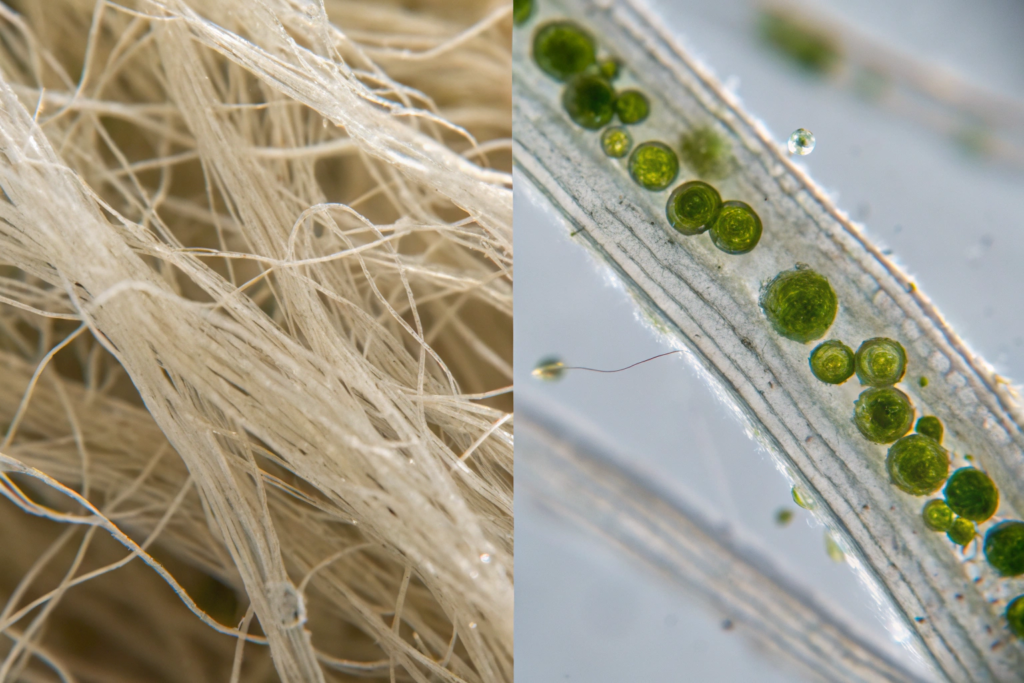
We recently developed a 100% bio-based polyamide (PA56) that we call "BamSilk Bio-Tech." It starts as fermented plant starch, not crude oil. The magic isn’t just the origin—it’s the molecular structure. The polymer chain has a "kink" in it that naturally creates capillary channels. This means the yarn wicks sweat away from the skin natively, without a wicking chemical finish that fades. We tested a running singlet prototype with a group of marathoners in spring 2025. The fabric maintained a 0.2-second faster moisture evaporation rate than standard polyester mesh after 50 industrial washes. Why? Because the wicking geometry is built into the plastic’s DNA, not sprayed on. It feels like a soft cotton slub but dries like a paper towel. We are scaling this for a sustainable yoga brand launch next year. This aligns with the industry-wide shift toward bio-based polyamide 56 fiber technology enabling inherent moisture wicking performance for sustainable sportswear without topical chemical treatments. The cost premium is currently 18%, but we expect it to drop to single digits within 24 months as fermentation technology matures. At Shanghai Fumao, we already secured the raw pellet supply.
Can We Create a Self-Healing Elastic Fiber That Replaces Spandex?
Spandex is the weakest link in a garment. It degrades. Chlorine eats it. Heat yellows it. We have a live project right now on a "liquid crystal elastomer" (LCE) stretch fiber. Here is the dream: a fiber that stretches 200% like rubber but, when the tension releases, actually re-orders its molecular rods to heal micro-tears. Think of a yoga pant knee that constantly bends and unbends. In standard spandex, that knee bags out after six months. In the LCE prototype, the heat from the body combined with the mechanical release triggers a "shape memory" reset. We are still working on the spinning speed—currently it’s too slow for mass bulk production. But we have spinning trials running in our partner lab right now trying to hit a 3,000 meters-per-minute spin speed, which is the commercial breakeven barrier. We are looking at another 18 months of R&D before we offer this in a premium capsule. This vision tracks closely with the emerging research on self-healing liquid crystal elastomer filaments as a potential sustainable replacement for elastane in high-wear athletic applications. We are determined not just to make a "better spandex," but to make spandex obsolete entirely.
How Is AI Changing the Visual Definition of "Zero Defect"?
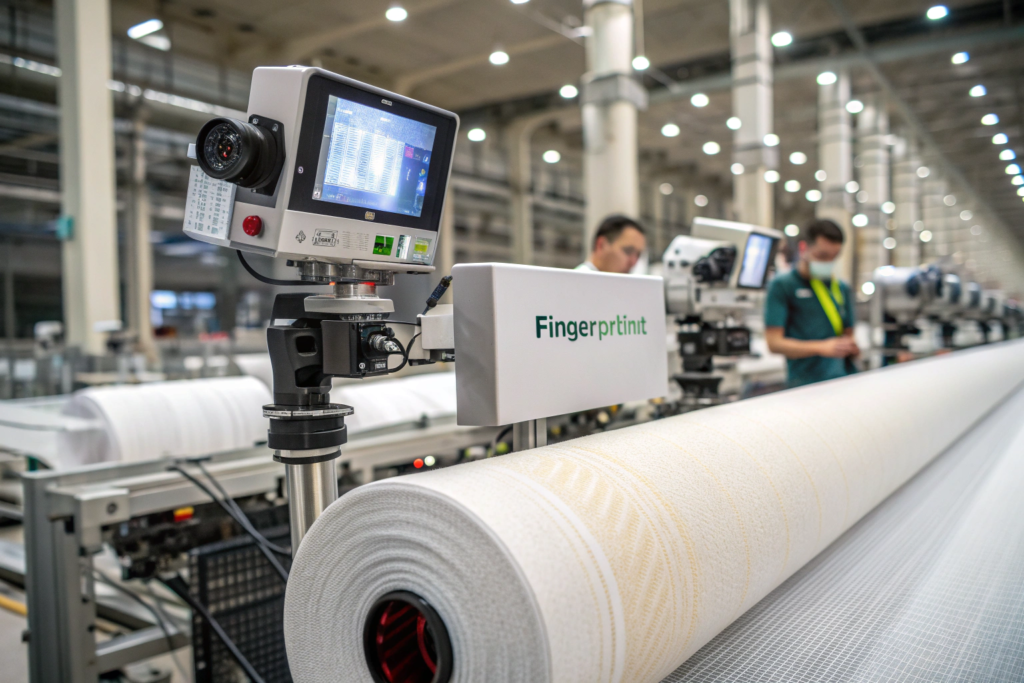
For a century, fabric inspection relied on the Mark 1 Eyeball. But the human retina cannot see a 0.5mm broken filament moving past it at 60 yards per minute. It’s biologically impossible. The future of high-quality fabric isn’t just smoother yarn; it’s 100% visual capture of every square millimeter. We are deploying AI camera arrays that don’t blink. They generate millions of data points per roll. The result is a digital "fingerprint" of the fabric that certifies perfection, proving that not a single contaminant exists.
What Is an "Automated Optical Inspection" (AOI) Fabric Map?
We have integrated an AOI system on our finishing tenter frame. This is an array of 8 high-speed line-scan cameras capturing 16,000 pixels per line, checking for oil stains, dropped threads, and pilling clusters. The AI is trained on a library of 5 million defect images collected over our 20-year history. It doesn’t just mark a red sticker. It generates a full "Defect Heat Map" of the entire roll. The system plots the XY coordinates of every single anomaly onto a digital replica of the roll layout. When the fabric goes to the cutting table, the client loads this digital file into their auto-cutter. The laser cutter automatically nests the pattern pieces to steer clear of the defect coordinates. The yield rate jumps because you aren’t throwing away half a meter around a vague chalk mark. You are avoiding the stain with surgical precision. This technology, drawing from high-speed automated optical inspection systems generating AI-driven defect heat maps for fabric roll optimization before apparel cutting, changes the game from "acceptable loss" to "optimized perfection." We are currently using this on all high-value merino wool and silk blends.
Why Is "Digital Twin" Spectrophotometry More Accurate Than Human Eyes?
Early last year, we calibrated a new AI-driven light cabinet. A human QC operator typically sees about a 0.8 Delta E difference if they are sharp. The machine sees 0.2. In a test we ran internally, we set up a blind trial between our best 20-year veteran color matcher and the spectrophotometer. The human passed a batch of "taupe" that the machine instantly flagged. The machine read a spike in the blue absorption band—invisible to the eye under D65, but visible under the store’s Target-branded cool-white LEDs. The AI caught a metamerism failure the most expert human couldn’t see. We deep-sixed that dye formula. The veteran was stunned, but he agreed once we showed him the spectral graph. We are now deploying this digital twin spectrophotometer calibration system with AI analysis for detecting sub-visible metameric color failures in retail supply chains. It’s not replacing the human; the human sets the strategy and taste. The AI does the drone work of scanning every pixel against the standard, which is physically impossible for a person. This gives brand buyers a guarantee that the final garment won’t suffer the "two-lot drama" on the store rack.
How Do Smart Finishes Extend Garment Lifecycles Without Toxins?
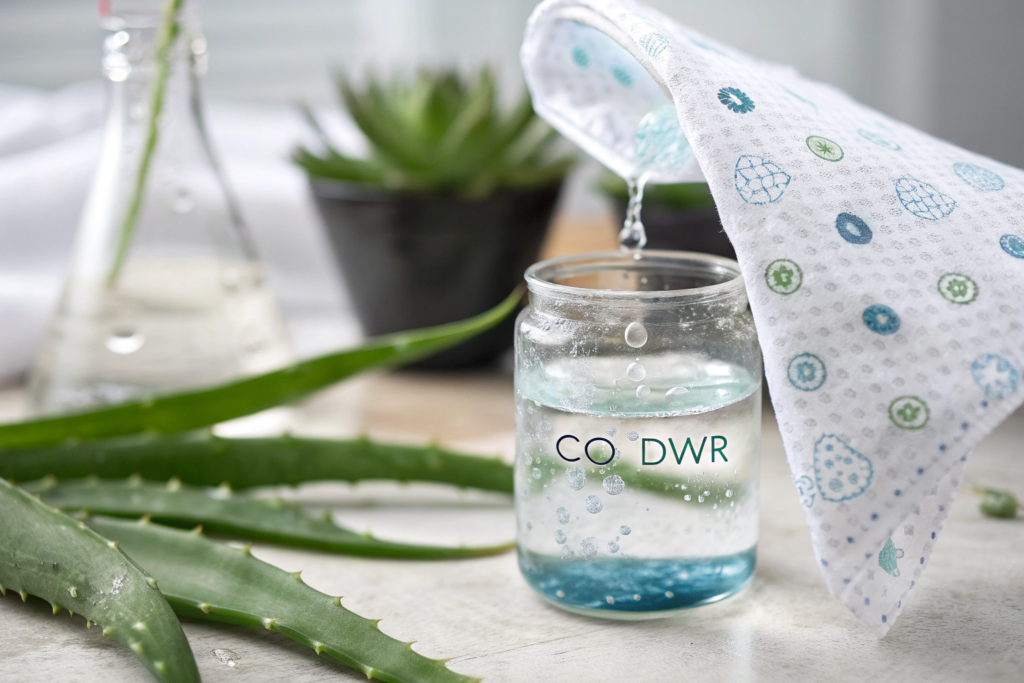
Durability is the purest form of sustainability. The best way to stop fashion waste is to make the garment last long enough that the customer gets bored of it before it wears out. We are shifting our finishing chemistry away from "fast fashion" temporary crutches. Standard Durable Water Repellent (DWR) has historically relied on C8 fluorocarbons—forever chemicals that poison water tables. Our future is strictly C0 (fluorine-free), using plant-based and hyper-branched polymer chains. We are not just chasing "eco-labels"; we are chasing hyper-durability.
What Are Hyper-Branched Polymers for C0 Durable Water Repellency?
Standard C0 DWR coatings collapse after 5 washes. The fibers lie down. Water gets in. We tested a new class of "hyper-branched dendritic polymers" that create a fractal-like roughened surface on the fiber. At the nano-level, it looks like a lotus leaf. The liquid isn’t repelled by a chemical oil film; it’s repelled by pure physical geometry. The air pockets trapped in the fractal structure prevent the water droplet from adhering. In our lab, we achieved a 90/100 spray rating after 20 industrial washes on a cotton-nylon shell, using zero fluorine. The challenge was the hand-feel. The first iteration felt like sandpaper. Our chemistry partner modified the polymer backbone to add a long-chain alkyl group that acts like a softener. Version 3.0 felt soft and dry. This project sits at the intersection of advancements in fluorine-free hyper-branched polymer surface geometries for durable lotus-effect water repellency on outdoor technical fabrics. No one has perfectly solved the cost-versus-scale equation yet, but our pilot batch for a winter 2026 collection costs only 8% more than standard C6 chemistry. We are close.
Can a Fabric Finish Actively Neutralize Air Pollution?
Yes, and we have a kids’ outerwear brand in the Netherlands preparing to release it. We use a photocatalytic titanium dioxide (TiO2) wash. It sounds scary, but it’s basically a mineral wash, like crushed rock, that adheres to the fabric. When sunlight (UV) hits the treated cotton canvas, the TiO2 acts as a catalyst. It strips electrons from water vapor in the air, creating radical oxygen species that react with nitrogen oxide (NOx) and volatile organic compounds (VOCs) passing near the child’s parka. Basically, the jacket cleanes the air while the kid walks to school. Lab tests using a closed gas chamber showed a 30% reduction in NOx concentration around the fabric over 2 hours of sunlight. This is not a gimmick. This is construction-site-grade air scrubbing woven into a backpack. The finish lasts for about 35 wash cycles before the catalyst abrades away. The next step is to embed the TiO2 directly into the polyester polymer melt during spinning, making the photocatalytic function last for the life of the fiber, not just the surface. The most forward-looking work we track is indeed photocatalytic titanium dioxide textile coatings for active degradation of nitrogen oxide pollutants in urban children’s wear. We are pushing this from the lab into commercial reality.
Conclusion
The mill that only competes on thread count and price per kilo will be extinct in ten years. The future of high-quality fabric belongs to mills that see a bolt of cloth as a hardware platform. At Shanghai Fumao, our platform runs on bio-intelligent yarn that wicks moisture because of its DNA, inspection cameras that map perfection with the precision of a satellite, and finishing layers that clean the atmosphere and heal themselves. We are taking the "hope" out of high performance and replacing it with chemistry and digital physics. Quality is no longer a subjective "it’s good." Quality is a certified digital file and a verified molecular structure.
If your brand needs a textile partner who is not just quoting today’s price list but is already drafting the tech for the 2028 retail floor, we need to talk. The prototypes are spinning. The lab glass is bubbling. We are looking for collaborative launch partners to co-develop and test these future-facing fabrics—whether it’s a bio-elastane running tight or a self-deodorising travel shirt. Let’s define the next standard together.
Please reach out to our Business Director, Elaine, to schedule a Future Fabrics R&D video briefing. She can screen-share our current R&D pipeline dashboard, the latest Martindale cycle data, and arrange for a parcel of limited-run lab trial yardage to be shipped to your design desk within the week. Contact Elaine immediately at elaine@fumaoclothing.com. The future of fabric isn’t coming next decade. It’s being woven right now, in our Keqiao lab, for the brands brave enough to wear it.