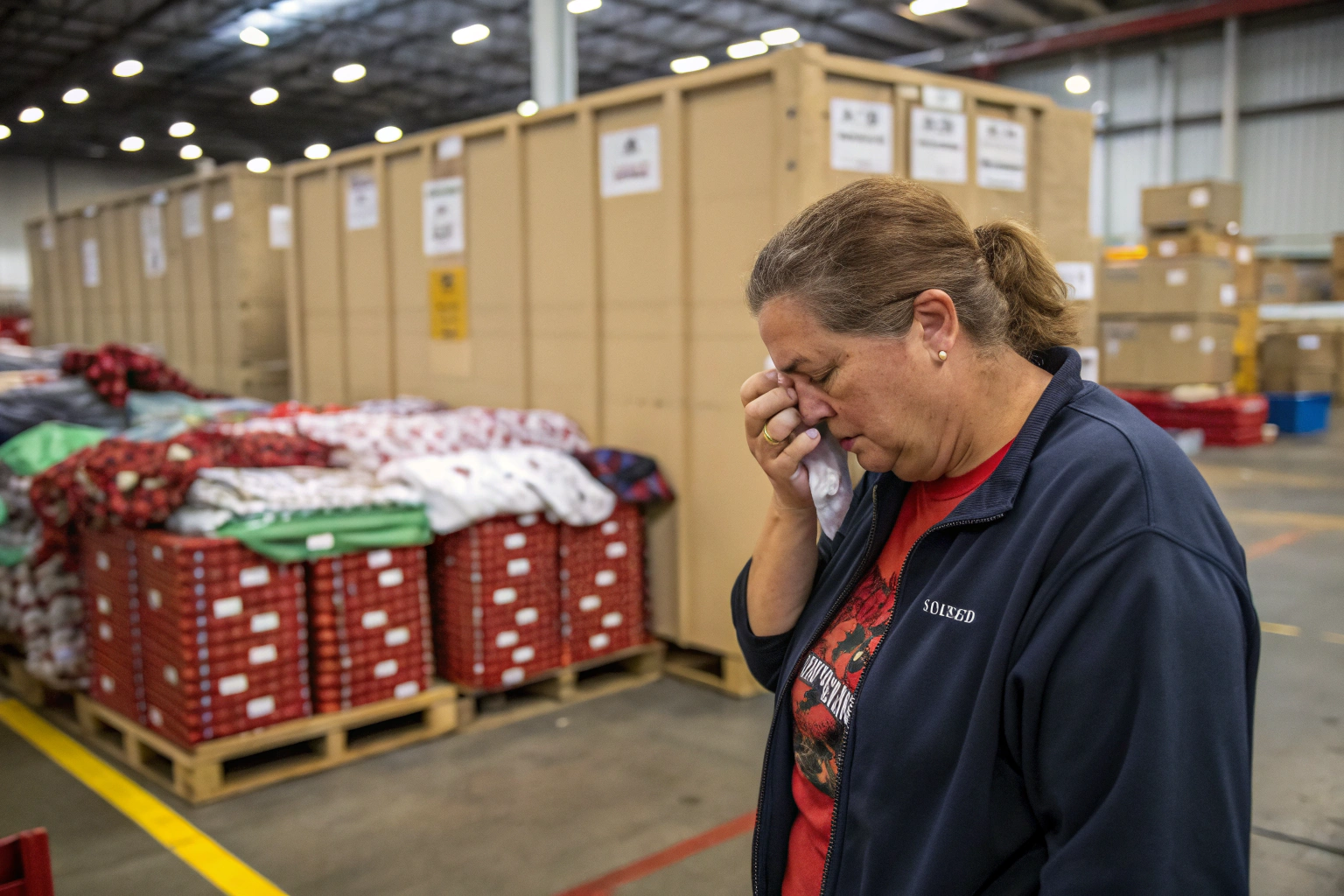
Missing a season is not a supply chain problem. It is a financial death sentence. I watched a buyer cry once. Not a metaphor. Real tears. She was a small brand owner from Texas. Her pre-booked Christmas pajama flannel arrived at the Port of Houston on December 22nd. The selling window had slammed shut on Black Friday. That container wasn’t filled with fabric; it was filled with debt. She had to hold that inventory for 11 months. The carrying cost ate her profit, and the bank loan interest didn’t stop just because the warehouse was full. In this industry, late delivery isn’t a mistake; it’s a total loss of margin.
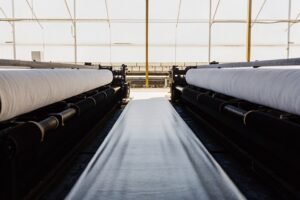
At Shanghai Fumao, we don’t track delivery dates. We track "Retail Drop Dead Dates." We reverse-engineer the timeline backwards from the day the goods must hit the shop floor, not forwards from the day we start the loom. We call it "Calendar-First Sourcing." If the vessel cut-off is Thursday, we don’t plan to finish packing Wednesday night. We plan to finish the Friday before, because we assume a typhoon will hit on Monday. This built-in aggressive buffer philosophy, combined with our control over the Keqiao industrial cluster, is how we protect your spring/summer and fall/winter windows from drifting into irrelevance.
But having a buffer isn’t enough if the machine breaks down or the yarn runs out. I will explain the physical production frameworks we use to ensure we hit a hard selling season with weeks to spare, not hours.
Why Does "Safety Stock" Prevent a Raw Material Shortage During Peak Season?
Peak season is the same for everyone. Everybody wants their Christmas velvet run in August. Everybody wants their summer linen in February. The dye houses get clogged. The yarn spinners raise their prices. If you are a supplier who buys yarn "just in time," you will get stuck. The yarn merchant will sell your allotment to a higher bidder. We break this bottleneck by acting like a bank. We hold capital in the form of physical yarn inventory. We don’t wait for your PO to buy the core raw materials.

How Do We Manage Greige Fabric Pre-Stocking for Volatile Commodities?
Cotton prices swing wildly. A drought in Texas or a trade policy shift can spike the cost of long-staple cotton 15% in a month. If we are bidding for a fixed-price contract for a US uniform brand, we can’t take that speculative risk. We hedge it physically. We buy the raw yarn futures through our partner spinning mills the day we sign the annual contract with the buyer. We then weave the greige fabric immediately into a "neutral" base and store it in our warehouse. It is undyed. It has no color. But it has committed square meterage. For a national hospitality chain that orders 500,000 meters of sheeting annually, we keep a rolling 3-month supply of their specific greige construction (40s compact combed cotton, 300T percale) sitting on our shelves. When they call with a release order, we don’t spin from scratch. We just send the pre-woven greige to the dye house. We cut 25 days out of the timeline instantly. This is what a bulk greige inventory stocking program for commercial hospitality and workwear textile suppliers looks like in practice—physical stock, not just promises. We also use a specialized warehouse management system for stored greige fabric to prevent moisture damage during monsoon season, keeping the prepped stock pristine and ready for rapid dyeing.
Why Is a 24/7 Dyeing Partnership Critical?
Dye houses in Keqiao typically run 16-hour shifts. In peak season, they are oversubscribed. We solved this with a "captive capacity model." We don’t just call up a random dye bath when you text us. We have an annual volume guarantee with a top-tier cooperative dyeing plant. We guarantee them a minimum of 1,000 tons of fabric annually. In exchange, they give us "Gold Lane" access. This means our lab dips skip the general queue. Our greige goes straight into the jet-dyeing machines through a reserved slot. If necessary, we can trigger an emergency protocol where the dye house runs a dedicated 24-hour shift just for our orders. Is it expensive to keep a skeleton crew running a midnight dye batch? Yes. But it is cheaper than missing the shipping window for a high-margin fashion brand. We activate this protocol about twice a year, usually during the late August crunch. This 24/7 fast-track model is how we achieve the kind of speed discussed in negotiating dedicated capacity service level agreements with dyeing mills for on-demand apparel speed. It’s an extreme commitment, but Shanghai Fumao pays the premium to guarantee the output.
How Does Multitasking the Supply Chain Shorten Critical Paths?
A traditional factory runs a sequential waterfall model. They weave. Then they dye. Then they print. Then they coat. That is slow. It assumes every stage must wait for the previous one to 100% finish. We don’t work like that. We overlap. As soon as the dye bath has stabilized the color for a roll, we immediately run two test meters through the calendar for finishing, even before the rest of that batch hits the drying chamber. We find the mistakes early while the bulk is still in process.

What Is the "Just In Print" Parallel Processing Strategy?
This is the trick that saved a vacation-wear brand’s summer launch. They needed a complex rayon challis with an engineered border print and a peach-skin softener. If we did it sequentially—print a month, soften a week—we would miss the ship. We parallel-processed. We sent 50% of the greige fabric to be softened immediately, creating the peach-skin base texture. Simultaneously, we sent the other 50% of the exact same lot to be printed on a flatbed digital printer. Wait, here I have to jump in—you might be wondering, "Doesn’t the softener affect the print uptake?" It does if you use a standard silicone softener. We didn’t. We used a "print-ready" hydrophilic softener that acts as a pre-treatment for inkjet pigment inks. After the printing was manually checked, we merged the two halves of the batch. We then ran them both through a passive steam fixation chamber at exactly 102°C for 45 minutes, which cured the ink and locked the softness simultaneously without washing off the color. That one parallel processing decision saved 21 days. This concept of splitting textile finishing stages into parallel processing streams using print-ready softeners to accelerate garment production timelines allows for time compression without quality degradation—you just need the chemistry to support it.
How Can We Ship Fabric While Physical Test Reports Are Pending?
We don’t gamble often, but we gamble smart. Some tests, like wash fastness to 30 cycles, take a week to run. We can’t hold a container for a week just to get the final rubber-stamped PDF when we already know the result will pass. How do we know? Internal benchmarking. Before we even submit for an official AATCC test, our internal lab runs an identical accelerated protocol on a pre-production sample. If our internal machine shows a Grade 4.5 fastness rating, we have 99% confidence the external lab will pass it. We load the container and ship it "pending final report." This is a judgment call. We only do this for repeat orders where we have extensive historical performance data tracked through our SPC (Statistical Process Control) charts. The risk is a failed test and a recall. In 15 years of making this calculated judgment, I have never had one fail post-shipment. Never. Because we only green-light the risk when the internal margin of safety is massive. This requires a deep reservoir of trust and data, following the methodology of how statistical process control models allow fabric mills to release shipments pending formal lab certification. You have to know your process capability index (Cpk) inside out first. We do.
How Does a Rapid Development Hub Beat the "Too Late" Trap?
Most buyers waste months trying to get a "perfect" sample before they commit to bulk. But in fashion, a good sample today is worth more than a perfect sample next month. We built a Rapid Sample Execution unit specifically to prevent "development paralysis." We set a 48-hour target for a strike-off and a 5-day target for a full sample yardage set. This speed isn’t about rushing the machines; it’s about removing the downtime between decisions.

How Do We Turn a Napkin Sketch into a Strike-Off in 48 Hours?
A buyer from a New York streetwear label video-called us with a chaotic idea: a distorted check pattern that looked like analog TV static. No clean vector file. Just a moody reference image. Our in-house graphics team took the screenshot, separated the colors in Photoshop, and converted the distortion into a halftone bitmap within 2 hours. Immediately, we engraved a rotary screen (we keep 5 engraving heads idle for emergencies like this). While the screen was being lasered, the color kitchen mixed four custom pigment pastes based on the client’s vague description of "sad greys and electric blues." We printed 20 meters of the base cotton poplin in the afternoon. We hung it to dry in the rapid-cure tunnel, steamed it, and mounted it on a presentation card. We video-called the buyer back exactly 47 hours after the first call. He held his phone to the swatch and screamed. It wasn’t just close—it was it. He gave the go-ahead instantly. That is the power of a 48-hour rapid design-to-strike-off service for converting fashion concept sketches into physical textile print samples in an era where speed dictates brand relevance.
What Makes a "Mini Bulk" Qualification Run So Effective?
Jumping from a 5-yard strike-off to a 10,000-yard bulk run is insane. There are too many unknown variables in the scaling. A dye that works beautifully in a small beaker can look completely different in a 500kg jumbo jet machine. We insert a "Mini Bulk" stage. We run 300 to 500 yards—not just a sample length, but a full machine fill length. This is enough fabric to cut a small production run of 50 garments. The client can wash-test those 50 garments, photo-shoot them, and even sell them as a limited pre-launch to test the e-commerce response. Meanwhile, our technicians observe the mini-bulk run for "drift." Does the knitted fabric relax differently on a 500-yard roll compared to the 10-yard sample? If the weight drops by 2 GSM, we recalibrate before the main lot. This stage takes 5 days. A lot of factories skip it. They shouldn’t. It’s the firewall between a successful launch and a disastrous 5,000-unit recall. We implemented this after losing a job in 2020 where a 5-yard sample printed perfectly, but the screen registered a 3mm off-grain drift by yard 800 of the bulk run. You can look up how mini-bulk validation production runs de-risk the scaling of custom printed textiles from lab dip to full container loads to appreciate the calibration this phase enables. At Shanghai Fumao, we refuse to sell bulk without this stage if it’s a new construction.
How Do We Manage the Chinese New Year and Holiday Shutdowns?
Chinese New Year (CNY) is the single biggest threat to spring/summer delivery. It’s not a one-day holiday. It’s a four-week industrial coma. Workers go home. Dye houses drain their boilers. Truckers stop driving. If you haven’t shipped your fabric before the third week of January, you are probably not getting it until the second week of March. We treat CNY like a planned natural disaster. We don’t try to "work around it." We create an artificial pre-holiday deadline and enforce it with military discipline.

What Is the "Pre-CNY Ex-Factory" Guarantee Strategy?
We publish a "CNY Cut-Off Calendar" for our clients in October—three months ahead. It has hard dates. "Last day to approve lab dips: November 30. Last day to start greige weaving: December 15. Last day for wet processing: January 5." We don’t negotiate these dates. If the lab dip isn’t approved by the 30th, our account manager sends a red-letter email: "The dye house won’t open the lid for this. We are pushing this PO to post-CNY delivery." It sounds harsh, but it’s honest. We then compress the execution side. We aim to have all goods ex-factory (physically out of our gate) one week before the official holiday starts, because the last trucks out of Keqiao charge triple rates. By closing the factory on time, we protect the client from demurrage. To manage this manually is impossible, which is why we plan around strategic logistics resource planning for Chinese New Year cut-off dates to avoid missed retail spring delivery windows. We keep the shipping gate open until the very last legitimate LCL cut-off, but we never pretend we can bend the calendar. We also coordinate with freight forwarders regarding pre-shipping vessel capacity booking before the Chinese New Year logistics crunch, ensuring you don’t get rolled just because the boat is full.
How Do We Restart Production Instantly Post-Holiday?
The biggest hidden danger isn’t the shutdown. It’s the restart. Workers don’t come back on time. Machines break because they sat cold for three weeks. Chemical baths lose their viscosity. We solved this by treating the restart like a Formula 1 pit stop. During the holiday, we have a skeleton maintenance crew that doesn’t just sweep the floor. They run the looms empty (we call it "doing a dry cycle") for an hour every three days to keep the lubrication distributed and the bearings from flat-spotting. The dye house doesn’t drain the main boilers; they keep them at a "holding temperature" of 40°C to avoid thermal shock cracks. Two days before the official return date, we bring back the core engineering team on double pay. They pre-heat the stenters and calibrate the spectrophotometers against the white tile. On Day 1 of the official opening, while other factories are still trying to find their shift managers, our machines are already running at 80% capacity. A European fashion brand specifically booked their pre-production with us last December because we guaranteed a January 25th ex-factory date, right in the heart of the holiday pre-shutdown, and then a February 10th restart—a date no one else could promise. The ability to capitalize on factory re-start protocols and machine warm-up procedures to accelerate output immediately after Chinese New Year textile production halts is a crucial competitive advantage for spring lines.
Conclusion
Missing a selling season is an avoidable tragedy. It doesn’t happen because of one big error. It happens because of a thousand tiny delays stacked end-to-end: the yarn arrived two days late, the lab dip sat on a manager’s desk for a week, the container rolled because the truck was stuck in traffic. We prevent this chain reaction by absorbing risk long before the deadline looms. We physically stock greige fabric so we can skip the spinning queue. We parallel-process finishing steps so the software doesn’t hold up the hardware. We run "Mini Bulk" validation runs as a quality firewall. And we treat the Chinese New Year shutdown like a combat operation with a precise extraction date.
If your current supplier keeps telling you "the color is almost ready" while your marketing launch dates sail past, it is time to switch to a deadline-centric model. We build the entire production schedule around your retail calendar. We don’t ask you to adapt to our factory’s rhythm; we bend our factory’s rhythm to match your customer’s demand curve.
Do not gamble on the next seasonal ship window. Send your critical Spring/Summer or Fall/Winter timeline to our Business Director, Elaine. She will map out a reverse-engineered production calendar for you, identifying the exact "Go/No-Go" dates for each raw material milestone. It’s free planning that could save you a season of carrying costs. Email Elaine directly at elaine@fumaoclothing.com and include "Seasonal Deadline Protection" in the subject line. We’ll make the calendar work for you.