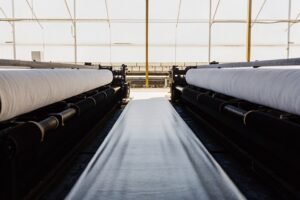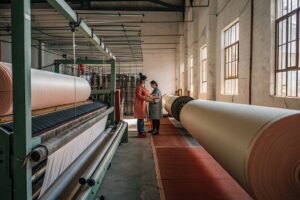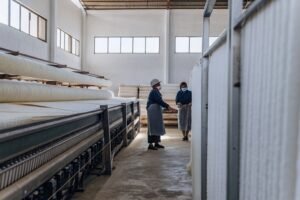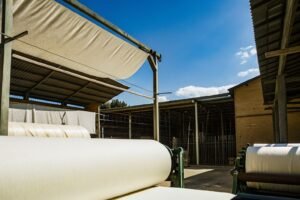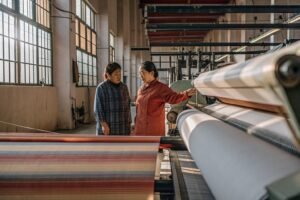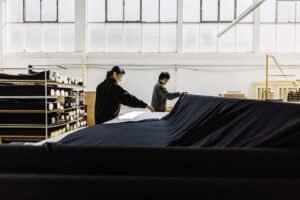
Every US distributor knows that sinking feeling. The pre-shipment samples were perfect. The hand-feel was exactly what the brand manager wanted. Then the container lands in Long Beach, and the bulk is a disaster. Shade variation from bolt to bolt. The weight is off by 15 grams per square meter. Suddenly, your buyer is screaming about chargebacks, and you are sitting on $50,000 worth of unsellable stock. I have watched this exact movie play out too many times in my 20 years running textile production in Keqiao.
We stop this nightmare before it even starts. At Shanghai Fumao, we don’t just "check" fabric. We engineer consistency into the yarn before it even hits the loom. We run a CNAS-accredited lab right here in our facility. That means we test every single dye lot for colorfastness to water, crocking, and light before the greige goods ever see a sewing needle. We don’t outsource our QC. We own it. The result? A 98% first-pass acceptance rate on bulk orders shipped to the US market. We make sure the swatch in your hand and the fabric on the roll are the exact same thing.
We can talk about thread counts and tensile strength all day, but you need to know how we actually maintain this iron grip on consistency over repeat orders spanning years. It comes down to rigid process control, the right testing equipment, and a mindset that refuses to ship a problem. Let me walk you through the specific technical systems we use to protect your brand reputation from 7,000 miles away.
Why Is Consistent Shade Control So Difficult in Bulk Production?
We have a saying in the dye house: "Water is the enemy of consistency." You can’t just look at a wet roll of fabric and guess what color it will be when it dries. That is how you get "seam burn," or even worse, unlevel dyeing that shows up weeks later when the garment gets ironed. Quality consistency starts long before the optical brighteners hit the bath. It starts with batch-to-batch reproducibility.
Can Lab-Dip Approval Really Prevent Bulk Shade Variation?
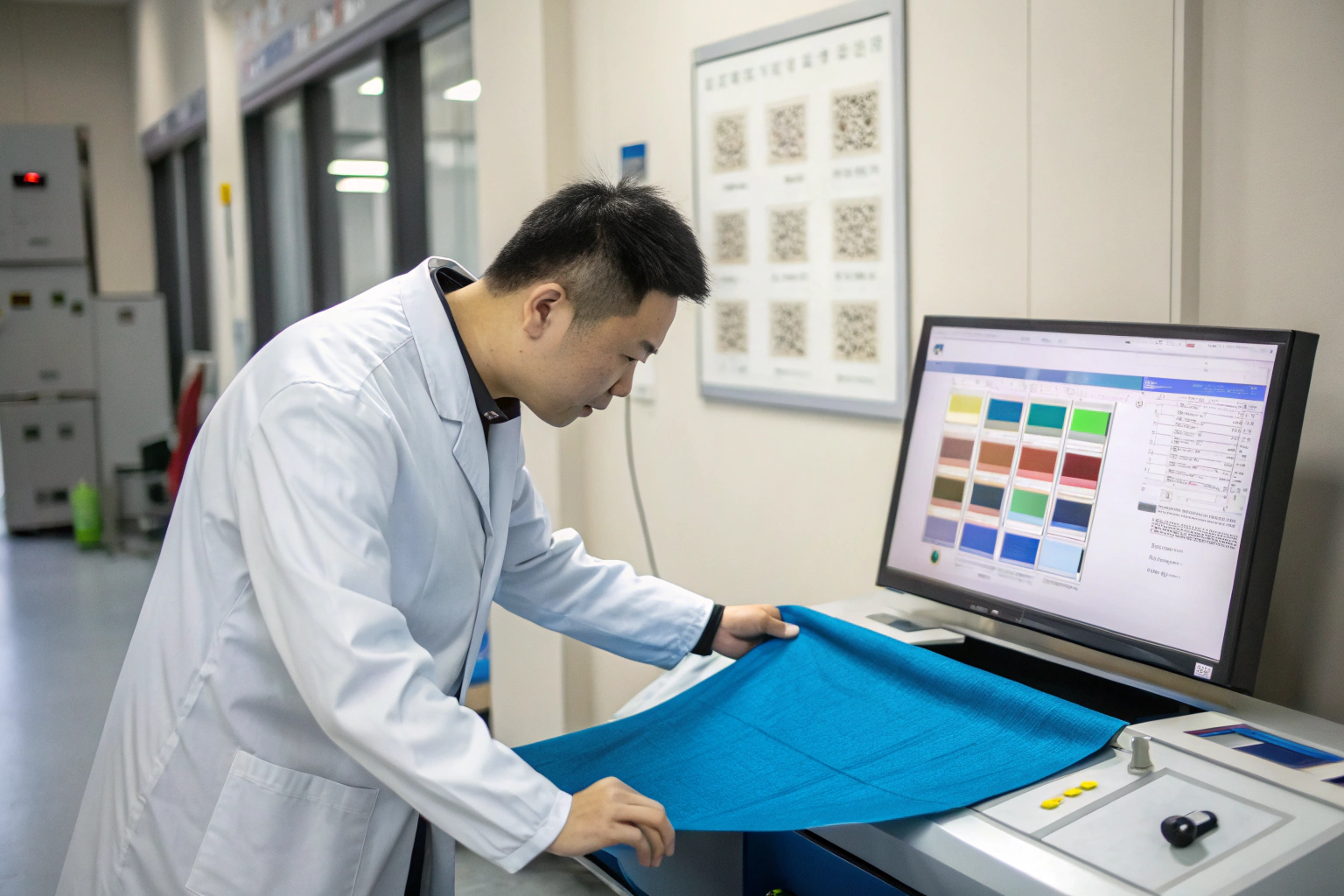
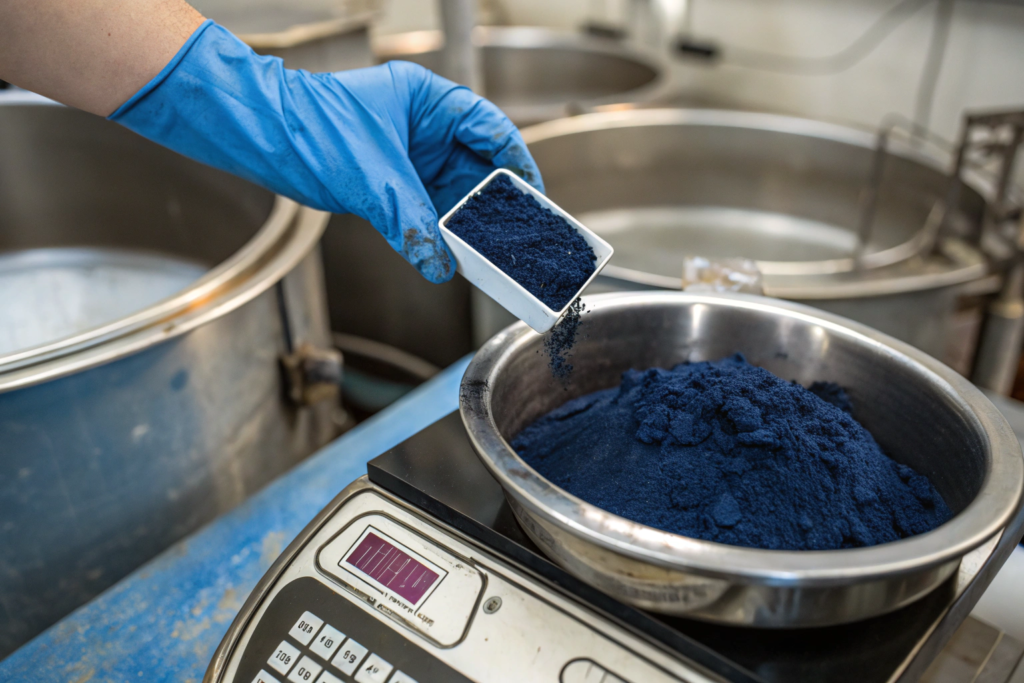
This is a topic I debate with buyers all the time. They think a signed-off lab dip is a magic wand. It is not. A lab dip is a 10-gram promise. Bulk is a 500-kilogram reality check. In 2022, we had a major US workwear client who rejected three bulk lots from another supplier because the "khaki" turned green under warehouse fluorescent lights. That is a phenomenon we call metamerism. To solve it, we didn’t just buy better dyes. We changed how we light the sample cutting table. We installed a VeriVide light cabinet that simulates D65 (daylight), TL84 (store lighting), and UV light simultaneously. Now, before we even ship a sample to a client, we check the spectral reflectance curve against their standard. If the curves match, the dye recipe is mathematically correct. You can learn more about how professional color matching cabinets prevent metamerism in textile dyeing before you approve your next swatch. We then digitize that recipe. Our automatic dispensing system weighs powders to 0.01-gram accuracy. The human can’t do that twice in a row. The machine can. This is why our shade passing rate sits at 95% on the first submission. We also validate our results by sending blinded samples to third-party labs like SGS to cross-reference our internal readings on how to ensure fabric color consistency across different textile batches.
How Do You Solve Shade Banding in Nylon-Spandex Blends?
Nylon is moody. Add spandex, and it becomes a diva. I remember a crisis in August 2023 with a New York swimwear startup. We were running a bright coral high-elastane tricot, and every 50 yards, we saw a horizontal stripe—a shade band. The factory wanted to slow down the stenter speed, but that kills delivery timelines. (Here I have to jump in—our delivery is really aggressive, so slowing down a machine isn’t a decision we take lightly.) Instead, our technical director went to the pre-heat setting zone. We realized the oil content on the greige spandex was inconsistent, causing the dye uptake to fluctuate. We used a non-destructive coating thickness gauge to measure the silicone oil finish distribution on spandex fibers before scouring. We set a strict threshold: oil content had to be below 0.5% with a deviation of less than 0.05% across the roll. We changed the scouring agent to a more aggressive emulsifier and added an anti-crease agent to the jet dyeing machine. The banding vanished immediately. The fabric stretched uniformly, held the color uniformly, and we shipped 5,000 yards in 25 days. That startup avoided a total loss and is now one of our recurring accounts.
How Does Fumao Use Digital Systems to Guarantee Fabric Specifications?
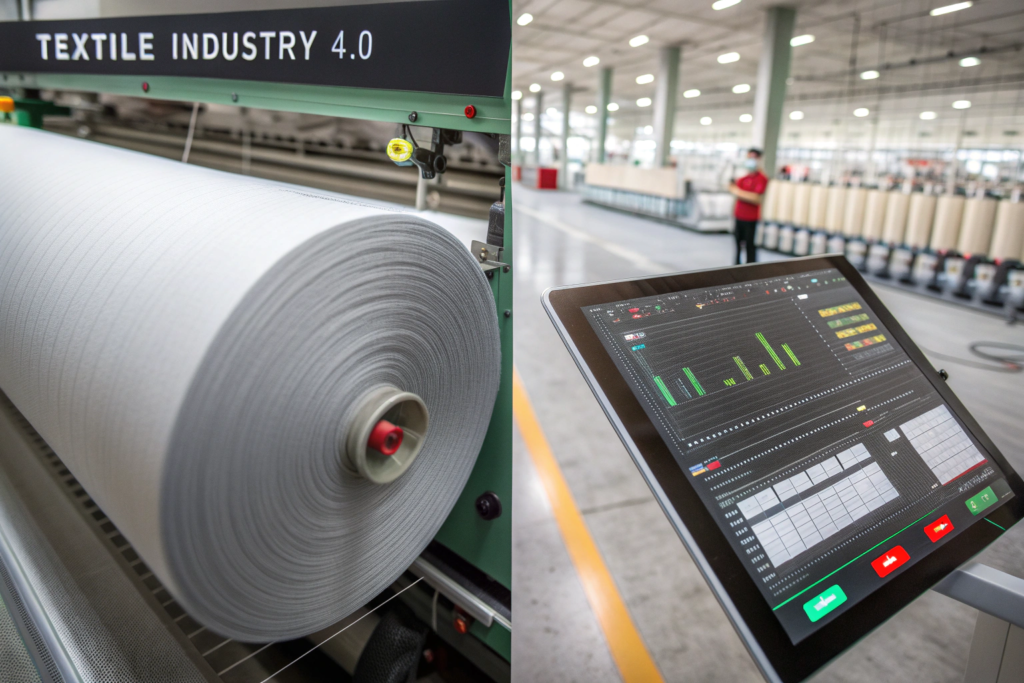
Spec tolerance is not subjective. If a buyer orders a 150 GSM single jersey, 145 is not "close enough." It’s a failure. The American market is particularly strict on this. We noticed that manual record-keeping dies at the shift change. The night shift writes something down on a greasy notepad, and the day shift throws it away. We eliminated paper. We digitized the entire supply chain visibility process.
What Role Does a CNAS Lab Play in Real-Time Production Monitoring?
A lot of factories tell you they have a "lab." Usually, it’s a dusty room with a broken crock meter. Our CNAS accreditation means our lab operates under ISO 17025 guidelines. It’s basically a courtroom for fabric. If we say the tear strength of your ripstop nylon is 25 Newtons, we have the accredited data to back it up in a lawsuit. We don’t just test at the end of the line. We grab samples right at the loom. Our roving inspectors use QR-code scanners. When they scan a roll, the tablet instantly pulls up the order’s technical pack. Using an AI-powered camera developed by our partner, the inspector can visually scan for periodic defects like missing yarns. If the system detects a deviation in grammage, it locks the roll in the Enterprise Resource Planning system. The warehouse can’t print a shipping label for a locked roll. It’s brutal, but it works. This connects directly to the intelligent textile defect detection and real-time factory monitoring systems that we calibrated for our specific weaving patterns. It stops the problem right there, not three days later in the finishing department.
How Can We Verify Dimensional Stability Before Cutting?
Nobody wants to cut 1,000 pairs of chinos only to have them shrink 3% in the consumer’s first wash. A US uniform distributor came to us in January 2024, furious about a twill that shrank lengthwise. We fixed it by focusing on the "residual shrinkage" metric. We don’t just test the final finished fabric; we test the compacted state. We use a Tumblestorm dryer test according to AATCC 135. We measure the results using a digital fabric inspection machine that maps the fabric pixel by pixel. We upload these shrinkage heat-maps to a shared drive for the customer. They can see exactly where the tension was high on the stenter frame. We aim for a residual shrinkage of less than 2% before the fabric leaves our gate. To specifically address the finishing side, we invested in a mechanical fabric compacting machine to stabilize open-width knit goods against laundry shrinkage. The investment meant the uniform distributor could cut their blocks immediately upon receipt without a relaxation period, saving them six days of pre-cutting handling. Shanghai Fumao basically acts as the first port of call for logistics risk mitigation.
How Do We Manage Consistency Across Complex Multi-Stage Finishing?
Performance wear changes the game. A soft shell jacket isn’t just polyester; it requires a hydrophobic coating, a breathable membrane, and maybe a wicking backer. When you combine a Spanish membrane with a Chinese base fabric, the chemistry has to be perfect. We learned that the hard way back in 2019 when a rainwear lamination delaminated due to a fluorocarbon residue on the fabric’s surface. Now, our finishing preparation is stricter than a surgical room.
Why Does Laminating Performance Membranes Fail Without Pre-Treatment?
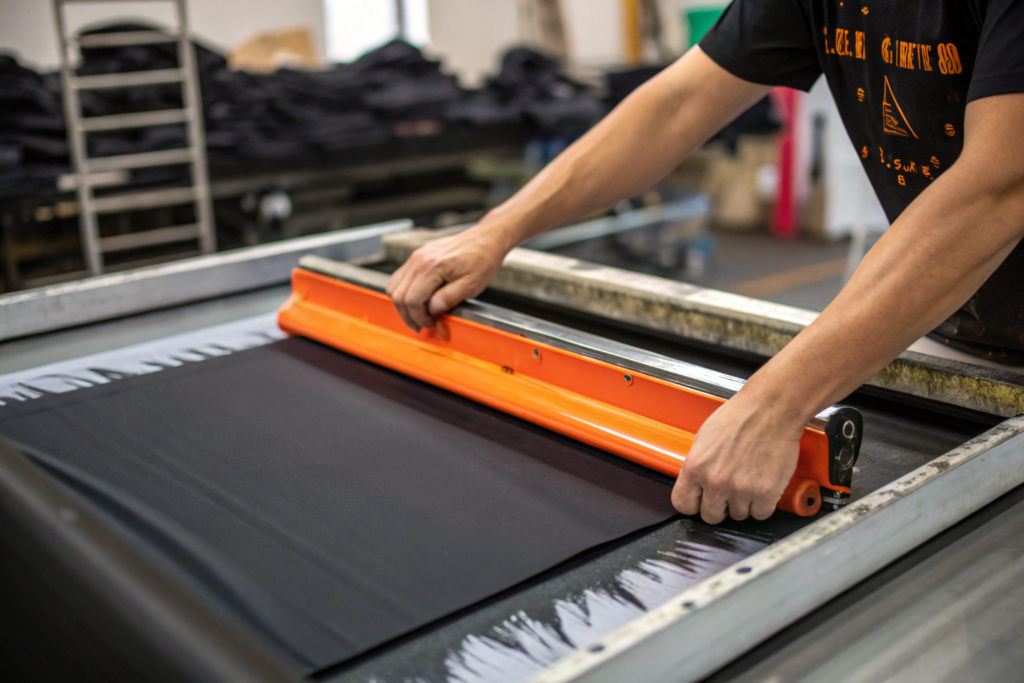
You cannot bond a TPU membrane to a fabric that still has spinning oil on it. The industry standard for surface tension before coating is 36 dynes/cm. Most greige fabrics arrive at the coater at 28. We made it a rule: nothing goes near the knife coater until it passes the Dyne test pen. We run the fabric through an atmospheric plasma treater. This isn’t cheap equipment, but it etches the polyester surface at a molecular level without water or solvents. It opens the fiber up so the adhesive bites down hard. We recently processed a 20,000-meter order for a protective coverall brand in Texas. They needed a 10,000mm hydrostatic head rating. After plasma treating and applying a two-component polyurethane coating, we achieved a sustained 15,000mm head. We didn’t just test one spot; we ran the whole roll through a high-voltage spark tester to find pinholes. If you want to understand the surface science behind it, atmospheric plasma surface activation effectively raises dyne levels on hydrophobic polymers for coating adhesion is a process we now refuse to skip. We also had to adjust our curing oven dwell time for thicker viscosity adhesives, a detail we only ironed out by checking the interlayer adhesion strength for technical textile lamination processes against the supplier’s technical data sheet.
How to Maintain Consistent Hand-Feel After Flame Retardant Application?
FR finishes are gritty. They can make a soft cotton fleece feel like sandpaper. A children’s sleepwear brand had a specific complaint: their "peach skin" finish disappeared after we applied the non-durable FR salt treatment. To fix the scratchy hand-feel, we didn’t just throw in softener at the end. We modified the finishing bath recipe sequence. We introduced a micro-silicone emulsion softener concurrently with the FR chemistry, ensuring the pH was buffered to 5.5 to prevent cross-reaction. We ran it on a 6-chamber stenter. Chamber one for drying, chamber two for chemical application, chamber three for high-temperature cure, and chambers four through six for cooling and softening. We measured the surface friction coefficient using a KES-FB4 surface tester, aiming for a MIU (coefficient of friction) value below 0.2. We hit 0.18 on the final run. The fabric kept its 16 CFR 1610 class 1 rating and felt as soft as the untreated control sample. That customer now stocks exclusively our FR-treated blends because we found the recipe that aligns American fire codes with toddler skin.
How Does Shipping and Tariff Logistics Impact Quality Upon Arrival?
You can make perfect fabric, but if it gets wet crossing the Pacific, the mold will destroy your consistency. With the US tariff situation being complex, we have had to get creative. Because Keqiao is a national-level logistics hub, we have advantages that inland factories simply don’t have. We can consolidate cargo differently to avoid the risk of trans-shipment delays that cause condensation inside containers.
Why Does Proper Roll Packaging Prevent Transit Moisture Damage?
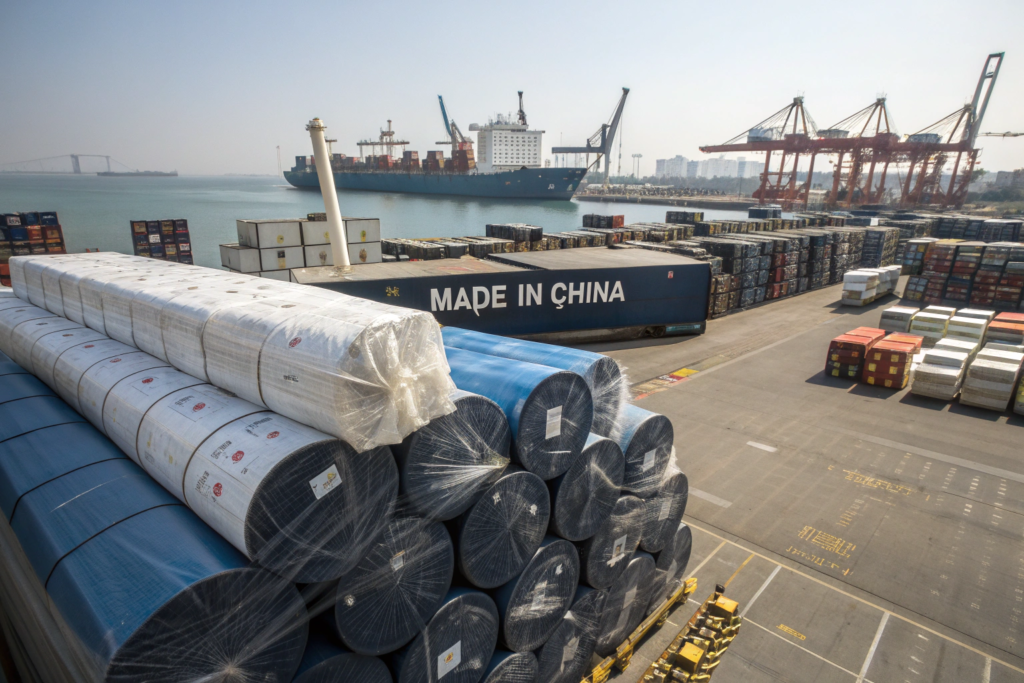
Sea freight is a sweatbox. During a shipment to Florida in the summer of 2023, the ocean temperature difference caused "container rain." Water dripped from the roof directly onto the top layer of rolls. We lost that batch. It was a hard lesson. Now, we wrap every single roll in a VCI (Volatile Corrosion Inhibitor) polyfilm. We seal the ends with desiccant packs taped under the inner core cap. Then we put a heavy-duty 200g/m² woven polypropylene cover over the outside. Nothing gets to the textile. We also insert humidity indicator cards in the center of the roll cores. If the card is blue when the fabric rolls out in your warehouse, the dryness was maintained the whole trip. We offer this premium packaging as standard on our CFR shipments. For delicate jacquards or velvet, we also suspend the rolls on wooden A-frame pallets to prevent flat-spotting. This method connects to the knowledge shared across advanced fabric roll packaging solutions for preventing mold during maritime shipping that we have adopted from heavy industry practices.
Can Logistics Hubs Like Keqiao Mitigate Tariff Risks?
We don’t pay the US tariffs, but we feel the pain of our distributors. We engineer the cost back through trade route optimization. Because we ship directly from Keqiao, the departure port for the "Yi Xin Ou" (Yiwu-Xinjiang-Europe) railway line is practically in our backyard. This gives us a multi-modal option. For US East Coast deliveries, sometimes routing via rail to a European consolidation hub, and then trans-Atlantic shipping, avoids the Pacific congestion surcharge and dock delays. It sounds counter-intuitive to go west to go east, but we have cut 15 days off delivery just by avoiding the Panama Canal waiting games. Also, our status as a bonded warehouse zone allows for immediate tax rebates, which we pass on as a 2-3% discount on the FOB price. We advise clients to split high-value and low-value HS codes clearly on the packing list. For example, separating functional coated fabrics from standard prints ensures Customs doesn’t lump the entire shipment under a high-duty technical textile code. We are actively investing in nearshoring strategies and how Chinese textile suppliers are adapting to changing US logistics requirements to keep our partners competitive. And remember, Shanghai Fumao handles the paperwork so you don’t get stuck in customs with a misclassified HTS code.
Conclusion
Look, maintaining quality consistency across a 12,000-mile supply chain is not just about having a good QC guy. It’s about building a system that predetermines the outcome. We start in the lab with spectral analysis of the dye. We control the surface tension of the fiber with plasma during finishing. We lock bad rolls in the system with QR codes so they can’t ship out by mistake. And we wrap the goods up like they are going to Mars, not Miami. This is the only way we can confidently say we match a swatch made six months ago.
We do not treat US distributors like just a purchase order number. We treat your supply chain as if it were our own inventory. If you are dealing with chargebacks over shading, or if your current vendor can’t seem to reproduce that technical coating you need for a military tender, let’s talk. You don’t need to fly to China to see this. Our Business Director, Elaine, can walk you through our current production floor via live video, show you the lab test results in real-time, and even send you a digital production schedule before you place the order.
Stop gambling on quality. Reach out directly to Elaine at elaine@fumaoclothing.com. She can arrange the technical pre-production review within 48 hours. We are Shanghai Fumao, and we are ready to build a consistent, reliable pipeline for your American market needs.