
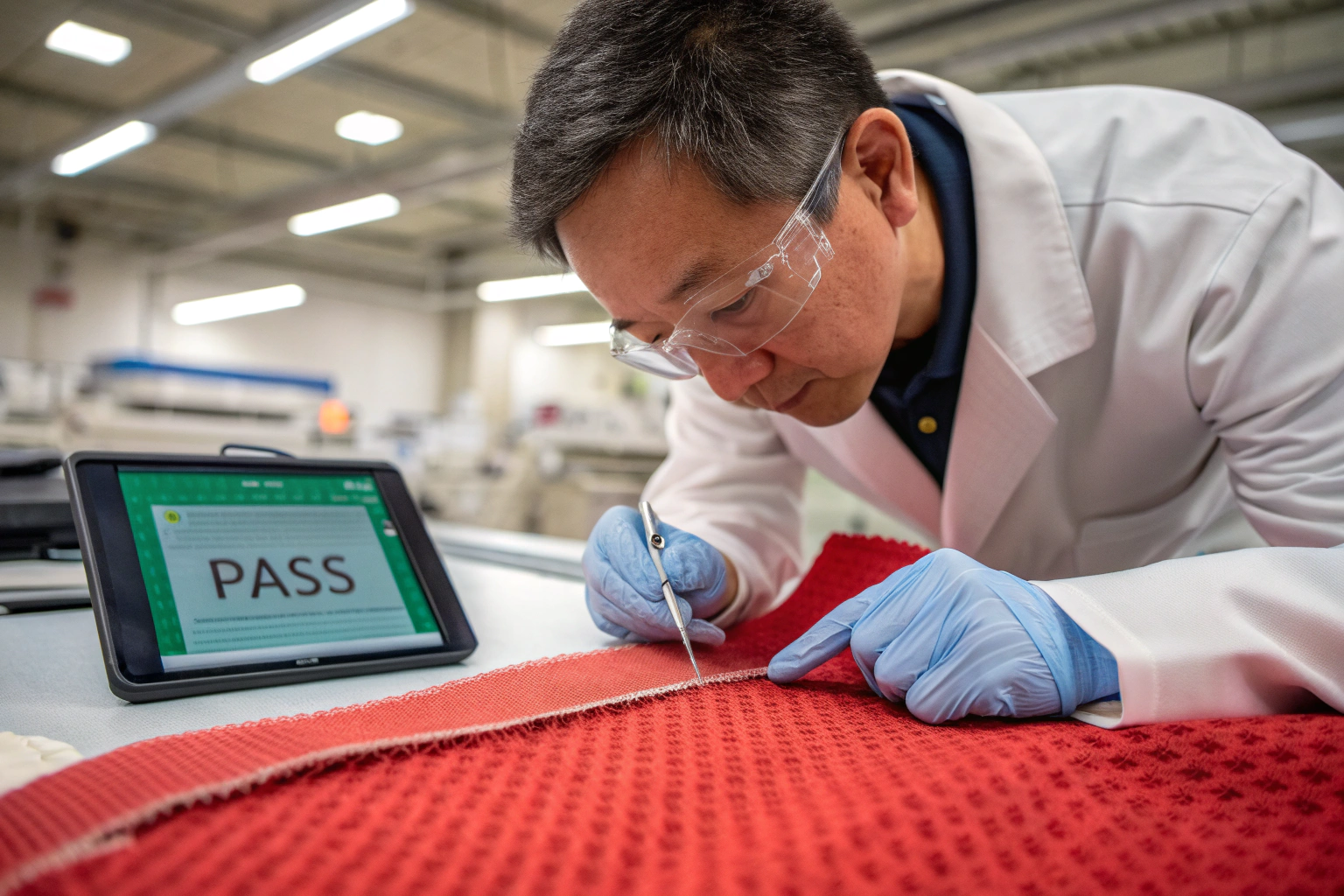
Trust in the textile world is a fragile thing. It gets shattered the moment a buyer slits open a polybag and finds the zipper tape is a shade off, or worse, the seam slips after two washes. I remember a call from a panicked brand manager in Berlin. He had just received a container of supposedly "premium" mercerized cotton polos. The color was right. The weight was right. But the fabric pilled like crazy after a single wear. His customer returns spiked to 12% in one week. That brand almost died, not because of a bad design, but because of a hidden structural flaw that a proper QC process would have caught in 15 seconds. He trusted the wrong spec sheet.
At Shanghai Fumao, we earn trust not by saying "trust me," but by saying "test me." We operate on a simple brutal philosophy: If the fabric fails, we want it to fail here, inside our own lab, under our own microscope. We don’t ship problems and hope you don’t notice. That hope would get wiped out by your credit card chargebacks. Our QC process is a multi-layered defense grid. A surface level visual check is just the last line. The real trust is built upstream, in the yarn twist control, in the real-time dye bath monitoring, and in the physical destruction tests we perform daily. We treat a 4,000-yard order with the same scrutiny as a government military tender.
But what exactly does that scrutiny look like in practice? You have probably heard every factory say they do a "100% inspection." That phrase is often meaningless. Let me take you inside our actual inspection dock, our laboratory, and our reporting system, so you can see why our AQL results are not just a hope—they are a mathematical guarantee.
How Does the Four-Point Inspection System Prevent Bulk Defects?
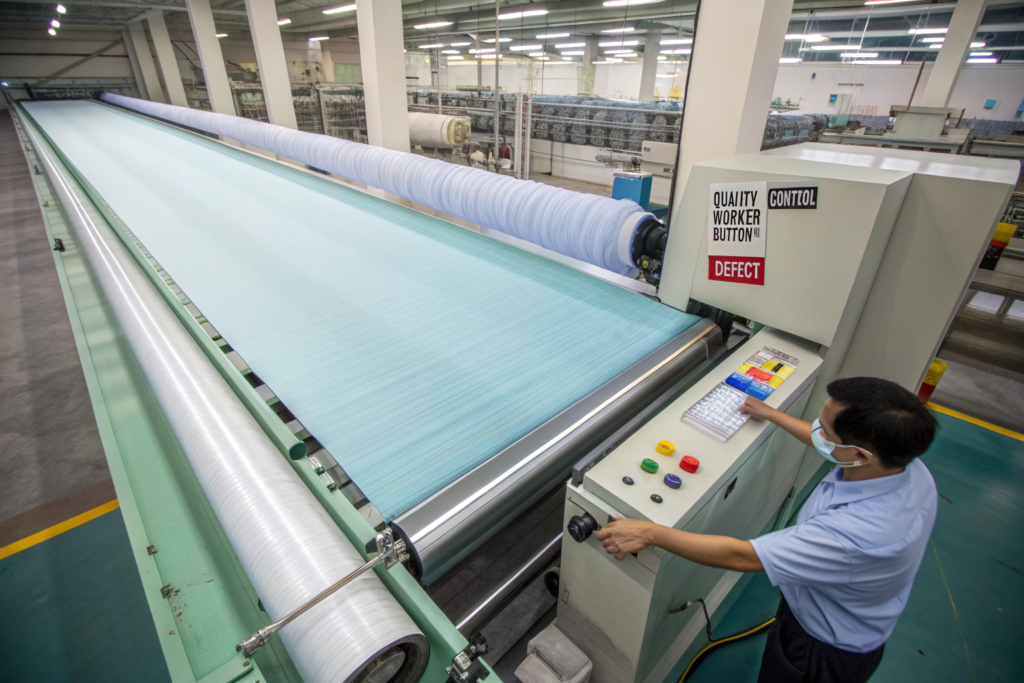
Visual inspection seems simple. Unroll the fabric. Look at it. But the human eye gets tired. After 20 minutes, you start missing things. We override human fatigue with machine-assisted standardization. We use the globally recognized "Four-Point System" (ASTM D5430). This is not a subjective "looks good" walk-around. Every single yard gets a score. A hole bigger than an inch gets 4 points. A continuous running defect gets 4 points per yard. If the total points per 100 square yards exceed 40, the entire roll is quarantined and we trigger root cause analysis automatically.
Why Is the ASTM Four-Point Method More Reliable Than a 100% Hand Check?
A 100% hand check sounds good on a brochure, but it is psychologically flawed. Without a scoring rubric, inspectors make emotional decisions. They might let a small barre pass because "it’s not that bad," or they might fail a perfectly good roll because they had a fight with their spouse that morning. The Four-Point system removes the emotion. It sets a penalty matrix. The rules are binary. The light source is fixed at 1075 lux (we measure it with a lux meter every morning). The inspection speed is capped at 15 yards per minute. We don’t go faster because faster rolling tricks the eye. We once caught a major issue on a linen blend for a Miami resort wear brand. The manual "touch and stare" team missed a subtle warp streak because it was only visible under raking light. Our automatic inspection table uses a slanted frosted glass with backlight, which casts a shadow from the thickness variation. The operator immediately saw the 2-inch cyclic streak, scored it a 4, and we stopped the loom. We discovered a bent reed wire. If we had used a flat table and a tired worker, that whole batch would have been cut-and-sewn into defective shorts. You can research the detailed ASTM D5430 standard for four-point fabric inspection and defect scoring to improve bulk textile acceptance rates further, but essentially, we just make sure the rules are blind. We also correlate this with techniques for automated fabric defect detection using high-resolution camera vision systems to supplement the standard four-point visual method on critical white and pale-shade runs.
How Do We Calibrate the Inspection Lighting to Catch "Ghost Shade"?
Fluorescent tubes age. A bulb that is 6 months old emits a different Kelvin temperature than a new one. If your light box is yellowish, you won’t see a blue-based shade variation. You will ship it. We recalibrate our visual inspection tables more often than most factories change their coffee filters. We use a standard light booth with D65 (artificial daylight) and a UV light mode. We also have a "horizon light" setting (TL84) which mimics a European retail store shelf. A fabric can look perfectly matched under D65 day-light but look completely mismatched under TL84 store light—this is the "metamerism trap." We caught one last month. The navy blue satin looked flawless in the morning sun. At 3 PM, under the TL84 setting, the trim pieces looked red-toned while the main body looked green-toned. The dyes were metameric. We rejected the dye lot and reformulated the recipe, not the fabric. That is a failure you only catch in the lab, never at the sewing machine. This process is tied to integrating standard D65 light booth calibration and visual color assessment protocols for textile quality assurance. You need a controlled viewing environment, and Shanghai Fumao invests in keeping that standardized light booth locked and logged.
How Does Shrinkage and Torque Testing Prepare for Real Laundry?
The fabric might look perfect on the bolt. But after the first laundry cycle, does it turn into a twisted tube or shrink to a toddler size? Most fabric defects that trigger retail returns are latent. They are sleeping. The washing machine wakes them up. Brand buyers trust us because we don’t just test the flat fabric; we torture-test a garment simulation. We measure the "residual shrinkage" and "spirality" (torque) by subjecting the material to a standard AATCC test method that mimics domestic care.
How to Test and Correct Spirality in Single Jersey Knits?
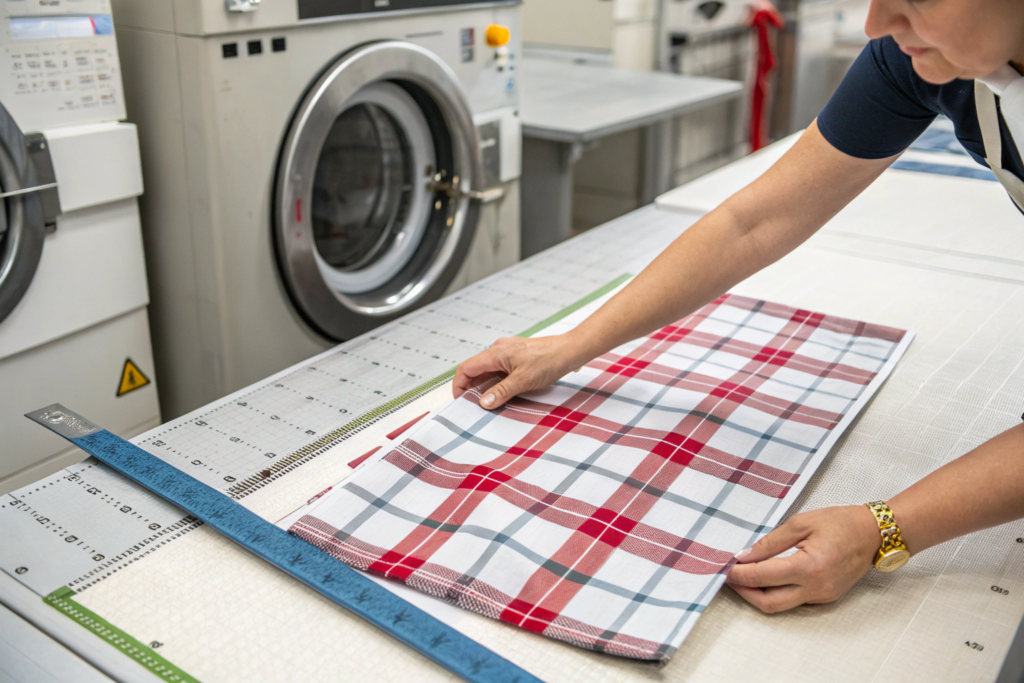
Single jersey knit is notorious for spirality. That’s when a T-shirt side seam twists to the front after washing. It’s a fatal defect. Usually, it says to me that the yarn twist was unbalanced, or the knitting cam settings were off. To test it, we mark a perfect square on the greige fabric with an indelible ink. We wash it according to AATCC LP1 (five times, hot wash, hot dry). We take the twisted rag out and measure the percentage deviation from the horizontal line. If the corner shifts more than 3%, the roll is failed. A Japanese streetwear brand had this exact issue with their heavy 280gsm jersey from a previous vendor. We fixed it by introducing a "compacting" step with a Tubular compactor under controlled overfeed. We overfed the fabric to relax the stitch geometry before cutting. Then we ran a cross-linker finishing agent to lock that relaxed structure. The post-wash twist dropped from 6% to exactly 1.5%. We filmed the test and sent them the time-lapse video alongside the data. That’s not just QC, that’s collaborative troubleshooting. To understand the mechanics, look into the effect of yarn twist and compactor settings on controlling spirality percentage in single jersey cotton knit fabrics. We use these results to inform our finishing recipes, combining them with the standard AATCC test method 179 for skewness change in fabric and garment twist after automatic home laundering to provide certified reports.
Why Is Dimensional Stability Essential for Cut-and-Sew Operations?
If a factory cuts 10,000 units of a blouse and the fabric shrinks 3% after the first steam press, the armhole becomes too small to fit the sleeve cap. Suddenly, the sewing line stops. We measure dimensional stability in both length and width. We simulate the ironing too, using a Hoffman press test. For a high-end London shirt maker, we processed a 100/2 poplin. They wanted maximum 1% shrinkage. We achieved 0.8% by doing a pre-curing process called "liquid ammonia finishing" (water-based process, not solvent). It permanently sets the cellulosic chains without degrading the tear strength. We printed out the dimensional change map—a digital grid showing the shrinkage at five points across the roll width. The edges usually shrink more because the stenter clip leaves tension memory. By showing the shirt cutter exactly where the tension was highest, they could nest their pattern pieces to cut away from the salvage. They cut their waste by 2%. This level of granular spec adherence comes from studying differential shrinkage mapping across fabric roll widths to optimize CAD marker making in garment cut-and-sew factories. It’s forensic science for clothing, and we do it so the cutter doesn’t have to guess.
What Is the Role of a CNAS Lab in Third-Party Trust?
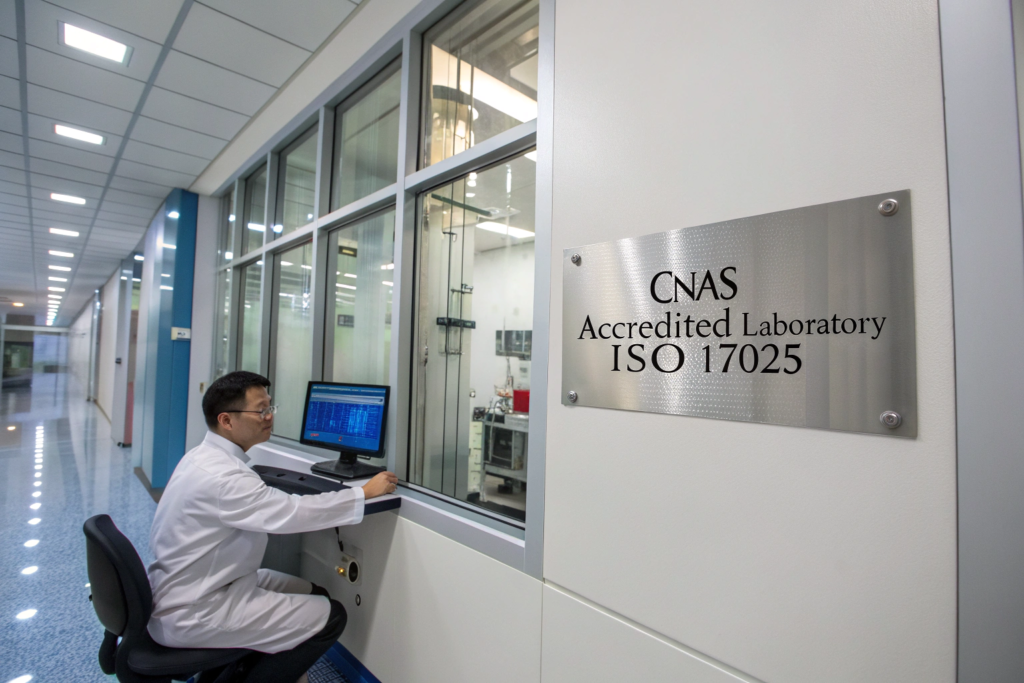
An internal QC manager can be pressured by a production manager to "let this batch go because we are late." A CNAS-accredited lab operates under rules that prevent that pressure. Our lab is independent of the weaving floor. The lab director reports directly to the CEO, bypassing the production head entirely. He has the authority—and the legal obligation under ISO 17025—to put a ‘Stop Ship’ red tag on any batch that fails the certified spec. This structural independence is why brands trust a CNAS report. It is not an internal memo. It is a legal document.
How Does a CNAS Lab Provide Internationally Recognized Results?
The "ILAC-MRA" mark on our CNAS paperwork means our test results are accepted by US retailers without re-testing. If we say the tensile strength of a back-to-school backpack fabric is 45 Newtons, a lab in SGS New York will accept that data because our methodology is internationally peer-reviewed. That saves the brand $500 in redundant QC fees and 7 days of waiting for a duplicate external report. To maintain this, we do "proficiency testing." An external agency sends us a "blind" sample—we don’t know what it is. We test it and send the results back. They grade us against a global pool of labs. If we drift, we get a warning before we even know we are drifting. This happened once with our Martindale abrasion tester. We were recording 39,000 rubs, but the international consensus was 40,000. A 2.5% deviation. We immediately stopped, stripped the machine, found a worn spindle bushing, and fixed it. The internal lab next door might not have caught that until a furniture client yelled about pilling polyester in year three. That verification loop is crucial for the ILAC mutual recognition arrangement and how CNAS accredited textile labs provide legally admissible quality data for international buyers. It’s not just a piece of paper; it’s an admission ticket to global supply chain trust. And we pair this with internal reference material validation protocols for fabric tensile and abrasion testing under ISO 13934-1 and ASTM D4966 to keep our data bench-marked.
How Do We Use Statistical Process Control (SPC) for Continuous QC?
We don’t just check the final rolls. We chart the process. In our dye house, we create X-bar and R charts for the color coordinates. Every 30 minutes, we measure the dye bath’s L, a, b values. We plot the dots. If the dot goes outside the upper or lower control limits, an alarm buzzes and the machine operator adjusts the heat or the dye concentration immediately, not at the end of the 5-ton batch. This turns QC from a post-mortem into a live, real-time correction. A batch of royal blue seersucker showed a delta trend drifting upward on the chart—moving from a perfect 0.3 DE to a borderline 0.7 DE over one hour. The SPC chart caught the slope. The engineer noticed the salt addition pump was clogging, slowing the migration of reactive dye into the cotton. He cleared the nozzle. The color snapped back to 0.3. Without SPC, we would have produced three more rolls of borderline reject fabric, argued about them with the client, and probably landed them as a "commercial acceptance" discount. Instead, we fixed the root cause silently. These models directly relate to the principles found in textile process capability analysis using X-bar and R control charts for continuous dye shade monitoring. We track the Cpk value strictly, and Shanghai Fumao demands a Cpk of 1.33 or above just to ship without a full resort.
How Are Random Container Lot Inspections Executed Under AQL?
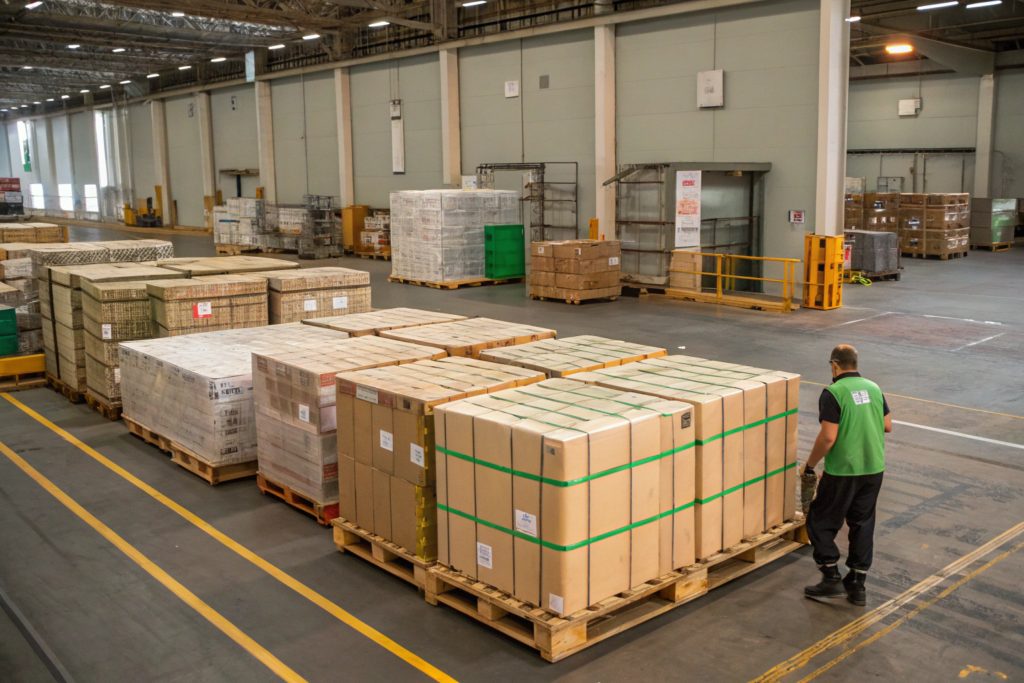
The final battle for trust happens in the shipping bay. Bulk is packed. Cartons are sealed. At this point, a crooked supplier can play a deadly trick: switch the QC-approved fabric for cheaper stock. We actually invite the buyer to catch us. We don’t seal a container until the buyer or their nominated third-party inspector gives the green light. We use the Acceptable Quality Limit (AQL) 2.5 for major defects and 4.0 for minor defects as the standard military-grade benchmark for this random audit.
How Does a Live AQL Protocol Work on Our Shipping Dock?
We don’t select the cartons for the inspector. We let the inspector, or a random number generator app, select the sample size based on the total lot volume. If it’s a 5,000-unit shipment, the AQL code letter might require 200 random cartons to be opened. Our team cuts the packing straps and shows the fabric under the dock light. If a single major defect shows up in that sample—say, a hole or a uncuttable stain—we don’t just swap that one roll. We follow the fail protocol absolutely: open 200 more cartons for the double-sample size. If there are defects in the second sample too, the inspector officially fails the lot. We then pay the penalty. We delay the shipment and re-sort 100% of the container. We don’t argue. We don’t offer a "secret discount" to just ship it anyway. One time, a batch of printed viscose failed for a mis-registration on a small percentage of the yardage. The customer needed the goods urgently for a marketing launch. We didn’t hide the fail. We opened the entire 5,000-yard lot on the sorting tables, manually cut out the off-register sections, and re-rolled the good fabric. It took 48 hours straight. But the 4,800 yards we shipped were actually perfect. That is how you build trust in how AQL 2.5/4.0 random lot inspection standard operates for container-level textile shipments before export. It’s about honoring the statistical integrity of the double-sampling plan rules for textile defects according to ISO 2859-1 acceptance sampling procedures, even when the clock is screaming.
Why Does Final Roll-Hardness Testing Minimize Transport Damage?
Even if the fabric is flawless, if you roll it too loose, it will sag, slide, and scuff against the truck floor during the 14-day sea voyage. If you roll it too tight, you stretch the edges permanently, creating a "baggy selvage" that won’t lay flat on the cutting table. We use a durometer to test roll hardness. We have mapped the ideal durometer reading (between 55 and 65 on the Shore C scale) that allows the roll to hold its shape without crushing the face-side pile. For a furniture-grade velvet, we actually roll the fabric onto a telescopic cardboard tube that has a reinforced steel inner core, and wrap it in a non-woven dust sheet before the outer poly bag. It looks like a tank shell when we ship it. This prevents "flat-spotting." A flat spot is when the weight of the roll sitting in the container for three weeks crushes the pile permanently flat. At the destination, the upholsterer screams that there’s a "bald stripe" every meter. You can’t fix that with a steamer. This dedication to packaging science follows the logic of fabric roll hardness measurement techniques and the impact of telescopic core packaging on preventing transit pile crush damage. It’s a detail most overlook until they open a container and cry.
Conclusion
Trust is a stack of data, not a gut feeling. For the brand manager in Berlin who suffered the pilling polos, a trustworthy QC report isn’t a "passed" stamp; it is a Martindale abrasion test read-out showing "Grade 4.5 at 30,000 rubs," a post-wash spirality angle of exactly 1.5 degrees, and an AQL container audit with zero major defects. We build our entire QC chain to be a series of un-skippable checkpoints. The lamp calibration, the SPC dye charts, the CNAS legal accountability, and the final dock audit—they form a mechanical guarantee. The machine catches what the tired eye misses.
If you are sourcing fabric and you feel like you are gambling every time a purchase order leaves your hands, you need a QC framework that operates like a scientific laboratory, not a souvenir shop. We invite you to test us on the very first order—send a third-party inspector unannounced, if you like. We will hand them the light meter and the AQL random sampling sheet and step back.
Begin the inspection process before you even cut a purchase order. Contact our Business Director, Elaine, to request a "Live QC Documentation Packet." She will walk you through our current CNAS certifications, our active SPC charts, and our video walkthrough of the inspection dock setup so you can verify it remotely. Reach Elaine directly at elaine@fumaoclothing.com. Let’s make your fabric QC something you verify, not something you hope for.








