Inappropriate fabric weight choices can jeopardize entire clothing collections. Numerous brands have suffered financial losses due to poor T-shirt texture, deformed hoodies after washing, or see-through leggings when stretched. Fabric weight (GSM) serves as a critical indicator directly influencing product market acceptance and customer satisfaction.
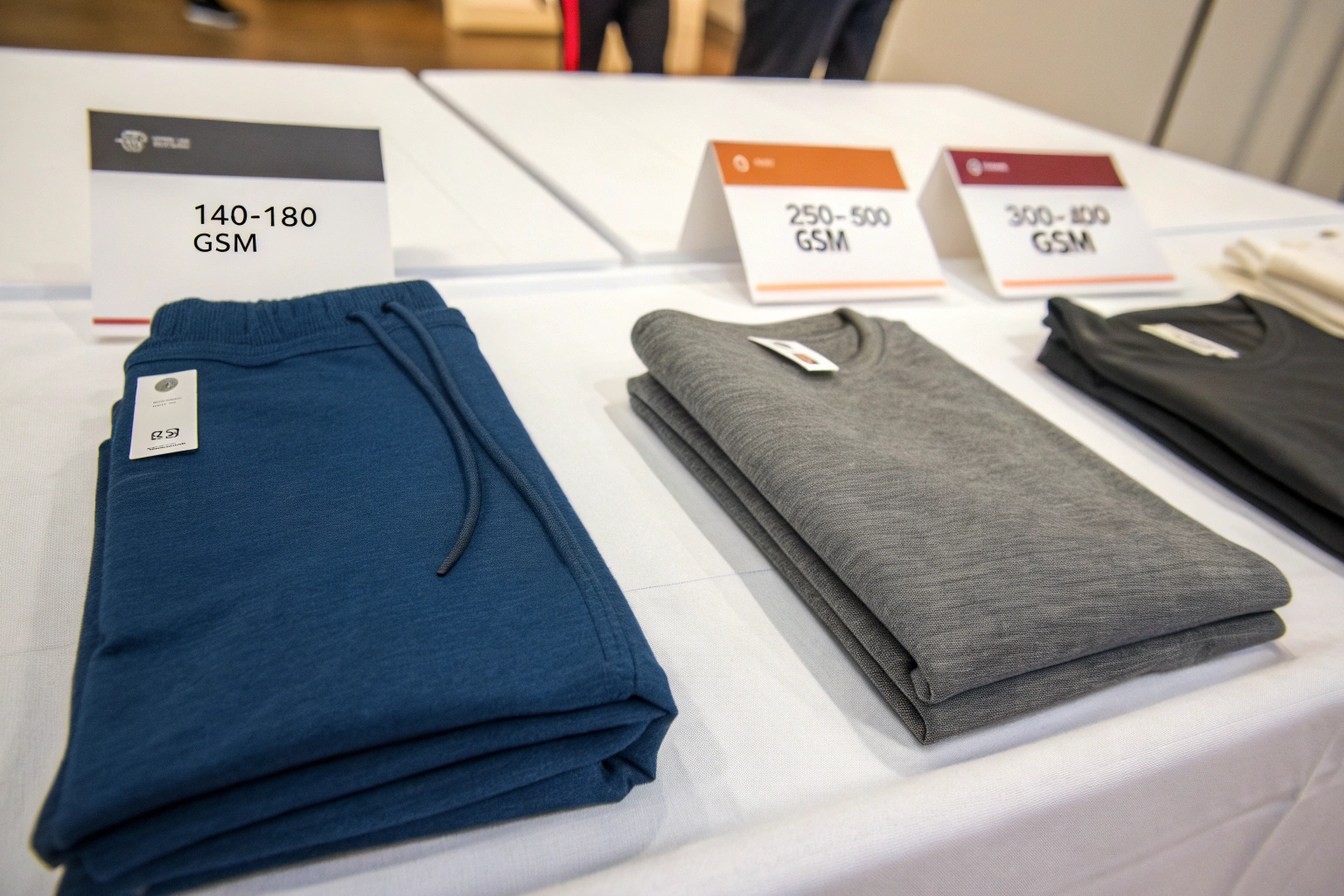
Proper fabric weight selection impacts garment performance, wearing comfort, and consumer experience. Different categories require distinct weight standards: T-shirts perform best at 140-180 GSM, hoodies demand 300-400 GSM, while leggings excel within 250-300 GSM. Practical selection must integrate product positioning with target market requirements.
Designers often struggle between quality and cost during fabric selection. Below are practical weight guidelines accumulated from serving international brands, designed to optimize decision-making processes.
Optimal Weight Range for T-Shirt Fabrics
Case studies demonstrate that T-shirt weight selection requires balancing multiple factors. Insufficient weight compromises texture, while excessive weight affects comfort. Precise understanding of different market preferences proves crucial.
Commercial T-shirts typically adopt 160-180 GSM standards, ensuring durability and skin-friendly feel. Fashion-forward brands prefer 140-160 GSM for lightweight drape, while premium lines favor 200-220 GSM for substantial handfeel. Different weights correspond to varied market positions and pricing strategies.

How Does Weight Influence T-Shirt Lifespan?
Fabric weight closely correlates with garment durability. Experimental data indicates T-shirts below 140 GSM experience premature wear at stress points like shoulders and side seams. Fabrics within 160-180 GSM maintain good condition after 30 washes, effectively resisting pilling. Products exceeding 200 GSM offer exceptional durability but require improved sewing techniques, including reinforced seams and collar structures.
How to Determine Weight Based on Target Markets?
Regional markets show predictable weight preference patterns. European fast fashion commonly uses 140-160 GSM for lightweight texture, while North American consumers prefer 180-200 GSM for substantial feel. Promotional T-shirts typically choose 150-160 GSM for optimal cost-effectiveness. Premium brands utilize 180-220 GSM as quality differentiation, supporting premium positioning through noticeable substantial texture. We also provide customized solutions considering climate characteristics, recommending lighter weights for tropical regions and heavier specifications for temperate markets.
Weight Selection Strategy for Hoodie Fabrics
Inappropriate weight choices directly impact hoodie market performance. Some brands have experienced stiff, uncomfortable products from overemphasizing heavy fabrics.
Professional recommendations place hoodie weight within 300-400 GSM, balancing warmth, durability, and comfort. Lightweight options (280-320 GSM) suit layering and seasonal transitions, regular styles (320-350 GSM) meet daily wear needs, while heavyweight series (350-400 GSM) provide exceptional warmth without compromising mobility.

How to Balance Warmth and Bulkiness?
Weight and thermal efficiency don’t share a simple linear relationship, with fiber composition and structure being equally important. Test results show 320-350 GSM fleece achieves optimal warmth-to-weight ratio through air entrapment. Beyond 380 GSM, thermal gains diminish gradually. Performance hoodies recommend 300-320 GSM brushed fabrics maintaining thermal properties while ensuring movement freedom. Final selection should combine specific usage scenarios and climate conditions.
How Does Weight Relate to Durability and Shrinkage?
Higher weights naturally enhance pilling and abrasion resistance but require professional pre-shrinking treatments. We implement controlled compressive shrinkage for fabrics above 300 GSM, with data indicating 340-360 GSM French terry maintaining under 3% shrinkage after proper finishing. For high-frequency use scenarios like campus wear and work uniforms, 350-380 GSM with reinforced stitching at key areas significantly extends service life.
Weight Standards for Leggings and Activewear
Incorrect legging weight choices can cause serious consequences. We’ve witnessed entire batches rejected for transparency issues during squat tests. Precise weight control forms the foundation for ensuring activewear functionality.
High-performance leggings require 250-300 GSM for complete coverage and muscle support. Daily styles perform well at 220-250 GSM, while specialized yoga and dance products can select 180-220 GSM ultra-light specifications. The key lies in integrating weight with recovery properties, ensuring shape stability during movement.

Why Does Opacity Become the Core Indicator?
Testing reveals fabrics at 220 GSM and below easily show transparency when stretched. We’ve established standardized elongation testing procedures (30% stretch rate) to verify opacity at different weights. Black leggings meet basic requirements at 230 GSM, while 250-270 GSM ensures complete coverage in all positions. Complex patterns require 250+ GSM to prevent distortion when stretched. Recommended selection combines 260-280 GSM with 25-30% mechanical stretch for ideal balance between coverage and flexibility.
How Does Weight Shape Performance and Comfort?
The weight-function relationship is more complex than commonly perceived. Training leggings suit 280-300 GSM for strong compression, while hot yoga recommends 240-260 GSM for enhanced moisture management. Research confirms 270 GSM with directional stretching provides precise muscle support without restricting movement. Daily wear prefers 230-250 GSM, meeting consumer expectations for comfort and durability. Different sports correspond to specific weight ranges, with data derived from systematic athlete testing.
How Fiber Composition Influences Weight Selection
Different fiber compositions can perform distinctly at identical weights. Understanding this interaction helps prevent technical specification errors.
Fiber composition significantly alters fabric performance at equivalent weights. Cotton materials feel more substantial, while polyester provides good strength at lower weights. Cotton-polyester (60-40) blends achieve optimal handfeel and durability at moderate weight ranges, simultaneously optimizing production costs.

How Do Natural and Synthetic Fibers Compare at Equal Weights?
Under 180 GSM conditions, all-cotton fabrics appear heavier due to fiber density and surface structure. Research indicates cotton’s natural crimping creates more air chambers, enhancing texture perception. At identical weights, polyester demonstrates approximately 30% higher tensile strength but requires surface treatments to improve plastic-like handfeel. Cotton blending solutions balance texture and performance, achieving weight optimization across various applications.
How Does Blending Facilitate Weight Optimization?
Strategic blending allows performance adjustment without significantly increasing weight. Adding 5-10% spandex to cotton achieves good recovery. Our proprietary 180 GSM high-performance fabric uses 87% cotton/11% polyester/2% spandex ratio, providing ideal combination of durability, comfort, and stretch for premium T-shirts. For hoodie applications, 80/20 cotton-polyester blends at 340 GSM feel warmer than all-cotton while improving shrinkage issues. Correct blending maximizes performance at target weights.
Conclusion
Scientific fabric weight selection profoundly influences clothing quality, functional performance, and market feedback. From 160-180 GSM T-shirt drape to 320-350 GSM hoodie warmth, and 250-280 GSM legging reliability, each category possesses ideal weight ranges. Importantly, weight must collaborate with fiber composition, structural design, and finishing processes to collectively create satisfactory end products.
Through complete fabric solutions, we’ve assisted numerous brands in achieving precise weight decisions. Laboratory testing ensures weight accuracy and performance parameters, while integrated manufacturing guarantees consistency from yarn to finished product. Whether developing new active collections or upgrading basic styles, we provide professional technical support and reliable supply chain services to facilitate optimal fabric selection. Contact Business Director Elaine (elaine@fumaoclothing.com) to discuss optimal fabric solutions for your next clothing order.