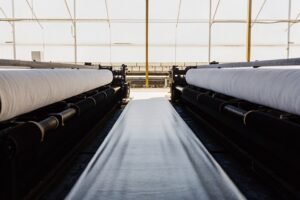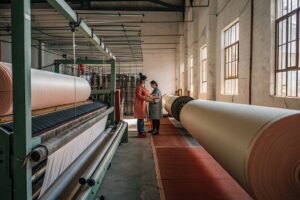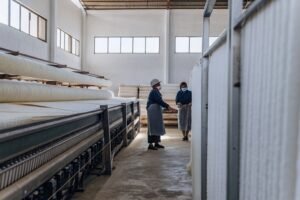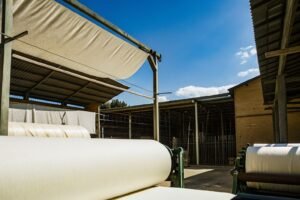
Your margin is getting eaten alive by the overhead, and you can feel it. You’ve likely spent months negotiating with a cut-and-sew factory, only to realize that the “factory direct” price you’re paying for linen shirting is suspiciously close to the retail price of the finished garment. You’re stuck in a trap: you want exclusivity, but you’re funding a production line for buttons, zippers, and cut-offs that bleeds your cash before you sell a single piece. The deep frustration is that you aren’t comparing apples to apples. You’re comparing the chaotic reality of managing a textile supply chain with the polished allure of a ready-made garment rack. The guilt comes from wondering if you’re wasting your creative talent on logistics instead of design, turning your fashion brand into a struggling trucking company.
The hard math shows that white-labeling premium linen fabric from a specialized supplier almost always beats the hidden costs of self-manufacturing—especially when you measure actual profit per hour of your time. At Shanghai Fumao, we’ve run the numbers with dozens of clients. When you “manufacture” from scratch, you don’t just pay for the yarn; you pay for the 1.5-meter selvedge waste on the cutting table, the 3% shrinkage allowance in dyeing, and the dead stock of the three colors that didn’t sell. By using our ready-to-cut linen rolls—pre-inspected in our CNAS lab for colorfastness and shrinkage—you eliminate the invisible money pit of raw fabric yield loss. Our clients simply pick a stock program of high-end European flax linen, slap their neck label into a finished garment, and ride our 20-year supply chain expertise. This model turns your business from a capital-intensive gamble on cotton futures into a lean, cash-flow-positive operation where you only pay for what you sell.
Look, I’ve seen the Keqiao supply chain from every angle for over two decades. The real difference between broke brand owners and thriving ones isn’t their design eye; it’s their ability to distinguish between a "good cost" and a "bad investment." A good cost is buying moisture-wicking linen for a premium activewear line. A bad investment is buying an industrial cutting machine just to launch a 50-piece test run. In this article, I’m going to strip away the romance of “vertical integration” and show you the raw numbers. We’ll walk through hidden waste rates, the cash impact of the Chinese New Year shutdowns on your working capital, and how to use our textile infrastructure as a profit multiplier. Stick with me, because this might just save your brand from a very expensive mistake.
What Are the Hidden Fees in Linen Garment Manufacturing?
You’ve been quoted a “cheap” CMT (Cut, Make, Trim) price, and you feel like you’ve gamed the system. But when the invoice lands, you’re staring at surcharges that devour your 4x markup. This is the anxiety of hidden fees. The linen fabric itself might be reasonably priced, but the cost of turning it into a salable garment is a minefield. You budget for the fabric per meter, maybe the sewing per piece, but you forget that linen is a living, breathing fiber that shrinks, slips, and frays. The financial pain doesn’t come from the big numbers you expect; it comes from the small, technical details you don’t. The result is a final "landed cost" that makes your retail price look like a joke.
These hidden fees fall into two brutal camps: physical material loss and time-based financial loss. The physical loss is the extra 3-5% of fabric you must buy just to account for the shrinkage during the relaxing process. When you buy greige linen fabric, you have to over-order because it will shrink in width and length. Then there is the cutting room waste—those oddly shaped scraps that can’t be used for a sleeve. The time-based loss is even nastier. If your fabric arrives with inconsistent color batches, your factory stops the line to re-sort. This "downtime" is billed back to you as an operational surcharge. At Shanghai Fumao, we help our white-label partners skip this gamble entirely because our pre-shrunk, inspected linen rolls are ready to spread and cut, with a certified shade-band guarantee that ensures continuity.
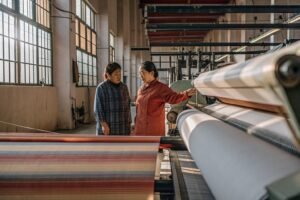
But the biggest hidden fee is the "creativity tax" on your brain. When you are manufacturing, you spend your Wednesday afternoons haggling over the cost of fusible interlining instead of designing next season’s lookbook. White-labeling isn’t just about buying fabric; it’s about buying back your time. We handle the heavy lifting of stabilizing the linen so you don’t have to argue with a cutting master about why the plaid lines don’t match. We use our high-tension spreading machines to ensure the grain is straight before the knife even touches the cloth. This efficiency is what allows our partners to quote instantly and ship fast, even during the chaotic peak production period of August through October.

How Does Fabric Yield Waste Kill Your Profit Margins?
You might think 5% waste sounds trivial. It’s not. It’s the difference between a luxury margin and a bankruptcy filing. Yield waste in linen manufacturing is the actual fabric that ends up in the trash bin, not in a box heading to a customer. You pay for 100% of the roll, but due to linen’s slubby nature and shifting grain, you might only put 85% of it on a body. This is a silent margin killer.
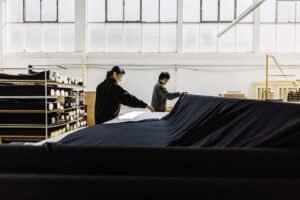
First, consider the "splice loss." A traditional linen roll might have knots where the threads were tied together during spinning. If you are manufacturing a long flowing dress, you can’t have a knot in the middle of the skirt panel. You have to cut around it, creating waste. Second, shade variation within a roll forces you to discard perfectly good fabric just to avoid a visible color line on a jacket. We manage this by offering our white-label clients rolls that are digitally graded for exact color consistency. This step alone can reclaim that 5-8% loss. (A quick behind-the-scenes truth: we often run a "mock lay" test on our cutting table just to photograph the yield map for a client before they commit to a production run.)
Why Do Quality Control Failures Double Your Landed Costs?
A seam that bursts on a customer costs you one refund. A dye lot that fails inspection in a warehouse costs you an entire container. QC failures during manufacturing are retroactive nightmares. You’ve already paid for the CMT, the shipping, and the import duty, and only then do you discover the fabric has a poor crocking rating and the color rubs off on a white sofa.
When you manufacture from scratch, you assume the QC risk on the raw fabric. If the wet rubbing fastness of the linen is a grade 1-2 (dry), you own a mountain of unsellable rags. We fix this with white-labeling because we apply the liability on ourselves before the fabric is cut. We run the AATCC 8 crock test in our lab and won’t release a dye lot for cutting if it doesn’t hit a grade 3 or higher. This shift in risk is profoundly profitable. Instead of you financing a quality failure, we absorb it as a manufacturing write-off. You simply receive a ready-to-stitch kit of components that passes all safety standards, turning a potentially catastrophic risk into a non-event.
How Does White-Labeling Linen Reduce Supply Chain Complexities?
You have maybe two or three reliable suppliers on your list, and you live in constant terror that one will fail. That’s not a supply chain; that’s a house of cards. The complexity of managing raw fiber sourcing, a spinning mill, and a dyeing house simultaneously is a full-time job for three experts, not one designer. You are drowning in transactional emails about yarn counts and dye-bath ratios while your marketing plan collects dust. This chaos slows your speed-to-market so dramatically that by the time your linen blazer arrives, the season has already changed and your customers have moved on to polyester blends.
White-labeling compresses a 12-step nightmare into a 2-step transaction. You effectively delete the entire greige manufacturing pipeline from your risk register. Instead of sourcing raw flax fibers from Europe and arguing with mills about the micronaire value, you simply draw from our stocked inventory of finished linen and linen-viscose blends. We take care of the complexities that usually break a small brand. For a client from New York launching a menswear line last March, we condensed the entire sourcing cycle for 300 meters of linen herringbone into a single morning. Instead of them navigating the shutdown threats of Chinese New Year, we handled the pre-production weaving in the off-season. When they woke up in Manhattan, the fabric was already finished, inspected, and waiting in Keqiao.
This simplification directly impacts your ability to handle the volatile US tariff landscape. When you engage in full manufacturing, your customs documentation requires a detailed breakdown of every input—the cost of the yarn, the weaving fee, the dyeing surcharge. A misstep here triggers a 25% penalty. With our white-label stock program, the transaction is a single commercial invoice for a finished good. This streamlined paper trail makes it easier for your broker to clear the goods. It minimizes the time your container sits in the demurrage zone at the port of Los Angeles. We don’t just sell you a textile; we sell you a simplified customs footprint.

Can You Survive Peak Season Without Raw Material Panic?
When the March-to-May rush hits, the entire textile cluster in Keqiao is fighting for loom capacity. If you are a small manufacturer trying to weave a custom linen construction, you are last in line. The mills prioritize the big guys. You end up with a 4-week delay that cripples your marketing launch. This raw material panic is a seasonal disease that kills small brands.
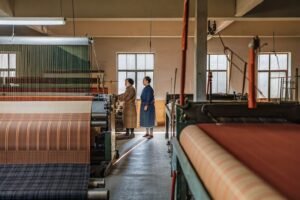
White-labeling is your vaccine against this capacity crunch. We operate our own looms and maintain a strategic "buffer stock" of popular linen bases specifically for this season. Because we are weaving 52 weeks a year, we don’t react to the peak—we just flow with it. When a swimwear client transitioned to a linen cover-up line, they used our in-stock washed linen to capitalize on a sudden heatwave in Europe. They ordered the finished fabric on a Monday, and by Friday it was in cutting. That kind of fast turnaround isn’t just service; it’s the ability to catch a trend wave while your competitors are still crying over a P.O. delay.
How Do Import Duties Favor Finished Goods Over Raw Fabric?
You need to look at your tariff engineering strategy closely. Bringing in a roll of fabric (Chapters 52-55) might carry one duty rate, but bringing in a "made-up" garment kit (Chapter 62 or 63) might carry another, often more favorable under specific trade agreements or de minimis thresholds. This is where white-labeling flips the economics in your favor.
If you import raw linen fabric, you pay duty on the material, plus the shipping volume of a bulky, hard-to-handle roll. If you use our pre-cut, ready-to-sew panels or localized finishing, you might benefit from different classifications. We work with a logistics firm in Los Angeles to optimize this exact puzzle. A recent shipment for a home-textile brand shifted from "woven fabric" classification to "made-up articles" by using our pre-hemmed and printed linen napkin panels. This was entirely above board and legal, leveraging the specific rules of classification. The duty savings covered the entire logistics cost for that container, effectively giving them free freight on a 5,000-unit order.
When Is Bulk Linen Manufacturing Cheaper Than White-Labeling?
Let’s be fair: white-labeling isn’t a magic trick, and it isn’t always the cheapest sticker price. There is a dangerous myth that ready-made stock is for amateurs while “real” brands manufacture. Sometimes, the math flips. If you are pushing massive volumes of a basic, uncomplicated open-width linen, the sheer scale of bulk buying might seem tempting. The fear here is leaving money on the table. You don’t want to pay our margin on the finishing if you could do it for a lower piece-rate by buying 20,000 meters of greige fabric directly. The pain is the uncertainty of not knowing if you are big enough to swim in the deep end without drowning.
Bulk manufacturing becomes genuinely cheaper when your volume reaches a threshold where the fixed costs of custom tooling are amortized to near-zero per unit. The magic number for 100% linen is often the container load. If you are ordering a full 40-foot high-cube container of a single linen twill, with a consistent width and a single color finish, the economics of scale start to work. We actually advise our clients on this transition point with honesty—it’s usually around the 10,000-meter mark. Below that, the premium you pay for our white-label inventory is actually a massive discount compared to setting up a custom dyeing vat and paying for the minimum order quantity of chemicals. It’s like renting a car for a weekend trip versus building a car for a daily commute; the math simply shifts at a specific distance.
But here is the nuance: even at high volumes, the "cheaper" manufacturing route hides risks that are invisible on a spreadsheet. Bulk manufacturing requires you to become a commodity trader. You don’t just buy the production; you buy the fluctuation of the flax market. If a poor harvest in Normandy spikes the raw flax price by 20% between the time you sign the contract and the time the weaving starts, that’s your loss to eat. In our white-label model, we absorb that commodity volatility because we hedge our raw stock across hundreds of clients and seasons. We offer a fixed price validity window, often 30-60 days, allowing you to calculate a bulletproof margin without betting on Belgian agricultural weather patterns.

How Much Volume Is Needed for Custom Linen Weaving?
The breakeven for custom weaving isn’t just about the money; it’s about the machine time. A rapier loom doesn’t like to stop. Setting up a new construction—say, a specific herringbone weight—takes a mechanic about half a day to change the drawing-in and the reed. You pay for that time, which we call the "warping fee."
Let’s break down the minimums. If you want a fully customized, exclusive weave, you need to commit to enough yardage to justify that setup cost. We generally find that anything under 3,000 meters per color results in a high "engineering surcharge" per meter. However, if you are doing a basic plain weave with a standard finish, the threshold drops. I always advise clients to avoid full custom weaving unless they have a signature fabric that defines their brand—a unique texture they will use every single season. Otherwise, it’s better to use our white-label stock and add value through design and digital printing, which has a much lower minimum order quantity.
Why Do Large Brands Still Choose White-Label Linen Sourcing?
It looks counterintuitive. Why would a massive brand with huge purchasing power pay a "middleman" markup? Because they are paying for the elimination of lead time and the zero-defect rate. Huge retailers don’t care about the cost of the fabric as much as they care about the financial pain of a markdown because the shipment landed late. White-label linen isn’t a product for them; it’s an insurance policy.
I recall a talk with a buyer from a European chain store in 2024. They could easily have bought greige fabric and commissioned a specific dye, but they needed to replenish a bestselling basic item in under three weeks. They pulled from our open stock of 10,000 meters of ready-dyed linen. Yes, the per-meter cost was slightly higher than their direct manufacturing price. But the time saved—and the prevention of stock-outs during the Golden Week shutdown—made the net profit higher. They understood that a product in stock sells at full price, while a delayed "cheap" product eventually sells at a 50% markdown. That clarity is what separates the pros from the hobbyists.
How Do You Market White-Label Linen for Premium Profit?
You have the product, a beautiful white-label linen garment, but it’s just hanging on a rail looking like a generic commodity. The fear here is that you won’t be able to justify a premium price point. If you just put a label on a standard fabric, the customer will reverse-image search it and find the same base cloth on a competitor’s site for half the price. The pain is the "generic tax"—the loss of margin because you haven’t wrapped the fabric in a compelling story that differentiates it from the mass-market noise.
White-label linen doesn’t have to be generic. You elevate it through "narrative finishing." The physical fabric remains the same, but the visual framing and added brand value change the customer’s perception of worth. We help our clients build a "luxury wrapper" around our stock linen by providing a full Origin Story Kit—the high-res photos of the fabric on our looms, the slow-motion video of the breathability test. For a womenswear boutique in Toronto, we provided close-up shots of our pre-wash process that softens the linen naturally without chemicals. They used these assets to justify a $220 price point for a simple shirt, selling out in days.
Marketing premium linen is about selling the hand-feel through a screen. Since you are using a proven Shanghai Fumao base, you’re not guessing about quality—you know it doesn’t shrink excessively. This confidence lets you use bold claims. You market the "heirloom wash" we apply, creating a brand mythos around the finish. You aren’t just slapping a tag on a garment; you are curating a texture. This is crucial for Instagram and TikTok, where the drape of the fabric on a body sells the shirt in 3 seconds. You leverage our vertical integration as your silent production partner, allowing you to position your brand as a designer-led house, not just a reseller.

Can You Create an "Exclusive" Feel With Open-Stock Fabrics?
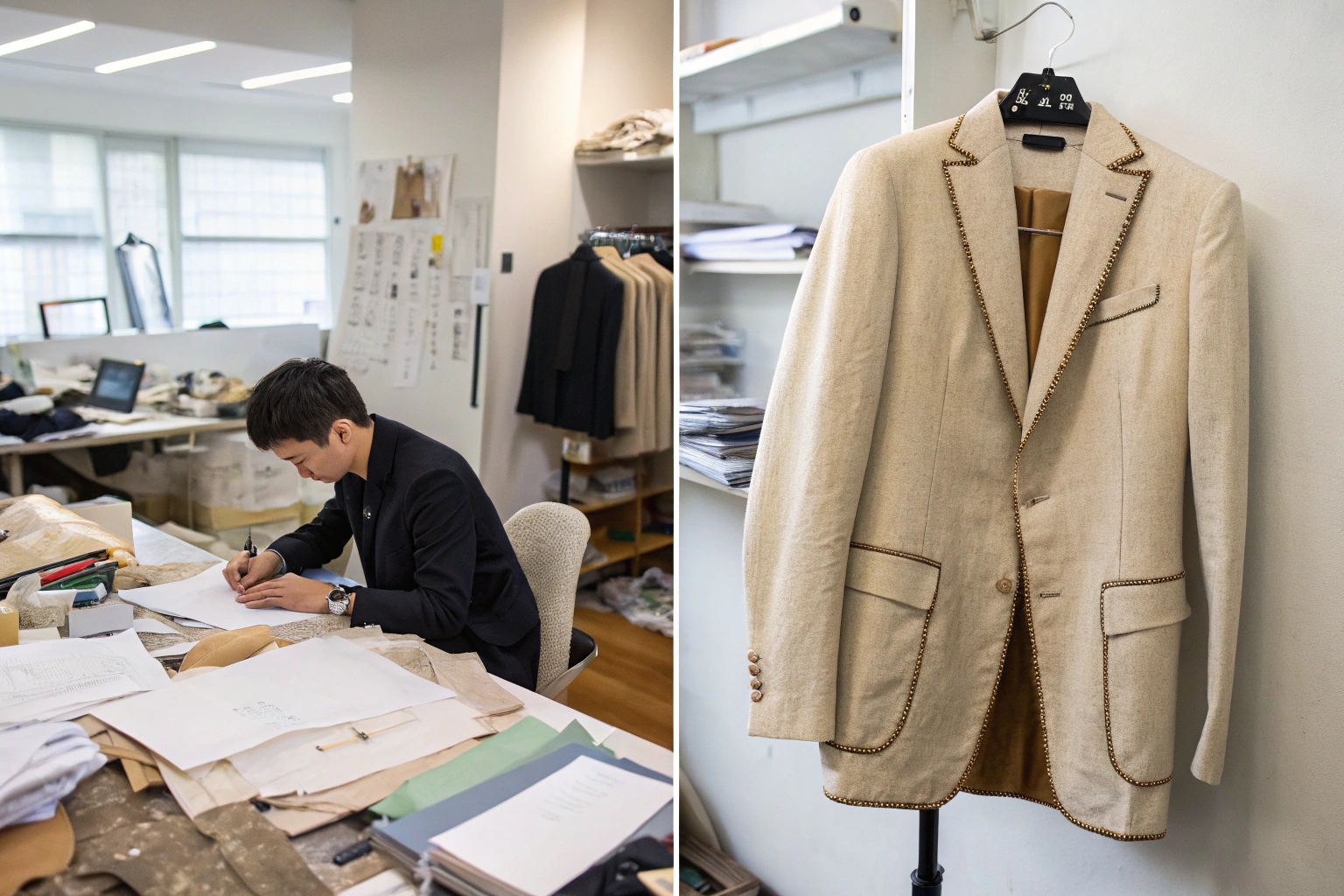
Yes, you can fake exclusivity by adding specific physical trims that change the identity of the base. Take our open-stock linen—it’s a brilliant canvas. You can create a "house style" by standardizing a specific contrasting stitch, a signatory shell button, or a unique label placement that we install.
This "proprietary conversion" is the trick. You buy the generic base, but you apply a very specific laundry treatment or garment dye to the finished piece. You can even use our digital embroidery machines to add a unique logo in an unusual spot, like the inside of the placket. These micro-details make the garment unsearchable by competitors. It’s still our reliable linen, but it’s your intellectual property. This bridges the gap between the efficiency of white-labeling and the exclusivity of custom manufacturing without the crippling minimums.
How Do You Use Lab Data to Justify a Luxury Price Tag?
Premium pricing must be backed by performance data, or the customer feels scammed. A luxury linen dress cannot pill like a cheap sweater or fade in the first wash. We provide a "Technical Certificate" with our white-label lines that translates our lab science into marketing gold.
You use the numbers from our CNAS lab to craft the story. Instead of saying "high quality," you say, "Tested to withstand 9,000 Wyzenbeek rubs—designed for a decade of use." You mention the "lightfastness grade of 4-5, ensuring the sun-drenched color stays true even after a summer on the French Riviera." These are concrete, factual statements sourced from our factory, not marketing fluff. We give you the photos of the Martindale machine test. When a high-ticket customer hesitates, you don’t just email a discount code; you email them the technical report. This data-driven approach shifts the conversation from subjective taste to objective worth, which is the only way to charge a premium online.
Conclusion
We’ve sliced through the numbers, the waste, and the marketing fluff to get to the core truth of linen profitability. We’ve seen that hidden factory fees—like shrinkage and shade-band sorting—act as a silent tax on manufacturing, while white-labeling effectively insures you against these yield losses. We’ve validated that navigating the import tariff maze and navigating peak season delays is often simpler and cheaper when you leverage a ready-made stock program rather than wrestling with raw greige fabric and custom looms. Ultimately, true profitability isn’t just a spreadsheet of costs; it’s the speed of your cash flow and the power of your brand story.
Remember that the goal isn’t to own a loom; it’s to own a market. Whether you decide to white-label for speed or manufacture for custom exclusivity depends entirely on your volume threshold and your tolerance for risk. But in my two decades here in Keqiao, I’ve seen that for 90% of growing brands, the smartest path is to leverage a partner’s infrastructure to avoid the dead stock trap and focus your energy on design and storytelling. White-labeling isn’t a shortcut; it’s a strategic alliance that keeps your working capital liquid and your hairline intact.
If you are ready to stop gambling on raw fabric yields and start capitalizing on a reliable, premium linen program that ships with full visual proof and lab data, let’s get on a call. Whether you need a private-label batch of our pre-softened linen or a fully custom wash for a higher-end collection, we can engineer the supply chain to protect your margin. At Shanghai Fumao, we’re not just a vendor; we are your behind-the-scenes production partner. Reach out to our Business Director, Elaine, at elaine@fumaoclothing.com. Tell her what you’re working on, and let’s figure out the most profitable path forward for your linen range.