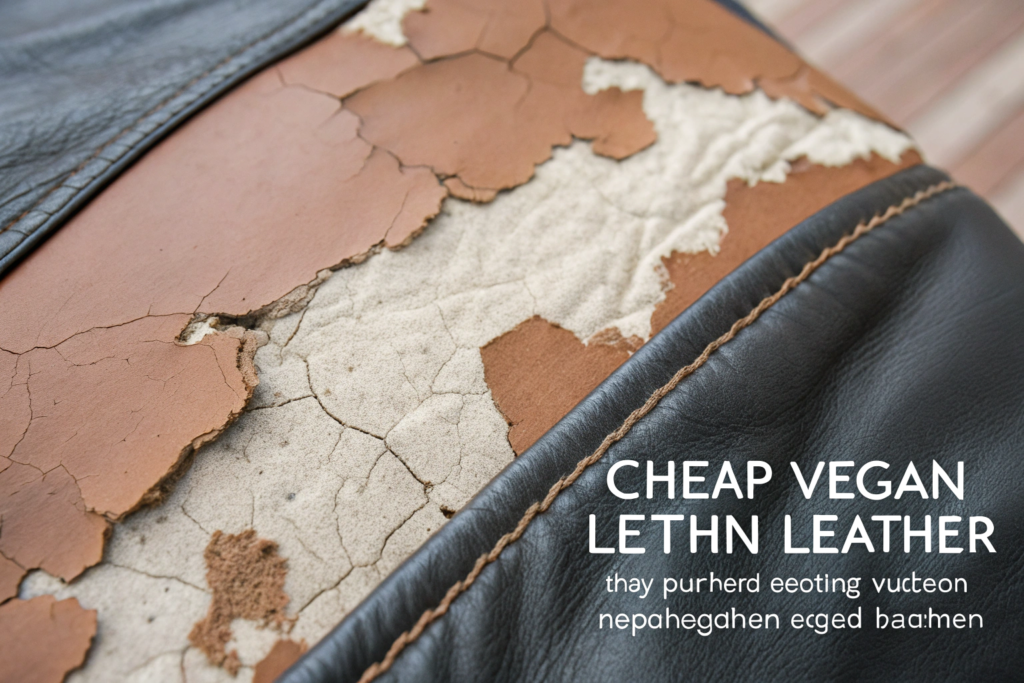
You built your brand on a promise: no animals harmed, no leather sourced. Your customer trusts you with their ethics. You source a "vegan leather" from a new supplier, cut it into beautiful moto jackets, and ship them out. Six months later, the complaints flood in. The material is peeling like sunburned skin. The "leather" was just a cheap PU film glued to a weak polyester backing, and it started hydrolyzing the moment it left the factory. Now your vegan brand isn’t just dealing with returns—it’s dealing with a credibility crisis. Because if the "vegan" material falls apart faster than the animal version, you’re not offering a sustainable alternative; you’re offering landfill filler.
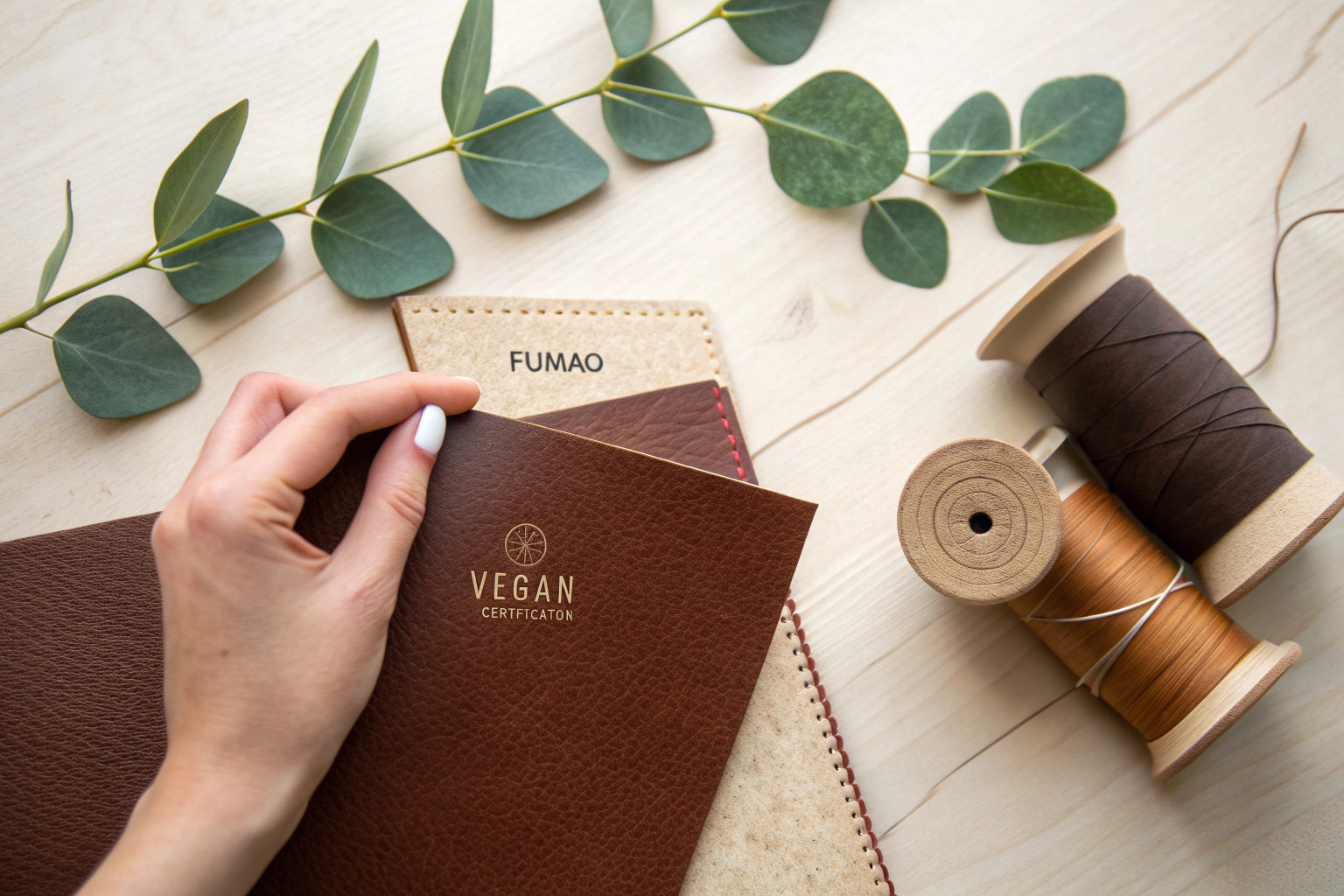
Synthetic leather for a vegan brand carries a heavier burden than regular PU. It has to be cruelty-free, yes. But it also has to survive real wear, resist peeling for years, and meet the chemical safety standards your eco-conscious customer demands. At Shanghai Fumao, we manufacture our synthetic leather with a specific focus on the fashion-vegan segment: high-tensile microfiber backings, solvent-free polyurethane topcoats, and third-party certifications that prove there’s no DMF, no heavy metals, and no phthalates hiding in the material structure. In this article, I’ll show you exactly what separates a premium vegan leather from a greenwashed one, and how to spec a material that your brand can build its reputation on.
What Backing Materials Make Vegan Leather Actually Durable?
The dirty secret of cheap vegan leather is that the "leather" part—the polyurethane or PVC coating—is rarely the problem on day one. What fails first is the backing fabric underneath. If the coating is a beautiful skin, the backing is the skeleton. A weak skeleton collapses, and the skin cracks along with it. I’ve seen PU coatings that were still perfectly intact peel off in sheets because the underlying polyester scrim had disintegrated from sweat and friction.
The cheapest synthetic leathers use a low-density, non-woven felt backing made from mixed recycled fibers. It feels thick and padded in the showroom, but it has terrible tear strength—you can rip it with your bare hands. The mid-range uses a woven polyester-cotton backing, which has better tear resistance but lacks the soft, dimensional drape of real leather. The high-end, which is what we produce at Shanghai Fumao for vegan fashion brands, uses a microfiber non-woven backing that mimics the interlocking collagen fiber structure of animal hide. Microfiber backings are made from ultra-fine polyester or nylon filaments (less than 0.1 denier per filament) entangled through hydroentanglement or needle-punching. The result is a substrate with a dense, suede-like cut edge, high tear strength (well above 25 Newtons per ISO 13937-2), and a drape that falls naturally rather than folding like cardboard. A Los Angeles handbag brand switched to our microfiber-backed synthetic leather in 2023 after their previous material’s woven backing shredded at the strap attachment points. The microfiber backing eliminated the stitching blowout entirely.
How Do I Test the Peel Adhesion Between the Coating and the Backing?
Delamination is the plague of synthetic leather. The coating looks perfect, but it starts separating from the backing like a blister, usually at high-stress folding points like the collar of a jacket or the gusset of a bag. The industrial test for this is ASTM D751 (or ISO 2411), which measures the force required to peel the coating away from the backing at a constant angle.
We run this test on every production lot. A 25mm wide strip is cut, the coating is partially separated from the backing, and the two layers are clamped into a tensile testing machine. The machine pulls them apart at 100mm/min and measures the average peel force over the separation distance. For a fashion jacket or a handbag that will be folded, creased, and pulled, the minimum acceptable peel adhesion is 12 Newtons per 25mm width. For a phone case or a shoe vamp, which sees almost no flexing, 8 Newtons might pass. Our microfiber-backed material consistently achieves 18 to 22 Newtons in peel adhesion testing because the PU resin penetrates deeply into the micro-pores of the non-woven structure, creating a mechanical lock that’s vastly stronger than the surface-level glue bond on a cheap woven scrim. The standard test method for peel adhesion of coated fabrics under ASTM D751 gives the full specimen preparation protocol, and it’s a test you should demand on every synthetic leather quality report you review.
Why Does Microfiber Backing Cost More Than Woven Backing?
Microfiber non-woven fabric is a completely different manufacturing animal than woven polyester cloth. The raw filaments are extruded at sea-island or segmented-pie cross-sections, then split chemically or mechanically into individual filaments one hundredth the thickness of a human hair. The splitting process alone requires specialized alkali-shrinkage baths, precision temperature control, and wastewater treatment for the dissolved polymer components. This is expensive chemistry.
A square meter of standard 0.6mm microfiber backing material might cost ¥22 to ¥28 in raw form, compared to ¥6 to ¥10 for a basic woven polyester-cotton backing of the same weight. But the microfiber backing adds tangible value that the woven backing cannot replicate. It has higher surface area for mechanical bonding, so you get better peel adhesion. It has a structure of entangling fibers rather than a rigid grid, so it drapes and flexes without creating sharp fold lines that crack the PU coating. And it has a suede-like touch on the reverse side, which adds a perceived luxury quality that customers immediately equate with high value. For a premium vegan brand selling a $200 jacket, that backing quality is the difference between a customer saying "this feels like real leather" and "this feels like plastic." Exploring the microfiber non-woven manufacturing process for high-grade synthetic leather substrates reveals why the cost gap exists and why it’s non-negotiable for quality-driven vegan brands.
Is Fumao Synthetic Leather Free from Toxic Solvents?
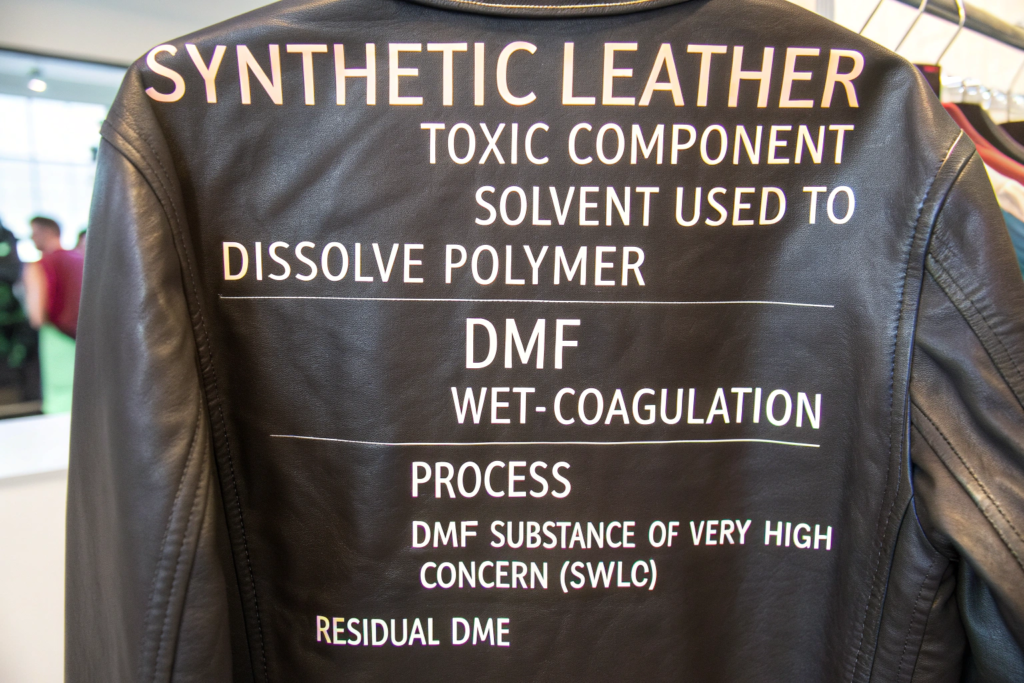
The most toxic thing in synthetic leather isn’t usually the polymer—it’s the solvent that dissolves the polymer for coating. Traditional PU synthetic leather manufacturing uses dimethylformamide (DMF) as a solvent in the wet-coagulation process. DMF is a powerful chemical that creates that beautiful, consistent pore structure in PU, but it’s also a reproductive toxin classified as a Substance of Very High Concern (SVHC) under EU REACH. Residual DMF can remain trapped in the synthetic leather and off-gas slowly over years, posing a health risk to the person wearing the jacket and to the factory workers inhaling it during the coating process.
At Shanghai Fumao, we’ve moved our production line to water-based polyurethane (WPU) and solvent-free PU systems for our vegan fashion grades. Our solvent-free PU is a two-component system where the polyol and isocyanate components react directly in the coating head with no DMF required. The reaction chemistry forms a continuous PU film without needing a solvent carrier to evaporate out. The result is a synthetic leather that can be certified below the 1000 mg/kg DMF limit required by REACH—often below 10 mg/kg, which is essentially "non-detectable" on standard GC-MS analysis. A Dutch vegan shoe brand tested our solvent-free PU suede in February 2024 through an independent OEKO-TEX certified lab and found DMF levels of 8 mg/kg, which cleared their strictest "baby-safe" tolerance threshold. For brands applying for EU REACH compliance documentation for solvent-free polyurethane synthetic leathers, having a supplier who can provide the full GC-MS chromatogram is a massive sourcing advantage.
What Certifications Should a Vegan Brand Demand for Chemical Safety?
OEKO-TEX Standard 100 is the starting line, not the finish line, for synthetic leather. The standard covers heavy metals, phthalates, and certain harmful solvents. But a vegan brand positioning itself as "clean" often needs more. I recommend three specific certifications to request: OEKO-TEX LEATHER STANDARD (yes, it applies to synthetic leather as well), which tests a broader panel of chemicals including specific azo dyes and chlorinated phenols; ZDHC Level 3 conformance, which audits the entire manufacturing wastewater stream and chemical input inventory; and a specific DMF/NMP (N-Methyl-2-pyrrolidone) residue test report with a limit of quantification below 50 mg/kg.
We also maintain a vegan-specific Material Safety Data Sheet (MSDS) that explicitly declares all chemical inputs used in the coating, the backing, and the adhesive layers. This transparency is unusual in the synthetic leather industry, where coating formulations are often closely guarded trade secrets. But the vegan consumer is data-hungry. They scan QR codes in stores and read chemical safety databases. If your brand can link to a full ZDHC Gateway chemical inventory from your material supplier, you win a level of trust that "vegan" alone cannot deliver. A useful deep dive here is the ZDHC Manufacturing Restricted Substances List conformance guidelines for synthetic leather manufacturing facilities which explains exactly what chemical management a modern mill should have in place.
How Do We Ensure Colorants in Vegan Leather Are Also Non-Toxic?
The PU coating is clean, the backing is clean, but the brilliant crimson red color might not be clean. Certain synthetic leather dyes, especially in vivid reds, oranges, and neon shades, are achieved with heavy metal-complex pigments that can contain lead chromate, cadmium, or barium. These pigments are stable in the plastic matrix under normal conditions, but if the material is abraded, heated (like in a hot car interior), or chewed on by a child, the heavy metals can become bioavailable.
We use only high-molecular-weight organic pigments and carbon black for our vegan synthetic leather colorants. Our red shades are formulated with diketopyrrolopyrrole (DPP) and quinacridone pigments, which are organic molecules with no heavy metal content. These pigments are more expensive—around ¥180 to ¥320 per kilogram, compared to ¥40 to ¥80 for lead chromate-based reds. But the color fastness is superior (DPP reds resist UV fading far better than lead-based reds), and the toxicity risk drops to zero. Our colorant supplier provides an annual heavy metal analysis certificate per pigment batch, which we attach to the technical file for each dye lot. If a brand requests a specific "lead-free" or "heavy-metal-free" certification for their synthetic leather color palette, we can compile the pigment certificates for the specific colors used in their order. For a comprehensive look at the chemistry, organic pigments for polyurethane colorant systems versus heavy-metal based inorganic alternatives explains the performance and toxicity tradeoffs in depth.
How Does Fumao Synthetic Leather Handle Cold Crack Testing?
Vegan leather fails most spectacularly in the cold. A beautiful soft tote bag shipped to a customer in Montreal in January arrives stiff as a board. She opens the package, bends the strap to adjust it, and crack—the coating fractures in a jagged line across the fold. The material passed all the softness and durability tests in a 25°C showroom, but at -10°C, it became as brittle as a potato chip. This is the cold crack failure mode, and it separates serious synthetic leather from costume material.
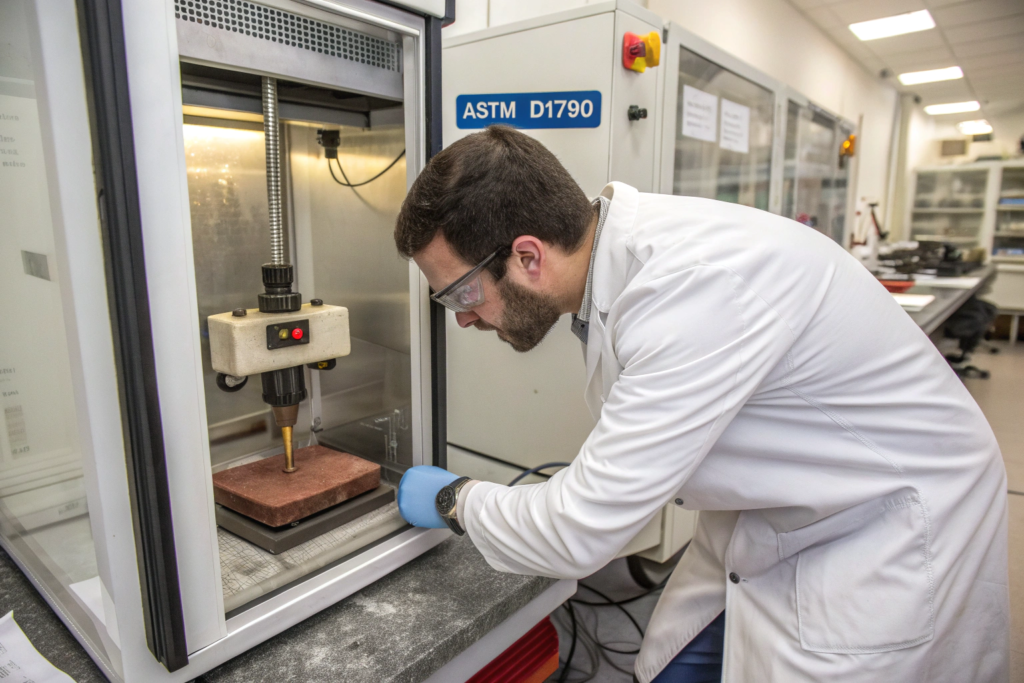
We test every vegan fashion-grade synthetic leather using the ASTM D1790 cold crack test. A specimen is conditioned at a specific low temperature for 4 hours, then folded 180 degrees around a mandrel of a specified diameter. The test is repeated at progressively lower temperatures until the material cracks. Our standard PU leather for fashion outerwear is rated for -20°C without cracking on a 25mm mandrel. A microfiber-reinforced version extends that rating to -30°C. For a Quebec-based vegan coat brand, we supplied a 1.2mm thick synthetic leather with a cold crack rating of -35°C, tested and verified. They sold parkas into the dead of a Canadian January without a single winter-weather return. Understanding the ASTM D1790 cold crack temperature test method for coated fabrics and synthetic leather is essential if your distribution map includes any territory where the temperature drops below freezing.
What Makes Polyurethane Become Brittle in Freezing Temperatures?
PU flexibility is determined by the "glass transition temperature" (Tg) of its soft segment. The soft segment is made of long-chain polyols—polyester or polyether chains—that act like microscopic springs inside the polymer structure. When the temperature drops toward the Tg, these springs freeze into a glassy state. They lose their ability to flex and absorb energy. Apply a sharp bend in this state, and the brittle glassy polymer shatters instead of bending.
The secret to a low cold-crack rating is selecting polyols with extremely low glass transition temperatures. We use a polycarbonate-based polyol with a Tg of -45°C in our premium vegan leather topcoat. This means the polymer doesn’t begin to stiffen until the temperature drops well below typical winter extremes. Cheap PU uses polyether polyols with a Tg of -15°C or even higher, which explains why inexpensive synthetic leather jackets crack at the first frost. The chemistry choice has a direct price implication—polycarbonate polyols cost roughly 2.5 times more than standard polyether polyols—but for a brand whose customers live in a cold climate, the upgrade is invisible to the consumer’s eye and entirely visceral to their experience. A helpful technical resource on this is the polyol glass transition temperature influence on low-temperature flexibility of polyurethane elastomers which connects the polymer physics directly to the wearing experience.
Can Synthetic Leather Also Fail in Extreme Heat?
Yes, and the failure mode is different but equally destructive. At high temperatures (think a black handbag left on a car dashboard in Arizona in July, reaching 80°C surface temperature), plasticizers migrate out of the polymer matrix, causing the synthetic leather to become sticky, shiny, or tacky. The surface can also yellow as the aromatic isocyanate hard segments oxidize under UV and heat combined.
We formulate our vegan leather for an upper service temperature of 100°C for intermittent exposure, which covers the hottest automotive interior scenarios. We use aliphatic isocyanates instead of aromatic ones in the topcoat for UV-stable applications. Aliphatic isocyanates do not form the chromophore structures that cause yellowing, so a white vegan leather handbag remains white under years of sunlight exposure. The hydrophobicity of the polycarbonate soft segment also resists hydrolysis better than polyester-based soft segments, so the material doesn’t degrade and become brittle in hot, humid environments like a Southeast Asian monsoon season. A Singaporean accessories label tested our material for 500 hours in a QUV accelerated weathering chamber (alternating UV exposure and condensation cycles) and measured a Delta E color shift of only 1.8. A standard polyester-based PU under the same conditions shifted by Delta E 7.5, a dramatic yellowing visible to the untrained eye. The performance data for aliphatic polyurethane topcoat systems for non-yellowing synthetic leather applications is foundational reading for any brand whose product lives under direct sunlight.
How Do I Achieve a Genuine Leather Look with Vegan Materials?
The "plastic" sheen is the enemy of a convincing vegan leather. That unnatural, uniform gloss under lighting, the way the folds look like bent Tupperware instead of worn hide. You can feel the synthetic-ness from across the room. But this isn’t an inherent property of PU—it’s a design failure in the surface texture and finishing. Real leather has pores, grain variation, subtle color depth from underlying layers, and a flexural pattern that creates unique, non-repeating micro-wrinkles when bent. Cheaper synthetics are perfectly uniform, perfectly smooth, and perfectly unconvincing.
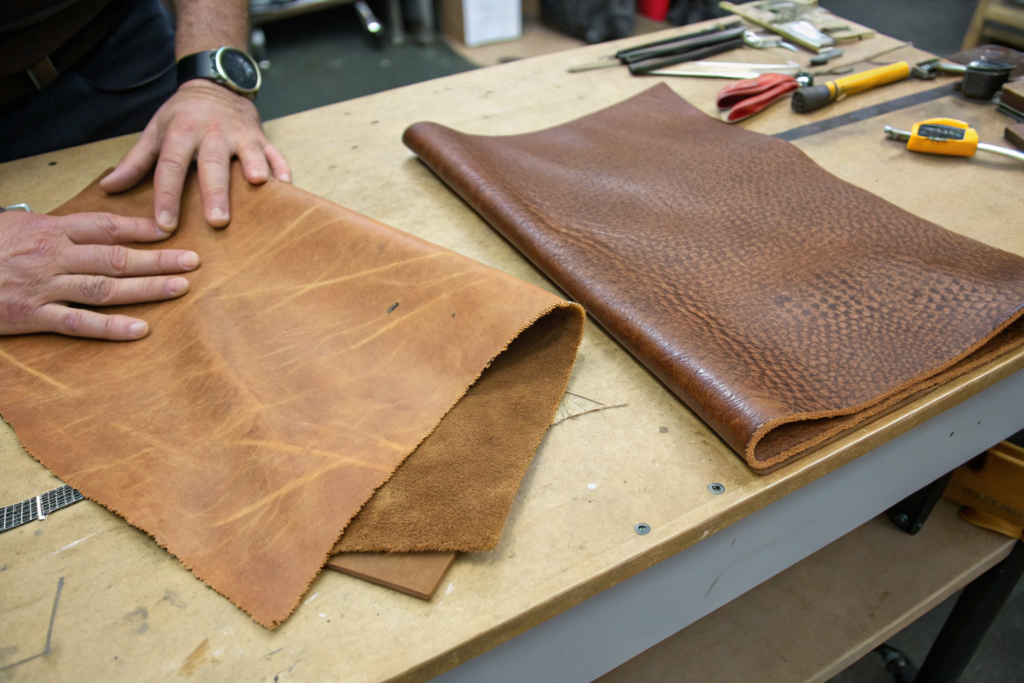
At Shanghai Fumao, we close the gap using two techniques: a deep-embossed grain pattern and a multi-layer topcoat with color graduation. First, a hydraulic embossing cylinder presses a genuine-leather-casted grain texture into the semi-cured PU surface at high pressure and heat. This texture is not a simple repeating geometric stamp; it’s a stochastic pattern taken from a real calfskin hide, which includes the subtle randomness of real pores and hair cell topography. Second, the color layer is not a single flat pigment coating. It’s a semi-transparent base color with a slightly darker grain-fill in the embossed valleys, topped with a matte-polycarbonate clear coat that diffuses reflected light the same way a natural wax finish does on animal leather. The visual depth comes from the light passing through the clear coat, hitting the darker grain color, and reflecting back through the clear coat again—a two-pass optical journey that mimics the three-dimensional chromophore structure of real, dyed animal skin.
How Does the Embossing Process Create a Natural Grain?
The embossing roller is the unsung hero of vegan leather aesthetics. It is a precision-etched steel cylinder, the surface of which is a negative relief of a genuine leather surface. The original leather texture is digitized via 3D laser scanning, the data is cleaned and tiled seamlessly, and then laser etching transfers the negative of that texture onto the roller surface. When the wet PU coating passes under this heated roller, the texture is compressed into the polymer, physically deforming the surface to match the genuine hide’s topography.
The critical parameter here is the embossing depth. A genuine calfskin grain pore might be 80 to 150 microns deep. A cheap embossing roller might only achieve 30 to 50 microns before the PU recovers and the texture vanishes in the first week of use. Our embossing system achieves a permanent 120-micron grain depth by using a high-temperature cross-linking PU formulation that chemically sets in the embossed state. The texture is locked in, not just stamped in. This is also why our synthetic leather can withstand flat-press lamination or high-frequency welding without losing its grain pattern—the texture is dimensionally stable at high temperatures because the polymer network is cross-linked at maximum compression. When a designer picks up our swatch and runs their fingernail over the grain, the texture bites back with the same irregular resistance that natural leather provides.
How Do I Pick the Right Gloss Level for My Vegan Product?
Gloss is measured in "Gu" units on a 60-degree gloss meter. The number communicates surface reflectivity, and it profoundly affects how "real" the synthetic leather reads. A high-gloss patent leather finish has a gloss of 80+ Gu. A natural matte calfskin might read 2 to 5 Gu. A semi-matte, waxed aniline finish reads around 15 to 25 Gu. The sweet spot for most vegan leather trying to pass as genuine is a matte to low-satin gloss level of between 5 and 15 Gu. Anything above 30 Gu triggers the "plastic" brain response in a consumer because glossy plastic is far more familiar than glossy leather in most modern fashion contexts.
We offer our vegan leathers in five standard gloss levels: dead matte (2-3 Gu, achieved with silica micro-particles in the clear coat that scatter light), soft matte (5-8 Gu, corresponding to natural naked leather), satin (15-20 Gu, a polished dress shoe look), semi-gloss (35-50 Gu, a patent effect), and high-gloss (80+ Gu, full patent mirror). For a vegan belt and accessories line launched by a Copenhagen studio in late 2023, we supplied a dead matte finish that provoked multiple customer emails asking "Is this real leather?" And that—that question from a customer who isn’t sure—is exactly the aesthetic target a vegan luxury brand should aim for. Knowing the specular gloss measurement standard for coated fabrics using a 60-degree geometry gloss meter per ASTM D523 allows you to specify the exact number in your material brief, replacing subjective words like "matte" with a measurable, repeatable quality parameter.
Conclusion
Synthetic leather for a vegan brand is not a check-the-box alternative to animal hide. It is a polymer engineering challenge that must solve for durability, chemical safety, cold-crack resistance, and aesthetic authenticity simultaneously. The backing must be microfiber, not cardboard-like scrim. The PU must be water-based or solvent-free, with a DMF residue below detectable limits. The colorants must be heavy-metal-free organics. The cold-crack rating must stretch to at least -20°C for any brand selling into a four-season territory. And the surface texture must fool the fingernail test.
A weak vegan leather isn’t just a quality failure—it’s a philosophical failure. It validates every skeptic who says animal-free materials are cheap, flimsy, and disposable. A premium vegan leather, built to the standards I’ve laid out above, is a statement that ethical choices and high-performance materials can coexist in the same luxury product. It can outlast the animal version in abrasion testing and out-safety it in a chemical audit.
If your brand is building a vegan leather collection and you’re tired of swatches that peel, crack, or smell like a chemistry lab, we should have a direct conversation about what you need. At Shanghai Fumao, we stock microfiber-backed, solvent-free, cold-crack-rated synthetic leathers in 50+ colors and 10 grain textures. We can ship you a swatch book with the full technical data sheets—peel adhesion numbers, cold-crack temperature ratings, DMF residual reports, and gloss unit measurements—so you can spec your material with confidence. Reach out to our Business Director, Elaine, at elaine@fumaofabric.com. She’ll put together a vegan leather sample pack matched to your product category, whether that’s outerwear, bags, footwear, or accessories. Let’s build a vegan leather product that your customers will wear until it wears out, and then remember your brand for the quality long after.