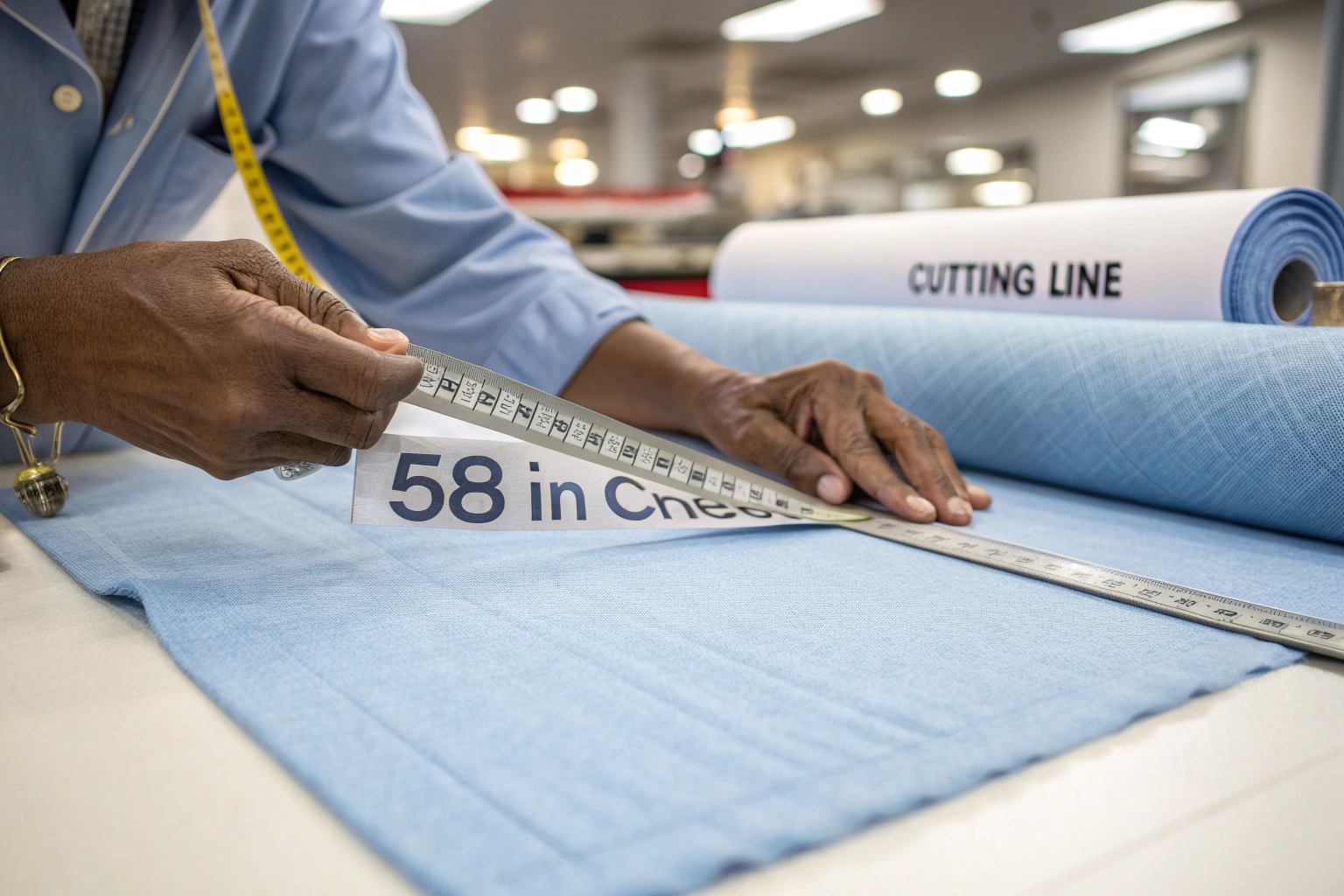
You open the shipment of 2,000 yards of linen blend you ordered for your summer dress collection. You paid a premium for "60-Inch Wide" fabric because your pattern marker is optimized for a 58-inch cuttable width. You lay the first roll on the cutting table, stretch it out to remove the creases, and grab your measuring tape. It’s 57 inches. Selvage to selvage. You check another roll. 56.5 inches. You check a third. 57.25 inches. You have 2,000 yards of fabric that is Too Narrow for your pattern. You can’t cut the dresses as planned. Your yield is destroyed. Your profit margin just evaporated because of Three Missing Inches.
Fabric width is the most overlooked, most misunderstood, and most expensive specification in the textile industry. Buyers and suppliers talk past each other constantly. The buyer means "Cuttable Width After Finishing." The supplier means "Width on the Loom Before Finishing." The difference between those two numbers is where money goes to die.
I’m Jack, and I’ve been clarifying width specifications at Shanghai Fumao for twenty years. I’ve seen this miscommunication cost brands tens of thousands of dollars in wasted fabric and lost production time. I’m going to give you the precise vocabulary and the specific questions you need to ask to ensure that the fabric on your cutting table is exactly the width you need to make your marker work.
What Is the Difference Between "Greige Width" and "Finished Width"?
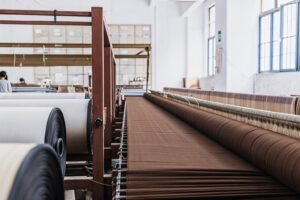
This is the fundamental physics of textile manufacturing. Fabric is woven on a loom. The Greige Width (also called Loomstate Width) is the width of the fabric as it comes off the loom, before any wet processing. It’s wide. It’s loose. It’s full of tension and sizing chemicals.
Then the fabric goes through Dyeing and Finishing. It gets soaked in water (which relaxes the fibers and causes shrinkage). It gets pulled through hot ovens (stenter frames) to be dried and set to a specific width. This process shrinks the fabric—sometimes by a lot.
- Cotton Twill: Typically shrinks 3-5 inches from greige to finished.
- Viscose Challis: Can shrink 6-8 inches from greige to finished. Viscose is notorious for width loss.
- Polyester Chiffon: Minimal shrinkage, maybe 1-2 inches.
If a supplier quotes you a price based on "60-Inch Greige Width," and you think you’re getting "60-Inch Finished Width," you are in for a very rude awakening when the finished fabric arrives at 55 inches wide.
At Shanghai Fumao, we Never quote width in greige terms to an apparel buyer. We only quote Finished Width. Why? Because the greige width is an internal engineering number for our weaving department. The finished width is what you can actually cut and sew. We ask the client: "What is your required cuttable width?" and we engineer the greige width backwards from there to ensure the finished fabric hits that target.

How Do You Specify "Cuttable Width" vs. "Selvage to Selvage"?
Even within "Finished Width," there is a crucial distinction that causes endless frustration.
- Selvage to Selvage Width: This is the measurement from the extreme left edge of the fabric to the extreme right edge. It includes the Selvage—the tightly woven, often fringed or pin-holed edge that prevents the fabric from unraveling.
- Cuttable Width: This is the usable width between the selvages. It’s the area where the weave is consistent and you can actually place a pattern piece.
The selvage is Waste. It’s usually 0.5 to 1.0 inch on each side. So a fabric with a "60-Inch Selvage to Selvage Width" typically has a Cuttable Width of only 58-59 inches.
If you need a True 58-Inch Cuttable Width for your marker, you must specify: "Finished cuttable width must be a minimum of 58 inches." If you just say "60-Inch Fabric," the supplier might deliver a fabric that is 60 inches selvage to selvage, giving you 58 inches cuttable. That might be okay. Or they might deliver a fabric that is 58 inches selvage to selvage, giving you only 56 inches cuttable. That’s a disaster.
At Shanghai Fumao, we clarify this on every order confirmation. Our line item reads: "Fabric: 100% Linen. Finish: Piece Dyed. Width: 58/59 inches Cuttable." The "58/59" accounts for the slight natural variation in textile processing. It’s an honest, industry-standard tolerance. You can read more about this by exploring how fabric width is measured and specified in the textile industry and understanding fabric width tolerances and their impact on garment costing.
What Is "Width Wise Shrinkage" and How Does It Affect My Order?
We talked about shrinkage in length (which ruins the hemline). But Width Wise Shrinkage is what ruins the marker efficiency. This is the percentage the fabric shrinks in the width direction during washing or dry cleaning.
A fabric might measure 58 inches cuttable off the roll. But after your customer washes it, it might shrink to 55 inches. The garment is now tighter across the chest and hips. You can’t control that after the garment is sewn.
The mill must control Residual Shrinkage during finishing. The stenter frame over-stretches the fabric slightly so that when it does shrink in the wash, it relaxes to the target size.
At Shanghai Fumao, we test every lot for Dimensional Stability according to AATCC 135. Our standard tolerance for width shrinkage is Max 3%. If a fabric shrinks more than that in our lab, we Re-Finish it (run it through the stenter again) before shipping. This is a cost we bear to protect your yield. A cheap supplier will skip this step, ship the fabric, and let you discover the width loss when your customer returns the shrunken garment.
How Do Fabric Type and Finishing Affect the Final Usable Width?
Not all fabrics are created equal when it comes to width stability. Some fibers and finishes are "Width-Friendly." Others are "Width Nightmares." You need to know the difference before you spec a marker.
-
Width-Friendly Fabrics:
- Polyester, Nylon (Synthetics): These are thermoplastic. You heat-set them on the stenter, and they Stay Set. Width variation is minimal (+/- 0.5 inches). You can cut a 59-inch marker with confidence.
- Dense Worsted Wool: Heavy wool suiting is stable. It’s been pressed and steamed into submission.
-
Width Nightmares:
- Viscose, Rayon, Tencel (Regenerated Cellulose): These fibers swell massively in water and shrink dramatically in drying. They "creep" even after finishing. A roll of viscose might measure 58 inches at the core (where it was tight) and 57 inches at the outer layer (where it relaxed). Width variation of +/- 2 inches is common.
- Linen, Hemp (Bast Fibers): These are naturally slubby and irregular. The selvage can be wavy. Achieving a perfectly straight, consistent width is difficult. Expect +/- 1.5 inches.
- Open Weaves (Gauze, Leno): These are so delicate that they stretch and distort just from being rolled up.
At Shanghai Fumao, we advise clients on Width Risk. If you are ordering a viscose challis, we tell you: "Plan your marker for a 56-inch cuttable width, even though we quote 58/59 inches. Viscose is variable. If you plan for 56, you’ll never be short. If you get 58, you have a nice bonus yield." This conservative approach prevents the "My marker doesn’t fit!" panic.

Why Does Knit Fabric Width Fluctuate More Than Woven Width?
Knit fabric is a whole different beast. A woven fabric is made of straight yarns interlaced at right angles. A knit is made of Loops. Loops can stretch. A lot.
A circular knit tube comes off the machine at a certain width. It’s then slit open. It’s then stretched lengthwise on the stenter to dry, which Narrows the width. If the operator pulls it harder, it gets narrower. If they pull it less, it stays wider. The width of knit fabric is directly controlled by the Tension on the finishing range. And tension is an art, not a science.
Furthermore, knit fabric Relaxes after it’s rolled. You unroll a jersey knit that has been sitting on the shelf for two weeks, and it’s "spongy." It has shrunk slightly in width and grown slightly in length just from sitting there.
At Shanghai Fumao, we use a Relaxation Dryer for knits before we cut and pack them. We let the fabric "do its thing" in a controlled environment so that the width you measure on your cutting table is the stable width. We also provide Width Tolerance Guarantees for knits (+/- 2 inches). This is wider than wovens, but it’s the reality of the material. You must build this flexibility into your cutting plan. You can learn more by reading the causes of width variation in knitted fabrics and how to control them and understanding relaxation shrinkage in knitted textiles.
What Is "Needle Cutting" and How Does It Affect Selvage Width?
This is a finishing detail for certain lightweight wovens and knits. To create a clean, non-raveling edge, some fabrics are Needle Punched or Laser Cut along the edge instead of having a traditional woven selvage. This removes a tiny strip of fabric—maybe 0.25 inches on each side.
If you are counting on every fraction of an inch for a tight marker, that needle-cut edge represents lost width. A 58-inch fabric with a traditional selvage has a 58-inch cuttable width. A 58-inch fabric with a needle-cut edge might have a 57.5-inch cuttable width because the edge is slightly recessed.
At Shanghai Fumao, we specify this on our tech packs. If a fabric has a Fused Edge or Laser Cut Edge, we note the cuttable width after the edge treatment. It’s a small detail, but it’s the kind of detail that prevents a marker from failing.
How to Accurately Measure Fabric Width Upon Receiving a Shipment?
You can’t just pull the fabric off the roll, yank it tight, and slap a tape measure on it. That will give you a false, overly optimistic measurement. There is a specific, repeatable protocol for measuring fabric width that mimics how the fabric will behave on the cutting table.
The Correct Way to Measure Fabric Width:
- Relax the Fabric: Unroll at least 2-3 yards of fabric and let it sit on a flat table for 30-60 minutes. This allows the creases from the roll to relax and the fabric to "breathe." Do not measure right off the roll. The tension from winding compresses the width.
- Do Not Stretch: Lay the fabric flat. Use your hands to gently smooth out major wrinkles, but do Not pull the fabric taut in the width direction. You are measuring the Relaxed Width, not the Stretched Width.
- Measure Perpendicular: Use a Rigid Yardstick or Carpenter’s Ruler, not a floppy tailor’s tape. Place it Perpendicular to the selvage. Do not measure at a diagonal.
- Measure in Three Places: Measure the width near the Beginning of the unrolled section, in the Middle, and near the End.
- Measure Between the Selvages: For cuttable width, measure from the inside edge of the left selvage to the inside edge of the right selvage. Ignore the selvage fringe or pinholes.
At Shanghai Fumao, this is exactly how our QC team measures width during final inspection. We use a Calibrated Metal Ruler and a Standard Relaxation Time. If a client disputes the width of a shipment, we ask them to send a video of them performing this exact measurement protocol. Nine times out of ten, the fabric measures correctly when measured properly.

How Much Width Variation Is "Normal" and Acceptable?
Zero variation is impossible. Textiles are not machined metal parts. There will always be some variation. The question is: What is the industry-standard tolerance?
- Woven Fabrics (Cotton, Linen, Wool): Acceptable tolerance is +/- 1.0 inch from the quoted width. If we quote "58/59 inches," a roll measuring 57.25 inches is Acceptable. A roll measuring 56.5 inches is Not Acceptable.
- Knit Fabrics (Jersey, Rib, Fleece): Acceptable tolerance is +/- 1.5 to 2.0 inches. Knits are just more variable. If we quote "60 inches," a roll measuring 58.5 inches is acceptable.
- Viscose/Rayon Challis: Acceptable tolerance is +/- 1.5 inches. This fabric is a diva.
At Shanghai Fumao, we provide a Width Inspection Report with every bulk shipment. We measure the width of a Statistically Significant Sample of rolls (usually 10% of the total rolls) and list the minimum, maximum, and average width. If the average width is below the quoted minimum, we do not ship without client approval. This is the kind of transparency that builds trust. You can learn more by reading standard tolerances for fabric width, weight, and shrinkage in the textile industry.
What Should I Do If the Fabric Is Consistently Under Width?
You’ve followed the protocol. You’ve measured ten rolls. The average width is 56.5 inches on a "58/59" quote. You have a legitimate claim.
Step 1: Document Everything. Take clear photos of the fabric on the table with the yardstick clearly showing the measurement. Take a photo of the roll label showing the lot number. Send this to your supplier.
Step 2: Calculate the Yield Loss. How much extra fabric will you need to buy to cut the same number of garments? This is the financial damage.
Step 3: Negotiate a Remedy. A professional supplier will offer one of the following:
- Partial Credit: They credit you back a percentage of the invoice to compensate for the lost yield.
- Replacement Fabric: They re-run the order correctly (if time allows).
- Discount on Next Order: A goodwill gesture for a future partnership.
At Shanghai Fumao, if we make a mistake on width, we own it. We don’t make excuses. We look at the data. If our finishing line tension was off that day, we apologize and make it right. That’s how you build a 20-year relationship.
How Do I Communicate Width Requirements Clearly in a Purchase Order?
The Purchase Order (PO) is your legal contract. Vague language on the PO is an invitation for the supplier to ship you narrow fabric. You must be Specific and Unambiguous.
The Wrong Way to Write a PO:
"Item: Cotton Twill. Width: 60 inches."
This is wrong. It doesn’t specify cuttable vs. selvage. It doesn’t specify tolerance.
The Right Way to Write a PO (The Shanghai Fumao Method):
"Item: 100% Cotton Twill, 20×20 / 108×58. Finish: Piece Dyed. Cuttable Width: 58/59 inches minimum (Selvage to selvage approx 60 inches). Tolerance on width: No roll less than 58.0 inches cuttable. Width to be measured per AATCC standard relaxed method."
See the difference? The second version leaves zero room for misinterpretation. It defines the measurement method. It defines the absolute minimum. It protects you.
At Shanghai Fumao, we prefer this level of detail. It makes our job easier. We know exactly what the client expects. We can engineer the greige width and the finishing parameters to hit that exact target. A supplier who complains about "too much detail" on the PO is a supplier who plans to take shortcuts.

Should I Ask for a "Width Guarantee" in Writing?
Yes. For large orders or critical styles, you should ask for a specific Width Conformance Clause.
Example Clause:
"Supplier guarantees that 95% of rolls shipped will have a cuttable width of 58 inches or greater. No roll shall be less than 57.5 inches cuttable. Supplier to provide inspection report confirming width measurements for 10% of shipped rolls. Buyer reserves right to claim credit for yardage below 58 inches at a rate of 2% per 0.5 inches of width deficit."
This sounds aggressive. But to a professional mill with good process control, it’s just a description of what we already do. We know our finishing lines can hold a tolerance of +/- 0.5 inches. We can sign that clause without breaking a sweat. A mill with poor equipment and loose controls will refuse to sign it. That’s the red flag you need to see.
How Do I Handle Width for Tubular Knit Fabric?
Tubular knit fabric is knit in a continuous circle, like a sock. It has no selvage. It’s used for t-shirts, underwear, and seamless garments. The width is specified as "Tubular Width" or "Flat Width."
- Tubular Width: The measurement of the tube when laid flat. It’s roughly Half the circumference. A t-shirt body might need an 18-inch tubular width (which makes a 36-inch chest circumference).
- Flat/Open Width: If the tube is slit open, it becomes a flat fabric. The width is the Double Tubular Width minus a small amount for the slit.
Communicating tubular width is even more critical because the fabric is stretchy. You must specify: "Tubular width to be measured flat, relaxed, without stretching. Target: 18 inches. Tolerance: +/- 0.5 inches."
At Shanghai Fumao, we produce a lot of tubular jersey for our t-shirt brand clients. We use a Width Control Template on the knitting machine. The operator checks the width of the tube as it’s being knit every 30 minutes. This is the only way to catch drift in real-time. Once the tube is rolled up, it’s too late to fix the width of that lot.
Conclusion
Fabric width is not a suggestion. It’s a critical engineering specification that directly determines how many garments you can cut from a roll of fabric. A 2-inch width deficit across a 2,000-yard order can mean the difference between cutting 500 units and cutting 470 units. That’s a 6% loss in yield that comes straight out of your bottom line.
The path to width accuracy is paved with Specific Language and Verified Measurements. Stop saying "60-Inch Fabric." Start saying "58-Inch Cuttable Width Minimum." Stop measuring fabric right off the roll. Start letting it relax. Stop assuming the supplier knows what you mean. Start putting it in writing on the PO.
At Shanghai Fumao, we treat width as seriously as we treat color and hand feel. It’s a key performance indicator for our finishing department. We measure it, we log it, and we guarantee it. We want your cutting room to run smoothly, and that starts with fabric that is the right width, every single time.
If you’ve been burned by narrow fabric before and want to ensure it doesn’t happen again, let’s talk about how we specify and verify width. Our Business Director, Elaine, can provide sample width reports and walk you through our quality control process. Reach out to her at elaine@fumaoclothing.com. Let’s make sure your next order is wide open for profit.