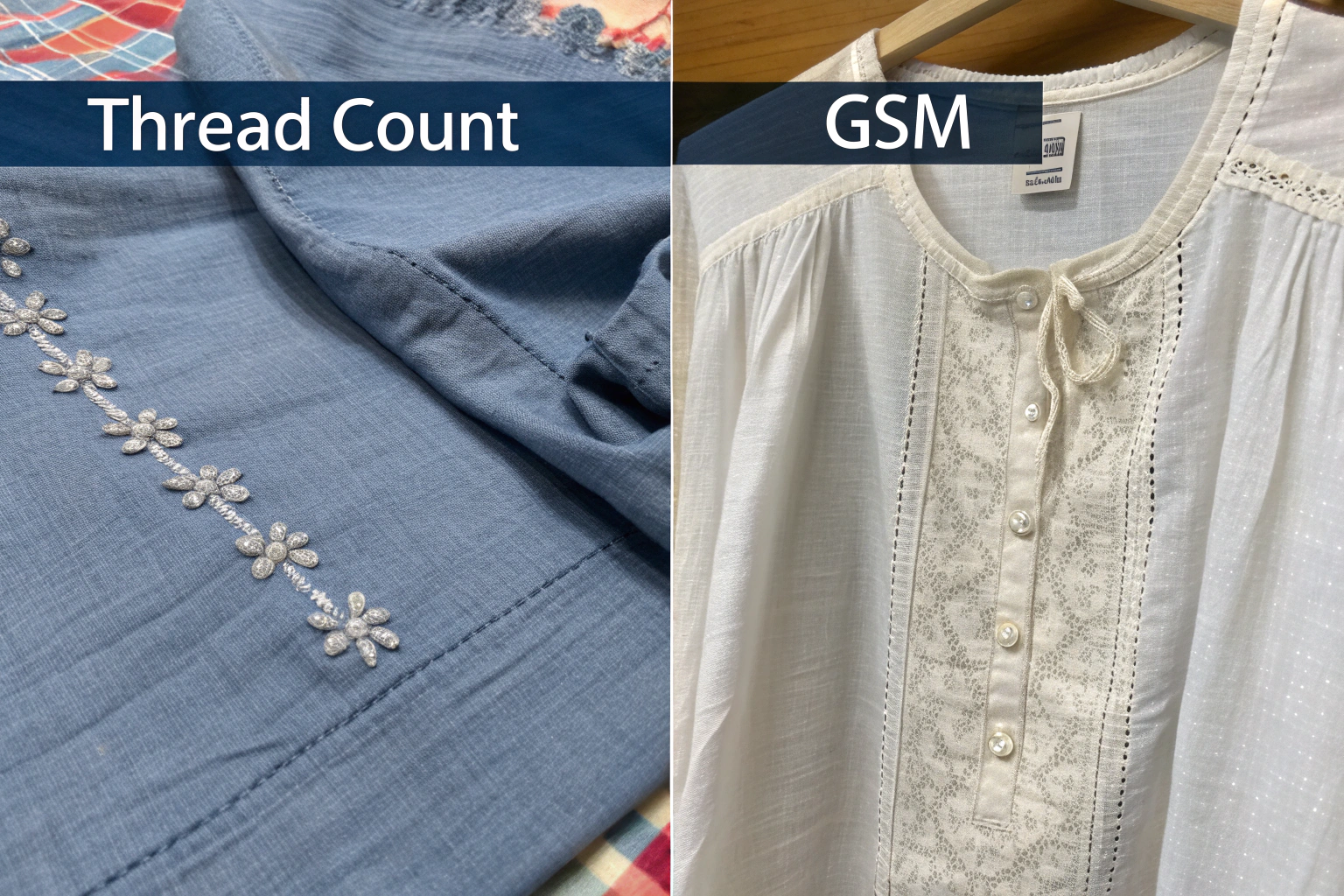
Selecting materials for fashion collections requires understanding thread count and GSM metrics. These specifications frequently cause confusion among designers, potentially impacting material choices and manufacturing outcomes.
Both measurements serve distinct purposes in assessing woven textiles like cotton, linen, and denim. Thread count quantifies threads within one square inch of material. GSM measures weight per square meter. Recognizing this distinction proves essential when choosing between delicate chiffon blouses and sturdy canvas workwear.
This analysis clarifies these concepts through straightforward explanations. We’ll examine how each parameter influences texture, longevity, and suitable applications. Ultimately, you’ll gain confidence in specifying requirements that align quality, expense, and functionality.
Defining thread count in woven fabrics
Although commonly linked with premium bedding, thread count remains equally relevant for apparel materials. Elevated thread counts typically indicate refined textures and smooth surfaces – crucial attributes for brands emphasizing comfort and luxury perception.
This metric enumerates warp and weft threads within one square inch of woven material. Increased density generally signifies finer threads woven tightly, yielding softer textures, enhanced resilience, and improved drape characteristics. High-count cotton poplin exemplifies this through exceptional smoothness and reduced pilling tendency, ideal for premium shirts. Nevertheless, maximum density doesn’t always guarantee superiority. Excessive tightness can compromise breathability while increasing costs. Certain manufacturers employ multi-ply yarns to artificially boost counts without genuine quality improvement. Our Keqiao weaving facility utilizes single-ply long-staple cotton to create authentic high-thread-count textiles that fulfill their intended purpose.

Methods for precise thread count measurement
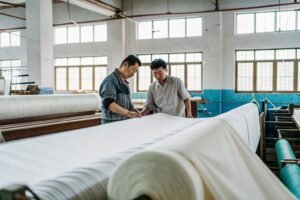
Reliable specifications depend on accurate measurement techniques. Quality assurance begins with proper assessment protocols. Standard methodology incorporates a specialized counting lens known as a pick glass during fabric inspection. Operators position this tool over materials to manually enumerate threads within designated one-inch areas. This procedure forms an integral component of Fumao’s quality management system, validating all production batches meet client specifications. Advanced optical scanning equipment provides automated alternatives that minimize human counting errors. Such technology proves particularly valuable for intricate jacquard patterns or exceptionally dense materials where visual enumeration becomes challenging.
Thread count’s impact on material quality
This parameter directly affects multiple performance and aesthetic considerations that consumers notice. Balanced thread density contributes to improved material longevity. Tighter woven structures demonstrate greater resistance to surface wear and tearing, thereby extending garment lifespan – a vital characteristic for work uniforms or children’s clothing. Additionally, it modifies tactile sensation and hanging properties. Higher counts typically produce smoother surfaces against skin with more fluid draping behavior, desirable for fashion applications. Still, this represents just one quality indicator among many. Fiber selection, including long-staple organic cotton, combined with yarn spinning methods remain equally significant. Even high-thread-count materials utilizing inferior yarns will deliver disappointing results.
Understanding GSM for fabric weight
While thread count addresses thread quantity, GSM evaluates mass properties. This universal standard indicates material heaviness, directly reflecting substance, thickness, and seasonal appropriateness. It constitutes an indispensable specification within professional technical packages.
GSM quantifies one square meter’s fabric weight. This measurement establishes an objective benchmark for comparing diverse materials across various fiber compositions and weaving techniques. For illustration, summer dress linen might measure 160 GSM whereas denim for jeans could reach 400 GSM. It provides more consistent indications of durability and thermal properties than thread count alone. Higher GSM values generally correspond to thicker, more robust materials. We supply comprehensive GSM documentation for all our products through QR code tracking systems, ensuring complete transparency regarding your production materials.

GSM verification in textile manufacturing
Weight verification involves straightforward yet critical quality checks. The process requires cutting precise fabric samples, typically using circular die cutters to maintain consistent area, followed by weighing on calibrated digital scales. Gram weights are then converted to represent one square meter equivalents. Our CNAS-certified testing laboratory implements this procedure to ensure international standard compliance. For knitted constructions, the same terminology applies though stretch characteristics demand careful measurement handling. We conduct GSM verification at multiple production phases – examining greige goods, post-dyeing, and after finishing treatments – monitoring weight variations throughout manufacturing while guaranteeing final products match approved samples.
GSM’s role in cost determination and usage selection
Material weight significantly influences pricing structures while defining optimal applications. Heavyweight fabrics consume greater raw material volumes, elevating base costs. For fashion businesses, accurate GSM targeting becomes essential for competitive garment pricing. More importantly, it dictates functional appropriateness. The following table outlines common weight ranges with their typical uses:
| GSM Spectrum | Weight Classification | Primary Implementations |
|---|---|---|
| 30-150 | Lightweight Category | Scarves, delicate blouses, garment linings |
| 150-300 | Medium Weight Range | T-shirts, dresses, shirts, standard clothing |
| 300-600 | Heavyweight Class | Denim jeans, outerwear, furniture covers, protective wear |
Inappropriate GSM selection risks customer dissatisfaction. Winter coats constructed from 200 GSM fabric would provide insufficient warmth, while summer shirts using 350 GSM material would feel uncomfortably heavy. Our development specialists can recommend optimal weight parameters for specific markets and applications, ensuring design concepts achieve intended performance standards.
Interrelationship between thread count and GSM
These parameters maintain connected yet independent characteristics. Consider them complementary perspectives for examining fabric architecture. One evaluates thread quantity, the other assesses final product mass. Comprehending their interaction prevents specification excess while identifying optimal value propositions.
Typically, identical yarn thickness and fiber types yield higher GSM with increased thread density, since more material occupies equivalent areas. However, this correlation remains neither predictable nor absolute. Some textiles achieve high GSM through substantial yarn diameters despite low thread counts – consider bulky tweed constructions. Conversely, refined materials like quality silk chiffon demonstrate high thread counts with minimal GSM through ultra-fine lightweight yarns. Exclusive reliance on either measurement creates misleading impressions. Authentic quality emerges from balanced parameters combined with superior raw materials.

High GSM possibilities with reduced thread count
This combination frequently occurs across numerous fabric categories. The determining factor involves yarn dimension selection. Materials like fleece, wool melton, and certain canvas varieties prioritize warmth and structural integrity. They attain substantial weight using voluminous yarns in relatively open weave patterns. These configurations trap air pockets, enhancing insulation properties. Within our product assortment, performance athleisure fabrics often moderate thread count while employing specialized yarns to achieve ideal moisture management and thermal regulation without excessive mass. This design philosophy enables greater creative innovation within functional apparel development.
Parameter prioritization guidelines
Selection emphasis should reflect final garment purposes. For materials where tactile sensation, surface refinement, and luxury perception dominate – such as premium bedding or high-grade shirting – thread count emerges as the crucial discussion point with suppliers. Concentrate on this metric when direct skin contact represents a primary marketing feature. Where resilience, weather protection, warmth, and structural integrity take precedence, GSM delivers more reliable guidance. Emphasize weight specifications for outer layers, functional implementations like protective clothing, and items requiring substantial presence. Most standard apparel demands simultaneous consideration of both aspects to guarantee appropriate appearance, feel, and operational performance.
Selecting optimal parameter balance
Final decisions shouldn’t pursue maximum values for both specifications. Instead, focus on optimizing for design concepts, cost parameters, and market expectations. Imbalanced selections risk manufacturing complications and consumer disappointment.
Begin with clear end-use definitions. Establish garment purposes, seasonal targeting, and intended retail positioning. Subsequently, employ physical samples for definitive selection. Technical specifications provide useful guidance, yet physical examination offers irreplaceable insights. We recommend utilizing our rapid 48-hour sampling service for practical material assessment. Fiber composition also warrants consideration. Identical 200 GSM measurements for bamboo silk blends versus pure cotton will produce dramatically different draping behaviors and tactile experiences. Furthermore, finishing treatments like brushing or coating can modify hand-feel and functional weight without altering base GSM values.

Essential supplier inquiries
Professional differentiation emerges through asking insightful questions. Move beyond basic thread count and GSM requests. Investigate yarn construction methods and fiber sources. Determine whether thread counts derive from single-ply yarn constructions. Seek validation documentation for environmental claims, particularly regarding certified organic cotton supplies. Request GSM tolerance ranges (acceptable variance percentages) and verification methodologies. Reputable partners will readily provide this information. Additional inquiries should address performance attributes like color retention and shrinkage percentages, which our laboratory comprehensively tests. Such thorough verification prevents unexpected issues when bulk materials reach your packaging facilities.
Supplier role in specification optimization
Genuine partnerships extend beyond basic material supply. Knowledgeable suppliers can adjust specifications to reduce expenses while maintaining quality standards. For instance, we might propose alternative weave structures that deliver comparable tactile qualities with moderately reduced thread density, generating substantial savings for large-quantity orders. We also advise how digital printing techniques interact with specific GSM ranges, or how material weight influences transportation logistics and shipping costs. Leveraging our twenty-year industry experience, we help navigate these technical decisions, ensuring project commercial viability and production readiness.
Concluding analysis
Thread count and GSM represent fundamental yet distinct instruments within material sourcing. Thread density reveals weaving tightness, affecting tactile qualities and refinement, while GSM delivers objective mass measurements directly connected to durability and implementation contexts. The most effective strategy avoids maximizing both numerical values, instead focusing on their harmonious balance relative to specific garment types, target demographics, and financial plans. Simultaneous evaluation of both parameters alongside raw material quality enables confident, well-informed decision-making.
For reliable collaboration in value creation and technical navigation for upcoming apparel projects, contact our Business Director Elaine. She and the Fumao team stand ready to support comprehensive manufacturing services spanning weaving through packaging and global distribution. Reach Elaine at elaine@fumaoclothing.com to explore transforming your fabric concepts into reality through quality craftsmanship, operational efficiency, and professional expertise.