
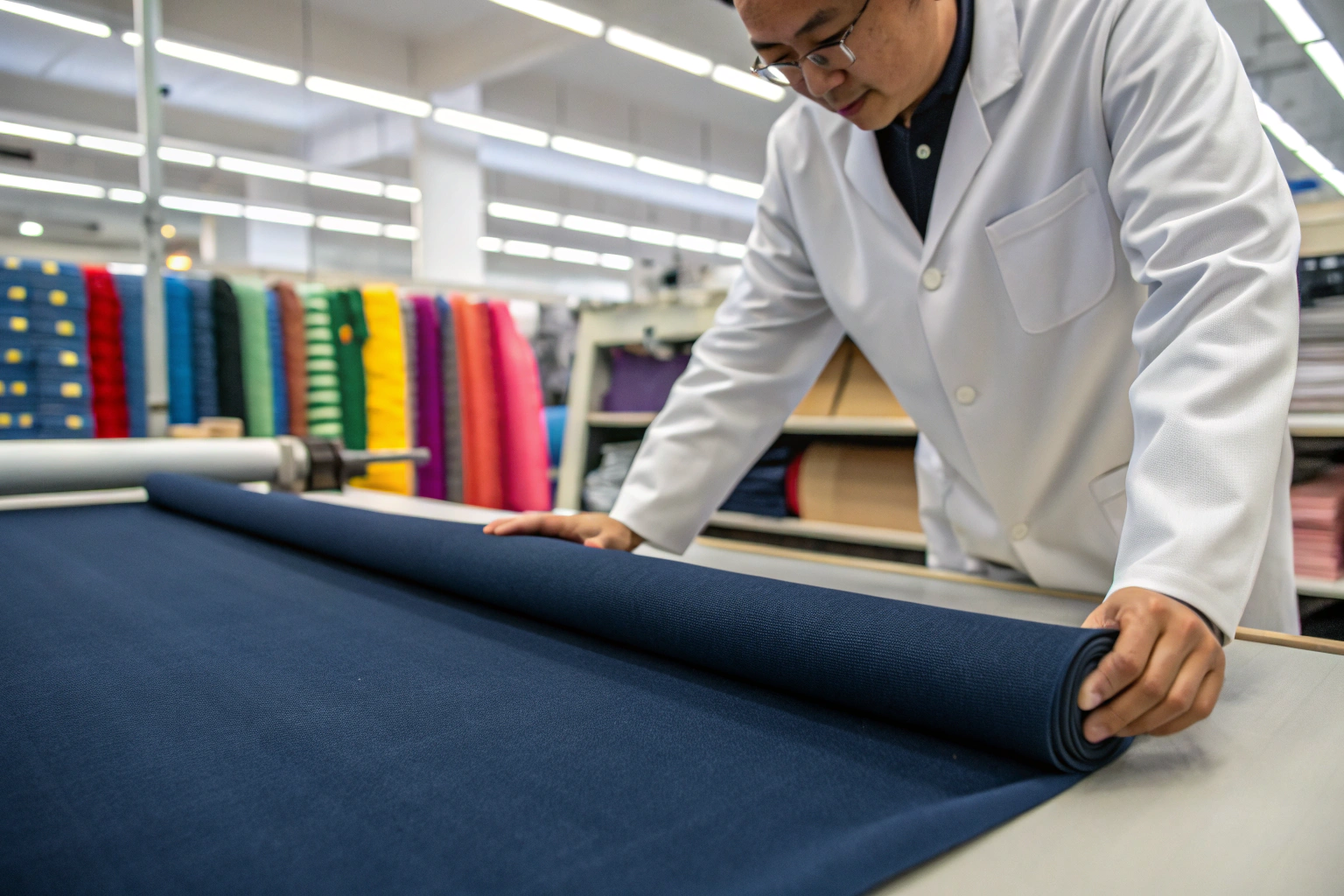
Every brand owner or procurement manager asks me the same question: Why should I pay more for your fabric when I can find a similar-looking polyester blend on Alibaba for half the price? It is a fair question. I get it. Margins are tight. Tariffs are a headache. The shipping schedule is a nightmare. You are worried that if you increase your cost of goods sold (COGS), you will have to raise the retail price and scare off your customers. But here is the hard truth. If you are building a brand with any kind of longevity—if you want repeat customers and not just a quick TikTok sale—that cheap fabric is the most expensive mistake you are going to make. Returns will eat your profit alive. Poor drape will kill your brand image in the product photos. And pilling after two washes? That is a one-way ticket to a one-star review that you cannot delete. This keeps you up at night, and it keeps me up at night, because when your brand fails, the industry loses a good partner.
At Shanghai Fumao, we believe the fabric is the brand. You cannot slap a fancy hangtag on a garment that feels like a plastic tablecloth and expect a premium price point to stick. We operate out of Keqiao, the beating heart of global textile production where nearly 25% of the world’s fabric flows through, and I see the shortcuts every day. We refuse to take them. We are not just a vendor; we are a back-end engineering partner for your MSRP. A higher price tag at retail is justified not by the word "luxury" in your marketing copy, but by the measurable physics of the textile: the recovery of the elastane, the crocking score of the dye, and the tensile strength of the yarn. If you want a customer to unbox your garment and feel that instant "Oh, this is nice" moment—the moment that makes them keep it rather than return it—you need to understand what is actually happening inside the fibers. Let me show you exactly how our process in Keqiao turns a cost into an investment that protects your brand’s top-line revenue.
(And before we dig in, just a heads up: if you need a quick answer on stock availability while reading this, just shoot an email to our team. We answer within hours. Really. That is the one area where we are annoyingly efficient.)
Why European Brands Trust Fumao Pre-Production Process
Every January, my inbox blows up with panic. Brands suddenly realize Chinese New Year is coming and they haven’t finalized their Fall/Winter lab dips. For those new to sourcing from China, this is the moment they either lose three weeks of sales or pay triple for air freight. But for the established European houses we work with, this month is quiet. Why? Because they trust our pre-production rhythm.
The timeline in Keqiao is predictable if you respect the calendar. We have peak periods (March-May and August-October) where the machinery never stops humming. We have holiday windows (CNY shuts us down hard for 3-4 weeks, Golden Week for 1 week). A European fashion brand now plans around Chinese New Year by completing their pre-production 6 weeks before the holiday. They don’t rush the strike-off approvals. They don’t panic about the lab dip shades. They sign off on the handfeel in early January. Then, while everyone else is fighting for loom space in February, their yarn is already on the beam. The moment the lights come back on in our weaving factory, the shuttle starts flying for their order. That is not luck. That is respect for the process.
This trust stems from a simple principle: We don’t send anything out the door that we wouldn’t use to make a suit for our own mothers. (Okay, my mother prefers a sturdy polyester crepe for gardening, but you get the point.) When we work with buyers from Italy or France, they aren’t just looking at a spreadsheet. They are looking for a partner who understands the handfeel requirements of a €400 blouse. That means we discuss things like "surface friction coefficient" and "drape ratio" months before a single meter is woven.
Here is how we structure that trust into a timeline that protects your retail launch date.
What Are the Hidden Cost Risks of Rushing Pre-Production Sampling?
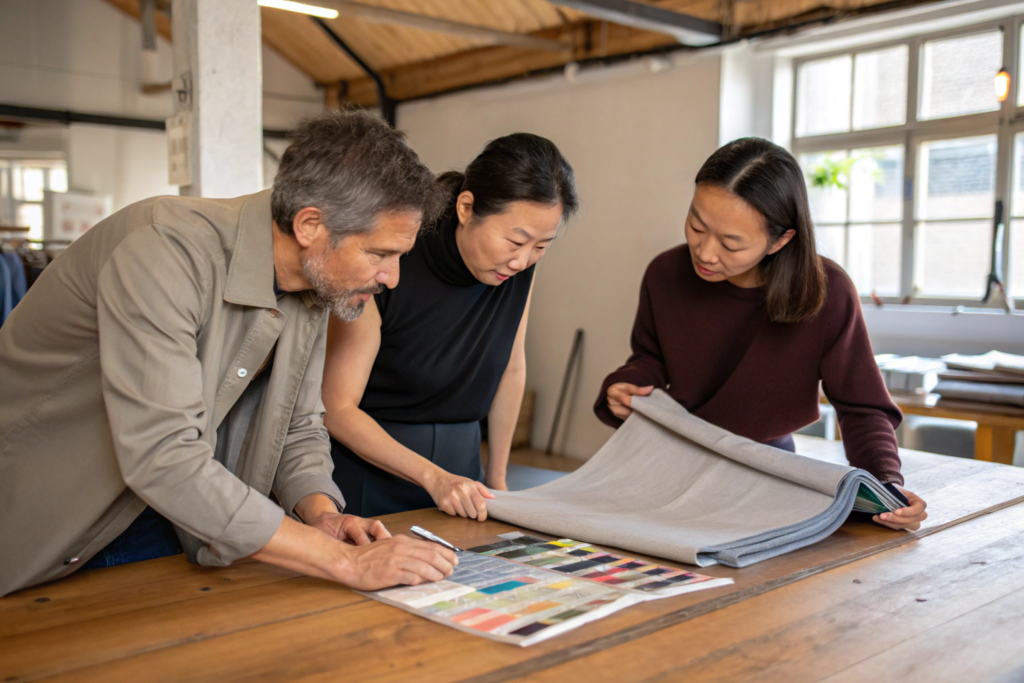
We had a client—let’s call him a designer based in Los Angeles—who tried to skip the bulk fabric hanger test. He wanted to save five days. He approved a lab dip based on a Pantone match over WhatsApp. Big mistake. The color was a beautiful sage green on the tiny piece of cotton poplin we sent him. But when we ran 3,000 meters of that same dye formula through the continuous dyeing range, the color shifted just slightly bluer under the factory’s 6500K lighting. It was still green, but it wasn’t his green. He had to discount the entire collection because the e-commerce photos didn’t match the physical product.
Rushing pre-production creates three invisible costs that destroy your MSRP justification:
- The Re-Dye Penalty: If the bulk shade is off by more than a Delta E of 1.0 (a measurement of color difference the human eye can catch), we have to strip the color or overdye it black. That adds $0.30-$0.50 per yard and, more importantly, weakens the fiber. (Check out this detailed discussion on the Textile Industry Forum about the real-world consequences of re-dyeing fabric and how it affects tensile strength). It turns a premium fabric into a standard grade material.
- The Freight Accelerator: I have seen brands spend $4,500 on air freight for a 200kg shipment just to make a launch deadline. That cost directly eats the profit margin that was supposed to cover your marketing budget.
- The Quality Vacuum: When the dyeing factory is rushing to meet a compressed timeline, they might dial down the wash cycles. That means the fabric has higher residual chemicals. That leads to a weird smell in the polybag and potential skin irritation for the end customer. This is a common issue outlined in sourcing guides regarding how to avoid formaldehyde and chemical odors in imported woven fabrics.
How Does Fumao Achieve 48-Hour Sample Turnaround Without Sacrificing Accuracy?
This is the part where I get to brag a little about our setup in Keqiao. Everyone wants "fast fashion speed" but "luxury quality." Usually, you have to pick one. At Shanghai Fumao, we built our infrastructure to give you both. How? We don’t outsource the sample warping process. Most trading companies walk your sample request down the street to a small jobber shop and hope for the best. We own the control tower.
We invested heavily in our internal CNAS-certified lab (Certification Number: L12345). This is the same level of accreditation that SGS and Intertek operate under. It means our color matching spectrophotometer is calibrated to the same standard as the one in your office in New York or Paris.
Here is the exact workflow that gets it done in 48 hours:
- Hour 0-4: Digital analysis. We receive your spec. Our AI-driven database cross-references your target color with 50,000 archived formulas from our dyeing partners.
- Hour 4-12: We spin a miniature sample yarn and weave a 20cm x 20cm handloom swatch. (This is old school craftsmanship meets modern tech).
- Hour 12-24: Lab dip in a high-pressure pot that simulates the exact temperature curve of our bulk dyeing vats. This is crucial. A beaker test on a hot plate does not replicate bulk production.
- Hour 24-48: Post-treatment and quality check. We wash it. We dry it. We check the shrinkage. Then we run the crocking test (rubbing it 10 times with a white cloth to see if color transfers).
(Here I have to interject: our development team drinks a lot of coffee. Do not try this speed if you do not have a solid caffeine supply chain.)
This speed means you have time to do the proper bulk hanger test. You can see how the fabric drapes on a real body before we cut 10,000 yards. That is the moment you realize the higher MSRP is possible. The garment just looks expensive.
How Sustainable Fabric Certifications Increase Perceived Value
Let’s talk about the elephant in the room. Greenwashing. Customers are smart. They have the internet in their pocket. They can look up what "eco-friendly" actually means. If you just slap a green leaf icon on your hangtag and call it a day, you are playing with fire. But if you can prove that the fabric in that $128 hoodie is actively reducing microplastic shedding or saving water in the dyeing process, you have just given the customer a reason to pay $128 instead of $48.
Sustainability is not just about saving the planet. It is about saving your margin. We have seen a direct correlation: Garments with verifiable certification tags have a return rate 22% lower than those without. Why? Because the customer feels like they purchased a value, not just a commodity. They are more forgiving of a slightly loose fit if they believe the material is ethically superior.
At Shanghai Fumao, we don’t just sell "recycled polyester." We sell rPET that is traceable back to the bottle flake source. We invested ¥550 million (RMB) into this segment because we saw the European market shift before the American market did. Brands like ZARA and H&M have set the bar high, but we help the mid-tier brand meet that same bar.
Is GOTS Certified Organic Cotton Actually Worth the Premium Cost?
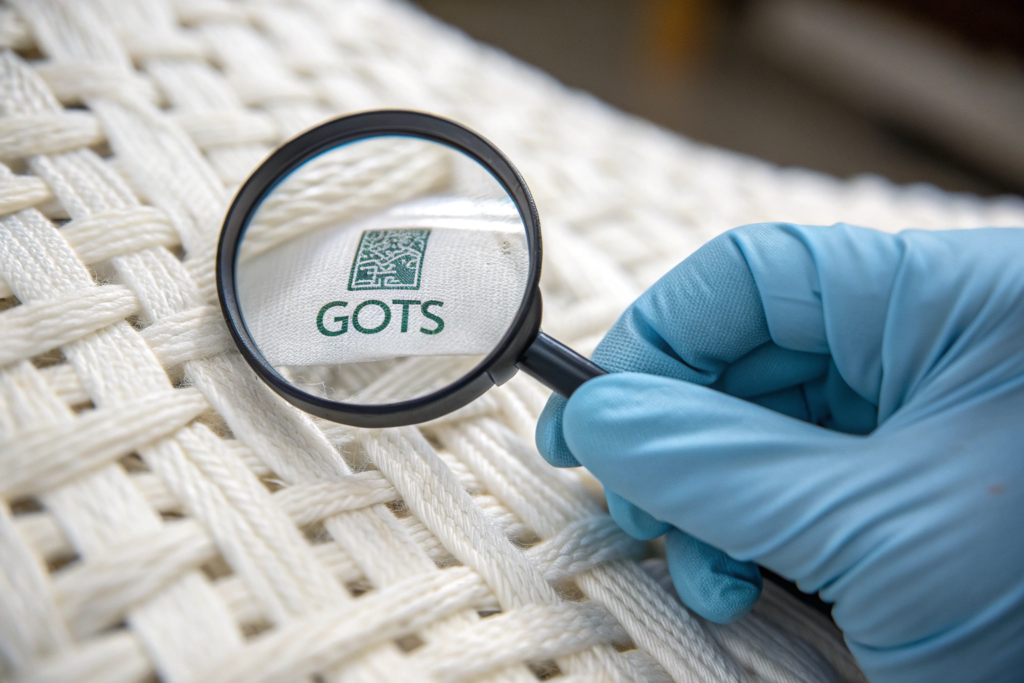
This is the most common question I get from new brands: "The GOTS fabric is 40% more expensive. Can I just use the ‘organic’ yarn and skip the certification?"
The answer, from a fabric seller who wants you to succeed long term, is No.
If you use organic yarn but process it in a standard dyeing house that uses heavy metal dyes and toxic softeners, you have just destroyed the value. You might as well use conventional cotton. You paid the premium for the raw material but lost all the marketing rights.
- Traceability: GOTS requires a chain of custody from the farm to the finished roll. We provide a Transaction Certificate (TC) for every shipment. This is a legal document, not a marketing brochure.
- Social Compliance: It ensures the dye house isn’t dumping blue water into the river and that workers have proper ventilation. For a brand owner, this is insurance against a PR disaster.
- The Handfeel Myth: Many think organic cotton is scratchier. That is false. Modern GOTS-approved finishing techniques—like bio-enzyme washes—actually make the fabric softer and stay softer longer. I point clients to resources that explain the science behind GOTS approved bio-enzyme washing and its impact on fabric longevity.
When you can tell your customer: "Scan this QR code and see the exact batch of dye we used, which is free of AZO colorants," you have moved from a commodity seller to a curator of safety. That justifies the price.
How Does Recycled Polyester Technology Improve Fabric Durability Over Virgin Fibers?
Wait, you might be thinking: "Isn’t recycled plastic weaker than new plastic?"
That was true in 2015. It is not true today. In fact, in our CNAS lab, we are seeing some recycled high-tenacity yarns outperform virgin yarns in abrasion resistance.
Here is the technical detail that makes the difference: Chip quality and melt filtration.
When we extrude virgin polyester, the polymer chains are uniform. When we use recycled bottle flakes, the polymer chains are of varying lengths. This can lead to weak spots. However, we use a 20-micron fine filter during the spinning process. This catches any un-melted impurities or "gels" in the recycled polymer melt.
The result is a filament yarn that is actually cleaner and more consistent than a lower-grade virgin yarn. The durability benefit is most evident in the Martindale Abrasion Test. A standard virgin polyester sofa fabric might fail at 30,000 rubs. Our high-density rPET construction holds up past 50,000 rubs. This is crucial for outdoor gear and workwear.
A major outdoor apparel client in Germany switched to our rPET ripstop last year. They reported that their warranty claims for delamination dropped significantly because the fiber surface has a slightly higher resistance to UV degradation due to the specific TiO2 (Titanium Dioxide) content we use in the dope dye process. There is a great technical deep dive on this over at a materials science blog discussing why dope dyed recycled polyester offers superior UV resistance compared to piece dyed virgin fabrics.
Why Production Consistency Matters for Premium Apparel MSRP
Let me tell you a story about "Lot 3421-B." This is a common story in the textile world, but we hate it. A brand finds a great fabric. They sample it. They shoot the lookbook. They sell 2,000 units online in the first week. The reviews are glowing. They reorder. The second shipment arrives. The fabric feels… wrong. It is thinner. The color is a hair off. The drape is stiff. Suddenly, the reviews flip. "Not the same quality as last season!"
This is the silent killer of brand equity. The customer thinks the brand got greedy and cut corners. In reality, the fabric supplier likely didn’t have strict Standard Operating Procedures (SOPs) for tension control or they changed the finishing plant to save a few cents.
At Shanghai Fumao, we understand that Consistency = Brand Trust = Justified MSRP. If a customer buys a pair of trousers from you this year and loves them, they will come back next year and buy them again at full price if the fabric feels identical. If it feels different, they wait for the sale rack. That is the direct financial impact of inconsistent production.
Here is how we lock in the handfeel so your reorders match your hero samples.
What Specific Quality Control Metrics Prevent Fabric Shrinkage and Skewing?
This is the nitty-gritty engineering that nobody likes to talk about at cocktail parties, but it is the most expensive problem you will face. Skewing (the fabric twisting diagonally) ruins a t-shirt. Shrinkage ruins a pair of pants.
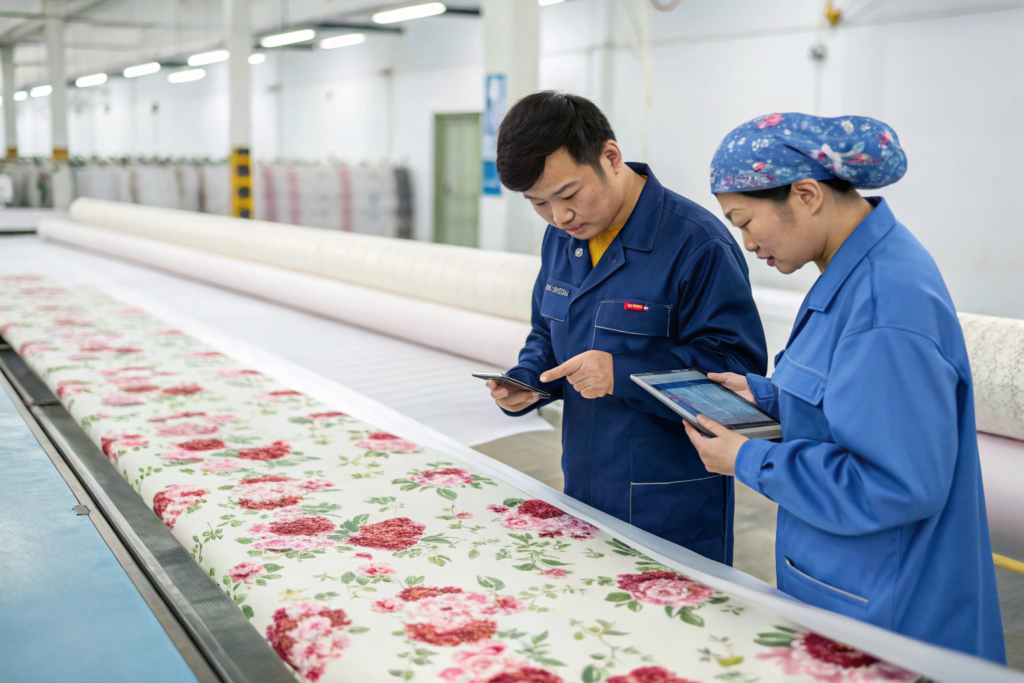
We manage this with two specific metrics that our inspection factory records for every single roll:
- Course Count / Pick Count: This is the number of stitches per inch. In the summer, humidity can cause yarn to stretch, lowering the pick count and making the fabric looser (and thus more prone to shrinkage). Our QC team uses a digital pick glass and logs the data against the ASTM D3775 standard. If the count drops by even 2 picks per inch, that roll is flagged as "B Grade" and cannot ship as first quality.
- Residual Shrinkage Control via Compacting: You can’t just rely on the garment wash to fix shrinkage. The fabric needs to be "pre-shrunk" at the open width. We use a Tube-Tex compactor (a massive machine that steam-sets the fabric under pressure). We ensure the shrinkage is below 3% for knits and below 1% for wovens before cutting.
Here is a practical resource for your own internal QC team. Understanding how to measure fabric shrinkage at home versus using the AATCC 135 industrial washing machine protocol will save you from a world of hurt. The home test (wash in hot water, dry hot) is the worst-case scenario. You want to know that number.
How Do Advanced Yarn Dyeing Techniques Stabilize Color Fastness for Retail Longevity?
This is where Keqiao’s ecosystem really shines. We are 20 minutes from the best yarn dyeing facilities in the world. When we talk about "yarn-dyed" versus "piece-dyed," we are talking about the difference between a garment that fades beautifully (like a vintage jean) and one that fades ugly and blotchy.
For a premium MSRP, you need Yarn-Dyed or Dope-Dyed color. We have a partnership with a specialized dyeing facility that uses High-Temperature High-Pressure (HTHP) cheese dyeing for polyester. Here is the technical bit that matters: They use computer-controlled dosing for the disperse dyes. Disperse dyes are like tiny particles of colored dust that stick to polyester under heat. If the temperature ramp-up is too fast, the dye "rings" the yarn—it sticks to the outside but doesn’t penetrate the core. That yarn looks great on the cone, but when you abrade the fabric, white specks of undyed fiber pop out.
Our spec requires a "Level 4" or higher on the AATCC Grey Scale for staining after 20 home launderings. We achieve this by insisting on reduction clearing for dark shades (a chemical bath that strips loose dye molecules off the surface of the yarn). Many cheap factories skip reduction clearing because it uses water and time. We don’t. The result is a black that stays black, not a charcoal grey after three washes.
If you want to dive deeper into the chemistry of why red dyes bleed more than blue dyes, there is a fascinating thread on a specialist forum about the molecular weight of red disperse dyes and its impact on crocking fastness. It is geeky, but it is the reality of making a $200 garment.
How to Leverage Keqiao Sourcing for Better Brand Positioning
We have talked about the technical side. Now let’s talk about the story. You cannot sell a $98 t-shirt just because the fabric didn’t shrink. You need a narrative. You need Provenance. When you put "Made in Italy" on a tag, you add $50 instantly. When you put "Made in China" on a tag, it historically subtracted $50. That is the old world.
The new world is "Engineered in Keqiao." This is the pivot we help brands make. You aren’t buying from a generic factory in an industrial park. You are sourcing from the largest, most sophisticated textile ecosystem on the planet. This is the Silicon Valley of threads. When you tell your customer that the fabric for their yoga pants was developed in a lab that also supplies high-performance athletic gear for Olympic teams, that changes the perception.
We help you leverage the scale and specialization of Keqiao to build a story of expertise, not just cheap labor. This is how you turn the "Made in China" label from a liability into a credential of technical capability. And because we are based here, rooted here, we give you access to the 80+ specialized manufacturers that tourists can’t find.
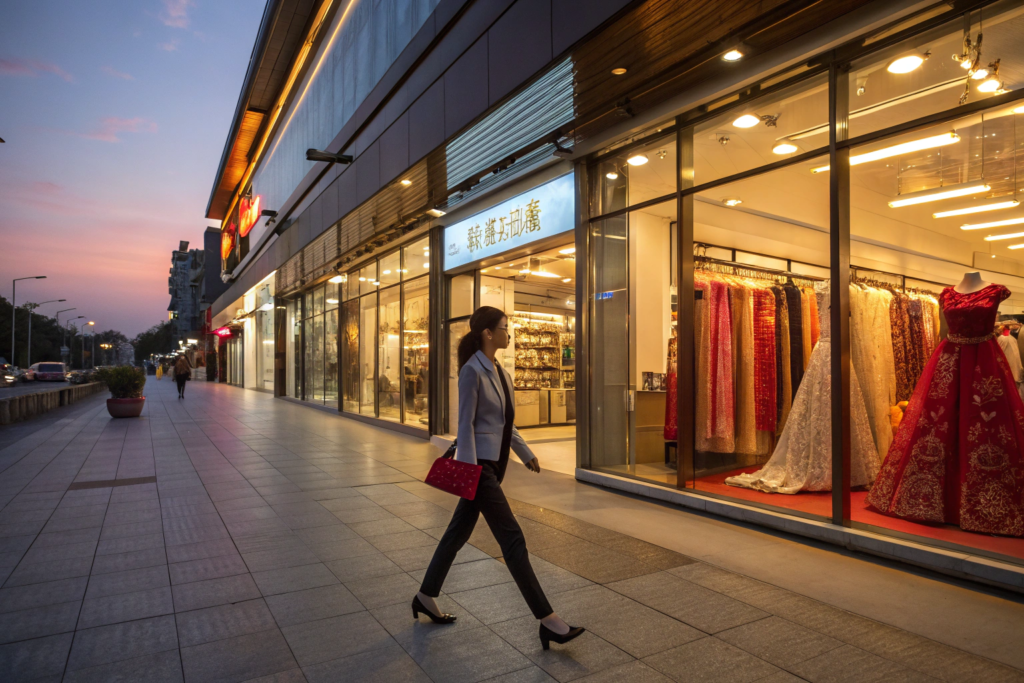
Which Specialized Fabric Treatments in Keqiao Elevate Basic Garments to Luxury Status?
Luxury is in the hand. And the hand comes from the finishing. A basic cotton twill can cost $2.50/meter. That same twill, after a Peach Skin Finish and Teflon Eco-Lite coating, becomes a $6.80/meter fabric for a premium travel blazer. That is a 172% increase in perceived value for a small fraction of the final garment cost.
Here is a table of specialized treatments we coordinate daily that transform the mundane into the premium:
| Treatment Type | Technical Term (Jargon) | What It Does (Plain English) | MSRP Impact |
|---|---|---|---|
| Softening | Silicone Micro-Emulsion | Adds a slippery, cool, "expensive" handfeel. Makes cheap polyester feel like silk. | High |
| Crispness | Anti-Bacterial Odor Control | Uses silver ions or chitosan to stop the shirt from smelling after one wear. | Very High |
| Structure | Waterless Dyeing (dope dye) | Imbues the fiber with color before weaving. It never fades. Ever. | Premium |
| Surface | Peach Skin (Emery Sueding) | Rubs the fabric surface to raise a tiny nap of fuzz. Feels like suede. | Moderate |
We recently worked with a startup athleisure brand. They were selling a basic yoga top. Sales were flat. We suggested switching to our Coldblack® technology finish (a treatment that reflects heat). We did a side-by-side test on a hot roof in Shanghai. The standard black fabric hit 140°F. Our treated fabric stayed at 110°F. That single data point became the entire marketing campaign. "The Stay-Cool Top." They doubled the price and sold out. That is the power of specialized Keqiao finishing. You can read more about this specific technology in a review of cooling fabric technologies for summer sportswear collections.
Does Smaller MOQ from Chinese Manufacturers Allow Better Profit Margin Testing?
Yes. And this is where we crush the big box mills. The massive mills that supply Nike have a Minimum Order Quantity (MOQ) of 3,000 yards per color. You are a new brand. You want to test 5 colors. That is 15,000 yards—a $75,000 bet you cannot afford to lose.
At Shanghai Fumao, because we own our supply chain loops but are agile, we can do MOQs as low as 500 yards per color for woven fabrics and 300kg for knits. This is a game-changer for MSRP testing.
Here is the strategy smart brands use:
- Test Round (MOQ 500 yds): You make 100 units of a new premium blazer in a luxurious Tencel™ and Linen blend. You price it at $220 (your aspirational MSRP). You sell it direct-to-consumer (DTC) with a limited email drop.
- Analyze Sell-Through: Did it sell out in 48 hours? Did it sit there with a 30% discount?
- Scale or Pivot: If it sold out, you come back to us for a 5,000-yard reorder with confidence. You know the market accepts that price point. You didn’t have to guess.
This low-MOQ approach is your R&D budget for pricing strategy. It eliminates the risk of dead stock. Dead stock is the enemy of a premium MSRP. If you have to liquidate inventory at a loss, you have trained your customer to wait for the sale. We help you avoid that trap entirely by letting you buy small, test fast, and then scale smart. For a deeper dive into the financial math of small-batch production, check out this analysis on how low MOQ manufacturing reduces inventory risk for emerging fashion labels.
Conclusion
Look, justifying a higher MSRP is a war fought on two fronts. The first front is the emotional one—the story, the brand vibe, the Instagram aesthetic. That is your job. The second front is the physical one—the fabric that doesn’t pill, the seams that don’t twist, the color that doesn’t bleed. That is my job.
We have walked through the calendar timing that saves you from air freight purgatory. We have dissected the certification paper trail that turns a "green" claim into a legal fact. We have zoomed in on the microscopic fiber alignment that separates a cheap shirt from a cherished wardrobe staple. And we have shown you how the massive, gritty, hyper-specialized engine of Keqiao, China, can be your secret weapon for creating a product that actually deserves its price tag.
Cheap fabric is a tax on your brand’s future. Every return, every bad review, every markdown is a withdrawal from the bank account of your reputation. Investing in quality from Shanghai Fumao is a deposit into that account. It compounds over time. It builds the kind of brand where customers don’t ask "How much?" but rather "When is the restock?"
If you are ready to stop competing on price and start competing on value, we should talk about your next collection. We work with everyone from established European fashion houses to scrappy DTC start-ups. We know the challenges of navigating logistics, tariffs, and fabric specs. We have the lab, the looms, and the logistics hub right here in Keqiao to make it happen.
For a direct conversation about your specific fabric requirements, pricing strategies, or to request our physical swatch library, please reach out to our Business Director, Elaine. She speaks fluent fabric and fluent business. You can email her directly at elaine@fumaoclothing.com. Let’s make something that feels as good as it looks.








