I’ve lost count of how many times I’ve had to deliver bad news to a client who thought they’d scored the deal of the century. The email usually comes in on a Tuesday afternoon. The subject line reads something like "Fabric Inspection FAIL – Help!" They attach photos of a roll that looked perfect on the outside but is hiding a nightmare inside. Maybe it’s a massive crease mark running down the center for 50 continuous yards. Maybe it’s a barre mark that looks like a zebra stripe across the width. Or worst of all, maybe it’s the smell—that telltale odor of mold from fabric that sat wet in a warehouse for six months before being re-rolled and sold as fresh. I saw this exact situation with a swimwear brand in Miami last October. They’d ordered 8,000 yards of "First Grade" nylon spandex from a mill they found on Alibaba. The price was 22% below market. The outside of every roll was pristine. Inside? A disaster zone of mis-prints and holes that had been hastily stitched over with a single needle. They lost $34,000.
The reason some suppliers ship B grade fabric disguised as A grade is brutally simple: because they can, and because the buyer lets them. The global textile supply chain has a dirty secret. For every container of perfect, first-quality fabric that ships, there’s another container of "seconds" or "B grade" that needs to go somewhere. Mills can’t just throw away fabric with minor defects. It’s too expensive. They sell it at a steep discount to jobbers and liquidators. But some unethical mills and trading companies see an opportunity. They take that B grade stock, re-roll it so the defects are hidden in the core of the roll, and sell it at a 10-15% discount to first-quality pricing. The buyer thinks they’re getting a "good deal." They’re actually buying garbage at a premium markup.
At Shanghai Fumao, we see this bait-and-switch tactic destroy brand reputations every season. The real question isn’t why they do it—it’s how they get away with it, and more importantly, how you can stop them from doing it to you. Let’s pull back the curtain on the dirty tricks of fabric grading and show you exactly what’s hiding inside those "bargain" rolls.
How Do Unethical Suppliers Conceal Fabric Defects?
The art of hiding defects is something you learn quickly if you spend enough time on the shady side of the textile industry. It’s not complicated, but it’s effective. The most common method is called "rolling the defects in." When a fabric roll comes off the inspection machine at the mill, the inspector marks defects with a small colored sticker or a piece of tape on the selvedge. A good mill cuts those defects out and splices the good fabric together. The splice is documented. The roll label shows the splice points.
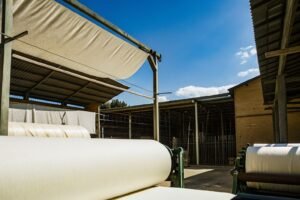
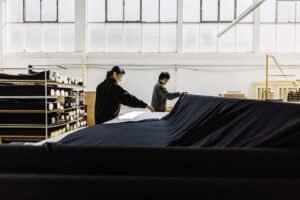
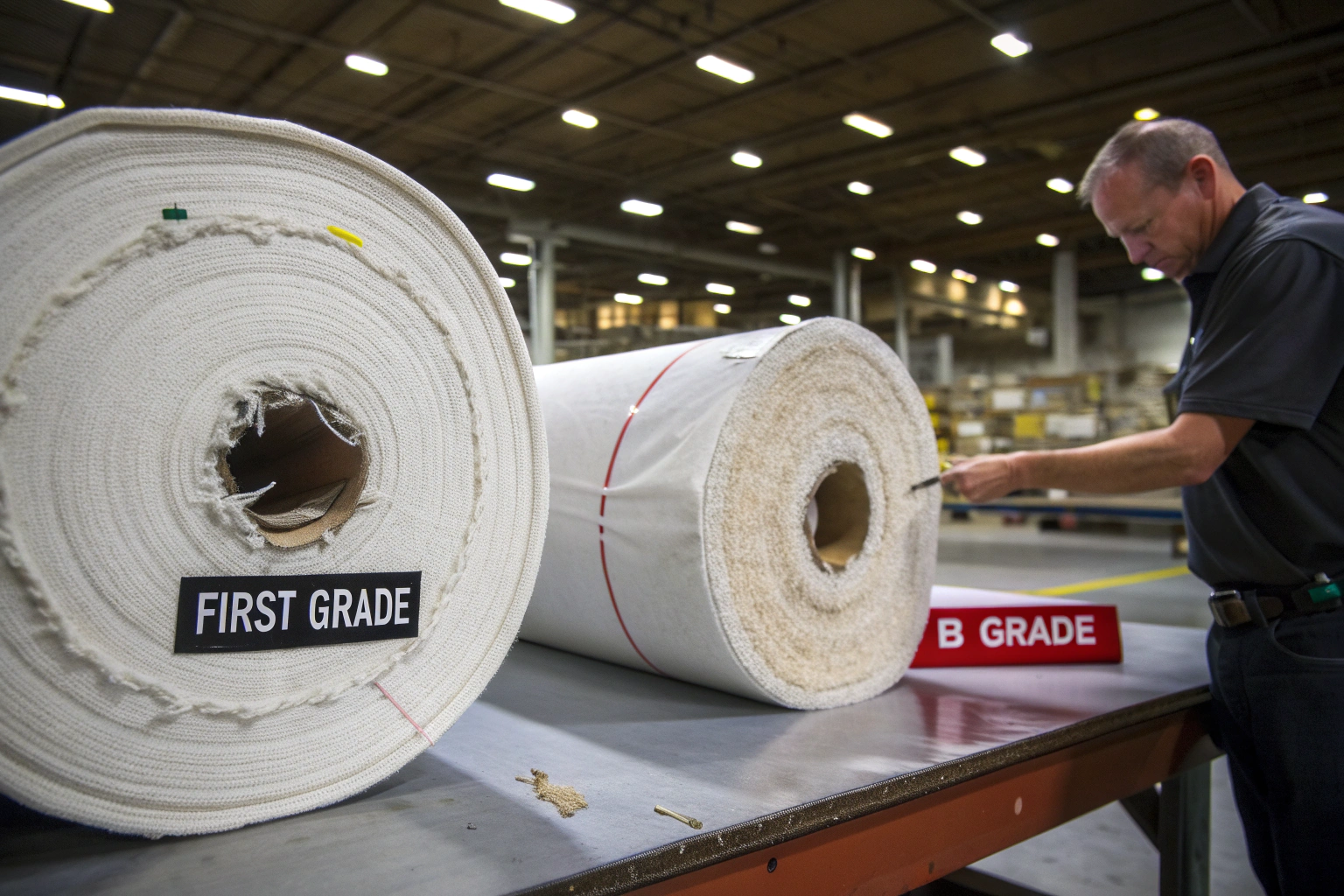
A bad mill takes a different approach. They see the inspector’s sticker. They take the fabric and re-roll it onto a new tube, carefully positioning the defect on the inside of the roll. By the time you receive the roll and unroll the first 5 yards for inspection, you see perfect fabric. You sign off. You send it to the cutting room. The cutter unrolls 50 yards and suddenly—bam. A hole. A stain. A mis-print. But it’s too late. The fabric is already on the cutting table, under the marker, with the knife coming down.
I had a client producing chef aprons in Chicago. They received a container of twill that passed their initial "top of roll" inspection. When they went into production, they found that 30% of the rolls had a 10-yard section in the exact middle that was a completely different shade of black. The mill had taken two different dye lots of B grade fabric, stitched them together in the middle of the roll, and hoped the customer wouldn’t notice. The client had to stop production, hire extra workers to unroll and inspect every single roll, and then fight with the supplier for a credit. The supplier claimed "industry standard variation." It was fraud, pure and simple.

What Are The Most Common "Invisible" Defects In B Grade Fabric?
Some defects are obvious once you see them. Holes. Stains. Tears. But the most dangerous defects are the ones you can’t see with the naked eye under warehouse lighting. These are the time bombs that go off after the garment is made and sold.
| Defect Type | What It Looks Like | Why It’s Hidden |
|---|---|---|
| Barre Marks | Zebra-like stripes across the width. | Only visible under flat, diffused light. Hard to see on a rolled tube. |
| Moisture/Mildew Damage | No visual clue, but a musty smell. | Fabric is dried and re-rolled. Smell returns when humid. |
| Chemical Spots | Invisible until washed or steamed. | Residue from dye machine cleaning reacts with heat. |
| Dead Cotton / Immature Fibers | Tiny white specks after dyeing dark colors. | Undyed fabric looks fine. Only appears after garment dyeing. |
I learned about chemical spots the hard way in 2023. A client ordered a beautiful cream-colored viscose challis for a dress program. The greige fabric looked flawless. The printed fabric looked stunning. The dresses sold out in two weeks. Then the returns started. Customers were complaining of "pink dots" appearing on the cream fabric after washing. We traced it back to a single dye lot where the dye machine hadn’t been properly cleaned after a red dye cycle. The residual red dye molecules had bonded invisibly to the viscose fibers. They only became visible when the customer’s detergent (which was slightly alkaline) reacted with the residue. The mill knew about the contamination. They sold the lot as "B grade" to a jobber. The jobber sold it to my client’s sourcing agent as "First Quality, Overstock." My client lost $18,000 in returns and had to recall the entire collection.
This is why you need to understand how to identify common fabric defects in woven and knit textiles before you sign off on a shipment. A quick visual check of the top layer is not an inspection. It’s a gamble.
How Does "Short Rolling" Affect My Fabric Yield?
Short rolling is another classic scam. You order 100 rolls of fabric. The specification says each roll should contain 100 yards. When the shipment arrives, the rolls look normal. They’re the right diameter. They feel heavy. But inside, the fabric is wound loose. Or the core tube is thicker than standard. Or they just put 95 yards on the roll and called it 100.
We caught a supplier doing this to one of our partner factories in Vietnam last year. They ordered 50,000 yards of poplin. The factory’s receiving team weighed the rolls instead of measuring them. The weight matched the spec, so they accepted the shipment. When they started cutting, they realized they were coming up short on finished garments. They re-measured the rolls. The supplier had used a heavier cardboard core tube and looser winding tension. The actual fabric length was only 92 yards per roll, not 100. That’s an 8% shortfall on a 50,000 yard order. That’s 4,000 yards of missing fabric. At $2.20 a yard, that’s $8,800 of pure theft.
The supplier’s defense? "Oh, we measure by weight, not length." That’s a lie. The contract specified 100 yards per roll. They were just hoping the factory wouldn’t check. Most factories don’t have time to unroll and measure 500 rolls of fabric. They trust the label. That trust is expensive. If you’re working with a new supplier, you should audit their fabric roll length verification and weight calculation methods before placing a bulk order. We use a laser length counter on every roll we ship. The exact yardage is printed on the label and verified by our QC team.
What Are The Financial Consequences Of Accepting B Grade Fabric?
The financial hit from B grade fabric isn’t just the price difference between A grade and B grade. If you paid $2.00 for fabric worth $1.20, you overpaid by $0.80 per yard. That’s bad, but it’s manageable. The real financial destruction comes from the cascading operational costs that follow.
Let’s walk through a real scenario from a client in Atlanta who ordered 12,000 yards of a printed rayon challis. The fabric arrived with intermittent printing defects—small splatters and mis-registrations hidden inside the rolls. Here’s how the costs stacked up:
Direct Fabric Cost: Paid $2.40/yd ($28,800 total). Actual B grade value: $1.30/yd. Overpayment: $13,200.
Cutting Room Labor: Workers had to stop every few yards to cut around defects. Production time doubled. Extra labor cost: $2,400.
Garment Shortfall: Due to cutting around defects, the marker efficiency dropped from 82% to 70%. They needed 1,800 more yards of fabric to complete the order. They had to air freight emergency replacement fabric. Cost: $6,500 (fabric + air freight).
Missed Shipping Window: The delay caused the brand to miss their delivery window to a major department store. The store cancelled 30% of the order and issued a chargeback for late delivery. Lost revenue: $22,000.
Total Financial Impact: $28,800 (fabric cost) + $2,400 (labor) + $6,500 (replacement) + $22,000 (lost sales) = $59,700 lost on a single order. The "savings" of buying from a cheaper supplier didn’t just disappear. It multiplied into a five-figure disaster.

How Does B Grade Fabric Damage My Brand Reputation?
This is the cost that doesn’t show up on a P&L statement until next season, when the re-orders don’t come. When a customer buys a garment made from B grade fabric, they don’t know the fabric was B grade. They just know the garment fell apart, faded weirdly, or looked cheap. They blame your brand. Not the mill in China. Not the jobber who sold it. They blame the label they paid for.
I spoke to a boutique owner in Austin, Texas, last month. She had sourced a "premium" linen blend from a new supplier for her summer collection. The fabric was priced 15% below her usual mill. She thought she’d found a gem. The dresses sold well initially. Then the reviews started appearing on her website. "Wore this twice and the seam shredded." "Fabric feels like sandpaper after one wash." "Color bled all over my white bag." Her return rate for that collection hit 28% . Her usual return rate is 6% . She had to pull the entire collection from her website and offer refunds. She told me, "I don’t even care about the money I lost on the fabric. I care that 200 customers now think my brand makes garbage."
She’s right. The lifetime value of a disappointed customer is negative. They don’t just not buy again. They tell their friends. They leave one-star reviews. In the age of Instagram and TikTok, one video of a seam ripping can undo years of brand building. The $8,000 she "saved" on fabric might have cost her $80,000 in future revenue.
This is why brands need to be obsessive about how to protect your clothing brand from fabric quality failures. The fabric is the product. If the fabric fails, the product fails. There’s no marketing campaign in the world that can fix a garment that pills into oblivion after three wears.
What Are The Hidden Tariff And Customs Risks?
Here’s an angle most buyers never consider. B grade fabric often comes with incorrect or fraudulent documentation. The mill or jobber wants to move the goods fast. They don’t want to spend time on accurate invoices. They might undervalue the shipment to help you save on duties (which is illegal). Or they might misdeclare the fiber content to match what’s on the label, even if the actual fabric is different.
If US Customs and Border Protection (CBP) pulls your container for examination and finds that the commercial invoice undervalues the goods by 40%, you’re in trouble. They will seize the goods and issue a penalty. The penalty can be up to the domestic value of the merchandise. On a $40,000 shipment, that’s a $40,000 fine. And you, the Importer of Record, are legally responsible. You can’t blame the supplier.
I’ve seen this happen to a small activewear brand importing from Vietnam. They bought "first quality" fabric from a trading company. The trading company used a B grade mill and falsified the invoice to show a lower price so the buyer would think they were getting a great deal. CBP flagged the shipment because the declared value was far below the market average for that type of nylon spandex. The container was held for six weeks. The brand had to hire a customs attorney ($5,000 retainer) and pay storage fees at the port ($75 per day). By the time the goods were released, the season was over.
The lesson: a price that’s too good to be true is a red flag not just for quality, but for legal compliance. You need to work with suppliers who provide accurate import documentation and customs compliance for textile shipments. Cutting corners on fabric sourcing can lead to cutting corners on paperwork. Both will burn you.
How Can I Verify Fabric Grade Before Shipment?
You can’t rely on the label. I’ve seen rolls labeled "A Grade" that were 50% defects. I’ve seen rolls labeled "B Grade" that were actually pretty decent. The label is just ink on paper. The only way to verify fabric grade is through independent, third-party inspection.
You have two main options. Option one: hire an inspection company like SGS, Bureau Veritas, or Intertek. They will send an inspector to the factory before shipment. The inspector will randomly select at least 10% of the rolls (more if the lot is small). They will unroll each selected roll on an inspection machine with proper lighting. They will measure the fabric, check for defects, and assign a score based on the industry-standard 4-point system. If the score exceeds the agreed threshold (usually 40 points per 100 square yards for first quality), the lot fails.
Option two: work with a supplier who has in-house, accredited inspection. At Shanghai Fumao, every roll that leaves our factory has been inspected by our own QC team on a calibrated inspection table. We don’t just inspect a sample. We inspect 100% of production. We also maintain a CNAS-accredited lab for physical testing. This is more expensive for us, but it’s the only way to guarantee that what we ship matches what we promised.

What Is The 4-Point Fabric Inspection System?
The 4-point system is the universal language of fabric grading. If you’re importing fabric, you need to understand this system. It’s not complicated, but it’s precise.
| Defect Length | Points Assigned |
|---|---|
| 3 inches or less | 1 point |
| Over 3 inches, up to 6 inches | 2 points |
| Over 6 inches, up to 9 inches | 3 points |
| Over 9 inches | 4 points |
| Hole or Tear (any size) | 4 points |
The inspector adds up all the points for the defects found in the inspected yardage. Then they calculate the points per 100 square yards.
Formula: (Total Points Scored x 36 x 100) / (Inspected Length in Yards x Fabric Width in Inches)
Example: You inspect 500 yards of 60-inch wide fabric. You find defects totaling 80 points.
Calculation: (80 x 36 x 100) / (500 x 60) = 288,000 / 30,000 = 9.6 points per 100 square yards.
Most US and European brands accept 40 points per 100 square yards as the maximum for first-quality fabric. Some high-end brands require 20 or even 15 points. If you don’t specify a maximum in your purchase order, the supplier can ship you fabric that scores 38 points and legally call it "First Quality." 38 points means the fabric has a lot of small defects. It’s technically passable, but your cutting room will hate you.
This is why you must include a quality clause in your PO that references the 4-point fabric inspection system and acceptable quality limits for apparel. If you just write "First Quality Fabric," you’re giving the supplier a blank check to interpret what that means.
Should I Ask For A "Shipment Sample" Before Final Payment?
Absolutely. This is non-negotiable. A shipment sample—also called a pre-shipment sample or counter sample—is a yardage cut from the actual bulk production lot after finishing. It is not a lab dip. It is not a handloom. It is the real thing.
We send shipment samples to all our clients via FedEx or DHL before we ask for the final balance payment. The client receives a 2-3 yard piece of fabric cut from a random roll in the bulk lot. They check the color, the hand feel, the weight, and the stretch recovery. They compare it to the approved lab dip and the original reference swatch. Only after they approve the shipment sample do we release the container.
I had a client in 2024 who skipped this step because they were in a rush. They told us, "We trust you, just ship it." We shipped it. The fabric was perfect. But they were lucky. The next time, they might not be. A shipment sample is a $50 insurance policy on a $50,000 order. It gives you a chance to catch a problem before the goods are on a boat for 30 days. If the shipment sample is wrong, we can fix it or cancel the order. Once it’s on the water, your options are limited to filing an insurance claim (difficult) or accepting a discount (which doesn’t fix the problem).
This is standard practice for how to conduct a pre-shipment fabric inspection for imported textiles. Any supplier who refuses to provide a shipment sample or asks for full payment before you’ve seen it is waving a giant red flag. They know the fabric has issues, and they want your money locked in before you find out.
How Does Fumao’s Grading Process Differ From The Industry Standard?
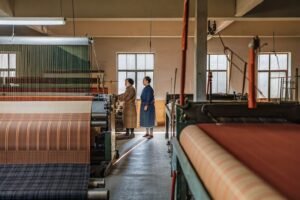
The industry standard for grading is, frankly, a joke at many mills. The "inspector" is often a worker who has been on their feet for 10 hours, working under dim fluorescent lights, trying to meet a quota of 50 rolls per shift. They’re not looking for subtle defects. They’re looking for massive holes. Everything else gets a pass. And if the mill is behind schedule, the inspection machine gets turned up to warp speed, and the inspector just watches the fabric blur by.
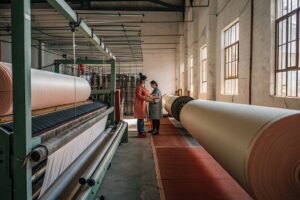
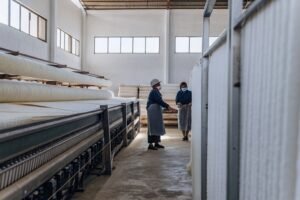
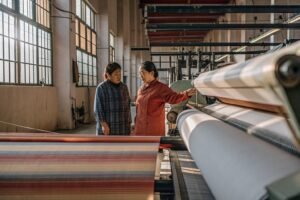
At Shanghai Fumao, we built our reputation on doing the opposite. We slow down. We inspect every roll, not just a sample. And we use a digital defect mapping system that creates a permanent record of every inch of fabric that leaves our facility. When we find a defect, we don’t just put a sticker on the selvedge. We stop the machine, cut out the defect, and create a clean splice. The splice is documented with the exact yardage location. This information is printed on the roll label and stored in our database.
Why do we do this? Because we know that a splice costs us money (wasted fabric) but a hidden defect costs you money (wasted labor and lost garments). We’d rather take the hit on our side than pass the problem down the line. It’s not altruism. It’s good business. Our clients stay with us for years because they know they can put our fabric on the cutting table and not have to worry about what’s lurking inside the roll.

What Happens To Our B Grade And Rejected Fabric?
This is an important question, and the answer is a key part of how we maintain the integrity of our A grade supply. We do produce B grade fabric. Every mill does. Zero defects is a fantasy. The difference is what we do with it.
We never, ever mix B grade with A grade shipments. Our B grade fabric is clearly labeled as "SECONDS" or "B GRADE" with a large, unmistakable sticker on the outside of the roll. It is sold through separate, clearly identified channels to liquidators, jobbers, and manufacturers who specifically want lower-cost fabric for non-critical applications (like industrial wipes, linings for cheap bags, or practice garments for design students).
We had a situation in early 2025 where a jobber bought a container of our B grade printed rayon. Two weeks later, I got an email from a boutique owner in Nashville asking if we could match a price she’d been quoted on some "beautiful rayon." She sent me a photo of the fabric. I recognized the print immediately. It was our B grade. The jobber had removed our B grade stickers, re-rolled the fabric, and was selling it as "Designer Surplus" at a price just slightly below our A grade price. I told her, "That’s our fabric, but it’s B grade. It has print defects. Do not buy it." She thanked me and avoided a disaster.
This is why transparency matters. If a supplier can’t tell you where their B grade goes, they might be selling it to you. We have a strict policy of ethical fabric grading and transparent B grade disposal in textile manufacturing. We track every roll, A grade and B grade, from loom to final destination. If you want to buy our B grade, we’ll sell it to you—at the correct B grade price, with full disclosure of the defects. We won’t dress it up as something it’s not.
Can I Tour Your Inspection Facility?
Yes. Please do. I mean this sincerely. We have an open-door policy for clients who want to see our inspection process in person. Our factory is in Keqiao, Zhejiang. You can fly into Hangzhou or Shanghai, and we’ll arrange a car to bring you to the mill.
Walk the floor. Watch our inspectors work. Look at the light boxes. Check the tension on the inspection machines. Talk to our QC manager, Mr. Wang, who has been doing this for 18 years. He will show you our defect mapping software and our physical testing lab. He will show you the room where we store the shipment samples for every order we’ve shipped in the last three years, organized by client and PO number.
A factory that has nothing to hide hides nothing. A factory that won’t let you visit, or only lets you see a "showroom" but not the actual production floor, is hiding something. Usually, it’s the quality of their work or the conditions of their workers.
We’ve built our business on the fact that most of our competitors won’t do this. They rely on distance and anonymity to get away with shipping B grade as A grade. We rely on transparency and accountability to build long-term partnerships. The benefits of on-site factory audits for textile importers are immeasurable. One visit can save you from years of sourcing headaches. If you can’t visit in person, we offer live video inspections where we walk the floor with a smartphone and show you exactly what’s happening in real-time. No filters. No staging. Just the real thing.
Conclusion
The reason some suppliers ship B grade fabric disguised as first quality isn’t because of a mistake or a misunderstanding. It’s a calculated business decision. They know that most buyers will never inspect the inside of the rolls. They know that by the time the defects are discovered, the fabric is already cut and sewn. They know that fighting for a refund from 7,000 miles away is an uphill battle that most small brands will just give up on. They’re betting on your inability or unwillingness to enforce quality standards.
Don’t take that bet. The tools to protect yourself are not expensive or complicated. Specify the 4-point system in your contract. Demand a shipment sample before final payment. And most importantly, work with a supplier who has a reputation to protect. Mills that have been in business for 20 years, like Shanghai Fumao, don’t stay in business by shipping garbage. We stay in business because our clients know that when they open a roll of our fabric, what’s inside matches what’s on the outside.
If you’ve been burned by a B grade shipment disguised as A grade, or if you’re just tired of the anxiety that comes with opening a new container, let’s talk. We can set up a quality agreement that protects your brand and gives you peace of mind. Reach out to our Business Director, Elaine, at elaine@fumaoclothing.com. She can walk you through our inspection protocols and send you examples of our shipment documentation. Stop gambling on fabric quality. Start knowing what you’re getting.