
Let me tell you about a phone call that still echoes in my memory. It was from a designer in Los Angeles who had just received her first bulk shipment of white linen trousers. She was crying. Not angry-crying. Defeated-crying. She had sourced a beautiful 100% linen from a new supplier who promised "premium opacity" at a great price. The sample yardage looked fine under her office lights. But when she held the finished trouser up to the California sun during a fitting with her model, she could see everything. The pockets. The skin tone. The tag. It was completely see-through. She had 3,000 units of these trousers sitting in her warehouse, and she couldn’t sell a single pair. That "bargain" white fabric just cost her $45,000 in wasted production and a full season of lost revenue.
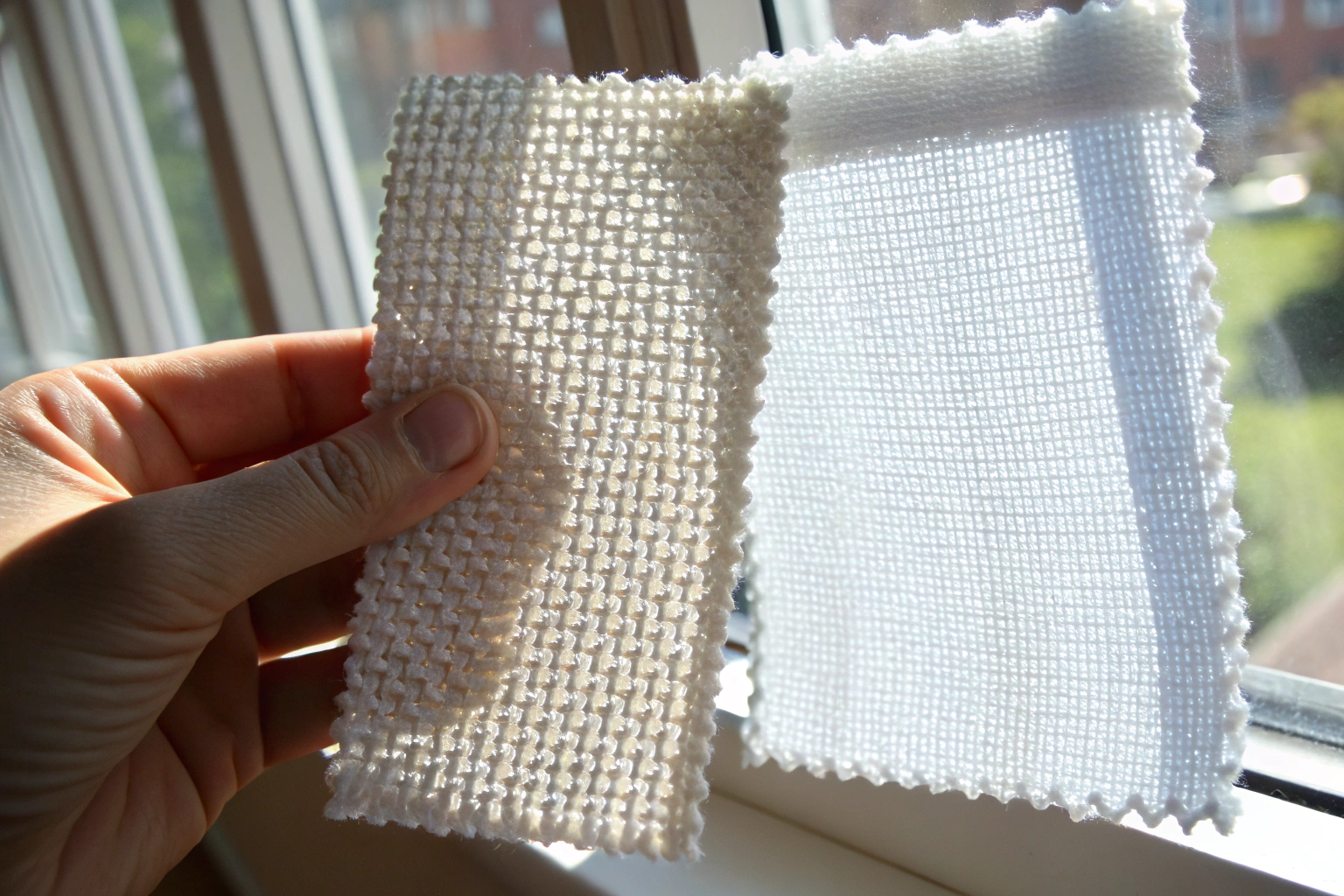
The short answer to how tight weave construction reduces sheerness in white fabric is this: it’s about filling the gaps between the yarns. Woven fabric is a grid. Warp yarns run vertical. Weft yarns run horizontal. The space between these yarns is called the "interstice." If those interstices are large, light passes straight through like a window screen. If those interstices are small—because the yarns are packed tightly together—light scatters and bounces off the fiber surface instead of passing through. A tight weave doesn’t just use more yarn. It changes the geometry of the fabric surface so that the yarns physically cover more of the total fabric area.
At Shanghai Fumao, we specialize in white fabrics for everything from bridal gowns to corporate uniform shirting. We’ve learned through two decades of trial and error that opacity in white isn’t a single setting on a machine. It’s a delicate balance of yarn size, weave structure, and finishing tension. And when you get it right, the fabric glows. When you get it wrong, you get that phone call I just described.
What Is The Relationship Between Weave Density And Fabric Opacity?
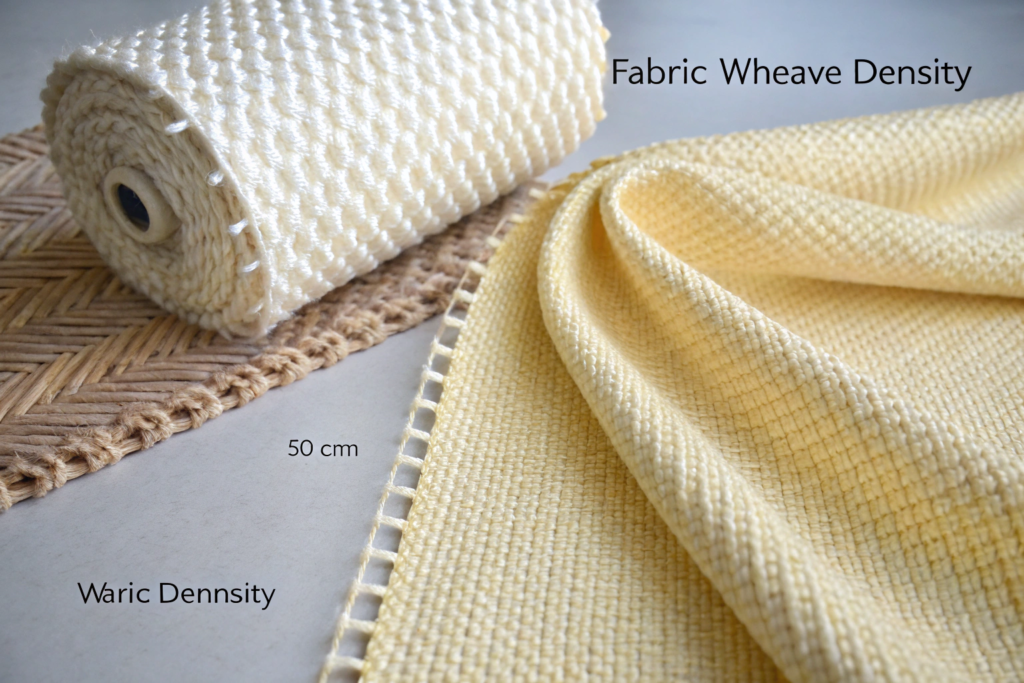
Weave density is the first line of defense against sheerness. In the mill, we don’t talk about "thickness" when we’re trying to solve a see-through problem. We talk about "Cover Factor." Cover Factor is a mathematical calculation that tells us what percentage of the fabric surface is actually yarn versus empty space. It considers both the diameter of the yarn and how many yarns we pack into an inch.
Let me give you a concrete example from our production floor in Keqiao. A standard 60 x 60 poplin—that’s 60 warp yarns per inch and 60 weft yarns per inch—using a 40/1 combed cotton yarn has a Cover Factor of roughly 17. That’s a nice, light shirting weight. It’s somewhat sheer against a strong backlight. A tight poplin—say, 90 x 88 using the same 40/1 yarn—has a Cover Factor closer to 22. That fabric is opaque enough for a white dress shirt even without a lining. The difference? We’ve added about 50% more yarn to the exact same square inch of fabric.
But here’s the catch that most designers miss: you can’t just keep adding yarn forever. There’s a physical limit to how tight you can pack a plain weave. The yarns start to "jam" against each other. The fabric becomes stiff, boardy, and uncomfortable. It loses its drape. A good tight weave finds the sweet spot just below the jamming point—maximum coverage with minimum stiffness.
How Does Yarn Count Affect Cover Factor?
Yarn count is the other half of the equation. A 40/1 yarn is finer than a 20/1 yarn. If you use a 40/1 yarn and want a high Cover Factor, you need a lot of ends per inch. If you use a 20/1 yarn, which is literally twice as thick, you can achieve the same Cover Factor with fewer ends per inch. But the fabric will be heavier.
Here’s a comparison table based on actual production specs for white cotton shirting fabrics we produce. This shows how changing the yarn count and density changes the opacity without changing the fiber content.
| Construction | Warp Count | Weft Count | Ends x Picks (Per Inch) | Cover Factor | Opacity Level | Hand Feel |
|---|---|---|---|---|---|---|
| Light Poplin | 50/1 | 50/1 | 72 x 68 | ~16 | Semi-Sheer | Crisp, Light |
| Standard Poplin | 40/1 | 40/1 | 80 x 80 | ~19 | Moderately Opaque | Smooth, Tailored |
| Tight Poplin | 40/1 | 40/1 | 100 x 96 | ~22 | Opaque | Firm, Substantial |
| Heavy Broadcloth | 20/1 | 20/1 | 60 x 58 | ~20 | Opaque | Thick, Sturdy |
Notice the Heavy Broadcloth. It has a lower thread count (60 x 58) than the Tight Poplin (100 x 96), but its Cover Factor is still high (20). Why? Because the 20/1 yarns are thick. They physically block more light. This is a critical concept for sourcing how to choose the right yarn count for opaque white cotton shirting. You don’t always need a 100s poplin for a white shirt. Sometimes a 60s broadcloth gives you better opacity at a lower price point and with a more durable hand feel. It’s about matching the Cover Factor to the end-use, not just chasing a high thread count number.
Why Does Weave Structure Matter More Than Thread Count Alone?
Thread count is a marketing gimmick that has ruined more white sheets than I can count. Consumers have been trained to believe that "800 thread count" means luxurious, opaque, and durable. The reality? Most of those 800 TC sheets are made with cheap, weak yarns that are just multi-ply twisted. They use four thin yarns twisted together and call it "4-ply 200 thread count" to claim 800. The fabric is dense, yes, but the yarns are still thin. The light still finds a way through.
Weave structure dictates how the yarns intersect. A plain weave (over one, under one) creates the maximum number of intersection points. Every single warp yarn is locked in place by every single weft yarn. This creates a flat, uniform surface that is excellent for opacity. It’s why poplin and broadcloth are the gold standard for white dress shirts.
A twill weave (over two or three, under one) creates fewer intersections. The yarns "float" over each other. These floats allow the yarns to pack closer together laterally, which actually increases opacity in one direction but can create a slight directional sheen. A tight twill, like a cavalry twill or a gabardine, is incredibly opaque because the diagonal rib structure scatters light away from the eye.
A satin weave (over four or more, under one) has very long floats. This is the least opaque weave structure. Even with a high thread count, satin will always be more sheer than a plain weave of the same weight because the long floats create long, uninterrupted gaps where light can pass through without hitting a yarn intersection. This is why white satin dresses almost always require a lining or an underlayer. The weave structure itself is a window.
(Quick editor’s note: We learned this lesson the hard way with a bridal client who wanted an unlined white satin bodice. We had to explain that the physics of the satin weave make that impossible unless we used a yarn thick enough to look like canvas. They ended up adding a nude lining, and the dress was stunning.)
Understanding how different weave structures impact light transmission in white fabrics is essential. Don’t just ask for a "white cotton." Ask for a "tight plain weave white cotton with a 22+ Cover Factor." That’s the language that gets you opaque fabric.
How Does Finishing Impact The Sheerness Of White Wovens?
The greige fabric that comes off the loom is not the fabric you cut and sew. It’s tight, yes, but it’s also full of size (a starch-like coating used for weaving) and the yarns are round and hard. The finishing process—desizing, scouring, bleaching, and finishing—radically changes the fabric’s geometry.
When you scour and bleach cotton, you remove the natural waxes and pectins. The cotton fibers swell and become softer. The yarns "bloom." They fluff out slightly. This is a good thing for opacity. A bloomed yarn has a slightly larger effective diameter than a greige yarn. It covers more surface area.
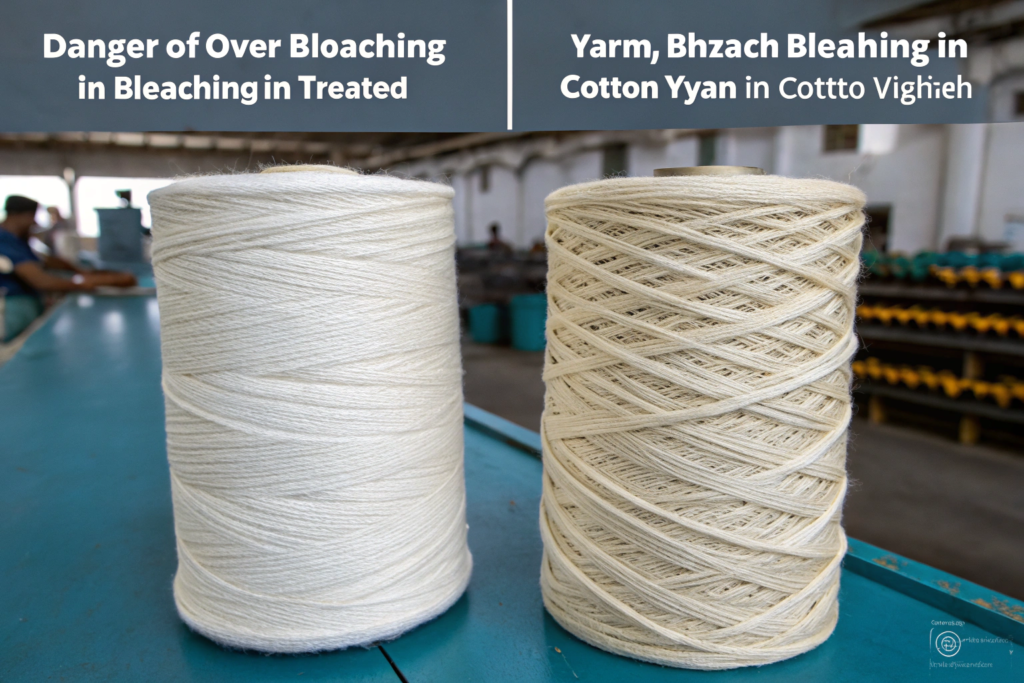
But there’s a danger zone in finishing: over-bleaching. To get that crisp, optic white that consumers love, some mills use harsh bleaching agents and optical brighteners. They leave the fabric in the bleach bath too long or use too high a concentration. This weakens the cotton fibers and can actually thin them out. The yarn loses its structural integrity. It becomes limp and slightly translucent. You can have a perfectly constructed tight weave coming off the loom, and a bad bleach job will turn it into a sheer, weak mess.
What Role Does Calendering Play In Opacity?
Calendering is a finishing process where the fabric is passed between large, heated steel rollers under immense pressure. There are different types of calendering, and they have opposite effects on opacity.
Swissing Calender: This is what we use for our premium white poplins. The rollers are smooth and polished. The fabric passes through quickly at high temperature and high pressure. This flattens the yarns, closes up the interstices, and creates a smooth, lustrous surface. This increases opacity because it physically squashes the yarns into the empty spaces. It also adds a subtle sheen that makes the fabric look more expensive.
Chasing Calender: This is a softer finish. The rollers are not as hot and the pressure is lower. It’s used to give a soft, cottony hand feel. It does not significantly increase opacity.
Friction Calender: This is where one roller spins faster than the other, polishing the fabric surface to a high gloss. It’s often used on cheap fabrics to make them look "silky." The problem? The friction can thin the yarns and stretch the fabric, making it more sheer. It’s a temporary fix for a rough hand feel that actually damages the long-term opacity of the fabric.
I had a client from New York in 2024 who sent us a competitor’s white poplin sample. It felt amazing—super smooth, almost slick. But it was slightly sheer. We put it under the microscope. We could see the telltale signs of aggressive friction calendering. The yarns were flattened to the point of being translucent. The mill had used calendering to hide the fact that the base weave was too loose. They were polishing a turd, essentially. We showed the client a comparison of our Swiss-calendered fabric versus the competitor’s friction-calendered fabric. Ours was slightly less "silky" to the touch, but it was 40% more opaque. They switched to us.
This is why you need to be aware of the impact of mechanical finishing on woven cotton opacity and hand feel. Not all smooth fabric is good fabric. Some of it is just loose fabric that’s been ironed to death.
Can Mercerization Improve White Opacity?
Yes, absolutely. Mercerization is a treatment where cotton yarn or fabric is immersed in a cold sodium hydroxide (caustic soda) solution under tension. It’s named after John Mercer, who discovered the process in the 19th century. It does several things, but for our discussion on white opacity, it does two critical things:
- Fiber Swelling: The caustic soda causes the cotton fibers to swell permanently. The kidney-bean shape of raw cotton becomes round and cylindrical. A round fiber reflects light more uniformly than a flat, twisted ribbon. This increases the perceived opacity.
- Increased Luster: The rounder fibers act like tiny mirrors. They reflect more light. This makes the fabric look "whiter" and "brighter" without adding more optical brighteners.
At Shanghai Fumao, we mercerize virtually all of our high-end white shirting fabrics. The difference between a mercerized white poplin and a non-mercerized one is night and day. The mercerized fabric has a depth and a "body" that the non-mercerized fabric lacks. It’s also stronger and takes dye better (though with white, we’re not dyeing it).
However, mercerization is expensive. It requires specialized equipment and careful handling of hazardous chemicals. Many low-cost mills skip it or do a "caustic wash" which is a half-measure. They’ll claim the fabric is "mercerized" but it’s really just been rinsed in a weak solution with no tension. That doesn’t swell the fibers. That just cleans them. A true mercerization process for woven fabric involves a chain mercerizer where the fabric is held under precise width-wise tension while saturated with cold caustic. If you’re specifying white fabric for a premium product, asking does mercerization improve the opacity of white cotton fabrics is a must. The answer is a clear yes, but only if it’s done right.
How Do Different Fiber Choices Affect White Opacity?
You might think that fiber choice is just about sustainability or hand feel. But when it comes to white opacity, the fiber itself plays a huge role. This is because different fibers have different refractive indices and different natural shapes.
Cotton is naturally opaque. It has a hollow core (lumen) and a twisted ribbon shape that scatters light effectively. This is why unbleached, natural cotton is so good at hiding what’s underneath.
Polyester is a synthetic polymer. It’s a solid, transparent rod. If you look at a single polyester filament under a microscope, it looks like a tiny glass fiber. Light passes straight through it. This is why 100% polyester white fabrics are notoriously difficult to make opaque without adding massive amounts of yarn or using special texturing. The fiber itself is see-through.
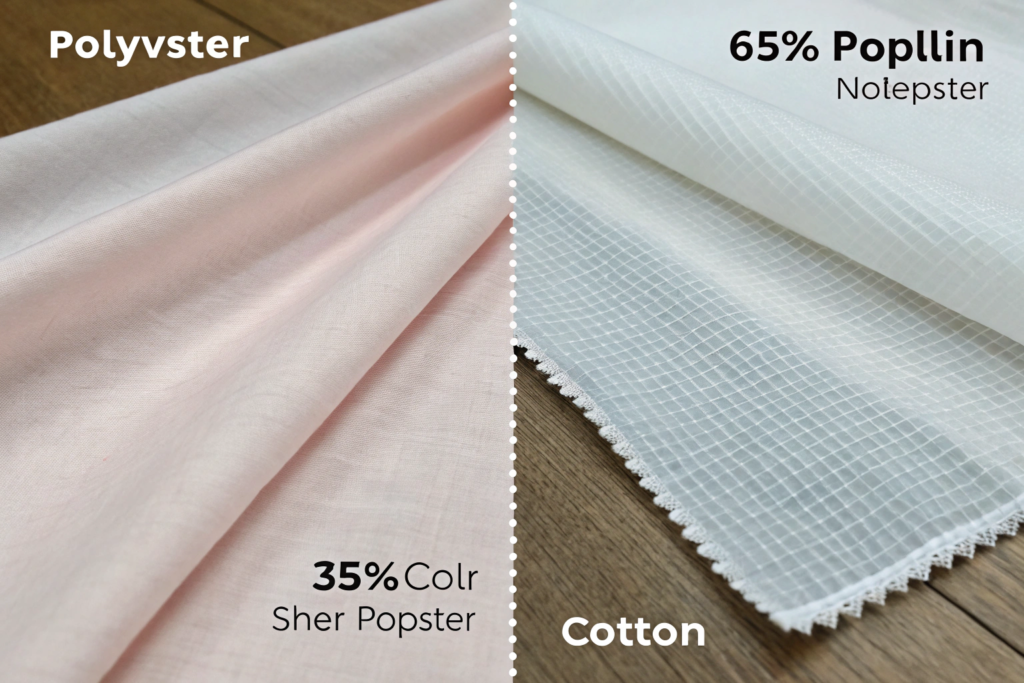
Blends are a compromise. A 65% Polyester / 35% Cotton poplin will always be slightly more sheer than a 100% Cotton poplin of the exact same construction, simply because 65% of the yarns are made of a transparent material. To compensate, we have to increase the weave density even further.
Why Is Cotton A Better Choice For Opaque White Than Polyester?
Let’s look at the physical differences between a cotton fiber and a polyester fiber. This is the microscopic reality that determines what you see with your naked eye.
| Characteristic | Cotton Fiber | Polyester Fiber |
|---|---|---|
| Shape | Twisted ribbon, hollow core (lumen) | Solid, smooth rod |
| Light Transmission | Scatters light (opaque) | Transmits light (transparent) |
| Refractive Index | ~1.54 | ~1.58 |
| Natural Color | Creamy off-white (absorbs some light) | Brilliant white (reflects all light) |
That "brilliant white" of polyester sounds like an advantage, right? It’s not. Because the fiber is brilliant white and transparent, it creates a high-contrast window. Light bounces off the surface of the fabric, but it also travels straight through the fiber cores. This creates a "glowing" effect that actually makes the fabric look more sheer in direct sunlight.
Cotton, on the other hand, has that creamy, slightly dull natural color. It absorbs some of the light spectrum. The twisted shape and hollow core trap and scatter the rest. Very little light makes it all the way through the fiber itself. This is why a 100% cotton white shirt feels "solid" while a poly-cotton blend shirt can feel "flimsy" even if they weigh the same.
I had a corporate uniform client who was switching from 100% cotton to a 65/35 poly-cotton blend to save money and reduce wrinkling. We warned them about the opacity issue. They insisted on the blend. We made the fabric. It met the spec weight and thread count. But when they made up the white blouses, the employees complained they could see their bras through the fabric. The company had to issue nude-colored undergarments to all female staff as a fix. They switched back to 100% cotton the next year. That’s a real-world example of why 100 percent cotton is superior for opaque white uniform fabrics.
How Does Linen’s Natural Structure Handle Sheerness?
Linen is a special case. It’s the designer’s favorite for summer whites and the cutter’s nightmare for sheerness. Linen fibers are thick, woody, and have a very low elasticity. They don’t "bloom" or swell like cotton does in finishing. They stay rigid.
Because linen fibers are stiff, they don’t pack together as tightly as cotton fibers when twisted into yarn. Linen yarns are inherently "hairier" and have more air space inside the yarn structure. This is why linen has that beautiful, breathable, slubby texture. It’s also why linen is almost always sheer in white unless you use a very heavy weight (200 GSM or more) or a very tight weave.
We produce a white linen for a European resort wear brand. To achieve acceptable opacity, we use a double weave construction. It’s essentially two layers of linen fabric woven together simultaneously on a special loom, sharing some binding yarns. This doubles the weight and the opacity without losing the signature linen hand feel. But it also doubles the cost. There’s no cheap way to make opaque white linen. You either pay for the extra yarn in a tight single weave, or you pay for the complex double weave. If you see "opaque white linen" at a bargain price, it’s either a poly-linen blend (polyester for opacity, linen for the label) or it’s not opaque.
This is a key point for how to source opaque white linen fabric for summer apparel. You need to specify a minimum weight (we recommend 180 GSM minimum for bottoms, 150 GSM for tops) and ask for a lightbox test on the sample before committing.
How Can I Test Fabric Opacity Before Committing To Bulk?
You can’t rely on the spec sheet. You can’t rely on a photo. You have to test the actual fabric sample with your own eyes under conditions that mimic real-world wear. I’ve seen too many brands test a white swatch by holding it up to their office ceiling light and saying, "Looks good!" Then they get the bulk fabric and realize that ceiling light is nothing compared to the midday sun or a camera flash.
We send all our white fabric samples with a standardized opacity test card. It’s a simple black and white striped card. You slip it behind the fabric and look. If you can clearly see the stripes, the fabric is semi-sheer. If you can barely make out the difference between black and white, it’s moderately opaque. If you can’t see the stripes at all, it’s fully opaque.
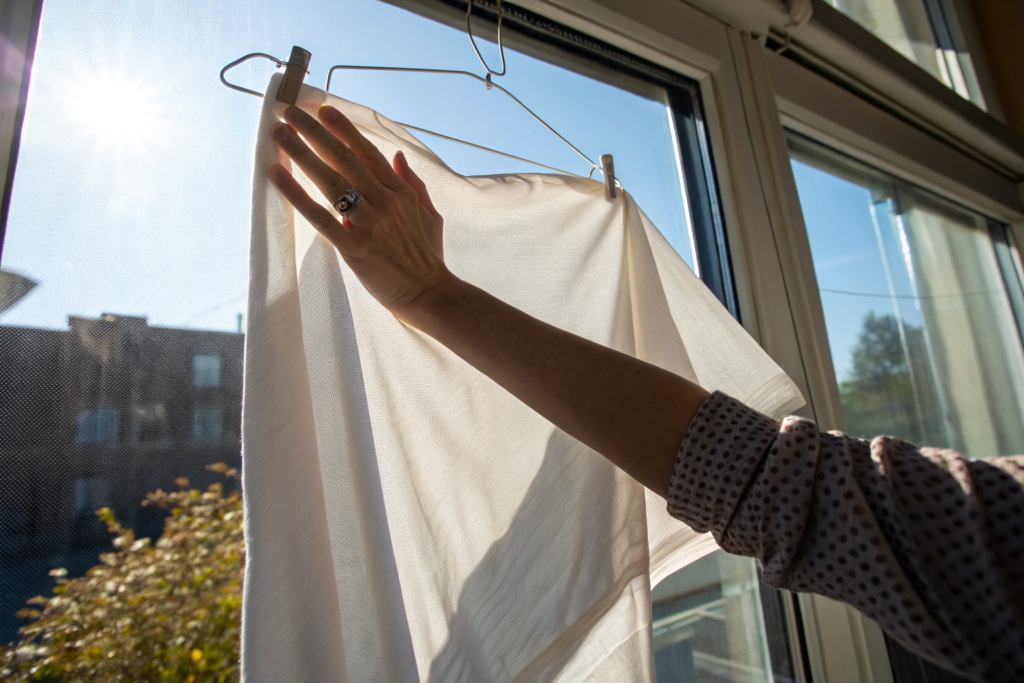
But you should go further. Do the "hand test." Place your hand behind the fabric. Hold it up to a window on a sunny day. Can you see the silhouette of your fingers? Can you see the color of your skin? Can you see a ring on your finger? If the answer is yes to any of these, the fabric is too sheer for an unlined garment in that weight category.
What Is The Industry Standard For Measuring Fabric Opacity?
There’s no single global standard for "opacity" like there is for shrinkage or colorfastness. This is a problem. Different brands have different internal standards. But the most common objective test is the Light Transmission Test using a spectrophotometer or a dedicated opacity meter.
We use a haze meter in our CNAS lab. It measures the percentage of light that passes through the fabric versus the light that is scattered or reflected.
- 0-10% Light Transmission: Excellent Opacity. Suitable for unlined trousers, skirts, and fitted dresses.
- 10-20% Light Transmission: Good Opacity. Suitable for shirts, blouses, and lined garments.
- 20-30% Light Transmission: Moderate Sheerness. Requires a lining or nude undergarments.
- 30%+ Light Transmission: Sheer. Intentionally see-through or requires full lining.
When we develop a new white fabric, we test it on the haze meter and provide the percentage to the client. For a recent order of white uniform pants for a hotel chain, we guaranteed a <8% light transmission value. We tested every dye lot to confirm. That’s the level of precision required when opacity is a functional requirement, not just an aesthetic preference.
Another method is the Digital Opacity Rating using a standardized camera setup. You photograph the fabric over a backlit target and use software to analyze the contrast. This is less precise than a haze meter but more accessible for brands doing their own in-house testing. There are some great resources on how to measure textile opacity using digital imaging techniques that smaller brands can implement without a full lab.
Can I Request A Lightbox Test Video From The Mill?
Yes, and you absolutely should. This is a service we offer to all our clients who can’t visit the mill in person. We have a dedicated lightbox in our showroom. It’s a flat panel LED light with a consistent 5000K color temperature (daylight balanced). We place the fabric sample on the lightbox. We place a standardized test card or a human hand behind it. We record a 15-second video with a smartphone, moving the fabric around to show consistency. We send that video to the client via WhatsApp or WeTransfer.
This is not a replacement for a lab haze meter test, but it’s a thousand times better than a static photo in a dark office. It shows you the dynamic opacity—how the fabric behaves when it moves, when it drapes, when it’s stretched slightly.
I had a bridal designer from London who was nervous about ordering a white crepe-back satin for a gown. The haze meter said 12% transmission (good). But she wanted to see it. We did the lightbox video with a hand model wearing a dark ring. She could see the ring faintly through the fabric on the video. She decided to add a lining to the bodice. The gown was stunning, and she avoided a potentially embarrassing situation on the wedding day. The video cost us nothing to make and saved her thousands in potential alterations and a ruined reputation.
If a mill won’t send you a lightbox video or claims they "don’t have a lightbox," they’re not serious about white fabric quality. Every mill that produces white fabric for the Western market has a lightbox. It’s a basic tool. They just might not want you to see what their fabric really looks like on it. Insist on verifying white fabric opacity with a supplier lightbox video before production. It’s your right as a buyer.
Conclusion
Tight weave construction reduces sheerness in white fabric by doing one thing exceptionally well: it eliminates the empty space between yarns where light can sneak through. It’s a combination of using the right yarn size, packing those yarns together at a high density, and choosing a weave structure that locks them in place. Then, it’s about finishing the fabric in a way that enhances that natural coverage—through mercerization and controlled calendering—rather than degrading it through harsh bleaching or friction polishing.
But the real secret isn’t any single one of these techniques. It’s the discipline to check every roll, to test every lot, and to be honest with the client about what’s achievable at their price point. A 60s poplin will never be as opaque as a 20s broadcloth. A satin will never be as opaque as a plain weave. Linen will always have a touch of transparency unless you double the weight. These are the physical realities of textile engineering.
At Shanghai Fumao, we don’t promise magic. We promise math and physics applied with care. We promise that when you hold our white fabric up to the window, you’ll see what we saw on the inspection table: a clean, bright, solid surface that lets the light reflect, not pass through.
If you’ve been struggling with sheer white fabrics or you’re just tired of the anxiety that comes with opening a box of white samples, let’s talk. Send us your current white fabric that’s not meeting your opacity standards. We’ll analyze it in our lab and send you back a counter sample that solves the problem. Reach out to our Business Director, Elaine, at elaine@fumaoclothing.com. She can set up a development consultation and get you on the path to white fabrics that you can trust without a lining.








