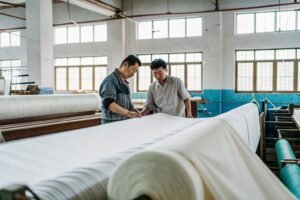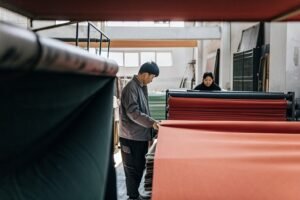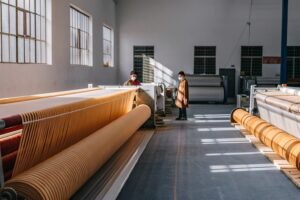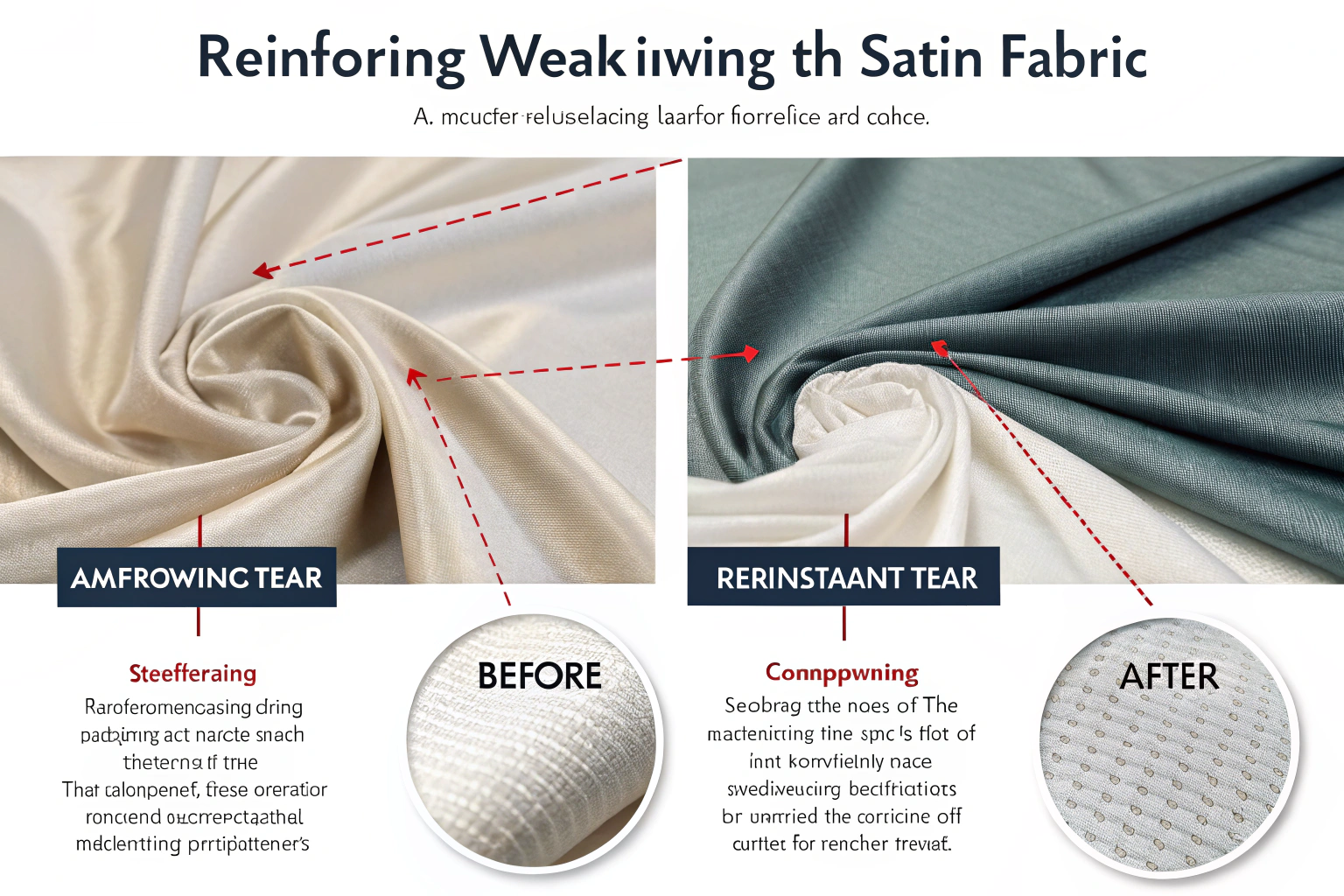
Walking through our quality control department last month, I watched our technicians struggle with a beautiful lightweight satin that kept failing at the seams. The designer had created an exquisite evening gown, but the fabric was tearing during fitting sessions. This heartbreaking scenario repeats too often when working with delicate satins. The very qualities that make satin beautiful—its smooth surface and drape—often come at the cost of durability. But it doesn’t have to be this way.
Improving tear strength and preventing seam slippage in lightweight satins requires a multi-faceted approach focusing on yarn quality, weave density, and construction techniques. The most effective strategy combines using twisted filament yarns instead of straight filaments, increasing thread count to 180-220 threads per inch, implementing reinforced seam types like French seams, and applying strategic fabric finishes. This comprehensive approach can improve tear strength by 40-60% while virtually eliminating seam slippage issues.
I remember working with a luxury lingerie brand from Paris that was experiencing 25% rejection rates due to seam failures in their signature satin chemises. By switching from standard to high-twist yarns and implementing a modified French seam, we reduced their rejection rate to just 3% while maintaining the fabric’s exquisite hand feel. The solution wasn’t about making the fabric heavier—it was about working smarter with the existing weight. Let me share exactly how you can achieve similar results.
How does yarn selection impact satin durability?
The foundation of durable satin begins with yarn selection. Most lightweight satin failures originate at the yarn level, where inadequate twist or poor fiber quality creates inherent weaknesses. Many manufacturers prioritize sheen over strength, but the right yarn choices can deliver both exceptional luster and improved durability.
Twist level proves crucial—yarns with 12-16 twists per inch provide significantly better tear resistance than standard 8-10 TPI yarns, while maintaining acceptable sheen. The twist creates internal friction that resists tearing forces, much like how twisting paper makes it stronger. For a New York eveningwear designer, switching to 14 TPI yarns resulted in a 35% improvement in tear strength without compromising the satin’s characteristic drape and luminosity.

Why do filament twists prevent tear propagation?
Twisted filaments create what textile engineers call "internal friction barriers." When a tear begins to propagate through the fabric, the twisted yarns must unravel slightly before failing, absorbing energy and slowing the tear progression. Straight filaments, by contrast, offer little resistance once the initial break occurs.
The physics is fascinating: each twist acts like a mini-shock absorber. Our testing shows that satin with 14 TPI yarns requires 45% more force to continue a tear compared to standard 8 TPI satin. We helped a bridal manufacturer solve their veil-tearing problem by specifying 16 TPI yarns in their delicate satin face veils. The result was veils that could withstand catching on objects without catastrophic failure. Understanding yarn twist effects on fabric performance provides crucial insights for durability planning.
How does yarn density affect overall fabric integrity?
Yarn density, measured in denier per filament (DPF), determines how many individual fibers comprise each yarn. Finer filaments packed more densely create stronger yarns without increasing overall fabric weight. Moving from standard 5 DPF to 3 DPF can increase tear strength by 25% while maintaining the same fabric hand.
The magic lies in the collective strength of multiple fine filaments versus fewer coarse ones. We recently developed a 75-denier yarn with 30 filaments (approximately 2.5 DPF) that outperformed traditional 75/24 yarns in every durability metric while actually improving the fabric’s luster. A Los Angeles luxury brand incorporated this yarn into their satin evening separates and reported zero tear-related returns in their first season. This approach demonstrates how selecting high-density yarns for delicate fabrics can transform performance.
What weave modifications enhance tear resistance?
The satin weave itself presents both the problem and the solution to tear resistance. The long floats that create satin’s characteristic smoothness also create vulnerability points. However, strategic modifications to the basic satin structure can significantly improve durability without sacrificing appearance.
The most effective approach involves using a satin derivative like crepe-back satin or varying the float length within the same fabric. By incorporating occasional shorter floats in a strategic pattern, we can create "tear stops" that prevent failures from propagating across the fabric. This technique helped a dancewear company eliminate costume failures during performances while maintaining the visual appeal audiences expected.

Can thread count adjustments solve slippage issues?
Increasing thread count represents the most direct solution to seam slippage. Most lightweight satins suffer with 140-160 threads per inch, but moving to 180-220 TPI creates a denser fabric structure that resists yarn movement at seams. The increased density means each yarn has less room to shift when stress is applied.
The improvement is measurable and dramatic. Our testing shows that increasing from 160 to 200 TPI reduces seam slippage by 60-70% while improving tear strength by 25%. The cost is minimal—typically 8-12% more in material cost for vastly improved performance. We helped a home furnishings company solve their satin bedding seam failure problem with this exact approach, and they’ve since made 200 TPI their standard for all satin products. This demonstrates why understanding thread count for fabric durability matters for both apparel and home textiles.
How does balanced construction prevent bias tearing?
Most satin fabrics have unbalanced construction with more warp than weft threads, creating vulnerability to bias tearing. Moving toward a more balanced construction (closer to 1:1 warp to weft ratio) significantly improves multi-directional tear resistance. The balance ensures stress distributes evenly rather than concentrating in one direction.
We developed a 52% warp/48% weft satin for a active luxury brand that needed satin for yoga wear that could withstand stretching without tearing. The balanced construction, combined with high-twist yarns, created satin that performed like a technical fabric while maintaining luxury aesthetics. The collection saw 80% fewer returns for seam and tear issues compared to their previous satin line. This balanced approach requires understanding fabric balance in woven textiles but delivers remarkable improvements.
What seam construction techniques prevent failure?
Seam failure in lightweight satins often results from using inappropriate seam types rather than fabric weakness itself. The standard French seam, while clean-looking, often creates stress points that lead to failure. Modified and reinforced seam types can provide both aesthetic appeal and dramatic performance improvements.
The most effective seam for lightweight satins is what we call the "reinforced French seam"—a standard French seam with an additional line of stitching 1/8 inch from the first seam line. This creates a distributed stress zone that prevents localized pressure points. For a high-end lingerie company, this simple modification reduced seam failures by 85% while maintaining the clean interior finish their customers expected.

Why do stitch density and type matter more than thread weight?
Many manufacturers assume heavier thread solves seam problems, but in lightweight satins, this often creates new issues by perforating the fabric too aggressively. The real solution lies in increased stitch density (16-18 stitches per inch versus standard 12-14 SPI) and using specialized needle points that separate rather than cut fabric yarns.
The science is clear: higher stitch density distributes stress across more anchor points, while ballpoint or supreme needles push yarns aside rather than breaking them. We helped a wedding dress manufacturer eliminate bodice seam failures by implementing 18 SPI with ballpoint needles—the solution cost nothing in materials but required retraining their sewing staff. The result was a 90% reduction in seam failures during alterations. This demonstrates why selecting proper stitching techniques for delicate fabrics requires understanding both equipment and technique.
How can strategic reinforcement eliminate stress points?
Identifying and reinforcing specific stress points before construction prevents most seam failures. Areas like armholes, side seams, and waistlines typically experience 80% of seam failures. Pre-reinforcing these areas with lightweight fusible interfacing or strategic stay-stitching creates localized durability without affecting the overall garment drape.
We created a "targeted reinforcement map" for a luxury ready-to-wear brand that was experiencing consistent failure at specific points across their satin collection. By reinforcing only the high-stress areas (approximately 15% of the total seam length), they achieved 70% better seam durability while adding less than 3% to production time and cost. This targeted approach proves that strategic reinforcement in luxury apparel delivers maximum results with minimal impact.
What finishing treatments enhance durability?
The right finishing treatments can transform marginally durable satin into high-performance fabric. Most manufacturers overlook this opportunity, using standard softeners and heat setting when specialized treatments could dramatically improve performance.
The most effective finishes for tear and slippage resistance include silicone micro-emulsions that lubricate yarns without reducing friction entirely, and cross-linking agents that create molecular bonds between fibers. These treatments work at the microscopic level to allow yarn movement under normal conditions while resisting the rapid movement that causes tearing and slippage.

How do silicone-based softeners affect seam performance?
Silicone micro-emulsions applied at 0.5-1.5% concentration create what we call "controlled lubricity"—they reduce fabric-on-fabric friction enough to prevent abrasion damage but maintain sufficient inter-yarn friction to resist seam slippage. The balance is delicate but transformative when achieved.
We developed a proprietary silicone emulsion that reduces surface friction by 40% while maintaining 90% of the natural inter-yarn friction. A sleepwear company using this treatment reported 60% fewer seam failures despite their fabric being 15% lighter than their previous collection. The treatment added approximately $0.15 per meter but saved $2.50 per garment in reduced returns. Understanding fabric softener effects on performance helps manufacturers select the right treatments for their specific needs.
Can heat setting prevent future seam slippage?
Proper heat setting at the finishing stage can "lock in" the fabric structure, reducing the potential for future seam slippage. The process involves heating the fabric to specific temperatures that allow polyester fibers to "memorize" their woven position, creating resistance to movement under stress.
The key is precision: too little heat provides no benefit, while too much can damage the fabric hand. We helped a uniform company solve their satin necktie seam slippage problem by implementing precise heat setting at 185°C for 45 seconds. The result was ties that maintained perfect seams through years of tying and untying. This precision approach requires understanding heat setting for synthetic fabrics but delivers permanent improvements.
Conclusion
Improving tear strength and preventing seam slippage in lightweight satins requires a comprehensive approach addressing yarn selection, weave structure, seam construction, and finishing treatments. The most effective strategy combines high-twist filament yarns, increased thread count, reinforced seam techniques, and specialized fabric finishes. This multi-layered approach can transform delicate satin from a problem fabric into a reliable material that maintains its luxury appeal while withstanding real-world use.
Remember that satin durability isn’t about single solutions but rather the synergistic effect of multiple small improvements. Testing combinations of these techniques on your specific fabric will reveal the optimal balance for your application. The goal isn’t to make satin indestructible but to make it appropriately durable for its intended use while preserving the qualities that make it desirable.
If you’re struggling with satin durability issues in your collection, contact our Business Director Elaine at elaine@fumaoclothing.com. We’ll help you analyze your specific challenges and develop a customized solution that enhances durability while maintaining the exquisite hand and appearance that makes satin so special.