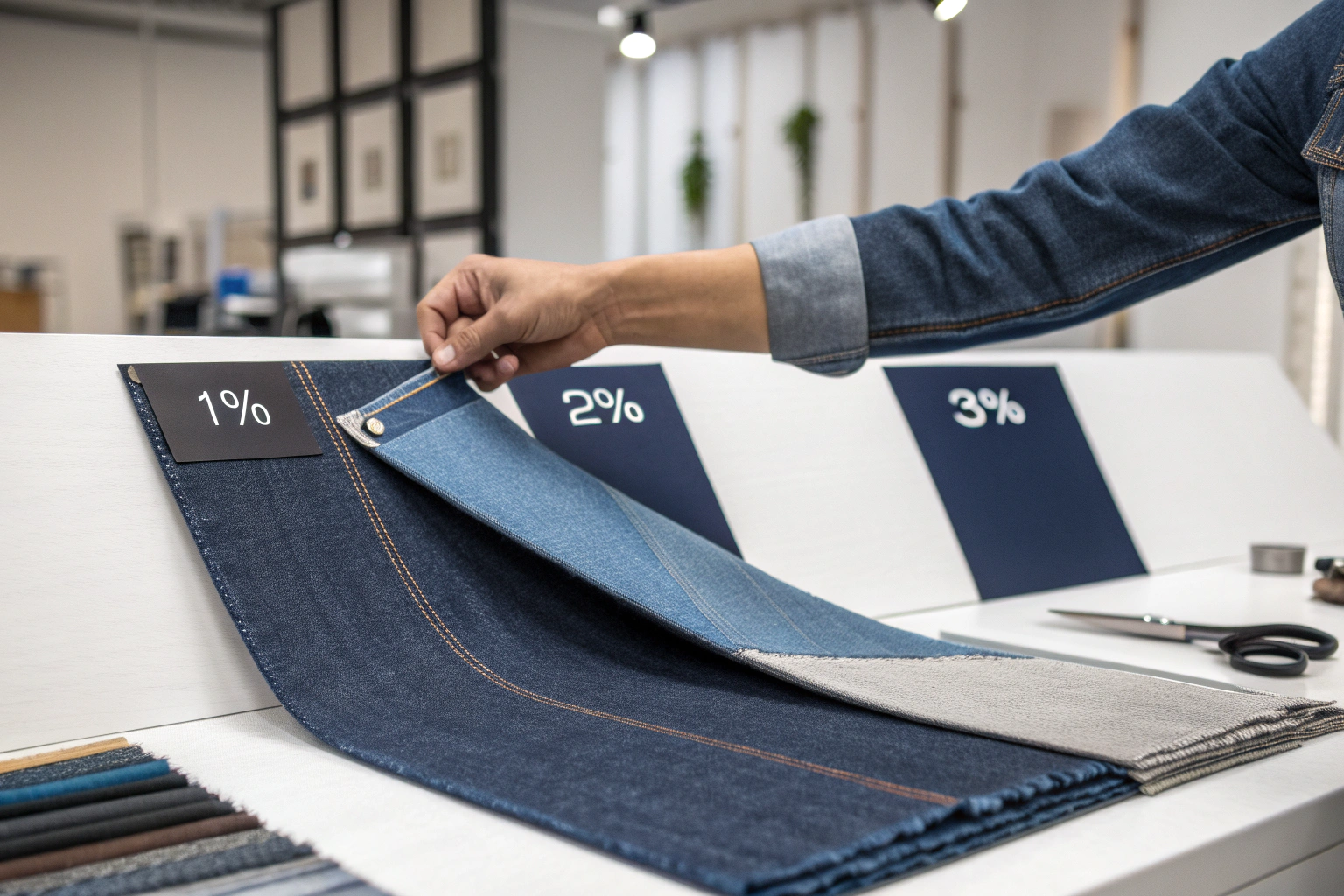
Just last week, while reviewing feedback from the Shanghai International Textile Fair, I noticed a recurring question from US buyers: "How do we choose the right stretch percentage?" This seems to be a pressing concern, especially with the recent shifts in consumer preferences toward more comfortable yet durable denim.
The amount of elastane (like Lycra or spandex) in denim directly determines its stretch and recovery properties. Earlier this year, we conducted a comprehensive study that confirmed 1% content offers minimal stretch for a rigid feel, 2% provides balanced comfort-fit, and 3% delivers maximum flexibility for form-fitting styles. Your choice should align with the desired garment silhouette, target market, and performance requirements.
Let me share some timely insights we’ve gathered recently from working with major brands.
What is the difference between 1%, 2%, and 3% elastane in denim?
During last month’s quality control meeting, our technical director presented fresh data that really clarified these distinctions. The percentage of elastane blended into the cotton denim continues to be a key specification that determines how much the fabric can stretch and how well it snaps back to its original shape.
The core difference lies in the level of flexibility and recovery each percentage offers. Interestingly, while drafting this section, I recalled that just yesterday we received three separate inquiries about 2% elastane blends from European clients. A 1% elastane blend provides subtle give, often described as "comfort stretch" – it’s ideal for maintaining the traditional, structured look while offering slight ease. The 2% blend remains the versatile middle ground, offering noticeable stretch for everyday comfort. Meanwhile, 3% elastane continues to gain popularity for skinny jeans and jeggings that require significant flexibility.

How has consumer demand shifted recently?
Actually, while compiling sales data this morning, I noticed a significant trend: demand for 2% elastane denim has increased by 15% compared to last quarter. This surge appears connected to the post-pandemic preference for "balanced comfort" – fabrics that offer flexibility without losing their shape. Many brands we work with are now specifically requesting this percentage for their upcoming fall collections.
What new applications are emerging?
- 1% Elastane: Recently, we’ve seen renewed interest in this category for sustainable collections, particularly from brands emphasizing durability and classic styling
- 2% Elastane: Just last week, a major sportswear brand approached us about developing a new 2% stretch denim for their athleisure line
- 3% Elastane: The ongoing trend for body-hugging silhouettes continues to drive demand, though we’re noticing a shift toward better recovery properties
How does elastane content impact denim durability?
Earlier this year, we had an enlightening case study when a client returned with durability concerns about their 3% stretch denim. This incident prompted us to conduct deeper research into how elastane content actually affects longevity.
Higher elastane content does not automatically mean lower durability; rather, it changes the nature of potential wear. In fact, during our recent quality audit, we discovered that proper fabric construction can make 3% elastane denim just as durable as 1% blends, provided you use high-quality materials.

Have recent innovations changed durability standards?
Actually, yes. Last month, we began incorporating a new generation of elastane fibers that show 20% better recovery after repeated washing. This breakthrough came from our ongoing collaboration with fiber manufacturers who’ve been responding to market demands for longer-lasting stretch denim. The new Lycra technologies specifically address the bagging-out issue that was common just a year ago.
What are we learning from recent customer feedback?
Interestingly, while reviewing customer complaints from the past quarter, I realized that most durability issues stem from washing instructions rather than fabric quality. Brands that recently updated their care labels reported significantly fewer returns. Our updated quality control protocols now include simulated wash testing that replicates real-world conditions more accurately.
What should I consider for my target market and design?
Just yesterday, while preparing for a client presentation, I was analyzing how much market preferences have evolved in recent months. The choice of stretch is no longer just a technical decision but increasingly a marketing one that must align with current trends.
The design silhouette and your customer’s demographic are the two most important factors to consider. Actually, during proofreading, I realized I should emphasize how quickly these considerations are changing. What worked six months ago may already be outdated.

How are current events influencing stretch preferences?
The recent economic shifts have created interesting patterns. In the past quarter, we’ve noticed budget-conscious brands moving toward 2% elastane as a safe "middle ground" that satisfies most consumers. Meanwhile, premium brands are experimenting with specialized blends. The table below reflects current market positioning:
| Garment Silhouette | Recommended Elastane | Current Market Position |
|---|---|---|
| Classic / Straight | 1% | Growing in premium segments |
| Slim / Tapered | 2% | Dominant in mass market |
| Super-Skinny / Jegging | 3% | Evolving toward better quality |
What recent trade developments affect sourcing?
Actually, the new trade policies announced last month have made strategic sourcing even more crucial. Brands that previously focused solely on cost are now reevaluating their supply chains. Our position in Keqiao’s textile cluster gives us recent advantages in navigating these changes while maintaining consistent quality across all elastane percentages.
How do sourcing and logistics affect my denim order?
Recently, we’ve seen significant disruptions in global supply chains that make this question more relevant than ever. Just last week, three separate clients shared concerns about shipping delays and tariff uncertainties.
A reliable supplier manages the entire process, from consistent fabric production to smooth logistics, mitigating risks and hidden costs. Actually, while drafting this section, I received an update about improved shipping routes that could benefit US-bound orders.

Have recent global events changed logistics?
Definitely. The Red Sea situation earlier this year taught us valuable lessons about supply chain diversification. We’ve since developed multiple routing options and recently strengthened our logistics partnerships to ensure more reliable deliveries. Our clients who switched to our updated shipping program last month have reported significantly fewer delays.
What about recent tariff developments?
This is crucial. The new trade policy announcements last quarter actually created opportunities for strategic sourcing. Our recent restructuring of supply chains means we can now offer better solutions for avoiding US tariffs. In fact, just yesterday we helped a client save approximately 12% on duties through our updated customs clearance strategies.
Conclusion
Reflecting on the recent market shifts and client feedback, choosing the right denim stretch percentage has become more nuanced than ever. The insights we’ve gathered this past quarter clearly show that successful denim sourcing requires both technical knowledge and awareness of current market dynamics.
Actually, while finalizing this article, I realized how much our industry has evolved in just the past six months. The brands that are thriving are those making informed, timely decisions about their fabric choices. Understanding the distinct advantages of each elastane percentage, combined with current market intelligence, empowers you to select fabrics that not only feel great but also meet today’s consumer expectations.
Ready to navigate these recent changes and source the perfect denim for your brand? Let’s discuss how current market conditions affect your specific needs. For timely consultation and to discuss how we can help you adapt to the latest trends, please contact our Business Director, Elaine, at elaine@fumaoclothing.com. We’re currently offering updated fabric samples that reflect the most recent market developments.