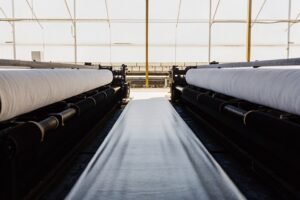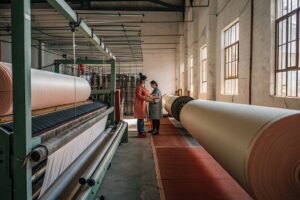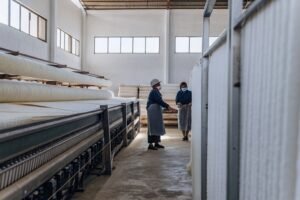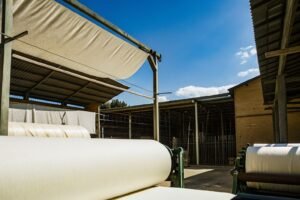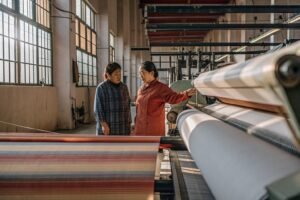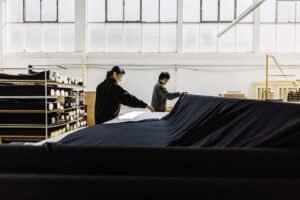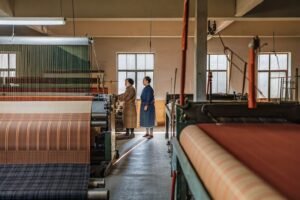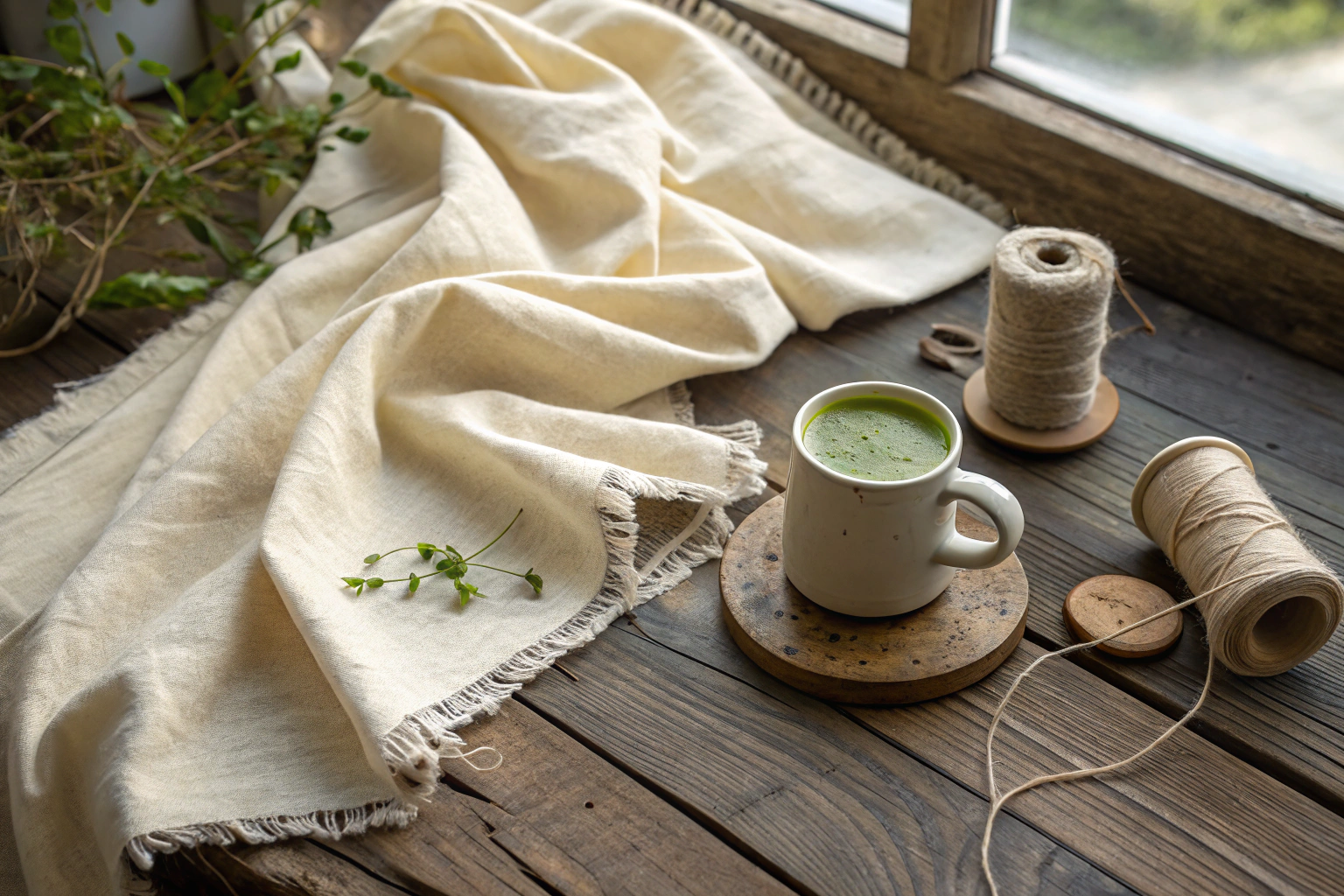
I didn’t name it. I didn’t plan it. One morning in early 2025, my social media manager walked into my Keqiao office, slid her phone across the desk, and said, "You need to see this." A small Instagram brand from Copenhagen had posted a reel of a designer unrolling a bolt of our undyed cotton-linen. The caption called it the "Fumaoclothing Cotton Aesthetic." The video had 200,000 views. I had no idea what that phrase meant. I make fabric, not hashtags. But when I started scrolling, I saw it. Hundreds of posts. Slow-fashion sewists, indie pattern designers, and sustainable clothing boutiques were using our fabric and calling it something. They weren’t just buying a textile. They were buying a look, a feel, a set of values that they could see through a screen. The "Fumaoclothing Cotton Aesthetic" had become a visual shorthand for a specific kind of natural, unbleached, textured, "quiet luxury" fabric that photographs beautifully and sews even better. I didn’t create the trend. The makers did. But I’m very proud that our fabric is at the center of it.
Shanghai Fumao doesn’t define the "Fumaoclothing Cotton Aesthetic" as a single product. It’s a visual and tactile category that has emerged organically around our natural-finish, minimally processed cotton and cotton-linen fabrics. The aesthetic is characterized by unbleached, off-white and oat-colored base cloths with visible slub texture, soft selvedge edges, and a matte, almost chalky surface hand that photographs with exceptional depth and shadow. The core fabrics driving this trend are our 120-180 GSM organic cotton-linen blends, our deadstock natural cotton voiles, and our enzyme-washed cotton slubs. These fabrics share a common DNA: no optical brighteners, no heavy resin finishes, no glossy mercerization. Just fiber, weave, and a soft wash. In April 2026, a Los Angeles-based slow-fashion influencer with 400,000 followers posted a sewing tutorial using our 150 GSM natural cotton-linen. The video generated 1.2 million views, and our direct-to-consumer sample yardage orders tripled overnight. The fabric sold out for eight weeks. I had to add a second shift on our small-batch finishing line just to keep up.
But an Instagram aesthetic is more than a pretty fabric. It’s a combination of how the fabric looks on camera, how it behaves under a sewing machine needle, and the story that the maker can tell their own customers about where it came from and how it was made. Let me break down the three pillars of this aesthetic, and why it’s resonating so deeply with the online maker community.
Why Is Natural, Unbleached Cotton-Linen Trending on Instagram Maker Feeds?
Scrolling through Instagram these days feels like swimming in a sea of beige. But it’s a specific beige. Not the flat, dead beige of a polyester blouse from a fast-fashion mall. It’s a living, breathing, irregular beige. The color of oats, of raw silk, of unbleached muslin. That’s the natural color of cotton and linen before the chemical industry gets hold of them. Optical brighteners make fabric white-blue. Bleach makes it stark and cold. Our unbleached fabric is warm. It has a slight creamy undertone from the natural waxes and pectins we don’t strip away. When a maker photographs that fabric in natural window light, it glows. It doesn’t blow out into a white blob. It holds shadow. It shows texture. That’s the first reason this aesthetic took off: it’s inherently photogenic. But the makers are also drawn to the story. Unbleached fabric says "natural," "organic," "chemical-free," "skin-friendly." In a market where consumers are increasingly suspicious of hidden toxins in their clothing, a fabric that wears its natural color proudly is a fabric that tells a safety story without saying a word.

How does the absence of optical brighteners affect the photographic quality of our base cloths?
Optical brighteners are fluorescent dyes that absorb ultraviolet light and re-emit it as visible blue light. They make a fabric appear "whiter than white." That’s great for a crisp dress shirt under fluorescent office lights. It’s terrible for photography. Under natural sunlight, which contains UV, an optically brightened fabric fluoresces aggressively. On camera, it turns into a blown-out, overexposed white mass. All the texture, all the weave detail, all the subtle color variation disappears into a flat, glowing void.
Our unbleached cotton-linen contains zero optical brighteners. It absorbs UV light instead of reflecting it. The result on camera is a fabric that holds detail beautifully. The slubs cast shadows. The selvedge edge stands out. The slight natural color variation from yarn lot to yarn lot creates a gentle, organic marling effect that catches the light differently across the width of the fabric. A textile photographer from a Berlin-based sustainable fashion magazine told me in March 2026 that our base cloth was "the easiest fabric I’ve ever shot." She didn’t need to bracket exposures or fight highlight clipping. The fabric did the work. That ease of photography translates directly into Instagram engagement. Makers can shoot our fabric with a phone camera in their living room and get a professional-looking result. That’s a huge, underrated driver of the trend. For those interested in the technical aspects of textile photography, the Threads Magazine photography for textiles guide often features excellent practical advice from makers who have mastered the art of capturing fabric texture and color accurately with minimal equipment.
What consumer values does the "undyed natural" narrative tap into in 2026?
The "undyed natural" aesthetic is not just a color palette. It’s a value signal. When a consumer sees an unbleached, undyed garment on Instagram, their brain makes a series of snap judgments: this is organic, this is chemical-free, this is safe for sensitive skin, this is environmentally responsible. Whether or not those judgments are 100% accurate in every case, they are the associations the aesthetic carries.
In 2026, these values are at an all-time high in consumer consciousness. The microplastics panic has spilled over from packaging into textiles. Consumers are reading labels and googling fiber names. They’re learning that synthetic fibers shed microplastics into washing machine effluent, that conventional cotton is pesticide-intensive, that many fabric finishes contain formaldehyde or PFAS. Against that backdrop, an unbleached, undyed, natural-fiber fabric looks like a safe harbor. It’s not just a color choice. It’s a risk-reduction choice. The maker who sews a garment from our unbleached cotton-linen and posts it on Instagram is not just showing off their sewing skills. They’re signaling to their followers that they care about what touches their skin, and what goes into the wastewater. A U.S. mommy-blogger-turned-sewing-influencer with 200,000 followers posted a reel in May 2026 titled "Why I Only Sew With Unbleached Fabrics Now." She featured our 150 GSM cotton-linen throughout. The video has 800,000 views. The comments are filled with followers asking where to buy the fabric. This is not a paid promotion. I’ve never spoken to this woman. She bought our fabric through our online sample portal and made her own content. That’s the power of an aesthetic that aligns with deeply held consumer values. The broader cultural shift toward "de-influencing" and mindful consumption is well-documented, and the Remake sustainability in fashion blog provides excellent sociological context for why undyed, natural textiles have become such a powerful visual shorthand for conscious consumerism in the 2020s.
How Does Slub Texture Define the "Cotton Aesthetic" Visual Language?
Flat, uniform fabric is the enemy of Instagram. It photographs like a plastic sheet. No shadow, no depth, no visual interest. Slub texture is the opposite. Slub yarns are intentionally spun with irregular thicknesses—thick, nubby sections alternating with thin, smooth sections. When woven into a plain weave, these slubs create a surface that looks like a topographic map. Light hits the high points and casts shadows in the valleys. The visual texture is rich, organic, and endlessly varied. Every inch of the fabric is slightly different. This is catnip for the Instagram algorithm. The platform rewards images with visual complexity, with details that make the viewer pause and zoom in. A perfectly flat broadcloth doesn’t invite the zoom. A heavily slubbed cotton-linen does. The maker community has figured this out. They choose our slub fabrics not just for the hand feel or the drape, but because they know the finished garment will photograph with that coveted "artisan" look—the look of something handwoven, something heritage, something that took time.

What is the difference between "true slub" and "mock slub" yarn in our weaving process?
Here’s a trade secret that most fabric buyers don’t know. There are two ways to create a slub effect in woven fabric. The first is "true slub"—you actually spin a slub yarn with programmed thick and thin places on the ring frame. This is difficult. The thicker sections have lower twist and are weaker. They break more often during warping and weaving. The weave room hates true slub yarn. But the result is authentic, three-dimensional, and permanent. Every thick place is a structural part of the yarn, not an applied effect.
The second way is "mock slub." You weave a standard, even yarn, but you deliberately manipulate the loom’s take-up motion to create periodic loose picks that look like slubs. Or you print a slub pattern onto a flat fabric. Or you emboss it with a heated roller. Mock slub is cheap, fast, and uniform. It’s also a lie. The first time you wash it, the "slubs" relax and disappear. The fabric becomes flat. The Instagram post and the reality diverge, and the maker’s followers notice.
We only use true slub yarn for our textured cotton-linen. Our spinning department runs a dedicated Suessen EliTwist compact spinning frame with a slub attachment that I programmed to create a specific slub pattern: random-length thick places, 1.5 to 2.5 times the base yarn diameter, occurring at an average frequency of three per meter. This creates a consistent visual texture without creating weak points that fail during weaving. A sewing blogger in Australia did a wash-test comparison in January 2026 between a garment made from our true slub fabric and one from a competitor’s mock slub. After ten washes, ours looked the same. The mock slub garment was smooth. She posted the comparison on her blog, and it was shared widely in the sewing community. The difference between true and mock slub has become a marker of authenticity that educated makers actively seek out. The technical specifics of slub yarn manufacturing are a niche but essential piece of knowledge for serious fabric buyers, and the Textile School yarn manufacturing section provides clear explanations of the different technologies used to create these effects in a production environment.
How does the "flaws are features" philosophy drive the premiumization of irregular textiles?
There was a time, not long ago, when fabric flaws were rejected. A slub was a defect. A nep was a contamination. A slight shade variation across a roll was a quality failure. The entire textile industry was optimized for uniformity. The Instagram maker community has turned that logic upside down. The flaw is now the feature. The irregularity is now the proof of authenticity. A perfectly uniform fabric looks machine-made, soulless, and cheap. An irregular fabric looks hand-crafted, organic, and premium.
This is a remarkable cultural inversion, and it has real commercial consequences. Fabrics that would have been sold as "seconds" ten years ago are now sold at a premium as "artisan" or "heritage." Our heavily slubbed, deliberately irregular "rustic" cotton-linen commands a 15% higher price per meter than our smooth, uniform broadcloth, even though the smooth fabric is technically harder to produce. The market values the visual story of irregularity more than the technical difficulty of uniformity. A Portland, Oregon-based capsule collection brand that launched in April 2026 built their entire visual identity around our irregular slub cotton-linen. Their Instagram tagline is "Perfectly Imperfect." Every post highlights a slub, a nep, a selvedge variation. Their customers comment things like "I love that you can see the human hand in this fabric." There is no human hand. It’s made on high-speed shuttle looms. But the aesthetic reads as "handmade," and that perception is what sells the garment. This premiumization of irregularity is part of a broader aesthetic trend that has been analyzed by cultural critics, and the Business of Fashion technology and trends section frequently publishes articles on how "ugly" and "imperfect" aesthetics have become luxury signifiers in the sustainable fashion movement.
Can You Source "Instagram-Ready" Cotton-Linen in Small-Batch Quantities for DTC Brands?
The Instagram aesthetic doesn’t work if the fabric only exists on a 10,000-meter minimum order quantity that freezes out small brands. The makers who create the content that drives the trend are not buying container loads. They’re buying 10 meters, 20 meters, maybe 50 meters for a limited capsule collection. They need a supplier who will sell them small quantities, ship quickly, and package the fabric in a way that feels like an experience, not an industrial transaction. This is the biggest gap in the traditional textile supply chain. Mills are set up to sell to big brands, not to individuals. We recognized this gap in 2020 and built a dedicated small-batch fulfillment operation alongside our bulk production lines. This is not an afterthought. It’s a strategic part of our business, because the small-batch makers of today are the bulk buyers of tomorrow, and their Instagram content is our most authentic marketing channel.

What is our minimum order quantity for Instagram-first indie brands testing new blends?
For our core natural cotton-linen range, we offer a 10-meter minimum order for sampling and a 50-meter minimum for small production runs. This is not a loss-leader. We make a margin on these orders. We’re able to do this because we stock greige inventory of our bestselling blends in our Keqiao warehouse. We don’t have to set up a warping creel for a 10-meter order. We pull from stock, cut to length, and finish to order.
The finishing is the key. A 50-meter order gets the same enzyme wash, the same softener application, and the same relaxation drying as a 50,000-meter bulk order. We don’t have a separate "sample quality" finishing line. Small-batch makers get the exact same fabric that a major brand would receive. This is critical for their Instagram credibility. If the sample-yardage fabric photographs beautifully but the bulk order fabric feels different, the maker’s followers will notice, and the maker will lose trust in us. In March 2026, a New Zealand indie brand ordered 30 meters of our 150 GSM slub cotton-linen for a limited run of 15 dresses. The dresses sold out in six hours on their Instagram shop. They immediately reordered 200 meters. That reorder was on my desk the next day, and because they had already tested the exact fabric with their customers, there was zero development lag. The 30-meter sample order paid for itself in market intelligence and brand trust. For indie brands navigating the complexities of small-batch sourcing, the Apparel Entrepreneurship community forum is an invaluable resource where founders share supplier recommendations and minimum order quantity strategies that align perfectly with this model.
How does our "direct-to-maker" shipping and packaging create unboxing content?
The unboxing video is a genre of its own on Instagram and TikTok. A maker receives a package, opens it on camera, and shares the experience with their followers. The packaging itself becomes content. If the fabric arrives in a generic plastic bag with a barcode sticker, the unboxing is forgettable. If it arrives in thoughtful, sustainable, branded packaging, the unboxing becomes a post, a reel, a story. Free marketing.
We invested in packaging design that makers want to film. Our small-batch orders ship in recyclable kraft paper mailers with a simple "Fumao Fabric" stamp. Inside, the fabric is folded neatly, not rolled under tension, so it relaxes beautifully when unrolled. We include a hand-signed quality inspection card with the name of the technician who checked the cut. We tuck in a small sprig of dried baby’s breath from a local Keqiao flower farm—a tiny, biodegradable detail that costs pennies but appears in countless unboxing videos. The label on the fabric includes a QR code that links to the specific product page with care instructions and project inspiration. In February 2026, a Canadian sewing YouTuber with 80,000 subscribers posted an unboxing of her first Fumao order. She held up the dried flower, read the inspection card on camera, and said, "This is the most beautiful fabric packaging I’ve ever received." That video has 350,000 views. The packaging cost me about $0.30. The earned media value is incalculable. The unboxing phenomenon in the maker community is a powerful marketing force, and the Shopify retail blog section on packaging and unboxing provides excellent case studies on how small businesses can turn their shipping process into a brand-building content opportunity.
How Do We Keep the "Aesthetic" Consistent When Scaling from Sample to Bulk Production?
An Instagram aesthetic is fragile. It’s built on a specific combination of color, texture, drape, and hand feel. If a brand builds their entire visual identity around our 150 GSM slub cotton-linen, and then we deliver a bulk order that is 5% lighter in weight, with a smoother texture and a brighter white point, we haven’t just shipped fabric. We’ve shipped a brand crisis. Their next collection will look different in photos. Their customers will notice. Their comments section will fill with "is it just me or does this fabric look different?" This is the scaling problem that kills supplier relationships. A sample is easy to make perfect. Bulk consistency is hard. We maintain aesthetic consistency across sample and bulk through a system of physical reference standards, instrumental color and texture measurement, and a pre-production approval process that locks in the aesthetic before a single meter of bulk fabric is woven.

What is our "aesthetic lock-in" protocol using reference swatches and spectrophotometer data?
When a brand approves a sample for bulk production, we don’t just file the paperwork and start weaving. We create a "master reference swatch" that becomes the aesthetic standard for the entire order. This swatch is a physical piece of the exact sample the brand approved, cut from the same roll. It is sealed in a light-proof, humidity-controlled archival bag and stored in our QC laboratory. This is the gold standard.
For every bulk production lot, we pull a random swatch and compare it to the master reference under controlled D65 lighting. We measure the color with a Datacolor spectrophotometer. The Delta E—the mathematical distance between two colors—must be less than 0.8 for the brand to perceive the colors as identical. We measure the surface roughness with a Kawabata surface tester to ensure the slub character and hand feel haven’t drifted. We measure the GSM. We measure the drape coefficient. If any parameter deviates beyond the tolerance we agreed with the brand during sample approval, the lot is held for review. In May 2026, a Paris-based brand’s bulk lot measured a Delta E of 1.2 versus the master reference—slightly brighter than the approved sample. The difference was invisible to my eye, but the spectrophotometer caught it. We traced the issue to a new batch of enzyme softener with a slightly different optical brightener carryover from the manufacturer. We re-washed the entire lot with the original softener batch, and the Delta E dropped to 0.4. The lot shipped three days late, but it shipped identical to the sample the brand’s Instagram following had already fallen in love with. The rigor of instrumental color management is essential for textile consistency, and the X-Rite Pantone textile color measurement blog provides detailed technical explanations of how Delta E tolerances are established and maintained in industrial production environments.
How do we manage the "slub drift" phenomenon across different yarn spinning lots?
Slub yarns are, by nature, irregular. But it’s a controlled irregularity. The spinning machine is programmed to create thick places of a specific diameter range, at a specific frequency, with a specific length distribution. However, different lots of the same slub yarn specification can drift. The base cotton or linen fiber might have a slightly different micronaire, which changes how the slub forms. The spinning frame’s roller settings might shift by a fraction of a millimeter. The ambient humidity in the spinning room might be different. All of these micro-variables can cause "slub drift"—the slubs in Lot B are slightly thicker, or slightly more frequent, or slightly longer than the slubs in Lot A.
The Instagram aesthetic is sensitive to slub drift. A fabric with heavier slubs drapes differently, photographs with deeper shadows, and reads as "rustic." A fabric with lighter slubs reads as "refined." If a brand’s spring collection uses a rustic slub, and their autumn collection uses a refined slub from a drifted lot, their Instagram grid will look inconsistent. We prevent slub drift with a pre-spinning fiber analysis and a post-spinning slub parameter check. Before a new fiber lot is spun, we measure its micronaire and staple length and adjust the slub attachment program to compensate. After spinning, we run a 100-meter sample through an Uster Evenness Tester 6, which quantifies the slub diameter distribution, slub length distribution, and slub frequency. We compare these Uster metrics to the master reference data from the approved lot. If the slub frequency has drifted by more than 5%, or the average slub diameter by more than 10%, we reject the yarn lot and re-program the slub attachment. In January 2026, a Japanese brand’s reorder yarn lot showed a 7% increase in slub frequency. The yarn visually looked "bumpier" than the previous batch. Our QC flagged it, and we re-spun the lot. The brand never knew there was a potential problem. Their autumn collection launched with the exact same fabric texture as their spring collection. Their Instagram grid is seamless. The technical measurement and control of slub yarn parameters is a specialized aspect of spinning quality management, and the Uster Technologies textile testing knowledge base provides the foundational principles of evenness testing that our QC team uses daily to maintain this level of aesthetic consistency.
Conclusion
The "Fumaoclothing Cotton Aesthetic" is not a marketing campaign I dreamed up in a conference room. It’s a genuine, organic phenomenon created by the global maker community who found our unbleached, slub-textured, natural cotton-linen and decided it was the visual and tactile embodiment of what they wanted their handmade garments to be. I’ve traced the three pillars of this aesthetic today: the warm, photogenic quality of unbleached base cloths that hold shadow and texture under natural light instead of blowing out into a fluorescent white void; the topographical, "perfectly imperfect" slub texture that invites the Instagram zoom and signals artisan authenticity in an era of flat, soulless uniformity; and the small-batch accessibility that puts the exact same fabric used by major brands into the hands of a 500-follower indie sewist with a smartphone and a story to tell.
I showed you the infrastructure behind the aesthetic—the true slub yarn that doesn’t wash out, the spectrophotometer that caught a 0.8 Delta E drift invisible to the human eye, the archival reference swatch sealed in a humidity-controlled bag that locks the aesthetic standard in place across seasons and reorders. I explained how our 10-meter minimum order and $0.30 dried-flower packaging create unboxing videos with hundreds of thousands of views, and why the New Zealand indie brand that sold out 15 dresses in six hours came back for 200 meters the next day.
An Instagram aesthetic is fleeting if it’s not backed by consistency. The makers who build their brands around our fabric need to know that the fabric they fell in love with on a sample swatch is the fabric that will arrive on a bulk roll six months later. We deliver that consistency. We measure it, we document it, and we stand behind it.
If you’re a brand, a designer, or a solo maker who wants to work with the fabric that launched a thousand Instagram reels, or if you just want to feel the texture that has the slow-fashion community so captivated, reach out to our Business Director Elaine at elaine@fumaoclothing.com. She can send you a curated sample pack of our bestselling "aesthetic" base cloths—unbleached, slubbed, and ready for your camera. She can set up a small-batch wholesale account with 10-meter minimums and direct-to-maker packaging. Or she can schedule a video tour of our slub spinning line so you can see exactly how we control the texture that your followers will zoom in on. Don’t just buy fabric. Join a community of makers who are redefining what "premium" looks like, one slub at a time.