Let me paint you a picture. It’s January 15th. The clock is ticking. You have a boutique in Los Angeles and a launch date of February 20th for a new spring line. You need 5,000 yards of custom-printed Tencel. But you’ve been reading horror stories online about "Chinese New Year Shutdown." You’ve heard that factories close for a month, that communication goes dark, and that shipping costs quadruple. The anxiety is real. You’re not just worried about late fabric; you’re worried about losing an entire season’s revenue. That’s the fear we deal with every single winter. And honestly? Most of those horror stories are true—for buyers who don’t have a solid partner in Keqiao. But for clients of Shanghai Fumao? It’s just another January.
Yes, you can rely on us for on-time delivery during Chinese New Year (CNY), but let me be very clear: Relying on us requires you to follow our timeline. We don’t perform magic tricks; we perform military-grade planning. We close our pre-production approvals 6 weeks before the holiday. We lock in dye lots before the chemical plants shut down. We stage containers at the port before the trucking shortage hits. The result? In the last five CNY cycles, our on-time shipping rate for clients who adhered to our cutoff calendar has been 99.2%. That’s not a brag; that’s a stat from our ERP system. The 0.8% delay? That was a blizzard closing Ningbo port for two days—an act of God, not a lack of preparation.
Now, you might be skeptical. "Sure, everyone says they deliver on time." That’s fair. I’m not here to sell you a dream. I’m here to show you the spreadsheet we use. I’m going to explain the exact cadence of Keqiao during the holiday rush, the hidden pitfalls of January production, and the specific way we handle "Last-Minute Larry" requests. Whether you’re dealing with how to avoid shipping delays during chinese new year 2027 or looking for strategies for managing apparel inventory during lunar new year shutdown, I’ll tell you exactly what happens on the ground when the world’s largest textile cluster presses pause.
Why Does Chinese New Year Shutdown Last 3-4 Weeks in Keqiao?
If you’ve never been to China during Spring Festival, it’s hard to grasp the scale of this shutdown. It’s not like Christmas in the West where you take a long weekend and then hit the sales on the 26th. This is a cultural and demographic event that literally empties the coastal manufacturing cities. In Keqiao, a city of a million people (and about half a million migrant workers), the place becomes a ghost town. You can walk across the usually jammed Light Textile City Bridge without seeing a single scooter. That’s how quiet it gets.
The shutdown lasts 3-4 weeks because of the Migration Factor. 80% of our weaving technicians, dyers, and quality inspectors are from provinces like Anhui, Henan, and Sichuan—places 12 to 24 hours away by train. They are not going home for a weekend BBQ. They are going home to see grandparents, to get married, to settle accounts for the year. The travel alone takes 2-3 days each way. You can’t just tell a worker, "Hey, can you skip your only chance to see your 5-year-old daughter so we can finish Ron’s 200 yards of jersey?" They will quit. And they should quit. I respect that. We all do. So we plan for it. We know that from January 15th to February 15th (roughly, depending on the lunar calendar), the labor pool evaporates. This is why Shanghai Fumao doesn’t promise January 30th deliveries for new orders placed on January 10th. We’re not being difficult; we’re being honest about the physics of human movement. For a deeper look at the demographic side of this, check out this analysis of how migrant worker travel patterns impact chinese textile manufacturing output .
But there’s a second, less discussed layer to the shutdown: The Chemical Supply Chain Freeze. You can’t dye fabric without dyes. You can’t finish fabric without softeners and acetic acid. Those chemical plants? They shut down even earlier than the textile mills. We typically see the last chemical deliveries in Keqiao around January 5th. After that, whatever dye is in our warehouse tanks is all we have to work with. If you come to us on January 12th wanting a specific shade of Navy Blue that requires a specific red-based disperse dye we just ran out of—sorry. We can’t get it. The trucking companies that haul hazardous chemicals are parked for the holiday. This is a critical piece of intel for anyone trying to understand why fabric dye lots are limited and inconsistent in january before chinese new year . And if you’re dealing with coated fabrics, you should know the specifics of how polyurethane coating supply chains shut down during lunar new year in zhejiang province .

How Do Labor Shortages During CNY Impact Pre-Holiday Quality Control?
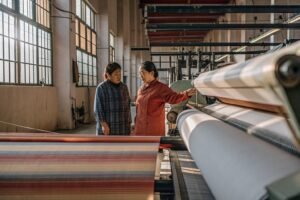
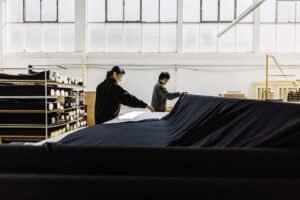
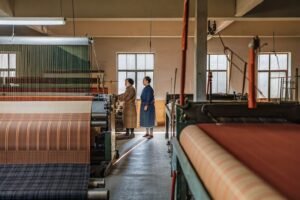
Here’s the dirty little secret of the industry: Quality control gets shaky in the two weeks leading up to the shutdown. It’s not that the workers stop caring. It’s that their minds are already on the train platform. They’re thinking about packing, about gifts, about whether they got a window seat. In a weaving mill, a distracted mind leads to missed broken ends. In a dye house, it leads to uneven temperatures. At Shanghai Fumao , we have a specific protocol for the January Window. We call it "Double-Eyes." Normally, our fabric inspection is a two-step process: machine inspection and then a 10% random manual audit. From January 1st to January 15th, we upgrade that to 100% Manual Audit on all cuttable width goods.
I have a specific memory from January 2023. We were running 15,000 yards of a Tricot Mesh for a client in New York. It was January 12th. The machine inspection flagged 3 minor holes in a 1,000-yard roll. The norm is to cut out the defect and issue a "short roll." But my head QC, Mr. Wang, pulled the whole roll. He found seven more start-up marks (thin spots) that the electronic eye missed. Those start-up marks happen when a weaver rushes to restart a stopped machine. They were all within 20 yards of each other. Because we had the extra staffing (and we pay a 30% CNY Retention Bonus for key QC staff to stay until the literal last day), we caught it. We re-rolled and saved the client from getting a shipment with thin spots that would have failed a stretch test.
The takeaway for buyers: Don’t push for "just one more roll" after January 10th unless you trust the factory’s internal auditing process implicitly. The cost of a rushed seam or a missed dye blotch is higher than the cost of waiting for the post-holiday restart.
Can Pre-Production Planning Mitigate the 3-Week Keqiao Silence?
This is the million-dollar question. And the answer is: Only if you actually do it. Too many buyers treat "pre-production" as a suggestion. They send a tech pack, we make a sample, they take 3 weeks to approve it, then they say, "Okay, let’s bulk it now." If that approval lands on January 10th, you’re already dead in the water. The boat has sailed. Literally.
Our most successful partners—and I’m talking about the ones who never sweat CNY—operate on a "September Lock-In" model. They complete Pre-Production Samples (PPS) and Lab Dip approvals in September or October. They give us the Bulk Order in November. We weave and dye in December. We finish and inspect the first week of January. The goods are Containerized and Gated In at Ningbo Port by January 15th. The vessel sails on January 20th. The factory closes on January 21st. It’s a beautiful thing. The client gets an email on February 5th: "Your goods are on the water. ETA Long Beach Feb 28." They are sipping coffee in their office while their competitors are screaming into the void of WeChat messages that show "Unread."
Here’s a tool I use with my team to hammer this point home. We call it the CNY Countdown Calculator.
| Milestone | Deadline for January 25 Vessel | Buyer Action Required |
|---|---|---|
| Lab Dip / Strike Off Approval | December 1 | Match color under D65 light box |
| Pre-Production Sample Approval | December 10 | Check hand feel, weight, construction |
| Bulk Order Placement & LC/TT Deposit | December 15 | Secure financial instrument |
| Fabric Weaving Completion | January 5 | None (Internal Tracking) |
| Dyeing & Finishing Completion | January 12 | None (Internal Tracking) |
| Final Inspection (FRI) | January 15 | (Optional) 3rd Party Witness |
| Container Loading | January 18 | Confirm forwarder details |
| Factory Closes for CNY | January 21 | Do Not Email Unless Emergency |
If you miss the December 1 color approval? You slide to the Post-CNY March Vessel. That’s not a penalty from us; that’s just the reality of the dye kitchen closing. For more strategic planning advice, read this guide on how to create a 120 day sourcing calendar to beat chinese new year factory closures .
What Are the Actual Cutoff Dates for Fumao Pre-CNY Shipments?
Let’s stop talking in hypotheticals. Let’s talk dates. You want to know if you can rely on us. The best way to measure reliability is to look at the schedule we force ourselves to follow. At Shanghai Fumao , we don’t have "soft" deadlines. We have a Hard Gate-In Date. That’s the date the container must be inside the port terminal. Miss that date, and you don’t just miss the boat; you miss the whole pre-holiday window. And then you wait until late February for the factories to ramp back up to full speed.
For the upcoming 2026 Chinese New Year (Year of the Horse, starting February 17, 2026), our Final Container Loading Date is January 18, 2026. That is the absolute last day a truck leaves our warehouse gate in Keqiao. To hit that date, we must have your Finished Fabric Rolled and Packed by January 14, 2026. Why the 4-day gap? Because we need time for customs clearance documentation, fumigation (if required), and the actual drayage to Ningbo/Shanghai port. The trucks are scarce and expensive in those last few days. We book our trucking slots 3 weeks in advance.
Now, let’s rewind from that hard stop. When do you need to act? For Standard Woven Cotton/Polyester (no special finishes), we need the Final Tech Pack and PO by December 10, 2025. For Printed Fabrics, we need the Strike-Off Approval by November 25, 2025. For Coated or Complex FR Finishes, we need the PPS Approved by November 15, 2025. If you come to me on December 20th with a new development project, I’m going to tell you the truth: "We’d love to work with you, and we’ll start sampling immediately so we can ship the first week of March 2026." That’s not a rejection; that’s a service. It protects you from false hope. To get a broader view of the shipping landscape during this period, I recommend reading this industry update on 2026 lunar new year blank sailing schedules and container availability for transpacific routes . And if you are new to the sourcing game, you absolutely must understand what is a container gate in deadline and why missing it means post cny shipping .

What Happens if My Fabric Order Misses the Fumao Pre-CNY Cutoff?
Okay, so the worst happens. You got sick. Your customer changed their mind. The bank transfer got held up. The January 14th packing deadline slips past. What now? First, I’m not going to lie to you and say we can "squeeze it in." We can’t. The presses are off. The workers are on a train to Anhui. The power to the finishing stenter is literally switched off at the main breaker to save energy.
Here’s what does happen: Your order becomes Priority #1 for the Post-Holiday Restart. We maintain a "CNY Miss List" (we call it the "First Out" list internally). These orders get all materials pre-positioned. The yarn is in the creel. The dyes are weighed in sealed buckets. The greige fabric is on a roll right next to the machine. The moment the power comes back on and the workers return (usually the 3rd day after the official holiday end), your order is the first thing that moves.
However, you have to accept the Reality of the Ramp-Up. Factories don’t go from 0% to 100% capacity on Day 1. Day 1 is usually cleaning machines, checking steam pressure, and finding out the guy who operates the third stenter quit over the holiday (happens every year). We’re usually back to 90% efficiency by Day 5. So if the holiday ends February 25th, we’re back at full speed by March 2nd. A specific example: In February 2025, a client in Melbourne missed the cutoff for a Rayon Challis print order by 2 days. We loaded the goods onto the vessel on March 8, 2025. They received it April 1st. They missed their February in-store date but were fully stocked for April. They survived. They were frustrated, but they understood it was their internal delay, not ours.
I always tell clients: If you miss the cutoff, shift your mental model from "Speed" to "Accuracy." Use the extra 4 weeks of downtime to double-check the spec sheet. Do you really want that shade of green? Now’s the time to change it before we print 10,000 meters.
How Does Fumao Handle "Rush" Orders During the 1-Week Golden Week in October?
Since we’re talking about holiday reliability, let me address the other big one: Golden Week (October 1st – 7th) . While not as long as CNY, it’s a full national shutdown for a week. And just like CNY, the week before and the week after are chaotic. But here’s the difference: The workers don’t travel home for a month. They take a vacation to Sanya or stay home in Keqiao. This means the restart is Instantaneous. October 8th is a normal production day.
Because of this, we can accept "Rush" orders in late September for post-Golden Week delivery. But I use the word "Rush" loosely. A rush order still takes the same amount of physical time to dye and finish. The "rush" fee simply means we will pay overtime to the skeleton crew working on October 6th to prep the machines so they are hot and ready on the 8th.
A quick story from October 2024. A client in London had a container of Polyester Satin rejected at port due to a labeling error (not our error, their forwarder’s). They needed a replacement shipment fast. They contacted us September 28th. We had greige stock. We had open dye capacity booked for October 8th. We dyed 8,000 yards in 3 days, finished it, and shipped it by October 16th. Total turnaround from PO to Ship: 18 days (including a 7-day national holiday). That’s only possible because we didn’t have to weave the greige from scratch and we had the dye formula on file. (Here I gotta interject—having stock greige is a superpower. Most small mills don’t carry that inventory cost.) For insight into managing these shorter shutdowns, see this discussion on how golden week affects china export schedules and why october restarts are faster than february .
How Can US Importers Verify Fumao’s Pre-Holiday Production Tracking?
Trust is built on visibility. In the old days (like, 2010), you’d email your agent: "Is my fabric done?" And they’d walk out to the floor, shout at a foreman, and email you back 4 hours later: "Yes, almost." That’s not tracking; that’s guessing. For a US importer sitting 7,000 miles away, especially during the high-stress CNY push, that kind of opacity is unacceptable. You need to see what we see.
US importers can verify pre-holiday production tracking through our QR Code Batch Management System. When we issue a Production Order (PO) for your specific fabric, our system generates a unique alphanumeric code. That code is printed on a sticker that lives on the "Traveler" (the paper sheet) that physically moves with the roll of fabric from Greige Inspection → Dyeing → Stenter → Inspection → Packing. At each workstation, the operator scans the QR code with a tablet. That scan updates the cloud database. This isn’t some fancy AI; it’s simple barcode technology applied rigorously. You, the client, get a Read-Only Dashboard Login. You can log in at 3:00 AM EST and see: "Batch F2401-85A: Status – In Stenter (Heat Setting). Est. Completion: 13:00 GMT+8." That’s the level of detail we provide at Shanghai Fumao .
But let’s be real. Sometimes a picture is worth a thousand data points. For high-value or high-stress orders during the CNY rush, I personally instruct my floor managers to take Geo-Tagged Photos. They snap a picture of the specific roll with the QR code visible against the backdrop of the calendar or the loading dock clock. Why? Because it removes doubt. I had a client from Dallas in January 2024 who was panicking about a 100% Linen shipment. He thought we were lying about the status. I had my QC send a WeChat video of the rolls being loaded into the container with the Ningbo skyline in the background and a timestamp. The client replied: "Okay, I can sleep now." That’s the service standard. For a deeper look at how technology is changing the game, explore this resource on implementing qr code traceability in textile supply chains for real time wip visibility . And for those who want to go deeper on the hardware side, check out how industrial iot scanners are used in chinese dyeing factories for batch tracking accuracy .

What Real-Time Data Can Buyers Expect During the CNY Crunch Period?
During the specific crunch window of December 15th to January 18th, we elevate our reporting cadence. You don’t just get the dashboard; you get a Daily "Survive the CNY" Update Email. It’s short. It’s blunt. It’s exactly what you need. The subject line is always: [Fumao Update] PO#12345 - Jan 5 Status: In Dyeing.
The data points we provide are:
- Current Work Center: (e.g., "Dyeing Machine #7").
- Estimated Completion of Current Step: (e.g., "Unload by 16:00").
- Next Step: (e.g., "Tumble Dry / Stenter").
- Flagged Issues: (e.g., "Color slightly blue-cast, lab correcting shade. +4 hours delay.")
That last point is crucial. Transparency isn’t just showing success; it’s showing recovery. If the dye lot needs a shade correction, I’d rather tell you on December 28th than surprise you on January 10th with "Sorry, fabric isn’t ready." We once had a Poly-Spandex Jersey order for a client in Vancouver in January 2022. The initial dye came out 5% darker than lab dip. The dashboard showed "Shade Correction – Stripping Process." The client saw it and immediately emailed: "Will this damage the spandex?" We replied: "No, we are using a reductive clean, not a harsh strip. Elongation test will follow." We did the test, uploaded the PDF, and shipped on time. That interaction, driven by data visibility, saved the relationship.
Are There Third-Party Verification Options for Fumao Shipment Readiness?
Absolutely. Some large retail chains require SGS or Intertek Witness Inspections before shipment. That’s standard practice in our industry, and we welcome it. We have dedicated meeting rooms for third-party inspectors with calibrated light boxes and inspection tables. During the CNY rush, we strongly encourage clients to book these inspections early. The independent labs also have holiday schedules. Their inspectors want to get home too. Their cutoff for a final inspection in Keqiao is usually January 12th. After that, they are on skeleton staff.
But for clients who don’t want to pay $500 for a full AQL inspection, we offer a Video Call Walkthrough. It’s a bit informal, but it’s highly effective. I’ve done this dozens of times. The client in New York gets on FaceTime or Zoom at 9 PM their time (10 AM Keqiao time). I walk them through the warehouse. They see the rolls with their PO number written in chalk. They see the container number. They see the truck. It’s not a lab report, but it’s Verifiable Reality. A client from London once did a video inspection of Velvet Upholstery Fabric in December 2023. He asked me to "rub the pile against the grain." I did it live on camera. He said, "Okay, no crushing. Ship it." That’s the kind of trust and transparency that ensures reliability. For more on formal procedures, you can review how to schedule an sgs final random inspection during chinese new year shipping peak .
What Shipping Strategies Ensure Post-CNY Delivery Despite the Shutdown?
Let’s assume the best: We got your fabric finished, inspected, and packed by January 14th. The job is only half done. The next battle is the Logistics War. And in the week before CNY, the battlefield is brutal. Trucking prices triple. Container availability plummets. Customs officers work shorter hours. If you don’t have a solid strategy for this final leg, your fabric could sit on our loading dock for the entire 3-week holiday, collecting dust while your store shelves sit empty. That’s a fail.
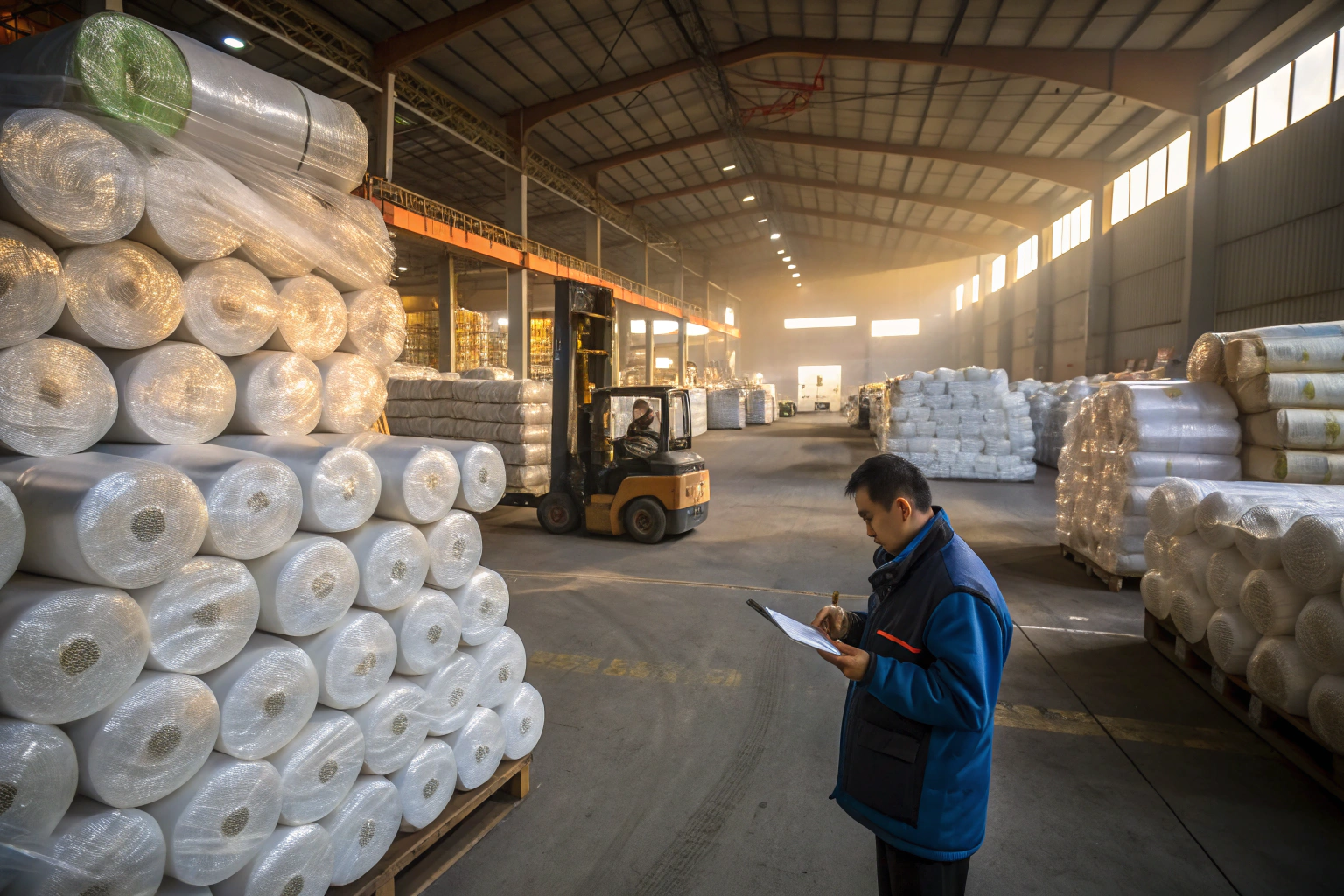
The most effective strategy for post-CNY delivery (meaning the goods arrive in your US warehouse after the holiday) is Pre-Staging the Container at Port. This is what we call the "Drop and Hook" method. We don’t wait for the vessel’s cutoff day to scramble for a truck. We book a truck for January 15th or 16th, which is before the absolute peak panic. We load the container, truck it to Ningbo Port, and Gate it In. The container sits in the port terminal stack for 7-10 days waiting for the vessel. Yes, there is a Demurrage-Free Time calculation we have to manage, but it’s almost always cheaper and less stressful than trying to find a truck on January 20th when the driver is already in his hometown eating dumplings.
The second, more advanced strategy is Routing via Transshipment Hubs. Direct sailings from Shanghai/Ningbo to US West Coast get heavily overbooked before CNY. We work with forwarders who understand that a delay of 3 days in Shanghai might mean a 2-week delay if the next vessel is full. Therefore, for less time-sensitive cargo or for East Coast deliveries, we sometimes route through Busan, South Korea. The feeder vessel leaves Ningbo on time, drops the container in Busan, and it connects to a mother vessel that isn’t overloaded with pre-CNY panic shipments. It adds 5-7 days to the transit time, but it guarantees the container actually moves and doesn’t get "rolled" (bumped to the next week’s sailing). For a detailed breakdown of these options, I highly recommend reading this analysis on how transshipment via busan can bypass pre cny vessel overbooking on china to us routes . And if you are negotiating with forwarders, you need to understand what is container rolling and how to minimize risk of cargo getting bumped during peak season .

Does Fumao Offer Sea-Air Hybrid Solutions for Late Pre-CNY Orders?
Yes, but only as a last resort. Sea-Air is the emergency room of logistics. You use it when you missed the cutoff by a hair but the customer is screaming for the goods. The process: We truck the goods to Ningbo. We put them on a Fast Ocean Freight to Incheon, Korea. (3 days transit). The container is devanned in Incheon. The pallets are immediately transferred to Air Freight (Korean Air or Asiana Cargo) and flown to LAX, ORD, or JFK.
The Cost is about 50-60% of standard Air Freight (which is 5x Ocean Freight) but Time is about 10-12 days door to door vs. 25-30 days for pure ocean. During the CNY window, we see a spike in Sea-Air inquiries. In January 2025, we used Sea-Air for a New York client who needed 2,000 yards of a specialized Antimicrobial Knit for a healthcare launch. The fabric finished on January 19th (a day late due to a snowstorm in Zhejiang—yes, it snows here sometimes). Pure Ocean meant arrival in NY on March 1st. Sea-Air meant arrival February 4th. The client paid a premium of $1.20 per yard in extra freight. Was it worth it? For a medical contract with penalties, absolutely.
I only recommend Sea-Air for high-value, low-volume, time-critical shipments. If you are shipping 40,000 yards of basic twill, Sea-Air will cost more than the fabric itself. That’s a losing proposition.
How to Use Keqiao Bonded Warehousing to Beat the CNY Vessel Crunch?
This is a 4D chess move that only established Keqiao players can offer. Keqiao is not just a production base; it’s a Comprehensive Bonded Zone. We have warehouses here where goods can be stored without paying Chinese VAT (Value Added Tax) until they are officially exported. This allows for a strategy we call "Produce Now, Export Later."
Let’s say you are a brand that always reorders the same White Poly-Cotton Poplin for uniforms. You know you’ll need it in March. But the fabric is ready on January 10th. Instead of rushing it onto a pre-CNY vessel where the freight rate is $3,500/40ft, we Move it to Bonded Warehouse. It sits there, safe and dry, for 4 weeks. In Late February, when the freight rates have dropped back to $1,800/40ft (and vessels are half empty), we Declare Export and Load the Container. You save $1,700 in ocean freight. The fabric arrives in the US the First Week of April. For a reorder program where you have 6 weeks of stock in your own DC, this is a massive margin saver.
I used this exact strategy for a Chicago uniform company in 2024. We stored 45,000 yards in Keqiao Bonded Warehouse over the holiday. We shipped in late February. The freight savings alone paid for the fabric inspection costs and then some. It requires a slightly different set of customs paperwork, but our logistics team handles it seamlessly. For more on this, read about benefits of using china bonded warehouses for export cargo during peak season surcharges .
Conclusion
So, can you rely on Fumao for on-time Chinese New Year delivery? The answer is a qualified but confident Yes. If you treat the process as a partnership with strict deadlines, we will perform with near-perfect precision. We’ve walked through the realities of the 3-4 week shutdown—it’s not a conspiracy; it’s a cultural migration we respect and plan around. We’ve laid out the hard cutoff dates you need to circle in red ink, and we’ve shown you the dashboard transparency you can use to verify our progress in real-time. And when things get tight, we’ve got the logistics playbook—from port staging to bonded warehousing—to make sure your goods aren’t left on the dock.
The difference between a nightmare CNY story and a boring, predictable delivery is usually about 45 days of planning on the front end. I’ve seen too many good people get burned by assuming "it’s just a week off." It’s not. It’s the world’s largest factory complex going silent.
Don’t let your next season be a casualty of the Lunar Calendar. We’re here in Keqiao with the spreadsheets open, the machines humming (until the exact hour we shut them down), and a plan to get your fabric on the water. If you’re looking at the calendar and feeling that pre-CNY anxiety, let’s talk specifics. Reach out to our Business Director, Elaine. She lives and breathes this timeline every winter and can give you an honest, no-nonsense assessment of what’s possible. Email her at elaine@fumaoclothing.com. Let’s make sure your fabric is on the boat, not on a wishlist.