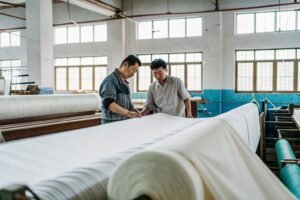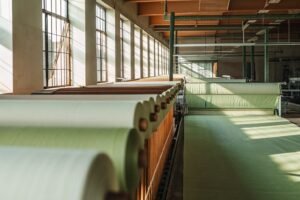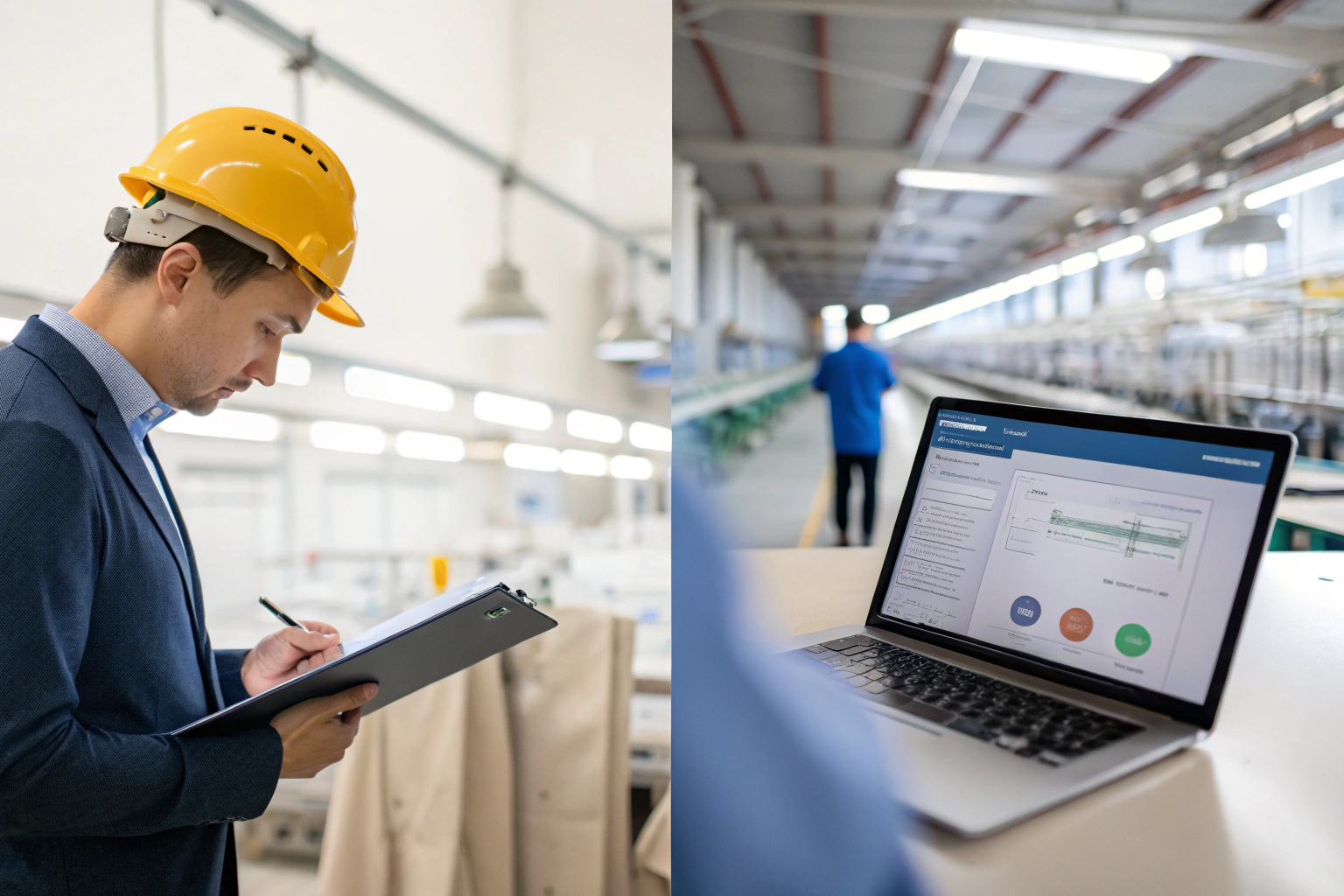
I have been in the garment manufacturing business for over twenty years. I have sourced fabric from hundreds of suppliers. I have visited factories in China, Vietnam, India, and Bangladesh. I have seen the good ones and the bad ones. In the last two years, something new has appeared. AI sourcing platforms. They promise to find the best fabric suppliers. They use algorithms. They use data. They claim to verify suppliers. My clients ask me about them. "Can I just use an AI platform to find fabric? Do I really need to visit the factory?" I understand the appeal. Visiting factories is expensive. It takes time. But I have learned something in twenty years. There is no substitute for seeing a factory with your own eyes.
You cannot fully trust AI-sourced fabric suppliers without a factory audit. AI platforms can provide data and recommendations. But they cannot verify the real conditions on the factory floor. They cannot see if the machines are maintained. They cannot check if the workers are trained. They cannot verify if the quality control systems actually work. A factory audit reveals what data cannot show. Without an audit, you are trusting an algorithm with your product quality, your delivery timeline, and your brand reputation.
This is what I want to share with you today. I am a factory owner who has been audited many times. I know what audits reveal. I also know what AI platforms miss. I will walk you through the limitations of AI sourcing and why factory audits remain essential. I will use real examples from my own experience.
What Do AI Sourcing Platforms Actually Verify?
AI sourcing platforms have become popular. They promise efficiency. They promise transparency. But you need to understand what they actually verify and what they miss.

What Information Do AI Platforms Provide?
AI sourcing platforms aggregate data. They collect supplier information from various sources. They show you:
- Company name and location
- Years in business
- Product categories
- Certification claims
- Contact information
- Sometimes customer reviews
This information is useful. It helps you find potential suppliers. But it is surface-level. It does not tell you what is really happening inside the factory.
I had a client in Los Angeles who found a fabric supplier through an AI platform. The platform showed the supplier had OEKO-TEX certification. The ratings were good. The client placed a large order. When the fabric arrived, it failed our tests. The color fastness was poor. I asked for the OEKO-TEX certificate. The supplier sent a document. I called the certification body. The certificate number did not exist. The supplier had faked the certification. The AI platform had not verified it.
Here is what AI platforms typically verify:
| Information Type | What AI Shows | What It Misses |
|---|---|---|
| Basic company data | Name, address, contact | Whether the address is real |
| Certification claims | Icons and documents | Whether documents are authentic |
| Product categories | Listed products | Actual quality of those products |
| Customer reviews | Star ratings | Whether reviews are genuine |
What Are the Limitations of Algorithm-Based Verification?
Algorithms cannot see. They cannot smell. They cannot feel. They process data that is entered. They do not verify that data against reality.
A client in Seattle used an AI platform to find a silk supplier. The platform showed the supplier had been in business for 15 years. It showed high ratings. The client ordered. When the fabric arrived, it was not real silk. It was a synthetic blend. The supplier had misrepresented their product. The AI platform had no way of knowing.
Here are the limitations:
| Limitation | What AI Cannot Do | Why It Matters |
|---|---|---|
| Visual verification | See the factory, machines, workers | You cannot confirm actual conditions |
| Physical inspection | Touch fabric, check quality | You cannot verify quality claims |
| Document verification | Validate certificates with issuing bodies | Fake documents are common |
| Personal assessment | Assess the people and culture | Trust and communication matter |
At Shanghai Fumao, we welcome AI platforms to list us. But we also welcome clients to visit. The platform can tell you we exist. Only a visit can show you how we work.
What Does a Factory Audit Reveal That AI Cannot?
A factory audit is a physical inspection. A trained auditor visits the factory. They look at everything. They ask questions. They verify documents. They see what data cannot show.

How Does an Audit Verify Real Production Capabilities?
An audit reveals whether a factory can actually produce what they claim. It shows the machines. It shows the workers. It shows the systems.
I remember a client from Chicago who was considering a new fabric supplier. The AI platform showed the supplier had 50 looms. They claimed high production capacity. The client asked me to visit. I went. The factory had 50 looms. But 20 were broken. 10 were being used for a different product. The real capacity was much lower. The AI platform did not know this. The client would have faced major delays if they had ordered based on the claimed capacity.
Here is what an audit reveals:
| Audit Area | What Is Checked | Why It Matters |
|---|---|---|
| Machinery | Number, condition, maintenance | Real production capacity |
| Workers | Number, training, experience | Ability to produce quality |
| Production flow | Layout, organization, efficiency | Lead time reliability |
| Quality control | Systems, equipment, records | Consistent quality |
How Does an Audit Verify Quality Control Systems?
Quality control systems are the most important thing in fabric production. A supplier can have all the certifications. But if their QC system is weak, your quality will suffer.
A client in Denver had a fabric supplier with excellent certifications on paper. The AI platform showed high ratings. But when we audited the factory, we found their QC system was weak. They did not test incoming yarn. They did not test fabric during production. They only did a final visual check. This is not enough. Good fabric requires testing at every stage. The client chose a different supplier based on the audit.
Here is what an audit checks in QC:
| QC Element | What Is Checked | Red Flag |
|---|---|---|
| Incoming inspection | Do they test raw materials? | No testing, rely on supplier claims |
| In-process inspection | Do they check during production? | Only final inspection |
| Testing equipment | Do they have spectrophotometers, tensile testers? | Outdated or no equipment |
| Records | Do they keep quality records? | No documentation |
| Non-conforming handling | What do they do with bad fabric? | They ship it anyway |
At Shanghai Fumao, we are audited regularly. We welcome audits. We know they build trust. We have nothing to hide.
What Are the Real Risks of Skipping a Factory Audit?
Skipping a factory audit is a risk. Sometimes it works out. Sometimes it does not. When it does not, the costs are high.

What Quality Risks Do You Face Without an Audit?
The most common risk is quality. You may receive fabric that does not meet your standards. The color may be wrong. The weight may be off. The finish may be poor.
I had a client in Boston who skipped the audit. They found a supplier through an AI platform. The price was good. The certifications looked good. They ordered 10,000 yards. When the fabric arrived, it had a chemical smell. We tested it. The formaldehyde level was above OEKO-TEX limits. The fabric could not be used for children’s wear. The client lost $15,000 on the fabric. They also lost four weeks of production time.
Here are the quality risks:
| Risk | What Can Happen | Potential Cost |
|---|---|---|
| Incorrect specifications | Fabric weight, width, composition wrong | Reject fabric, reorder, delay |
| Poor dyeing | Color variation, poor fastness | Rework, reject, customer returns |
| Chemical issues | Banned substances, odors | Cannot use for regulated products |
| Structural defects | Holes, slubs, uneven texture | High waste rate in cutting |
What Delivery Risks Do You Face Without an Audit?
Delivery delays are another major risk. A supplier may promise fast delivery. But without seeing their operation, you do not know if they can deliver.
A client in Miami had this experience. They found a supplier through an AI platform. The supplier promised 4-week delivery. The client placed an order. The fabric arrived in 10 weeks. The supplier had overcommitted. They did not have the capacity. The client missed their production window. They had to air freight the finished garments. The air freight cost was $8,000.
Here are the delivery risks:
| Risk | What Can Happen | Potential Cost |
|---|---|---|
| Overcommitted capacity | Supplier takes more orders than they can handle | Delays of weeks or months |
| Raw material issues | Supplier cannot get yarn or chemicals | Delays in production |
| Machine breakdowns | No backup machines or maintenance | Production stops |
| Labor shortages | Not enough trained workers | Slow production |
At Shanghai Fumao, we are transparent about our capacity. We tell clients when we can deliver. We do not overcommit. This is why clients trust us.
Can You Combine AI Sourcing with Remote Audit Alternatives?
I understand that visiting factories is not always possible. It is expensive. It takes time. There are alternatives. But they are not the same as a physical audit.

What Are the Options for Remote Verification?
Remote verification can provide some information. It is better than nothing. But it has limitations.
I have helped clients with remote verification. We do video tours. We send detailed photos. We share test reports. We provide references. This gives clients some confidence. But it does not replace being there.
Here are remote verification options:
| Option | What It Provides | Limitation |
|---|---|---|
| Video tour | See the factory layout, machines, workers | Cannot see details, can be staged |
| Third-party audit report | Independent assessment | Report may be outdated |
| Sample testing | Quality of actual product | Does not show production consistency |
| Reference calls | Feedback from other clients | References may not be candid |
How Do You Use AI Platforms Responsibly?
AI platforms are tools. They can help you find suppliers. But they should not be your only verification method.
A client in San Francisco uses AI platforms to create a shortlist. They find 5-10 potential suppliers. Then they do deeper research. They request samples. They ask for audits. They visit if possible. This approach works. They use the AI platform for discovery. They use traditional methods for verification.
Here is a responsible approach:
| Step | Action | Purpose |
|---|---|---|
| 1 | Use AI platform to find suppliers | Initial discovery |
| 2 | Request certifications and test reports | Verify claims |
| 3 | Request samples | Test quality |
| 4 | Request third-party audit report | Independent verification |
| 5 | Video call with factory management | Assess communication |
| 6 | Visit if possible | Final verification |
At Shanghai Fumao, we are listed on AI platforms. But we also welcome deeper verification. We provide samples. We share audit reports. We do video calls. We invite visits. We want clients to be confident in us.
What Should You Look for in a Fabric Supplier Beyond AI Data?
AI platforms provide data. But trust is built on more than data. You need to look at factors that algorithms cannot measure.

What Human Factors Matter in Supplier Selection?
The people behind the supplier matter. Their experience. Their integrity. Their communication. These factors determine whether your relationship will succeed.
I have seen clients choose suppliers based on price and data. Then they struggle with communication. They struggle with trust. The relationship fails. I have also seen clients choose suppliers based on relationship. They pay a little more. But they get reliability. They get partnership.
Here are the human factors to consider:
| Factor | What to Look For | Why It Matters |
|---|---|---|
| Experience | Years in business, product expertise | Knowledge and stability |
| Communication | Responsiveness, clarity, honesty | Problem resolution |
| Integrity | Follows through, admits mistakes | Trust and reliability |
| Flexibility | Willing to work with your needs | Partnership potential |
How Do You Build a Long-Term Supplier Relationship?
The best fabric suppliers are not found through AI. They are developed over time. You start with small orders. You test. You communicate. You build trust.
I have a client in New York who has worked with the same fabric supplier for 12 years. They started with small orders. They visited the factory. They got to know the owner. Now, when they have a problem, the supplier solves it. When they need a rush order, the supplier prioritizes them. That relationship did not come from an AI platform. It came from time and trust.
Here is how to build a relationship:
| Stage | Action | Outcome |
|---|---|---|
| 1 | Start with small test orders | Evaluate quality and reliability |
| 2 | Visit the factory | Build personal connection |
| 3 | Communicate regularly | Understand each other’s needs |
| 4 | Grow orders over time | Supplier prioritizes you |
| 5 | Build partnership | Long-term stability |
At Shanghai Fumao, we value long-term relationships. We work with clients for years. We grow with them. This is what AI platforms cannot provide.
Conclusion
AI sourcing platforms are useful tools. They can help you find potential fabric suppliers. They can provide data and ratings. But they cannot replace a factory audit. Algorithms cannot see the real conditions on the factory floor. They cannot verify if certifications are authentic. They cannot assess the people behind the supplier.
A factory audit reveals what data cannot show. It shows the machines and whether they work. It shows the workers and their training. It shows the quality control systems. It shows the real capacity. It builds trust through personal connection.
Skipping the audit is a risk. Sometimes it works. Sometimes it costs you thousands of dollars in bad fabric, delayed production, and lost sales. The brands that succeed in the long term are the ones that verify their suppliers. They use AI as a tool. But they do not rely on it alone.
At Shanghai Fumao, we welcome audits. We are transparent about our operations. We have nothing to hide. We want our clients to be confident in us. We want them to know exactly what they are getting.
If you are looking for a fabric supplier and you are considering using an AI platform, I encourage you to go further. Use the platform to find options. Then verify. Request samples. Ask for audit reports. Make a video call. Visit if you can. Build a relationship. Your brand deserves suppliers you can trust.
If you would like to learn more about how we operate, I invite you to reach out. Let us show you our factory. Let us build trust the old-fashioned way.
You can contact our Business Director, Elaine, directly. She can arrange a video tour. She can share our audit reports. She can answer your questions. Her email is: elaine@fumaoclothing.com. Let us show you why trust cannot be automated.