March 2026. A Chicago-based activewear brand called me at 9 PM China time—which tells you how urgent the situation was because they knew I’d be asleep. Their production line was stopping in 48 hours. They needed 2,000 meters of our recycled polyester-spandex jersey that we’d already produced and quality-checked, sitting in our Keqiao warehouse, waiting for a consolidated shipment that would arrive in twelve days. Twelve days might as well have been twelve months. Their factory couldn’t wait. Their retail delivery penalties were accruing at $800 per day. I spent two hours that night arranging an air freight solution that cost them $4,200 in shipping—on a $5,800 fabric order. The fabric arrived on time. The production line didn’t stop. But I hung up the phone knowing that air freight shouldn’t be the only answer to a problem that local inventory would solve permanently.
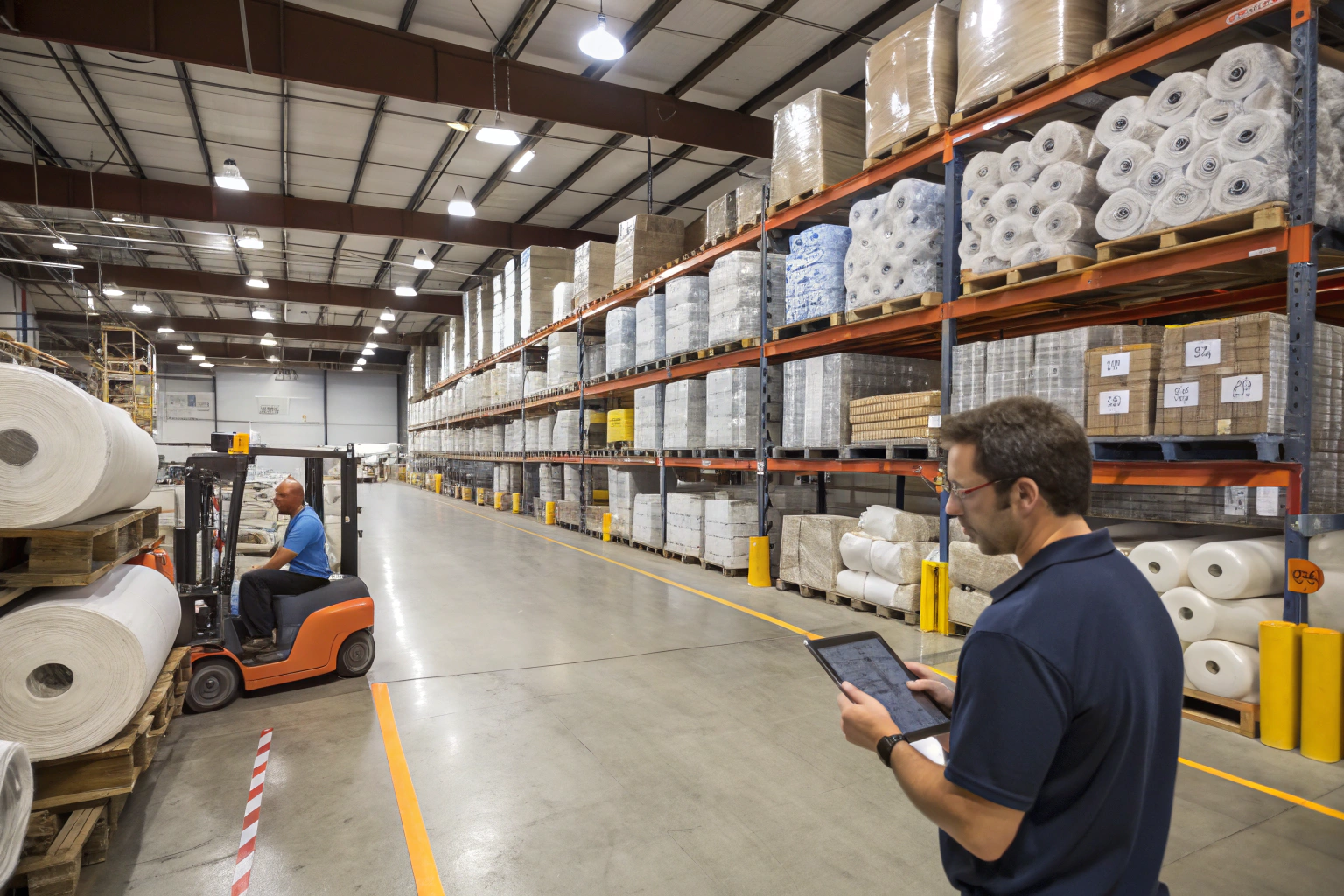
Shanghai Fumao will open its first US warehouse facility in Los Angeles in Q3 2026, with a second location planned for the Dallas-Fort Worth area by Q1 2027. The Los Angeles facility will stock approximately 200 of our highest-velocity SKUs—the core basics, best-selling eco-fabrics, and essential linings that represent about 65% of our North American order volume. Distributors and direct buyers will access this inventory with 2-3 business day delivery to West Coast locations and 5-7 business days to East Coast destinations. The warehouse isn’t a speculative experiment; it’s a direct response to the speed demands that have intensified throughout 2025 and 2026 as just-in-time manufacturing models spread from automotive to apparel and as tariff uncertainty makes buyers reluctant to hold their own large inventories.
The decision to invest in US warehousing didn’t come easily. I spent eighteen months analyzing the economics, visiting potential warehouse sites, and honestly questioning whether a Chinese textile manufacturer could operate a US distribution facility effectively. The capital commitment—roughly $3.2 million for the initial Los Angeles facility including leasehold improvements, racking systems, inventory management software, and initial staffing—requires conviction that the market will reward speed. What changed my mind wasn’t a spreadsheet; it was the accumulation of 2 AM phone calls from buyers whose production lines were stopping, whose retail windows were closing, whose businesses were threatened not by product quality or price but simply by distance. Distance is a solvable problem. US warehousing is the solution.
What Is Fumao’s 2026 US Warehouse Timeline and Location Strategy?
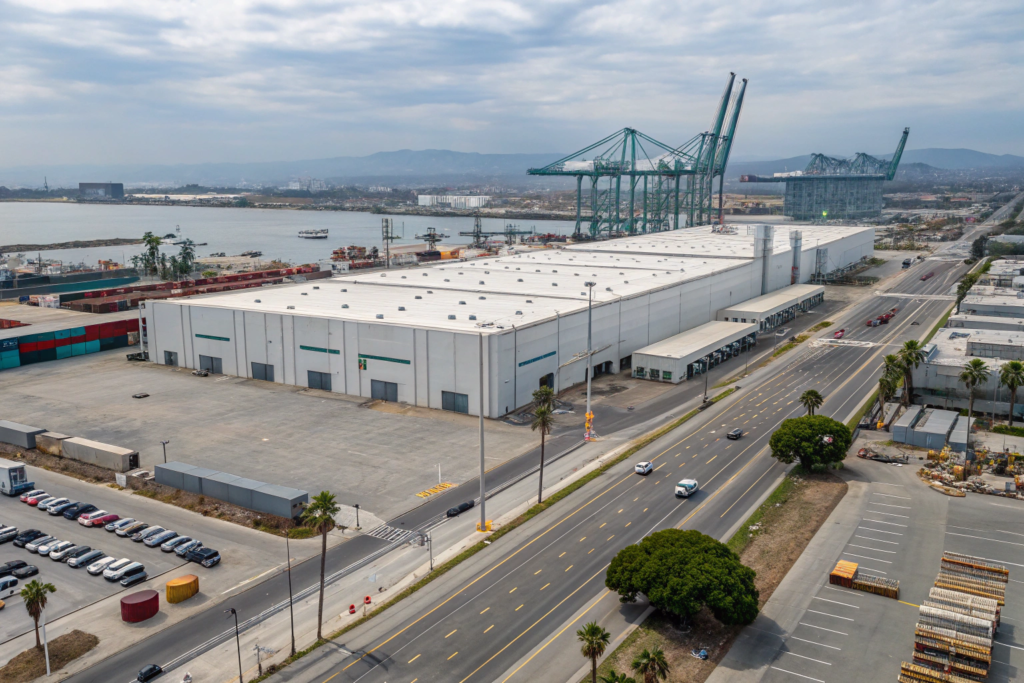
Let me be precise about timelines because vague promises about "coming soon" have damaged too many supplier-buyer relationships. Our Los Angeles facility lease was signed in April 2026, covering 28,000 square feet in the Commerce industrial district, approximately 15 miles from the Port of Los Angeles. The location was chosen for three specific reasons: proximity to the largest US container port where our ocean freight shipments arrive, concentration of apparel manufacturing and distribution in Southern California, and access to logistics talent familiar with textile handling. Renovations and racking installation are underway as of May 2026, with inventory receiving expected to begin in August and full operational capability targeted for September 2026. I’m not giving you a "maybe September" timeline—our team has a project plan with weekly milestones, and I review progress personally every Monday morning China time.
The Dallas-Fort Worth facility represents Phase Two of the strategy, with site selection currently underway among three candidate properties in the Grand Prairie and Arlington industrial corridors. Dallas makes strategic sense because it reaches the central US market with 2-day ground shipping, it serves as a major logistics hub with lower operating costs than coastal locations, and it provides geographic redundancy—a winter storm in Southern California or a West Coast port disruption won’t strand our entire US inventory. The Dallas timeline depends on Los Angeles operational performance. If LA hits our target metrics—order accuracy above 99%, same-day shipping on orders received before 2 PM local time, inventory accuracy above 99.5%—we’ll accelerate Dallas to Q4 2026. If LA requires more operational refinement than projected, Dallas shifts to Q2 2027. We won’t open a second facility until the first one runs flawlessly.
Why Choose Los Angeles and Dallas Over East Coast Distribution Hubs?
East Coast locations—New Jersey, the traditional apparel logistics hub, or Savannah near the growing Southeastern textile manufacturing cluster—were serious candidates during our analysis. They lost for reasons that surprised even me when the data came together. Shipping from Los Angeles to New York takes 5-7 business days by ground, which is slower than East Coast buyers deserve but still dramatically faster than the 4-6 weeks from Keqiao. The cost per pound to serve East Coast customers from a Los Angeles warehouse runs about $0.18-0.22, compared to $0.12-0.15 from a New Jersey location. That $0.07-0.10 difference matters, but it doesn’t justify the additional facility cost and management complexity of operating three warehouses instead of two.
The more important strategic consideration involves port infrastructure. The Port of Los Angeles/Long Beach complex handles approximately 40% of US container imports from Asia. Our ocean freight from Shanghai arrives there consistently in 12-16 days. By locating our primary warehouse adjacent to the port, we minimize inland transportation costs on inbound inventory—our containers travel 15 miles from terminal to warehouse instead of 2,800 miles to the East Coast. That saving largely offsets the higher outbound shipping costs to eastern destinations. For buyers needing faster East Coast delivery, we’re exploring a cross-docking partnership with a third-party logistics provider in central New Jersey that would receive consolidated weekly truckloads from our LA facility. That solution achieves East Coast delivery in 4-5 days without the fixed cost of a company-operated warehouse. The logistics analysis of West Coast versus East Coast distribution hub economics for textile import warehousing confirms what the numbers tell us: LA first, Dallas second, East Coast through partnerships rather than owned facilities.
How Will Inventory Selection Work for the New US Warehouse Facilities?
The SKU selection methodology deserves explanation because stocking the wrong inventory defeats the entire purpose of local warehousing. Stock too many niche fabrics, and your warehouse fills with slow-moving inventory that ties up capital. Stock too few, and buyers still face Keqiao lead times for most of their needs. Our approach used three data sources to identify the 200 initial SKUs: three years of North American sales history ranked by order frequency, unit volume, and gross margin contribution; surveys of our top twenty distributor partners asking which stockouts caused the most lost revenue; and analysis of which fabrics appeared most frequently in urgent air freight shipments—because every air freight order represents a warehouse stocking opportunity.
The resulting inventory falls into six categories. Core cotton and cotton-blend constructions—jersey, interlock, French terry, poplin, twill—in black, white, navy, and three seasonal colors account for roughly 35% of the stocked volume. Activewear synthetics—recycled polyester jersey, nylon-spandex knits, compression fabrics—represent about 25%. Eco-certified fabrics—GOTS organic cotton, GRS recycled polyester, Tencel™ blends—make up 20% because these categories are growing fastest and stockouts damage sustainability-focused brand relationships. Linings, pocketings, and interlinings account for 10% because these are the fabrics buyers most often forget to order until production is imminent. Seasonal basics—linen blends in spring, brushed fabrics in fall—represent 5% with inventory levels adjusted quarterly. The remaining 5% is flex space for testing new SKUs based on digital library search data showing emerging demand patterns before they appear in order history. Understanding how textile suppliers select core inventory SKUs for US warehouse stocking based on sales velocity and demand patterns helps buyers predict which fabrics will be locally available versus requiring China production lead times.
Can a US Warehouse Actually Reduce Lead Times to 2-3 Business Days?
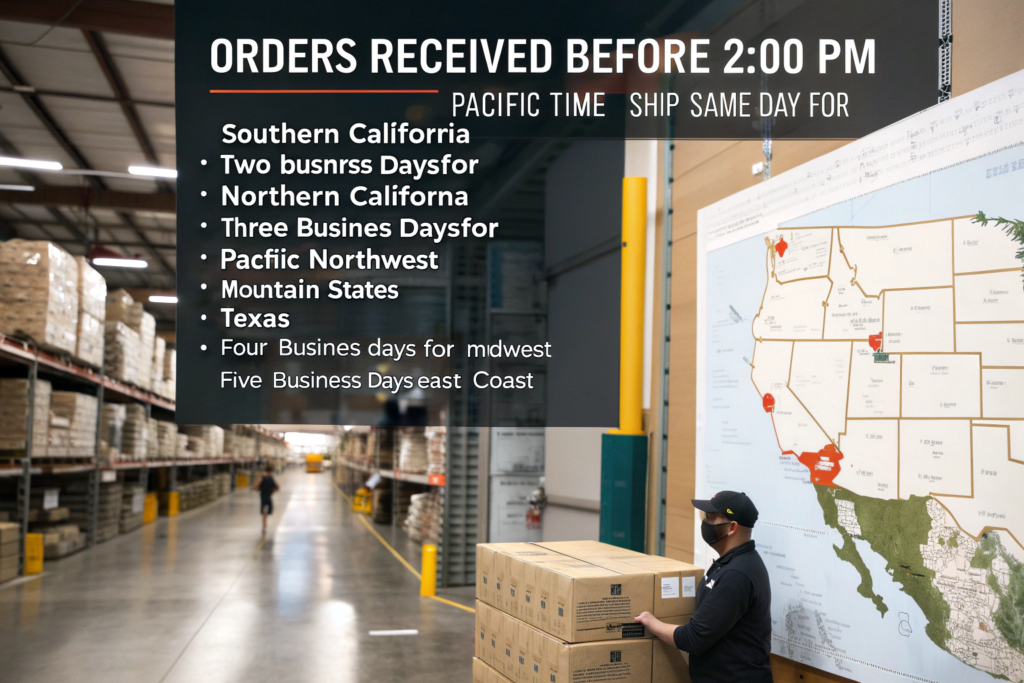
The short answer is yes, but only for stocked inventory and only within specific geographic zones. I need to be precise about what "2-3 business days" means because overpromising on delivery speed is how warehouses destroy the trust they’re built to create. Our operational specification for the Los Angeles facility requires that orders received before 2:00 PM Pacific Time on a business day, for in-stock items, ship same-day. Ground delivery to Southern California destinations (Los Angeles, Orange, San Diego, Riverside, and San Bernardino counties) arrives next business day. Northern California, Nevada, and Arizona arrive in two business days. Pacific Northwest, Mountain States, and Texas arrive in three business days. Midwest arrives in four business days. East Coast arrives in five business days, with the potential for four-day delivery depending on carrier performance.
The 2-3 business day promise applies specifically to the West Coast and Mountain West regions that represent approximately 45% of our US order volume. For the remaining 55%, the improvement is still dramatic—5 business days from Los Angeles versus 4-6 weeks from Keqiao—but I won’t call it "2-3 business days" because that would be dishonest. Buyers in New York or Miami will see delivery improvement of roughly 90% compared to direct China shipping, but they won’t see next-day delivery until the Dallas facility opens and improves the central US coverage zone, and they won’t see East Coast next-day until our cross-docking partnership activates. Speed is relative, and honest communication about which speeds apply to which locations prevents the disappointment that erodes supplier trust.
What Operational Systems Ensure Same-Day Shipping for In-Stock US Inventory?
Same-day shipping sounds simple until you’ve managed a warehouse. The gap between "we aim for same-day shipping" and "we actually ship 98% of orders same-day" is filled with systems, training, and relentless process refinement. Our operational design draws from our Keqiao warehouse experience—where we already process 200-plus daily shipments with 99.2% order accuracy—but adapts for US labor practices, carrier integration, and customer expectations.
The system architecture starts with real-time inventory synchronization between our Keqiao ERP and the Los Angeles warehouse management system. When a buyer places an order through our digital platform, the system instantly checks LA stock availability, allocates inventory, and generates a pick ticket prioritized by carrier cutoff times. Warehouse staff receive pick instructions on handheld scanners that map the most efficient route through the aisles—our Keqiao testing showed this reduces walking time by 40% compared to paper pick lists. Picked items move to a verification station where barcode scanning confirms SKU accuracy, roll length, and shade lot consistency before packing. The packed shipment receives a carrier-compliant label generated automatically based on the buyer’s selected shipping method and destination.
The system’s real test comes during peak demand. A buyer who orders at 1:45 PM—fifteen minutes before the 2:00 PM cutoff—needs the same priority as a buyer who ordered at 9:00 AM. Our workflow design uses a "rolling cutoff" logic where orders placed close to the deadline receive expedited pick priority while earlier orders flow through the standard pick path. The software handles this automatically, flagging time-critical picks with visual alerts on warehouse scanners. In Keqiao, we’ve maintained a 97.8% same-day shipping rate using this system over the past twelve months. The Los Angeles implementation uses identical software with English-language interfaces and US carrier integrations. The warehouse management technology and operational workflows enabling same-day order fulfillment for textile distribution center operations are proven in our China facility and translate directly to the US context.
How Does Local Inventory Change the Emergency Order Economics for US Buyers?
The March 2026 Chicago emergency I described at the beginning of this article crystallized the economics. That buyer paid $4,200 to air freight $5,800 worth of fabric—a 72% logistics surcharge that turned a profitable production run into a break-even scramble. With Los Angeles inventory, that same emergency order would have cost roughly $180 in ground shipping to Chicago, arriving in four business days instead of the 48-hour air freight window but still fast enough to prevent a line stoppage if the buyer maintained reasonable safety stock. The difference between $4,200 and $180 is the economic case for local warehousing in a single transaction.
The broader economic impact compounds across multiple orders. Buyers who know they can access core fabrics within 2-5 business days carry less safety stock themselves, freeing warehouse space and working capital. They order more frequently in smaller quantities, matching fabric purchases more precisely to actual production schedules rather than forecasting demand months in advance. They reduce air freight usage from a recurring cost to a genuinely rare emergency measure. One of our distributor partners who plans to rely heavily on our LA inventory for their West Coast customers estimates annual logistics savings of $35,000-45,000 compared to their current model of consolidated quarterly shipments from China supplemented by expensive air freight for mid-season shortages. The savings come from freight mode shift—ocean freight to our warehouse for base inventory, ground shipping to their customers for replenishment—rather than from any reduction in total fabric volume. The economic comparison of air freight emergency fabric shipments versus ground shipping from US-based textile warehouse inventory demonstrates that local stocking pays for itself through avoided expediting costs, not through higher fabric margins.
How Will US Warehousing Impact Fumao’s DDP and Distributor Pricing Models?
The pricing implications of US warehousing are genuinely complex because they involve shifting costs from one part of the supply chain to another. Under our current DDP model, the fabric price includes ocean freight, customs clearance, and delivery from port to buyer’s door. Under the US warehouse model, fabric still ships from Keqiao to Los Angeles by ocean freight, clears customs through our broker, and enters our warehouse inventory. The difference is that final delivery to the buyer occurs from warehouse stock via domestic ground shipping rather than direct from port. The ocean freight and customs costs remain identical. The domestic ground shipping from LA to the buyer replaces the domestic portion of the previous door delivery, and we add warehouse handling costs that didn’t exist before.
The net pricing impact depends on order characteristics. For full-container buyers who previously received direct port-to-door delivery, warehouse-sourced fabric will cost approximately $0.08-0.15 per meter more due to warehouse handling and the extra touch point in the supply chain. For LCL buyers who previously paid premium less-than-container rates for direct China shipping, warehouse-sourced fabric may actually cost less because their domestic ground shipping from LA is cheaper than the LCL surcharges and last-mile delivery premiums they previously paid. For emergency and small-quantity orders, the savings are dramatic as the air freight case demonstrates. We’re still finalizing the pricing structure—it will be transparent about which costs are added and which are removed compared to direct DDP—but the principle is that warehouse access shouldn’t cost more than the alternative for the same service level.

Will US-Stocked Fabrics Carry Different Pricing Than Direct China DDP Shipments?
Yes, they will carry different pricing because they represent a different service. Fabric sitting in our Los Angeles warehouse has already cleared customs, already passed quality inspection, and is available for immediate shipment. That inventory readiness has value—we’ve invested capital in the fabric, paid the duties, absorbed the ocean freight, and assumed the risk of holding inventory that might not sell immediately. The pricing needs to reflect those costs and risks, just as it needs to reflect the speed premium of same-day shipping versus 6-week lead times.
The pricing differential we’re targeting is 6-10% above the equivalent fabric ordered DDP from China for standard lead-time delivery. That premium covers warehouse operating costs, inventory carrying costs, and the service value of immediate availability. Buyers who can plan ahead and order with normal lead times continue to receive the most economical pricing through direct China DDP. Buyers who need speed, flexibility, or small-quantity replenishment pay a modest premium for warehouse access that’s still dramatically cheaper than air freight. The model creates a natural segmentation: planned production runs order from China, unexpected demand and replenishment orders pull from US stock. This isn’t price discrimination—it’s cost allocation. Holding inventory in the US genuinely costs more than shipping directly from China, and pricing that ignores that reality isn’t sustainable.
For distributors, the pricing structure includes a warehouse access fee separate from the fabric price. Distributors who commit to minimum annual warehouse volumes receive reduced access fees and priority allocation when inventory runs low on popular SKUs. Distributors who use the warehouse occasionally for emergencies pay standard access fees but still benefit from the speed advantage. The distributor pricing model for accessing supplier-owned US textile warehouse inventory reflects our belief that distributors should capture margin from the speed and service improvements the warehouse enables, not from marking up a fixed fabric cost that we’ve already priced to include warehousing. The details are still being finalized with our distributor advisory council, and I expect the structure to evolve as we gather real operational data from the Los Angeles facility.
How Does Local Inventory Change the Minimum Order Quantity Equation?
Local inventory fundamentally changes MOQ economics because the cost structure of fulfilling a small order from warehouse stock bears no resemblance to the cost structure of producing a small order from scratch. When a buyer requests 300 meters of cotton jersey from our Keqiao production line, the setup costs—loom programming, dye formulation, quality documentation—are identical whether the order is 300 meters or 3,000 meters. Those fixed costs force minimums that cover the setup expense. When the same buyer orders 300 meters from our Los Angeles warehouse, the fabric already exists. The cost is picking, packing, and shipping—variable costs proportional to order size with no fixed setup component. The economic logic that enforced 1,000-meter production minimums simply doesn’t apply to warehouse fulfillment.
Our warehouse MOQ policy reflects this different cost structure. For stocked SKUs, the minimum order from US inventory is one roll—typically 50-100 meters depending on the fabric construction. Buyers pay the warehouse pricing premium I described earlier but face no volume minimum beyond the roll size. This opens our supply chain to small brands, indie designers, and sampling programs that could never meet our production minimums. A Brooklyn-based designer who needs 80 meters of organic cotton voile for a capsule collection can order from warehouse stock, receive delivery in five business days, and pay a price that, while higher per meter than a 3,000-meter production order, makes economic sense for small-batch manufacturing. The flexibility of one-roll minimums from US warehouse stock compared to traditional textile production MOQs represents a genuine structural change in supply chain accessibility rather than a marginal discount on bulk orders.
What Does US Warehousing Mean for the Future of Fumao’s Distributor Network?
The distributor question has been the most sensitive aspect of our warehouse strategy. When we first discussed US warehousing internally, several of our long-time sales managers raised a legitimate concern: if we’re stocking fabric in Los Angeles and selling direct to brands with one-roll minimums, are we competing with our own distributors? The question deserves an honest answer because evading it would damage the distributor relationships that have driven our North American growth.
The honest answer is that our warehouse serves a different function than our distributor network, and maintaining that distinction requires discipline that not every supplier demonstrates. Distributors provide localized sales consultation, technical support, credit relationships, and multi-supplier curation that a single-mill warehouse cannot replicate. The Los Angeles facility stocks our core SKUs for speed and convenience; it doesn’t provide the design consultation, the competitive comparisons, or the relationship continuity that a good distributor delivers. We’re structuring the warehouse to support distributors, not replace them. Distributors receive preferential pricing on warehouse inventory, can direct their customers to warehouse stock for replenishment while earning commission on those orders, and can use the warehouse to serve customers outside their normal geographic range without investing in their own remote inventory. The warehouse becomes a tool in the distributor’s kit, not a competitor to their business.
Will Fumao Offer Drop-Shipping From US Warehouse Stock for Distributor Customers?
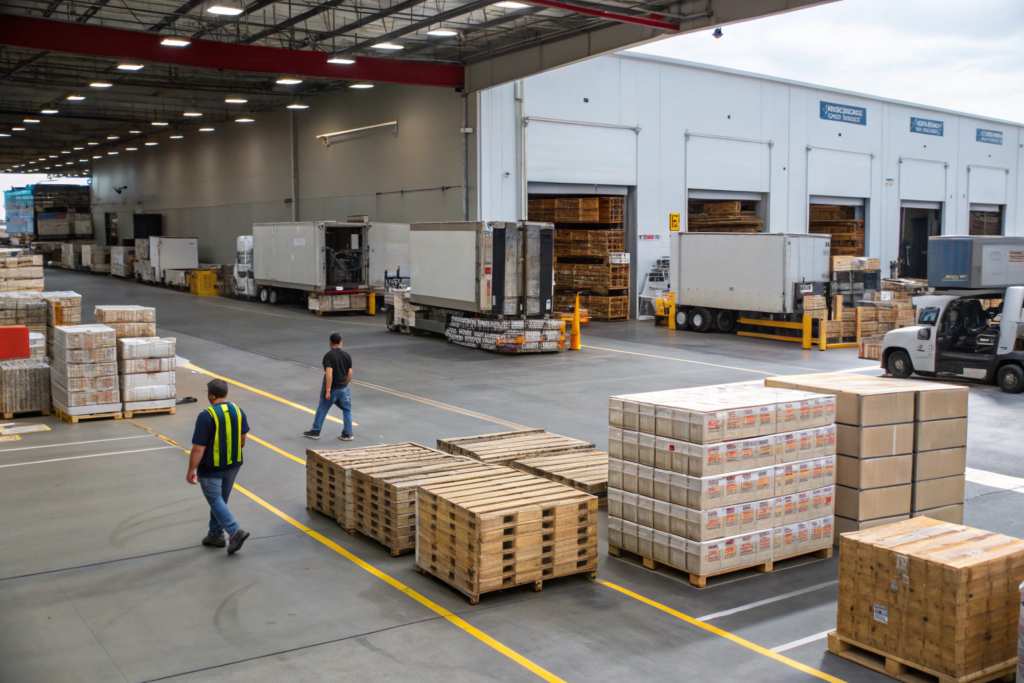
Yes, and this capability has generated more distributor enthusiasm than any other aspect of the warehouse program. Here’s how it works: a distributor in Texas has a customer in Florida who needs 500 meters of black organic cotton jersey for an urgent production run. The distributor doesn’t stock that SKU in their own warehouse. Under the current model, the distributor either orders from China with 6-week lead time—losing the sale—or air freights a small quantity at ruinous cost. Under the drop-ship model, the distributor places the order through our distributor portal, specifies their customer’s Florida shipping address, and our Los Angeles warehouse ships directly to the end customer with the distributor’s branding on the packing slip and no reference to Shanghai Fumao. The distributor earns their margin. The customer receives fabric in 5 business days. We never contact the end customer directly.
The drop-ship infrastructure requires careful execution to maintain distributor relationships. Our warehouse management system segregates distributor-direct inventory from distributor drop-ship inventory in the software, even though the physical fabric sits on the same racks. Order processing for drop-ship orders triggers a different workflow that applies the distributor’s pricing, prints their branded documentation, and suppresses our branding from the shipment. Distributor reporting shows all drop-ship activity with end-customer details so the distributor maintains visibility into their customer relationships. The system essentially turns our warehouse into a shared inventory pool that distributors access without the capital investment of building their own multi-SKU stock. The distributor drop-shipping model enabled by supplier-owned regional textile warehouse networks creates a hybrid supply chain where distributors maintain customer relationships while suppliers provide inventory infrastructure.
How Does the Warehouse Support Rather Than Compete With Existing Distribution Partners?
The support-versus-competition distinction operates on multiple levels. First, the warehouse stocks only our highest-velocity SKUs—the basics that distributors sell regularly but at thin margins, where the value-add of a distributor is availability rather than expertise. The specialty fabrics, custom developments, and technical textiles where distributors earn their highest margins for consultation and problem-solving remain China-sourced with standard lead times. The warehouse doesn’t touch the high-value, high-expertise part of a distributor’s business.
Second, the warehouse pricing structure includes distributor discounts that maintain margin for partners who route orders through their accounts. A brand buying direct from our warehouse pays the published warehouse price. The same brand buying through a distributor pays a price set by the distributor, who purchases from us at a discounted warehouse rate that preserves their margin. The brand has no financial incentive to bypass the distributor—in fact, the distributor may offer a better price than direct purchase if they’re willing to reduce their margin to capture the relationship. The pricing architecture incentivizes brands to maintain distributor relationships rather than switching to direct.
Third, the warehouse enables distributors to serve customers and geographies they couldn’t reach before. A distributor whose physical warehouse is in Atlanta can now serve Seattle customers through our LA inventory drop-ship program without investing in West Coast infrastructure. A distributor who specializes in performance fabrics for outdoor brands can now offer basic linings and pocketings from warehouse stock without diverting capital from their specialty inventory. The warehouse expands what distributors can offer rather than narrowing their role. The strategies for textile suppliers to structure US warehouse operations that support rather than undermine existing distribution partner networks depend entirely on pricing architecture, branding discipline, and a genuine commitment to distributor success as the primary North American go-to-market model.
Conclusion
The US warehouse decision represents the most significant operational investment Shanghai Fumao has made since our last major production expansion in 2019. The Los Angeles facility opening in Q3 2026, followed by Dallas in early 2027, transforms our North American service model from a 4-6 week import pipeline to a hybrid system that combines China-based production economics with US-based inventory speed. For West Coast buyers, core fabrics will be available in 2-3 business days. For the rest of the country, 4-5 business days. For everyone, the days of $4,000 air freight bills on $6,000 fabric orders should become rare exceptions rather than recurring nightmares.
The investment is substantial, the operational complexity is real, and the commitment to maintaining distributor relationships through this transition requires ongoing discipline. But the alternative—continuing to serve North American buyers exclusively from 10,000 kilometers away while just-in-time manufacturing demands compress lead times and tariff uncertainty discourages large inventory commitments—wasn’t sustainable. The buyers I speak with every week don’t just want quality fabric at competitive prices. They want supply chain partners who solve problems, not suppliers who ship from a distance and leave the logistics burden on the buyer’s shoulders.
If the US warehouse program addresses a challenge you’re facing in your fabric supply chain—whether it’s lead time compression, emergency replenishment, or small-batch accessibility—I encourage you to start a conversation with our team. Our Business Director Elaine can discuss the specific SKUs that will be stocked in Los Angeles, the pricing structure for warehouse access, and how the program integrates with your existing sourcing patterns. Reach her at elaine@fumaoclothing.com. We’re building this capability because buyers told us they needed it. Let’s make sure it serves your specific needs from day one.